



In This Article (7 sections)
Burn 9 Gameplay, Radio Operator Mechanics and Reverse Metal Gear Inspiration
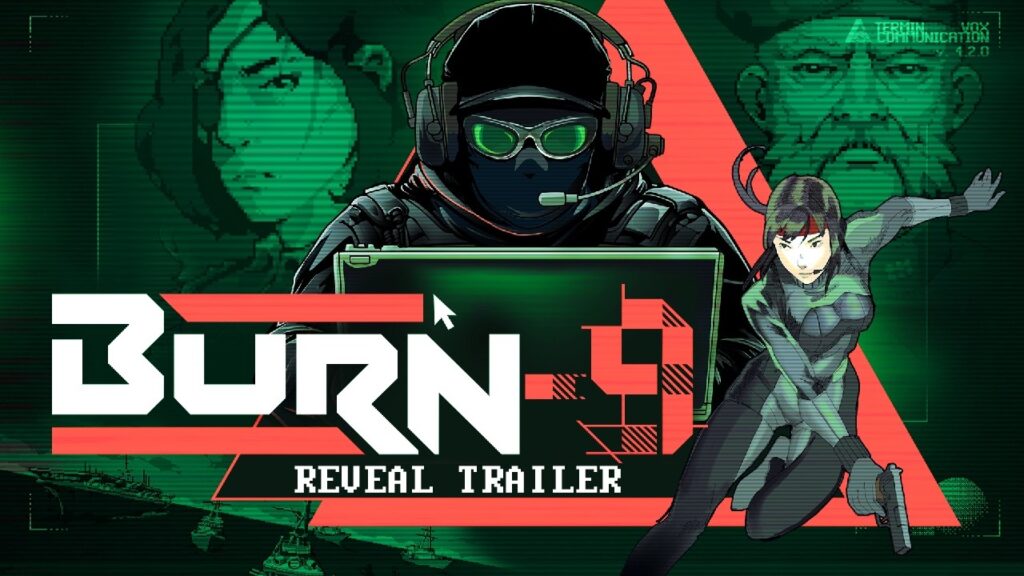
Burn-9 is an upcoming narrative driven indie thriller that transforms tactical radio communication into its central gameplay system. Instead of controlling an operative directly on the battlefield, players become a remote radio operator responsible for guiding agents through dangerous situations using fragmented reports, incomplete intelligence and rapidly changing information. The concept has drawn comparisons with the codec conversations from Metal Gear because it takes a system normally used to support action and makes communication itself the primary form of interaction.
This reversal explains why Burn 9 has been described as a “reverse Metal Gear” experience. In Metal Gear, players control an operative moving through hostile territory while receiving information and tactical advice through codec conversations. Burn 9 places the player on the opposite side of that relationship. The operative is somewhere beyond the player’s direct control, leaving communication as the main way to influence what happens.
The resulting structure removes several familiar elements of tactical action games. Players do not directly control combat, physically navigate environments or perform infiltration themselves. Instead, they must listen to reports, determine which information is trustworthy and provide instructions while events continue unfolding. This creates tension through uncertainty because the player can rarely see the complete situation before making a decision.
Radio communication occurs in real time, with field agents reporting enemy activity, environmental dangers and their own physical or psychological condition. Information may be incomplete, contradictory or distorted by interference, forcing players to construct an understanding of events from whatever evidence is available.
Important mechanics include:
- Time sensitive responses during transmissions
- Signal degradation that can obscure information
- Multiple radio channels requiring attention
- Emotional state tracking for field agents
- Conflicting reports from different sources
- Enemy interference and possible misinformation
- Decisions about which information should be shared or withheld
These systems make listening an active gameplay skill rather than a passive method of receiving exposition. A player’s ability to recognize uncertainty, remember previous information and identify contradictions can become as important as reacting quickly.
The influence of Metal Gear is most apparent in the use of tactical communication, emotional dialogue and unseen military operations, but Burn 9 is not officially connected to the franchise. It is better understood as taking inspiration from the idea behind codec conversations and developing that idea into an independent gameplay structure.
Where codec conversations traditionally interrupt or accompany physical action, Burn 9 makes them the action. Tactical instructions, emotional conversations, conflicting intelligence and ethical decisions all occur through the same communication framework, making the player’s interpretation of dialogue directly responsible for mission outcomes.
The game also shares some thematic similarities with Papers, Please because both experiences create pressure through incomplete information and morally complicated decisions. However, Burn 9 removes the ability to visually verify much of what is happening. Decisions occur through audio and textual information while events continue in real time, increasing the possibility that the player acts on incorrect assumptions.
This restricted perspective is fundamental to the game’s design. Burn 9 creates tension not by preventing the player from acting, but by preventing them from ever possessing complete certainty about which action is correct.
Burn 9 Story, Agent Dodo and Choices With Lasting Consequences
Burn 9 centers on Agent Dodo, a field operative deployed into a black operations mission that rapidly deteriorates. Players experience the unfolding crisis from the perspective of the remote operator communicating with Dodo rather than seeing events directly through the agent’s eyes.
This distance becomes an important part of the narrative. Players hear Dodo respond to danger, exhaustion and confusion while attempting to determine what is actually happening on the ground. Fragmented transmissions and changing mission objectives gradually reveal a larger conspiracy surrounding the operation, while instructions from command become increasingly difficult to trust.
As official intelligence begins contradicting what Dodo reports from the field, players must decide which sources deserve confidence. Following orders may protect the mission while endangering the agent, but ignoring command could create consequences that are equally difficult to predict.
The choices system is built around this imbalance of information. Players rarely receive everything they would ideally want to know before making an important decision, meaning consequences can emerge from misunderstanding as easily as deliberate action.
Decisions can involve:
- Sharing important information with an agent
- Withholding intelligence
- Choosing which communication channel receives priority
- Interpreting contradictory reports
- Responding to an agent’s emotional condition
- Balancing mission objectives against personal safety
- Deciding whether instructions from command can be trusted
This prevents morality from becoming a simple choice between clearly good and bad options. The player may make a reasonable decision based on the available evidence only to discover later that important information was missing or deliberately manipulated.
Agent Dodo’s emotional condition adds another layer to these choices. The operative is not simply a unit awaiting instructions but a person responding psychologically to the mission. How information is communicated may therefore matter alongside what information is provided.
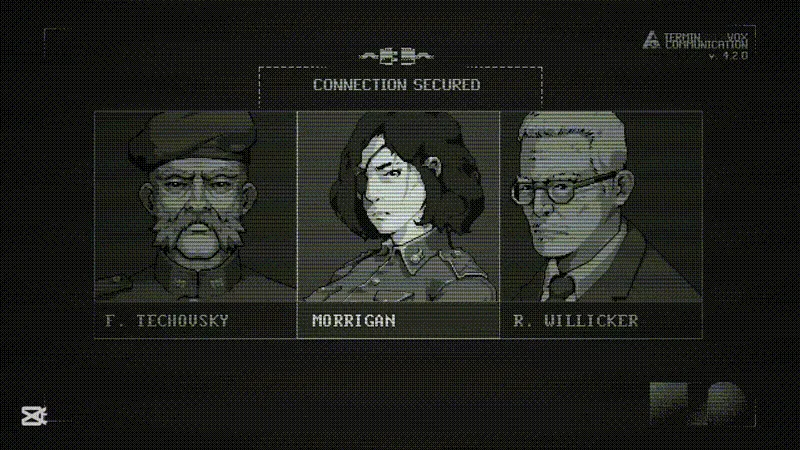
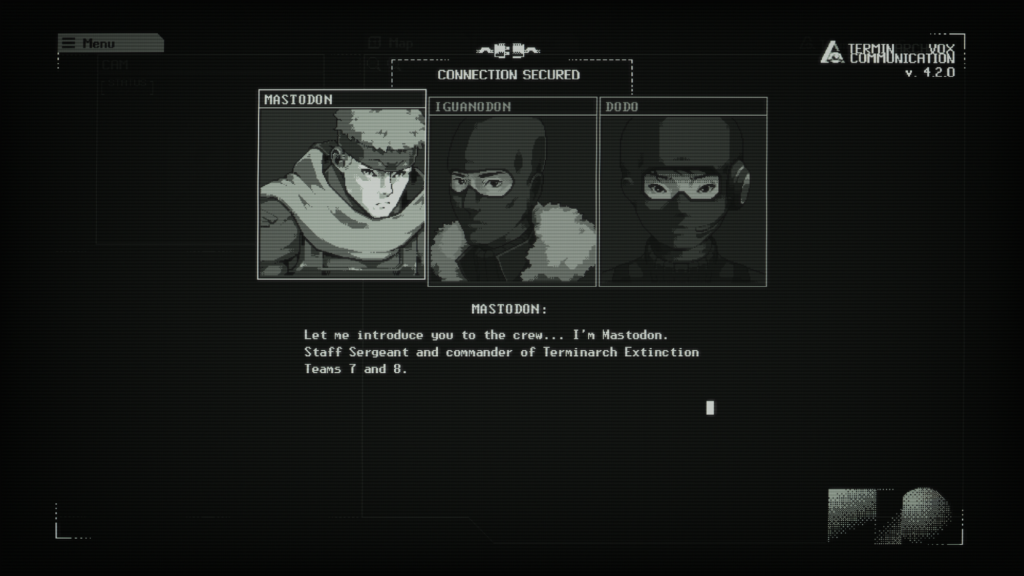
The reveal trailer reinforces these ideas through distorted transmissions, rapid channel switching, corrupted messages and changes in the emotional delivery of field agents. Its interface relies heavily on waveforms and textual information rather than visually depicting large action sequences, keeping attention focused on communication.
Several details also suggest that transmissions themselves may become unreliable. Signal interference can obscure information, while corrupted messages raise the possibility of deliberate deception. If players cannot automatically trust what reaches their console, identifying reliable information becomes another part of survival.
Burn 9 is developed by 14 Hours Productions, whose approach here emphasizes limited player control as a deliberate storytelling technique. Rather than providing a large collection of physical actions, the game restricts interaction to communication, prioritization and interpretation. This limitation forces players to think carefully about the information they receive because they cannot simply enter the field and solve the problem themselves.
Fellow Traveller is publishing the game, fitting its focus on narrative driven and experimental indie experiences. Burn 9’s combination of moral uncertainty, unconventional interaction and player influenced storytelling aligns naturally with that approach.
The game’s design also reflects a broader style of indie storytelling centered on minimal visual feedback and heavy reliance on text, audio and player interpretation. Instead of showing every important event directly, Burn 9 allows imagination to fill the gaps between transmissions, potentially making unseen dangers more psychologically effective.
The result is a story where communication itself can become dangerous. Saying the wrong thing, trusting the wrong source or waiting too long to answer can matter as much as any physical mistake made by the operative in the field.
Burn 9 PC Release, Steam Demo and Future Development
Burn 9 is currently focused on a PC release, with Steam serving as its primary digital platform in the supplied information. The game is expected to move through a public demo phase before its full release, allowing players to experience the radio operator mechanics while providing feedback on pacing, interface clarity and narrative communication.
Steam Next Fest is positioned as an important opportunity for players to experience an early build. The demo is expected to introduce the basic systems through shorter mission scenarios rather than immediately exposing players to the full complexity of later operations.
Expected demo elements include:
- Basic radio communication management
- Signal interpretation
- Early moral decisions
- Communication interference
- Short mission scenarios
- Initial examples of competing information sources
Because the entire experience depends heavily on communicating information clearly while still preserving uncertainty, the demo can provide valuable feedback about the interface. Players need to understand how to operate the communication systems without receiving so much assistance that the intended psychological pressure disappears.
Testing can also help refine decision timing. Response windows need to create urgency without becoming unfair, particularly when players are simultaneously managing multiple channels and interpreting incomplete reports.
The PC focus also suits the game’s relatively lightweight visual presentation. Burn 9 emphasizes audio, text and interface elements rather than demanding graphical environments, suggesting that its hardware requirements may remain relatively modest compared with visually intensive action games.
Console versions have not been ruled out in the supplied information, but development currently remains focused on PC. Expanding to other platforms would require ensuring that the communication interface and rapid decision systems work effectively with different control methods.
Future development may also expand the game through additional missions and communication systems. Potential additions discussed in the supplied material include new scenarios, additional communication tools and interface customization, allowing the experience to grow without changing its fundamental concept.
The modular nature of the design makes such expansion practical because new missions can introduce different combinations of misinformation, emotional pressure and competing objectives while preserving the central radio operator structure.
Burn 9’s most distinctive quality is therefore not simply its Metal Gear inspiration. Its identity comes from taking a familiar support mechanic and asking whether communication alone can sustain the tension normally created through stealth, combat and physical exploration.
By placing players behind the radio rather than behind the weapon, Burn 9 turns uncertainty into its primary challenge. Players must guide Agent Dodo through situations they cannot see, make decisions using information they cannot completely verify and accept that even sensible instructions can have unintended consequences.
That approach gives Burn 9 an unusual position among narrative games. Rather than measuring skill through shooting or movement, it tests listening, interpretation, prioritization and judgment. The player’s most important tool is not a weapon but their understanding of what another person is trying to tell them through an unreliable connection.

Frequently Asked Questions (FAQs)
- What is Burn-9 about?
Burn-9 is a radio operator simulation game where players guide field agents through dangerous missions entirely through communication. Instead of directly controlling an operative, players interpret transmissions, manage incomplete information and give instructions that can determine how situations develop and whether agents survive. - Is Burn-9 related to Metal Gear?
No, Burn-9 is not officially connected to Metal Gear. The comparison comes from its inspiration in the codec communication systems used throughout the Metal Gear series, except Burn-9 makes those radio conversations the central gameplay mechanic rather than a supporting feature. - What genre is Burn-9?
Burn-9 is a narrative simulation and psychological decision making game built around communication, uncertainty and moral choices. Players must interpret conflicting information and make decisions under pressure rather than relying on traditional action mechanics such as shooting, exploration or direct character control. - Who developed Burn-9?
Burn-9 is developed by 14 Hours Productions. The game’s design emphasizes limited player control and communication based interaction, using the player’s inability to directly see or control events in the field to create tension and strengthen the narrative experience. - Who is publishing Burn-9?
Fellow Traveller is publishing Burn-9. The publisher is associated with narrative focused and experimental indie games, making Burn-9’s emphasis on unconventional storytelling, moral uncertainty and player influenced consequences a natural fit for its catalog. - What platforms will Burn-9 release on?
Burn-9 is currently focused primarily on PC through digital distribution, with Steam serving as an important platform in the supplied information. Console versions have not been confirmed, although broader platform availability could potentially be considered after the initial PC development. - Does Burn-9 have combat gameplay?
No, players do not directly participate in traditional combat. Field agents may encounter dangerous situations, but the player’s role is to provide instructions remotely through radio communication, making listening, interpretation and decision making the main ways to influence what happens. - What is the main inspiration behind Burn-9?
The primary inspiration is the codec communication system from the Metal Gear series. Burn-9 reverses the familiar relationship by placing the player in the role of the person providing support over the radio rather than the operative physically carrying out the mission. - Will Burn-9 have a demo?
Yes, Burn-9 is expected to appear with a playable demo during Steam Next Fest. The early build is intended to introduce its communication systems, signal interference and moral choices while also allowing the developers to gather feedback on pacing and interface clarity. - Is Burn-9 story driven?
Yes, narrative is central to the entire experience. The story develops through radio conversations, fragmented intelligence and changing mission circumstances, while player decisions can influence agents and mission outcomes. Choices are complicated by incomplete information, making consequences difficult to predict with certainty.

Conclusion
Burn-9 represents a bold reinterpretation of communication in video games, transforming what was once a supporting mechanic into a full interactive system. By stripping away direct control and focusing entirely on radio based decision making, it challenges players to engage with uncertainty, ethics, and interpretation in ways rarely seen in modern gaming. Its “reverse Metal Gear” identity is not just a stylistic label but a structural philosophy that reshapes how tension and narrative can be delivered through interaction alone.
Sources and Citation
- Source: Fellow Traveller — Official Burn-9 Announcement — Confirms the game’s announcement, developer, PC plans, demo availability, radio operator premise, and political spy thriller setting.
- Citation: Fellow Traveller, “Incoming Transmission: Burn-9 Is in the Field,” June 2026. Fellow Traveller Games
- Source: Burn-9 — Official Press Kit — Provides the official synopsis, gameplay features, Agent Dodo’s role, developer credits, publisher details, and planned platforms.
- Citation: Fellow Traveller Press Kit, “Burn-9,” accessed October 28, 2026. Fellow Traveller Press Kit
- Source: Steam — Burn-9 Official Store Page — Lists the game, developer, publisher, release information, single-player format, demo, and official description.
- Citation: Steam, “Burn-9,” official store listing, accessed October 28, 2026. Steam Store+1
- Source: Engadget — Burn-9 Turns Metal Gear Codec Scenes Into a Full Game — Explains the “reverse Metal Gear” comparison and how Burn-9 turns radio conversations into its central gameplay mechanic.
- Citation: Igor Bonifacic, Engadget, “Burn-9 Makes an Entire Game Out of Metal Gear’s Codec Scenes,” June 6, 2026. Engadget
- Source: Gematsu — Burn-9 Announced for PC — Summarizes the announcement, tactical radio gameplay, developer, publisher, and original PC release plans.
- Citation: Sal Romano, Gematsu, “‘Tactical Radio Action’ Game Burn-9 Announced for PC,” June 6, 2026. Gematsu
- Source: Story Mode — Burn-9 Director Matthew Ritter Interview — Discusses the game’s design philosophy, Agent Dodo, branching choices, consequences, and the development team’s approach to player control.
- Citation: Story Mode, “Burn-9 Director Matthew Ritter on the Banality of Evil, ‘Reverse Metal Gear’ and More,” 2026. Story Mode
- Source: GamingOnLinux — Burn-9’s Radio-Driven Spy Thriller — Examines the game’s radio communication mechanics, Metal Gear inspiration, and PC-focused release plans.
- Citation: Liam Squires-Hand, GamingOnLinux, “Burn-9 Is a Political Spy Thriller That Puts You Behind Metal Gear-Styled Codec Calls,” July 6, 2026. GamingOnLinux
- Source: Higher Plain Games — Burn-9 Is a Reverse Metal Gear — Explains the reversed player perspective, surveillance systems, hacking, intelligence gathering, and narrative decision-making.
- Citation: Higher Plain Games, “Burn-9 Is a ‘Reverse Metal Gear’ That Puts You on the Other Side of the Codec,” 2026. Higher Plain Games
Recommendations
- Valve Accused of Monopoly in the PC Gaming Market in the Netherlands: Steam Antitrust Lawsuit Explained (2026 Update)
- Hokubu Evolving World Car Meet Location in Forza Horizon 6: Where to Find it Fast
- Active Reload Changes in Gears of War: E-Day Show The Coalition Isn’t Afraid to Reinvent an Iconic Feature
- ENDIX: Free Multiplayer Gaming Convention Experience You Can Explore Online
- Genshin Impact Next Update and Banners: Everything We Know About Version 6.5 and 6.6 (Release Dates, Characters, Reruns, and Leaks)
- Lanterns Tops 18 Million Global Views Per Episode
- Paralives Life Stages Explained: Complete Guide to Aging, Growth, and Character Progression System
- Mandate Order: Release Date, City Building, Warfare, and Everything You Need to Know
- New Gundam Anime From Ghost in the Shell: SAC Director Connects to Gundam Rogue Orbit
- Romestead: How to Get and Use Clay, Best Locations, Clay Pit Guide & Crafting Tips



































































































