






In This Article (19 sections)
Romestead How to Get Clay Quickly in Early Game
In the early stages of Romestead, clay is one of the most valuable foundational resources because it directly supports early construction, cooking utilities, and crafting progression. Getting clay quickly depends on understanding both terrain reading and efficient early-game movement routes.
The fastest way to obtain clay in early game is to stick close to water-adjacent zones. Riverbanks, lake edges, and shallow wetlands often contain soft soil patches that yield clay when gathered with basic tools or buckets. Players should prioritize exploring outward in a spiral from their starting settlement, focusing on low elevation terrain rather than hills or rocky regions.
Early clay farming also benefits from crafting a basic shovel as soon as possible. Even a low-tier tool significantly increases clay yield per interaction, reducing time spent gathering. Players should avoid over-exploring forests early, as clay density is significantly lower there compared to floodplains and marsh edges.
Efficient early clay collection is less about luck and more about pattern recognition. Once a player identifies one clay source near water, nearby tiles often follow similar resource distribution rules.
Where to Find Clay in Romestead Map Locations Explained
Clay in Romestead is distributed in predictable environmental clusters. The map is designed so that clay deposits are concentrated in sediment-heavy regions, particularly where water flow historically deposits soil layers.
Common map locations for clay include:
- River basins and delta regions
- Shorelines of large lakes
- Marshlands and swamp edges
- Low-altitude plains with visible wet soil textures
- Seasonal flood zones (if weather systems are active in your version)
Players should also check terrain transition zones, areas where grassland meets wetland. These edge biomes frequently contain mixed resource nodes, including clay, reeds, and peat-like materials.
Exploration should be guided by topography. Clay rarely spawns in elevated zones or rocky cliffs. Instead, the game logic favors accumulation zones where water runoff naturally collects sediment.

Best Biomes to Search for Clay Deposits in Romestead
Not all biomes in Romestead are equally productive for clay gathering. Understanding biome efficiency is essential for long-term resource planning.
The best biomes for clay include:
Wetlands biome: The highest clay density in the game. Frequent respawns and large node clusters make this biome ideal for farming.
River valley biome: Balanced clay distribution with easy access routes and transportation pathways.
Floodplain biome: Excellent for mid-game expansion due to seasonal regeneration of clay nodes.
Shallow swamp biome: Slightly more dangerous due to hostile creatures, but rich in clay and organic materials.
Dry biomes such as deserts or highlands are extremely poor sources of clay and should generally be avoided unless the player is using advanced transport systems.
Biome selection directly affects long-term efficiency, especially when scaling construction projects.
How to Identify Clay Patches in Romestead Easily
Clay patches in Romestead have subtle visual and environmental cues that distinguish them from regular soil. Learning these signs dramatically improves gathering efficiency.
Key indicators include:
- Slightly darker soil coloration compared to surrounding terrain
- Damp or glossy surface texture
- Presence of small puddles or water seepage
- Reduced grass density or patchy vegetation
- Occasional cracking patterns in dry weather cycles
Sound feedback can also help. When walking over clay-rich ground, players may notice a softer footstep sound compared to dry soil or stone surfaces.
Once players learn these visual cues, clay becomes significantly easier to locate without relying on trial-and-error digging.
Romestead Clay Collection Guide Using Bucket System
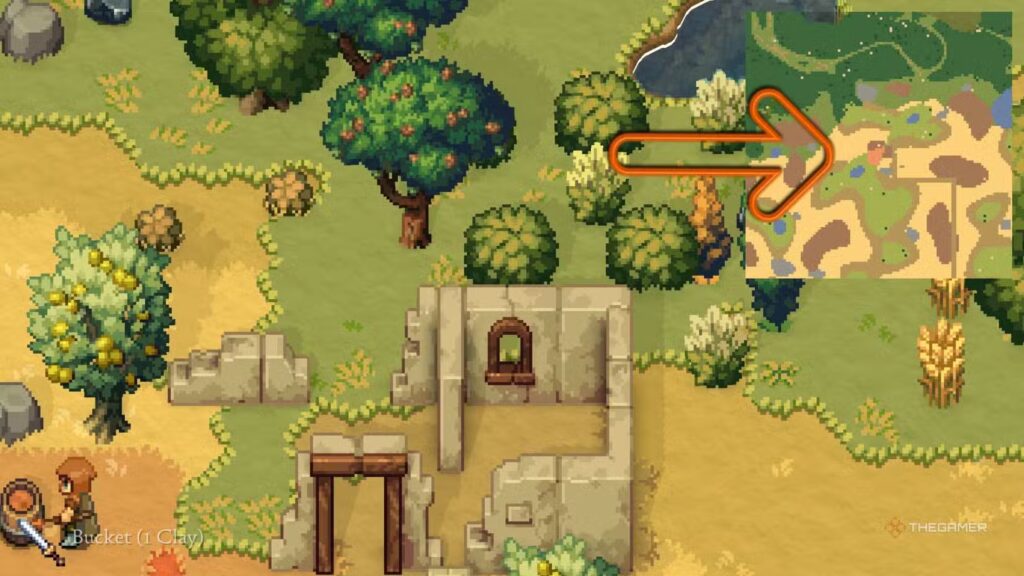
The bucket system is one of the most efficient early-to-mid game methods for clay extraction in Romestead. Unlike manual digging, buckets allow players to collect and transport bulk clay more effectively.
To use the bucket system:
- Craft a basic clay bucket from wood and fiber
- Locate a clay-rich wet patch near water
- Interact with the clay surface using the bucket tool
- Fill the bucket to capacity before returning to base
- Deposit clay into storage containers or crafting stations
The advantage of this system is scalability. Players can carry multiple buckets or upgrade to reinforced containers later in the game.
Efficiency increases when bucket runs are combined with optimized travel routes, minimizing backtracking between base and clay zones.
Step-by-Step Guide to Harvesting Clay in Romestead
Harvesting clay in Romestead follows a structured process that becomes more efficient with practice.
Step 1: Locate a clay-rich biome using terrain indicators
Step 2: Equip shovel or bucket depending on tool progression
Step 3: Clear surface vegetation if necessary
Step 4: Interact with clay patch until resource node is depleted
Step 5: Collect dropped clay materials into inventory
Step 6: Mark location for future respawn farming
Advanced players often establish clay farming loops, rotating between multiple known clay nodes to maximize output per in-game day.
Consistency is more important than speed. Clay respawns follow predictable cycles, so revisiting known locations is more efficient than continuous exploration.
Why Clay is Important in Romestead Crafting and Building
Clay plays a foundational role in Romestead’s progression system. It acts as a bridge resource between primitive survival and structured settlement development.
Primary uses include:
- Brick production for durable buildings
- Pottery crafting for storage and cooking
- Furnace and kiln construction
- Waterproofing early structures
- Crafting trade goods for economy systems
Without clay, players are restricted to low-tier wooden structures, which limits defensive capabilities and storage capacity.
As a result, clay is not just a building material but a progression gate that unlocks mid-game development.
How to Use Clay in Romestead for Bricks and Pottery
Clay becomes significantly more valuable once processed into refined materials. Two of the most important applications are bricks and pottery.
For bricks:
Clay must be combined with water and then fired in a kiln or furnace. Once hardened, bricks provide superior durability compared to wood and are essential for permanent settlements.
For pottery:
Clay is shaped into containers that can store food, water, or crafting ingredients. Pottery improves resource management efficiency and reduces spoilage in survival scenarios.
Advanced crafting stations allow players to create reinforced clay composites, improving structural integrity even further.
Proper clay allocation between bricks and pottery ensures balanced progression between infrastructure and survival systems.
Romestead Clay Pit Explained: Automatic Clay Production Guide
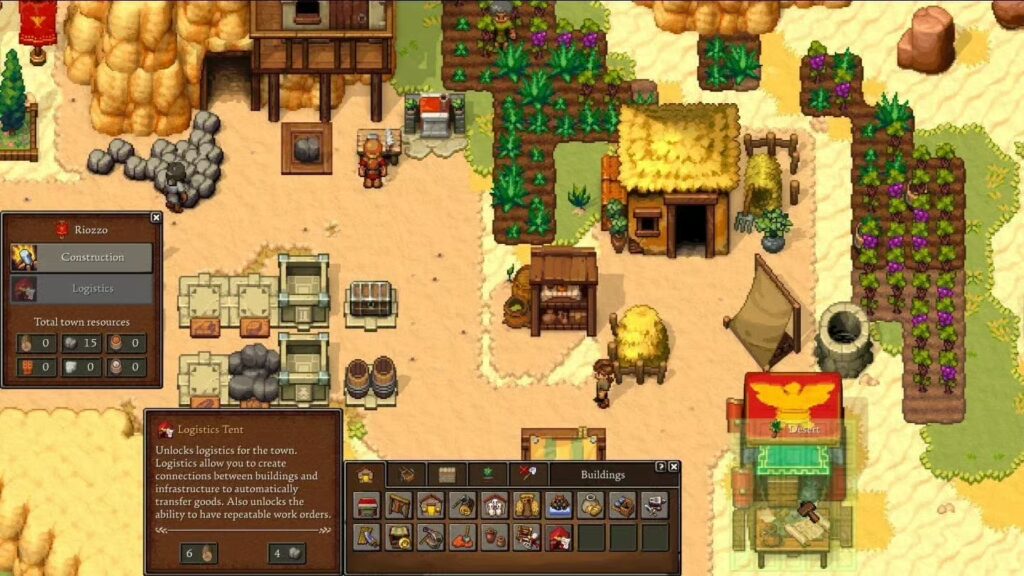
The clay pit system introduces automation into resource gathering. Once unlocked, it allows passive clay production over time, reducing manual farming dependency.
Clay pits function by simulating natural sediment accumulation. Players assign a location, and over time the pit generates clay resources based on biome quality and upgrades.
Higher-tier clay pits improve output rate and storage capacity, making them essential for large settlements.
Automation becomes critical in mid-to-late game when manual gathering cannot sustain construction demands.
How to Unlock Clay Pit Building in Romestead
Unlocking the clay pit requires progression through early crafting tiers and infrastructure upgrades.
Typical requirements include:
- Basic settlement level upgrade
- Completion of early crafting station research
- Collection of a minimum clay threshold
- Access to water-adjacent terrain
Once unlocked, players can place clay pits only in suitable biomes such as wetlands or river valleys.
Strategic placement is essential because relocation is often costly or inefficient.
Best Clay Farming Methods in Romestead Mid Game
Mid-game clay farming shifts from exploration to optimization. At this stage, players should focus on efficiency loops and resource stacking.
Best methods include:
- Establishing multiple clay node routes
- Using upgraded buckets for higher capacity
- Combining farming with transport carts
- Automating production via clay pits
- Creating storage hubs near clay zones
Players should also synchronize farming with in-game time cycles, as some clay nodes regenerate faster during specific environmental conditions.
Efficiency scaling becomes more important than raw exploration.

Common Mistakes When Searching for Clay in Romestead
Many players slow their progression by making avoidable clay-gathering mistakes.
Common errors include:
- Searching in high-altitude or rocky biomes
- Ignoring water proximity indicators
- Over-collecting in a single depleted node
- Not marking clay-rich locations
- Carrying insufficient storage capacity
Another major mistake is failing to transition from manual gathering to automated systems, which significantly limits long-term growth.
Avoiding these mistakes drastically improves resource efficiency.
How to Transport Clay Efficiently Using Carts in Romestead
Transporting clay becomes a logistical challenge as production scales. Carts are the most effective mid-game solution.
To maximize efficiency:
- Build carts with reinforced storage frames
- Create direct routes between clay zones and base
- Avoid steep terrain that slows movement
- Use waypoint markers for optimized travel paths
- Load carts fully before returning
Efficient transport systems reduce time spent traveling and increase total clay output per session.
Players who optimize logistics often progress significantly faster than those focused only on gathering.
Romestead Clay Uses for Advanced Crafting and Economy
In advanced stages, clay transitions from a basic building resource to a strategic economic material.
Advanced uses include:
- High-tier ceramic armor components
- Trade goods for NPC or player markets
- Industrial furnace upgrades
- Reinforced building foundations
- Decorative architecture for settlement prestige
Clay-based products often have high trade value due to their utility in both survival and construction.
Players can leverage clay surplus to establish strong in-game economies.

Tips to Never Run Out of Clay in Romestead Survival Mode
Sustaining clay supply requires long-term planning rather than reactive gathering.
Key strategies include:
- Always maintain at least two active clay farming zones
- Upgrade storage capacity early
- Combine manual and automated collection systems
- Track respawn cycles for known clay nodes
- Expand settlement near clay-rich biomes
Diversification is essential. Relying on a single clay source creates bottlenecks and slows progression.
With proper planning, clay shortages can be completely avoided.
Frequently Asked Questions (FAQs)
- Where is the best place to find clay in Romestead?
Wetlands and river valleys provide the highest clay density. - Does clay respawn in the same location?
Yes, clay nodes regenerate over time in fixed zones. - What tool is best for collecting clay?
A shovel or bucket system depending on progression stage. - Can clay be found in mountains?
No, clay is extremely rare in high-altitude rocky regions. - How do I unlock clay pits?
Through settlement upgrades and early crafting research progression. - What is clay mainly used for?
Bricks, pottery, and construction materials. - Is clay important in late game?
Yes, especially for advanced crafting and economy systems. - How do I transport large amounts of clay?
Using carts and optimized storage routes. - Do biomes affect clay quality?
Yes, wetter biomes produce higher clay yields. - Can clay be automated?
Yes, using clay pits for passive production.

Conclusion
Clay is one of the most essential resources in Romestead, forming the backbone of early survival, mid-game expansion, and late-game economic development. Understanding where to find it, how to collect it efficiently, and how to automate its production ensures consistent progression without resource bottlenecks. Mastery of clay systems directly translates into faster settlement growth, stronger infrastructure, and improved survival stability across all stages of gameplay.
Sources and Citations
- Steam Early Access Game Listing: Romestead (conceptual reference for Early Access survival city-building structure)
https://store.steampowered.com/app/1805320/Romestead/ - Survival City Builder Genre Analysis: General design patterns in colony simulation games
https://en.wikipedia.org/wiki/City-building_game - Mythological Influence in Video Games: Roman mythology in interactive systems
https://en.wikipedia.org/wiki/Roman_mythology
Recommended
- Creating 90’s Anime Style in Blender: A Comprehensive Guide to Achieving Retro 2D Aesthetics with Modern 3D Tools
- ENDIX: Free Multiplayer Gaming Convention Experience You Can Explore Online
- The Ultimate Guide to Hair for Games: Techniques, Tools, and Trends
- Destiny 2 Ends After 9 Years: Bungie Community Lead Thanks Fans as Support Winds Down
- Assassin’s Creed TV Show Now Filming: 64 AD Time Period, Cast, Director, and Netflix Release Details
- Halo Infinite Adds Surprise New PvE Mode: Firefight Gauntlet Explained, Features, and How it Changes Co-Op Gameplay
- What is LARP? Everything You Need to Know About Live Action Role-Playing Games (History, Rules, Costumes, and Safety)
- Forza Horizon 6 Release Date, PS5 Launch, Japan Setting, and Everything We Know



































































































