





LARP, or live action role-playing, is a form of role-play in which participants physically portray characters in real time inside a shared fictional scenario. In practice, that means players do not just describe what their characters do; they speak, move, negotiate, fight, investigate, and improvise as those characters inside an organized game world. Modern LARP spans everything from short indoor social dramas to enormous multi-day fantasy events with thousands of participants, which is why beginners often need one guide that explains the hobby’s meaning, formats, rules, cost, costume expectations, and safety standards in plain language.
What is Larp (live Action Role-Playing)
At its core, LARP is live, embodied, collaborative storytelling. Merriam-Webster defines LARP as a live-action role-playing game in which a group enacts a fictional scenario in real time, typically under the guidance of a facilitator or organizer. Official game materials from Alliance LARP describe the same basic idea in hobby terms: players step into a game world, remain immersed in real time, and experience events through their characters’ eyes. Realms of Mythodea likewise describes LARP as interactive role-play built on improvisation, acting, and player decision-making.
That definition matters because LARP is not one single format. Some games are combat-heavy fantasy adventures. Others are social, historical, political, horror, or relationship-driven experiences with little or no combat at all. What unites them is not genre, costume level, or scale, but the real-time portrayal of a character inside a structured fictional space.
How Does a Larp Work (players, Characters, and Game Masters)
Most larps run on a simple division of responsibilities. Players portray characters and pursue goals in the setting. Organizers create the rules, premise, logistics, and safety framework. Depending on the game, those organizers may be called game masters, facilitators, marshals, refs, plot staff, or playmakers. Official descriptions from Mythodea explain that “playmakers” push the story forward through quests, atmosphere, and guided roles, while Larp House uses the term facilitator for games led through workshops, scenes, and structured social play.
Characters may be player-created, organizer-assigned, or developed collaboratively in workshops. In campaign fantasy larps, players often bring an ongoing character from event to event. In many theater-style or chamber larps, organizers pre-write characters and relationships so the story can begin with built-in tension. That difference in character ownership is one of the biggest structural choices in LARP design.

Larp Meaning vs Cosplay vs Tabletop Rpg (differences Explained)
LARP overlaps with cosplay and tabletop RPGs, but it is not the same as either one. Cambridge Dictionary defines cosplay as the hobby of dressing as and pretending to be a character from film, television, comics, and similar media. Roll20 describes tabletop RPGs as collaborative storytelling played at the table, where the group verbally explores places, characters, and goals together. LARP differs because the action is physically enacted inside a live environment rather than primarily described aloud.
In practical terms, cosplay is usually appearance-first, with role-play optional; tabletop RPG is imagination-first, with action described verbally; LARP is embodiment-first, with costume, environment, and character action happening together in real space. Many hobbyists enjoy all three, and skills transfer between them, but the moment a player leaves pure dress-up or table narration and begins physically playing inside a shared live scenario, the experience has moved into LARP territory.
History of Larp (where Larping Started and How it Spread)
Modern LARP did not emerge from one single source. Multiple communities developed live role-play independently as tabletop RPGs, fantasy literature, improvisation, reenactment, and battle gaming influenced one another. Commonly cited early organizations include Dagorhir, whose official history traces proto-battles to 1977, and International Fantasy Gaming Society, which states it was founded in 1981 in Boulder, Colorado. In the United Kingdom, Treasure Trap at Peckforton Castle in 1982 is widely recognized as a highly influential early British fantasy LARP.
From those roots, LARP spread through local clubs, conventions, campus scenes, battle-game organizations, and later the internet. Over time, it diversified into campaign fantasy games, parlor and chamber larps, Nordic-influenced designs, educational larps, historical larps, and hybrid formats that borrow from theater, workshops, and narrative design. The expansion of community publications and organizer networks also helped formalize design language and safety culture without creating one universal global rulebook.
Types of Larp (boffer, Theater, Parlor, Nordic Larp)
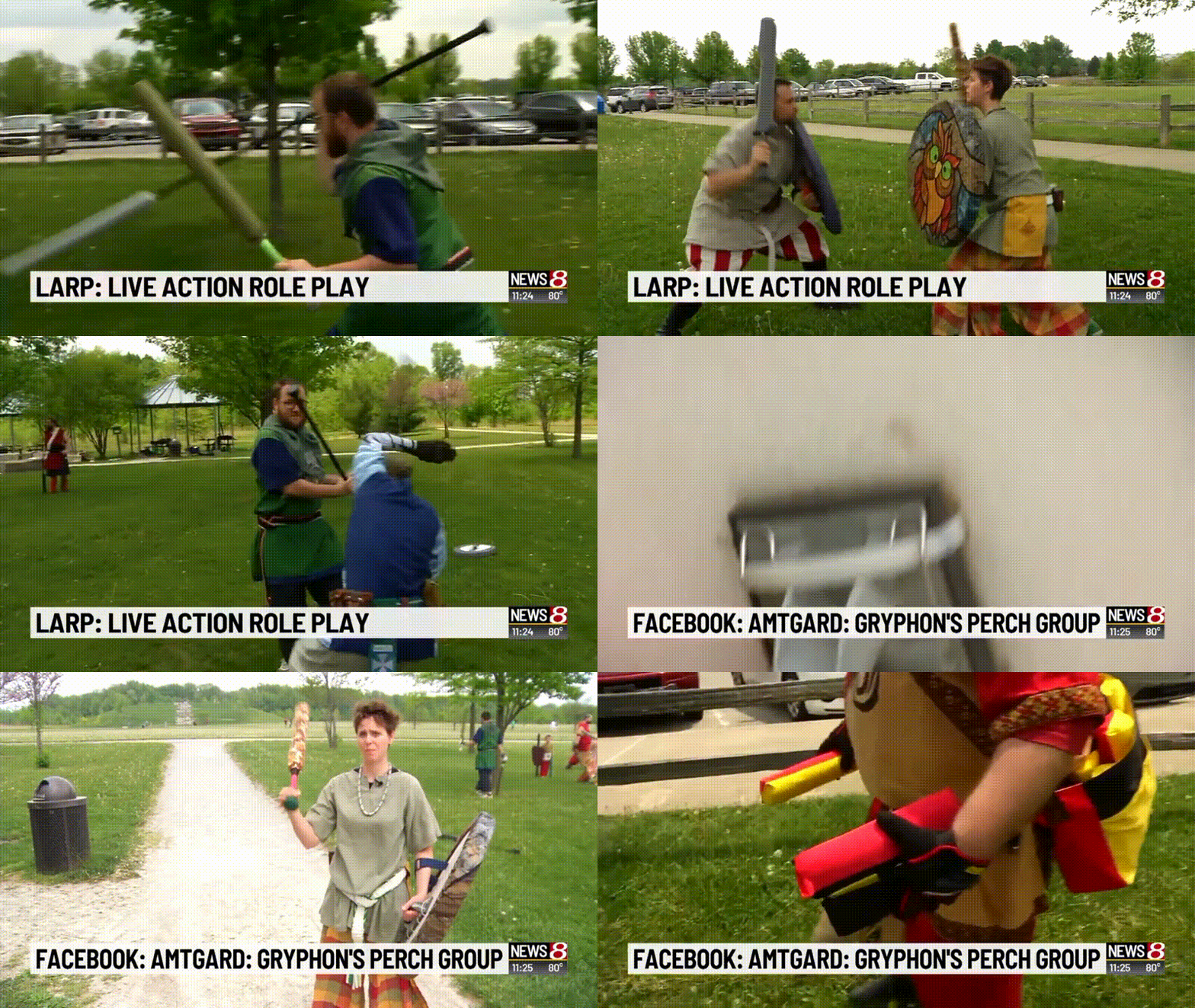
A useful beginner map starts with four broad labels, while remembering that LARP communities do not use these terms in exactly the same way everywhere. Boffer larp uses padded weapons and physical combat simulation; the Nordic Larp wiki describes boffer as a combat-simulation technique common in fantasy and historical larps, while Alliance explicitly defines its game as a boffer LARP using foam weaponry and lightest-touch combat.
Theater larp usually means a format without live boffer combat, or with highly abstracted conflict resolution instead. LARP Portal’s theater-style overview notes that the clearest shared trait is an absence of live-action weapon combat, with any conflict often resolved abstractly through mechanics like comparison systems or simple symbolic procedures.
Parlor larp is often used for smaller, social, mostly indoor games, though the label overlaps with chamber larp and theater-style larp depending on region. The Nordic Larp wiki defines a chamber game as a short larp played in a small enclosed area, often one room, while LARP Portal notes that some communities use “parlor” for styles others might call theater or freeform. That is why the safest way to read these labels is as community shorthand, not as globally standardized categories.
Nordic larp refers less to a single genre and more to a family of design traditions associated with the Nordic countries. Nordic Larp describes it as a shared tradition with strong emphasis on collaboration, collective creation, and relatively unobtrusive rules, often paired with a wide range of themes and settings, including emotionally heavy or experimental play.

What Happens at a Larp Event (typical Schedule and Gameplay)
A typical weekend LARP begins with arrival, check-in, setup, and safety or orientation steps before the fiction starts. Current beginner-facing guides describe a familiar rhythm: players arrive, get into costume, and enter the setting once “time-in” begins. Empire’s public event information shows a concrete example of this structure, with time-in beginning Friday evening and continuing in scheduled blocks through Sunday, while current Myth guides summarize the same general pattern for weekend events.
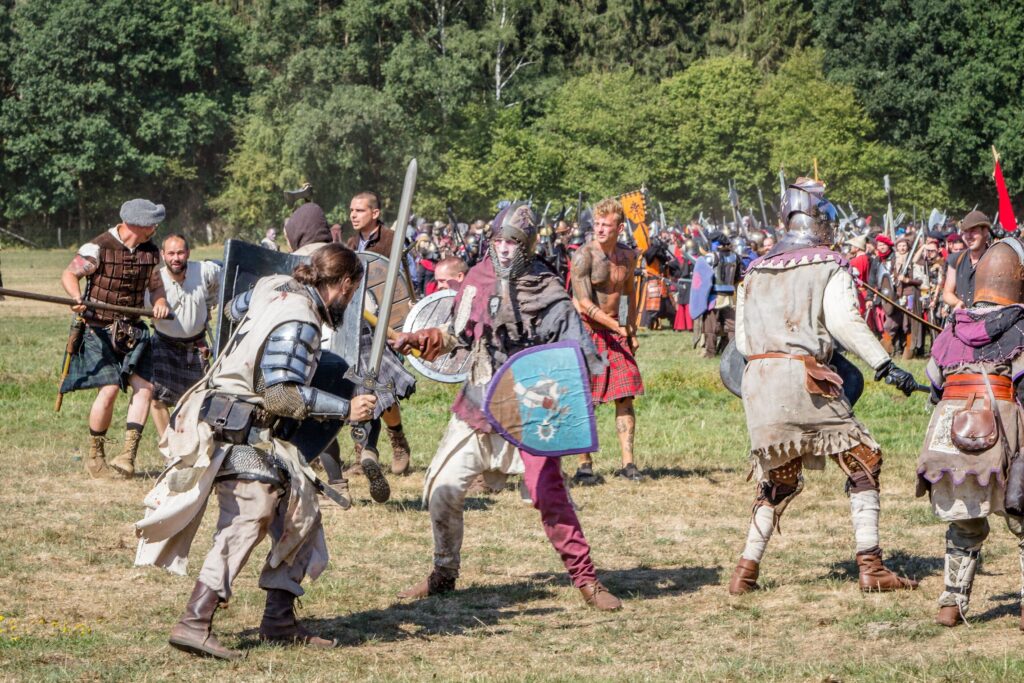
Once play starts, people do not all do the same thing. Some characters chase plot hooks, complete quests, or join battles. Others negotiate politics, craft, heal, study lore, perform rituals, trade, or simply build relationships in taverns and camps. Current live event listings show how wide that range can be: Larp House runs short social larps for 8 to 12 players over four to five hours, while ConQuest of Mythodea runs five days and reports about 6200 players plus 2000 NPCs, with more than 1000 storylines, adventures, and puzzles.
Larp Rules Explained (combat, Skills, and Conflict Resolution)
LARP rules exist to answer three recurring questions: what a character can do, how conflict is resolved, and how play stays fair and safe. In combat-oriented games, rules often define damage, skill use, packet attacks, protective gear, and legal target zones. Alliance’s combat rules, for example, require verbal damage calls on weapon swings and explain how packet attacks work for archery, spells, and alchemy.
Not every ruleset works the same way. Some larps are mechanics-heavy and model combat, magic, crafting, and character advancement in detail. Others are point-light or point-free and rely more on representation, trust, or dramatic judgment. Mythodea’s current rules page explicitly says point-free play has become the norm in many larps and presents its own framework as a lighter rules philosophy, while the Nordic Larp rulebook and wiki emphasize honor-system methods and social resolution tools in many Nordic-style games.
Conflict resolution can therefore be physical, symbolic, mechanical, or social. A boffer hit may resolve a sword strike. A packet may represent an arrow or spell. A numerical skill or verbal call may determine special effects. In other games, especially chamber or Nordic-style formats, outcomes may be decided cooperatively through trust, telegraphing, or narrative framing rather than tactical competition. That variety is normal, which is why the first rule of joining any LARP is to read that game’s own rules, not just a general overview.
Larp Etiquette and Out-of-Character Rules (consent, Boundaries, and Roleplay Respect)
Good LARP etiquette begins with understanding that players and characters are not the same thing. Alliance’s current community guidelines center inclusion, compassion, and boundary-respect, and its code of ethics explicitly states that consent can be revoked, harassment is not tolerated, and body contact should stay within stated or clearly implied limits.
Out-of-character courtesy also matters for immersion. Empire’s gameplay rules state that anyone in the in-character area during time-in is considered in character, and if a participant wants to stop role-playing, the expected courtesy is to leave the in-character area unless there is a genuine emergency. The same rules ecosystem also makes clear that conduct rules separately govern romance, conflict, sexual performances, and related boundaries.
In practical terms, strong etiquette means asking before escalating, keeping OOC issues OOC, respecting organizers’ calls, avoiding personalizing in-game conflict, and protecting other players’ fun. A good larper plays boldly inside the fiction and gently outside it.
Larp Safety Rules for Weapons and Prop Checks
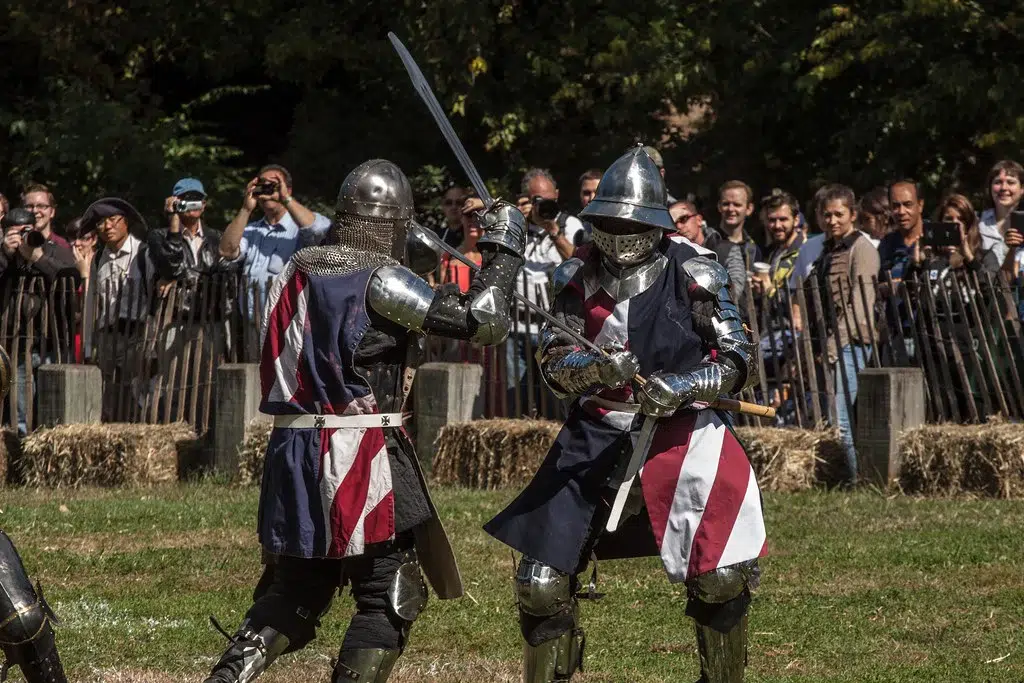
Safety rules are not a side issue in LARP; they are the structure that makes immersion possible. Alliance requires every weapon to be inspected and approved by a weapon marshal before every event, rejects unsafe weapons at any time, and sets construction standards for cores, padding, thrusting tips, non-striking surfaces, shields, and packets. Its code of ethics also empowers any player to call a hold if unsafe behavior appears.
Other organizers reinforce the same principle in slightly different language. Mythodea’s rules guidance says each participant is responsible for the safety of the weapons and armor they use, and its glossary forbids intentional blows to the head, neck, and genital area. Community safety guidelines from BathLARP similarly require approved materials, adequate padding thickness, safe cores, and checker approval for weapons and shields.
The broad beginner rule is simple: never assume a prop is legal because it looks professional, never bring real weapons into play unless an organizer explicitly allows a non-combat display prop, and never improvise around safety checks. If a marshal, ref, or checker says a weapon fails, it fails.
What Are Boffer Weapons (larp Foam Weapon Basics)
Boffer weapons are padded mock weapons used to simulate combat in live play. In hobby language, “boffer” can refer either to the padded weapon itself or to the larger style of LARP that uses such weapons. Nordic Larp’s glossary defines boffer as a technique for simulating combat with padded weapons, and Alliance describes boffer combat as foam weaponry used with lightest-touch contact.
A legal boffer-style weapon is not just “foam on a stick.” Current official standards typically require a safe core, adequate padding, covered striking surfaces, and extra measures for thrusting tips, cross guards, pommels, and thrown weapons. Alliance requires at least half an inch of closed-cell foam on striking surfaces, padding beyond the core tip, and inspection before use, while Mythodea describes foam weapons as built around an unbreakable fiberglass core with foam padding and a stabilizing top layer.
The most important beginner takeaway is that boffer weapons are designed to reduce injury, not eliminate risk. Even safe foam weapons can bruise or strike fragile areas if used poorly, which is why legal construction and safe technique always go together.
What to Wear to a Larp (costume Basics for Beginners)
A good beginner costume is readable, functional, and setting-appropriate. Empire’s costume guidance states that the minimum standard is broadly medieval-style clothing in the in-character area and that plain modern garments can be used if their modern features are covered and unobtrusive. Mythodea gives similar advice, recommending simple medieval basics such as tunics, capes, dresses, belts, and disguised hiking boots rather than expensive perfection on day one.
That means most new players do not need custom armor or cinematic replicas. A strong starter kit is usually a tunic or simple shirt, dark trousers or skirt, a belt, a pouch, boots in dark neutral colors, and one or two character-signaling layers such as a cloak, tabard, scarf, or robe. Many organizers explicitly encourage incremental improvement over time instead of expecting first-event excellence.

Larp Makeup and Props for Immersion (what’s Allowed and What’s Not)
Makeup and props should support the setting, not break it. Current organizer guidance from Mythodea says watches, mobile phones, neon clothing, and visibly modern items disrupt ambiance; Empire says cans, plastic-looking objects, folding chairs, and other obvious modern items should be covered or concealed where practical. The same logic applies to props, containers, cups, camp furniture, and visible gear.
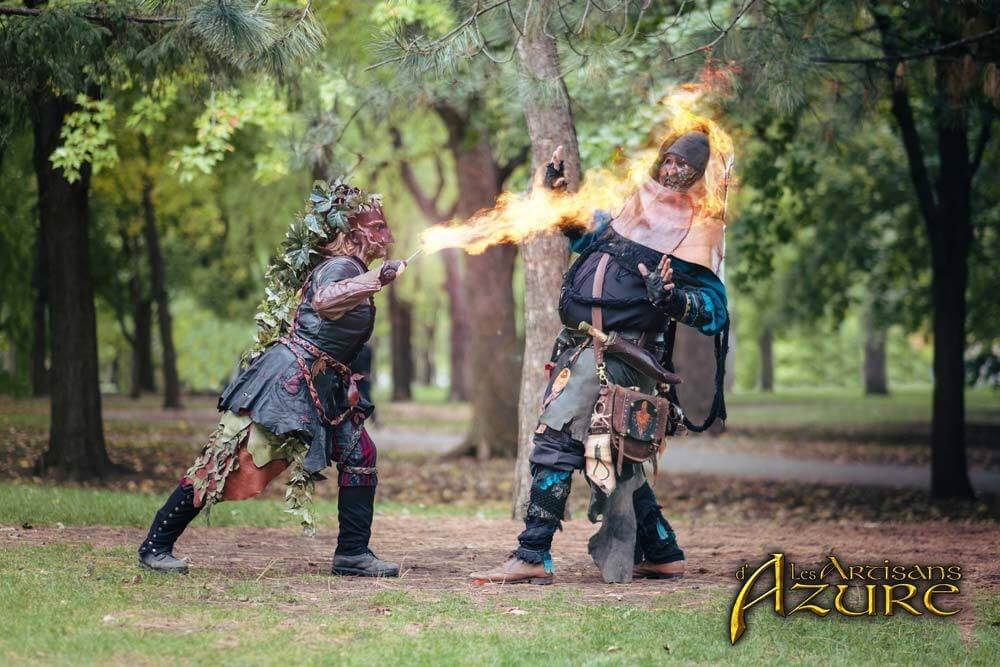
Makeup is usually allowed when it clearly helps communicate character identity, species, faction, age, or mood, but the exact rules depend on the game. Mythodea notes that every character’s costume must fit the setting and represent the character’s background, while some boffer fantasy larps use explicit makeup or prop requirements for non-human ancestries or factions. The deeper principle is representation: other players must be able to read what the costume, prop, or makeup is trying to communicate.
For beginners, the best approach is restrained clarity. Use makeup to reinforce the role, not overwhelm it. Use props you can safely carry, maintain, and explain in play. When in doubt, ask staff whether an item is legal, safe, or too visually modern before bringing it into the in-character space.
How to Write a Larp Character (backstory, Goals, and Roleplay Tips)
A strong LARP character is playable before it is clever. Mythodea’s beginner guidance advises new players to start with a role they can imagine sustaining for several days, to avoid copying famous media characters too closely, and to create an individual name, background, and personal weaknesses instead of building a flawless power fantasy.
Backstory matters most when it creates action. The best beginner histories answer a few practical questions: Who is this person? What do they want right now? What are they afraid of? What relationships can they form easily? What trouble are they likely to step into? Organizers repeatedly warn that exact replicas of famous characters can feel restrictive, expensive, and difficult to sustain in round-the-clock live play.
The simplest way to improve role-play is to give the character one social hook, one personal drive, and one weakness. A mercenary who needs money, distrusts nobles, and panics around magic is far easier to play than an all-powerful “mysterious chosen one” with no concrete wants. In LARP, playability beats lore density almost every time.
How Much Does Larp Cost (tickets, Gear, and Budgeting)
LARP can be inexpensive, moderately priced, or premium, depending on the format. Current examples show that small one-shot social larps may be donation-based, with Larp House’s Good Society listing a suggested pay-what-you-want contribution of $10 to $25. At the other end of the spectrum, packaged destination-style events can include lodging and food, such as Sturmwacht tickets currently listed from €349 to €549 depending on accommodation type. Standard weekend campaign events usually land somewhere in the middle: current Empire tickets list £85 early booking, £90 late booking, and £100 gate booking, while current Myth event listings show player pricing from $100 to $150 and a new-player rate of $75 on at least one event page.
Clothing can start cheap. Mythodea says beginners often wear simple capes, dresses, or tunics costing about 30 to 40 euros, and current beginner-facing Myth material emphasizes that expensive gear is not required to begin. Weapon cost varies more sharply: current retail examples from Calimacil show common foam weapons around CA$165 to CA$260, with custom builders also listed in the mid-hundreds.
The smartest beginner budget usually prioritizes ticket, sleep system, weather-appropriate clothing, footwear, and one legal weapon if the game requires combat. Armor, luxury props, faction decor, premium prosthetics, and bespoke weapons can wait. Many communities also support borrowing, used gear, or gradually upgrading over multiple events instead of buying a “perfect kit” upfront.
How to Find Larp Events Near Me (where to Start Searching)
The most reliable way to find a nearby LARP is to combine directories, local groups, and organizer communities. Meetup currently lists dozens of live-action role-playing groups, while LARP Portal offers a searchable “Find a LARP” tool by system, campaign, genre, style, tech level, or size. LARPfinder and Larp Radar both provide location-based or country-based browsing for events, groups, and organizers.
Organizer communities are just as important as search tools. Mythodea’s preparation guide specifically recommends Discord servers, Facebook groups, meetups, and local role-playing shops as good places to ask questions, find fellow players, and prepare for an event. That advice scales well almost anywhere: find the organizer, read the new-player guide, join the community server, and ask what first-time attendance looks like before buying gear.
Frequently Asked Questions (FAQs)
- Do you need acting experience to start LARP?
No. Beginner-facing guides routinely frame LARP as something new players can learn through participation, workshops, and simple character choices rather than formal acting training. Many organizers design explicit newcomer support into first events. - Is LARP the same as cosplay?
No. Cosplay focuses on dressing as and pretending to be an existing character, while LARP usually centers on playing a character in an organized live scenario with goals, consequences, and interaction rules. - Is LARP the same as a tabletop RPG?
No. Tabletop RPGs are usually narrated around a table, while LARP happens through physical action in real time inside a shared environment. - Is combat required in every LARP?
No. Theater-style, chamber, and many Nordic-influenced larps can use abstract conflict tools or skip combat entirely, while boffer larps make combat central. - Are foam weapons actually safe?
They are designed to be safer than real weapons, but only when built to standard, inspected properly, and used with safe technique. Unsafe construction, bad targeting, or poor control can still cause injury. - Can a beginner attend alone?
Yes. Organizer guidance says solo attendance is common, though joining a small group or organizer Discord can make the first event easier. - Do you need an expensive costume for your first event?
No. Several beginner guides explicitly recommend simple, low-cost basics and improving gradually rather than buying a full premium kit immediately. - How long does a LARP last?
It depends on format. Current examples include four-to-five-hour indoor social larps, standard weekend campaign events, four-day castle larps, and five-day convention-scale fantasy larps. - Can children participate in LARP?
Sometimes. Age policy varies by organizer. Myth currently sets most attendance at 18+, with limited exceptions for ages 16–17 with parental consent, while other events such as ConQuest and Empire allow younger participants but impose additional supervision and battle restrictions. - What is the best first-step for getting into LARP?
Read the new-player guide for a local game, join its community channel, ask about safety and costume minimums, and attend with a simple, playable character instead of overbuilding your first concept.
Conclusion
LARP is best understood as a family of live, embodied role-playing formats rather than one narrow hobby. It can be tactical or theatrical, rules-heavy or rules-light, social or combat-focused, tiny or massive. What makes it LARP is the combination of real-time character play, shared fiction, organizer structure, and community agreement about rules, safety, and consent. For beginners, the most successful path is also the simplest: choose one local game, read its new-player rules carefully, arrive with a basic costume and a straightforward character, and treat safety and boundary-respect as part of the game’s craft rather than as obstacles to immersion.
Sources and Citations
Alliance LARP Rulebook
Alliance LARP Rulebook
Alliance LARP Official Rules
Alliance LARP Rules 2.1.2
Profound Decisions Empire Campaign
Empire by Profound Decisions
Empire Official Wiki & Rules
Empire Wiki Main Page
Realms of Mythodea
Mythodea Official Website
Larp House
Larp House
Merriam-Webster Definition of LARP
Merriam-Webster LARP Definition
Cambridge Dictionary Definition of LARP
Cambridge Dictionary LARP Definition
Roll20 LARP Definition
Roll20 LARP Meaning Guide
Meetup LARP Events
Meetup LARP Groups
LARP Portal
LARP Portal
LARPfinder
LARPfinder
Larp Radar
Larp Radar
Dagorhir
Dagorhir Official Site
International Fantasy Gaming Society
International Fantasy Gaming Society
Treasure Trap Historical Commentary
Treasure Trap History Archive
Nordic Larp Community Documentation
Nordic Larp Wiki
Recommended
- Dead By Daylight Anime Is Reportedly On The Way: What We Know About the Animated Series
- A Beginner’s Guide to The View Keeper Add-on for Blender
- Assassin’s Creed Hexe will be a “darker” installment “set during a pivotal moment in history” — what Ubisoft has revealed so far
- EA Reportedly Wanted Alice: Madness Returns to Be “More Sexy,” So the Developer Put Dildos on a Snail: The Story Behind the Bizarre Creative Clash
- Obsidian Was Originally Planning To Make Fallout: New Vegas 2 – What Happened and Why It Never Released
- Blender Set Hair Curve Profile Geometry Nodes Preset
- Sony’s Spider-Man Universe Headed For Reboot After Disastrous Morbius, Madame Web, And Kraven Movies: What Tom Rothman Confirmed
- Manhunt 2 Remake Mod 2026: Unreal Graphics Ultimate Visuals Install Guide, Requirements, and Best Add-On Mods
- Despite Studio Closures and Layoffs, Meta Quest Usage Hits All-Time High in 2025: What It Means for VR’s Future
- The View Keeper Add-on: Why Every Blender Artist Needs It for Optimized Rendering Workflows