









In This Article (9 sections)
Silent Hill: Townfall Overview, 2026 Release Window, and Atmospheric Horror in 1990S Scotland
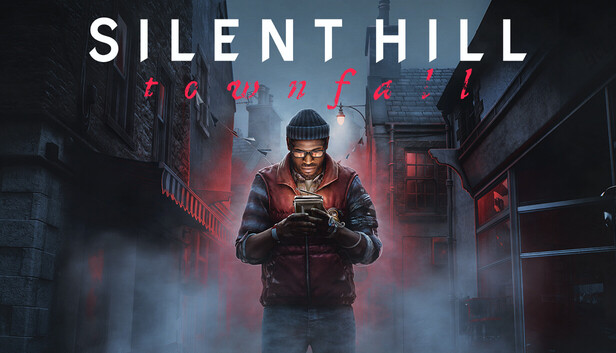
Silent Hill: Townfall is an upcoming psychological horror entry in the legendary Silent Hill franchise, developed through a collaboration between Konami, Annapurna Interactive, and No Code Studios. Unlike traditional entries in the series that focus heavily on combat-heavy survival horror mechanics and fixed narrative progression, Townfall is positioned as a more experimental, atmospheric experience that emphasizes environmental storytelling, fragmented narrative delivery, and psychological tension over action.
Set within a remote Scottish town during the 1990s, the game builds its identity around isolation, analog technology, and distorted perception. Early descriptions suggest that Silent Hill: Townfall leans heavily into mystery-driven gameplay, where players must uncover the truth behind a decaying town through exploration, observation, and interaction with a mysterious CRTV device. The main keyword “Silent Hill Townfall brings atmospheric horror to ’90s Scotland with incredible attention to detail” reflects the core design philosophy of the game: immersion through historical authenticity and psychological dread.
While Konami has officially confirmed the existence of Silent Hill: Townfall, a precise release date has not been firmly established at the time of writing. Industry expectations place the game within a 2026 release window for PlayStation 5 and PC platforms, though delays in AAA horror development cycles remain common.
The development approach taken by No Code Studios suggests a longer production timeline focused on narrative refinement and environmental design rather than rapid release scheduling. Given the ambitious nature of the project, particularly its analog horror systems and experimental storytelling structure, a staggered or late-2026 release is widely anticipated. Players should also expect potential marketing expansions or gameplay showcases before launch, likely during major gaming events such as PlayStation Showcase or Summer Game Fest.
St. Amelia, Simon Ordell, and First-Person Storytelling in Silent Hill: Townfall
The decision to set Silent Hill: Townfall in 1990s Scotland, specifically the fictional town of St. Amelia, is central to the game’s atmospheric identity. This setting introduces a unique cultural and environmental backdrop not previously explored in the Silent Hill franchise. The Scottish Highlands and rural town aesthetics contribute to a sense of isolation that aligns perfectly with the series’ psychological horror roots, while fog, decaying infrastructure, limited communication technology, and pre-digital-era uncertainty amplify the feeling of helplessness. St. Amelia itself is portrayed as a once-thriving mining and industrial town now suffering from economic decline and unexplained disappearances, and the 1990s setting ensures that players cannot rely on modern tools like smartphones or GPS navigation, reinforcing vulnerability and confusion.
The narrative of Silent Hill: Townfall is rumored to revolve around a central character named Simon Ordell, though official confirmation of his role remains intentionally ambiguous. Simon is believed to be an investigator or journalist drawn to St. Amelia after receiving fragmented broadcasts or recordings linked to unexplained phenomena. His journey reportedly involves piecing together the town’s dark history while confronting increasingly unstable perceptions of reality. Like many Silent Hill protagonists, Simon may not be a traditional hero but rather an unreliable observer whose understanding of events becomes distorted over time. The story structure is expected to be non-linear, with players reconstructing events through audio logs, CRTV transmissions, environmental clues, and psychological hallucinations.
One of the most significant shifts in Silent Hill: Townfall is its rumored first-person perspective. This change dramatically increases immersion and tension, placing players directly inside the psychological breakdown of the protagonist. Unlike earlier Silent Hill games that used third-person perspectives to create cinematic distance, first-person gameplay removes that buffer, making every sound, visual distortion, and environmental shift feel immediate and personal. This design choice aligns Townfall more closely with modern psychological horror titles while still preserving the franchise’s identity through narrative ambiguity and environmental storytelling.

Stealth, CRTV Mechanics, and Exploration Across St. Amelia
Combat has traditionally been a core part of Silent Hill gameplay, but Townfall appears to shift toward stealth and evasion mechanics instead. Players are expected to avoid threats rather than confront them directly, making survival dependent on awareness, timing, and environmental understanding rather than weapon mastery. Enemies are likely to be overwhelming, symbolic, or unpredictable, forcing players into hiding, distraction, or escape-based strategies. This approach enhances tension and aligns with the idea that the true horror in Silent Hill is not fighting monsters, but surviving perception-altering fear.
A defining feature of Silent Hill: Townfall is the mysterious CRTV device, an analog technology that appears to function as a central gameplay and narrative tool. The CRTV is believed to allow players to receive distorted broadcasts, hidden messages, and fragmented timelines from St. Amelia’s past. It may also reveal alternate realities or guide players toward hidden areas within the environment. The device symbolizes the game’s obsession with analog horror aesthetics, where outdated technology becomes a gateway to forbidden knowledge. The flickering screen, static noise, and warped imagery contribute to the unsettling tone that defines the experience.
St. Amelia is the fictional town at the heart of Silent Hill: Townfall. Designed with meticulous environmental detail, it reflects a decaying 1990s Scottish community trapped between industrial decline and supernatural disturbance. The town features narrow streets, abandoned housing blocks, fog-covered hillsides, and derelict industrial zones, with each location designed to evoke both realism and unease. This blurs the line between historical authenticity and surreal horror. Exploration in St. Amelia is expected to be non-linear, encouraging players to revisit locations as new information is uncovered through the CRTV system or narrative progression.

Psychological Horror, 1990S Technology, and Symbolic Enemy Design
At its core, Silent Hill: Townfall continues the franchise’s tradition of psychological horror, focusing on internal fear rather than external threats. Themes likely include trauma, memory distortion, guilt, and perception manipulation. The atmosphere is built through subtle environmental storytelling rather than explicit exposition, with sound design playing a critical role. Distant echoes, distorted radio signals, and ambient noise shape player anxiety, while the game is expected to challenge players’ understanding of reality by making it difficult to distinguish hallucination from truth.
The use of 1990s technology is not just a stylistic choice but a core gameplay mechanic. Without smartphones, internet access, or modern navigation systems, players must rely on physical maps, CRTV broadcasts, and environmental observation. This design reinforces isolation and uncertainty, as communication is fragmented, information is unreliable, and technology itself becomes part of the horror experience. The analog aesthetic also enhances immersion by recreating a pre-digital world where misinformation and distortion are harder to verify.
While specific enemy designs have not been fully revealed, Silent Hill: Townfall is expected to feature creatures that reflect psychological states rather than traditional monster archetypes. Enemies may represent fear, guilt, or trauma associated with the town’s history and Simon Ordell’s personal narrative. Their behavior is likely unpredictable, emphasizing avoidance over confrontation. The design philosophy appears to prioritize symbolism over physicality, consistent with earlier Silent Hill entries but adapted for first-person immersion.

Gameplay Systems, Series Differences, and the Realism of Silent Hill: Townfall’s Scottish Setting
Gameplay in Silent Hill: Townfall is expected to blend exploration, puzzle-solving, and survival mechanics. Puzzles will likely be environmental and narrative-based, requiring players to interpret CRTV messages, documents, and visual distortions. Survival systems focus on resource scarcity, limited visibility, and psychological stress, meaning players must manage not only physical threats but also cognitive distortion caused by the environment. This combination creates a layered gameplay experience where progress depends on observation and interpretation rather than combat skill.
Compared to earlier Silent Hill titles, Townfall represents a major departure in structure and presentation. Key differences include:
- First-person perspective instead of third-person
- Greater focus on analog horror and CRTV mechanics
- Reduced combat emphasis in favor of stealth
- Non-linear storytelling through environmental clues
- Deep integration of 1990s Scottish setting
Despite these changes, the game retains the franchise’s core identity: psychological horror rooted in human emotion and perception. The realism of Silent Hill: Townfall’s Scottish setting comes from its attention to environmental authenticity, with developers appearing to focus heavily on architectural accuracy, cultural context, and atmospheric consistency. The fog, weather systems, building layouts, and industrial decay all contribute to a believable world. Even though St. Amelia is fictional, it reflects real-world Scottish towns affected by post-industrial decline, and this grounding in realism strengthens the horror by making supernatural elements feel more intrusive and disturbing.

Frequently Asked Questions (FAQs)
- What is Silent Hill: Townfall about?
Silent Hill: Townfall is a psychological horror game set in 1990s Scotland, focused on exploration, mystery, and atmospheric storytelling. Players are expected to uncover the secrets of the fictional town of St. Amelia through environmental clues, distorted broadcasts, and the use of a mysterious CRTV device. - Who is developing Silent Hill: Townfall?
Silent Hill: Townfall is being developed by No Code Studios in collaboration with Konami and Annapurna Interactive. No Code Studios is associated with narrative-driven and experimental horror design, while Konami oversees the Silent Hill franchise and Annapurna Interactive is involved in the project’s publishing and creative collaboration. - Is Silent Hill: Townfall first-person?
Yes, Silent Hill: Townfall is expected to feature a first-person perspective. This viewpoint is designed to increase immersion by placing players directly inside the protagonist’s experience, making environmental changes, sound design, and psychological distortions feel more immediate. - What is the CRTV device?
The CRTV device is a mysterious analog tool believed to be central to both gameplay and story. It appears to receive distorted messages, hidden broadcasts, and fragmented information connected to St. Amelia’s past, helping players uncover secrets and possibly access alternate layers of the game world. - Where is Silent Hill: Townfall set?
Silent Hill: Townfall is set in the fictional Scottish town of St. Amelia during the 1990s. The setting plays a major role in the game’s atmosphere, using rural isolation, industrial decline, foggy landscapes, and limited pre-digital technology to create a strong sense of unease. - Will there be combat in the game?
Combat is expected to be minimal compared to traditional Silent Hill games. Instead, Townfall appears to emphasize stealth, evasion, and survival through awareness, requiring players to avoid or escape threats rather than constantly fight them directly. - What platforms will it release on?
Silent Hill: Townfall is expected to release for PlayStation 5 and PC. These platforms align with current expectations for the game, though final release details may depend on future official announcements from Konami and its partners. - Is Silent Hill: Townfall connected to other Silent Hill games?
Silent Hill: Townfall exists within the broader Silent Hill universe but is expected to tell a standalone story. This means players may not need detailed knowledge of previous games to understand its narrative, even though it retains the franchise’s psychological horror identity. - What makes Townfall different from other Silent Hill games?
Townfall stands out through its first-person perspective, analog horror focus, CRTV-based storytelling, and 1990s Scottish setting. It also appears to place less emphasis on direct combat and more on stealth, exploration, environmental storytelling, and fragmented narrative discovery. - When will Silent Hill: Townfall release?
A release window is expected around 2026, though an official release date has not been confirmed. Given the game’s experimental structure, atmospheric design, and narrative-focused development approach, a later or staggered 2026 launch is widely anticipated.

Conclusion
Silent Hill: Townfall represents a bold reinvention of the franchise, combining psychological horror with analog technology, immersive first-person gameplay, and a deeply atmospheric 1990s Scottish setting. Its emphasis on CRTV-driven storytelling, stealth-based survival, and environmental realism positions it as one of the most anticipated horror titles in recent years. By stripping away traditional combat and leaning into psychological immersion, the game reinforces what Silent Hill has always done best: transforming fear into an interactive experience rooted in perception and uncertainty.
Sources and Citations
- Konami Official Silent Hill Franchise Announcements
https://www.konami.com - Annapurna Interactive Publisher Updates and Game Listings
https://annapurnainteractive.com - Silent Hill: Townfall Reveal Coverage and Industry Reports (Game Events Coverage)
- Developer Interviews and Studio Commentary from No Code Studios Official Channels
- Major Gaming Showcase Presentations (PlayStation Showcase / Summer Game Fest Archives)
- Community Analysis and Trailer Breakdown Discussions (Gaming Forums and Editorial Coverage)
Recommended
- Marvel’s Wolverine Preorders Still Waiting on Insomniac’s Next Gameplay Reveal as PS5 Release Approaches
- A First Look at Houdini 22: 3D Gaussian Splats, Copernicus Updates, and USD World Building
- Call of Duty Warzone Black Ops Royale Gameplay Footage Brings Back Blackout Nostalgia
- Resident Evil Requiem Demo Is Out: How to Download on PC, PS5, Xbox, and Switch 2
- Romestead Citizen Guide: How To Feed Your Citizens and Prevent Starvation
- Iron Lung Indie Game Film Adaptation Earns $21.5 Million on Opening Weekend: Box Office Breakdown, Cast, and What Happens Next
- Animating 3D Worlds and Crowd Interactions: Integrating iClone, Unreal Engine, MetaHuman, Daz 3D, MakeHuman, and Motion LIVE Plugins
- Soldier Boy and Stormfront Take Center Stage in Bloody First Trailer for the Boys Spin-Off Vought Rising, Full Breakdown, Cast Details, and Story Explained
- What 3D Program Did Arcane Use? An In-Depth Look at the Animation Tools Behind Riot Games’ Hit Series
- Yerba Buena Preview: “We Have Portal at Home”, Gameplay, Release Date, and Puzzle Mechanics Explained



































































































