










In This Article (9 sections)
How to Feed Citizens and Secure Early Food Sources in Romestead
Keeping citizens fed is one of the most important responsibilities in Romestead. A thriving settlement depends on a reliable food supply, and starvation can quickly derail progress by reducing productivity, lowering morale, and limiting settlement growth. While combat, exploration, and expansion are important parts of the game, none of them matter if citizens do not have enough food to survive.
Citizens consume food automatically when it is available in designated storage locations. This means players do not need to manually feed individual citizens, but they must ensure that food production, transportation, and storage systems are working properly. If food runs out or distribution becomes inefficient, citizens may begin experiencing hunger penalties.
The key to successful settlement management is creating a stable supply chain. Food must be produced, harvested, transported, stored, and consumed in a consistent cycle. Players who treat food production as an afterthought often find themselves facing sudden shortages that are difficult to recover from. Feeding citizens effectively begins with understanding where food comes from and how quickly population growth increases demand.
Early-game survival depends on securing simple and reliable food sources before expanding the settlement. The first few days are often the most dangerous because production infrastructure is limited, and resource gathering competes with construction priorities.
Wild food sources are usually the fastest solution. Gathering berries, mushrooms, fruits, and naturally occurring edible plants provides immediate food without requiring farming infrastructure. These resources can sustain a small population while permanent production systems are developed.
Hunting is another strong early-game option. Animals often provide larger food yields than gathering activities, though hunting requires additional time, tools, and worker commitment. Players should balance hunting efforts with other critical tasks to avoid neglecting settlement development.
Fishing, when available, offers a dependable food source that can remain useful throughout the game. Water-based food production often scales well and may require less maintenance than farming during the earliest stages.
The best strategy is to combine multiple food sources rather than relying on a single one. Diversification reduces the risk of shortages and creates a buffer against unexpected production interruptions.

Food Production, Farming, and Crop Planning in Romestead
Food production in Romestead revolves around transforming natural resources into sustainable supplies capable of supporting an expanding population. Most settlements eventually transition from gathering and hunting toward structured farming systems, since farms produce crops that can be harvested regularly and create more predictable food output than wild resource collection. Understanding these production chains is essential because population growth eventually outpaces simple gathering methods.
Food production often follows a chain: crops are planted, grown, harvested, transported, stored, and distributed. Interruptions anywhere in this process can create shortages, even when farms appear productive. Production efficiency depends on several factors, including worker allocation, crop selection, seasonal conditions, available tools, storage infrastructure, and transportation networks. Poor planning in any of these areas can reduce overall food output. Advanced production systems may also include food processing, cooking, preservation, or specialized agricultural structures that improve yields and reduce waste.
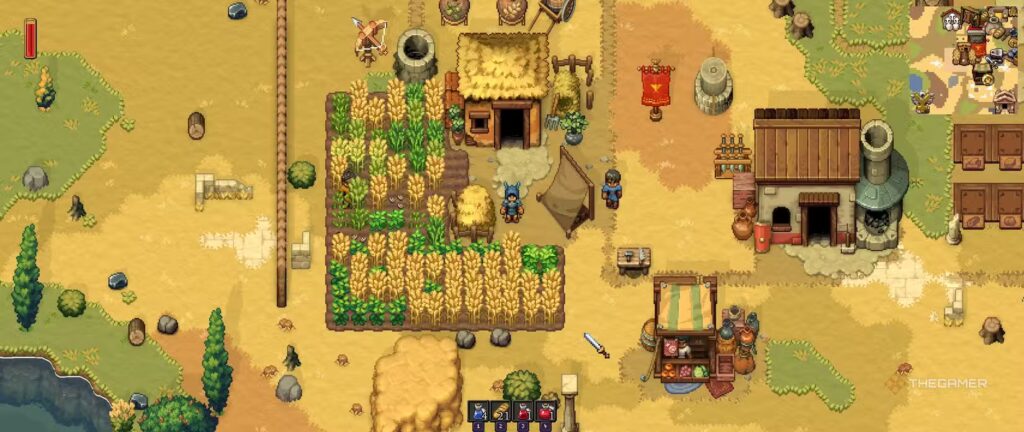
Farming becomes the foundation of long-term food security in Romestead. New players should prioritize establishing farms as soon as the settlement’s basic survival needs are met. The first step is selecting suitable land, as fertile terrain generally produces better yields than poor-quality soil. Farm placement should also consider proximity to storage buildings and worker housing to reduce transportation time.
Beginners should start with a small number of manageable fields rather than creating massive agricultural zones immediately. Large farms can overwhelm available workers and lead to missed harvests. Labor availability must always match farm size, because expanding agricultural land without increasing the workforce often results in lower overall efficiency rather than higher production. Monitoring harvest results and adjusting crop selection accordingly allows players to optimize output over time.
Crop diversity is also important. Different crops may grow at varying speeds, provide different nutritional values, or offer unique benefits related to happiness and productivity. Not all crops contribute equally to settlement success. Staple crops typically offer the highest production rates and form the backbone of most food systems because they provide reliable yields capable of feeding large populations.
Luxury or specialty crops often deliver lower food output but contribute positively to morale and settlement quality of life. Citizens generally prefer dietary variety over monotonous food supplies, so balanced agricultural planning should combine staple foods with higher-quality options. This approach supports both survival and happiness. Crop rotation may also improve long-term productivity depending on game mechanics, as maintaining soil quality helps preserve output across multiple growing seasons. Players should experiment with different crop combinations to determine which options best support their settlement’s specific needs.

Preventing Starvation Through Food Supply and Resource Management
Preventing starvation in Romestead requires planning ahead rather than reacting after shortages begin. The most effective approach is maintaining a consistent food surplus, since settlements operating near the minimum food requirement are vulnerable to unexpected disruptions caused by weather, labor shortages, or resource bottlenecks. Storage reserves act as insurance against temporary production failures, so players should always maintain emergency stockpiles capable of supporting the population for extended periods.
Monitoring consumption trends is equally important. Daily food requirements vary based on population size, game balance settings, and citizen needs. Each citizen consumes food at a predictable rate, allowing players to calculate minimum production targets. Understanding this consumption rate is essential for long-term planning, especially because food demand rises alongside population growth and production systems must scale accordingly.
Population growth creates exponential pressure on food systems. A settlement that comfortably feeds ten citizens may struggle when the population doubles if production remains unchanged. Food calculations should include reserve production rather than merely meeting minimum requirements, as surpluses provide protection against poor harvests and future expansion. Tracking consumption trends helps players identify emerging shortages before starvation occurs, and the safest strategy is producing significantly more food than current demand requires.
Food production cannot be separated from broader resource management. Agriculture requires labor, land, storage space, tools, and transportation infrastructure, and neglecting any of these supporting systems can reduce food efficiency dramatically. Workforce management also influences starvation prevention, as assigning too many workers to construction, military duties, or resource extraction can leave farms understaffed during critical periods.
Worker scheduling should reflect seasonal priorities, since harvest periods often require additional labor compared to planting seasons. Storage capacity must expand alongside production, because overproduction becomes wasteful if harvested food has nowhere to go. Transportation routes should remain short and efficient, as workers who spend excessive time moving resources contribute less to actual production. Maintaining reserves of seeds, tools, and agricultural materials also supports long-term stability.
A balanced economy where food production remains a priority is far more stable than one focused entirely on rapid expansion. Effective resource management transforms food production from a constant crisis into a predictable system.

Food Storage, Distribution, and Common Feeding Mistakes in Romestead
Food storage is often overlooked until shortages occur, but proper storage ensures harvested food remains available when needed rather than spoiling or being lost due to capacity limitations. Storage infrastructure should grow alongside agricultural output, especially as settlements expand and food production becomes more complex.
Storage buildings should be positioned near both production areas and residential districts. Efficient placement reduces transportation delays and improves distribution speed. Multiple storage sites can also improve logistics across larger settlements, since centralized storage may become inefficient as populations grow. Players should regularly monitor capacity utilization because full storage buildings can interrupt production when workers have nowhere to place harvested goods. Reserve warehouses dedicated to emergency supplies provide additional security against food crises.
Several common mistakes frequently lead to starvation. The first is expanding the population faster than food production. More citizens create higher demand immediately, while new farms require time to become productive. Another mistake is relying on a single food source, since crop failures, seasonal limitations, or resource depletion can quickly create shortages.
Ignoring storage capacity is also dangerous. Food that cannot be stored effectively may go to waste despite strong production. Understaffing farms during critical seasons often reduces harvest yields dramatically, and neglecting reserve stockpiles leaves settlements vulnerable to unexpected disruptions. Avoiding these mistakes significantly improves long-term stability.

Scaling Food Production and Managing Settlement Growth
Mid-game settlements require more sophisticated food systems than early survival strategies. Agricultural specialization becomes increasingly valuable, and dedicated farming districts often outperform scattered production zones. Multiple crop types provide both efficiency and resilience, while diverse production protects against localized failures. Fishing, animal husbandry, and farming should complement one another whenever possible.
Processing facilities may improve food output by transforming raw ingredients into higher-value products. Automation and infrastructure upgrades also become increasingly important as populations grow. Mid-game success depends on scaling production before shortages appear rather than after they occur.
Efficient expansion focuses on eliminating bottlenecks. Adding more farmland without sufficient workers rarely solves shortages, just as increasing production without expanding storage creates waste. Players should expand food systems in stages: first increase labor capacity, then production infrastructure, followed by storage and transportation improvements. Technological upgrades often provide better returns than simply increasing farm size.
Settlement layout also influences efficiency. Agricultural zones positioned near storage and housing reduce travel time significantly, while incremental expansion generally produces more reliable results than massive agricultural projects. Population growth is directly tied to food demand, and every new citizen increases daily consumption requirements, making expansion both beneficial and challenging.
Rapid growth can create hidden problems if food systems fail to keep pace. Short-term prosperity often masks future shortages, so settlement planners should forecast future food needs rather than focusing only on current consumption. Housing expansion, immigration, and population incentives should be balanced against available food production. Controlled growth is usually safer than unrestricted expansion, and the strongest settlements grow only when food reserves can comfortably support additional citizens.
Advanced players often use predictive planning rather than reactive management. Production targets should account for future growth, seasonal fluctuations, and emergency reserves simultaneously. Specialized agricultural districts improve efficiency by concentrating related infrastructure in specific areas, while strategic stockpiling allows settlements to survive extended disruptions without reducing population.
Data tracking is another valuable technique. Monitoring harvest yields, consumption rates, and storage utilization reveals inefficiencies that may otherwise remain hidden. Some advanced players intentionally overproduce food to support trade, economic growth, and emergency preparedness. Mastering these techniques transforms food management into a competitive advantage.
Frequently Asked Questions (FAQs)
- How do citizens eat in Romestead?
Citizens automatically consume available food from settlement storage systems when supplies are accessible. You do not need to manually assign food to each citizen, but you do need to make sure food is stored in the right places and can be reached efficiently. If storage buildings are too far away, poorly connected, or empty, citizens may still experience hunger even if food is being produced elsewhere. - What is the best early-game food source?
A combination of gathering, hunting, and fishing provides the most reliable early-game food supply. Gathering is usually the fastest option because it requires little setup, while hunting can provide larger amounts of food if workers and tools are available. Fishing is especially useful when water access exists, as it can offer a steady source of food while farms are being prepared. - When should I start farming?
Farming should begin as soon as basic survival needs are secured and workers become available. Early gathering and hunting can keep citizens alive temporarily, but they are not always reliable enough for long-term growth. Starting farms early gives crops time to grow before the settlement’s population increases and food demand becomes harder to manage. - Why are my citizens starving despite having farms?
Common causes include insufficient workers, poor storage placement, transportation bottlenecks, or harvest failures. Farms alone do not guarantee food security if crops are not harvested, moved, stored, and distributed properly. If workers spend too much time walking, storage is full, or farms are understaffed during harvest periods, food production may fail to reach citizens in time. - Which crops are best for food production?
Staple crops generally provide the highest yields, though diversified farming improves resilience and happiness. High-yield crops are useful for feeding large populations, but relying on only one crop can create problems if production is disrupted. Mixing staple crops with specialty or higher-quality foods helps support both survival and citizen morale. - How much food should I store?
Maintaining reserves capable of supporting the population during production interruptions is strongly recommended. A settlement should not operate with only enough food for immediate daily needs, because weather, labor shortages, or missed harvests can quickly cause starvation. The safer approach is to keep a surplus that can cover the settlement while new food is being produced. - Is hunting useful in the mid-game?
Yes. Hunting can supplement farming and provide additional food diversity. While it may not replace large-scale agriculture in bigger settlements, it can help cover temporary shortages and reduce pressure on farms. It is most useful when balanced with other work priorities so that too many citizens are not pulled away from farming, construction, or storage tasks. - How can I increase food production quickly?
Improve labor allocation, expand storage, optimize transportation routes, and increase agricultural efficiency. Adding more farms is not always the fastest solution if there are not enough workers to manage them. Shorter travel routes, better-positioned storage, and proper staffing can often increase usable food output faster than simply expanding farmland. - Does citizen happiness affect food consumption?
Happiness systems vary, but food quality and dietary variety often contribute positively to morale. Citizens may survive on basic food, but a varied diet can improve overall settlement satisfaction depending on the game’s mechanics. Producing both staple foods and higher-quality crops can help support a healthier, more stable population. - What is the biggest food management mistake?
Expanding population faster than food production remains the most common cause of starvation. New citizens increase food demand immediately, while new farms and production systems take time to become useful. Before encouraging growth, players should make sure they have enough surplus food, workers, storage space, and production capacity to support additional citizens comfortably.

Conclusion
Feeding citizens successfully in Romestead requires careful planning, efficient farming, strong storage systems, and continuous attention to population growth. Early-game gathering and hunting provide the foundation for survival, but long-term success depends on scalable agricultural production and intelligent resource management. Players who maintain food surpluses, diversify production, and expand infrastructure alongside population growth will create settlements capable of thriving through every stage of the game. Starvation is rarely caused by a single mistake; it is usually the result of poor planning across multiple systems. By treating food as the settlement’s highest priority, players can ensure their citizens remain healthy, productive, and ready to support future expansion.
Sources and Citations
- Official Romestead gameplay guides and tutorial information
https://store.steampowered.com/app/2419850/Romestead/ - Romestead official community guides and gameplay resources
https://steamcommunity.com/app/2419850/guides/ - Developer patch notes and production system explanations
https://store.steampowered.com/news/app/2419850 - Romestead official announcements and development updates
https://steamcommunity.com/app/2419850/allnews/ - Community settlement management discussions
https://steamcommunity.com/app/2419850/discussions/ - Romestead community hub for strategy discussions
https://www.reddit.com/search/?q=Romestead - Early access player strategy guides
https://steamcommunity.com/app/2419850/guides/ - Agriculture and resource management mechanics documentation
https://store.steampowered.com/app/2419850/Romestead/ - Population growth and survival system references
https://steamdb.info/app/2419850/ - Food production and storage optimization guides from experienced players
https://steamcommunity.com/app/2419850/guides/ - PC Gaming and city-builder strategy coverage
https://www.pcgamer.com/tag/city-builder/ - Game Developer articles on settlement management and survival game systems
https://www.gamedeveloper.com/design
Recommended
- Star Wars Zero Company Release Date Leak Confirms August Launch, Why It’s Skipping the September Game Release Crush
- Warhorse Studios Works on Two New Games Set in Kingdom Come & Middle-Earth Universes: Latest Rumors, Development Insights, and RPG Expansion News
- Soft Body Physics Simulation: Techniques, Algorithms, and Real-Time Workflows
- Resident Evil Requiem – Official 4th Trailer (State of Play 2026): Community Reaction, Breakdown, Release Date, and Everything We Know
- The Last of Us Season 3 Adds Patrick Wilson and Jason Ritter to Its Cast: Release Date, Roles, and What It Means
- Detroit: Become Human Dev Quantic Dream Kills Live Service Game 3 Months After Early Access Launch, Insists Star Wars Eclipse ‘Continues as Planned’
- High-End Gaming PCs Are More Expensive Than Ever, But You Don’t Actually Need One: Smarter Ways to Game in 2026
- Scriptorium: Master of Manuscripts – Newly Released Illustration Sandbox Game Lets You Create Medieval Art Freely
- Scientists Make Breakthrough That Allows Lab-Grown Brain Cells To Play A Sort Of Video Game (UC Santa Cruz Cart-Pole Results Explained)
- How to Make Blender Hair Work with Unreal Engine’s Groom System



































































































