





Yerba Buena preview “We Have Portal at Home” gameplay breakdown
Yerba Buena is a first-person puzzle-platformer in which players use a high-tech gadget called the Oscillator to manipulate reality. In practice, gameplay involves exploring levels and solving physics puzzles by copying and pasting object properties. For example, the Oscillator can capture a trampoline’s bounce or a car’s left-right movement and apply it to another object to create ramps or move obstacles. Barb – the player character – must navigate a surreal 1970s San Francisco by creating makeshift platforms (e.g. giving concrete a trampoline’s bounce) or by making entire buildings float across gaps. Early previews report that this core loop feels engaging and fun: one hands-on noted the puzzles were “pretty cool” and encouraged free experimentation with the copy-paste mechanics.
What is Yerba Buena game and how does it play
Yerba Buena is being developed by Mad About Pandas and published by Focus Entertainment as a puzzle-platformer for PC, PlayStation 5, and Xbox Series X|S. In the game, you control Barb, a young woman who begins as an NPC (non-player character) in an abandoned 1970s San Francisco game world. A mysterious glitch is corrupting the world, and Barb’s friend Russell is kidnapped by a biker gang. To save the city, Barb must become the hero of her own story, using the Oscillator device to bend the game’s physics to her will. Gameplay alternates between exploring the open city and tackling environmental puzzles.
Players must survey each scene for “glitchy” objects (often glowing or flickering) and then use the Oscillator to transfer physical traits from one object to another. Success often involves combining multiple copied traits – for example, turning a wall into an intangible gas-like surface and giving it a bounce simultaneously – to reach new areas. As Barb progresses, her Oscillator gains new features (like copying smoke properties) that unlock ever-more intricate puzzles.
Yerba Buena Oscillator mechanic explained (copy and paste physics puzzles)
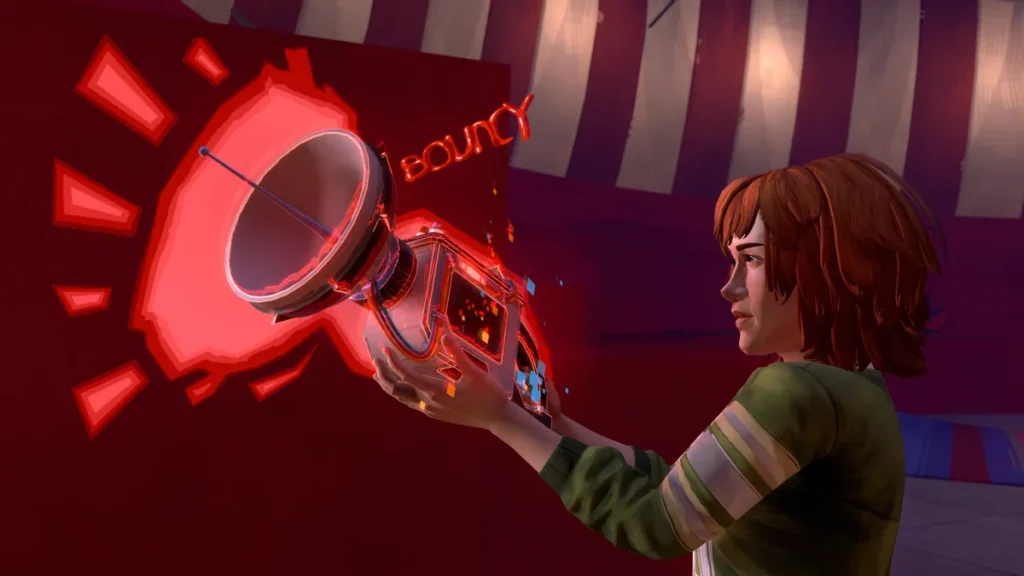
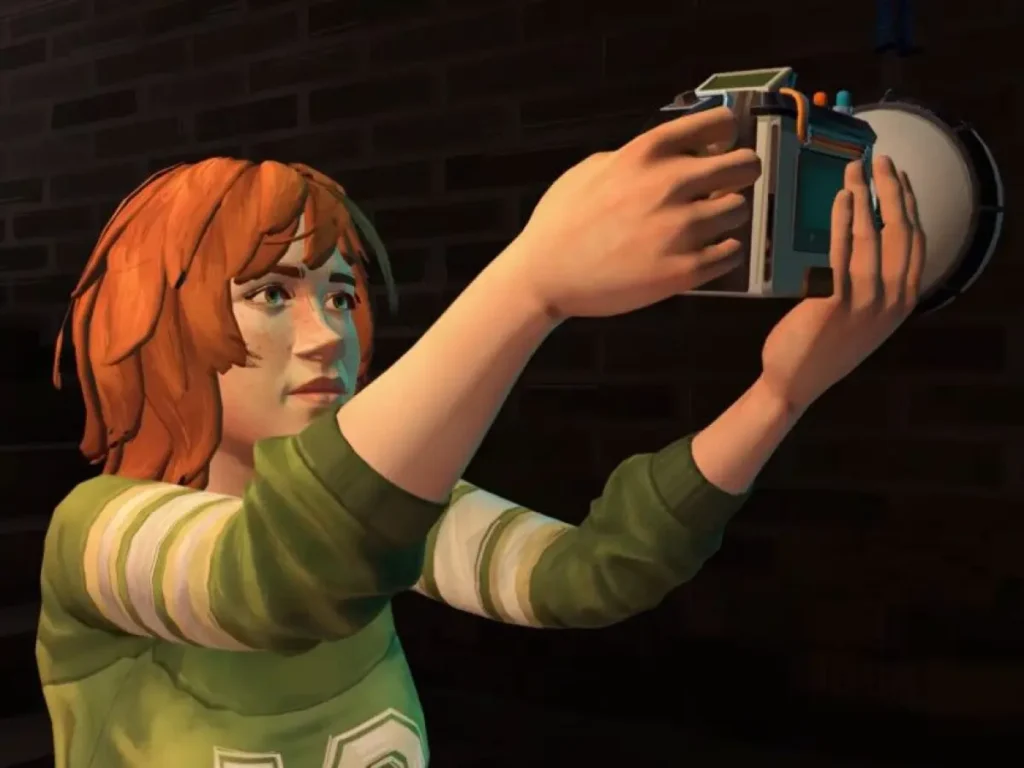
The Oscillator is Yerba Buena’s signature tool. It scans an object’s physics (either its state or its momentum and direction of travel) and then allows Barb to paste those properties onto any glitched object. In practical terms, you might copy the steady up-and-down movement of a crane or the back-and-forth driving of a car, and then apply that exact movement to a building to make it float or shift. The Steam demo’s tutorial illustrates this: for example, players copy a car’s left-right motion and paste it onto a housing block so it moves out of the way. Likewise, copying a trampoline’s high bounce onto a concrete slab can create a springy platform.
Importantly, these copied properties can stack: you could give one object both a bounce and intangibility, or other combined effects. Every use of the Oscillator is visible on the device’s display, so players always know what they’ve captured. Hands-on previews highlight how satisfying it is to experiment: moving multiple objects, building makeshift bridges, and “warping reality” in playful ways.

Why Yerba Buena is being compared to Portal-style games
The first-person perspective and physics-based puzzles naturally draw comparisons to Valve’s Portal series. In fact, one previewist admitted, “I’m a huge Portal fan” and noted that the Oscillator’s tutorial explicitly evokes the Portal training chambers. Early levels present enclosed rooms (“chambers”) designed to teach the device’s use, similar to Portal’s style. However, reviewers emphasize that Yerba Buena isn’t just a Portal clone.
The core copy-and-paste mechanic is quite different (Portal’s gun creates linked portals, whereas Yerba Buena’s gun reassigns physics properties). One preview summarized it well: while Yerba Buena will appeal to Portal fans with its reality-bending puzzles, it ultimately “stands up as its own unique title”. The tone is also very different: instead of sterile test chambers, Yerba Buena offers a whimsical 1970s city full of color and humor, making it feel distinct even if it scratches a similar creative itch.
Yerba Buena preview impressions: story, characters, and setting
In previews, Yerba Buena’s story comes across as quirky and meta. Players learn that Barb was just an ordinary NPC until a glitch thrust her into adventure. Her friend Russell is kidnapped by a biker named Bear, prompting a rescue mission. Throughout the city, Barb interacts with her circle of friends (Wanda, Jorge, etc.) and discovers that the whole game world – called Bay Angels – is glitching. Intriguingly, hidden developer diaries are scattered around, hinting that Barb herself might secretly be “Viper,” a member of the very gang holding Russell hostage.
Previews note Barb’s character is relatable and well-animated, and they highlight the unusual circumstance of an NPC realizing she can rewrite her story. The setting enhances this vibe: the entire environment feels alive and “exceptionally meta,” with NPCs aware of being in a video game. Overall, first impressions praise the narrative setup and characters as charmingly offbeat – one preview even teases whether “Barb will ever save her friend” or remain a mere NPC in someone else’s game.
Yerba Buena 1970s San Francisco setting and world design details
Yerba Buena’s world is explicitly a stylized version of 1970s San Francisco. The developers have filled the city with retro-futuristic details: neon signs, period architecture, and protest posters referencing the era’s tech booms. Previews emphasize the vibrant art style – jewel-toned color palettes, lively characters, and a surreal cartoonish aesthetic. One preview described the city as both “groovy” and strangely meta, noting that exploring it feels rewarding. The layout is fairly linear but features alternate paths and hidden spots, so players can roam local landmarks (like a preserved Yerba Buena Gardens area and warehouse breweries) at will.
Puzzles often integrate with the environment: for instance, the Steam demo includes a Brewery level and even a psychedelic carnival/Fairground level, the latter granting Barb new oscillator powers when entered. The whole world is painted as a game – even the signage and sound design reflect a playful, almost dreamlike version of 1970s culture. (No official soundtrack credits have been released yet, and previews have not commented on the music beyond noting upbeat, era-appropriate tunes in trailers.)

Yerba Buena demo gameplay features and first impressions
Focus Entertainment has released a free PC demo on Steam (April 16, 2026) covering the game’s opening stages. This demo includes the Oscillator tutorial plus the first two levels (the Brewery and Amusement Park areas). It introduces the colorful cast of characters and lets players experiment with the core mechanics (copying object movements, making platforms, etc.) in a more open city segment. Previews based on this demo are positive: they highlight the cleverness of the puzzles and the joy of wandering the vibrant city.
One writer noted that even in an early build, “manipulating all sorts of different things – cars, bus stops, signs, even entire floors of buildings – felt unique and clever”. The demo’s pacing is brisk, combining puzzle segments with story moments (like rescuing Russell), and introduces power-ups (for example, gaining the ability to use smoke as a property at a carnival level). Overall first impressions say the demo “over-delivered” on what it promised: inventive puzzles, a lively art style, and a funky 1970s vibe.
Yerba Buena release date, platforms, and price details
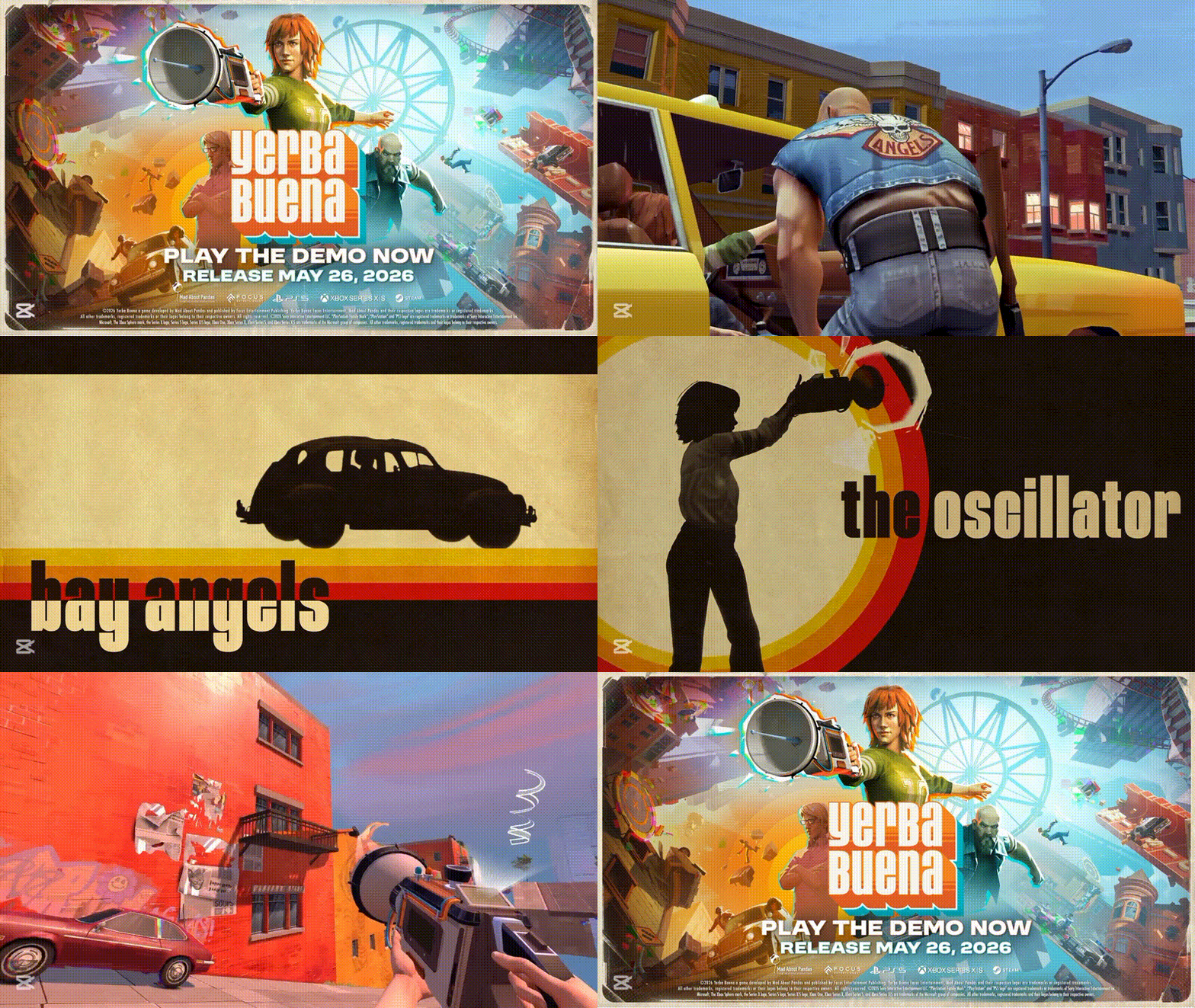
Yerba Buena is scheduled to launch on May 26, 2026 for PlayStation 5, Xbox Series X|S, and PC. It is being released by Focus Entertainment (publisher) and Mad About Pandas (developer). The game’s price is listed at about $24.99 USD, with a 10% off pre-order discount ($22.49) on many platforms. It will be available digitally on Steam (PC), the PlayStation Store, and Xbox Store. Notably, all progress from the free demo will carry over to the final game. Reviewers mention that the marketing has emphasized the 10% discount and cross-platform availability, encouraging players to wishlist or pre-order on their platform of choice.
Yerba Buena puzzle mechanics and environmental interactions guide
Yerba Buena’s puzzles rely on creatively changing the environment. Barb can copy a physical behavior from one object and apply it to another – for instance, copying a moving car’s direction to make a building slide, or copying a trampoline’s bounce to make a rigid floor springy. The demo’s examples include copying a car’s left-right motion to a concrete block so it crosses a street, or capturing a jet of escaping gas and pasting it onto a wall to make the wall disappear. Properties stack, meaning you could give a single object multiple behaviors.
Later in the game, Barb even gains the power to copy smoke’s properties – turning walls intangible, as shown in preview play sessions. Importantly, any “glitchy” object (highlighted with flickering graphics) is a candidate for manipulation; this means many puzzles have multiple solutions. One preview noted that since most objects in the world can be manipulated, players are free to approach each puzzle in creative ways – for example, using street lamps, scaffolding, or trampling to build makeshift bridges. In short, the environment behaves like a giant physics sandbox: understanding and experimenting with each object’s role in a puzzle is key to progression.

Pros and cons from Yerba Buena early preview reviews
Early previews are generally positive about Yerba Buena’s originality and style. Reviewers praise the art direction (colorful, vibrant, retro-inspired) and the sheer fun of the copy-paste puzzles. For example, Kyusai’s preview says the game is “looking like one of the best puzzle-platformers of the year” and highlights how much fun it is to experiment with the Oscillator. The writing and characters have been described as charming, with Barb’s friends adding heart to the adventure.
On the negative side, some previews note minor polish issues. In one hands-on, the voice acting and character animations were described as “a little iffy” – likely artifacts of an early build – though the puzzles themselves remained enjoyable. No previews have reported major performance problems; the consensus is that any drawbacks (such as occasional clunky dialogue) feel like normal early-preview quirks, not deal-breakers. In summary, pros include inventive mechanics and charismatic style, while cons so far are limited to minor presentation glitches (voice/animation) and the usual unknowns until the final release.
Yerba Buena storyline explained: Barb, biker gangs, and conspiracy
Yerba Buena’s narrative centers on Barb uncovering a conspiracy in a “game-about-games” world. As we’ve seen, Barb starts off as a background NPC but soon becomes thrust into the spotlight. Her journey involves a dangerous biker gang led by a man named Bear; his gang (the Bay Angels) actually kidnapped Barb’s taxi driver friend Russell during a street protest. Barb then acquires the Oscillator (accidentally dropped by the gang) and uses it to chase them down. As the plot unfolds, Barb and her allies discover that the city’s decay is caused by a mysterious glitch spreading through the game world.
Sneak-peek information suggests that the bikers have “superpowers” (glitch-enhanced abilities) and that behind the scenes, developers’ notes hint Barb might secretly be “Viper,” a member of that gang, or perhaps simply an NPC written to fill that role. In essence, Yerba Buena mixes a detective-style rescue mission with meta commentary: Barb must learn the truth about who created her world and stop the glitch’s source. By the end of the demo, Bear is defeated in one timeline, the game resets, and Barb can try a different approach – hinting at time-loop puzzle elements. All clues point to a core quest: “track down the dangerous biker gang and uncover the truth behind the glitch”.
Is Yerba Buena worth playing based on preview hands-on
So far, impressions suggest yes, especially for fans of innovative puzzle-platformers. The unique Oscillator mechanic and the 1970s SF setting give it a fresh feel. Previews frequently note that the game’s core concept delivers on its promise: one writer said the demo “over-delivered” and praised how “satisfying” it was to solve puzzles with the Oscillator. Graphics and style also stand out; reviewers consistently call the visuals “vibrant,” “gorgeous,” and full of character.
Importantly, multiple hands-on pieces emphasize that the puzzles, while initially accessible, seem poised to become very challenging and creative later on – a good sign for longevity. The only caution from previews is that narrative and audio polish may not be flawless at launch, so players primarily seeking story-acting depth should wait for final reviews. Overall, if you enjoy Portal-like logic puzzles with a quirky twist, the consensus is that Yerba Buena is worth watching (and trying the demo).
Yerba Buena graphics, art style, and soundtrack analysis
Visually, Yerba Buena is consistently described as lively and stylized. Reviewers highlight the bright color palette and charming character designs – one preview calls the art style “gorgeous” and notes jewel-toned color schemes throughout the city. The 1970s theme comes through in retro graphics (big blocky TVs, vintage cars) blended with surreal elements (floating objects, glitch effects). The tone is often compared to a cartoon or comic book feel rather than realistic 3D.
Detail-wise, the city environments appear well-crafted: posters, vehicles, and even the protesters around Yerba Buena Gardens lend authenticity to the setting. Previews point out that this visual style amplifies the game’s meta humor (NPCs crack jokes about being in a video game), so the art and writing complement each other. Unfortunately, no official information on the soundtrack or composer has been released yet, and previews have said little about music beyond noting upbeat, period-appropriate tunes in trailers. As of now, we only know that the game uses its visuals and sound effects to enhance the arcade-like puzzle atmosphere.
How Yerba Buena compares to Portal and other puzzle platformers
Yerba Buena sits in the same genre as games like Portal, The Talos Principle, and Quantum Conundrum, but with its own twist. Like Portal, it’s first-person with a device-driven puzzle mechanic; however, instead of opening portals, it copies physics traits. Reviewers note that this leads to very different puzzle design. Portal’s challenges are about spatial navigation through linked portals, whereas Yerba Buena’s are about creative physics combinations. For instance, copying momentum can replace the need for building separate bridges.
Thematically, Portal is a sci-fi lab with a dry humor AI, whereas Yerba Buena is a funky urban game-world with a narrative about games and glitches. Other puzzle platformers (like Baba Is You with its rules-changing) have been referenced: one preview likened Yerba Buena’s style to “Thomas Was Alone meets Portal,” highlighting its indie sensibilities and cleverness. But most comparisons circle back to Portal: many say Yerba Buena is “Portal-like” in spirit, though its setting and mechanics are sufficiently novel that it isn’t just re-treading Valve’s formula. In summary, if Portal is the benchmark for innovative FPS puzzles, Yerba Buena offers an original spin on that tradition with an environment and tone all its own.
Everything revealed in the Yerba Buena demo and gameplay trailer
Between the free demo and the official gameplay overview trailer, most major features have been shown. In the trailer and press releases, we see Barb obtaining the Oscillator, meeting allies, and beginning her quest to save San Francisco. The “copy and paste” concept is demonstrated (copying a car’s movement, making trampolines bounce, turning walls to air). We also see glimpses of Barb confronting a gang member (Bear) and navigating surreal locations like the carnival/fair level. The demo (Steam) fills in details: it includes the first two levels (Brewery and Amusement Park) plus tutorial, and shows that players will encounter puzzles with more than one solution. We learn that any progress carries over to the full game, encouraging players to explore.
In playing the demo, many puzzles involve levers of difficulty: the initial puzzles are simple introductions, but by the end Barb faces multi-step challenges (e.g. use a dumpster to reach a roof then copy something to open the next door). Review previews also revealed that the demo contains hidden collectables (developer diaries) that hint at the meta-story. All in all, the demo and trailer fully outline the gameplay loop and story setup: Barb’s Oscillator powers, the glitching city, the biker gang threat, and a promise of escalating puzzle complexity.
Frequently Asked Questions (FAQs)
- What kind of game is Yerba Buena?
Yerba Buena is a first-person puzzle-platformer where you use an Oscillator device to copy and transfer object properties. It combines exploration and physics puzzles in a stylized 1970s San Francisco setting. - Who is the protagonist and what’s the story?
You play as Barb, an NPC who becomes the hero of her own story. The plot involves rescuing her friend Russell from a biker gang called the Bay Angels, stopping a mysterious glitch corrupting the city, and discovering meta-narrative twists about her world. - When and where can I play Yerba Buena?
The game releases on May 26, 2026 for PlayStation 5, Xbox Series X/S, and PC (Steam). A free demo is already available on Steam, and progress from the demo carries into the final game. - What platforms is it on?
Yerba Buena is confirmed for PS5, Xbox Series X/S, and PC. The PC version is on Steam. There’s no word yet on a Nintendo Switch version or older consoles. - How does the Oscillator work?
The Oscillator “copies” physics traits from one object (like movement, weight, or bounce) and pastes them onto another. For example, you might copy a car’s left-right motion and apply it to a building, or make a steel wall behave like a trampoline. It can even capture properties like gas or smoke to make objects intangible. It’s essentially a copy-and-paste physics tool. - Why is it compared to Portal?
Both Yerba Buena and Portal are first-person puzzle games that use a handheld device to change the environment. Previews say Yerba Buena will appeal to Portal fans with its mind-bending puzzles. However, instead of portals, the Oscillator changes object physics. Most agree it pays homage to Portal but has its own unique mechanics and story. - Is there a demo I can try?
Yes – Focus Entertainment released a free Steam demo (in April 2026) covering the game’s first levels. It includes the Oscillator tutorial plus two levels (Brewery and Amusement Park) and lets you experiment with Barb’s abilities. Any progress you make in the demo will carry over to the full game. - Who is making Yerba Buena?
Yerba Buena is developed by Mad About Pandas and published by Focus Entertainment. It is not developed by Valve or the Portal team. Mad About Pandas is an indie studio focusing on creative gameplay. - What is the price?
The standard price is $24.99 USD. Many retailers offer a 10% pre-order discount (about $22.49) up until release. (Prices may vary slightly by region.) - Where can I follow news or pre-order?
You can pre-order or wishlist Yerba Buena on Steam, PlayStation Store, and Xbox Store. Focus Entertainment also has a community hub (Focus Together) and official Discord for updates. Adding it to your wishlist will notify you on launch day.

Conclusion
Yerba Buena emerges as a promising new puzzle-platformer, combining fresh mechanics with a distinctive style. From official sources and early previews, we see a game that takes the Portal-like concept of reality-bending puzzles and spins it into a groovy, 1970s San Francisco adventure. The Oscillator copy-paste mechanic and meta-game narrative have impressed previews, and the demo suggests deep, creative puzzles ahead. While the full experience won’t be clear until release, the game’s vibrant visuals, engaging protagonist, and novel physics-based puzzles indicate it could be “one to watch” for fans of the genre. In short, if you enjoy reality-warping puzzle games, Yerba Buena looks like it could be well worth playing when it launches.
Sources and Citations
- Focus Entertainment – Yerba Buena Game Page (developer, release date, setting)
https://www.focus-entmt.com/en/games/yerba-buena - Focus Entertainment – Yerba Buena News Releases (overview, oscillator, demo announcement)
https://www.focus-entmt.com/en/news - Gematsu – “Yerba Buena demo now available”
https://www.gematsu.com/ - Foro3D – “Yerba Buena, a First-Person Puzzle Game Set in the 1970s”
https://foro3d.com/ - Merlin’in Kazanı – “First-person Puzzle Game Yerba Buena Introduced”
https://www.merlininkazani.com/ - Kyusai – “Yerba Buena preview: Genre-hopping, groovy goodness”
https://www.kyusai.com/ - DayOne (XboxEra/PlayDay) – Yerba Buena Preview (hands-on impressions)
https://xboxera.com/ - Steam – Yerba Buena Demo Page (features, description)
https://store.steampowered.com/ - Xbox Store – Yerba Buena Listing (price, pre-order, release date)
https://www.xbox.com/ - Focus Entertainment – Yerba Buena: Core Mechanics and Demo Unveiled
https://www.focus-entmt.com/en/news
Recommended
- Riot Games Downsizing the 2XKO Development Team: February 2026 Layoffs, Official Update, and What’s Next
- Free Maya Character Rigging Toolset mGear 5.3: Download, Features, and Setup Guide
- Netflix Joins Blender: What Netflix Animation Studios Funding Means for Blender and the Community
- Crimson Desert Female Character Creator Mod Lets Players Move Beyond Premade Kliff
- Prince of Persia: The Lost Crown Team Reportedly Freed From Ubisoft “Support Studio Prison” and Pitching New Games Again
- Tomodachi Life Players Can’t Believe The Game Has Basically No Filter (Living the Dream Demo Has No Swear Filter)
- Overwatch Reveals Its Newest Hero Look as Fans Guess Hero 51’s Identity
- Kingdom Come: Deliverance 2 Translator Says He Was Fired as Warhorse Plans “AI for All Translations Going Forward”
- The Future of 3D Modeling: Insights on AI Advancements
- The Best Bearded Video Game Characters: Iconic Facial Hair and Their Impact on Gaming