











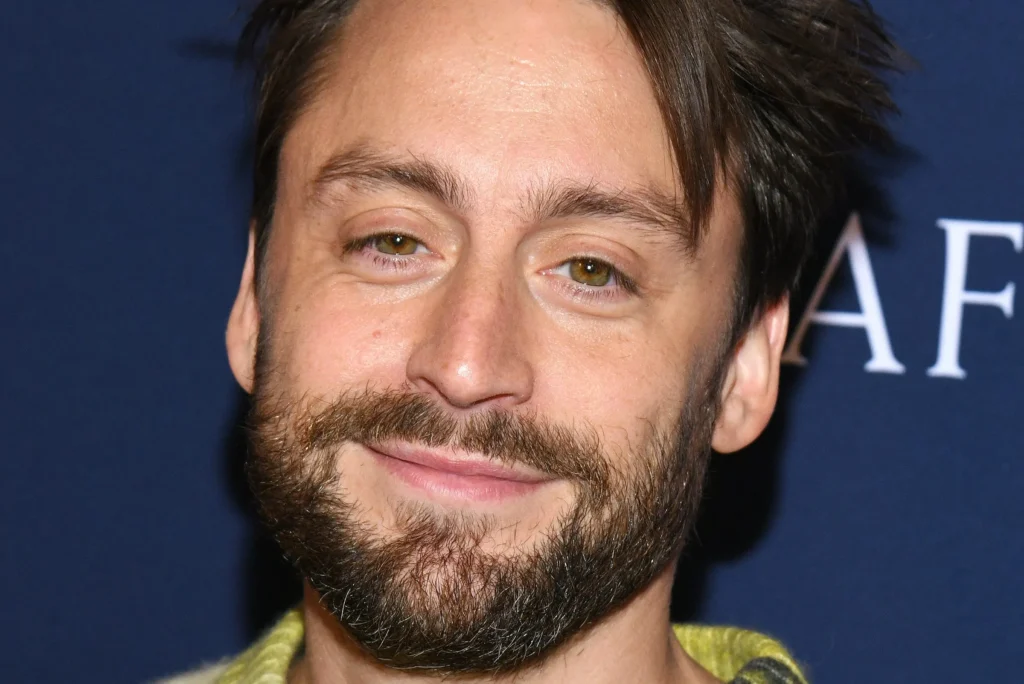
New promotional material for The Hunger Games: Sunrise on the Reaping expands the first concrete look at its re-cast legacy characters—most notably Kieran Culkin as a younger Caesar Flickerman—while reinforcing the film’s core promise: a return to Panem at its most brutal, during the 50th Hunger Games (the Second Quarter Quell), where the rules are designed to maximise spectacle and casualties.
Adapted from Sunrise on the Reaping by Suzanne Collins, the story begins on the morning of the District 12 reaping for the Fiftieth Hunger Games—set 24 years before the events of the original trilogy. The book’s publisher, Scholastic, has also confirmed the film adaptation’s global studio partner Lionsgate will release the movie on November 20, 2026.
Footage context and what has been revealed so far
The Hunger Games: Sunrise on the Reaping new footage — what the clip shows
The “new footage” circulating this week is not limited to a standard trailer drop. Coverage indicates that Lionsgate published an “official lookback”/franchise recap-style featurette on its official YouTube presence, combining clips from earlier franchise entries with brief new glimpses from The Hunger Games: Sunrise on the Reaping—including first looks at recast roles.
In the segment highlighted by outlets, the recap featurette includes a quick shot of Maya Hawke as Wiress and a separate glimpse of Kieran Culkin as Caesar Flickerman. Reporting also frames this as deliberate marketing: juxtaposing “then vs now” footage—original actors in their established roles against the new cast—so audiences can instantly map the prequel’s character continuity.
The clip arrives amid a wider, staged promotional campaign that has included at least two major trailer beats: a teaser released November 20, 2025, and a full-length trailer released April 13, 2026.
Kieran Culkin as Caesar Flickerman — first look and character details
The first on-film look at Kieran Culkin in the Caesar Flickerman role is being framed explicitly as a “younger Caesar”—a continuity move that matters because Flickerman functions as one of the Capitol’s most recognisable “faces” of the Games: the presenter who sells cruelty as entertainment.
Historically, the character’s role has centred on interviewing tributes and introducing them to the Capitol audience, helping manufacture public narratives that can directly influence sponsor attention (and, by extension, survival odds). In the prequel context, that same function becomes even more charged, because The Hunger Games: Sunrise on the Reaping is explicitly positioned around propaganda and narrative control—themes Scholastic quoted Suzanne Collins emphasising when announcing the book.
On what the footage actually shows: coverage describes this as a brief glimpse within a recap featurette rather than an extended scene, offering confirmation of costuming and casting without fully revealing performance style.

Legacy character recasts and what they imply
Younger Caesar Flickerman vs Stanley Tucci — how the portrayals compare
Stanley Tucci’s version of Caesar Flickerman in the original films was explicitly characterised in early franchise coverage as a “smooth-talking interviewer” and “pivotal supporting player,” responsible for introducing tributes to the Capitol audience—an on-camera role designed to look celebratory even when it is morally grotesque.
That legacy sets a high bar for any younger iteration. The new footage does not yet provide enough uninterrupted screen time to make definitive performance comparisons, but it establishes two important points for story continuity:
First, the host role is firmly in place by the era of the 50th Hunger Games, reinforcing that “broadcast pageantry” is already a matured institution decades before the original trilogy.
Second, the marketing approach—placing the new faces alongside archival footage—signals the franchise’s stated preference for “character evolution rather than impersonation” across recasts (a philosophy widely reported around the production’s approach to legacy roles).
In short: the comparison is less about duplicating Stanley Tucci’s exact cadence and more about depicting how the same Capitol-facing job shaped a younger person who later becomes the familiar presenter seen in the original timeline.
Elle Fanning as Effie Trinket — first glimpse and what it means for the prequel
The Lionsgate lookback/featurette footage includes the first clear promotional look at Elle Fanning as Effie Trinket, presenting her as a younger Capitol figure within the District 12 Games machine. This matters because it confirms that Effie’s association with District 12 extends backward into the Haymitch era, repositioning her on-screen not only as “Katniss and Peeta’s escort” in the original films but also as part of the prequel’s machinery around styling, image-making, and the ritualised performance that surrounds the Games.
Visually, coverage highlights the franchise’s continuation of Capitol fashion maximalism in the prequel footage, aligning with the earlier films’ approach to using costume as a political signal: the Capitol’s excess is a core storytelling tool, not just decoration.
Industry reporting has also documented how strongly fan expectation shaped the casting conversation around Effie, with TheWrap noting Elle Fanning discussing the intensity of online fan-casting pressure in public interview coverage.
Maya Hawke as Wiress — why she matters to Panem’s timeline
Footage and trailer coverage places Maya Hawke’s Wiress within a critical continuity corridor between the prequel era and the later rebellion timeline. Reporting explicitly describes her as the victor of the 49th Hunger Games—meaning she sits adjacent to the Second Quarter Quell chronologically and has immediate relevance to how victors are used and reused by the Capitol.
In the April 2026 trailer coverage, Wiress is also given a thematic “thesis line” about the arena as a machine that can be broken—language that directly supports the prequel’s emphasis on systems, propaganda, and engineered compliance.
For franchise lore, this is a notable reframing: Wiress is not merely a tragic later-game participant (as remembered from the core timeline), but a figure positioned close to Haymitch’s experience of the Capitol’s “industrial” violence during the 50th Games.

Ralph Fiennes as President Snow — what the footage reveals about Snow’s era
The April 2026 trailer explicitly showcases Ralph Fiennes as Coriolanus Snow addressing Haymitch directly, reinforcing that Snow’s governance is already defined by personal intimidation, surveillance, and a blunt message: tributes are isolated, disposable, and expected to perform for power.
This “Snow era” is also positioned as a midpoint between the Donald Sutherland portrayal in the original films and the younger Snow depiction in The Hunger Games: The Ballad of Songbirds & Snakes. For continuity, that matters: it implies the film is not merely revisiting the Games as a concept, but mapping the maturation of the Capitol’s political theatre under a now fully consolidated President Snow.
Trailer takeaways and franchise “Easter eggs”
Sunrise on the Reaping trailer breakdown — biggest moments and reveals
The April 2026 trailer described by Entertainment Weekly foregrounds Haymitch’s selection at the District 12 reaping, then pivots to the larger structural twist: this is the Second Quarter Quell, so there are double the number of tributes competing.
Several trailer moments are repeatedly emphasised across coverage:
Snow directly addresses Haymitch with a threat-laced warning, underlining that the Games are political theatre first and “competition” second.
The trailer explicitly introduces multiple legacy characters in younger form (Effie, Caesar, Wiress, Beetee), positioning the prequel as an ensemble narrative rather than a single-thread origin story.
Dialogue attributed to Beetee and Wiress indicates a coordinated plan “between tributes and victors” to disrupt or stop the Games—suggesting the film will explore rebellion logic earlier than the original trilogy timeline typically implies.
Separately, Business Insider reports the trailer includes glimpses of a chariot crash during the tribute parade, a live TV interview sequence for Haymitch before the arena, and a private conversation between Haymitch and Snow—set pieces that typically anchor the Hunger Games cinematic rhythm (parade → interviews → arena) but appear escalated here by Quarter Quell scale.
Taken together, the trailer framing suggests a film structure that leans heavily into Capitol ritual, media performance, and the machinery of violence—matching the book’s officially stated preoccupation with controlled narratives and implicit submission.
Sunrise on the Reaping Easter eggs — hidden references to the original films
The most verifiable “Easter egg” mechanism in the current marketing is structural: Lionsgate’s lookback/recap video explicitly uses footage from older films (including flashes of The Hunger Games: Mockingjay – Part 2) and then transitions into new images of the younger cast, creating a “mirror” effect between timelines. This is an unusually direct continuity pointer, functioning as a built-in reference map for viewers.
A second connective reference appears in the film’s iconography. Business Insider notes a shot in which Lenore Dove gives Haymitch a striker marked by a bird and a snake—imagery tied to the book cover symbolism and subsequently used as film branding (including a previously released teaser clip/official logo reveal).
Trailer and teaser coverage also highlights a recurring voiceover line—reported as Woody Harrelson’s Haymitch voice in some write-ups—ending both a teaser and a teaser clip with the suggestion that “these games are going to be different.” Where this voice originates in the finished film remains unconfirmed in publicly accessible official materials, but its repeated use in marketing functions as a deliberate bridge between old and new versions of Haymitch.
Story and stakes
Haymitch Abernathy prequel story — what happens in Sunrise on the Reaping
The official synopsis published by Scholastic frames the story with unusual specificity: it begins on the morning of the reaping for the Fiftieth Hunger Games (Second Quarter Quell), where fear spreads because the Quarter Quell twist requires twice as many tributes to be taken.
The synopsis positions Haymitch’s central emotional conflict not as abstract heroism but personal rupture: he is separated from his family and “the girl he loves,” then sent to the Capitol with three other District 12 tributes. As the Games begin, he interprets the situation as designed for his failure—yet the synopsis also emphasises his impulse to fight in a way that “reverberate[s] far beyond the deadly arena,” a formulation that aligns with the franchise’s long-running theme: survival acts can become political symbols even when the individual never intended them to.
Crucially, Suzanne Collins’s own stated thematic intent (as quoted by Scholastic) foregrounds “implicit submission,” propaganda, and the power of controlling narratives—language that clarifies why this particular Hunger Games era is being revisited: it is an origin point for how the Capitol perfects televised domination.
Second Quarter Quell explained — what makes the 50th Hunger Games different
Within Panem’s worldbuilding, a Quarter Quell is a special edition of the Hunger Games staged every 25 years, each time with a “twist” engineered to dramatise the Capitol’s power. For the 50th Games, the twist is brutally straightforward: each district must send double the usual number of tributes—creating 48 contestants instead of 24.
From a story mechanics perspective, the Second Quarter Quell changes the narrative in three predictable ways, all supported by the way the film is being marketed:
It makes the arena instantly more chaotic, increasing the number of potential alliances and betrayals.
It increases the “broadcast spectacle” burden: more tributes means more interviews, more styling, more propaganda work—expanding the roles of Capitol presenters, escorts, and production personnel.
It structurally supports an ensemble cast and a bigger bench of returning “legacy” names (Plutarch, Beetee, Wiress, Mags), which multiple outlets highlight in cast coverage.
What Sunrise on the Reaping adds to Hunger Games lore — new details from the prequel
At an official level, Scholastic positions the novel (and by extension its film adaptation) as a return to Panem that deepens the franchise’s core theme: how power uses narrative control to govern “the many” through the few. That framing alone shifts the lore emphasis from “Games as arena event” to “Games as media system.”
On-screen, the trailer’s most lore-relevant thread is its suggestion that anti-Capitol disruption logic predates the original trilogy: the preview includes dialogue about stopping the Games and breaking the arena-machine itself. This effectively reframes “rebellion” as something that emerges in fragments and collaborations across years, rather than igniting suddenly in Katniss’s era.
Separately, book-focused reporting emphasises that Sunrise on the Reaping contains multiple connective tissues to the mainline trilogy—such as new information about District 12 family lines and the symbolic objects that later become rebellion icons. While the film marketing has not yet fully showcased these details, the decision to foreground (in trailers) Capitol interviews, propaganda-heavy ritual, and legacy character networks signals that the adaptation intends to carry at least part of this expanded lore into the cinematic canon.

Cast, filmmakers, and production expectations
Sunrise on the Reaping cast list — all confirmed actors and roles
As of April 15, 2026, public reporting describes a large, Lionsgate-announced cast built around both new District 12 characters and younger iterations of familiar Capitol figures. The following roles have been reported as part of the confirmed ensemble (names grouped for clarity, with spellings reflecting published coverage).
Core District 12 and central story figures: Joseph Zada as Haymitch Abernathy; Whitney Peak as Lenore Dove Baird; McKenna Grace as Maysilee Donner; Ben Wang as Wyatt Callow; Molly McCann as Louella McCoy; Iona Bell as Lou Lou.
Capitol-facing figures and Games presentation apparatus: Ralph Fiennes as Coriolanus Snow; Elle Fanning as Effie Trinket; Kieran Culkin as Caesar Flickerman; Jesse Plemons as Plutarch Heavensbee; Glenn Close as Drusilla Sickle; Billy Porter as Magno Stift; plus prep/team additions reported as Lionsgate announcements: Iris Apatow as Proserpina Trinket and Edvin Ryding as Vitus.
Legacy “victor network” characters positioned in the prequel era: Kelvin Harrison Jr. as Beetee Latier; Maya Hawke as Wiress; Lili Taylor as Mags Flanagan.
Additional announced tributes and supporting characters listed in major reporting: Jhaleil Swaby as Panache; Percy Daggs IV as Ampert; Laura Marcus as Silka; Rada Rae as Wellie; Sky Frances as Maritte; Tatyana Muzondo as Ringina; Salimou Thiam as Clayton; John Doeble as Buck; Alina Reid as Kerna; Kaine Buffonge as Hull; Kara Tointon as Willamae; Smylie Bradwell as Sid; Jeffrey Hallman as Clerk Carmine; Serafin Mishiev as Woodbine.
Later-announced additions reported by TheWrap include Jax Guerrero as Tibby and Sandra Förster as Hersilia.
Returning original-era leads: Multiple outlets report that Jennifer Lawrence and Josh Hutcherson are expected to reprise Katniss Everdeen and Peeta Mellark, respectively, linked to an epilogue/flashforward component of the source novel.
Francis Lawrence directing Sunrise on the Reaping — what to expect from the film style
Francis Lawrence’s return is one of the most stability-providing datapoints for predicting how the film will look and move. Multiple outlets note that Lawrence directed every Hunger Games film from The Hunger Games: Catching Fire onward (including the two Mockingjay films and the 2023 prequel), and he is again directing this sixth installment.
From a craft perspective, this continuity strongly suggests:
A consistent visual language for Panem’s contrasts (District scarcity vs Capitol excess), because Lawrence’s entries have historically leaned into production design and colour-coded political symbolism.
An emphasis on ritual sequences (reapings, parades, interviews) as narrative engines rather than mere exposition—something the April 2026 trailer appears to prioritise.
A film rhythm that treats the arena as both action set-piece and ideological device—a “machine” that characters explicitly discuss in trailer dialogue.
The screenplay is reported as adapted by Billy Ray, who is repeatedly described in coverage as returning after work on the 2012 film’s screenplay.

Release timing and where the official footage lives
Sunrise on the Reaping release date — when the movie hits theaters
The release date is consistently reported as November 20, 2026.
This date is not merely rumour: Scholastic’s official press release announcing the book cover and publication explicitly states that the feature film adaptation will be released by Lionsgate on November 20, 2026.
Promotional materials and coverage also repeatedly frame the release as a major theatrical event (including IMAX positioning in official trailer metadata on Lionsgate’s YouTube presence).
Where to watch the Sunrise on the Reaping trailer and official footage
Current reporting identifies three main “official footage” channels:
Lionsgate’s official YouTube presence, which hosted both the recap/lookback video containing the first glimpse of the younger legacy cast and the film’s trailers.
Major entertainment outlets that embed the official trailer video directly in their coverage (for example, Entertainment Weekly’s trailer article, which includes the trailer on-page).
Official franchise social promotion (frequently referenced as a rollout mechanism for cast reveals and production updates), described in reporting as part of Lionsgate’s broader marketing strategy for The Hunger Games: Sunrise on the Reaping.

Frequently Asked Questions (FAQs)
- What is the “new footage” of Sunrise on the Reaping, exactly?
Reporting describes it as an official Lionsgate “lookback”/franchise recap-style video that includes brief new glimpses of the upcoming film’s recast characters, including a first look at the younger Caesar Flickerman. - Is Kieran Culkin confirmed to play a younger Caesar Flickerman?
Yes. Multiple outlets describing the recap featurette and broader cast list coverage state that Kieran Culkin plays a younger Caesar Flickerman in the film. - What does the April 2026 trailer show about the story’s main conflict?
Coverage highlights Haymitch’s reaping, direct intimidation from President Snow, the doubled-tribute Quarter Quell twist, and dialogue indicating that tributes/victors may attempt to disrupt the Games “machine” itself. - What makes the Second Quarter Quell different from a standard Hunger Games year?
It is a Quarter Quell twist year (every 25 years), and for the 50th Games the twist is double the number of tributes: two boys and two girls from each district, rather than one of each. - When was the book Sunrise on the Reaping published?
Scholastic states the novel was published March 18, 2025. - When does The Hunger Games: Sunrise on the Reaping release in cinemas?
The publicly stated theatrical release date is November 20, 2026. - Who is directing and writing the film?
Reporting identifies Francis Lawrence as director and Billy Ray as the screenwriter adapting the novel. - Are Jennifer Lawrence and Josh Hutcherson really returning as Katniss and Peeta?
Multiple reports indicate they are expected to reprise the roles, with coverage linking the return to the source novel’s epilogue/flashforward framing. - Where is the most reliable place to watch official trailers and clips?
Coverage consistently points back to Lionsgate’s official YouTube presence and franchise-linked promotional channels as the primary source of official trailers and recap footage. - What themes are officially associated with Sunrise on the Reaping?
Scholastic quotes Suzanne Collins citing “implicit submission,” propaganda, and narrative control as core inspirations for the story.

Conclusion
The newest promotional material around The Hunger Games: Sunrise on the Reaping serves two functions at once: it confirms key recasts—especially Kieran Culkin as a younger Caesar Flickerman—and it clarifies how the prequel plans to “feel” like Hunger Games again, by leaning hard into reaping ritual, Capitol broadcast spectacle, and an arena framed explicitly as an engineered killing system.
Anchored in Sunrise on the Reaping and its officially stated thematic focus on propaganda and submission, the film’s marketing positions the Second Quarter Quell as both a narrative expansion (48 tributes, massive ensemble) and a lore cornerstone that deepens the franchise’s central question: who controls the story, and what happens when the story breaks?
Sources and citation
- Scholastic — official press release / book announcement (Sunrise on the Reaping: cover, synopsis, publication + film date)
https://www.scholastic.com/press-room/scholastic-announces-suzanne-collins-new-hunger-games-novel-sunrise-on-the-reaping.html - People — Lionsgate “official lookback” footage, synopsis, and cast confirmation
https://people.com - GamesRadar+ — first-look glimpse of Kieran Culkin as Caesar Flickerman
https://www.gamesradar.com - Entertainment Weekly — April 2026 trailer breakdown and dialogue analysis
https://ew.com - Business Insider — trailer timeline, cast list, and key moments overview
https://www.businessinsider.com - TheWrap — Lionsgate cast additions (Apatow, Ryding, Guerrero, Förster) and production notes
https://www.thewrap.com - Motion Pictures Association — first footage, ensemble cast, director/script confirmation
https://www.motionpictures.org - Teen Vogue — “everything we know” (teasers, production, casting timeline)
https://www.teenvogue.com - E! News — book Easter eggs and lore context analysis
https://www.eonline.com
Recommended
- How to Make Hair in Blender
- Stylized Water Shader in UE5: Complete Guide to Creating Real-Time Cartoon Water Effects
- What Is Film Grain? Understanding Its Role in Cinematic Aesthetics
- New Invincible Season 4 Trailer Teases the Debut of Ultimate Viltrumite Villain Thragg
- FBC: Firebreak just got its last ever major update (Open House), plus a permanent price drop and free Friend’s Pass
- Camera View Preservation in Blender: Why Use The View Keeper?
- How Do I Create a First-Person Camera in Blender?
- What is the clipping range in Blender cameras?
- Marathon Open Beta Announced: Everything We Know About the Server Slam Dates, How to Join, Rewards, and Launch Details
- Why Pixar Canceled a Female-Led Movie Similar to KPop Demon Hunters — The Untold Story of ‘Be Fri’