







What is the New PvE Mode Added to Halo Infinite?
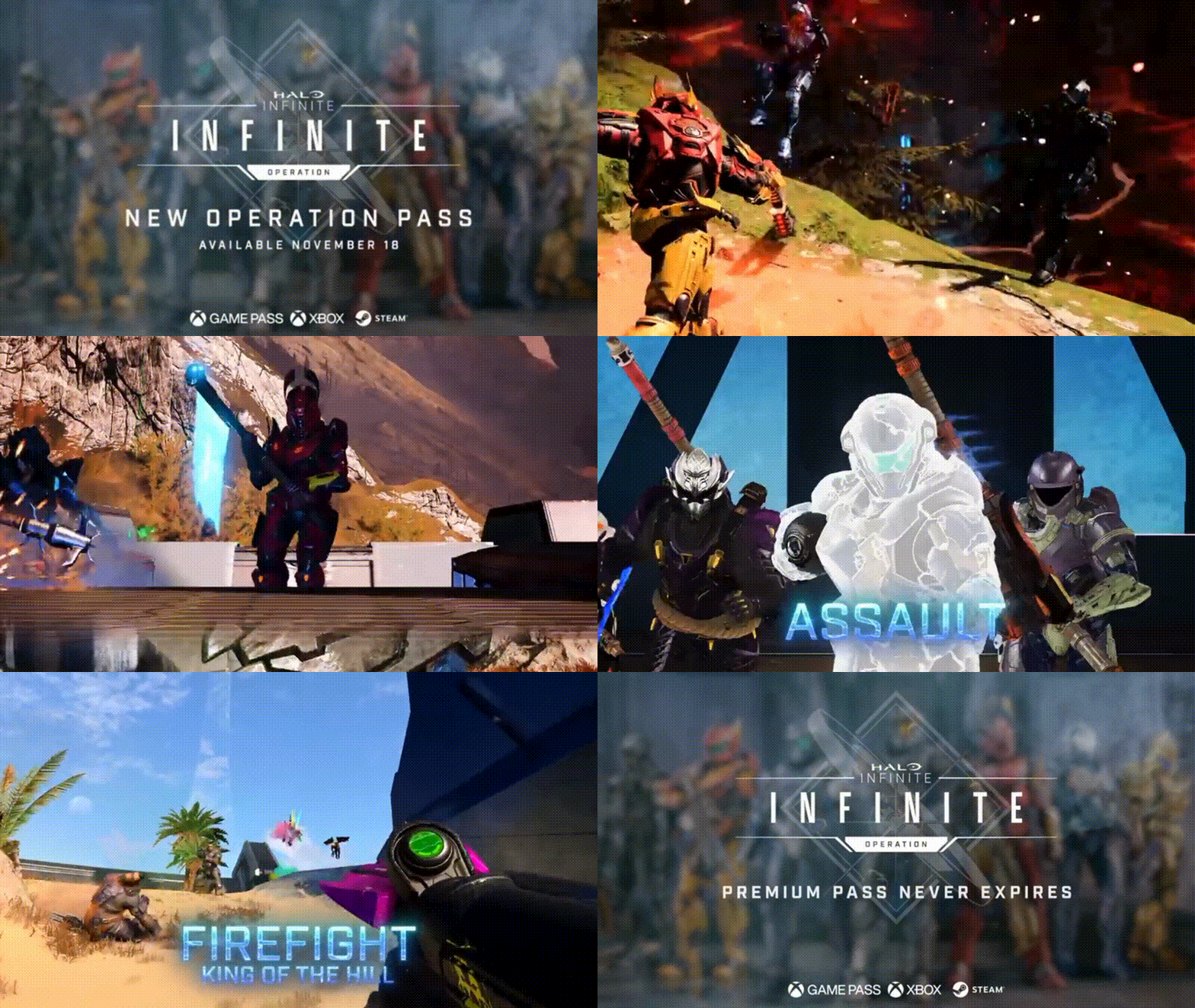
The newly introduced PvE mode in Halo Infinite, known as Firefight Gauntlet, represents one of the most significant gameplay expansions added to the game in its post-launch lifecycle. Designed as a high-intensity cooperative experience, this mode builds upon the legacy of earlier Firefight systems in the Halo franchise while introducing new mechanics, progression systems, and dynamic enemy encounters that fundamentally reshape how PvE content is experienced.
At its core, Firefight Gauntlet is a wave-based survival mode where squads of players face increasingly difficult enemy forces across structured arenas. However, unlike traditional Firefight modes seen in earlier entries such as Halo 3: ODST and Halo: Reach, this version introduces modular objectives, evolving battlefield conditions, and adaptive enemy AI that reacts to player behavior.
The surprise element of this update comes from the fact that Halo Infinite was previously believed to be transitioning away from major content expansions. Despite earlier statements suggesting the game had reached its final major update phase, the introduction of Firefight Gauntlet demonstrates continued investment in cooperative gameplay and community-driven replayability.
This PvE mode is designed for both casual squad play and high-skill competitive PvE challenges, offering scalable difficulty and a progression system that rewards coordination, survival efficiency, and tactical adaptability.
Halo Infinite Firefight Gauntlet Explained: Gameplay Overview
Firefight Gauntlet is structured as a multi-stage survival experience where players progress through increasingly complex combat encounters. Each session is divided into “gauntlet rounds,” with each round introducing new enemy types, modifiers, and environmental hazards.
The gameplay loop is built around three core phases:
- Preparation Phase: Players spawn into a controlled arena and are given a short window to select weapons, equipment, and positioning strategies.
- Combat Phase: Waves of Covenant, Banished, and synthetic enemies attack in escalating difficulty.
- Objective Phase: Certain rounds introduce mission-based goals such as defending zones, escorting AI units, or disabling enemy strongholds.
Unlike traditional Firefight, Firefight Gauntlet emphasizes strategic adaptation over simple wave survival. Enemy compositions are randomized within structured parameters, ensuring that no two matches play exactly the same.
Additionally, players are rewarded not only for survival but for efficiency, accuracy, and teamwork. Score multipliers are influenced by revive rates, objective completion speed, and damage optimization.
How Halo Infinite’s Surprise PvE Update Works in 2026
The 2026 implementation of Firefight Gauntlet is part of a broader systems update that integrates PvE progression with existing multiplayer infrastructure. The mode is accessible through the main multiplayer menu and supports both matchmaking and private squad lobbies.
Key operational systems include:
- Dynamic Matchmaking Scaling: Matches adjust difficulty based on average player skill rating.
- Persistent Progression Tracking: Performance contributes to seasonal PvE ranks.
- Rotating Weekly Modifiers: Each week introduces unique gameplay conditions such as low gravity, limited ammo, or enhanced enemy aggression.
- Cross-Mode Reward Integration: Progress in Firefight Gauntlet contributes to Battle Pass progression.
The system is designed to encourage repeated engagement while maintaining long-term challenge scalability. This ensures that both new and veteran players have meaningful progression paths within the mode.
Firefight Gauntlet Mode Features and Core Mechanics Explained
Firefight Gauntlet introduces several new systems that distinguish it from previous PvE modes in the franchise:
- Adaptive AI Director: Enemy spawns are controlled by an AI system that evaluates player performance and adjusts encounters dynamically.
- Combat Zones: Arenas are divided into zones that can become corrupted, locked down, or modified mid-match.
- Weapon Drop System: Instead of fixed weapon spawns, players receive randomized but tiered weapon drops based on performance.
- Revive Economy System: Reviving teammates consumes shared squad resources, making survival decisions more strategic.
- Environmental Hazards: Certain maps introduce plasma storms, gravity fluctuations, or shield drain fields.
These mechanics combine to create a highly variable gameplay environment where adaptability is more important than memorization.
Is Halo Infinite Getting New PvE Content After “Final Update” Claims?
One of the most discussed aspects of Firefight Gauntlet is its timing. Earlier communication around Halo Infinite suggested that major content updates had concluded. However, the introduction of this PvE mode indicates that development priorities have shifted toward sustaining player engagement through targeted feature expansions.
Rather than full-scale expansions, the current development strategy focuses on modular content additions such as:
- New PvE modes
- Seasonal gameplay modifiers
- Limited-time cooperative events
- System-wide balance updates
Firefight Gauntlet fits into this model as a self-contained yet expandable PvE system. It does not contradict previous “final update” messaging but instead reframes ongoing support as incremental rather than expansive.
How the New Co-Op PvE Mode Changes Halo Infinite Gameplay
Firefight Gauntlet significantly alters the cooperative experience in Halo Infinite by emphasizing synergy and role specialization. Unlike standard multiplayer modes where individual performance can dominate outcomes, this PvE mode rewards coordinated team strategies.
Key gameplay changes include:
- Role Differentiation: Players naturally adopt roles such as support, frontline, sniper, or engineer.
- Resource Sharing Mechanics: Ammo and equipment become shared strategic resources.
- Revive Dependency: Team survival is heavily tied to coordinated revival systems.
- Tactical Positioning: Arena control becomes essential for long-term survival.
These changes shift Halo Infinite’s co-op experience closer to tactical survival gameplay rather than traditional arcade shooting.

Firefight Gauntlet Difficulty System and Scaling Explained
The difficulty system in Firefight Gauntlet is not static. Instead, it is governed by a multi-layered scaling model that evaluates both player performance and match progression.
Difficulty factors include:
- Enemy wave intensity
- AI aggression levels
- Resource scarcity
- Objective complexity
- Player survival efficiency
As players progress through rounds, the game dynamically increases difficulty based on success rate. Teams that perform exceptionally well may face “Overload Rounds,” where enemy density and elite spawns increase dramatically.
Conversely, struggling teams may experience slightly reduced pressure to maintain engagement balance.
This system ensures that Firefight Gauntlet remains challenging without becoming inaccessible.
Halo Infinite New PvE Mode Boss Battles and Arena Structure
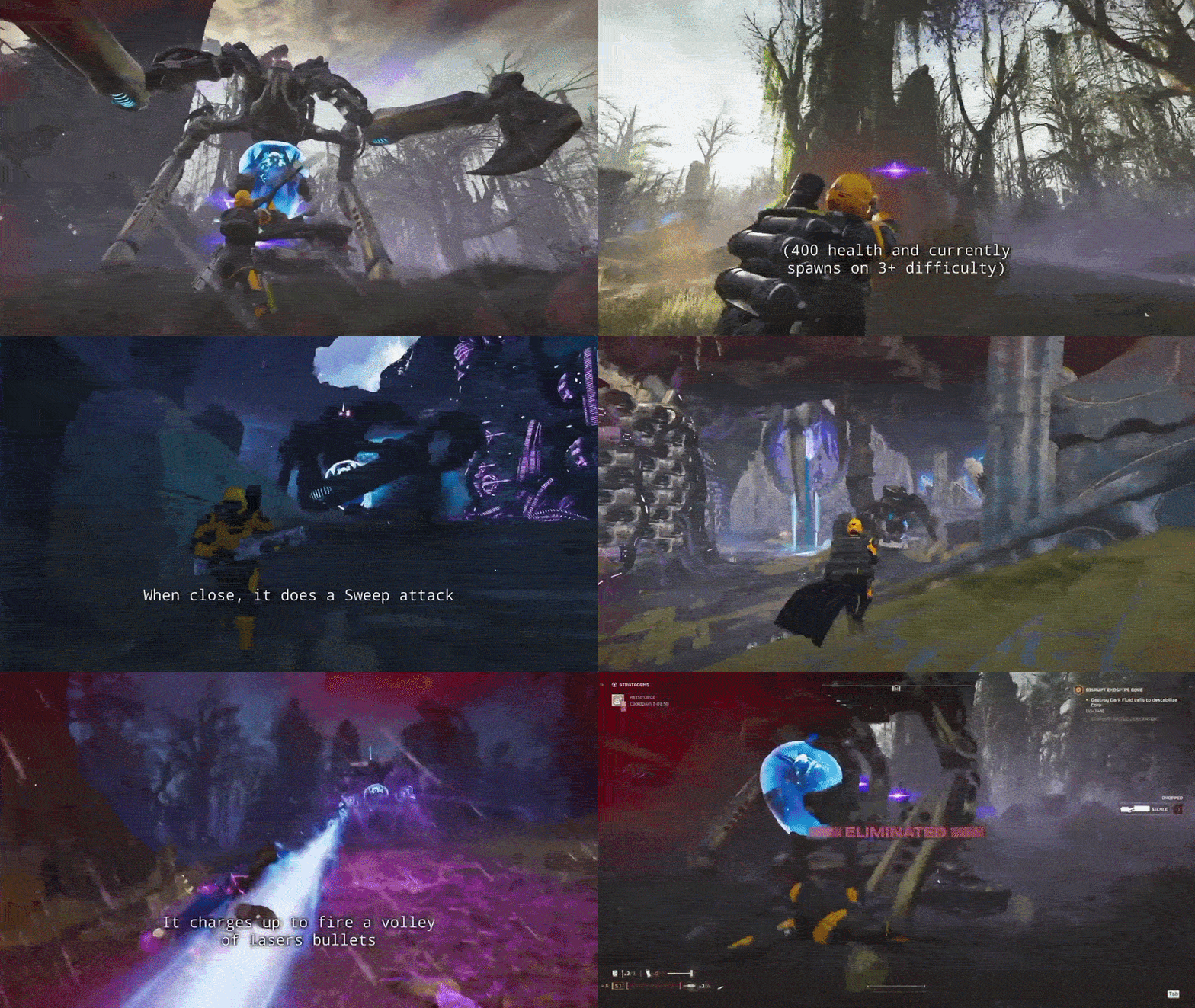
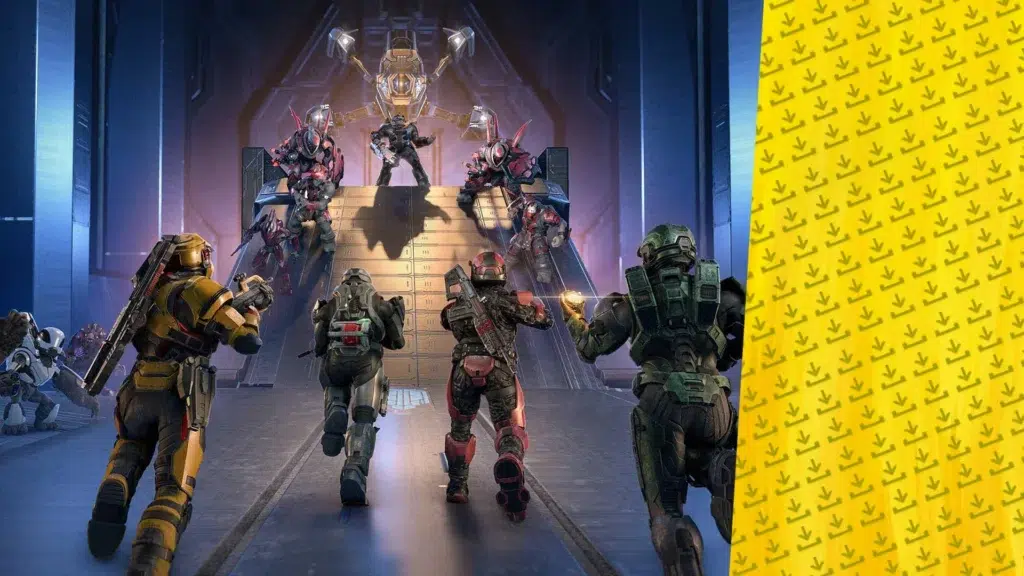
One of the defining features of Firefight Gauntlet is its structured boss battle system. Every few rounds, players encounter elite enemy commanders or large-scale mechanical threats.
Boss encounters include:
- Banished war machines with multi-phase armor systems
- Elite squad commanders with enhanced AI tactics
- Hybrid Promethean remnants with adaptive shielding
- Environmental boss events such as corrupted zone collapses
Arena design plays a crucial role in these battles. Maps are constructed with verticality, choke points, and destructible cover systems that influence combat flow.
Boss arenas often transition mid-fight, forcing players to reposition and adapt to new environmental conditions.
Upgrade System in Firefight Gauntlet: How it Works
Firefight Gauntlet introduces a temporary in-match upgrade system that allows players to enhance abilities during a session.
Upgrades are earned through:
- Wave completion bonuses
- Objective performance
- Enemy elimination milestones
Upgrade categories include:
- Weapon efficiency boosts
- Shield regeneration enhancements
- Movement speed increases
- Tactical equipment cooldown reductions
These upgrades reset after each match, ensuring balance while still allowing progression within a single session.
Best Strategies to Survive Halo Infinite’s New PvE Mode
Success in Firefight Gauntlet depends heavily on strategic coordination. Effective survival strategies include:
- Prioritizing enemy elite units early in each wave
- Maintaining controlled positioning instead of overextending
- Sharing ammo and equipment strategically
- Assigning revive responsibility roles within squads
- Controlling high-ground areas for defensive advantage
Teams that communicate effectively consistently outperform those relying on individual playstyles.
Is Firefight Gauntlet the Hardest PvE Mode in Halo Infinite?
Firefight Gauntlet is widely considered one of the most challenging PvE experiences in Halo Infinite. Its combination of adaptive AI, escalating difficulty scaling, and resource management creates a significantly higher skill ceiling than traditional Firefight modes.
However, difficulty perception varies depending on:
- Squad coordination level
- Familiarity with enemy behavior patterns
- Loadout optimization
- Reaction speed and tactical awareness
While not universally the hardest mode, it is currently the most systemically complex PvE experience in the game.
Comparison: Firefight Gauntlet vs Classic Firefight Modes
Compared to earlier Firefight systems, Firefight Gauntlet introduces several major differences:
- Classic Firefight relies on fixed wave patterns, while Gauntlet uses adaptive AI spawning.
- Traditional modes have static difficulty, whereas Gauntlet scales dynamically.
- Classic Firefight focuses on survival, while Gauntlet integrates objectives and upgrades.
- Older modes use predictable enemy rotations, while Gauntlet features randomized compositions.
This evolution marks a shift from arcade survival gameplay to tactical PvE design.

Why Halo Infinite’s Surprise Update is Important for Fans
The introduction of Firefight Gauntlet is significant because it demonstrates continued evolution of Halo Infinite beyond its initial lifecycle expectations. It reinforces the importance of PvE content in maintaining long-term engagement.
Key implications include:
- Renewed interest in cooperative gameplay
- Expanded replayability for veteran players
- Increased value for squad-based play
- Strengthening of community-driven experiences
This update also signals that player feedback continues to influence development priorities.
Co-Op Gameplay Changes in Halo Infinite’s Latest PvE Mode
Co-op gameplay in Firefight Gauntlet is fundamentally different from previous implementations. The mode encourages interdependence rather than independent performance.
Changes include:
- Shared survival systems
- Coordinated objective execution
- Resource balancing between teammates
- Increased importance of communication
This creates a more immersive cooperative experience that rewards teamwork over individual dominance.
Will Halo Infinite Continue Getting New Game Modes in 2026?
Based on the introduction of Firefight Gauntlet, it is likely that Halo Infinite will continue receiving selective gameplay updates throughout 2026. While large-scale expansions may not be planned, modular additions such as PvE modes, seasonal systems, and experimental gameplay variants are expected to continue.
Future updates may include:
- Additional Firefight variants
- New enemy factions
- Expanded cooperative missions
- Rotating challenge events
This approach allows the game to remain active without requiring full-scale content cycles.
Frequently Asked Questions (FAQs)
- What is Firefight Gauntlet in Halo Infinite?
It is a new PvE survival mode featuring adaptive waves, objectives, and boss battles. - Is Firefight Gauntlet multiplayer or solo?
It is designed primarily for co-op squad play but may support solo attempts with difficulty scaling. - How many players can join Firefight Gauntlet?
It supports standard Firefight-style squad sizes optimized for cooperative gameplay. - Does Firefight Gauntlet have progression rewards?
Yes, it includes progression systems tied to performance and seasonal rewards. - Are there boss fights in Firefight Gauntlet?
Yes, boss encounters appear at set intervals with unique mechanics. - Is Firefight Gauntlet harder than normal Firefight?
Yes, due to adaptive AI and dynamic scaling systems. - Can you upgrade weapons during matches?
Yes, temporary in-match upgrades are available based on performance. - Does Firefight Gauntlet use random maps?
It uses structured arenas with dynamic modifiers rather than fully random maps. - Is Firefight Gauntlet part of the main story?
No, it is a standalone PvE mode separate from campaign progression. - Will more PvE modes be added to Halo Infinite?
It is likely that additional PvE content will continue in modular updates.
Conclusion
Firefight Gauntlet represents a major evolution in Halo Infinite’s PvE design philosophy, blending adaptive AI systems, cooperative strategy mechanics, and scalable difficulty into a unified survival experience. By expanding beyond traditional Firefight structures, the mode introduces a deeper level of engagement that emphasizes teamwork, tactical decision-making, and long-term replayability. Its arrival reshapes expectations for future PvE content in the franchise and reinforces the enduring importance of cooperative gameplay within the Halo ecosystem.
Sources and Citations
- Halo Infinite Official Site and Seasonal Updates
https://www.halowaypoint.com/news - Halo Waypoint Universe Archive – Firefight and Halo Lore Systems
https://www.halowaypoint.com/en-us/universe - Game Developer – Design Analysis for Live-Service Shooter PvE Systems
https://www.gamedeveloper.com/design - IGDA Resources – AI and Difficulty Scaling Research in Games
https://igda.org/resources-archive/ - GDC Vault – Live-Service Progression and Retention Design Talks
https://www.gdcvault.com/browse/gdc-26/?categories=Game+Design
Recommendations
- Samsung’s 2026 Micro RGB TVs: Release Date, Sizes, Pricing, and How Micro RGB Compares to OLED
- Sparseal Launched New 3D Texturing App For iPad: Wafer Brings Stylized PBR Texture Painting to iPad
- Blender CEO On Anthropic Funding: “This Is Not AI Takeover” — What the Sponsorship Means for Blender, Claude, and the Community
- Lego Batman: Legacy Of The Dark Knight Samurai Armor Explained
- Redefining Representation: Authentic Black Hairstyles in Video Games
- The Legend of Vox Machina Season 4 Release Date Announced: June 3, 2026 Premiere on Prime Video
- When Is PS6 Coming Out, How Much Will the PS6 Cost, and Will PS6 Be Backwards Compatible? (2026 Update)
- Belgian Gambling Market Revenue Fell in 2024 for the First Time Since COVID-19
- Default: Epic Adds Them to “Confrontational Emotes,” Offers Refunds, and Fans Demand Full Removal
- How To Create A Dynamic Rain System – Unreal Engine 5 (Niagara Rain, Splashes, and Global Wetness)