








In This Article (8 sections)
Rokky Steam Key Checker and Steam Key Verification Explained
The gaming industry has evolved far beyond simple game distribution and digital storefronts. Modern game publishing now involves large-scale key distribution systems that support publishers, journalists, influencers, marketing campaigns, review channels, retail partners, bundle platforms, and internal testing operations. Among digital gaming ecosystems, Steam remains one of the largest and most influential platforms used by developers and publishers around the world. As digital distribution has grown, so has the complexity of managing Steam keys. Publishers regularly distribute thousands of activation keys to multiple partners across different channels, and tracking which keys have been redeemed, which keys remain active, and whether a particular key originated from a bundle or press campaign has become increasingly challenging.
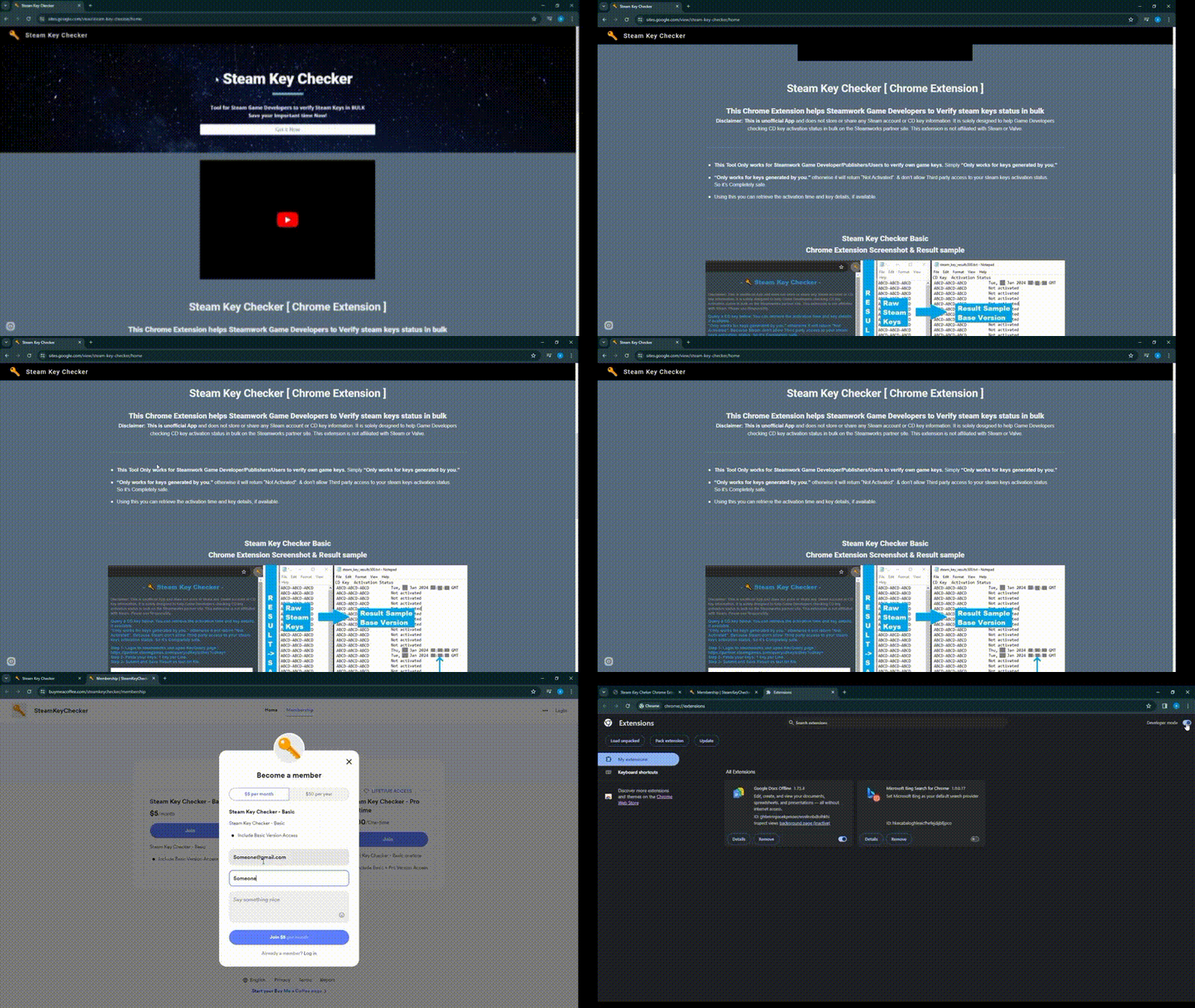
The emergence of unofficial tools designed to simplify Steam key management has generated attention among game developers and publishers. One such development involves the keyword phrase, “Rokky introduces an unofficial tool for Steam that verifies the usage status of bundle and press keys.” The Rokky Steam Key Checker has gained visibility as a solution intended to improve visibility into Steam key usage patterns and key status monitoring. Rokky Steam Key Checker is described as an unofficial Steam key management and verification tool intended to help game publishers determine the status of certain Steam activation keys, especially those distributed through bundle campaigns and press channels.
Steam keys function as unique activation codes that allow users to access games on the Steam platform. Developers generate these keys through Steamworks and distribute them to various external channels. Because distribution often occurs at scale, maintaining accurate records can become difficult.
The Rokky Steam Key Checker attempts to provide additional visibility into the life cycle of these distributed keys. Instead of relying solely on spreadsheets and manual tracking methods, the tool aims to identify whether certain keys remain unused, have been activated, or belong to specific categories. Its primary focus appears to center around bundle keys and press keys because these categories frequently create tracking challenges for developers. Bundle campaigns can involve thousands of keys spread across multiple websites, while press keys may be sent to media outlets, influencers, and reviewers.
Steam keys pass through several stages before they ultimately reach players. They are generated, distributed, activated, and eventually associated with user accounts. Rokky’s verification process reportedly focuses on identifying usage status rather than attempting to interfere with Steam’s underlying activation process. The system may operate by comparing distributed key datasets, monitoring key records supplied by publishers, and analyzing usage patterns connected to specific key groups. The objective is not necessarily to reveal private account information, but rather to determine the current state of a key.
For example, a publisher distributing five thousand bundle keys may later need to determine whether those keys were redeemed. Manual investigation would require substantial time and administrative effort, while verification systems can potentially streamline this process through automated reconciliation methods that compare distribution records against activation information where accessible.
For press keys, the process may involve tracking whether keys assigned to reviewers were activated after distribution. This form of verification can help identify situations involving unused press keys, redeemed promotional keys, duplicate distribution issues, untracked marketing campaign activity, and unexpected redemption patterns. Publishers gain improved visibility into their distribution ecosystem without manually reviewing every campaign entry. Unlike official Steam management systems, Rokky reportedly acts as an external layer designed to assist publishers with organization and monitoring activities. The increasing popularity of independent game publishing and digital marketing campaigns has created a stronger demand for systems capable of reducing administrative overhead.
One of the most important questions surrounding the tool involves its relationship with Valve. Valve operates Steam and Steamworks while establishing official systems and policies governing key generation and distribution. Rokky is generally described as an unofficial solution rather than an officially supported Steam or Valve product. This distinction matters because unofficial tools operate independently from platform ownership. Official support generally includes documented integration standards, customer assistance, and direct platform authorization, while unofficial tools may function effectively while still lacking formal endorsement.
Publishers considering third-party solutions should evaluate compatibility with Steam policies, data privacy implications, long-term maintenance support, security standards, and the reliability of reported information. Developers should avoid assuming that unofficial systems possess identical authority or platform access as native Steam services.

Why Publishers and Indie Developers Use Steam Key Management Tools
Steam key distribution may appear straightforward on the surface, but modern publishing workflows create significant complexity. Game publishers frequently distribute keys through multiple channels simultaneously, including media outlets, content creators, marketing agencies, retail partnerships, affiliate campaigns, giveaway websites, review networks, and bundle services. Without a dedicated tracking solution, several problems may emerge. A publisher may lose visibility into where keys originated, unused review keys may remain unaccounted for, large bundle campaigns may generate inconsistent reporting, marketing teams may struggle to evaluate campaign performance, and sales forecasting can become inaccurate.
Steam key verification tools attempt to solve these challenges by providing centralized oversight. For independent developers with limited resources, administrative tasks often consume valuable time. Instead of focusing on game development, teams may spend hours managing spreadsheets and distribution records. A verification system can potentially reduce these operational burdens. Larger publishers also benefit because their campaigns can involve tens of thousands of keys spread across multiple regions and promotional partners. Visibility and accountability become increasingly important as key volumes increase.
Independent developers often operate under severe resource constraints. Unlike major publishers with dedicated operations teams, indie studios frequently rely on small groups managing development, marketing, customer support, and publishing activities simultaneously. Steam key administration can consume significant time, especially when a single independent title may distribute keys through review outreach, beta testing, crowdfunding rewards, influencer campaigns, bundle partnerships, and promotional events. Without organizational systems, tracking quickly becomes difficult.
Steam key verification tools can potentially provide several benefits for indie developers. Administrative tasks become more efficient, campaign performance becomes easier to evaluate, unused keys can be identified more quickly, distribution errors may be reduced, and historical campaign records remain accessible. These time savings can allow developers to focus more heavily on improving game quality and audience engagement. Since independent developers frequently depend on targeted marketing efforts, understanding key performance can directly influence future campaign decisions.
The Rokky Steam Key Checker reportedly offers several functions designed to simplify Steam key administration. One area of focus involves usage verification, since publishers often need insight into whether keys remain active or have already been redeemed. Automated status monitoring can reduce manual workload. Another possible feature involves campaign segmentation, allowing publishers to distinguish among retail keys, press keys, influencer keys, giveaway keys, and bundle keys.
Campaign reporting may also allow publishers to analyze engagement patterns and compare results across different campaigns. Key reconciliation functionality can assist with matching distributed keys against redemption records, while privacy protection mechanisms reportedly attempt to reduce exposure of sensitive information. Browser integration may further simplify workflows by allowing users to perform checks without moving across multiple systems. The overall goal appears to be creating a more organized ecosystem for Steam key administration.
Bundle Keys, Press Keys, Campaign Tracking, and Redemption Status
Bundle keys represent a unique category of Steam activation codes because they frequently involve mass distribution. Game bundles typically package several games together and sell them through third-party platforms. During these promotions, publishers may generate thousands of keys at once. Manual tracking creates multiple difficulties: human error may introduce inconsistencies, duplicate entries may appear, records can become outdated, and redemption status becomes difficult to monitor. Automated systems aim to simplify this process by centralizing campaign data.
A Steam bundle key checking workflow may involve importing key batches into a management platform, associating those keys with specific campaigns, and monitoring usage status over time. Instead of opening multiple spreadsheets and comparing records manually, publishers can use a consolidated environment for campaign oversight. This approach may help publishers answer important questions, such as how many keys were redeemed, which campaign generated the highest engagement, whether unused keys are still available, and whether certain distribution partners performed better than others. By reducing manual intervention, publishers can improve efficiency and reduce administrative costs.
Press keys serve an essential role in game marketing strategies. Developers provide press keys to journalists, streamers, YouTubers, reviewers, and influencers before or after a game’s release. The purpose is to generate exposure and create audience awareness. Managing press keys effectively requires structured processes. Developers commonly separate press keys from retail or bundle keys because they serve different purposes. A press key distribution process may include assigning unique identifiers, recording recipient information, documenting campaign details, and maintaining activation records.
Problems arise when developers lack sufficient tracking systems. Press keys may be distributed multiple times, unused keys may remain undocumented, recipients may lose access information, and campaign performance data may become fragmented. Steam key management systems attempt to reduce these problems through centralized monitoring, which can be especially useful for smaller studios operating with limited personnel.
Marketing campaigns rely heavily on measurable results, and Steam bundle promotions often function as large-scale customer acquisition strategies designed to increase visibility and reach new audiences. However, distributing thousands of keys without monitoring performance creates substantial uncertainty. Bundle tracking systems provide improved visibility into campaign effectiveness by allowing publishers to evaluate redemption rates across various channels and identify which campaigns generated meaningful engagement. For example, a campaign distributed through one bundle partner may produce stronger activation rates than another campaign using similar key volumes. This information supports future decision-making.
Tracking systems may also help publishers identify unusual patterns. Extremely high redemption rates within short periods could indicate unexpected activity, while low redemption rates may suggest ineffective campaigns. Historical reporting contributes to long-term planning and strategic adjustments. Effective bundle tracking therefore extends beyond simple key management and becomes part of broader marketing analysis.
One of the most frequently discussed questions among developers involves determining whether a key has already been activated. The answer depends largely on access permissions, available records, and the systems being used. Steam itself provides publishers with certain management tools through Steamworks, but publishers may still face limitations regarding large-scale tracking and organization. External systems attempt to bridge this gap by offering visibility into key status information.
Checking redemption status can help answer several operational questions, including whether a reviewer activated a distributed key, whether a giveaway key was claimed, whether a bundle campaign performed as expected, and whether a duplicated key has already been used. Knowing whether keys remain active or have been redeemed improves accountability, but users should recognize that privacy considerations and platform restrictions may affect the amount of information available. The purpose of status verification should focus on campaign management rather than invasive user tracking.

Steam Key Reconciliation, Privacy, Risks, and Best Practices
Reconciliation involves comparing different sets of records to identify inconsistencies. In Steam publishing environments, reconciliation frequently compares generated keys, distributed keys, redeemed keys, and campaign outcomes. Without reconciliation processes, publishers risk inaccurate reporting. For example, a publisher may distribute ten thousand promotional keys but fail to determine actual usage patterns. This uncertainty creates forecasting challenges, because sales forecasting relies heavily on understanding customer acquisition channels. If bundle campaigns consistently convert players into paying customers, publishers may allocate additional resources toward similar promotions. If certain key campaigns generate minimal engagement, resources can shift elsewhere.
Reconciliation supports these decisions by improving data accuracy. Forecasting benefits may include improved marketing allocation, better inventory planning, more accurate revenue expectations, enhanced campaign evaluation, and stronger operational efficiency. Data-driven decisions increasingly define successful publishing strategies, especially as game marketing becomes more expensive and more dependent on measurable campaign outcomes.
Although unofficial tools can provide useful functionality, they also introduce potential risks. Security remains one of the primary concerns. Steam keys possess financial value because they grant access to digital products, so sharing key information with external systems requires careful consideration. Developers should evaluate data handling practices before using third-party platforms. Another limitation involves platform dependence. Unofficial tools may change functionality over time if Steam policies evolve, and the lack of direct support from platform operators can create uncertainty. Data accuracy may also vary.
If verification systems rely on external methods rather than official integrations, reported results may contain limitations. Privacy concerns may emerge if systems request sensitive information beyond operational requirements, and users should also consider long-term sustainability. Tools maintained by small teams may face operational interruptions, reducing reliability. These risks do not automatically invalidate unofficial tools, but they emphasize the importance of careful evaluation.
Privacy remains a major consideration when managing digital activation keys. Browser-based tools frequently process information locally to reduce unnecessary exposure of sensitive data. Rokky reportedly emphasizes privacy protection mechanisms intended to limit direct disclosure of key information. Local processing approaches may reduce the amount of transmitted data, while encryption practices can further improve protection by safeguarding communications between users and external systems.
Access control measures may restrict who can view certain information within organizational environments. Privacy considerations become increasingly important because leaked Steam keys can create financial losses and operational complications. Publishers should evaluate privacy practices carefully before implementing any browser-based tool by asking how information is stored, how long data is retained, who can access records, and what security methods are implemented.
Effective Steam key management extends beyond choosing a specific tool. Publishers should establish clear operational practices designed to improve accountability and efficiency. Centralized documentation significantly reduces confusion, while separating keys by campaign category improves visibility and simplifies reporting. Maintaining historical records helps evaluate long-term campaign performance, and access permissions should be carefully controlled to reduce unnecessary exposure. Regular reconciliation processes improve data accuracy, and publishers should establish procedures for handling expired campaigns and unused keys. Security awareness remains essential. Organizations should avoid unnecessary sharing of key databases and maintain secure storage systems. Strong management practices reduce administrative burdens while improving campaign oversight, and as distribution ecosystems continue expanding, structured workflows become increasingly important.

Frequently Asked Questions (FAQs)
- What is Rokky Steam Key Checker used for?
Rokky Steam Key Checker is used to help publishers and developers identify the status of Steam keys, especially bundle keys and press keys distributed across multiple campaigns. Its purpose is to make key tracking easier by showing whether keys are unused, redeemed, or connected to certain campaign categories. This can reduce the need for manual spreadsheet tracking and help publishers better understand how their promotional keys are being used. - Is Rokky an official Valve product?
No. Rokky is generally described as an unofficial third-party solution, not an officially supported Valve or Steam product. This means it operates outside Valve’s official Steamworks tools and does not carry the same level of platform endorsement or direct support. Publishers considering it should understand that unofficial tools may still be useful, but they should be evaluated carefully for security, privacy, reliability, and Steam policy compatibility. - Can the tool determine if a Steam key was redeemed?
The tool reportedly focuses on identifying usage status and activation information where that information is available for management purposes. In practical terms, this means it may help publishers understand whether a distributed key appears to have been used or remains unused. However, any such checking should be understood within the limits of available data, privacy rules, and Steam-related restrictions. The goal is campaign management, not invasive tracking of individual players. - Why are bundle keys difficult to track?
Bundle keys are difficult to track because bundle campaigns often involve thousands of keys being distributed at once through third-party platforms. When publishers manage those keys manually, records can become outdated, duplicated, or inconsistent. It can also be difficult to know how many keys were actually redeemed, which partner generated the most engagement, or whether unused keys remain available. Automated tracking tools help organize those large batches and reduce administrative errors. - Why do developers distribute press keys?
Developers distribute press keys to journalists, reviewers, streamers, YouTubers, and influencers to generate publicity for a game. These keys allow media and content creators to play the game for coverage, reviews, previews, streams, or videos. Press keys are an important part of game marketing because they can help build awareness before or after launch. However, they need to be tracked properly so developers know who received keys, whether they were activated, and how each outreach campaign performed. - Can independent developers benefit from key verification tools?
Yes. Independent developers can benefit because they often have limited staff and fewer resources than large publishers. A small team may be handling development, marketing, support, community management, and key distribution at the same time. Key verification tools can reduce manual work by centralizing records, identifying unused or redeemed keys, and organizing different campaigns. This gives indie developers more time to focus on improving the game and planning future outreach. - Are unofficial Steam tools risky?
Yes, unofficial Steam tools can carry risks, especially because Steam keys have financial value and must be handled carefully. Potential risks include privacy concerns, data security issues, inaccurate results, compatibility problems if Steam policies change, and reliance on third-party maintenance. These risks do not automatically mean a tool is unsafe, but publishers should review how the tool stores data, what permissions it requires, who can access key records, and whether it follows good security practices. - Does Steam itself provide key management tools?
Yes. Steamworks includes official tools for generating and managing Steam keys, and publishers should treat those as the primary platform-supported systems. However, some publishers may still seek additional organizational tools because large-scale campaigns can become difficult to manage through basic records alone. Third-party tools are usually used to improve workflow organization, campaign tracking, reporting, or reconciliation, not to replace Steamworks entirely. - Can key reconciliation improve forecasting?
Yes. Key reconciliation can improve forecasting by making campaign data more accurate. When publishers compare generated keys, distributed keys, redeemed keys, and campaign outcomes, they can better understand which promotions are actually working. This helps with sales forecasting, marketing allocation, inventory planning, and future campaign decisions. For example, if a bundle campaign produces strong redemption and follow-up engagement, a publisher may decide to invest in similar promotions again. - What should publishers prioritize when choosing a key management solution?
Publishers should prioritize security, privacy, reliability, reporting capability, and compatibility with Steam-related workflows. Since Steam keys can represent real product value, any tool that handles them should protect sensitive data and limit unnecessary exposure. Publishers should also consider whether the tool provides clear campaign tracking, accurate status information, access controls, and long-term support. A good key management solution should make operations easier without creating new security or compliance problems.

Conclusion
Steam key management has become increasingly important as digital publishing workflows continue expanding. Modern developers and publishers distribute large volumes of activation keys through bundle campaigns, review outreach programs, influencer partnerships, and promotional channels.
The statement “Rokky introduces an unofficial tool for Steam that verifies the usage status of bundle and press keys” reflects a broader industry trend toward improved visibility and automation in key management processes.
Rokky Steam Key Checker represents an example of how external solutions seek to address challenges involving key tracking, campaign organization, and operational efficiency. While unofficial tools may provide meaningful advantages, users should carefully evaluate privacy practices, reliability standards, and platform compatibility before implementation.
Ultimately, successful Steam key administration depends on structured workflows, responsible data practices, and ongoing monitoring strategies that support both marketing effectiveness and long-term publishing goals.
Sources and Citations
- Valve, Steamworks Documentation, Steam Keys: Explains key generation, distribution, activation, tracking and revocation policies.
https://partner.steamgames.com/doc/features/keys - Valve, Steamworks Documentation, Curators and Curator Connect: Explains promotional game distribution, reviewer access and creator outreach.
https://partner.steamgames.com/doc/marketing/curators?l=english - FirstLook Documentation, Key Management: Covers key imports, automated distribution, redemption tracking and bulk management.
https://docs.firstlook.gg/setup/steam - FirstLook Documentation, Key Types and Access Management: Explains key classification, audience targeting and product access management.
https://docs.firstlook.gg/access/keys
Recommendations
- Dying Light: the Beast PS4 and Xbox One Versions Cancelled: Why Techland Dropped Last-Gen Support
- Razer Wolverine V4 Is an Extreme Controller Built for Competitive Gaming
- Marvel Tōkon: Fighting Souls Sells 485,000 Copies in One Week
- How to Create Realistic Hair Using the New Hair Tools, Geometry Nodes, and Hair Curves in Blender
- Diablo: Dawn of Hatred Expands the Lore of Sanctuary – New Regions, Mephisto’s Influence, and the Future of Diablo IV
- Helldivers 2 Performance Update: Arrowhead Calls it the “Opening Salvo” for More Optimization
- What’s Wrong with Level Design in Modern Games?
- Stronghold 4 Surpasses 250,000 Wishlists Ahead of Release
- A Beginner’s Guide to The View Keeper Add-on for Blender
- Graft: Official Extended Gameplay Trailer Breakdown, Release Details, Story, Gameplay Features, and Everything We Know



































































































