





In This Article (8 sections)
Red Rooster Reveal, Summer Eternal, and the Former Disco Elysium Connection
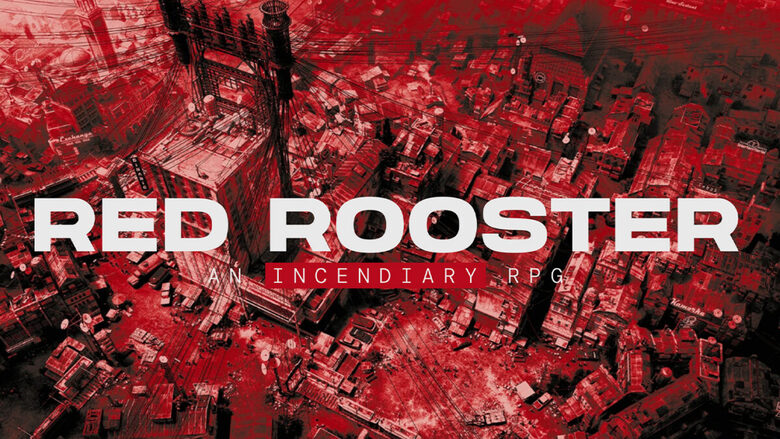
Red Rooster is Summer Eternal’s debut role-playing game, combining a substantial narrative component with physics-based environmental interaction, firefighting, arson investigation, and psychological conflict. The project was fully revealed on October 14, 2026, with follow-up reporting continuing on October 15, including PC Gamer’s coverage.
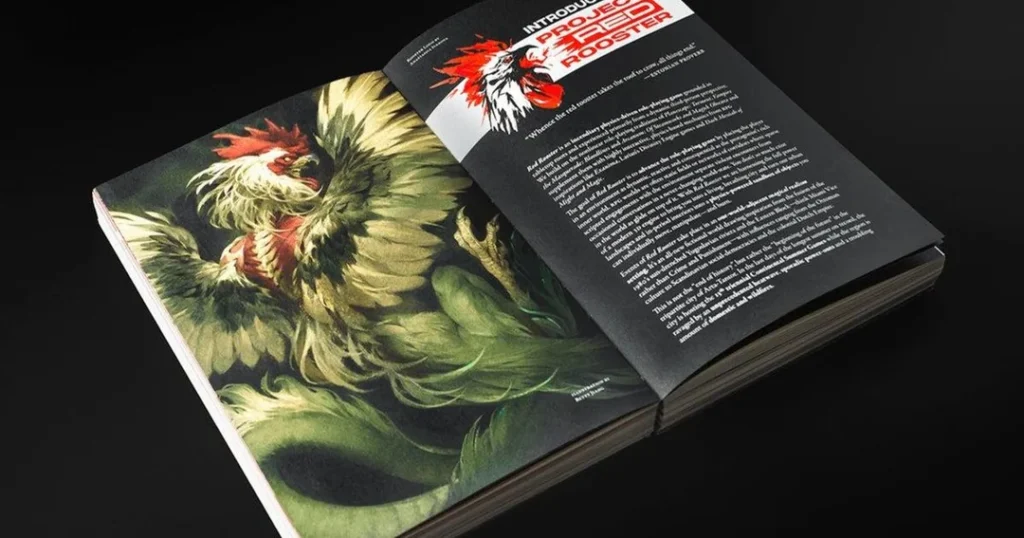
The announcement established a PC-first release plan, with PlayStation 5, Xbox Series, and Nintendo Switch 2 versions intended to follow, but it did not provide a confirmed launch date. Summer Eternal had teased the project in September through imagery involving an egg, a colour change, and a countdown to October 14 before tying the reveal to its physical Anthology Volume One. The approximately 500-page publication combines material about the collective with a substantial presentation of Red Rooster, making the announcement unusually detailed while still representing a creative vision rather than a finished implementation.
Summer Eternal’s connection to Disco Elysium comes through former ZA/UM staff, including writer Argo Tuulik and narrative designer Dora Klindžić, with other former staff associated with the collective including artist Anastasia Ivanova and graphic designer Michael Oswell. Those backgrounds help explain the project’s emphasis on psychologically complicated characters, institutions, politics, and narrative consequence, but Red Rooster should not be treated as a direct continuation of Disco Elysium or as proof that its developers are recreating the same game in a different form.
Eurogamer’s reveal coverage explicitly framed the project as resisting expectations that it should simply become a “Disco Elysium successor” or “Disco-like.” Red Rooster introduces a separate design challenge by attempting to combine dense role-playing with a three-dimensional world in which physical actions and environmental systems can influence outcomes. Previous experience provides context for the team’s ambitions, but the finished game will need to establish its own identity through how those systems actually work together.
The studio describes Red Rooster as an “incendiary” RPG, a term that applies both literally and thematically. Fire sits at the centre of the investigation, the protagonist’s responsibilities, and the environmental systems, while also reflecting destructive impulses and political tension within the story.
Fire is particularly useful for role-playing because an action can create consequences that spread beyond the person who initiated it, potentially destroying evidence, exposing institutional failures, or forcing cooperation between people who distrust one another. The firefighting side of the premise creates an additional contrast because Redrick must learn to understand and contain a force that also represents temptation and damage. Whether that metaphor works in practice will depend on whether the fire system is readable, consistent, and capable of creating consequences that players can understand rather than functioning only as an atmospheric idea.
Summer Eternal also places Red Rooster within a broader creative and organisational philosophy. Its published cooperative proposal allocates 50 percent of ownership to a creative cooperative, 25 percent to a broader worker structure, 20 percent to investors, and 5 percent to a player organisation, while a September 2026 announcement described a Players Non-Profit with representative elections, strategy participation, and proposed community decisions involving a share of future profits.
These documents describe intended governance rather than proving that every legal and operational detail will remain unchanged throughout development. The model is relevant because ownership can influence how creative priorities and financial pressure are balanced, but a cooperative structure does not remove the practical difficulties of production, funding, scheduling, or resolving disagreement. Its value will ultimately depend on how effectively the structure supports the people making the game while allowing them to finish a coherent product.
Redrick Roost, Arta-Tantor, Terminal 9, and the Political Arson Investigation
Red Rooster centres on Redrick “Rooster” Roost, a prisoner serving a life sentence following criminal negligence associated with an auto-meditation device disaster. Shortly before his parole hearing, a government official offers him a pardon in exchange for infiltrating the fire service led by his brother and identifying a suspected arsonist.
That arrangement makes the investigation inherently coercive because Redrick’s potential freedom depends on accepting an assignment he has strong personal reasons to pursue. His brother’s position makes the situation even more complicated, since investigating an unfamiliar institution would allow more emotional distance than investigating a workplace tied directly to family. The central narrative tension is therefore not simply about discovering who is responsible, but about deciding what to do with information that could help Redrick legally while damaging relationships or exposing people he may want to protect.
The story takes place in Arta-Tantor, a divided fictional city shaped by overlapping influences from the Yugoslav riviera, the Eastern Bloc, Ottoman culture, Scandinavian social democracy, and Dutch colonial history. An extreme summer and a major sporting event form part of the immediate setting, giving the city a pressured backdrop in which public services and institutions are already under strain. The divided geography creates opportunities for authority, identity, and public trust to vary across districts, although the announcement does not confirm specific border systems or mechanics.
This matters because Red Rooster’s politics appear intended to emerge through lived circumstances rather than through abstract speeches alone. Imprisonment, conditional freedom, government recruitment, public services, and institutional loyalty all give the player reasons to confront political questions through decisions involving actual people.
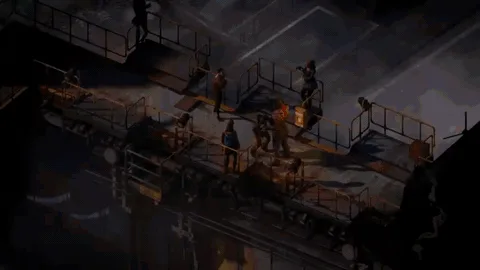
Terminal 9, the fire-service environment Redrick must enter, gives those conflicts a recognisable institutional setting. The official overview connects his assignment with responding to incidents, preparing for his hearing, and fitting in among firefighters, making the station more than a simple location for suspects. Repeated routines, shared responsibilities, and dependence during emergencies can reveal tensions that would be harder to establish through one-off encounters.
Firefighting also introduces a public-trust dimension because emergency services are relied upon when people cannot protect themselves, so wrongdoing within that institution has consequences beyond individual characters. The game has not been presented as a comprehensive firefighting simulator, and the announcement does not establish equipment authenticity, procedural depth, or full emergency-management systems, but the fire-service setting clearly provides a structure for turning institutional questions into personal relationships.
Redrick is also surrounded by other notable characters, including Dr Astrid Albers, a mathematician experiencing opiate dependence, and Rico, a bus driver and activist who carries nunchaku. PC Gamer’s reveal coverage highlighted this unusual trio, although the available material does not fully explain when or how extensively the player controls characters other than Redrick.
A separate system involves Redrick’s alternate selves inside an internal space called the Coop, where competing versions of his personality can influence abilities and dialogue. Rock Paper Shotgun’s anthology-based reporting describes strengthening or suppressing these selves as part of character development. This turns character building into an argument over identity, where repeated behaviour may gradually determine which tendencies gain influence rather than simply increasing neutral statistics.
The political dimension is explicit both in the game’s premise and in Summer Eternal’s public identity. The studio foregrounds artistic independence, labour, and opposition to corporate control, while Redrick’s situation places individual survival beside obligations imposed by institutions with greater power. The announcement does not establish which political positions the finished game will permit or how evenly they will be represented, so the studio’s manifesto should not be treated as a complete map of branching dialogue. The strongest version of the design would allow politics to emerge naturally through conflicting interests, practical limitations, and characters who understand their own actions differently. That would make Arta-Tantor’s institutions feel like active forces shaping the player’s experience rather than merely background lore.

Physics-Based Gameplay, Fire Simulation, Immersive Sim Influences, and Psychological Role-Playing
Summer Eternal’s central gameplay ambition is to connect psychological role-playing with a world that responds physically to player actions. The studio describes movable and manipulable objects and draws on immersive sim traditions alongside narrative RPG design, creating a distinction between choosing an authored dialogue option and discovering a solution through interacting systems.
Physical actions can communicate intent indirectly by changing access, visibility, safety, or the state of the environment rather than explicitly telling the game what the player means. Rock Paper Shotgun’s examination of the anthology describes proposed object properties, a simplified real-time fire simulation, and environmental changes that can occur independently of the player. That reporting also stresses that the project remains early and that individual systems may change substantially during development.
The significance of this approach lies in the possibility that physical behaviour could become part of character expression. Caution, recklessness, curiosity, or cruelty might emerge through what the player does to the environment as well as through dialogue choices. For that to work, the game must interpret actions consistently enough that experimentation feels meaningful rather than arbitrary. Narrative systems also have to remain coherent when the player rearranges circumstances in ways the writers did not anticipate directly. A physical action that bypasses a planned conversation should ideally change the story in a way the player can understand, just as a narrative choice should ideally produce consequences that are visible in the world.
The game’s stated inspirations clarify this ambition. Summer Eternal names Planescape: Torment, Vampire: The Masquerade; Bloodlines, and Arcanum: Of Steamworks and Magick Obscura among its narrative influences, while its physical-interaction references include Exanima, Larian’s Divinity Engine games, and Dark Messiah of Might and Magic. These references point toward two forms of freedom: narrative freedom in what a character can believe, say, and decide, and systemic freedom in what a player can attempt with the tools and environment. The influence list does not mean Red Rooster will reproduce the combat, structure, or interface of every cited title. The more useful question is whether improvised actions can create meaningful role-playing consequences within Red Rooster’s own systems.
This physically reactive design is also the clearest way Red Rooster differs from Disco Elysium. Gematsu’s announcement summary identifies dynamic camera movement and Unreal Engine development as part of a more spatially interactive direction, meaning physical movement, object placement, and environmental reactions can carry information that would otherwise need to be described through text or dialogue. That introduces a different design burden because players need to understand what can be manipulated, which actions matter, and why the world responds the way it does. A scene can be narratively complex yet still fail mechanically if those interactions are unclear. Red Rooster’s success will depend on whether its physical systems create experiences that its narrative could not achieve through dialogue alone.
The alternate-selves system provides a psychological counterpart to those environmental mechanics. If the Coop allows different versions of Redrick’s personality to influence dialogue and abilities, then the game can potentially connect internal identity with external behaviour. Repeated actions may strengthen one tendency over another, turning progression into a question of which version of the protagonist gains influence. This could make character development feel less like choosing bonuses and more like negotiating between competing internal perspectives. Its effectiveness will depend on whether those selves have distinctive desires, consequences, and dramatic weight rather than serving as elaborate labels for conventional statistics.
Red Rooster Platforms, Development Status, Release Timing, and What Remains Unconfirmed
Red Rooster is planned to launch on PC first, with PlayStation 5, Xbox Series, and Nintendo Switch 2 versions intended to follow. The announcement does not establish simultaneous releases across those platforms, and Nintendo Everything’s coverage independently identifies Switch 2 as planned without providing launch timing. The PC-first strategy should therefore not be interpreted as proof of final controller support, platform-specific feature parity, performance targets, frame rates, or resolution goals. A physics-focused game may require different optimisation work on different hardware, but the reveal does not establish what compromises or changes might be necessary. The only firm platform conclusion from the announcement is that PC leads the schedule and console versions are planned afterward.
The game also does not have a confirmed release date. October 14, 2026, marks the full reveal and anthology release, not the launch of the playable game. Rock Paper Shotgun’s anthology-based reporting describes the project as being in early pre-production and mentions a possible three-to-four-year development horizon depending on funding, but that estimate is conditional rather than an official commitment. Converting it into a guaranteed launch year would therefore be misleading. Narrative branching and environmental simulation can affect one another in complicated ways, making production schedules especially difficult to predict for a project attempting to combine both.
The current announcement should be read as a detailed statement of intent rather than evidence that every described system is already complete. Concept art, worldbuilding documents, gameplay proposals, and a large printed anthology make Red Rooster’s creative direction easier to understand, but they do not establish how far each feature has progressed toward a finished commercial implementation. The same caution applies to playable-character assumptions, fire-system complexity, platform performance, console timing, and the final balance between narrative and systemic interaction. Future demonstrations showing multiple systems working together will provide stronger evidence than design documents alone.
The project’s biggest unanswered question is therefore not whether its ideas are distinctive, but whether Summer Eternal can successfully integrate them. Red Rooster proposes a psychologically complicated protagonist, a politically charged city, a coercive arson investigation, alternate selves, physical object interaction, real-time fire behaviour, emergency-service responsibilities, and a cooperative development philosophy within one game.
Each element is understandable on its own, but the project’s identity will depend on how naturally they interact. A strong implementation would allow narrative choices, environmental actions, political consequences, and personal identity to influence one another rather than operating as disconnected systems. Until more playable material appears, Red Rooster remains an ambitious and unusually detailed early-stage RPG whose creative direction is clearer than its final form or release schedule.
Frequently Asked Questions (FAQs)
- What is Red Rooster?
Red Rooster is an upcoming role-playing game from Summer Eternal that combines narrative-heavy character development with an arson investigation, firefighting, psychological conflict, and physics-based environmental interaction. The project is designed around more than dialogue choices, because players are also expected to influence the world through physical actions and environmental systems. Fire is central both to the story and to the game’s mechanics, making it part of the investigation as well as a broader expression of the protagonist’s destructive impulses and internal conflict. The setting, characters, and systemic interactions are intended to work together so that decisions can have both narrative and physical consequences. At this stage, however, the announcement describes the intended design rather than proving how every system will function in the finished game. - Who is developing Red Rooster?
Summer Eternal is developing Red Rooster. The collective includes former ZA/UM staff associated with Disco Elysium, including people with experience in writing, narrative design, art, and visual identity, alongside other contributors. That background helps explain the studio’s interest in psychologically complex characters, political themes, and institutions that place pressure on individuals. Summer Eternal also presents itself around ideas of artistic leadership and cooperative ownership rather than as a simple recreation of the original Disco Elysium development team. Red Rooster should therefore be treated as a new project shaped by some familiar creative experience rather than as the continuation of an earlier studio in a different name. - Was Red Rooster announced on October 15?
The full public reveal took place on October 14, 2026. Coverage continued on October 15, which is why some reports about the announcement carry the later date. The October 14 reveal also coincided with the release of Summer Eternal’s Anthology Volume One, which contains extensive material about the project. This date concerns the public unveiling of Red Rooster and the anthology, not the release of the playable game itself. Keeping those dates separate avoids turning press coverage into a false launch date. - Is Red Rooster a Disco Elysium sequel?
No. Red Rooster has been announced as a separate game with its own protagonist, setting, story, and gameplay systems. The connection to Disco Elysium comes from some of the people working at Summer Eternal and from overlapping interests in character psychology, political themes, and complicated institutions. Red Rooster also differs through its stronger focus on physical interaction, fire simulation, and a three-dimensional environment influenced by immersive sims. The developers have not presented it as a continuation of Disco Elysium’s plot or world. Comparisons are useful for explaining the team’s background, but they should not replace an assessment of Red Rooster on its own terms. - Who is Redrick Roost?
Redrick “Rooster” Roost is the central protagonist of the game. He is serving a life sentence following criminal negligence connected to an auto-meditation device disaster and is offered a possible pardon shortly before his parole hearing. The offer requires him to infiltrate the fire service led by his brother and investigate a suspected arsonist, making his potential freedom dependent on the outcome of the assignment. This puts personal loyalty, institutional pressure, legal responsibility, and self-interest into direct conflict. His own history of harm also means he is not approaching the investigation from a morally uncomplicated position. - What is Terminal 9?
Terminal 9 is the fire-service workplace that Redrick enters as part of the investigation. It connects the central mystery with firefighting, emergency response, workplace relationships, and the people operating inside the institution. Because Redrick is investigating his brother’s fire service, the station also becomes a place where family ties and professional suspicion overlap. The setting gives the story opportunities to explore public trust, cooperation during emergencies, and the difficulty of judging people you may need to depend on. The announcement does not yet provide enough detail to define Terminal 9 as a full firefighting simulation or explain every activity available there. - Are Astrid and Rico confirmed as fully controllable characters?
They are confirmed as important members of the announced cast, but the available material does not fully establish how much direct control the player will have over them. Dr Astrid Albers is described as a mathematician dealing with opiate dependence, while Rico is a bus driver and activist who carries nunchaku. Their prominence in reveal coverage shows that they are significant to the game’s character ensemble. However, that does not automatically confirm free character switching, equal playable sections, or a conventional party-management system. More detailed gameplay information will be needed before those mechanics can be described with confidence. - What are Redrick’s alternate selves?
Redrick’s alternate selves are competing aspects of his internal identity associated with a psychological space called the Coop. Reported design material describes these personalities as influencing abilities, dialogue, and character development, with the player potentially strengthening or suppressing different internal tendencies. This suggests that progression may involve deciding which parts of Redrick’s personality gain influence rather than simply increasing neutral statistics. Repeated behaviour could therefore shape how he approaches conversations and situations over time. Because the project remains in development, the exact mechanics, balance, and final presentation of the alternate-selves system may still change. - Which platforms are planned?
The announced release sequence begins with PC. PlayStation 5, Xbox Series, and Nintendo Switch 2 versions are planned to follow afterward. The reveal did not establish a single simultaneous launch date across all platforms, so the console versions should not be assumed to arrive alongside the initial PC release. The announcement also does not confirm final performance targets, resolutions, frame rates, or feature parity between platforms. More precise expectations will depend on later platform-specific demonstrations and release announcements. - When will Red Rooster be released?
Red Rooster does not currently have a confirmed release date. The October 2026 date refers to the game’s full reveal and the publication of Summer Eternal’s anthology, not to the launch of the game itself. Reporting based on the anthology described an early pre-production stage and mentioned a possible development horizon of several years depending on funding. That estimate is conditional and should not be converted into a guaranteed release year. A firm launch window will require a later announcement from Summer Eternal after development has progressed further.
Conclusion
Red Rooster stands out for combining an arson investigation, firefighting, political pressure, and a protagonist divided by competing versions of himself. Its biggest promise lies in connecting those narrative conflicts to a physical world where player actions can shape outcomes rather than leaving every consequence inside dialogue choices.
If Summer Eternal can make environmental improvisation feel as meaningful as its psychological role-playing, the game could develop a distinctive identity separate from the team’s Disco Elysium connections. However, the project remains at an early stage, with PC planned first, console versions intended to follow, and no confirmed release date. For now, its strongest appeal is the ambition to make destruction, prevention, investigation, and personal identity operate as interconnected parts of the same RPG experience.
Sources and Citations
- Summer Eternal’s official Red Rooster presentation provides the primary description of its creative goals, setting and stated gameplay inspirations. summereternal.com
- Gematsu’s October 14 announcement report establishes the reveal timing, PC-first platform plan and absence of a confirmed release date. Gematsu
- Rock Paper Shotgun’s October 14 anthology examination supplies additional reporting on proposed psychological systems, physical simulation and the project’s early development status. Those details describe plans that may change. Rock Paper Shotgun
- PC Gamer’s October 15 coverage discusses the central cast and the project’s relationship to the developers’ earlier work. PC Gamer
- Summer Eternal’s Studio Architecture document explains its proposed ownership structure, while the September 2026 Players Non-Profit announcement describes the player organisation’s intended participation. SUMMER ETERNAL
- The official Anthology Volume One page documents the physical publication associated with the reveal. Inven Global and Nintendo Everything provide additional announcement coverage and platform context. summereternal.com
Recommended
- How to Make Mind-Blowing Anime FX in Blender and After Effects
- Cartesian Caramel Geometry Nodes Tests: How Sound Can Be Visualized with Blender Geometry Nodes
- Diablo V Filming Begins as Blizzard Targets Spring 2029
- Grow a Garden 2: How to Lock Your Garden and Protect Your Crops From Thieves
- Metro 2039 Gamescom Renegade Trailer: The Stranger, Novoreich and February 2027 Release
- Spider-Man: Miles Morales Actor Talks About That Missing Venom Game: What Nadji Jeter Revealed About Insomniac’s Plans
- Mewgenics: All the Joy of Breeding a Cat Army Without the Food and Kitty Litter Bills
- GTA VI May Not Get a Physical Disc Edition After All
- Huion Kamvas 22 Gen 3: Affordable Pen Display for 2D, 3D & Video Editing
- Wanted Tangled 2, but Couldn’t Find a “Story Worth Telling”: What the Director Revealed and What Happens Next



































































































