





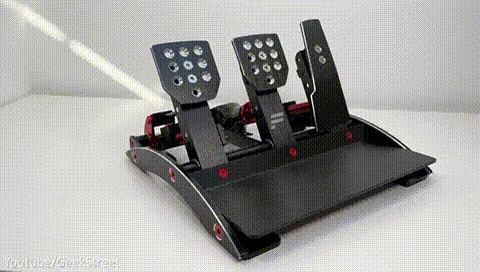
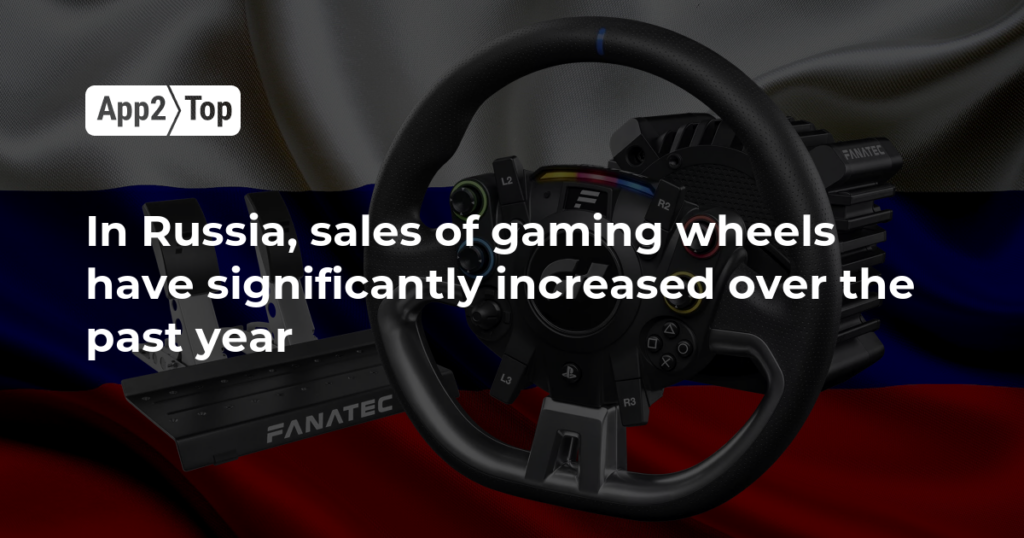
Russian retailers M.Video and Avito report a significant rise in racing-wheel sales over the past year, providing evidence that dedicated driving controllers are attracting more attention from Russian consumers. However, the two reports measure different periods and different sales populations. M.Video’s figures concern the Russian market during the first half of 2026, while the Avito figure concerns sales on its platform in August compared with the same month in 2025. They should not be presented as interchangeable measurements of a single annual growth rate.
The distinction matters because the story is about more than a surge in purchases. It raises questions about affordability, the appeal of dedicated simulationWhy Racing Wheel Sales Are Rising in Russia
Understanding Russia’s racing wheel market requires separating reported sales figures from the explanations offered for those figures. It also means distinguishing product popularity from technical superiority. A wheel that generates the most revenue is not necessarily the model purchased by the greatest number of people, while a more expensive simulator is not automatically the best choice for every player. The wider trend reflects several connected factors, including equipment affordability, interest in racing games, esports development, and the relationship between entry level hardware and increasingly sophisticated driving systems.
The explanations identified in WN Hub’s reporting include lower equipment costs, the availability of more affordable options, interest in modern racing games, and the development of esports. Its account attributes these views to marketplace representatives and industry specialists consulted by Izvestia. These should be treated as informed explanations for the market trend rather than a statistical breakdown showing exactly how much each factor contributed.
The relationship between software and hardware offers a useful way to understand the increase in demand. A racing game gives players a reason to drive, while a dedicated controller changes how that driving feels. As someone begins spending more time learning circuits, controlling slides, improving lap times, or competing with other players, a racing wheel can become a more attractive purchase than it was when racing games were played only occasionally with a gamepad.
At the same time, affordability affects another part of the purchasing decision. A player may already want a wheel but postpone buying one because the complete setup appears too expensive. A lower initial price or a clearer all in one package can reduce that obstacle without changing the player’s underlying interest in racing.
Ready made equipment provides a practical example of how purchasing complexity can also be reduced. MOZA’s R5 package combines a direct drive base, steering wheel, pedals, and a table clamp instead of requiring a newcomer to select every component separately. Factors such as affordability, easier setup, stronger interest in racing games, and esports can therefore reinforce one another. Nevertheless, the available sales reports do not establish that every additional purchase came from a beginner, an esports participant, or someone upgrading from a gamepad.
In This Article (7 sections)
Russian Racing Wheel Sales Growth, Market Value and Pricing in 2026
M.Video’s August 31 announcement estimates that 78,300 racing wheels were sold in Russia during January to June 2026, representing a 27.3% year over year increase compared with January to June 2025. The figure covers the first half of 2026 rather than the immediately preceding six months or the full year. Keeping that distinction clear prevents a half year result from being incorrectly presented as an annual outcome. Unit growth is particularly useful because it measures the expansion in purchases separately from changes in prices. A market can generate more revenue simply because products become more expensive, whereas an increase in units indicates that more equipment changed hands within the measured category.
Even so, purchases and individual users are not the same measure. A customer replacing an existing wheel contributes to unit sales just as a first time buyer does, while a household purchasing a second setup also adds to the total without necessarily representing a new household entering the hobby. The result therefore supports the conclusion that demand for racing equipment strengthened, but it does not establish an equivalent 27.3% increase in the number of Russian sim racers or active racing game players.
WN Hub separately reports that Avito’s racing wheel sales in August 2026 were 70% higher than in August 2025. The report does not disclose the absolute number of devices sold, so the percentage cannot by itself establish the size of Avito’s racing wheel market. For example, a purely illustrative starting index of 100 would become 170 after 70% growth, but that calculation is only an explanation of the percentage and not an estimate of Avito’s actual sales volume.
The figure must also remain tied to Avito’s own platform rather than being presented as evidence that all racing wheel sales across Russia rose by 70% during August. A single month can indicate strong momentum, but it cannot show whether the same pace persisted throughout the year without additional monthly observations measured on the same basis.
M.Video and Avito therefore provide different but complementary views of the market. M.Video describes a national market estimate over six months, while Avito’s reported increase relates to activity on its platform during one month. Those differences mean the two growth percentages should not be averaged. A meaningful combined statistic would require compatible market coverage, the same reporting period, known transaction volumes, and a method for dealing with any overlap between sales channels. Avito’s higher growth percentage also does not establish that it sold more wheels than the wider market measured by M.Video because percentage growth describes change relative to a starting point, while absolute sales measure scale.
Reported racing wheel turnover reached 1.22 billion rubles in the first half of 2026, an increase of 23.8%. Across M.Video’s broader measured gaming accessory market, unit sales increased by 0.8%, while turnover declined by 3.7%. The contrast suggests that racing wheels performed differently from the wider accessory category and that their growth was not simply the result of uniformly rising spending across gaming accessories. Revenue should not, however, be confused with profit.
Consumer spending does not reveal seller purchasing costs, logistics expenses, promotional spending, returns, or after sales obligations. The 1.22 billion ruble figure is also a nominal value rather than an inflation adjusted measure, and it should not be converted into a foreign currency growth claim without an explicitly defined exchange rate basis.
The category itself also has limits. Racing wheel sales do not necessarily include every pedal upgrade, cockpit, monitor, handbrake, software purchase, or subscription associated with sim racing, so the reported turnover should not be described as the value of Russia’s entire sim racing economy. For retailers and manufacturers, the more useful commercial questions are which products generated the turnover, how customers used them, and whether those purchases translated into longer term engagement.
Pricing provides another important part of the picture. M.Video reports an average selling price of approximately 15,600 rubles, down from around 16,100 rubles a year earlier. An average selling price is not the same as a price index tracking an unchanged product. The decline could reflect individual models becoming cheaper, consumers choosing more affordable products, or changes in the mix of bundles being sold. The figure alone cannot determine which explanation contributed most.
That distinction matters in a category that includes everything from basic wheel and pedal packages to modular direct drive systems. A lower headline price does not always mean a lower total cost because some products require separate wheels, pedals, clamps, or mounting hardware before they can be used. Lower prices can reasonably make sim racing equipment easier to purchase, but the available figures do not establish how much of the sales growth was directly caused by falling prices. A stronger causal conclusion would require comparable model level pricing and sales data over time. For buyers, the more practical comparison is therefore the total cost of complete and compatible setups rather than the advertised price of a single component.
MOZA, PXN and Logitech Shares in Russia’s Racing Wheel Market
M.Video’s reported racing wheel revenue shares were 41.2% for MOZA, 15.9% for PXN, and 14.2% for Logitech. Their corresponding unit shares were 24.2%, 17.1%, and 10.6%. Revenue share and unit share measure different aspects of market performance. Revenue share shows how much consumer spending a brand captures, while unit share shows its proportion of products sold. Neither figure should be substituted for the other when describing market leadership.
A brand with a revenue share that is higher than its unit share has a higher average transaction value than the category average, assuming the products are classified consistently. This is an arithmetic relationship rather than proof that every product from that brand is premium or that its buyers are necessarily more experienced. MOZA’s substantially larger revenue share than unit share, for example, indicates a different spending profile from a brand whose unit and revenue shares are closer together, but the aggregate figures do not reveal the exact models or configurations responsible for that difference.
Brand level market shares can also hide major differences among individual products. Buyers therefore need to look beyond a manufacturer’s overall popularity and consider the specific wheel’s platform compatibility, force feedback system, included pedals, mounting requirements, and available expansion options. The distinction is particularly important for console players because products from the same family may support different platforms.
Logitech illustrates this clearly. Its official documentation distinguishes the G29, which supports PlayStation and PC, from the G920, which supports Xbox and PC. Both belong to the Driving Force family, but they are not interchangeable choices for console users. Market share figures are useful for understanding purchasing patterns across Russia, while compatibility, included hardware, and intended use remain the more relevant factors when determining whether a particular racing wheel fits an individual setup.
Best Selling Racing Wheels in Russia, Direct Drive Growth and Budget vs Premium Equipment
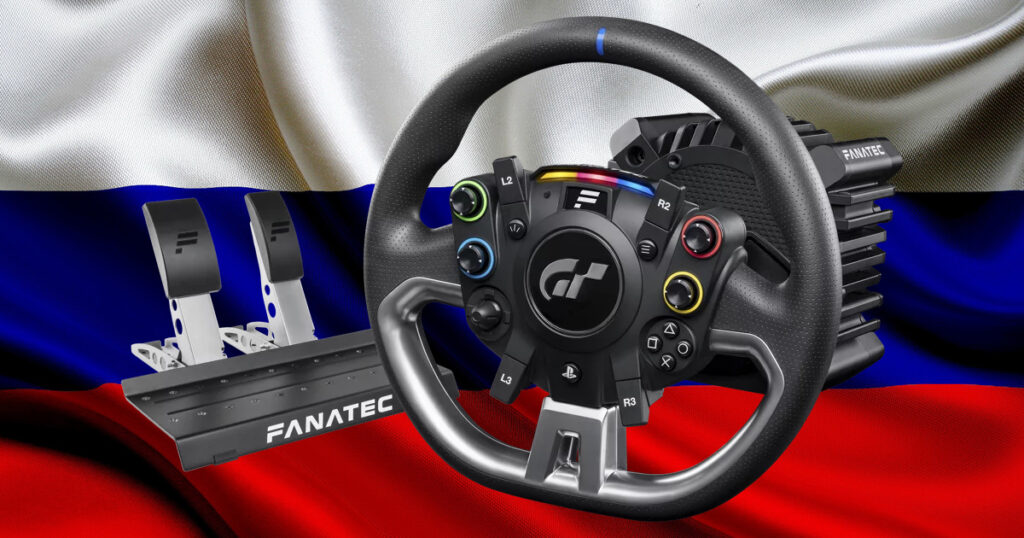
M.Video’s descending revenue ranking for the first half of 2026 lists the MOZA R3 Racing Direct Drive Simulator, MOZA R5 Bundle, PXN Silverstone Black, PXN Wheelman Pro Black, and Logitech G920/G29 Driving Force. This is a revenue ranking rather than a unit sales ranking, so a higher priced package can generate more revenue from fewer purchases. It would therefore be inaccurate to describe the first entry as the most widely owned racing wheel in Russia based on this list alone. The final position also groups the Logitech G920 and G29 together, and the published ranking should not be separated into individual positions for those models without additional data.
Manufacturer specifications help explain some of the technical differences within the ranking. MOZA identifies the R3 as a 3.9 Nm direct drive system, while the standard R5 provides 5.5 Nm peak torque. Its R3 documentation also distinguishes the Xbox compatible package from a PC only offering. These specifications describe the hardware configurations, but they do not reveal why each customer chose a particular product. The ranking does not establish whether buyers prioritized force feedback, platform support, package price, availability, or another factor. For market analysis, it shows where spending was concentrated. For consumers, it is better treated as a starting point for further investigation rather than a universal recommendation.
Direct drive technology is one of the important distinctions within the category. In a direct drive racing wheel, the motor acts on the steering assembly without an intermediate belt or gear reduction system. This differs from the Logitech G29 and G920 design, which uses helical gearing and dual motor force feedback. The attraction of direct drive is not simply stronger steering resistance. Force feedback acts as an information channel between the simulation and the player, with the game calculating steering forces and the hardware communicating those forces through the wheel. The quality of that experience depends on the game, the equipment, and the selected settings working together.
Greater torque does not automatically mean greater detail. iRacing’s official guidance explains that clipping occurs when a simulation requests more force than a wheel can output. Once the hardware reaches its limit, different requested forces can become indistinguishable because the system cannot communicate any additional strength. For that reason, torque figures should not be treated as a complete measure of quality. Calibration, suitable force feedback strength, pedal behavior, and mounting stability are also important when evaluating a finished setup. Direct drive systems do not necessarily require a permanently installed cockpit either. The standard MOZA R5 includes a table clamp, showing that direct drive equipment can also be designed for desk mounting.
The difference between budget and premium racing equipment is therefore more complicated than a single price threshold. Product design determines what the player receives, and two similarly priced packages can emphasize very different features. At the basic end, some wheels use mechanical centering resistance rather than motor driven force feedback. Thrustmaster’s T80 Ferrari 488 GTB Edition, for example, uses a bungee cord centering mechanism, while the T128 provides a HYBRID DRIVE force feedback system. These represent materially different approaches to steering feel.
Pedals introduce another layer of distinction. Thrustmaster’s T LCM documentation describes a load cell brake that measures applied force, together with adjustable resistance and pedal positioning. This shows why a racing setup should not be judged only by the steering motor. Someone interested in occasional recreational driving may value easy storage, quick installation, and a straightforward package. A player expecting regular practice may care more about consistent controls, adjustable components, and the ability to replace or upgrade individual parts.
Premium equipment is most useful when it solves a clearly identified problem. Spending more without knowing whether the real limitation involves steering feel, braking control, ergonomics, compatibility, or another part of the setup can result in an expensive mismatch. At the same time, the cheapest package is not necessarily the most economical if it lacks a feature that is central to the buyer’s expectations. A realistic budget should therefore account for the complete driving experience being purchased rather than focusing only on the headline price.
Racing Games, Esports and New vs Used Racing Wheel Buying Considerations
Modern racing software can make dedicated hardware more attractive when a setup serves several activities rather than one short lived interest. MOZA’s compatibility documentation includes circuit racing, rally, drifting, and driving simulation titles such as Assetto Corsa Competizione, EA SPORTS WRC, CarX Drift Racing Online, and Euro Truck Simulator 2. These examples show the breadth of possible uses for a racing wheel, although they do not establish the relative popularity of those games in Russia or identify which title generated the most hardware purchases.
The economic reasoning is straightforward. A player considering a substantial equipment purchase can compare its cost with the expected number of sessions and compatible games. A wheel that supports several preferred activities may be easier to justify than hardware purchased for a single experiment. Compatibility, however, should be examined carefully because simply recognizing the wheel as an input device is not the same as supporting every feature. Steering and pedal input, force feedback, and telemetry driven displays can be separate functions. MOZA’s support documentation presents force feedback and telemetry in different columns, illustrating that distinction. One user may only require steering and pedals to operate correctly, while another may expect every display, indicator, and feedback effect to function.
Esports also provides a possible explanation for increased interest in dedicated racing equipment. WN Hub identifies esports development as one of the factors offered for stronger racing wheel demand, although it does not quantify the proportion of purchases directly attributable to competitive racing. The FIA describes esports as a discipline it has certified since 2018 and includes digital competition within its motorsport activities, providing broader institutional context rather than a measurement of Russian participation growth.
Competition can change the way players evaluate their hardware. During occasional play, a racing wheel may primarily be judged by how entertaining or immersive it feels. With repeated practice, the questions can become more specific, including whether braking inputs are repeatable, steering behavior remains consistent, and the seating position is comfortable enough for a full session. Watching competitive drivers can also make specialized equipment easier to understand by showing how particular components are used in practice.
However, exposure to competitive racing is not the same as a completed purchase, and esports audience figures cannot be converted directly into hardware sales. The available reports therefore support esports as a possible motivation, while establishing it as a measured sales driver would require buyer surveys, referral data, or another method connecting purchases directly with competitive participation.
The new and used markets introduce a separate set of considerations. The cited Avito report does not provide separate average prices or transaction volumes for new and used racing wheels, so it cannot establish that secondhand equipment caused most of the reported growth or that used wheels were sold at a particular average discount. A useful comparison begins with equivalent packages. A base only listing should not be compared directly with an offer that includes the steering wheel, pedals, power supply, cables, and mounting hardware.
Condition also requires more than examining photographs. A practical inspection should establish whether the wheel is recognized by the intended system, whether steering input follows physical movement correctly, and whether the pedals register consistently throughout their travel. iRacing’s support documentation discusses calibration, off center steering, and unintended pedal activation, showing why functional testing is important when evaluating used equipment.
Compatibility should also be confirmed before payment, particularly when closely related products support different consoles. An attractive price cannot compensate for hardware that does not work with the intended platform. For a new product, relevant questions include who is selling it, what documentation accompanies the purchase, and what support the seller agrees to provide. For a used product, buyers should additionally ask about previous faults, modifications, missing components, and whether the equipment can be tested before purchase.
There is no universal discount that automatically makes a used racing wheel better value than a new one. The more meaningful comparison includes the complete package, verified condition, compatibility, available support, and the potential cost of replacing missing or faulty parts. Modern racing games and esports can provide reasons to invest in dedicated equipment, but the quality of the hardware and software combination, together with the condition and completeness of the package, ultimately determines whether the purchase meets the expectations that encouraged it.

Frequently Asked Questions (FAQs)
- Are racing-wheel sales increasing in Russia?
Yes. Both M.Video and Avito reported growth in racing wheel sales, providing evidence that demand for this type of gaming hardware has strengthened in Russia. However, the two companies measured different periods and different parts of the market. M.Video reported broader market data for the first half of 2026, while Avito reported growth on its own platform for August 2026. Their figures therefore support the same general trend, but they should not be combined into a single national growth percentage. - What period does M.Video’s 27.3% growth figure cover?
M.Video’s 27.3% increase covers racing wheel unit sales from January through June 2026 compared with the same January through June period in 2025. This is a year over year comparison for the first half of the year. It should not be presented as growth for the whole of 2026 or as a comparison between the first half of 2026 and the final six months of 2025. - Does Avito’s 70% figure apply to all Russian racing-wheel sales?
No. The 70% increase specifically refers to racing wheel sales reported by Avito in August 2026 compared with August 2025. It describes activity on Avito rather than every retailer and marketplace operating across Russia. The figure is useful as evidence of strong growth on the platform, but it cannot be treated as a nationwide 70% increase without broader market data supporting that conclusion. - Can the M.Video and Avito growth rates be averaged?
No. M.Video’s 27.3% figure covers a six-month national market estimate, while Avito’s 70% figure covers one month of activity on a particular platform. A reliable combined growth rate would require comparable reporting periods, consistent definitions, actual sales volumes, and a way to account for possible overlap between the two datasets. Simply averaging the percentages would not accurately represent the Russian racing wheel market. - Does higher revenue mean retailers earned more profit?
Not necessarily. Revenue represents the total value of products sold, while profit is what remains after costs and expenses are taken into account. Retailers may face purchasing costs, delivery expenses, promotions, returns, customer support costs, and other operating expenses. Therefore, an increase in racing wheel turnover can show that consumers spent more money in the category without proving that individual retailers became more profitable. - Is a revenue-leading racing wheel necessarily the most purchased model?
No. A revenue ranking combines the number of products sold with their selling prices. A relatively expensive racing wheel can generate more total revenue even if fewer units are purchased than a cheaper competitor. Unit sales would be needed to determine which model sold in the greatest quantity, while information about the installed user base would be required to determine which wheel is actually owned by the most people. - Do Logitech G29 and G920 support the same consoles?
No. Although both products belong to Logitech’s Driving Force family and share several design similarities, they are intended for different console ecosystems. Logitech identifies the G29 for PlayStation and PC, while the G920 is designed for Xbox and PC. Console buyers should therefore confirm the exact model before purchasing rather than assuming that every Driving Force wheel works across both PlayStation and Xbox systems. - Does direct drive automatically make a player faster?
No. Direct drive describes how the steering wheel motor transfers force to the steering assembly and can provide a different force feedback experience compared with gear or belt-driven systems. However, lap times still depend on factors such as driving skill, practice, calibration, game settings, and the rest of the setup. Excessive force feedback settings can also cause clipping, reducing the amount of useful force detail the wheel communicates. - Are all racing wheels compatible with every racing game?
No. Racing wheel support varies according to the exact hardware model, gaming platform, and software being used. A game may recognize basic steering and pedal inputs while offering limited or different support for force feedback, telemetry, displays, or additional accessories. Buyers should therefore check compatibility information for the exact wheel and game combination instead of assuming general PC, PlayStation, or Xbox compatibility guarantees every feature will work. - What should someone check before buying a used racing wheel?
A buyer should confirm the exact model, platform compatibility, included components, and overall working condition before completing the purchase. The wheel should ideally be tested to make sure steering movement registers correctly, pedals respond consistently, buttons work, and force feedback operates normally where supported. It is also useful to check whether the power supply, cables, pedals, and mounting hardware are included and to ask about previous faults or modifications.

Conclusion
Reports from M.Video and Avito support the conclusion that Russian demand for racing wheels increased during the periods they measured. The strength of that conclusion comes from recognizing the reports as complementary evidence, rather than forcing them into a single growth statistic.
The broader significance lies in the interaction between the desire to play driving games and the practical decision to acquire dedicated equipment. Price, package completeness, compatibility, and the expected frequency of use all provide useful ways to interpret that decision.
For consumers, the most important distinction is between a popular product and a suitable one. A market ranking cannot replace checking platform support, understanding the feedback system, evaluating pedals, or accounting for the complete cost of installation.
For businesses and researchers, the next questions concern persistence and participation. Continued comparable sales data would show whether growth is sustained; information about first-time buyers, upgrades, and ongoing usage would explain its character.
Russia’s racing-wheel market therefore presents a clear story of reported sales expansion, alongside important unanswered questions about who is buying, what motivates them, and how durable that demand will prove.
Sources and Citations
- M.Video Eldorado, Racing Wheel Market Announcement, August 31, 2026 : Official company report stating that 78,300 racing wheels were sold in Russia during the first half of 2026, up 27.3% compared with the previous year. It also reports revenue growth of 23.8% to 1.22 billion rubles and examines brand shares, leading models and average prices. These are the retailer’s reported market figures rather than an independent audit. M.Video
Citation: M.Video Reports Strong Growth in Russia’s Racing Wheel Market. (M.Video Eldorado) - WN Hub, Russian Racing Wheel Sales Coverage, August 31, 2026 : Report summarising M.Video’s first half figures alongside Avito’s reported 70% increase in racing wheel sales during August compared with the previous August. It also discusses affordability, racing games and esports as explanations offered by retailers and industry representatives. The figures concern different reporting periods and sales channels, so they should not be combined into one growth rate. WN Hub
Citation: Racing Wheel Sales Have Grown Significantly in Russia Over the Past Year. (WN Hub) - MOZA Racing, R5 Racing Bundle Official Product Page : Manufacturer’s specification page documenting the PC bundle’s direct drive wheelbase, 5.5 Nm peak torque, ES steering wheel, SR-P Lite pedals and included table clamp. It also explains adjustable pedal settings, the quick release connection, supported games and MOZA Pit House software, providing a direct reference for the bundle’s advertised equipment and capabilities. MOZA Racing
Citation: MOZA R5 Racing Bundle: Official Features and Specifications. (MOZA Racing) - Logitech G, Official Racing Wheels and Pedals Catalogue : Official product directory presenting the G29, G920 and G923 alongside direct drive systems, pedals, shifters and mounting accessories. It provides platform and product filters, links to individual specifications and information about TRUEFORCE technology. The updated catalogue address below replaces the supplied driving page, which redirects to this current destination. Logitech
Citation: Logitech G Sim Racing Wheels, Pedals and Accessories. (Logitech G) - Thrustmaster, Official Racing Hardware Catalogue : Manufacturer’s racing directory covering complete wheel systems, separate bases, interchangeable rims, pedals, shifters and handbrakes. It distinguishes direct drive and hybrid force feedback products and provides filters for PC, PlayStation and Xbox compatibility. Individual product links supply the more detailed specifications needed to compare models and determine which components work together. Thrustmaster
Citation: Thrustmaster Sim Racing Wheels, Pedal Sets and Accessories. (Thrustmaster) - iRacing, Controller Setup and Calibration Guide, Updated September 9, 2025 : Official support documentation explaining initial wheel and pedal calibration, brake response, force feedback and the use of separate controllers for pedals, shifters or handbrakes. It includes manufacturer specific recommendations and troubleshooting for steering alignment, inverted inputs and calibration problems, providing practical setup guidance rather than a ranking of competing hardware. iRacing
Citation: Controller Setup and Calibration. (iRacing Support) - FIA, Official Esports Information : Official motorsport governing body page introducing its involvement in competitive virtual racing, with links to Gran Turismo championships, the Motorsport Games Digital Cup, iRacing initiatives and regional competitions. It provides institutional background for discussing organised sim racing, but does not itself establish that esports caused the reported increase in Russian racing wheel sales. FIA
Citation: FIA Esports: Competitions and Official Information. (Fédération Internationale de l’Automobile) - MOZA Racing, Official Newsroom and Technical Blog : Official newsroom collecting product announcements, exhibition appearances, partnerships and esports sponsorships. The supplied blog separately contains educational articles about force feedback, iRacing adjustments, wheelbase power and equipment positioning. Together, these resources document MOZA’s activities and technical guidance, while keeping manufacturer announcements distinct from independent reviews or market research. MOZA Racing
Citation: MOZA Racing Official Newsroom and MOZA Racing Technical Blog. (MOZA Racing) - MOZA Racing, Official Website : Manufacturer’s central catalogue presenting racing bundles, wheelbases, steering wheels, pedals, shifters and flight simulation equipment. It also provides support links, company news and game compatibility information. The site offers broader context for MOZA’s product range, while individual model pages remain the more precise references for torque, included accessories and supported platforms. MOZA Racing
Citation: MOZA Racing Official Website. (MOZA Racing)
Recommendations
- Splatoon Raiders Review: a Single-Player Spin-Off that Shines
- Mistfall Hunter Hits 1 Million Players as Solo Mode and Roadmap Are Revealed
- The Studio Behind MIO: Memories in Orbit Is Closing After Creating One of 2026’s Best Metroidvanias
- Abyssus Console Release Date and Everything to Know About the Co-op FPS
- Chaos releases V-Ray 7.4 for Houdini
- Oddworld Inhabitants Teases “Part 3 Coming”: What the New Game Could Mean for the Oddworld Franchise
- How to Solve the Evacuation Zone Art Gallery Secret in Control Resonant
- How to Convert a Real Human to Metahuman Using Photogrammetry: Complete Workflow Guide for Unreal Engine 5
- Face2Face Links Directly to VTube Studio: Control Your VTuber Using Only Your Face
- Iconic Legend of Zelda line named #1 video game quote of all time: “It’s dangerous to go alone! Take this.”



































































































