






In This Article (9 sections)
Ryse: Son of Rome Sequels Would Have Turned the Game into a Historical Anthology
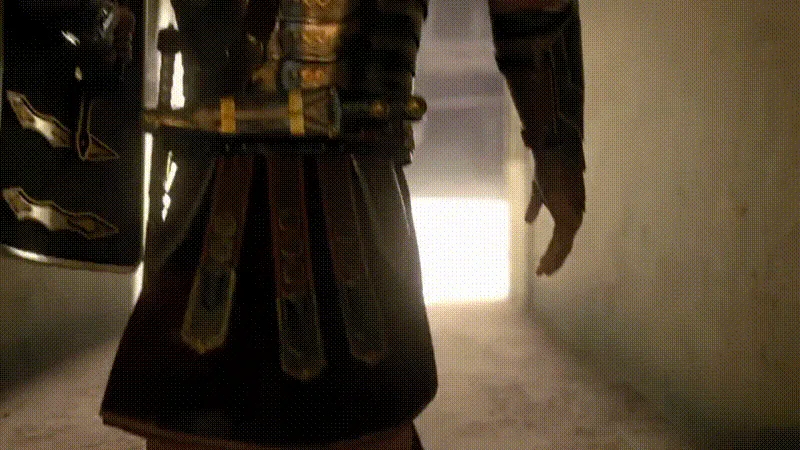
Ryse: Son of Rome was designed as more than a visually impressive Xbox One launch showcase. Although Crytek’s historical action game ultimately remained a standalone release, former developers have revealed that the studio considered turning it into a much broader anthology franchise. Ryse: Son of Rome sequels would have spanned historical eras far beyond Ancient Rome, with proposed directions including Viking territories, medieval Iceland, feudal Japan, the Mongol invasions, the Sengoku period, and Constantinople during the Ottoman conquest of 1453. These concepts show that Crytek was thinking about Ryse as a flexible historical action brand rather than a series permanently tied to Marius Titus or the Roman Empire.
The proposed sequels were not intended to be simple reskins of the first game. Crytek wanted future entries to rethink the campaign structure, deepen battlefield mechanics, expand the scale of environments, introduce competitive multiplayer, and restore ideas that had been removed while the original game was rushed toward the Xbox One launch. A recurring theme based on the rise and fall of civilizations could have connected stories separated by centuries, while the original game’s understated supernatural mythology might have returned in forms suited to different cultures and religions. That approach would have allowed each installment to feel distinct while still belonging to the same franchise identity.
These plans should be understood carefully. Crytek developed franchise concepts, historical research, visual proposals, and mechanical ideas, but the Viking, Japanese, and Ottoman-related installments were never publicly confirmed as full production projects. The evidence shows what Crytek hoped Ryse could become, not a finalized release calendar of multiple canceled games. Ryse: Son of Rome launched for Xbox One on November 22, 2013, before reaching PC in 2014. Its cinematic presentation, character animation, environments, and technical accomplishments were widely noticed, but its short campaign, repetitive encounters, and narrow level design limited its critical and commercial momentum. Even so, Crytek continued to view the intellectual property as something with long-term potential.
Crytek began considering future Ryse games while the original title was still nearing completion. Former developers described a small planning group that included four concept artists, a historian or historical researcher, and members of the senior creative team. Patrick Hanenberger, who worked on the original as a visual consultant, led much of the exploration and was reportedly considered for a franchise-level art direction role. Published credits also corroborate Hanenberger’s involvement and identify Peter Gornstein as director of cinematics and art director.
The earliest creative question was not simply where Ryse 2 should take place. It was what “Ryse” should mean as a franchise. Some developers believed the series should remain attached to Rome because the first game had established Roman military imagery, gods, political conflicts, and imperial storytelling. A move from Rome to Greece would have preserved a recognizable classical-world identity while still allowing Crytek to introduce new architecture, weapons, myths, and battlefields. Others argued that Ryse should be built around history itself, with each installment moving to a different civilization while retaining cinematic action, tragic storytelling, intense melee combat, and an interest in imperial power.
That broader vision suggests Crytek was considering a historical anthology rather than a conventional continuation of Marius Titus’s story. A new protagonist could belong to a different society and period, while the franchise explored recurring questions about conquest, governance, loyalty, vengeance, cultural survival, and political decline. The developers were also thinking beyond setting changes. Future games were expected to improve the original title’s linear level design, combat freedom, multiplayer options, vehicle navigation, formation mechanics, and use of historical tactics.
Microsoft reportedly responded enthusiastically to the wider franchise presentation, with Hanenberger recalling that the company regarded it as an unusually coherent and thoroughly developed intellectual-property pitch. That positive response did not become a binding agreement for several sequels, however, because future games still depended on the first title’s performance and on Crytek and Microsoft reaching acceptable financing and ownership terms.

Why Crytek Wanted Ryse to Become Xbox’s Historical Action Franchise
The idea that Ryse could have been Xbox’s answer to Assassin’s Creed refers mainly to its planned franchise structure. Ubisoft had shown that a recognizable action series could move among different historical periods, protagonists, countries, and political conflicts while retaining a consistent brand identity. Crytek considered using Ryse in a comparable way, allowing each installment to enter a new civilization without abandoning the core identity of the series.
The comparison does not mean Crytek planned to copy every defining Assassin’s Creed mechanic. The original Ryse focused on direct sword-and-shield combat, battlefield spectacle, executions, formations, performance-captured drama, and tightly controlled cinematic sequences. No reliable report says future Ryse games would have been rebuilt around social stealth, rooftop parkour, assassination contracts, synchronization points, or a modern-day conspiracy.
Ryse could instead have occupied a different position within the historical-action genre. Assassin’s Creed traditionally combines historical exploration with stealth, traversal, and secret-society fiction, while Crytek’s version of a multi-era franchise would likely have concentrated more heavily on warfare, military culture, heroic tragedy, and the expansion or collapse of empires. The strategic value for Xbox would have been significant. A successful Ryse franchise could have given the platform a recurring historical action series where environments, combat styles, characters, armor, architecture, religions, political institutions, and military tactics changed with each release. Rome could lead to the Viking world, Japan, Byzantium, or other periods while the Ryse name remained the unifying brand.
It is still more accurate to describe “Xbox’s answer to Assassin’s Creed” as a summary of Crytek’s ambition rather than a publicly declared Microsoft strategy. Microsoft published the original game and reportedly admired the franchise pitch, but it never announced a multi-era Ryse roadmap. Crytek evaluated several possible settings rather than approving one fixed chronological sequence. The best-documented concepts include a Viking installment, Viking-era Iceland, feudal Japan, Kublai Khan’s invasions of Japan, the arrival of European merchants in Japan, the Sengoku period, and an Ottoman or Byzantine story associated with the conquest of Constantinople in 1453. Greece was also discussed as a less dramatic transition away from Rome.
Those proposed settings would have taken Ryse across many centuries. Viking exploration and service in Constantinople could belong to the late first or early second millennium. The attempted Mongol invasions of Japan occurred in 1274 and 1281. The Sengoku period and expanding European contact belong to a later Japanese context, while the Ottoman capture of Constantinople occurred in 1453. This range suggests Crytek was not simply outlining Ryse 2, Ryse 3, and Ryse 4 in an approved order. The studio was evaluating which historical transitions could best express the franchise’s identity, and some concepts were more developed than others.
Each proposed period offered distinct gameplay opportunities. Viking voyages could support sea travel, raids, settlements, and long-distance movement across the North Atlantic and toward Constantinople. The Mongol invasions of Japan could create scenarios around coastal defenses, landing forces, fortifications, archery, and conflicting military traditions. Sengoku Japan could provide castle warfare, factional politics, and tactical formations. Constantinople could place the player inside a prolonged siege involving defensive walls, artillery, ships, and urban combat. These settings were connected by more than spectacle. They represented moments when political systems were expanding, fragmenting, or being replaced, giving every installment a way to explore the human consequences of imperial change while maintaining the tragic tone established by Marius’s story.
The Viking concept was one of the most notable directions, and Peter Gornstein was especially interested in it. His idea extended far beyond a single settlement or raid. A Viking Ryse could have followed activity along the coasts of England and France, across the North Atlantic to Newfoundland, and eastward to Constantinople.
Northern warriors were historically connected to the Byzantine world through the Varangian Guard, an elite force associated with the protection of Byzantine emperors. This geographical range could have produced a campaign with a strong sense of escalation, beginning in a smaller northern community before moving through coastal warfare, dangerous seas, unfamiliar kingdoms, and eventually one of the medieval world’s wealthiest imperial capitals. That remains a reasonable interpretation of the proposed locations, not a confirmed plot.
A Viking installment would have complemented the original game’s themes without repeating its Roman identity. Marius belongs to an organized imperial army, while a Viking protagonist could have begun outside such a system and encountered several political structures as an explorer, settler, mercenary, trader, raider, or bodyguard.
The setting was also comparatively underused when Crytek discussed it. The television drama Vikings was still early in its run, and Assassin’s Creed Valhalla was years away, so Crytek’s plans were not a response to Ubisoft’s later Viking game. Constantinople would have been especially valuable as a connective location because the Byzantine Empire developed from the surviving Eastern Roman state. A Viking serving a Byzantine emperor would enter a political system still claiming Roman continuity, creating a natural bridge between different Ryse games.
Viking-era Iceland was also named among Crytek’s possible sequel settings, though available interviews provide more detail about the wider Viking world than about a specific Icelandic campaign. The responsible conclusion is that Iceland was considered, while the exact story, playable region, hero, and historical date remained undecided or undisclosed. Iceland would have suited the proposed theme of civilizations forming and changing. Norse settlers created communities in a demanding environment, and the Alþing was established at Þingvellir in 930 as an assembly that made laws and settled disputes.
The island could also have served as a narrative base for voyages across the North Atlantic. UNESCO identifies L’Anse aux Meadows in Newfoundland as the remains of an 11th-century Viking settlement and the earliest known evidence of European presence in North America, with turf structures resembling those found in Norse Iceland and Greenland. That historical context explains why Iceland could have worked in a semi-open Ryse sequel, but it should not be confused with proof of a finished Icelandic storyline.

Japan, Constantinople, Civilization Cycles, and Less Linear Campaign Design
Feudal Japan was one of the most enthusiastically discussed possibilities within Crytek’s planning group. The developers considered several Japanese contexts, including the Mongol invasions ordered under Kublai Khan, the later arrival of European merchants, and the Sengoku period of political fragmentation and warfare.
Because these events belong to different centuries, they were probably alternative directions rather than parts of one finalized campaign. The Mongol invasions offered an especially strong foundation for a military action game. The first invasion reached Tsushima and Iki in 1274, while a second and larger invasion followed in 1281 after Japanese defenders had strengthened coastal preparations, including fortifications around Hakata Bay. A storm destroyed a significant part of the attacking fleet and contributed to its withdrawal.
This setting would have allowed Crytek to contrast different military traditions. Japanese defenders, Mongol cavalry, Goryeo forces, sailors, archers, and other troops could have required different player responses. Coastal landings, island attacks, defensive walls, naval staging areas, and contested settlements would have offered more environmental variety than the first game’s frequent corridor battles. The concept also supported Crytek’s interest in real military tactics. Former developers discussed the possibility of introducing the Parthian shot and Kakuyoku, described in reporting as a formation that could develop into an enveloping or pincer movement. These references show that future Ryse combat was intended to express the military identity of each era rather than giving every culture an interchangeable version of Roman melee fighting.
A Sengoku-era Ryse would have produced a different kind of story. Instead of focusing on resistance to an overseas invasion, the protagonist could have become involved in rival domains, sieges, political alliances, succession crises, and betrayals. Castles and surrounding settlements could have served as semi-open regions connected by directed campaign missions. European contact would have introduced another period of transformation, with foreign traders, weapons, beliefs, and commercial relationships affecting Japanese politics. There is no public evidence, however, that Crytek chose this period over the Mongol invasions or Sengoku warfare. “Feudal Japan sequel” is therefore best treated as an umbrella description for several serious but unresolved Japanese possibilities.
The Ottoman-related concept also requires careful wording. Some summaries describe it as a game about the “fall of the Ottoman Empire,” but the reported 1453 setting refers to the Ottoman capture of Constantinople and the fall of the Byzantine Empire. The Ottoman Empire itself continued for centuries after that conquest, with the title of Ottoman sultan eliminated in 1922.
There is no comparable evidence that Crytek planned a Ryse game about the empire’s 20th-century dissolution. The likely subject was the collapse of Byzantine Constantinople and the rise of Ottoman imperial power, which would have fit Ryse’s interest in Rome and its legacy. Constantinople had served as the capital of the Eastern Roman Empire for more than a millennium, making its conquest a direct continuation of the franchise’s fascination with imperial continuity, decline, and replacement.
A 1453 installment could have shown an old imperial system reaching its final crisis as a new empire established itself in the city. The setting offered exceptional gameplay possibilities, including defensive walls, surrounding waters, military camps, artillery positions, religious sites, streets, docks, and palaces. A campaign could have supported large battles while also allowing smaller stories about civilians, soldiers, political leaders, and divided loyalties. Crytek has not revealed which side the player would have represented, so any claim that the protagonist would have been Byzantine, Ottoman, foreign, mercenary, or connected to multiple factions remains speculation.
Moving Ryse from Rome to Viking Iceland, Japan, or Constantinople created an obvious branding challenge. Crytek needed a reason for games separated by centuries and geography to belong to one franchise. One proposed solution was a continuing examination of why civilizations rise and fall. Rome might represent imperial power and internal corruption.
Iceland could explore settlement and the creation of institutions. The Mongol invasions could focus on resistance to external conquest. Sengoku Japan could examine fragmentation and reunification. Constantinople could portray the final crisis of one empire and the ascent of another. These stories would not need the same protagonist or a single uninterrupted timeline. Connections could appear through artifacts, family lines, military traditions, disputed accounts, religious symbols, political decisions, or recurring supernatural influences.
Crytek also considered preserving the original game’s supernatural dimension. Ryse: Son of Rome includes Aquilo and Aestas, apparently mortal figures who are ultimately connected to a hidden divine contest. Former developers said similar influences could have continued in later games, adapted to different religions and mythologies while remaining subtle. This would have given the franchise two layers of continuity. The visible layer would involve historical politics, warfare, migration, and imperial succession. Beneath it, supernatural forces associated with different cultures might repeatedly influence human ambition and conflict. Crytek did not appear to be planning unrestricted fantasy where gods openly dominated every battle. The intention was reportedly to preserve the supernatural element without overwhelming the historical setting.
A major design goal for any sequel was to move beyond the original game’s narrow level structure. Former project manager Yannick Boucher characterized much of the campaign as a succession of corridor-like spaces. That format gave Crytek strong control over visual composition, performance, enemy placement, and cinematic timing, but it limited exploration and tactical choice. Ryse 2 would have moved toward larger and more open-ended environments where players could approach objectives from different directions, explore optional spaces, and make greater use of terrain while still following a directed story.
This shift could have transformed formation combat. Instead of waiting inside fixed sequences, players might have chosen when to remain with allied troops, break away, attack a flank, occupy a defensive position, or return to formation. Crytek had already considered allowing Marius to leave and re-enter the testudo during the original game, but that feature was reduced to a more scripted interaction.
Larger environments would also have made the historical settings more meaningful. A Viking settlement should not feel identical to a Japanese castle approach or a district of Constantinople. Geography, architecture, troop behavior, and route design could all shape how the player fought. The move away from corridors did not mean Crytek wanted to abandon authored spectacle.
The original game’s appeal was closely tied to visual control, performance capture, environmental detail, and cinematic battles. A sequel could have preserved those strengths while giving players more agency between major story moments. The ideal structure would likely have combined directed missions with flexible spaces, such as a siege district containing several objectives, a coastal defense spread across walls and beaches, or a Viking expedition connecting a central settlement with wilderness and harbors.

Planned Gameplay Changes, PvP, Vehicle Navigation, and Cut Content
The comparison between the planned Ryse sequels and God of War requires chronological clarification. Crytek was discussing future Ryse games around the completion of the original title in 2013, while God of War’s influential semi-open 2018 installment had not yet been released. Former developers used it retrospectively as a familiar comparison for the type of structure they had imagined. It would therefore be inaccurate to say Crytek copied that later game. The intended similarity was structural: large connected areas, optional exploration, and tightly directed story sequences without adopting a conventional unrestricted open world.
There was also a personnel connection to the God of War franchise. Todd Papy, director of God of War: Ascension, joined Crytek late in 2013. Later reporting indicates that his experience was expected to contribute to a new historical action project, although his exact duties on an unproduced Ryse sequel have not been fully documented. A semi-open structure would have suited the proposed settings well. A Viking installment might have used a settlement or harbor as a recurring hub, with voyages leading to separate regions.
A Japanese campaign could have connected defensive positions, villages, islands, and castle approaches. A Constantinople game could have divided the city and its surroundings into interconnected military zones. This structure would have controlled pacing more effectively than a fully open world, allowing Crytek to stage dramatic battles at specific points while still giving players room to explore, gather information, prepare equipment, or complete secondary objectives between major story events.
Crytek also considered adding genuine player-versus-player multiplayer to future Ryse games. The original title concentrated on Gladiator mode, where players fought waves of computer-controlled enemies in arena environments. Crytek’s official materials described cooperative online combat, and later content also supported solo arena play. PvP would have required substantial changes to the combat system because moves that feel dramatic and readable against artificial-intelligence opponents may become frustrating or unbalanced against human players. Crytek would have needed to reconsider blocking, dodging, attack timing, execution animations, equipment advantages, movement speed, and recovery windows.
The historical anthology concept could have made competitive multiplayer visually diverse, with Roman legionaries, Viking warriors, Japanese fighters, archers, and other combatants supporting culturally distinct armor and weapons. At the same time, combining eras in one mode might have conflicted with the historical integrity of individual campaigns unless Crytek created separate era-specific multiplayer systems. No trustworthy account reveals the intended PvP format. There is no confirmation of one-on-one duels, team battles, ranked modes, faction warfare, competitive sieges, or persistent progression. The confirmed information is narrower: PvP was among the mechanics Crytek wanted to explore after it had been omitted from the first game.
Claims about vehicle combat also need careful wording. Former developers specifically referred to vehicle navigation as planned or removed content. They did not publicly identify the vehicle, describe its controls, or confirm that it participated in combat. The available evidence supports vehicle movement, not a fully documented vehicle-combat system. Ships, chariots, horses, wagons, and siege equipment would all be historically appropriate for one or more proposed settings, but appropriateness is not confirmation. A Viking game makes playable ships seem plausible, yet Crytek has not released a design document proving that longship combat was implemented or fully planned.
The testudo formation is more clearly documented. In the released campaign, formation sequences are heavily directed. The player raises a shield against incoming attacks and responds during specific moments. Crytek’s earlier plan reportedly would have allowed Marius to leave the formation, fight enemies independently, and return to the line. That design would have converted a cinematic sequence into a tactical system. Remaining in formation could provide protection, while leaving it might allow the player to eliminate archers, defend a flank, rescue an ally, or exploit an opening. Future games could have extended this principle through era-specific tactics, including shield walls, cavalry maneuvers, defensive fortifications, coordinated assaults, and culturally distinct formations.
These ambitions also explain why the released game sometimes feels divided between spectacle and interaction. Former developers estimated that approximately two-thirds of the planned content was removed so Ryse could be completed in time for the Xbox One launch. That figure should be treated as a retrospective estimate rather than a published inventory of every deleted mission, but it conveys the scale of the reduction. The project had already changed significantly before release, evolving from ideas associated with Codename: Kingdoms, Xbox 360, first-person melee combat, and Kinect into a third-person controller-based action game and a technical showcase for new Xbox One hardware.
A console launch date creates unusually rigid constraints. Delaying an ordinary game is costly, but delaying a title meant to demonstrate a new system can leave a visible gap in the launch lineup. Crytek had to prioritize a complete campaign, stable performance, cinematic presentation, and visual polish. Mechanical experiments were especially vulnerable because they required design, animation, artificial intelligence, interface work, balancing, testing, and technical reliability.
Vehicle navigation, dynamic formation behavior, PvP, wider levels, and more complex battlefield systems could not simply be added as decorative features. Each one affected multiple departments and introduced new risks. The development team also experienced intense crunch during the final stage, and while the released game remained a major technical achievement, its compact campaign and repeated combat structures reflected what had been sacrificed.
Crytek appeared to believe it was laying the foundation for a franchise, which may have made the cuts seem temporarily acceptable. Ideas that could not fit into the launch game might return in a better-funded sequel. The problem was that the reduced first game then had to prove the franchise’s value without many of the systems that could have broadened its appeal. Ryse later developed a devoted audience, but its initial reception was mixed, and it became known as much for its graphics as for its limited gameplay variety. That weakened the case for immediate investment in a more ambitious sequel.

Why Ryse 2 Stopped and Whether the Franchise Could Still Return
The failure to produce Ryse 2 resulted from both performance concerns and incompatible business positions. Contemporary reports stated that Crytek and Microsoft discussed a sequel but could not agree on ownership. Microsoft reportedly wanted control of the Ryse intellectual property in return for continuing to finance the series, while Crytek refused to surrender the property. Crytek’s position was that Ryse remained its intellectual property. In August 2014, then-CEO Cevat Yerli said the company was not describing Ryse 2 as canceled and wanted to wait until the new console generation had a larger installed base. He also stated that Microsoft did not own the sequel rights, leaving Crytek legally able to work with another partner.
The 2026 developer accounts support the central outline of that earlier reporting. Microsoft was unwilling to continue funding an expensive franchise it did not own, while Crytek did not want to sell Ryse or develop future installments after transferring ownership to another company. Neither position was inherently irrational. Microsoft would have assumed substantial financial risk by supporting another high-budget installment after the first game’s mixed performance. Ownership would have given it greater control over future development, publishing, licensing, and studio assignments. Crytek, however, had reason to protect an original property it had created. Selling the rights might have produced immediate funding, but it would have removed the company’s long-term control over settings, platforms, partners, and future games.
The result was a deadlock. Crytek owned the franchise but lacked an agreed publishing arrangement capable of supporting its ambitions. Microsoft had the resources and platform relationship but would not proceed under Crytek’s preferred ownership structure. This explains why former developers say the sequels were never formally canceled. There may not have been one fully approved project requiring an official cancellation announcement. Instead, concept development and planning stopped once there was no viable path to financing and production. The dispute did not erase Crytek’s historical ideas. It prevented them from moving from franchise planning into completed games.
A new Ryse game remains possible because Crytek has publicly maintained ownership of the intellectual property. Older statements that Ryse 2 was not formally canceled also leave the company free to reconsider the concept under different market conditions or with another publishing partner. Possibility, however, is not confirmation. As of July 14, 2026, neither Crytek nor Xbox had officially announced a Ryse sequel. Crytek’s official Ryse news archive includes retrospective and documentary material, but it does not list a confirmed new game.
A remaster rumor appeared in June 2026. The original claim came from an anonymous online poster who said a remaster was being developed with Crytek’s technology. Subsequent coverage acknowledged that Crytek and Xbox had not verified the claim, so it should be treated as an unconfirmed rumor rather than evidence that production is underway. A remaster would be a plausible way to test modern interest in the property, and potential improvements could theoretically include higher frame rates, updated resolution, faster loading, revised controls, modern platform support, or restored and reworked content. No such feature list has been officially announced.
If Ryse returned, a full sequel would need to resolve more than its setting. It would have to deepen combat, provide greater enemy and tactical variety, broaden its environments, and decide how much of the supernatural storyline to preserve. Simply updating the graphics would not address the design weaknesses identified by the original developers. The current evidence supports cautious interest rather than certainty. Crytek still controls a recognizable property with a loyal following, and the abandoned historical plans provide a compelling blueprint for how it could evolve. Until Crytek or an authorized publishing partner announces a sequel or remaster, the Viking, Japanese, Byzantine, and Ottoman-related concepts remain records of Ryse’s unrealized potential.

Frequently Asked Questions (FAQs)
- Were multiple Ryse: Son of Rome sequels actually in development?
Crytek was planning the future of the franchise and evaluating several settings, themes, and gameplay systems. However, the available evidence does not show that multiple numbered sequels entered full production. The Viking, Japanese, and Ottoman-related ideas are best described as proposed directions or franchise concepts rather than completed canceled games. - Was Ryse 2 officially canceled by Microsoft?
Former developers say the sequels were never formally canceled. Work appears to have stopped after the original game underperformed and Crytek and Microsoft failed to agree on financing and intellectual-property ownership. Cevat Yerli also said in 2014 that Crytek was not calling Ryse 2 canceled, which supports the idea that the project stalled rather than receiving a clear public cancellation. - What historical periods did Crytek consider for future Ryse games?
The documented possibilities include Viking territories, Viking-era Iceland, feudal Japan, the Mongol invasions of 1274 and 1281, the Sengoku period, European contact with Japan, Greece, and Constantinople during the Ottoman conquest of 1453. No official sequence for these settings was finalized publicly, and the concepts should be treated as explored possibilities rather than a locked release plan. - Was Viking-era Iceland confirmed as the setting of Ryse 2?
Iceland was identified as a proposed setting, but no completed Icelandic campaign has been revealed. The better-documented Viking concept covered a much wider area, including England, France, Newfoundland, and Constantinople. Iceland may have served as one region, a narrative base, or part of a broader Viking world rather than the entire game. - Which Japanese war would a Ryse sequel have portrayed?
One of the strongest possibilities was the Mongol invasion of Japan under Kublai Khan. Crytek also considered the Sengoku period and the arrival of European merchants. Because these alternatives belong to different centuries, the available evidence indicates that the team had not chosen one definitive Japanese timeline before the franchise planning stopped. - Did Crytek plan a game about the fall of the Ottoman Empire?
The reported 1453 concept concerns the Ottoman capture of Constantinople and the fall of the Byzantine Empire. The Ottoman Empire itself continued until 1922. There is no reliable evidence of a Ryse installment set during the Ottoman Empire’s actual 20th-century dissolution. - Would Ryse 2 have been completely open world?
No confirmed information suggests a fully unrestricted open world. The developers wanted a semi-open structure with larger connected areas, alternative routes, and more exploration than the original game’s narrow corridors. The goal was to preserve directed missions and cinematic set pieces while giving players more freedom within historical battlefields and settlements. - Was Ryse 2 directly inspired by God of War from 2018?
Direct inspiration is unlikely because Crytek’s sequel discussions began around 2013, years before God of War’s 2018 release. Former developers used that later game as a retrospective comparison for the kind of semi-open structure they had imagined. Todd Papy’s earlier work on God of War: Ascension may have contributed relevant experience, but his exact role in an unproduced Ryse sequel remains unclear. - Did Crytek confirm vehicle combat and PvP?
Crytek considered PvP multiplayer and vehicle navigation. The sources do not identify the intended PvP modes or confirm that the vehicles had combat capabilities. Playable longships, chariots, and siege vehicles are historically plausible interpretations for some proposed settings, but they have not been verified as confirmed gameplay features. - Is a Ryse: Son of Rome remaster currently confirmed?
No. A June 2026 online rumor claimed that a remaster was in development, but Crytek and Xbox had not confirmed it as of July 14, 2026. The rumor should not be reported as an official announcement or proof of active production.
Conclusion
Ryse: Son of Rome was conceived as the possible beginning of a much larger historical action property. Crytek’s developers did not intend to remain permanently confined to the story of Marius Titus or even to Ancient Rome. They considered a franchise that could move through Viking exploration, Icelandic settlement, feudal Japan, the Mongol invasions, Sengoku warfare, and the Ottoman conquest of Constantinople.
The proposed structure would have allowed each game to develop a distinctive cultural and military identity. Roman formations could give way to Viking expeditions, Japanese defensive warfare, pincer tactics, cavalry maneuvers, siege operations, and other systems suited to the selected period.
Crytek also understood that new settings alone would not be enough. Future games were expected to replace many of the original campaign’s corridors with semi-open environments, make formation combat more dynamic, introduce vehicle navigation, explore PvP multiplayer, and preserve the series’ supernatural layer through different religions and mythologies.
The historical anthology could have been connected by a continuing investigation of imperial power. One civilization would rise while another declined. Decisions, people, traditions, or supernatural influences might echo between installments, producing continuity without requiring one immortal protagonist or a single uninterrupted period.
Several claims still require qualification. Viking-era Iceland was considered, but no finalized Icelandic story has been disclosed. Vehicle navigation was planned, but vehicle combat has not been confirmed. The comparison with God of War is retrospective, not proof that Crytek copied a game released years later. The reported Ottoman concept concerned the fall of Byzantine Constantinople in 1453, not the Ottoman Empire’s end in 1922.
The franchise stopped because its creative ambition was not matched by favorable production and business conditions. Severe launch pressure forced Crytek to remove a large amount of content from the first game. Mixed reception weakened the argument for immediate investment, and the dispute over ownership left Crytek and Microsoft unable to proceed together.
Ryse: Son of Rome Sequels Would Have Spanned Historical Eras, but those eras remained concepts rather than completed releases. Crytek still owns a property capable of returning, and the abandoned plans provide a compelling blueprint for how it might evolve. Until an official announcement appears, however, the Viking, Japanese, Byzantine, and Ottoman projects remain a record of Ryse’s unrealized potential.
Sources and Citations
- IGN
https://www.ign.com/articles/ryse-son-of-rome-had-plans-to-be-xboxs-assassins-creed - Play3
https://www.play3.de/ - Insider Gaming
https://insider-gaming.com/ - TweakTown
https://www.tweaktown.com/ - PC Games
https://www.pcgames.de/ - VGTimes
https://vgtimes.com/ - IXBT Games
https://ixbt.games/ - Crytek
https://www.crytek.com/games/ryse - Crytek News
https://www.crytek.com/news - Crytek YouTube
https://www.youtube.com/@Crytek - MobyGames
https://www.mobygames.com/game/63847/ryse-son-of-rome/ - Bit-Tech
https://bit-tech.net/ - GameSpot
https://www.gamespot.com/ - Ars Technica
https://arstechnica.com/ - UNESCO
https://whc.unesco.org/ - National Archives of Japan
https://www.digital.archives.go.jp/ - The Metropolitan Museum of Art
https://www.metmuseum.org/ - Library of Congress
https://www.loc.gov/ - Reddit
https://www.reddit.com/r/GamingLeaksAndRumours/
Recommendations
- Toph Beifong Actor Speaks Out on Avatar Leak What Fans Need to Know About the Controversy
- Final Fantasy XI Free Trial Expansion: No Time Limit and Higher Level Cap
- Non-Canon’ Teaser for Sequel Black Myth: Zhong Kui — What the In-Engine Lunar New Year Short Reveals
- ONEXPLAYER 3 and ONEXPLAYER X2 Mini Pro Coming in June 2026: Release Date, Specs, Pricing Rumors, and Everything We Know
- Halo Campaign Evolved Master Chief DLC Requires Fanta Soda Despite No MTX Shop
- How to Split Keyframes in Blender: Move and Edit Keys in the Dope Sheet and Graph Editor
- High-Level Metahuman Mocap Workflow: Professional Techniques for Unreal Engine 5 Animation
- Halo: Campaign Evolved Will Require a Microsoft Account on All Platforms
- Battle for Embolia: Everything You Need to Know About the Fast-Paced Indie MMORPG with Responsive Combat and Constant Updates
- Valor Mortis: Release Date, Gameplay, Demo and Platforms



































































































