




In This Article (8 sections)
S.T.A.L.K.E.R. 2 Xbox Exclusivity Budget Claim and GSC Game World’s Denial
The S.T.A.L.K.E.R. 2 Xbox exclusivity controversy centers on a claim that Microsoft paid GSC Game World more for its partnership than the studio spent developing S.T.A.L.K.E.R. 2: Heart of Chornobyl. Sergiy Grygorovych, the founder of GSC Game World, said that the payment exceeded the game’s development costs and effectively allowed the project to recover its expenses before public sales began. GSC later issued a formal denial, stating that his comments did not accurately reflect the circumstances because he had not participated in the relevant partner negotiations or remained directly involved throughout the game’s complete production cycle.
Several surrounding facts are confirmed. S.T.A.L.K.E.R. 2 launched for Xbox Series X|S and PC on November 20, 2024, with day-one Xbox Game Pass availability. The PlayStation 5 version followed exactly one year later on November 20, 2025. This establishes that GSC and Microsoft had a significant commercial partnership involving Game Pass and timed Xbox console exclusivity in practice. However, neither company has disclosed the contract, the amount Microsoft paid, or a confirmed final development budget, preventing the central financial claim from being independently verified.
Grygorovych made the claim during a July 2026 interview with Ukrainian gaming creator OLDBoi. According to his account, Microsoft contacted GSC after observing the exceptional view count generated by an early S.T.A.L.K.E.R. 2 video. He said that the documents required to formalize the arrangement arrived approximately one week later. When asked whether Microsoft’s payment exceeded what GSC spent creating the game, he agreed and further confirmed his belief that the project had already recovered its costs before release. He declined to provide a specific payment figure because of a nondisclosure agreement.
Those comments initially produced definitive headlines stating that Microsoft had funded more than the game’s entire budget. GSC responded that the information was untrue and that remaining silent could be misinterpreted as confirmation. The studio said Grygorovych had not participated in negotiations with partners concerning S.T.A.L.K.E.R. 2 and had not been directly involved throughout the complete production cycle. It therefore argued that his public assessments could not accurately represent the real circumstances surrounding the agreement or the project’s finances.
ARS Capital, the holding company associated with current owner Maksym Krippa, issued an expanded statement supporting GSC’s position. It recognized Grygorovych’s historical role in creating the studio and the S.T.A.L.K.E.R. franchise, but said founder status did not authorize him to represent the modern company or provide definitive assessments of confidential commercial arrangements. ARS Capital added that public assumptions could not replace contracts, documentary evidence, or legal procedures established through the relevant agreements.
GSC’s explanation draws a clear distinction between historical importance and current contractual knowledge. A founder may remain closely associated with a franchise in the public imagination even after ownership, operational responsibility, and decision-making authority have changed. Familiarity with the company’s early history does not necessarily provide access to later platform contracts, payment amendments, final budgets, or revenue records. In a December 2024 interview summarized by dev.ua, Krippa identified Ievgen Grygorovych and Mariia Grygorovych as the people managing the project’s operational and organizational processes, while GSC’s later statement emphasized that Sergiy Grygorovych was outside the negotiations being discussed.
The studio did not claim that Microsoft paid nothing or deny that a major Xbox agreement existed. The game’s launch platforms, Game Pass inclusion, Microsoft showcase appearances, and delayed PlayStation release make the partnership undeniable. What GSC specifically rejected was Grygorovych’s account that Microsoft’s payment exceeded the development budget and made the game profitable before launch. The accurate description is therefore that the budget claim remains disputed. GSC’s founder made it publicly, but the company that controlled the project and conducted the negotiations formally denied it.
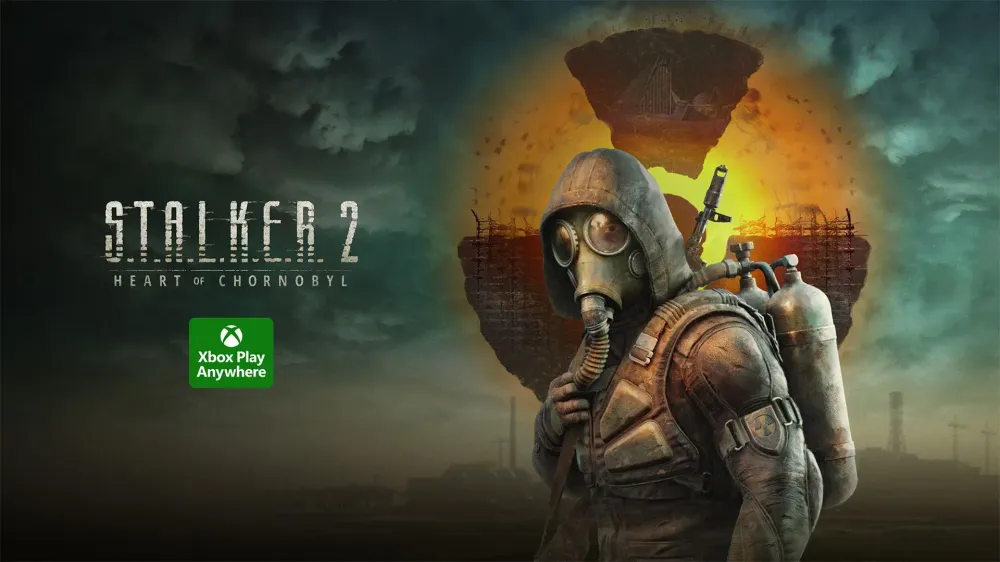
S.T.A.L.K.E.R. 2 Development Budget, Microsoft Payment, Funding, and Profitability
The exact development budget for S.T.A.L.K.E.R. 2 has never been publicly disclosed. The broadest description attributed to current ownership came from Maksym Krippa’s December 2024 interview with Forbes Ukraine, in which he declined to provide an exact figure and said only that the investment amounted to tens of millions of dollars. That description establishes the project’s general scale but does not reveal whether the final total was closer to $20 million, $40 million, $70 million, or another amount that could reasonably fit the same wording.
Grygorovych offered a more specific personal estimate in an April 2026 interview covered by GameDev DOU, describing development costs as reaching up to $70 million. That figure was not accompanied by audited accounts, internal financial records, or a breakdown of the expenses it included. GSC’s later statement that he had not participated in the complete production cycle makes it especially important to identify $70 million as his estimate rather than the studio’s confirmed budget.
Development totals can vary according to which expenses are counted. One calculation might include only direct production costs through the November 2024 launch, while another could incorporate years of preproduction, technology licensing, contractors, office operations, relocation, replacement equipment, delays, marketing preparation, post-launch support, the PS5 version, story expansions, and financing costs. Without a shared accounting definition, two people may provide different figures while measuring different periods and categories.
Microsoft’s payment is equally confidential. Grygorovych cited an NDA when declining to reveal the amount, while GSC and ARS Capital said the relevant contractual terms would not be debated publicly. The absence of documentation means there is no reliable way to calculate how much Microsoft paid or determine whether the money was delivered as one payment, several milestone installments, guaranteed revenue, marketing support, development assistance, or another arrangement.
Publicly, the partnership involved at least two valuable commercial rights. S.T.A.L.K.E.R. 2 was unavailable on PlayStation consoles at launch, and it entered Xbox Game Pass on its first day. Those rights are distinct even when negotiated simultaneously. Console exclusivity concerns where a game can be released during a particular period, while Game Pass licensing concerns distribution through Microsoft’s subscription service. Microsoft may also have provided showcase placement, technical assistance, marketing exposure, distribution support, or other services. No public record establishes whether everything was grouped into one contract or divided among separate agreements.
This uncertainty is why claims that Microsoft paid more than $70 million are unsupported. Reaching that conclusion requires treating Grygorovych’s disputed payment statement and his separate budget estimate as precise and mutually compatible. GSC has confirmed neither premise. Microsoft may have paid a substantial amount for the combined value of Game Pass access and timed console availability, but the available evidence does not prove that its payment exceeded the game’s total development cost.
GSC also identified Krippa as the person who financed most of the development budget. Krippa had previously described the production financing after his 2020 involvement with the company as coming entirely from his own funds. He declined to disclose the total but again characterized it as tens of millions of dollars. GSC’s statement credited him with providing the majority of the capital required to complete the game.
Funding development and later recovering development costs are related but separate concepts. Owner financing supplies money while production is underway, allowing the company to pay salaries, contractors, equipment, offices, technology, and other expenses. Revenue from a platform agreement may arrive later and reimburse some of that risk without becoming the original source that kept development operating. Krippa could therefore have financed most of the game while Microsoft still made a substantial commercial payment. Identifying him as the principal funder does not, by itself, reveal whether Microsoft’s contribution was large or small.
The same distinction matters when discussing profitability. Grygorovych claimed that Microsoft’s payment had covered development before launch, but GSC directly rejected his account. There is no independently available financial document proving that S.T.A.L.K.E.R. 2 was profitable before consumers could purchase it. The stronger verified evidence concerns what happened after release. In December 2024, Krippa said the game had sold enough copies to move into profit, referring to more than one million copies sold during approximately its first 36 hours.
These statements describe different financial timelines. Pre-release profitability would mean the Microsoft agreement alone had already removed most or all commercial risk. Post-launch profitability means retail revenue was still necessary before the project crossed its break-even point. Based on GSC’s official response and Krippa’s later comments, the defensible conclusion is that S.T.A.L.K.E.R. 2 became profitable after its November 2024 launch. Whether it had already recovered its costs beforehand remains the disputed part of Grygorovych’s story.
Even the post-launch profitability description depends on the accounting method being used. A studio may declare that a project has recovered direct development expenses while continuing to spend money on patches, salaries, platform ports, marketing, downloadable content, and future expansions. Without access to GSC’s financial records, outside observers cannot reproduce its calculation or determine which continuing costs were excluded from the break-even assessment.
Why Xbox Pursued S.T.A.L.K.E.R. 2, Game Pass, and the One-Year Console Gap
Microsoft has not published an internal explanation identifying one decisive reason for pursuing S.T.A.L.K.E.R. 2, but its public promotion demonstrates why the project was strategically attractive. During the July 2020 Xbox Games Showcase, Microsoft presented it as a major partner world premiere that would launch exclusively on Xbox consoles. The announcement came while Xbox was building interest in the Xbox Series X|S generation and emphasizing both next-generation software and day-one Game Pass releases.
At the June 2021 Xbox showcase, Microsoft described S.T.A.L.K.E.R. as an award-winning PC franchise loved by millions and presented the sequel as a genuine next-generation console debut. Its combination of first-person shooting, immersive simulation, horror, survival systems, and open-world exploration gave Xbox a recognizable enthusiast franchise that stood apart from more conventional action games. The sequel could strengthen the Xbox lineup, attract players familiar with the PC series, demonstrate new hardware, and increase the perceived value of Game Pass.
Grygorovych said trailer views directly prompted Microsoft’s interest. In his version of the negotiations, Xbox saw the audience response to a video, recognized the project’s commercial potential, and sent documents for signing approximately one week later. Strong trailer engagement could logically improve a developer’s negotiating position because it demonstrates brand awareness, fan enthusiasm, geographic reach, and potential subscription demand.
However, Microsoft has not confirmed that a particular view count caused the agreement, and no internal emails, negotiation records, or public executive comments establish the claimed sequence. GSC’s formal denial also said Grygorovych had not participated in the negotiations and that his public account did not accurately describe the circumstances. Trailer performance may have supplied useful evidence of demand, but the stronger claim that it directly caused Xbox to initiate and complete the deal within a week remains based on his disputed recollection.
The partnership clearly included day-one Game Pass availability. Xbox Wire confirmed that S.T.A.L.K.E.R. 2 launched on November 20, 2024, for Xbox Series X|S and PC and could be accessed through Xbox Game Pass from its first day. Microsoft’s November 2024 subscription schedule listed it for cloud, PC, and Xbox Series X|S through Game Pass Ultimate and PC Game Pass.
What remains unknown is whether Game Pass licensing and timed console exclusivity were purchased through the same agreement. Public discussion often compresses the entire partnership into one “Xbox exclusivity payment,” but this may oversimplify the contractual structure. A Game Pass guarantee could compensate GSC for allowing subscription access and possible lost full-price sales, while an exclusivity payment could separately cover delayed PlayStation availability. Marketing rights, showcase commitments, development support, and projected revenue guarantees could also have carried their own conditions. No public evidence provides a division among these possible elements.
The game was exclusive to Xbox consoles for one year when measured by actual consumer availability. Xbox Series X|S and PC received it on November 20, 2024, while the official PlayStation product page lists the PS5 edition for November 20, 2025. The exact 365-day difference makes “one-year Xbox console exclusivity” an accurate description of the market outcome.
That release gap does not necessarily reveal what the contract originally required. A confidential Microsoft portfolio document that surfaced during the Epic Games v. Apple litigation listed S.T.A.L.K.E.R. 2 with three months of console exclusivity. That document was reported in May 2021, more than three years before the game finally launched.
Several explanations could account for the discrepancy. The agreement may have been amended after the early document was prepared. The listed three months may have represented a minimum restriction rather than the final commercial plan. GSC may also have needed additional time to develop and certify the PS5 edition after any contractual restriction expired. None of those possibilities has been confirmed, so the precise exclusivity period written into the final agreement remains confidential.
The distinction is therefore between observable availability and private contractual obligation. Consumers experienced a complete one-year gap between the Xbox and PlayStation releases. The leaked document suggests that an earlier arrangement may once have involved three months, but it cannot prove the terms that ultimately governed the launch. Release dates confirm the practical outcome, not the wording of the agreement.

How the War in Ukraine Shaped Development and What the Deal Means for the Game’s Success
Any discussion of the development cost must account for the extraordinary circumstances created by Russia’s full-scale invasion of Ukraine. GSC activated an emergency relocation plan around February 24, 2022. Microsoft’s account of the studio’s experience said approximately 500 employees and family members were involved in the first wave that left Kyiv and eventually established a new development base in Prague. Around 200 staff members were still working from Ukraine when that account was published.
The move was far more complicated than transferring equipment between ordinary offices. Employees fled without much of their production hardware, forcing GSC to replace equipment and reconstruct essential facilities. Voice actors had to be recast after performers joined Ukraine’s defense forces, relocated, or became unreachable. The studio also rebuilt motion-capture and audio-recording facilities in Prague while attempting to preserve development across geographically divided teams.
The invasion disrupted power, internet access, communications, travel, staffing, performance capture, security, and daily coordination. Some employees joined the defense forces, while friends, relatives, and people connected to the wider GSC community were killed. Those human consequences cannot be reduced to a financial calculation, even though they also created unavoidable production expenses and delays.
GSC has never published an exact figure showing how much additional money the war added to the project. It is nevertheless reasonable to infer that relocation, duplicated operations, replacement hardware, new facilities, recasting, cybersecurity, extended salaries, travel restrictions, and interrupted production significantly increased costs and reduced efficiency. The game’s development lasted longer under conditions that no conventional commercial budget could have anticipated.
The size of the company also changed dramatically. Krippa said the development organization expanded from approximately 65 people when he entered the company in 2020 to around 470 employees by late 2024, with roughly 270 still based in Ukraine. Supporting a team of that scale across Prague and Ukraine extended the period during which GSC needed substantial financing before the game began producing release revenue.
The disputed Microsoft payment affects how observers interpret the financial risk behind this development. If Grygorovych’s version had been confirmed, it would suggest that the Xbox agreement reimbursed the full cost before launch and gave GSC unusually secure financial protection. Under GSC’s official account, Krippa carried most of the development financing, while Microsoft’s commercial agreement was one important element within a broader production and funding history.
The disagreement does not erase the game’s verified commercial performance. S.T.A.L.K.E.R. 2 sold more than one million copies during its opening period even though Game Pass provided subscribers with another way to play. Krippa said by December 18, 2024, that sales had moved the project into profit. This indicates that the game achieved commercial sustainability shortly after release, regardless of the unresolved pre-launch claim.
By March 2025, GSC announced that more than six million players had entered the Zone. That was a player milestone rather than confirmation of six million purchased copies because it included Game Pass users. It still demonstrated that the game had attracted a substantial global audience within less than four months and that Microsoft’s subscription service had contributed to its reach.
The PS5 launch on November 20, 2025, expanded the addressable console market after the one-year Xbox-to-PlayStation gap. GSC’s July 2026 response also said the team was continuing to develop a significant update and its first large-scale story expansion, confirming that S.T.A.L.K.E.R. 2 remained an active product with continuing costs, content plans, and revenue opportunities rather than a completed one-time release.
The financial dispute therefore changes the interpretation of who carried the greatest development risk, but it does not change the evidence of the game’s success. Krippa and GSC say owner financing supplied most of the production budget, Microsoft provided an undisclosed partnership involving Game Pass and Xbox console availability, and post-launch sales moved the project into profit. The game subsequently reached millions of players, expanded to PlayStation 5, and continued receiving major development support.
Without the actual contract or audited accounts, it is impossible to determine whether Microsoft’s payment was economically favorable for Xbox, how much of GSC’s risk it absorbed, or whether any part of the disputed claim was based on an incomplete understanding of the finances. What can be stated confidently is that S.T.A.L.K.E.R. 2 became one of the most internationally visible Ukrainian entertainment projects, survived extraordinary production circumstances, and achieved substantial commercial reach despite the uncertainty surrounding the Xbox agreement.

Frequently Asked Questions (FAQs)
- Is it confirmed that Microsoft paid more than the S.T.A.L.K.E.R. 2 development budget?
No. Sergiy Grygorovych claimed that Microsoft paid more than GSC spent developing the game, but GSC Game World formally rejected his account as inaccurate. The studio said he had not participated in the relevant partner negotiations or remained directly involved throughout the full production cycle. Without a public contract, confirmed payment figure, or audited development budget, there is no independent evidence proving that Microsoft’s payment exceeded the game’s total cost. - Who originally made the S.T.A.L.K.E.R. 2 Xbox budget claim?
GSC Game World founder Sergiy Grygorovych made the claim during an interview with Ukrainian gaming creator OLDBoi. He said Microsoft became interested after noticing the strong response to a S.T.A.L.K.E.R. 2 trailer and that the resulting Xbox payment was larger than the development expense. GSC later stressed that his historical status as founder did not give him authority to represent the modern company’s confidential negotiations or current financial affairs. - Why did GSC Game World respond publicly?
GSC said it initially preferred not to discuss confidential business arrangements through the media. However, the studio became concerned that remaining silent would be interpreted as confirmation of information it considered untrue. It therefore clarified that Grygorovych had not participated in the partner negotiations or the complete production process and that his description did not accurately represent the circumstances surrounding the Xbox agreement. - What is the confirmed S.T.A.L.K.E.R. 2 development budget?
No exact development budget has been publicly confirmed. Current owner Maksym Krippa described the investment only as tens of millions of dollars and declined to provide a more precise total. That broad description also does not establish whether the figure includes marketing, relocation, post-launch support, platform ports, or other expenses beyond the initial production period. - Is the frequently reported $70 million budget official?
No. The figure came from Grygorovych’s personal estimate that development may have cost up to $70 million. It was not supported by audited accounts, a detailed expense breakdown, or an official GSC financial disclosure. Because GSC says he was not directly involved throughout the full production cycle, the number should be identified as an informal estimate rather than the company’s confirmed final budget. - How much did Xbox pay GSC Game World?
The amount remains confidential. Grygorovych said a nondisclosure agreement prevented him from revealing it, while GSC and ARS Capital stated that the relevant contractual terms would not be publicly debated. It is also unknown whether Microsoft made one combined payment or separate arrangements covering Game Pass access, timed console exclusivity, marketing, technical assistance, guaranteed revenue, or other commercial rights. - Did S.T.A.L.K.E.R. 2 make a profit before launch?
That remains disputed. Grygorovych said the Xbox agreement had already covered development expenses before the game went on sale, but GSC rejected his account. The strongest verified profitability statement came after launch, when Maksym Krippa said in December 2024 that early sales had moved the project into profit. This supports post-launch profitability but does not prove that the game was already profitable beforehand. - Was S.T.A.L.K.E.R. 2 available through Xbox Game Pass on release day?
Yes. S.T.A.L.K.E.R. 2 launched on November 20, 2024, for Xbox Series X|S and PC with day-one availability through Game Pass Ultimate and PC Game Pass. What remains unknown is how Microsoft financially structured that access. Game Pass licensing and console exclusivity are separate commercial rights, even though they may have been negotiated together. - How long did the Xbox console exclusivity last?
The observable gap between the Xbox and PlayStation releases was exactly one year. Xbox Series X|S and PC received the game on November 20, 2024, while the PlayStation 5 edition arrived on November 20, 2025. An older Microsoft document had listed three months of console exclusivity, suggesting that the agreement may have changed or that the PS5 version required additional development time. The final contractual restriction remains confidential, so the one-year period describes actual availability rather than a confirmed contract term. - Who does GSC say paid for most of the game’s development?
GSC says current owner Maksym Krippa financed the majority of the development budget. Krippa had previously stated that financing after his 2020 agreement involving the company came from his own funds and amounted to tens of millions of dollars. This does not mean Microsoft provided no financial support, but it identifies Krippa as the primary source of production funding while the Xbox payment concerned separate commercial arrangements.

Conclusion
The S.T.A.L.K.E.R. 2 Xbox Exclusivity Deal Budget Claim Explained controversy does not end with a verified blockbuster payment figure. It ends with two incompatible accounts and confidential documents that prevent independent confirmation.
Sergiy Grygorovych said Microsoft approached GSC after seeing strong trailer engagement, quickly prepared an agreement, and paid more than the entire cost of developing S.T.A.L.K.E.R. 2. He also said the project had effectively recovered its investment before its first public sale.
GSC Game World rejected that account. The studio said Grygorovych had not participated in the Xbox negotiations or the complete production cycle and that his comments did not accurately represent the facts. GSC and ARS Capital identified Maksym Krippa as the person who funded most of the development budget and said the relevant contractual terms would remain confidential.
The exact development cost is still unknown beyond Krippa’s description of tens of millions of dollars. The frequently cited estimate of up to $70 million came from Grygorovych and is not an official, audited total. Microsoft’s payment is equally unknown, as is the division between console exclusivity, Game Pass access, marketing, and any additional support.
The verified commercial record is clearer. S.T.A.L.K.E.R. 2 launched on Xbox Series X|S and PC with Game Pass on November 20, 2024, surpassed one million sales during its opening period, and had become profitable by December according to its owner. It reached more than six million players by March 2025 and arrived on PS5 exactly one year after its original release.
Therefore, the accurate verdict is not that Xbox definitely paid more than S.T.A.L.K.E.R. 2 cost. The accurate verdict is that Grygorovych made that claim, GSC officially denied it, and the confidential financial evidence needed to settle the dispute has not been made public.
Sources and Citations
- Insider Gaming, original interview report: Written by Mike Straw, published July 21, 2026. Records Grygorovych’s assertion that Xbox paid more than S.T.A.L.K.E.R. 2 cost to develop and that the project had paid for itself before release. It also includes his account of Microsoft reacting to the trailer’s view count and sending paperwork within approximately a week. This documents his claim, not independently verified payment figures. (Insider Gaming)
Citation: Xbox Paid More Than Stalker 2’s Development Cost To Make It Exclusive
Original interview: OLDBoi’s interview with Sergiy Grygorovych, linked at 29:45 - dev.ua, interview coverage and subsequent denial: Written by Mariia Brovinska, dated July 23, 2026. This English-language report covers the trailer-view account, Grygorovych’s reference to an NDA preventing disclosure of the payment, and his earlier development-cost estimate of up to $70 million. Its updates reproduce GSC’s denial and the studio’s statement that Maksym Krippa financed most of development. (dev.ua)
Citation: Grygorovych’s Xbox exclusivity claim and GSC Game World’s response - Insider Gaming, GSC Game World’s formal response: Written by Mike Straw, published July 22, 2026. Contains the statement provided directly to the outlet in which GSC disputes Grygorovych’s account. The studio says he was not involved in partner negotiations or development throughout the complete production cycle, that his comments were inaccurate, and that Krippa funded the majority of the development budget. (Insider Gaming)
Citation: STALKER 2 Studio Shuts Down Recent Xbox Funding Claims - dev.ua, December 2024 financial context: Written by Oleksandr Kuzmenko, published December 18, 2024. Summarizes Krippa’s Forbes Ukraine interview, including his description of development spending as tens of millions of dollars, his claim that financing after the 2020 agreement came entirely from his funds, and his statement that sales had made the project profitable. It also reports growth from 65 employees in 2020 to approximately 470, including 270 in Ukraine at the time of the interview. These are attributed statements, not an independently audited budget. (dev.ua)
Citation: GSC Game World’s owner says S.T.A.L.K.E.R. 2 has recouped its costs and become profitable - Xbox Wire, original console announcement: Published July 23, 2020. Provides first-party evidence of Microsoft’s early promotion of the game, its reveal during the Xbox Games Showcase, and its positioning as GSC’s first console announcement for an established PC franchise. It also confirms the original commitment to day-one Xbox Game Pass availability. (XBOX Wire)
Citation: S.T.A.L.K.E.R. 2 Is Coming to Xbox Series X - Xbox Wire, confirmed launch and Game Pass date: Written by Megan Spurr, published November 19, 2024. Lists S.T.A.L.K.E.R. 2: Heart of Chornobyl for November 20, 2024, on Xbox Series X|S, PC and cloud, explicitly identifying it as a day-one release through Game Pass Ultimate and PC Game Pass. (XBOX Wire)
Citation: Coming to Game Pass: S.T.A.L.K.E.R. 2, Nine Sols, Genshin Impact Benefits, and More - PlayStation, official product page: The page’s release information confirms November 20, 2025, for the PS5 version. Together with Xbox’s launch announcement, this establishes the one-year gap between the actual releases, without establishing that every earlier exclusivity agreement specified one year. (PlayStation)
Citation: S.T.A.L.K.E.R. 2: Heart of Chornobyl, official PlayStation page - PlayStation LifeStyle, alternative source for the earlier three-month exclusivity reference: Written by Rebecca Smith, published May 3, 2021. Reports that a Microsoft Executive Portfolio Update submitted during Epic Games v. Apple identified three months of Xbox console exclusivity. The article links directly to the court filing and distinguishes the arrangement from permanent exclusivity. (PlayStation LifeStyle)
Citation: S.T.A.L.K.E.R. 2 Exclusive to Xbox for Just Three Months, Leaves Door Open for PS5 Release - Microsoft Source, evacuation and divided workforce: Written by Athima Chansanchai, published October 31, 2024. Documents GSC’s emergency evacuation planning, the relocation of approximately 500 employees and family members, the rebuilding of operations in Prague, and approximately 200 staff remaining in Ukraine at that point. Staff interviews describe the personal losses, separation and disruption behind continued development. (Source)
Citation: When Danger Sprang From the Screen to Real Life, a Ukrainian Game Studio Battled Back - The Kyiv Independent, documentary-based development reporting: Written by Andrea Januta, published November 20, 2024. Drawing on the development documentary, this report describes employees fleeing without their equipment, voice-actor recasting, and the construction of replacement motion-capture and audio-recording studios. It also covers the Prague relocation and developers continuing to work in Ukraine under wartime conditions. (The Kyiv Independent)
Citation: Delayed by War, Ukraine’s Long-Awaited S.T.A.L.K.E.R. 2 Surges to the Top of Video Game Purchases - Verification limitation: I could not verify reliable direct article links for the specific VideoCardz, GameDev DOU and The Verge reports named in your passage. The linked Insider Gaming interview report, dev.ua coverage and PlayStation LifeStyle court-document report provide verified alternatives for those points.
Recommendations
- Godzilla: Destroy All Monsters Melee Remastered May Not Be the Last
- Polden Publishing Reaches $7 Million in Revenue After Adding $1 Million in Six Weeks
- Arc Raiders is Seeing 6 Million Players Weekly, Surpasses 14 Million Copies Sold, Nexon Q4 2025 Investor Report
- Beast of Reincarnation Patch v1.0.9 Adds Ultrawide, DLSS and FSR
- Nipsey Hussle’s Braids: A Symbol of His Legacy
- The Pixar Movies, Ranked from Worst to Best: Every Pixar Film Explained
- 11 Nioh 3 Tips to Help You Defeat the Yokai and Become Shogun (Beginner Combat & Exploration Guide)
- Epic Introduces Unreal Engine 5.8 Update With Twice-as-Fast Lumen Lite for Nintendo Switch 2
- Pokémon Go Choose Your Path Fossil Fun June 2026 Timed Research Bonuses
- Ghost of Yōtei: Legends ‘Last Major Planned Update’ Explained, What the Raid Ending Means for Future Content, Player Reactions, and Sucker Punch’s Next Move



































































































