








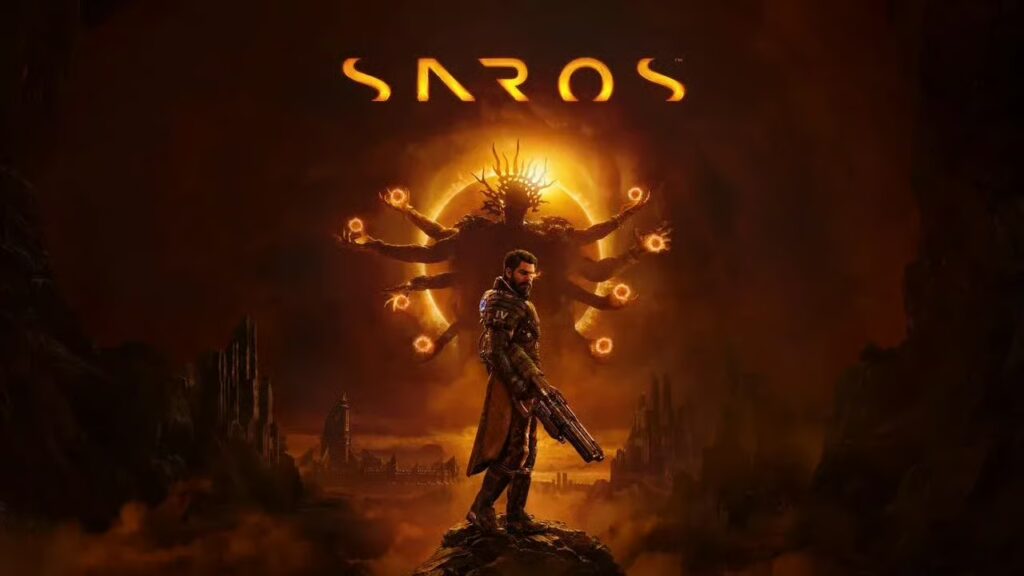
Saros is Housemarque’s upcoming third-person action roguelite shooter, launching April 30, 2026, exclusively on PlayStation 5 (with PS5 Pro enhancements). In Saros you play as Soltari Enforcer Arjun Devraj on the alien world of Carcosa. The game mixes fast-paced bullet-hell combat with a “come back stronger” progression loop. Arjun wields a Soltari Shield that absorbs enemy projectiles, converting them into energy for devastating Carcosan Power Weapons. Each death resets part of the world under a mysterious eclipse, but you retain permanent upgrades and new gear, letting you “come back stronger” on each run.
Saros Release Date, Platforms, and Developer Details You Should Know
Saros releases on 30 April 2026, exclusively on the PlayStation 5 (including PS5 Pro). It is developed by Finnish studio Housemarque (known for Returnal and other PS5 titles) and published by Sony Interactive Entertainment. The game uses Unreal Engine 5 and promises to push the PS5’s hardware, running at a rock-solid 60 FPS even during intense combat. (Note: Saros is not planned for PC or other consoles, it is a PlayStation-exclusive title.)
Saros Story Explained: Who Is Arjun Devraj and What Is Carcosa?
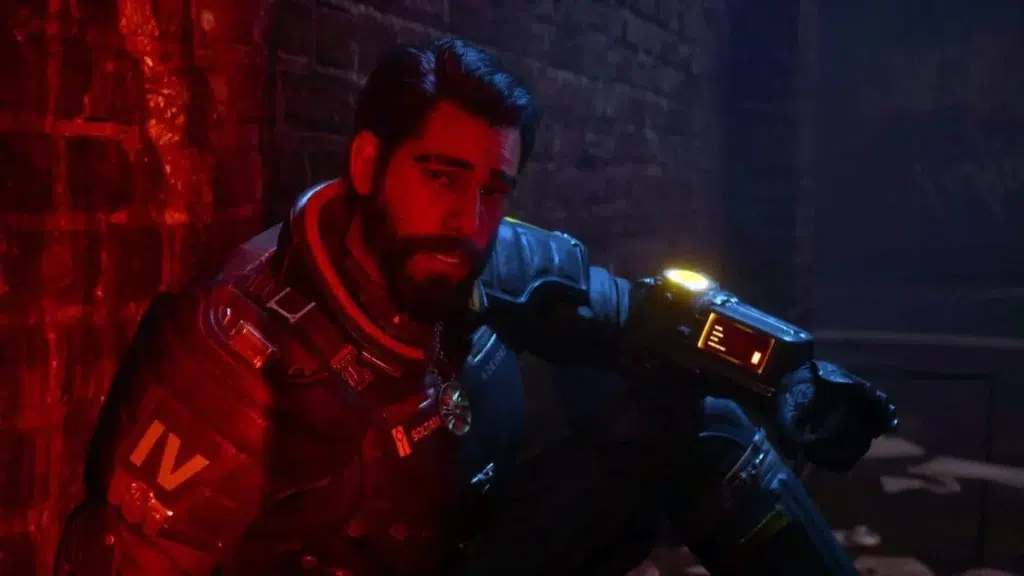
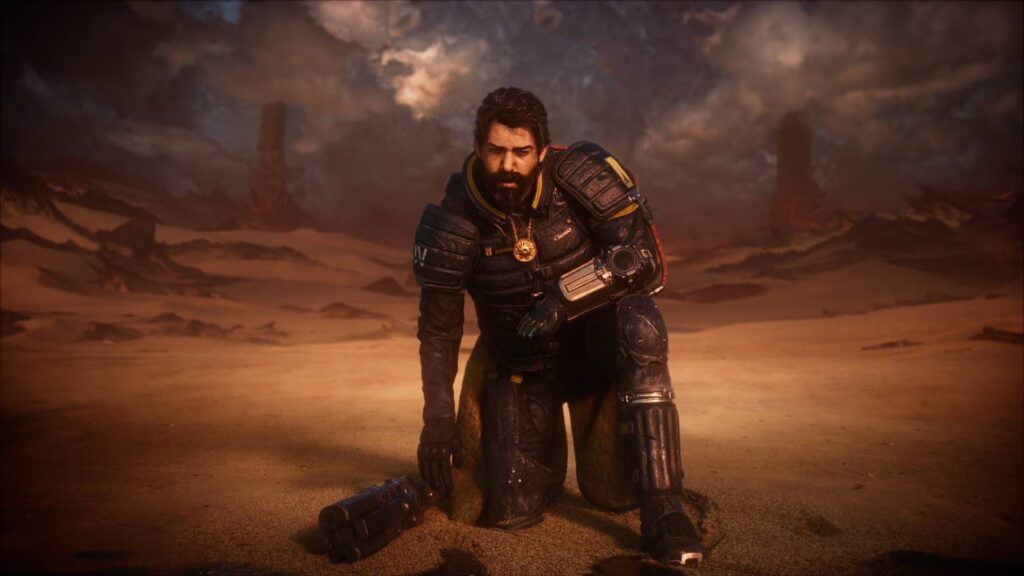
Arjun Devraj (voiced by actor Rahul Kohli) is a Soltari Enforcer, a powerful soldier sent to investigate the fate of a lost human colony. After decades of silence from the Echelon space expedition, Arjun’s mission on Carcosa is to find out what went wrong. Carcosa itself is a hostile, alien planet with a strange past: it was once home to an advanced “sun-worshipping” civilization, whose ruins dot the landscape.
You will explore crumbling cathedrals, ancient temples and the maze-like Ancient Depths beneath the surface. Dangerous native creatures and malfunctioning alien machines lurk everywhere. The world is also under a perpetual solar eclipse that warps the environment, storms of corruption, mutated wildlife, and shifting terrain all follow the eclipse’s mysterious cycle. In short, Arjun must face a haunted Carcosa of ancient tech and cosmic horror to uncover what happened to the missing colonists.
Understanding the Eclipse System in Saros and How It Affects Gameplay
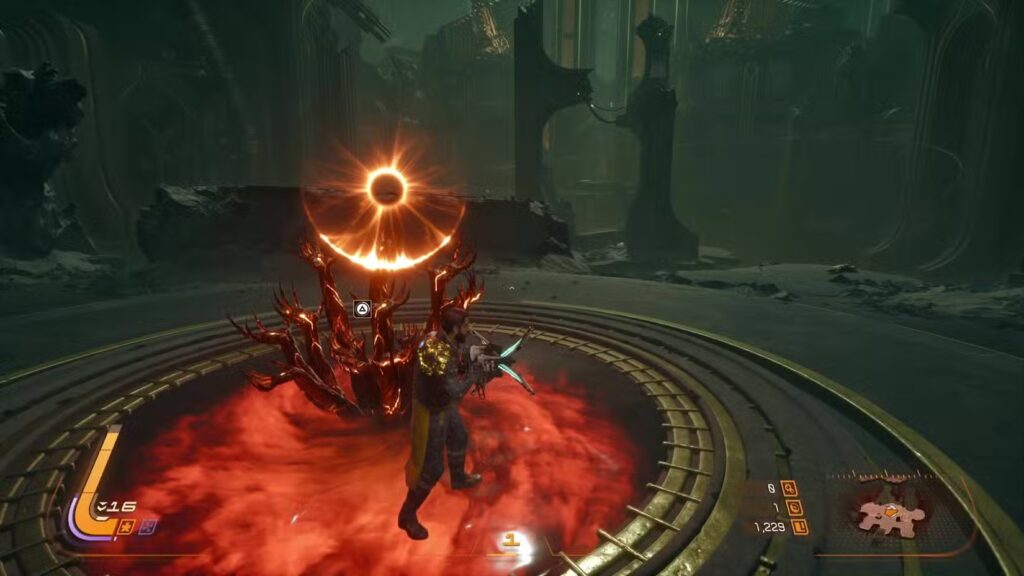
The Eclipse is a recurring cosmic event on Carcosa that amplifies danger and reshapes the world. In-game, players find “Eclipse pedestals” in each biome. Activating an eclipse on demand dramatically changes the visuals and enemy behavior: hostiles become far tougher and spawn yellow “corrupted” projectiles. In return for braving this, enemies drop more Lucenite/Halcyon and you can earn extra experience, it’s a true risk-reward mechanic. Importantly, the Eclipse narratively affects Carcosa: research briefings note that after each eclipse, the planet’s maps and landscapes actually shift unpredictably. Known locations like the hub area The Passage remain fixed (it is “protected from topographical realignment” by design), but everywhere else new paths open and old routes close after an eclipse.
Mechanically, this means each cycle feels fresh, enemies, loot spawns, and hazards move around. The Eclipse also literally corrupts environment hazards: for example, in the Blighted Marsh biome, the marsh water becomes a burning hazard when the eclipse is active. Players can cleanse corruption from their armor (reducing its harmful effect) by using their Power Weapon. In summary, engaging the Eclipse makes the game harder but more rewarding, and causes dynamic, procedural changes to the world.
Saros Gameplay Loop Explained: Death, Respawn, and Permanent Progression
Unlike a traditional roguelike, Saros rewards death with progression. When Arjun dies on a run, he respawns back at the hub (The Passage) but any Lucenite or Halcyon collected, and any gear you found, is banked for upgrades. In The Passage, you use those resources to permanently upgrade Arjun through the Armor Matrix (described below). Over time you unlock higher Max Health, more Shield energy, faster Lucenite gain, and even the Second Chance mechanic (a limited revive on death).
Critically, the world itself is altered by your progress: new teleporters unlock, and the world’s layout randomizes after each death, so exploration remains unpredictable. Saros’s loop is thus: go on a run, fight bosses and explore, earn Lucenite/Halcyon, die (or quit), come back stronger with upgrades, and try again. Each death feels less punishing than in Returnal, you keep your improved stats and hard-won weapons for the next life.
How the Soltari Shield Works in Saros Combat Mechanics
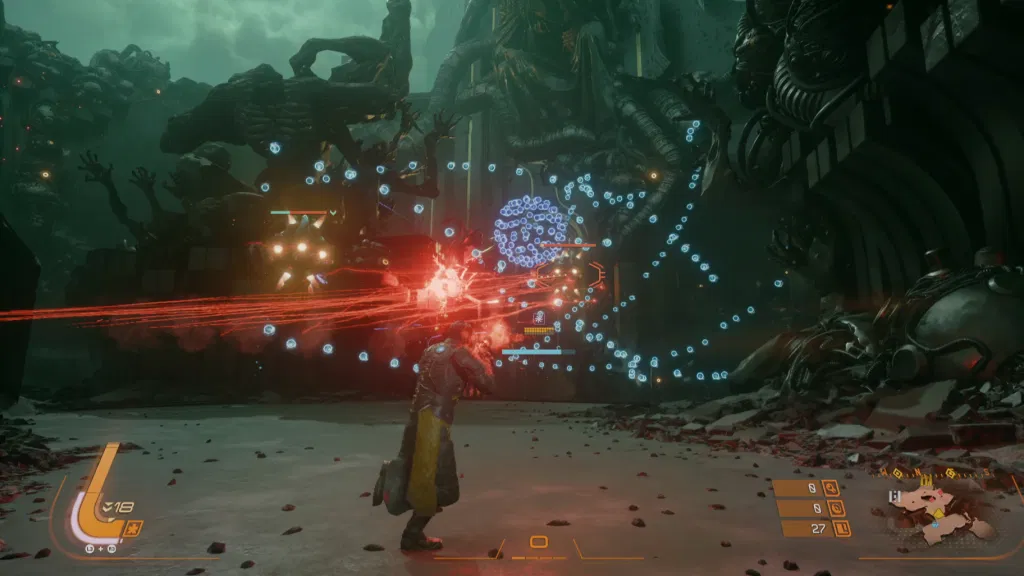
Arjun’s Soltari Shield is central to combat strategy. You hold L1 (the left bumper) to deploy the shield. While it drains your Power gauge, the shield can block and absorb certain projectiles. Absorbed projectiles (blue or yellow) recharge your Power Weapon meter. Absorbing a blue projectile simply gives power; absorbing a yellow (“corrupted”) projectile also gives power but temporarily shrinks your Max Armor (Corruption). Yellow projectiles and beams build Corruption, but this isn’t fatal, you can cleanse Corruption by firing your Power Weapon. Red projectiles can be parried: timing a block at the last moment (Parry) sends a shockwave back at enemies.
Learning the color cues (blue=absorb, red=dodge/parry, yellow=absorb or cleanse) is key. In practice, defenders recommend shielding frequently and converting enemy fire into power, rather than trying to dodge everything. Since Saros encourages an aggressive style, you’ll often dash into fire to absorb it and unleash a powerful Power Weapon attack. The Soltari Shield thus turns incoming enemy attacks into your resource, fundamentally changing how fights play.
Saros Weapons Guide: Power Weapons and Loadout Options Before You Start
Saros features two weapon classes: Main Weapons (guns you find or unlock) and Power Weapons (once-per-cycle special arms). Main Weapons include handcannons, rifles, shotguns, crossbows, and chakrams, each with a unique alternate fire. The game’s randomization means each run gives you variants, but some weapons stand out. According to tests, the Eruptor Handcannon and Onslaught Rifle are among the strongest main weapons (both have auto-aim features and powerful charged shots). Other viable weapons include the Smart Rifle (auto-missiles alt-fire), Burst Handcannons, and various chakrams/shotguns depending on playstyle.
Power Weapons are extremely destructive Carcosan armaments that use your Shield’s energy. There are four known Power Weapons: Prominence, Illumine, Dispiritor, and Nova Lance. As an example, Prominence fires lethal explosive shells; Illumine unleashes a continuous golden beam; Dispiritor creates homing entropy projectiles; Nova Lance is a railgun shot through enemies. Of these, Illumine and Prominence are often considered top-tier due to their versatility.
Power Weapons recharge as you absorb fire, so using them aggressively is the key. Plan your loadouts around your find each run, unlock each weapon by progressing (the game gradually adds guns to the loot pool). In summary, before starting, know that Saros rewards using both your guns and your Power Weapon freely, and that collecting a good main gun and alternating fire modes can turn the tide of any fight.
What Makes Saros Different From Returnal and Other Roguelike Games
While Saros shares Returnal’s bullet-hell action DNA, it makes several key changes for a more player-friendly roguelite. Notably, Saros has permanent upgrades between runs. Unlike Returnal’s brutal loss of progress, Saros lets you bank experience and resources at the hub, so “every death is valuable” and you feel consistently more powerful. Saros also segments runs into shorter expeditions: you can teleport between biomes and take breaks at The Passage without losing your spot.
The tone and storytelling differ too, Saros is designed with a broader, more optimistic build-up, whereas Returnal kept relentless pressure. In universe, Saros is a completely new IP; there is no story connection to Returnal or shared characters. Even genre-wise, Saros adds new layers: it has optional Carcosan Modifiers (difficulty tweaks) and rich narrative background, whereas Returnal focused purely on challenge. In short, Saros feels like Returnal‘s bullet ballet at first glance, but with a clear roguelite safety net and a unique mythos of its own.
Carcosa Planet Explained: Biomes, Enemies, and Environmental Hazards
Carcosa’s world is divided into distinctive biomes, each with hazards. For example, the Shattered Rise is a rocky, mountainous region filled with aggressive native creatures and mysterious alien ruins. The Ancient Depths lie beneath the surface, sprawling caverns and tunnels once mined for lucenite by a long-gone civilization. It’s patrolled by alien machines and unknown entities. The hub area, known simply as The Passage, is an ancient alien structure used as a safebase. Notably, no enemies enter The Passage and it’s unaffected by the eclipse’s world shifts. Across these biomes you’ll face both biological threats (mutated beasts) and technological ones (sentient machinery, automated defenses).
Environmental hazards include the aforementioned living, burning pools (like in the Blighted Marsh) and Corruption elements (yellow beams that shrink health). You’ll often find “lucenite veins” (resources) and abandoned Soltari sites, but beware, even walking triggers traps in polluted areas. Knowing a biome’s hazards helps: e.g. carry powerful weapons in Shattered Rise, use ranged Firepower in the Ancient Depths. With each cycle, expect some changes (see next section), the map isn’t fixed. Mastering Carcosa means learning each region’s layout, enemies, and alien tech (like the 48-hour early armor suits or Returnal-themed gear in Deluxe editions).
Saros Armor Matrix System: How Upgrades and Builds Work
Between runs, Saros lets you retool Arjun’s armor via the Armor Matrix, a Soltari AI at the hub. You spend Lucenite (yellow crystals collected in runs) and Halcyon (blue shards) to unlock permanent stat boosts. There are three core attributes: Resilience (max health), Command (max Power/Energy), and Drive (how fast your Proficiency/XP grows). Upgrading Resilience means Arjun can take more hits; higher Command lets him absorb and use more power; higher Drive nets more upgrades per run. You also spend resources to unlock new features: for example, the coveted Second Chance ability (revive once per run) and faster lucenite gain rates become available as you advance the Armor Matrix.
Artifact drops on Carcosa can temporarily boost attributes or even change your armor’s abilities (e.g. resist Corruption or harvest resources). Overall, your “build” comes from how you allocate Lucenite/Halcyon: do you pump health, offense, or utility? Good early advice is to increase Resilience and Command first for survivability, then experiment with Drive and special traits.
Beginner Tips for Surviving Early Runs in Saros
- Master the Shield and Power Weapon: As noted above, use your shield aggressively. Absorb blue/yellow shots whenever safe, and fire your Power Weapon often, the energy can quickly recharge. Don’t hoard power; save weaker enemies with it or break Corruption.
- Color-Coded Attacks: Pay attention to projectile colors. Blue = absorb for free power. Red = dodge or parry (a perfect parry sends a shockwave). Yellow = absorb for power (it adds Corruption) or dodge if low on health. If you get confused, you can even adjust the projectile colors in Accessibility settings.
- Collect Resources Religiously: Pick up every piece of Lucenite (yellow crystals) and Halcyon (blue shards) you see. They carry over between runs: more Lucenite = more upgrades at the matrix, more Halcyon = better gear and abilities unlocked. Skipping these pickups early will slow your long-term progress.
- Use Adrenaline Wisely: Building your adrenaline meter (through kills and Lucenite) gives combat bonuses (like temporary buffs, radar ping, repair, etc.). Avoid getting hit and losing it. High adrenaline stacks matter, so play carefully to keep it maxed.
- Upgrade Attributes: Inside The Passage, regularly spend resources on Resilience, Command, and Drive. Many Main Weapons also scale with your attributes, so pumping them up makes found guns hit harder or recharge faster.
- Don’t Fear Corruption: Yellow projectiles drain your max health temporarily, but this “Corruption” is easily undone by firing any Power Weapon. In fact, some weapons perform better the more corrupted you are. Learn to let yellow shots hit your shield when you can, and cleanse them with a beam to actually heal back.
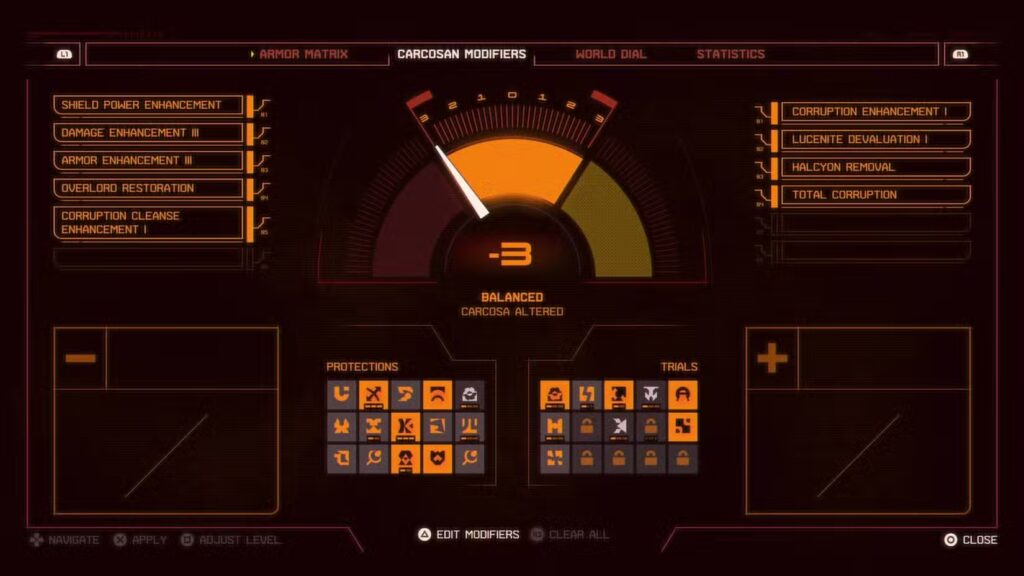
- Adjust Difficulty (Modifiers): If you’re struggling, unlock Carcosan Modifiers (after the second boss) and try Protection modifiers. For example, Shield Power Enhancement makes your shield never drain power when fully charged. Use mods to lower spikes or increase challenge as suits you.
- Learn Your Weapons: Check each gun’s alternate fire and Traits on the equipment screen. Alt-fires can add homing missiles, charged shots, or special effects. Knowing when to use them (e.g. precision shots on weakpoints) is key.
- Use Fast Travel: After unlocking it, teleporting between biomes at The Passage saves time and risk. If a run is going poorly, you can start a new one quickly without slogging back.
- Study Boss Patterns: Each boss (Overlords, Legions, Prophet, etc.) has multi-stage phases with telltale attacks. Observe their telegraphs and use the shield during heavy barrages. Dying to a boss isn’t the worst: you keep weapons and can try again immediately.
- Don’t Panic in Chaos: Saros’s bullet-screens are hectic. Stay calm, use cover points, circle-strafe enemies, and pick the fights you want. Sometimes it’s okay to temporarily retreat or parry rather than dive deeper.
Boss Fights in Saros: What to Expect in Multi-Phase Encounters
Saros features a variety of boss encounters, each with multi-stage fights. Early bosses (overlords of their domains) serve as checkpoints. They will relentlessly shoot barrages of bullets, lasers, and projectiles of all colors. Key tips: Use your Shield to block and absorb when the boss fires blue/yellow shots, this both negates damage and charges you up. Parry red blasts to stun the boss when possible. Each boss usually has a “second phase” where their attack patterns change or they come up from cover.
For example, one boss might have a spinning shield you must parry to break. Don’t despair at death: Saros expects multiple attempts. When you die, you return with new stats and can immediately retry. Also, defeat of certain bosses unlocks vital features (e.g. Carcosan Modifiers unlock after boss 2). In short, expect pixel-perfect strafing, smart use of your shield/power weapons, and the ability to learn each boss’s rhythm. Watch for environmental hints (like safe spots or bounceable walls) and use gaps to heal with Halcyon.
How Procedural Level Changes Affect Exploration in Saros
Every time you die and restart, Carcosa’s levels procedurally change. Walls may have shifted, new corridors can open, and old ones close. This ties into the Eclipse: after each run (which includes at least one eclipse cycle), “maps of Carcosa are no longer accurate and must be created anew”. Practically, this means you can’t rely on memorizing a single layout, each run is a fresh puzzle. However, The Passage hub remains static, and any teleporters you unlock will always lead to that biome’s current layout.
You keep all Main and Power Weapons you found, so you don’t lose firepower, only the level geometry changes. The constantly shifting terrain encourages exploration (and use of the map): always ping the map to reveal new hidden rooms or shortcuts after an eclipse. Over time you may notice recurring patterns (e.g. a particular biome often splits differently), but expect surprises. This procedural design keeps runs unpredictable and replayable.
Saros Difficulty Settings and Accessibility Options Explained
Saros is built to be challenging but also customizable. Carcosan Modifiers (unlocking mid-game) let you adjust difficulty on the fly. They come in two types: Protection modifiers (which ease the game) and Trial modifiers (which make it harder). For example, you can boost your damage output or make your shield never drain power to make fights easier, or enable Weapon Decay and remove your Second Chance to crank up the challenge. The game forces a balance (adding multiple buffs requires balancing debuffs) to keep runs interesting.
On the accessibility side, Saros includes many features at launch. There are color-blind modes (so all players can distinguish Normal, Corrupted, and Nova projectiles) and a Dialogue Focus Mode. You can fully remap controls (including DualSense trigger settings) and adjust HUD/UI options. These options build on Housemarque’s Returnal accessibility and ensure a wider audience can enjoy the game. Combined, these settings mean you can tailor Saros’s challenge and visuals to your preference.
Common Mistakes New Players Make in Saros and How to Avoid Them
- Neglecting the Shield/Power Weapon: Many beginners dodge too much and underuse their shield. Remember, absorbing shots with your shield is intended: it refills your Power weapon bar and can even increase your score. If you’re skittish about absorbing yellow shots, note that Corruption (yellow’s effect) is easily cleansed by firing your Power Weapon. Instead of dodging all bullets, practice holding shield and dancing through some enemy fire – it turns danger into power.
- Forgetting to Gather Resources: Skipping Lucenite or Halcyon because you’re rushing a run is a huge missed opportunity. These resources are permanent. Always stop and pick up crystals you see – a few extra Lucenite can unlock a major upgrade at the matrix, and Halcyon is needed for the best gear.
- Not Using Modifiers: Some players play on default and think Saros is “too hard” early on. Remember, you can tweak the challenge with Carcosan Modifiers once available. New players shouldn’t hesitate to enable Protective buffs (like Damage Boost or Shield Power Enhancement) to survive bosses, as long as they balance with a slight trial mod.
- Underestimating Corruption: Yellow projectiles (and Corruption) shrink your health bar temporarily, which can panic players. In reality, it’s manageable. Power Weapons quickly purge corruption, and a deliberate use of a Power Beam will restore any lost health. Plus, certain Main Weapons actually scale up as you get corrupted. So don’t avoid all yellow shots: instead, absorb them strategically and then blast them away.
- Overlooking Attributes and Traits: New players often grab guns without checking their traits or noticing which attribute they scale with. Each weapon’s alt-fire and Trait (visible on the map/equipment screen) can greatly affect its performance. Take a moment to see if a gun boosts your Command or Drive, or adds elemental bolts, etc. Similarly, always upgrade your Resilience/Command/Drive steadily – ignoring this makes runs much harder than they need to be.
Frequently Asked Questions (FAQs)
- What exactly is Saros?
Saros is an upcoming single-player third-person action roguelite shooter for PlayStation 5. You play as Arjun Devraj, exploring a dangerous alien world called Carcosa, combining bullet-hell combat with permanent upgrades. - When does Saros come out and on what platform?
The game launches on April 30, 2026, exclusively for PS5 (with support for the upcoming PS5 Pro). It is developed by Housemarque and published by Sony Interactive Entertainment. - Who is Arjun Devraj?
Arjun Devraj is the Soltari Enforcer you control. He’s a former Earth soldier sent to Carcosa to investigate a missing colony. The character is voiced by actor Rahul Kohli. - What is the Eclipse in Saros?
The Eclipse is a mysterious cosmic event in the game. Activating an Eclipse on a run makes enemies stronger and corrupts part of the world, but yields extra loot and XP. In-world, it’s a recurring solar event that actually scrambles the planet’s maps, so after each cycle the layouts shift. - How does progression work between runs?
Saros lets you permanently upgrade Arjun between runs. You collect Lucenite and Halcyon on runs and spend them at the hub (The Passage) to boost your armor’s attributes and unlock abilities. Dying or quitting out of a run takes you back with your new resources and keeps any main/power weapons you found. - What is the Soltari Shield and how do I use it?
The Soltari Shield is Arjun’s defensive tool. Hold L1 to raise it. It can block/red projectiles and absorb blue/yellow shots. Absorbed energy charges your Power Weapon. Using the shield is vital: absorb attacks to build power, and learn the color system (blue = block, red = parry, yellow = absorb but causes Corruption). - What are Power Weapons in Saros?
Power Weapons are Carcosan arms of massive damage, recharged by your shield. Examples include Prominence (explosive shells), Illumine (continuous beam), Dispiritor (homing entropic orbs), and Nova Lance (armor-piercing railgun). You fire these with L2+R2. Use them generously once charged – they can clear waves and bosses faster than normal guns. - What about difficulty? Are there easy modes?
Yes. Saros features Carcosan Modifiers you can toggle after the early game. Protection modifiers (like boosting damage or infinite shield power) make combat easier, while Trial modifiers (weapon decay, removing second chances) ramp it up. You can mix and match these to adjust challenge. Plus, the game has accessibility options – color-blind modes, full button remapping, and UI tweaks are included at launch. - Is Saros connected to Returnal?
No. Saros is a new IP unrelated to Returnal’s story or characters. It shares Housemarque’s fast-paced combat style, but the narrative, mechanics (like permanent upgrades), and setting are all different. - Is Saros single-player only?
Yes, Saros is a single-player experience. It focuses on solo exploration and combat – there are no multiplayer or co-op modes.
Conclusion
Saros takes the best parts of Returnal’s bullet-hell action and evolves them into a more forgiving roguelite. Before jumping in, remember these key points: You control Arjun Devraj on the hostile, ever-changing world of Carcosa (under a haunting eclipse). You’ll die a lot, but each death earns you Lucenite and Halcyon to upgrade Arjun’s armor and weapons permanently. Use your Soltari Shield to absorb enemy fire and unleash powerful Carcosan weapons.
Explore each biome’s hazards (from burning swamps to alien temples) carefully, and adjust difficulty with Carcosan Modifiers if needed. In short, Saros is a rich roguelite: it’s brutal and beautiful, but also gives you the tools and knowledge to conquer Carcosa step by step. Welcome to the world of Saros – good luck on your first descent into the Eclipse!
Sources and Citations
- Housemarque / PlayStation — Official Saros announcements and developer communications (interviews, reveals, and updates)
https://www.playstation.com - PlayStation Blog — Official Saros posts, developer insights, and feature breakdowns
https://blog.playstation.com - Housemarque — Official studio site (developer background and project updates)
https://housemarque.com - Authoritative gaming coverage — Verified reporting, interviews, and gameplay details
https://www.ign.com - Authoritative gaming coverage — News, previews, and developer interview summaries
https://www.gamespot.com - Authoritative gaming coverage — Feature deep-dives and industry reporting
https://www.eurogamer.net
Recommended
- Amazon Introduces New DDoS Protection for Devs Using AWS GameLift Servers (How It Works + Setup)
- Shinji Mikami Establishes High-Profile Game Development Studio Unbound: What We Know About the New AAA Original IP
- “The Release is Almost Here”: Resonance (A Plague Tale Legacy) Could Be Only Months Away — Trailer Breakdown and Everything We Know
- Substance 3D Painter’s Role in Modern Pipelines: Why It Still Matters
- Battlefield 6 2026 Roadmap Confirmed: New Maps, Naval Warfare, Ranked Play & Season Updates Explained
- Blender Developers Meeting Notes 27 April 2026: Key Updates, New Features, Module Meetings, and Weekly Reports
- How do I align the camera to an object’s surface in Blender?
- First Look at Diablo IV: Lord of Hatred Prequel “The Lost Horadrim” – Story, Characters, Skovos Isles & Expansion Setup
- Tom Holland Confirms Spider-Man: Brand New Day Reshoots Add More Humor and a New Mystery Villain Twist
- What is the clipping range in Blender cameras?