










In This Article (8 sections)
Scavland Early Access: Xbox Project Helix is a Next-Generation Console Platform Built Around a Wider Family of Devices
Xbox Project Helix is Microsoft’s codename for its next-generation hardware initiative, and the company has confirmed that a first-party console remains part of that plan. Microsoft’s March 11, 2026 announcement described hardware designed to play both Xbox console and PC games, while Xbox chief executive Asha Sharma later told the BBC that Microsoft was working on a “great family of devices for Helix.” Those statements do not conflict. A Microsoft-designed console can remain the central product while other hardware extends the broader Xbox experience, but Microsoft has not confirmed the number, form factors, or final retail identities of those additional devices.
Sharma’s August BBC interview connected Helix with efficiency, affordability, and greater purchasing choice. When discussing efficiency, she referred to storage, memory usage, components, and cost per unit, suggesting that Microsoft is considering more than raw processing power. However, those comments describe priorities rather than final products. They do not confirm a low launch price, financing program, rental plan, or subscription-only console. Her explicit warning that memory costs would affect pricing and availability came earlier, in an April Game File interview reported by Windows Central, so the two discussions should be treated as related developments rather than one announcement containing every detail.
The idea of a hardware family could support devices with different priorities. A living-room console might focus on sustained performance, simple controller use, and quiet operation, while a handheld would need to balance battery life, portability, screen size, and thermal limits. A PC-oriented device could emphasize broader Windows software flexibility. Microsoft’s collaboration with ASUS on the ROG Xbox Ally and ROG Xbox Ally X shows that Xbox is willing to participate in branded handheld hardware through partners, but those products do not confirm a specific Helix handheld. Likewise, Xbox mode for Windows 11 demonstrates Microsoft’s interest in making PCs feel more console-like without establishing that every Windows device using that interface belongs to the Helix family.
Microsoft has also discussed additional hardware partnerships, but third-party Helix devices remain a possibility rather than a confirmed product category. There is a meaningful difference between another company manufacturing Microsoft-designed hardware, producing its own licensed Helix product, or simply selling a Windows PC with Xbox software. A broader manufacturer ecosystem could expand design choice and distribution, but it would also require clear rules around warranties, repairs, firmware, compatibility certification, and long-term support.
At the architectural level, Microsoft has confirmed that Helix will use a custom AMD system-on-chip and is being developed around the next generation of DirectX and AMD FidelityFX Super Resolution technology. That confirms the broad hardware direction without providing a complete consumer specification sheet. CPU core counts, final clock speeds, memory capacity, storage configurations, cooling, power consumption, and exact graphics capabilities remain unannounced. The useful interpretation is therefore that Microsoft has established the platform strategy and underlying partnerships while leaving the final retail family unresolved.

Rising Memory and Storage Costs Could Shape Helix Pricing, Availability and Purchasing Options
Component costs have become one of the biggest uncertainties surrounding Project Helix. Microsoft’s June 10, 2026 leadership memo said the prices it paid for console storage components had more than doubled by February compared with the previous autumn and then doubled again. Looking toward the 2027 holiday period, Microsoft forecast costs exceeding five times what it had paid two years earlier, with memory following a broadly similar trajectory. These figures concern component procurement and forecasts, not a prediction that the next Xbox will cost five times as much at retail.
Memory and storage should also be treated as different components. System memory holds data needed during active operation, while SSD storage contains installed games and other persistent data. Rising costs in either area can increase manufacturing expenses, but the effect on the final product depends on the proportion of total cost each component represents and how Microsoft chooses to respond. Possible responses include lower margins, higher retail prices, altered configurations, reduced production, or changes to launch sequencing, but none of those options has been confirmed as Microsoft’s final decision.
Availability is a separate issue from price. Microsoft’s June memo also said it could not manufacture as many consoles as customers wanted, meaning that even an acceptable retail price would not guarantee widespread availability. This helps explain why Xbox leadership is discussing efficiency and flexibility alongside performance. The company needs to decide not only how powerful Helix should be, but how reliably it can manufacture and distribute the hardware at a price consumers are willing to pay.
Flexible purchasing models could reduce the amount a customer needs upfront, although they would not necessarily reduce total ownership cost. Sharma’s comments leave room for several ways of buying hardware, while Xbox strategy chief Matthew Ball separately discussed making Helix more affordable and flexible without abandoning the console. Potential arrangements could include installment plans, hardware-and-service bundles, trade-in support, or multiple storage configurations, but these remain examples rather than announced programs.
Any final affordability comparison would need to consider the entire payment structure. A smaller monthly fee might simply spread the same purchase price across a longer period, while another arrangement could become more expensive by bundling services the buyer would not otherwise use. The relevant questions include total payments, included subscriptions, cancellation conditions, ownership at the end of the agreement, storage capacity, bundled accessories, and any required services. Financing, subscriptions, trade-ins, and outright purchases are not interchangeable.
The commercial picture is therefore much less defined than the strategic direction. Microsoft has not announced final prices, model names, storage options, or complete purchasing terms. The strongest future evidence will be a coherent retail presentation showing what each Helix model is for, how much it costs, what comes in the package, and how customers can buy it.
Project Helix Aims to Combine Xbox and PC Games with Backward Compatibility, Physical Libraries and Flexible Access
Support for both Xbox and PC games is central to Microsoft’s public description of Helix, but that promise contains several separate questions. Technical compatibility concerns whether a game can run correctly, store compatibility concerns where it can be purchased and launched, and entitlement concerns whether an existing purchase gives access to the relevant version. A positive answer to one does not automatically settle the others.
Xbox Play Anywhere demonstrates one defined entitlement model. Eligible digital purchases can be used across supported Xbox and Windows devices, with progress and related content carrying between them. That system should not be generalized to every game purchased from every PC storefront. Likewise, support for PC games does not automatically guarantee that every Steam title, third-party launcher, anti-cheat system, modification, peripheral, or account requirement will function identically on Helix.
Microsoft’s wider PC work helps explain why software integration matters as much as hardware. Advanced Shader Delivery, introduced in 2025, distributes precompiled shaders for supported configurations in an effort to reduce lengthy preparation and runtime interruptions. Xbox mode for Windows similarly aims to provide a more controller-oriented experience. These initiatives point toward Microsoft trying to combine console convenience with broader PC access, but final Helix compatibility rules still need to identify which games, stores, and features actually work.
Backward compatibility is another major part of the strategy. Microsoft has reaffirmed a commitment to keeping games from four Xbox generations playable, but that should not be interpreted as unconditional support for every title, accessory, or online service ever released. Existing Xbox compatibility already distinguishes most Xbox One games from selected original Xbox and Xbox 360 titles, while discontinued online services cannot be restored simply because the software runs on newer hardware. Helix will therefore need clear title-level compatibility information and migration rules for purchases, saves, peripherals, and enhanced editions.
Physical-game support remains unresolved at the hardware level. Microsoft has not confirmed whether Helix will include an internal disc drive, support an external one, offer separate digital and disc models, or use another arrangement. However, Microsoft announced a separate disc-to-digital entitlement feature in August 2026, allowing owners of supported Xbox One and Xbox Series X discs to claim digital access by inserting the disc into a compatible existing console and launching the game. That program concerns access rights rather than Helix’s physical design and does not cover every title automatically.
Game Pass and Play Anywhere also serve different roles. Game Pass provides temporary subscription access based on plan, platform, region, and catalog availability, while Play Anywhere concerns qualifying purchases and continuity across supported devices. Microsoft also announced that eligible owned games would be able to use paid cloud playtime without a Game Pass subscription beginning in November 2026. Together, these systems show that Xbox access is becoming less dependent on one commercial route, but no future Helix bundle should be assumed to include particular Game Pass benefits until Microsoft publishes the terms.

Helix Promises Major Ray-Tracing Gains, but Final Performance, Models and Release Timing Remain Unconfirmed
Microsoft’s most striking performance claim for Helix is an order-of-magnitude improvement in ray-tracing performance and capability. That is a company target rather than an independently verified measurement from finished retail hardware, and it should not be translated into a promise that every game will run ten times faster. Ray tracing affects lighting-related work such as reflections and shadows, while total game performance also depends on CPU simulation, rasterization, memory behavior, storage, software design, and other systems.
Developers could use additional graphics capability in several ways. One game might pursue a higher frame rate, while another could use the extra headroom for richer lighting, more detailed environments, or higher-quality effects. AMD’s FSR technology adds another distinction because upscaling reconstructs a higher-resolution image from a lower-resolution render, while frame generation inserts interpolated frames. A game displaying more generated frames is not necessarily updating its simulation and input processing at the same rate.
Meaningful Helix benchmarks will therefore need context. Native rendering resolution, reconstruction settings, ray-tracing quality, frame pacing, latency, and input responsiveness all matter. A single frame-rate number or theoretical graphics figure cannot describe the complete experience, just as memory capacity alone cannot determine system performance.
The release timeline remains equally uncertain. Microsoft has said alpha versions of Helix hardware will begin reaching developers in 2027, but developer kits are not consumer launch announcements and may differ substantially from retail hardware. There is no fixed interval between preliminary developer systems and commercial release because software readiness, manufacturing, compatibility testing, and launch content all affect timing. Microsoft’s June discussion of component planning for the 2027 holiday period also does not establish a retail launch window.
Both 2027 and 2028 consumer-release predictions should therefore remain predictions until Microsoft explicitly announces otherwise. The same caution applies to rumored models, detailed specifications, handheld configurations, third-party devices, prices, and disc-drive designs. The word “family” indicates a broader strategy but does not reveal how many products will exist or how they will differ.
The confirmed picture is substantial but incomplete: Microsoft is developing a first-party next-generation Xbox console around a custom AMD system-on-chip, Xbox and PC game support, backward-compatibility ambitions, modern graphics technology, and a wider family strategy shaped partly by affordability concerns. What remains unknown is the final consumer lineup, retail price, exact specifications, purchasing arrangements, physical-media design, detailed PC compatibility, and release date. Until Microsoft connects those pieces in a formal launch presentation, Project Helix is best understood as a defined next-generation platform direction rather than a fully specified retail product family.

Frequently Asked Questions (FAQs)
- When was Scavland released on PC?
Scavland entered Early Access on Steam for PC on September 4, 2026. That means the game is already available to purchase and play, but development is still continuing. The date refers to the Early Access launch rather than the release of a finished version containing all planned story acts and features. - Is Scavland a survival RPG or an extraction shooter?
The developer officially describes Scavland as a top-down survival RPG. Its gameplay does include an expedition-style loop where players leave settlements, scavenge dangerous locations, survive encounters and return with equipment, but it also includes quests, factions, reputation, exploration and an ongoing story. Calling it only an extraction shooter would therefore leave out a significant part of its RPG structure. - How much is Scavland in US dollars?
The listed US Steam price is $19.99. That is the base price referenced in the supplied material, but the actual amount a player pays can vary because of regional Steam pricing, currency conversion or temporary discounts. The price shown at checkout for the buyer’s Steam region is therefore the most relevant figure. - Can friends play Scavland together now?
No. The current Early Access version is listed as single-player, so cooperative multiplayer is not available in the build players can purchase now. NoShadow has identified co-op as a planned future feature, but the supplied material does not provide a confirmed release date, player limit or final implementation for multiplayer. - Does Scavland have a complete story in Early Access?
No. The Early Access release currently includes Act I, which introduces the first region, factions, quests and the central mystery surrounding the protagonist and the Mist. NoShadow’s stated plan is for the full game to contain three acts, meaning Acts II and III remain future content rather than part of the September 2026 launch build. - Is Scavland’s world procedurally generated?
Not entirely. The developer describes the main open world as handcrafted, while underground bunkers use procedural layouts that can vary between playthroughs. It is therefore more accurate to describe Scavland as combining an authored overworld with procedurally arranged underground areas rather than saying the entire game world is randomly generated. - What is the minimum RAM needed for Scavland?
Steam lists 8 GB of RAM as the minimum requirement and 12 GB as the recommended amount. RAM is only one part of the PC specification, however, because the minimum listing also calls for a dedicated graphics card with at least 2 GB of video memory along with the stated processor, DirectX and operating-system requirements. - Can Scavland be played on Steam Deck?
NoShadow advertises Scavland as Steam Deck compatible and says the game was developed with controller support in mind. That establishes the developer’s intended handheld support, but the supplied material does not provide a guaranteed frame rate, battery-life estimate, graphics preset or specific Valve verification rating. Players with strict performance expectations should therefore check the current Steam Deck information for the latest build. - When will Scavland leave Early Access?
NoShadow estimates that Early Access will last roughly 12 to 24 months from the September 4, 2026 launch. That would broadly place the intended period between September 2027 and September 2028, but it is only an estimate. The developer says timing depends on feedback and development priorities, so there is no confirmed full-release date yet. - Are Scavland’s Steam reviews positive?
Yes, overall sentiment was positive at the time covered by the supplied material. Steam displayed a “Very Positive” summary, with 82% of 894 user reviews marked positive. That percentage can change as more reviews are posted and the game receives updates, while individual comments show a mixture of praise for the atmosphere, combat and foundation alongside criticism of content quantity, clarity and quality-of-life features.
Conclusion
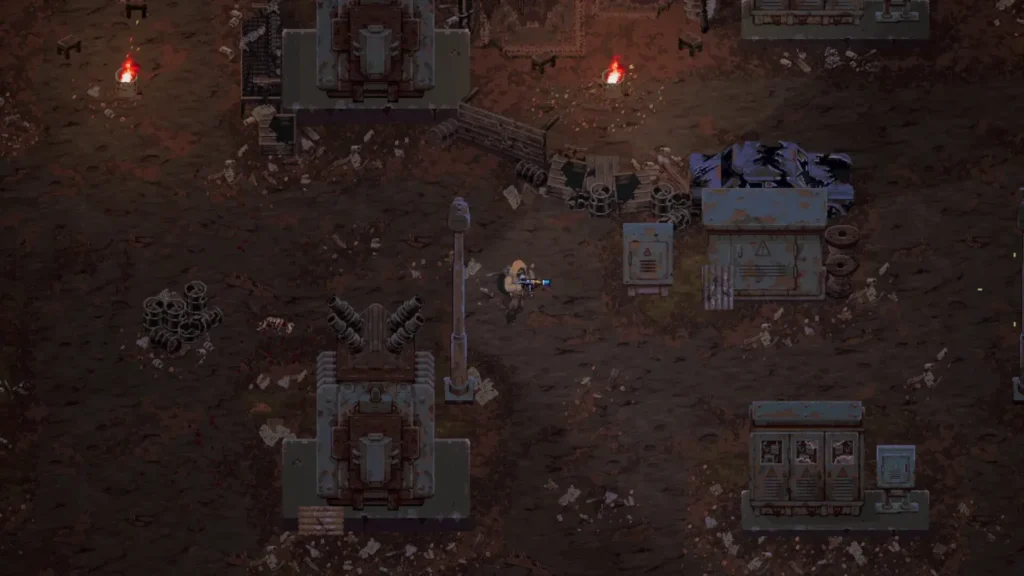
Scavland launched in Steam Early Access on September 4, 2026, with a clear appeal for players who enjoy demanding top-down survival RPGs. Its current build combines scavenging, tactical encounters, customizable firearms, traders, factions, reputation, and the opening act of a mystery set in post-apocalyptic Zalesye. NoShadow develops the game; Steam credits NoShadow and UNSUBSCRIBE as publishers. The US listing shows a $19.99 price, while the published Windows minimum includes 8 GB of RAM and a dedicated 2 GB graphics card. store.steampowered.com
The central limitation is equally clear. Players can explore and play through Act I now, but the other planned story acts and cooperative multiplayer are future work. NoShadow estimates 12 to 24 months in Early Access without committing to a full-release date. Steam’s positive review summary suggests many buyers already enjoy the game, while individual reviews identify concerns about content, balance, and clarity. The most reliable decision is based on the September 2026 game that exists today, with later additions understood as development plans. store.steampowered.com
Sources and Citations
- Steam Store — Scavland. The official Steam product page is the primary source for Scavland’s release date, developer and publisher credits, Early Access status, game description, features, user-review summary and PC requirements. Steam lists September 4, 2026 as both the release and Early Access release date, credits NoShadow as developer and NoShadow/UNSUBSCRIBE as publishers, and describes the game as a hardcore top-down pixel-art survival RPG set in the post-apocalyptic region of Zalesye. Steam Store
- Steam: Scavland Store Page
- Steam Store — Scavland Early Access Development Plan. The developer’s Early Access statement says the game is expected to remain in Early Access for roughly 12 to 24 months, although that timing can change with community feedback and development priorities. The full release is planned around three story acts. Early Access includes Act I, while Acts II and III are intended to add new regions, quests, creatures, factions and story content, along with more weapons, equipment, crafting, bunkers, AI improvements and eventually cooperative multiplayer. Steam Store
- Steam: Scavland Early Access Details
- Steam Store — Current Early Access Features. NoShadow’s current feature list says Act I includes a handcrafted open world with procedural underground bunkers, a journal and map system, 10 factions, tactical firearms/melee/stealth combat, 25+ weapons and 300+ attachments, crafting, traders, contracts, main and side quests, environmental hazards, a day/night cycle, controller support and Steam Deck compatibility. These are appropriate for describing the current Early Access build, whereas Acts II and III should remain framed as future plans. Steam Store
- Steam: Scavland Current Early Access Content
- Steam Store — Game Premise and Gameplay. The official description identifies the player as a Vulture, a scavenger surviving in Zalesye after war and the arrival of the mysterious Mist. Gameplay centers on exploring settlements and wilderness, accepting dangerous jobs, managing scarce ammunition and radiation, fighting mutants and hostile survivors, building faction relationships and customizing weapons with collected attachments. Steam Store
- Steam: Scavland About This Game
- Steam Store — Price. The live U.S. Steam page currently lists Scavland at $19.99. The developer also says the base price is intended to remain consistent between Early Access and full release except for seasonal discounts. Because store pricing and discounts can change, the live Steam page should take precedence when discussing current purchase cost. Steam Store
- Steam: Scavland Pricing
- Steam Store — Review Summary. Steam currently labels the overall review score Very Positive, with the live page showing 82% positive across 950 reviews at the time of this verification. Those totals have already changed since earlier September checks, illustrating why review counts and percentages should always be dated when used in the article. Steam Store
- Steam: Scavland Reviews and Store Information
- Steam Community — Scavland Community Hub. The Community Hub provides current developer news, guides, discussions, screenshots and player reviews. It also displays the normal U.S. price of $19.99, independently matching the current store-page base price. Steam Community
- Steam Community: Scavland Hub
- Steam Community — Hotfix 0.7.2. NoShadow’s September 16 developer update documents active Early Access maintenance. The patch includes changes to Raisa’s jobs and fixes for issues including world chunks failing to load. The Community Hub also records Hotfix 0.7.1 from September 15, which fixed the stash failing to open for some players. These dated posts are useful when discussing how the Early Access build has been changing after launch. Steam Community
- Steam Community: Scavland Updates
- Steam Community — Roadmap and First-Month Update. NoShadow’s first-month update says the developer launched a public roadmap and intends to expand it with more details as development proceeds. It says future updates are expected to introduce additional locations, biomes, creatures, weapons, gameplay systems and improvements, while community feedback continues shaping priorities. Steam Community
- Steam Community: Scavland Roadmap and Developer News
- Steam Community — Player Review Examples. Individual reviews can be used to illustrate player opinion when clearly labeled as subjective. One September 30 Early Access reviewer praised the artwork and sound and said the game kept them alert, while another September 30 reviewer highlighted the fog-of-war tension and said they wanted more content. A later October 3 review favorably compared the experience with older post-apocalyptic RPGs and praised its overall play feel. These comments reflect individual experiences, not verified characteristics of every installation or later build. Steam Community
- Steam Community: Scavland Reviews and Discussions
Recommendations
- Echoes of Aincrad Crafting Guide: Recipes, Materials and Unlock Requirements
- Did Christopher Nolan’s Depiction of the Gods Pay Off in The Odyssey?
- Castlevania: Belmont’s Curse Runs at Only 30 FPS on Nintendo Switch
- EA Sports College Football 27 Preview: Defense Wins Championships
- Jurassic World Evolution 2 Complete Edition Comes to Nintendo Switch 2 on July 30, 2026
- Unity-Based Tool for JRPG Game Development: RetroGig’s Retro JRPG Template for SNES/PSX-Style RPG Systems
- Keanu Reeves & China Miéville BRZRKR: Light Draws Breath — Release Date, Story, Creative Team & Variant Covers
- CD Projekt Raises Profit Goals with Witcher 4, 5, and 6 Coming: 5 Billion PLN Target Explained
- Creepshow Official Announcement Trailer Reveals a New Anthology Horror Game Experience
- GTA 6 Leans Into Vice City’s Influencer Hustle Where Looks Matter



































































































