






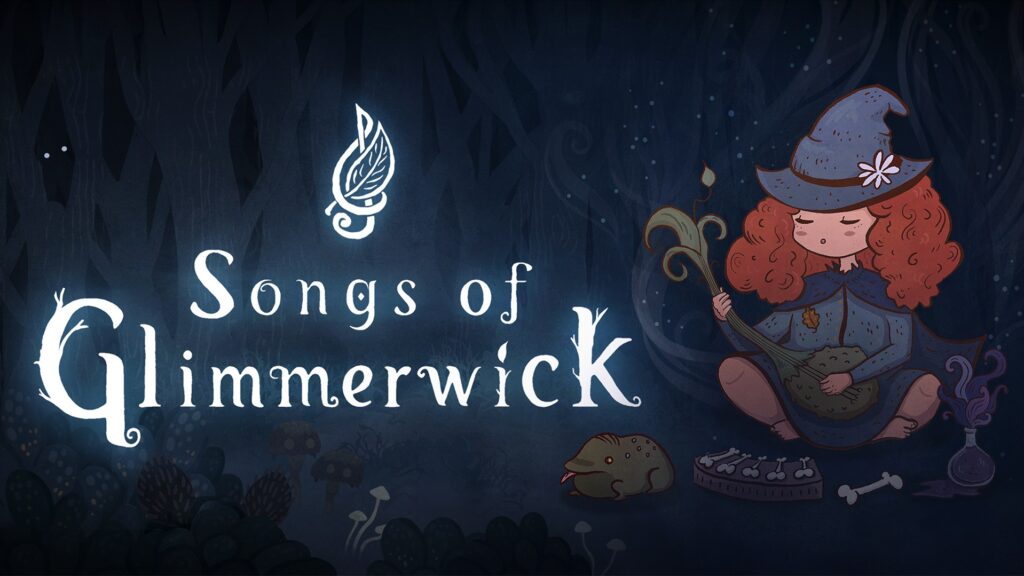
Songs of Glimmerwick is an unusually charming blend of witch academy RPG, farming simulator, life simulation, exploration game, and musical adventure. Developed and published by Eastshade Studios, the game places players in the woodland fantasy world of Glimmerwick, where attending school, tending a university garden, brewing potions, fishing, making friends, and exploring the island are all part of the same interconnected experience.
The central idea is immediately distinctive:Songs of Glimmerwick: Musical Magic, Witch School Life, and Farming
Songs of Glimmerwick is a story driven witch academy RPG set on the island of Glimmerwick, where magic is performed through music. Instead of relying on conventional spell menus or a traditional wand, the player carries a flute and learns songs that function as magical abilities. Those songs can till soil, manipulate the environment, enchant tools, interact with nature, and help open new routes around the island. Its musical identity is therefore not simply part of the soundtrack but one of the main gameplay systems, shaping how players explore, complete tasks, and engage with their surroundings.
Songs of Glimmerwick officially launched for PC through Steam on September 30, 2026, after an unusually long development period. Eastshade Studios described the game as eight years in the making at launch and has kept its free demo available so players can experience the opening portion before committing to the full game. The combination of musical magic, university life, and gardening makes it especially interesting for players who enjoy cozy games but want something with a stronger narrative and fantasy school identity. Although it shares some DNA with Stardew Valley and other farming life sims, it is not simply a Stardew Valley clone with witches.
The premise is deliberately simple but effective. The protagonist arrives in Glimmerwick and discovers that they are already enrolled at the Etchery, the island’s magical university. As a new student, the player quickly becomes involved in school life and the wider mysteries surrounding the island. Rather than spending the game fighting monsters or conquering kingdoms, players attend lessons, learn magical songs, maintain the school’s botanical garden, investigate local problems, interact with residents, and gradually uncover the island’s history. Scheduled classes, musical spellcasting, exploration, fully voiced characters, seasonal events, and a central mystery give the experience its own personality.
The school setting is important because it gives the game a natural structure. Instead of having a traditional farm that exists independently from the story, the player’s main growing space is connected to the university. The garden becomes part of the student’s responsibilities, while classes provide new knowledge and abilities that make other parts of the game accessible. This gives Songs of Glimmerwick a different rhythm from many conventional farming games. Players are not simply waking up every morning, watering crops, selling produce, and repeating the same routine. A day can involve a class, a garden task, an exploration trip, a potion request, a conversation with a resident, or an unexpected story development.
The official game description emphasizes RPG quests, university gardening, musical magic, classes, festivals, character progression, and customizable appearance. Extracurricular activities, including fishing, band activities, shell collecting, and forest expeditions, also form part of the experience, giving players things to do beyond their lessons and garden responsibilities. Taken together, these elements make Songs of Glimmerwick best understood as a cozy witch school RPG with farming and life simulation systems rather than a pure farming simulator.
In This Article (19 sections)
Songs of Glimmerwick Release Date and Platforms
Songs of Glimmerwick was released on September 30, 2026, for PC through Steam. Eastshade Studios confirmed the release date in August and subsequently announced on launch day that the game was officially available.
The Steam version launched at $24.99 USD, with a 10 percent launch discount bringing the introductory price to $22.49 during the initial launch period. The developer also released a Supporter Pack and soundtrack separately.
The game is available for Windows PC, and the developer has confirmed that console versions are planned. However, the safest current description of the console situation is that the console editions are coming later and do not yet have a publicly confirmed release date. This is important because some third-party databases list specific consoles, but the developer’s own launch messaging only establishes that console versions are planned for a later release.
A free demo is also still available. Eastshade Studios specifically said it would keep the demo available after launch because it believes the opening section gives players a good idea of what the game is and what it is not.
The demo is particularly useful because Songs of Glimmerwick has a distinctive rhythm-based magic system. Players who are unsure whether musical spellcasting and the game’s relaxed academic structure will appeal to them can sample the experience before purchasing the full game.
How Does Magic Work in Songs of Glimmerwick?
Magic is the defining gameplay mechanic in Songs of Glimmerwick. The basic principle is that songs are spells, and the player’s flute is effectively the primary magical tool.
Rather than selecting a spell from a conventional menu and watching an animation play, players learn melodies and use those musical sequences to perform magical actions. The game’s official description specifically explains that ancient songs can make garden work easier and can also be used to explore the island. Songs can communicate with trees, enchant tools, raise terrain, and perform other magical functions.
One of the earliest examples is the Song of Tilling. Instead of relying entirely on a conventional farming tool to prepare soil, the player can use music to perform the task. Other songs can deal with environmental obstacles and turn ordinary gardening and exploration problems into magical puzzles.
The magic system is also connected to progression. Players learn additional songs through classes, quests, characters, and other forms of progression. This means that acquiring a new song can have consequences beyond simply adding another ability to the player’s collection.
The game also includes a rhythm component associated with musical abilities. Practicing songs can improve mastery, while the game is designed so that players who do not want to repeatedly engage with the musical challenge are not necessarily forced to do so every time they cast a learned spell. This makes the system more approachable than a conventional rhythm game that demands perfect timing throughout the entire experience.
That flexibility is important because the magic system is intended to support the wider life-simulation experience rather than overwhelm it.
Why Songs of Glimmerwick Uses Music to Cast Spells
The decision to make music the source of magic is what separates Songs of Glimmerwick from most farming and witch-life simulators.
Many fantasy games treat magic as a collection of spells that are visually spectacular but mechanically familiar. Songs of Glimmerwick instead makes music part of the game’s underlying worldbuilding. The player does not merely listen to magical music; the player learns and performs it.
This also ties directly into the history of Glimmerwick. The game establishes that music and magic have a complicated history on the island. The demo’s early classes explain the historical importance of music and the period known as the Silence, when music, whistling, and magic were suppressed.
That gives the musical mechanic narrative importance. Learning a song is not merely unlocking a new button. It can represent the recovery of knowledge and a deeper understanding of Glimmerwick’s past.
The design also allows music to connect apparently unrelated systems. Gardening uses magical songs. Exploration uses magical songs. Tool automation uses magical songs. The flute therefore becomes a common language shared by the different parts of the game.
That is one reason the concept works so well. Songs of Glimmerwick could have simply included a magic school alongside a normal farming system, but making music the mechanism through which magic operates allows the school, farming, exploration, and story systems to reinforce one another.
What Is the Farming System Like in Songs of Glimmerwick?
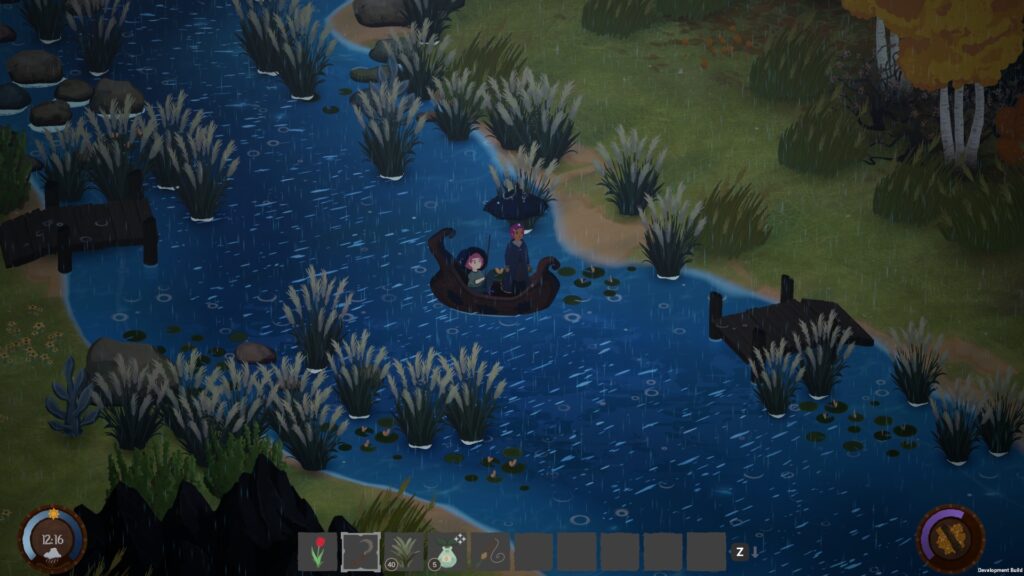
Farming in Songs of Glimmerwick is centered on the university garden rather than a conventional private homestead.
The player is given responsibility for the garden at the Etchery, and restoring it becomes one of the recurring activities throughout the school year. Players prepare soil, plant crops, water them, harvest produce, and use what they grow for money, quests, and crafting.
The garden has a distinctly magical character. The official description encourages players to grow both ordinary and arcane plants and specifically highlights the ability to summon rain through magic.
This is where the musical spell system becomes particularly useful. Instead of making gardening entirely dependent on traditional tools, the player can use songs to make certain tasks easier. Enchanted tools can also work automatically, creating a progression from manually managing the garden toward greater magical efficiency.
The farming loop is therefore not designed to be completely isolated from the RPG. Crops can become ingredients for potions, quest requirements, or sources of income. A player might plant a particular flower not because it is the most profitable crop but because a character needs it for a potion.
This relationship between farming and quest progression is one of the reasons the system feels more integrated than a decorative farm attached to an RPG.
How Classes and School Life Work in Songs of Glimmerwick
School life provides the framework around which Songs of Glimmerwick’s other systems operate.
The player receives information about classes and activities through the school’s schedule and correspondence, creating a calendar-based structure that resembles an academic year. The school is not simply a location that the player visits occasionally. It is the center of the protagonist’s new life.
Classes introduce mechanics and worldbuilding. Music lessons help players understand the relationship between songs and magic, while Potions 101 introduces brewing. Herbotany and other lessons connect directly to gardening and the game’s wider magical ecosystem.
The academic structure also helps explain progression naturally. Instead of receiving an arbitrary new ability because the player reached a particular experience level, abilities can be connected to lessons, professors, quests, or discoveries.
Outside class, students can participate in extracurricular activities and social events. The official game description mentions clubs, band activities, fishing, shell collecting, and forest expeditions.
This gives the school an appealing sense of place. It is not just a fantasy backdrop. It is a living institution where the player’s responsibilities, friendships, hobbies, and magical education overlap.
Can You Be Late to Class in Songs of Glimmerwick?
One of the most amusing aspects of Songs of Glimmerwick’s school system is that it does not treat academic scheduling like a harsh time-management simulator.
Songs of Glimmerwick Release, Musical Magic, and Farming Systems
Songs of Glimmerwick was released on September 30, 2026, for Windows PC through Steam. Eastshade Studios confirmed the release date in August and announced on launch day that the game was officially available. The Steam version launched at $24.99 USD, with a 10 percent launch discount reducing the introductory price to $22.49 during the initial launch period. The developer also released a Supporter Pack and soundtrack separately. Console versions are planned, but they do not yet have a publicly confirmed release date. Some third party databases list specific consoles, although the developer’s own launch messaging only confirms that console editions are coming later.
A free demo remains available after launch because Eastshade Studios believes the opening portion gives players a useful sense of what the game is and what it is not. This is especially helpful because Songs of Glimmerwick has a distinctive musical magic system that may feel different from more conventional farming and fantasy RPGs. Players who are unsure about its relaxed academic structure or rhythm based spellcasting can try the demo before purchasing the full game.
Magic is the defining gameplay mechanic in Songs of Glimmerwick. Songs function as spells, while the player’s flute serves as the primary magical tool. Rather than selecting abilities from a conventional spell menu and simply watching an animation, players learn melodies and use musical sequences to perform magical actions. Ancient songs can make garden work easier, assist with exploration, communicate with trees, enchant tools, raise terrain, and perform other environmental functions.
One of the earliest examples is the Song of Tilling, which allows the player to prepare soil through music rather than relying entirely on a traditional farming tool. Other songs help overcome environmental obstacles, turning ordinary gardening and exploration challenges into magical interactions. The system is also tied to progression because players acquire additional songs through classes, quests, characters, and other discoveries. Unlocking a new song can therefore affect several parts of the game instead of simply adding another isolated ability.
The game includes rhythm based elements connected to these magical abilities. Practicing songs can improve mastery, although players are not necessarily required to complete the musical challenge every single time they use a spell they have already learned. This keeps the system approachable for players who enjoy the musical concept but do not want the entire experience to operate like a demanding rhythm game. The mechanic is designed to support the broader life simulation systems rather than dominate them.
Music also has narrative importance within Glimmerwick itself. The game’s history establishes a complicated relationship between music and magic, with early lessons discussing the period known as the Silence, when music, whistling, and magic were suppressed. Learning a song can therefore represent more than unlocking a gameplay ability. It can also represent recovering forgotten knowledge and understanding more about the island’s past. Because gardening, exploration, tool automation, and magical education all rely on songs, the flute acts as a common link between systems that might otherwise feel separate.
Farming follows the same integrated design philosophy. Instead of managing a conventional private homestead, the player takes responsibility for the university garden at the Etchery. Restoring and maintaining the garden becomes one of the recurring activities during the school year. Players prepare soil, plant crops, water them, harvest produce, and use what they grow for money, crafting, and quests.
The garden includes both ordinary and arcane plants, while magical abilities can simplify routine work. Players can summon rain through magic, use songs to assist with gardening tasks, and eventually rely on enchanted tools that can work automatically. This creates a progression from more direct garden management toward greater magical efficiency. Farming also remains connected to the RPG systems because crops may become potion ingredients, quest requirements, or sources of income. A player may grow a particular flower because a character needs it rather than simply because it produces the highest profit, helping the garden feel like part of the larger adventure instead of an isolated side activity.

Classes, School Life, and Time Management in Songs of Glimmerwick
School life provides the framework around which many of Songs of Glimmerwick’s systems operate. The player receives information about classes and activities through the university’s schedule and correspondence, creating a calendar based structure built around the academic year. The Etchery is not simply another location to visit occasionally. It becomes the center of the protagonist’s daily responsibilities, magical education, friendships, hobbies, and story progression.
Classes introduce both gameplay mechanics and information about the world. Music lessons help explain the relationship between songs and magic, Potions 101 introduces brewing, and subjects such as Herbotany connect directly to gardening and the wider magical ecosystem. This academic structure also gives progression a natural explanation. Rather than receiving an unrelated ability simply because an experience meter reaches a certain level, new knowledge can come from professors, lessons, quests, characters, or discoveries made while exploring Glimmerwick.
Life outside the classroom is equally important. Students can take part in extracurricular activities and social events, with the official game description highlighting clubs, band activities, fishing, shell collecting, and forest expeditions. These activities help make the university feel like a functioning institution instead of a fantasy backdrop. The player’s school responsibilities overlap with friendships, personal interests, gardening, exploration, and the central mystery surrounding the island.
Despite the academic schedule, Songs of Glimmerwick does not appear designed as a harsh time management simulator. A hands on review published at launch described scheduled class events as pausing the clock once the player reaches them. This allows players to spend time gardening, fishing, exploring, or completing other activities without constantly worrying that a major class will permanently disappear because they arrived a little late.
Time still matters. The player has a calendar, seasons progress, scheduled events take place, and the school year continues moving forward. However, the structure leaves enough flexibility for players to become distracted by villagers, potions, gardens, mysteries, and extracurricular activities without turning every day into a race against the clock.
That balance between structure and freedom is central to the school experience. The academic calendar provides clear direction and gives each period of the year a sense of purpose, but it does not completely dictate how every day must be spent. Songs of Glimmerwick therefore captures the fantasy of being a magical university student while maintaining the relaxed pace expected from a cozy life simulation RPG.
This is a clever choice because the game wants the fantasy of being a student without imposing all the stressful aspects of real-world scheduling.
The player still has a calendar and scheduled activities, so time matters. Seasons move forward, story events occur, and the school year progresses. But the game gives the player room to explore rather than turning every morning into a race against the clock.
That is why the joke about always being late to class works so well. The protagonist can behave like the most distracted student imaginable, wandering around Glimmerwick and getting sidetracked by gardens, fishing, potions, villagers, or mysteries, while the game itself remains relatively forgiving.
It is an excellent example of how Songs of Glimmerwick balances structure and freedom. The school provides direction, but it does not completely dictate how the player experiences each day.
Songs of Glimmerwick Gardening and University Farm Explained
The university garden is one of the most important systems because it sits at the intersection of farming, magic, economy, crafting, and story progression.
At first, the garden is neglected and requires attention. The player gradually transforms it into a productive space by learning magical songs, planting crops, maintaining the soil, and expanding the range of things that can be cultivated.
The garden also has a distinctly seasonal structure. The school year progresses through spring, summer, fall, and winter, with festivals and events tied to the changing calendar. A guide covering the full game describes the school year as four seasons of 14 days each.
That shorter seasonal structure contributes to the game’s faster pacing compared with some farming simulators.
The garden’s products can be sold for money, but selling is not the only reason to grow things. Crops can become ingredients for potions and other activities. A launch-day hands-on account described growing herbs and flowers while also using garden products for potion-related requests.
The magical aspect also changes how the garden feels. Rain can be summoned with a song, while enchanted tools can eventually reduce repetitive work. This makes progression feel tangible because the garden becomes increasingly manageable as the player’s magical knowledge improves.
For farming-sim fans, the university garden may not offer the same emphasis on building a massive agricultural empire as a dedicated farming game. Its strength is instead how closely it is connected to the academy and the wider adventure.
How Potion Making Works in Songs of Glimmerwick
Potion making is another major activity and one of the clearest examples of how Songs of Glimmerwick combines its different systems.
Players acquire potion recipes through classes, characters, books, and quests. Ingredients can come from gardening, gathering, shops, fishing, and exploration. This creates a natural reason to participate in multiple parts of the game.
The brewing process itself includes a cauldron-based mini-game. Players practice recipes, and performance can affect the quality of the resulting potion. A current walkthrough identifies 14 potions in the game and describes potions as serving several purposes, including quest progression, gardening assistance, movement benefits, and other practical uses.
This is especially effective when potions solve environmental problems.
A player might need to grow a particular flower, collect an unusual ingredient, or explore another area to make a potion that allows a story quest to continue. A launch review described exactly this kind of interconnected progression, with a potion requiring a flower that had to be grown in the garden before the player could proceed.
Potion making therefore avoids feeling like a completely separate crafting screen. It gives players reasons to care about the plants they grow, the materials they collect, and the people they meet.
Songs of Glimmerwick Fishing and Its Musical Mini-Game
Fishing is one of the optional activities that gives players something relaxing to do away from classes and the main story.
The current release-week fishing system involves using a fishing rod near visible fish or bubbles and responding when a bite occurs. Community documentation describes a timing-based mini-game after the player successfully hooks a fish.
Although fishing fits the game’s broader musical identity, it is important not to describe the activity as simply playing flute notes. The available launch-week reports describe timed input prompts rather than requiring players to reproduce the same spell melodies used for magical abilities.
That distinction matters because fishing is intended to be another leisure activity within the wider life simulation.
The inclusion of fishing also reinforces the game’s approach to optional content. The player can spend time improving the garden, exploring the island, collecting ingredients, talking to residents, or simply going fishing.
The result is a game that consistently gives the player something else to do when the immediate story objective is not particularly urgent.
How Exploration and Quests Work in Songs of Glimmerwick
Exploration is one of the strongest reasons to play Songs of Glimmerwick beyond its farming and school premise.
Glimmerwick is designed as a place to investigate. Roads, forests, beaches, gardens, buildings, caves, and other areas contain characters, resources, environmental obstacles, and story clues.
Magical songs are particularly important because the environment can contain obstacles that the player cannot initially overcome. Learning new songs can open routes, manipulate terrain, interact with trees, or change the way the player approaches an area.
The quest structure also encourages curiosity rather than simply following an endless sequence of map markers.
One of the notable observations from the launch review was that many discoveries emerged naturally from conversations, experimentation, shopping, gardening, and exploration rather than from an overwhelming list of objectives.
This creates a more organic sense of adventure.
A seemingly minor conversation can lead to a request. That request can require a potion. The potion can require a plant. The plant may require a garden plot and several days of growth. The resulting potion may unlock a new route. That route can eventually reveal another character or piece of the central story.
This interconnected structure is arguably one of Songs of Glimmerwick’s biggest strengths.

Songs of Glimmerwick Characters, Friends, and Social Activities
The social side of Songs of Glimmerwick is built around classmates, teachers, townspeople, and other residents of the island.
The game is fully voiced, with the official description promising voice performances for major and minor characters.
That is significant because dialogue plays a large role in how the player discovers Glimmerwick. Rather than treating NPCs as stationary vendors, the game gives residents their own activities, relationships, problems, and stories.
The social systems are not simply a copy of the conventional gift-giving relationship structure found in many farming games. Instead, relationships are tied closely to conversations, quests, events, and personal stories.
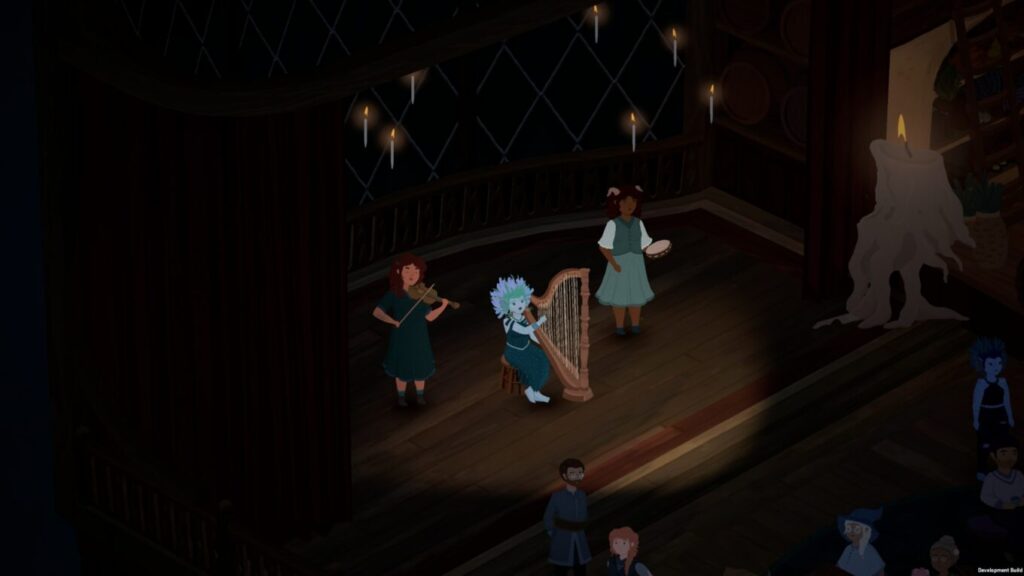
There are also group activities and extracurricular events. Players can join a band, participate in festivals, explore with the Green Sprites, go fishing, dive for shells, and spend time around the school and town.
The game does have weaknesses in this area. One launch review found some characters less memorable than others and noted that the distant camera and similar school uniforms can make characters difficult to distinguish visually.
Still, the breadth of social activities contributes strongly to the feeling that Glimmerwick is somewhere the player is actually living rather than merely visiting for a quest.
Why Songs of Glimmerwick Feels Like a Magical Stardew Valley
The comparison to Stardew Valley is almost unavoidable because both games combine farming, seasonal progression, exploration, relationships, crafting, fishing, and a relaxed day-to-day structure.
But Songs of Glimmerwick is better understood as a magical academic alternative to that formula rather than a direct replacement.
The farming system is important, but the player’s identity is not primarily that of a farmer. The player is a student. The garden is a university responsibility. Classes teach abilities. The Songs of Glimmerwick Gardening, Potions, and Fishing Explained
The university garden is one of the most important systems in Songs of Glimmerwick because it sits at the intersection of farming, magic, economy, crafting, and story progression. At first, the garden is neglected and requires attention, but the player gradually transforms it into a productive space by learning magical songs, planting crops, maintaining the soil, and expanding the range of things that can be cultivated. The garden also has a distinctly seasonal structure.
The school year progresses through spring, summer, fall, and winter, with festivals and events tied to the changing calendar. A guide covering the full game describes the school year as four seasons of 14 days each, giving Songs of Glimmerwick a faster seasonal pace than some farming simulators.
Garden products can be sold for money, but earning currency is not the only reason to grow crops. Plants can provide ingredients for potions and other activities, and a launch day hands on account described growing herbs and flowers while using garden products for potion related requests. The magical systems also change how routine gardening feels. Rain can be summoned with a song, while enchanted tools can eventually reduce repetitive work.
Progression therefore becomes tangible as the garden becomes increasingly manageable alongside the player’s expanding magical knowledge. For farming sim fans, the university garden may not place the same emphasis on creating a massive agricultural empire as a dedicated farming game. Its strength instead comes from how closely farming is connected to the academy, quests, crafting, and the wider adventure.
Potion making demonstrates this interconnected design particularly well. Players acquire recipes through classes, characters, books, and quests, while the required ingredients can come from gardening, gathering, shops, fishing, and exploration. This creates a natural reason to participate in several different parts of the game rather than treating brewing as an isolated crafting system. The brewing process includes a cauldron based mini game in which players practice recipes and their performance can influence the quality of the finished potion. A current walkthrough identifies 14 potions and describes them as serving several purposes, including quest progression, gardening assistance, movement benefits, and other practical uses.
Potions become particularly meaningful when they are required to overcome environmental or story obstacles. A player might need to grow a specific flower, collect an unusual ingredient, or explore another area before brewing the potion needed to continue a quest. One launch review described this type of interconnected progression, with a potion requiring a flower that first had to be grown in the garden. Potion making therefore gives players reasons to care about the plants they cultivate, materials they collect, and characters they encounter instead of functioning as a completely separate crafting screen.
Fishing provides another activity for players who want something relaxing away from classes and the main story. The release week fishing system involves using a fishing rod near visible fish or bubbles and responding when a bite occurs, followed by a timing based mini game after successfully hooking the fish. Although fishing fits the broader musical identity of Songs of Glimmerwick, it should not be confused with the flute based spell system. Available launch week reports describe timed input prompts rather than asking players to reproduce the melodies used for magical abilities.
Fishing also reinforces the game’s emphasis on optional activities. Players can spend their available time improving the university garden, gathering potion ingredients, exploring the island, interacting with residents, or simply fishing. This range of activities means there is consistently something else to pursue when the immediate story objective does not feel urgent, while farming, brewing, and resource gathering remain connected to the wider progression system.
Songs of Glimmerwick Exploration, Quests, Characters, and Stardew Valley Comparisons
Exploration is one of the strongest reasons to play Songs of Glimmerwick beyond its farming and magical school premise. Glimmerwick is designed as a place to investigate, with roads, forests, beaches, gardens, buildings, caves, and other locations containing characters, resources, environmental obstacles, and story clues. Magical songs play an important role because some obstacles cannot initially be overcome. Learning additional songs can open new routes, manipulate terrain, interact with trees, or otherwise change how the player approaches an area.
The quest structure encourages curiosity instead of simply directing players through an endless sequence of map markers. One observation from a launch review was that many discoveries emerged naturally through conversations, experimentation, shopping, gardening, and exploration rather than through an overwhelming objective list. A seemingly minor conversation can lead to a request, which may require a potion. That potion can require a plant that must be grown in the university garden over several days, and the resulting potion may then unlock another route leading to a character or piece of the central story. This interconnected progression is one of the game’s most distinctive strengths because its systems regularly feed into one another instead of existing as independent activities.
The social side of Songs of Glimmerwick is similarly integrated into the wider experience. Classmates, teachers, townspeople, and other island residents form the game’s cast, and the game is fully voiced, with its official description promising performances for major and minor characters. Dialogue plays a significant role in discovering Glimmerwick, while residents have their own activities, relationships, problems, and stories rather than functioning solely as stationary vendors.
Relationships are not simply built around the conventional gift giving structure found in many farming games. Conversations, quests, events, and individual stories contribute to the player’s relationships with the people of Glimmerwick. Group activities and extracurricular events further expand the social experience, allowing players to join a band, participate in festivals, explore with the Green Sprites, fish, dive for shells, and spend time around the school and town.
The social side does have some weaknesses. One launch review found certain characters less memorable than others and noted that the distant camera and similar school uniforms can sometimes make characters difficult to distinguish visually. Even so, the variety of interactions helps Glimmerwick feel like somewhere the protagonist is actually living rather than simply visiting to complete quests.
Comparisons with Stardew Valley are almost unavoidable because both games combine farming, seasonal progression, exploration, relationships, crafting, fishing, and a relaxed day to day structure. Songs of Glimmerwick, however, is better understood as a magical academic interpretation of that formula rather than a direct replacement. Farming remains important, but the protagonist’s primary identity is that of a student rather than a farmer. The garden is connected to the university, classes provide new knowledge and abilities, the academic year shapes the calendar, and the story revolves around Glimmerwick’s magical culture and history.
Magic creates the most significant difference between the two experiences. Stardew Valley primarily revolves around physical tools that can gradually be upgraded, while Songs of Glimmerwick allows music to transform ordinary activities. Songs can prepare soil, manipulate the environment, communicate with trees, and enchant tools, changing the underlying fantasy of the life simulation. Instead of imagining what it would be like to inherit and rebuild a farm, Songs of Glimmerwick asks players to imagine arriving at a magical university where everyday responsibilities can become forms of witchcraft.
The games also differ in how their narratives are structured. Songs of Glimmerwick has a more explicit central story and a defined school year while still allowing players to spend substantial amounts of time exploring and pursuing optional activities. For players who enjoy Stardew Valley but want stronger fantasy elements, school life storytelling, magical systems, and more structured RPG progression, Songs of Glimmerwick provides a distinct variation on the familiar farming and life simulation formula.school year drives the calendar. The story is tied to the island’s history and magical culture.
The biggest difference is the role of magic.
In Stardew Valley, tools are physical objects that are gradually upgraded. In Songs of Glimmerwick, music can transform how ordinary tasks work. A song can prepare soil, manipulate the environment, communicate with trees, or enchant tools.
That changes the basic fantasy.
Instead of imagining what it would be like to inherit a farm and rebuild it, Songs of Glimmerwick asks players to imagine arriving at a magical university and discovering that everyday activities are themselves forms of witchcraft.
The two games also differ in their sense of narrative urgency. Songs of Glimmerwick has a more explicit main story and a defined school-year structure, while still allowing players to spend large amounts of time wandering and pursuing optional activities.
For players who like Stardew Valley but want more fantasy, school-life storytelling, and structured RPG progression, Songs of Glimmerwick is a natural game to investigate.
Frequently Asked Questions[FAQs]
- What is Songs of Glimmerwick?
Songs of Glimmerwick is a story driven witch academy RPG from Eastshade Studios that combines magical school life with gardening, exploration, potion making, fishing, social activities, seasonal events, and quests. Players attend the Etchery, a magical university on the island of Glimmerwick, while gradually learning more about the surrounding world and its history. Its defining mechanic is musical magic, with songs played on a flute functioning as spells that can influence farming, exploration, tools, and the environment. - When did Songs of Glimmerwick release?
Songs of Glimmerwick released on September 30, 2026, for PC through Steam. The launch followed a lengthy development period and introduced the complete witch school RPG experience to PC players. Eastshade Studios has also confirmed that console versions are planned for a later date, although the developer has not announced when those versions will become available. - What platforms is Songs of Glimmerwick on?
The currently released version of Songs of Glimmerwick is available for Windows PC through Steam. Eastshade Studios has confirmed plans to bring the game to consoles as well, but a specific console release date has not yet been announced. Until the developer provides more details, PC remains the only platform with a confirmed and available version. - Does Songs of Glimmerwick have farming?
Yes. Farming is an important part of Songs of Glimmerwick, although it is centered around the university garden rather than a traditional private farm. Players can prepare soil, plant and harvest crops, grow both ordinary and magical plants, and use harvested materials for money, quests, potions, and other activities. Magical songs and enchanted tools can also make routine gardening tasks easier as the player progresses. - How does magic work in Songs of Glimmerwick?
Magic in Songs of Glimmerwick is performed through music. Players learn songs and use a flute to activate magical abilities instead of relying on a conventional spell menu or wand. Different songs can help prepare soil, interact with trees, enchant tools, manipulate terrain, and overcome environmental obstacles. New magical songs are learned through classes, quests, characters, and progression, allowing the player’s abilities to expand alongside the story. - Can you miss classes in Songs of Glimmerwick?
The game is designed to make scheduled classes and important events relatively forgiving. Reports from the launch version indicate that the clock can pause when players reach scheduled class events, reducing the pressure to manage every minute perfectly. Players still follow a school calendar and need to pay attention to scheduled activities, but the system allows more freedom to explore, garden, fish, or complete other tasks without constantly worrying about permanently missing an important lesson. - Is there fishing in Songs of Glimmerwick?
Yes. Fishing is one of the extracurricular and optional activities available throughout Songs of Glimmerwick. Players use a fishing rod near suitable fishing spots and respond when a fish bites, followed by a timing based mini game to successfully complete the catch. Fishing provides another relaxing activity away from classes and quests while also fitting into the game’s broader focus on exploration and life simulation. - Does Songs of Glimmerwick have potion making?
Yes. Potion making is an important crafting and progression system in Songs of Glimmerwick. Players can obtain recipes through classes, characters, books, quests, and other discoveries, while ingredients can come from gardening, gathering, shops, fishing, and exploration. Potions are brewed using cauldrons and a dedicated mini game, and they can assist with quests, gardening, movement, environmental challenges, and other practical situations. - Is Songs of Glimmerwick similar to Stardew Valley?
Songs of Glimmerwick shares several characteristics with Stardew Valley, including farming, fishing, seasonal progression, exploration, crafting, social activities, and a relaxed daily structure. However, its central fantasy is considerably different because the player is a magical university student rather than primarily a farmer. Classes, musical spellcasting, potion making, a defined school year, and a more direct central story give Songs of Glimmerwick its own identity despite the similarities between their life simulation systems. - Is Songs of Glimmerwick worth playing?
Songs of Glimmerwick is particularly suited to players who enjoy cozy RPGs, farming simulators, life sims, magical school stories, and exploration focused games. Its strongest feature is the way music connects several systems, allowing magical songs to influence farming, environmental puzzles, tools, exploration, and character progression rather than existing as a separate combat mechanic. The combination of university life, gardening, quests, potion making, social activities, and a central mystery gives it more structure than a traditional farming game. A free demo is also available, giving players an opportunity to experience its musical magic and relaxed pacing before deciding whether the full game suits them.

Conclusion
Songs of Glimmerwick is a refreshingly unusual take on the cozy RPG and farming-sim formula. Its premise sounds familiar at first: attend school, make friends, grow plants, fish, craft items, explore the countryside, and uncover a mystery. What makes the game stand out is the way those familiar systems are connected through music.
The flute is the heart of the experience. Songs become spells, spells change the way players interact with gardens and environments, classes teach new magical abilities, and exploration provides reasons to use those abilities. Farming is not merely a money-making side activity, while potion making is not simply an isolated crafting system. Each activity feeds into another.
The university setting also gives the game a strong identity. Instead of being another fantasy farmer simulator, Songs of Glimmerwick presents a world where the player’s responsibilities are those of a student. The garden is a school job. Classes unlock knowledge. Extracurricular activities provide distractions. Festivals mark the seasons. Villagers and classmates become part of a larger story.
That structure explains why the game can feel both directed and surprisingly free. The academic year and main narrative continue moving forward, but the player has considerable freedom over what to do between major events. One day might be dominated by gardening. Another might turn into an exploration trip. Another could become an extended fishing session or a chain of conversations that unexpectedly leads to a potion quest.
For players who enjoy the comforting routines of games like Stardew Valley but want a more explicitly magical and story-driven setting, Songs of Glimmerwick offers a compelling alternative. It does not try to replace the farming-sim formula; it reshapes it around witchcraft, music, education, and exploration.
Its biggest appeal is ultimately the same thing that makes its premise memorable. Songs of Glimmerwick feels like a game built around the fantasy of learning magic rather than simply possessing it. The player studies songs, practices melodies, discovers new abilities, grows plants, helps classmates, investigates the island, and gradually understands why music matters to Glimmerwick.
That makes Songs of Glimmerwick more than a musical skin placed over a farming game. It is a genuine witch-school life simulation where music is the foundation of the world, and that unusual combination is exactly why the game is so much fun.
Sources and citation
- Eastshade Studios Songs of Glimmerwick Official Website
https://www.songsofglimmerwick.com/ - Eastshade Studios Official Website
https://www.eastshade.com/ - Steam Songs of Glimmerwick Official Store Page
https://store.steampowered.com/app/1706510/Songs_of_Glimmerwick/ - Steam Songs of Glimmerwick Official News and Developer Updates
https://store.steampowered.com/news/app/1706510/ - Gematsu Songs of Glimmerwick Launches September 30 for PC
https://www.gematsu.com/2026/08/songs-of-glimmerwick-launches-september-30-for-pc - Kotaku Songs of Glimmerwick Hands On Coverage
https://kotaku.com/ - Songs of Glimmerwick Official Soundtrack
https://store.steampowered.com/app/1706510/Songs_of_Glimmerwick/ - Songs of Glimmerwick Steam Community Guides
https://steamcommunity.com/app/1706510/guides/ - Songs of Glimmerwick Steam Community
https://steamcommunity.com/app/1706510/
Recommendations
- Star Wars Eclipse Is Still in Development as Reveal Trailer Returns at Disney Event
- Kena: Bridge of Spirits Launches for Switch 2 on March 26 – Release Date, Features, DLC, and Gameplay Details
- Blender Switch Cameras During Animation with the View Keeper (Camera Markers + View Records Workflow)
- Maverick Games Reveals Clutch: 15 Big Details About the New Racing Game From a Former Forza Horizon Director
- Forza Horizon 6 Teams up with Crunchyroll to Give Subscribers a Free Car Voucher: How to Claim the Ani-May Reward
- Marvel’s Wolverine Gets a Translucent Yellow Vinyl This December
- How to Create Your Own Metahuman in Unreal Engine 5: Complete Step-by-Step Guide
- The Division’s free-to-play spinoff finally gets a release date: The Division Resurgence launches March 31, 2026 on iOS and Android
- Water in Houdini: Realistic FLIP Fluid Simulation Workflow for Oceans, Rivers, and Splash FX
- Uwe Boll Announces Unofficial House of the Dead Sequel 23 Years Later



































































































