








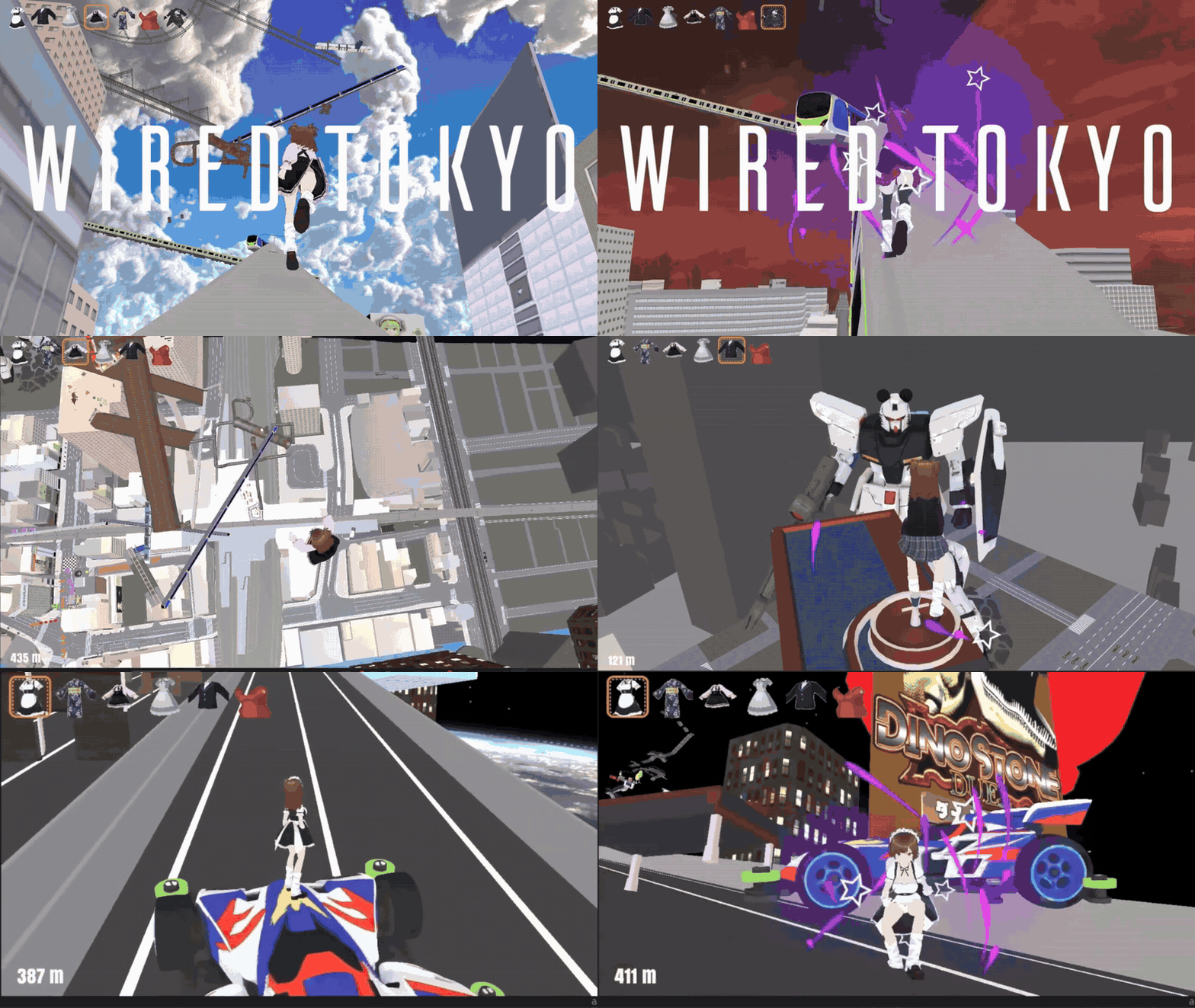
The WIRED TOKYO 2007 demo dispute is significant because it appears to show a legitimate Steam anti-infringement review colliding with a very indie problem: a creator reusing references to their own older work, published under a handle rather than a clearly documented legal entity. Public reporting says the issue surfaced when Daikichi_EMP disclosed that Steam had stopped the demo from going live over suspected third-party IP, even though the developer says the referenced assets were theirs. As of May 5, 2026, the demo’s Steam page still shows “Coming soon,” while the main game remains listed for 2027.
This article separates what is clearly documented from what must be inferred. Documented facts come from Steamworks policy pages, the Steam store listings, and reporting that reproduces or summarizes the support messages Daikichi shared publicly. The practical guidance below also draws on materials from the World Intellectual Property Organization, the U.S. Copyright Office, and the U.S. Patent and Trademark Office, because Steam’s own public rules explain what not to publish, but they do not publish a complete case-specific playbook for proving ownership in every pseudonym or chain-of-title scenario.
Steam Denied the WIRED TOKYO 2007 Demo Submission: What Happened— ×1
Public reporting indicates that Daikichi_EMP planned a free WIRED TOKYO 2007 demo release for April 30, 2026, but announced on April 29 that the demo was being held up in Steam review because motifs of board games previously created by the developer were being treated as third-party intellectual property. Steam’s own onboarding documentation says a store page or build cannot go live until Valve completes a brief pre-release review, and its review-process documentation says Valve sends feedback if changes are needed before a product becomes “Ready for release.” In practice, that means the demo appears to have been stopped at the review gate rather than disappearing from Steam entirely.
That distinction matters for accuracy. The public evidence supports a conclusion that the demo submission was effectively denied or frozen pending additional proof, not that WIRED TOKYO 2007 itself was permanently banned from Steam. The demo page remains live and wish-listable, and the main game still has an active store presence.

Who is Daikichi_EMP and What is WIRED TOKYO 2007
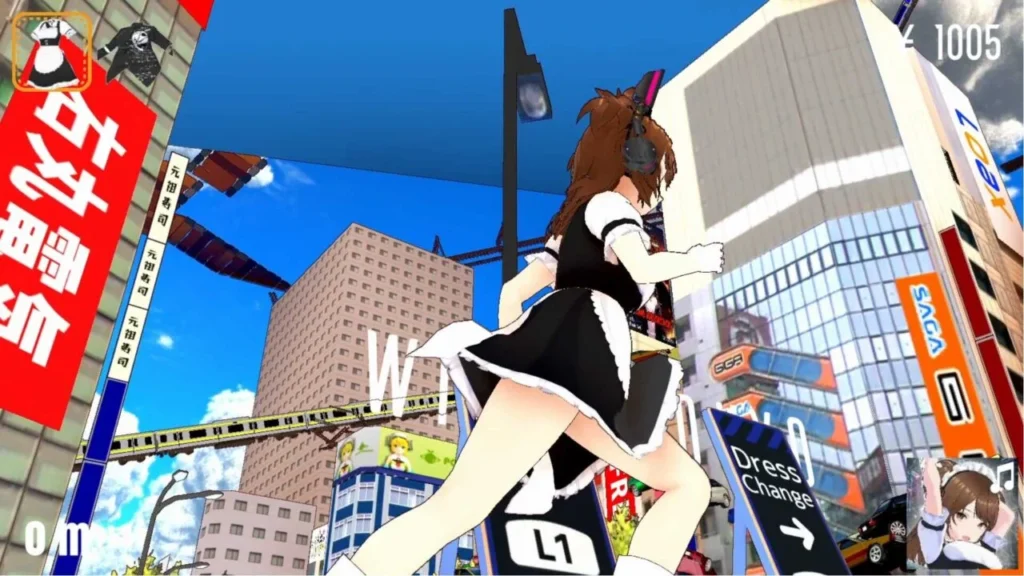
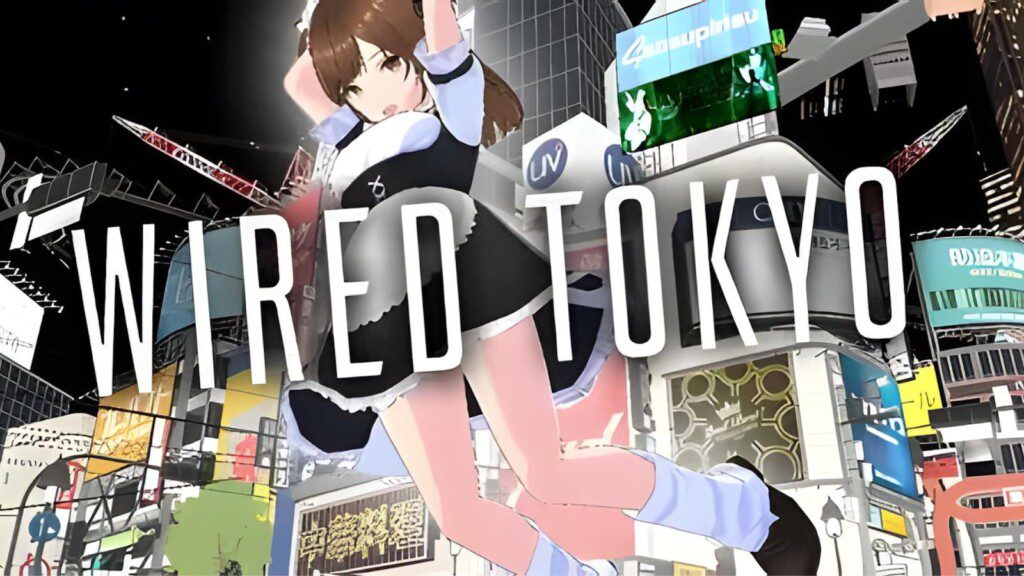
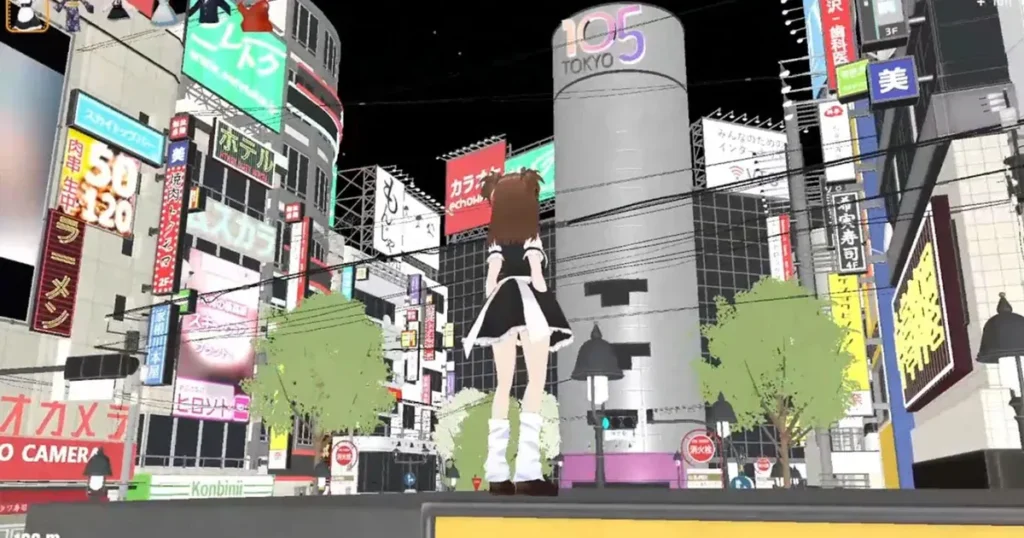
Daikichi_EMP is the public developer identity attached to the Steam listings for WIRED TOKYO 2007, a vertical 3D action game set high above Tokyo in which climbing upward and deliberately diving downward are both part of progression. Steam’s store pages list Daikichi_EMP as developer and Digital Ramen Studio as publisher; the full game is currently listed for release in 2027, while the demo page describes roughly one-third of a stage being playable.
Why that identity question matters is straightforward: Steam’s onboarding rules require the legal company name or legal personal name that actually owns or has the right to publish the product, and Steam explicitly says not to onboard under an alias, nickname, DBA, or friendly name. That makes pseudonymous publishing workable on the public-facing store side, but potentially messy if the rights documentation behind the scenes was never formalized in the same legal name Steam expects for partner onboarding.
Why Steam Said the Demo Violated “third-Party Intellectual Property”
According to reporting that quotes Steam’s correspondence, the issue was not presented as a stylistic concern or a general content warning. Steam reportedly told Daikichi that the app may infringe “intellectual property from third parties,” specifically referencing “dinosaur themed card games shown in the environment within your app in gameplay.” Steam then reportedly required “reasonable assurances” that no infringement was occurring and said such assurances could take the form of license agreements or a legal opinion from an attorney explaining why licenses were unnecessary.
The important legal and procedural point is that this looks like an internal platform rights review, not a public court ruling and not, in the material reviewed here, a published DMCA notice from an outside claimant. Steam’s public rules say developers may not publish content they do not own or lack adequate rights to, and Steam’s review team checks the game and store presence before release. The dispute therefore appears to be about whether the proof Steam received was sufficient, not about whether Steam has a published policy permitting self-references in the abstract.
Dinostone Board Game Reference in WIRED TOKYO 2007 Explained
Multiple reports say the dinosaur-themed reference Steam identified was Dinostone, described as a dinosaur-themed card or board game previously released by the same creator. Automaton also reports that another board game, Second Best, was part of the same problem set, and that Daikichi submitted links and evidence showing both were published under the same handle. In other words, the public record does not suggest Daikichi was borrowing someone else’s board-game IP for parody or homage; it suggests the developer was referencing their own earlier works inside a newer Steam-bound game.
That is also why this story has spread so quickly: it is an unusually clear example of provenance failure rather than an obvious piracy case. Steam’s reviewers appear to have seen assets that looked like external branded works. Daikichi appears to have seen self-referential Easter eggs and cross-project continuity. When those two interpretations collide, rights paperwork becomes the deciding evidence.
How Steam’s Review Process Handles Potential Copyright Infringement
Steam’s official documentation makes three public points that matter here. First, before a store page or build goes live, Valve runs a review that includes checking configuration, running the game, and confirming that the product is not doing anything harmful. Second, when reviewing store presence, Valve may send feedback and require changes before a title gets “Ready for release.” Third, Steam’s onboarding rules explicitly forbid publishing “content you don’t own or have adequate rights to.” Those rules are broad enough to cover code, art, logos, embedded references, store assets, and anything else that could expose Valve or the developer to infringement claims.
Steam has also made clear elsewhere in its documentation that the same principle applies beyond obvious traditional assets. Its content-survey guidance says developers promise that their games will not include illegal or infringing content and will match their marketing materials; even AI-assisted content is reviewed on that basis. Steam’s documentation for startup movies likewise warns that marketing materials must be non-infringing. So the platform’s review logic is not limited to executable game files. It spans the entire package Valve distributes and markets.
What “reasonable Assurances” Means in Steam’s IP Compliance Emails
Steam does not publish a public glossary page defining the phrase “reasonable assurances” for IP disputes, so the safest reading comes from the examples Valve reportedly gave in the Daikichi correspondence. In context, “reasonable assurances” appears to mean evidence that is legally attributable, reviewable, and strong enough for Valve to rely on if a rights question later escalates. Steam’s reported examples were license agreements or an attorney’s legal opinion explaining why no license is required. That is more than a casual email saying “trust me, it’s mine.”
There is also some evidence that the wording is not unique to this case. A separate 2024 Reddit post from another developer reproduced strikingly similar language about providing “reasonable assurances,” license agreements, or an attorney opinion before Steam would ship an app. That anecdote is not official policy, but it strongly suggests a template-style review response rather than a one-off phrase invented for WIRED TOKYO 2007.
Steam Asking for a Legal Opinion Letter: What Indie Developers Can Do— ×1
An attorney opinion letter is one possible form of proof, not the only thing Steam reportedly listed. For an indie developer, the practical first step is to assemble a documentary packet before paying for legal drafting: identify the flagged assets; map each one to its original publication or creation date; attach source files, public sales or listing pages, and any preexisting rulesheets, screenshots, repositories, or artwork exports; and write a concise rights memo that explains who created the asset, under what name it was published, and why the current Steam partner owns it. If the issue is really about document clarity rather than ownership itself, that packet may narrow what counsel needs to do later.
Steam’s own documentation points to the next escalation path after that: open a Steamworks support ticket or continue the support thread, because Valve explicitly directs developers to Steamworks support for issues not resolved by documentation. At the same time, keep the submission in a releasable state so it can be reviewed again once the ownership packet is clarified. Steam’s demo documentation says demos can be marked ready for review after the necessary checklist items are complete.

How to Prove You Own Your IP on Steam When You Publish Under a Pseudonym
Steam’s systems separate legal identity from public branding more than many creators realize. On the legal side, Steam says onboarding must use the legal name of the individual or entity that owns or has rights to publish the game, and it says not to use aliases, nicknames, or DBAs during onboarding.
On the public side, Steam store pages allow developer and publisher names to be displayed and linked through creator homepages, with those public names entered on the store page and linked separately. That means the central proof problem is not whether Steam allows a pseudonym to be visible to players; it is whether the developer can clearly bridge the public pseudonym to the legal rights holder behind the Steamworks account.
Where possible, that bridge should be built with formal documents instead of screenshots alone. The U.S. Copyright Office states that pseudonymous works can be registered, and its registration help materials explain that applicants can identify a work as pseudonymous and list the pseudonym; the Office also allows the legal name to be included even if it does not appear publicly on the work. WIPO likewise notes that copyright protection is generally automatic, but voluntary registration systems can help resolve ownership disputes and facilitate transfers or assignments. Together, those sources point to a simple rule: automatic copyright gets you the baseline right, but registration and recordation make that right easier to prove to a platform reviewer.
Steam Demo Rejected for Copyrighted Content: Step-by-Step Appeal Checklist— ×1
- Preserve the exact Steam message, the flagged wording, and all screenshots or support-ticket text, because the review language tells you what specific rights theory Valve wants answered.
- Build an asset-by-asset provenance sheet listing each challenged image, logo, board-game motif, or design element, its first creation date, where it was first published, and who created it. Steam’s rules are about whether you own or have adequate rights to the content, so the response should be targeted at those assets, not just broad assertions.
- Bridge the legal owner to the public pseudonym with signed declarations, prior storefront listings, creator pages, dated rulebooks, public credits, and any registration materials that show the same person or entity behind both names. Steam requires legal onboarding names, while store pages can show public-facing developer and publisher names.
- If rights moved between people or entities, attach the written assignment, license, or transfer evidence. If an individual later formed a company, Steam’s own transfer documentation says app transfers are the correct route when ownership changes or an individual forms a corporation and needs the game distributed under the new corporation.
- Open or update a Steamworks support ticket with a short cover note, the provenance sheet, and the attachments. Steam explicitly directs developers to support tickets for publishing issues not resolved in the docs.
- Once the file is clean and all requested materials are attached, resubmit the demo for review from the demo landing page. Steam’s demo docs say that after completing the relevant checklists, the page and build can be marked ready for review.
What to Include in Documentation to Show You Own Game Assets and Designs
The best ownership packet is a chain-of-title packet, not a single certificate. WIPO’s game-industry guidance emphasizes that contracts determine ownership of creative content in games, and official copyright recordation guidance explains that transfers and related documents can be recorded to create clearer notice around ownership. Even outside direct Steam disputes, official regulations tied to video-game cultural certification in the UK explicitly treat a copy of the “chain of title” and game design documents as expected paperwork.
In practical terms, the documentation should include the asset inventory; original layered or source files; dated exports; version-control or repository history where available; contractor agreements or work-made-for-hire documents; assignment or license documents if rights moved; storefront pages or sales pages for prior releases under the pseudonym; registration certificates where available; and one signed explanatory statement that connects the legal owner, the pseudonym, and the currently submitted Steam app. Copyright protection may be automatic, but recordable, timestamped, cross-referenced documents are much easier for a platform reviewer to trust.
Can You License Your Own Work to Yourself for Steam Approval
If the same legal person or entity both created the work and is the Steam publisher of record, a self-license is usually legally redundant. The copyright owner already holds the exclusive rights and, as the U.S. Copyright Office and WIPO explain, licenses are generally authorizations granted by the rights owner to others. In that same-owner scenario, the real need is usually not permission but proof.
If the creator and the Steam publisher are different legal persons, however, then a written assignment or license can be essential. That happens when a solo developer later forms a company, signs with a publisher, or moves a project from a personal identity to a corporate Steamworks partner. Steam’s transfer documentation expressly contemplates that scenario and says transfers may be useful when a game changes ownership or an individual forms a corporation and needs the title moved under the new corporation.
Public reporting suggests Daikichi tried a middle-ground workaround on May 2, 2026 by drafting and signing a document granting permission to use their own prior works and then resubmitting the game for review. That kind of self-signed declaration may still be worthwhile as supporting evidence, but the case so far suggests it should be treated as part of a broader proof file, not as a guaranteed substitute for a full chain-of-title package or independent legal opinion.
Common Reasons Steam Blocks Game Demos for IP Concerns
Steam’s public rules are broad, but the common risk buckets are fairly predictable. The first is the most obvious: content you do not own or lack adequate rights to. The second is anything in the game or store page that looks like another company’s protected brand, art, music, logo, or product design. The third is rights ambiguity, where the assets may in fact be yours but the documentation does not cleanly connect the legal Steamworks owner to the creator, contractor, previous studio, or pseudonym that first published the material.
Steam’s newer documentation shows the same principle applying across multiple categories. AI-assisted assets are still reviewed for illegality or infringement, non-infringing rights are required for marketing materials, and Steam’s creator-homepage URLs and company marks also must not infringe another company’s rights. For indie developers, that means IP-risk review is no longer just about soundtrack licenses or obvious fan art. It includes every asset that a reviewer could reasonably interpret as belonging to someone else.
How Much a Lawyer Costs for a Steam IP Dispute (and Cheaper Alternatives)
There is no public Steam tariff for an IP-review dispute, and Steam does not say every developer must buy a legal opinion letter. What Steam reportedly says is that an attorney opinion is one acceptable form of assurance. The best publicly available pricing benchmark in the sources reviewed here comes from Clio’s 2026 rate data, which says the average 2025 U.S. lawyer hourly rate was $349 overall and $453 in intellectual-property practice areas.
Based on those rates, a narrowly scoped review letter for a simple chain-of-title problem may land in the high hundreds or low thousands of dollars, while anything involving heavy fact development, multiple works, or formal dispute work can climb much higher. At the top end of the U.S. market, Reuters reported elite-firm billing rates reaching $3,000 per hour in 2025.
Cheaper alternatives do exist, though they are not perfect substitutes for bespoke counsel. Volunteer Lawyers for the Arts provides legal aid and education for artists; the USPTO’s law school clinic certification program includes clinics that provide pro bono patent and trademark services; some university IP clinics also provide copyright counseling and related advice for entrepreneurs and creators.
On the evidence side, lower-cost formalization tools can help too: the U.S. Copyright Office lists electronic registration fees of $45 for a qualifying single-author filing and $65 for the standard application, while its fee circular lists $125 to record a document covering no more than one identified work. Those administrative costs do not solve every Steam review problem, but they are often much cheaper than waiting until a dispute erupts and then starting from zero.
Best Practices to Avoid Steam Copyright Flags When Referencing Older Projects
The cleanest prevention strategy is to separate creative continuity from legal ambiguity before submission. First, onboard Steamworks under the real legal owner of the project, not a nickname or friendly name, because Steam explicitly forbids alias-based onboarding. Second, use the public developer and publisher fields only as branding layers, then keep a written internal memo that ties those public names back to the legal owner. Third, if you plan to reuse art, logos, mock board games, old product names, or any recognizable motifs from earlier works, prepare your provenance packet before you click “Mark as ready for review,” not after Steam objects.
Fourth, formalize ownership when projects move between identities. If a contractor made an asset, get the signed transfer. If you incorporated after making the game, assign or transfer the rights. If a work was published under a pseudonym, register or otherwise memorialize the pseudonym-to-owner link where your jurisdiction allows that. Fifth, clear rights for store art, trailers, startup movies, logos, and all marketing assets, because Steam’s public documentation treats those materials as part of the same non-infringement obligation. Sixth, document the provenance of AI-assisted and open-source elements as carefully as traditional art, because Steam says the same rights promises apply there too.
For developers who love cross-project references, there is one more practical rule: if a reference can look like someone else’s product to an outside reviewer, either be ready to prove ownership immediately or consider swapping it for a less specific internal nod until after launch. Steam’s rights rules are broad, and in a pre-release review setting, ambiguity itself can become the problem.
WIRED TOKYO 2007 Steam Demo Status Updates and What to Watch Next
The documented public timeline is relatively tight. On April 29, 2026, Daikichi publicly said Steam review was delaying the demo over past self-made board-game motifs inside WIRED TOKYO 2007. The expected demo release was April 30. Automaton reported that, by May 2, the developer had resubmitted after writing a signed document granting permission to use their own creative works. As of May 5, 2026, the Steam demo page still showed “Coming soon,” and the full game remained listed for 2027.
What to watch next is not mysterious. The clearest signals will be a change in the demo page from “Coming soon” to playable, a new public statement from the developer saying Steam accepted or rejected the revised proof packet, or a more explicit Steamworks support response becoming public. Until then, the visible case record is still largely built on developer-shared correspondence and media summaries rather than a formal public explanation from Valve.
Frequently Asked Questions (FAQs)
- Is WIRED TOKYO 2007 banned from Steam?
No public source reviewed here shows a permanent ban. The demo page is still live and marked “Coming soon,” and the full game still has an active Steam page with a 2027 release window. - Did Steam accuse Daikichi_EMP of stealing from another developer?
Public reporting says Steam flagged possible infringement involving “third-party intellectual property,” specifically “dinosaur themed card games shown in the environment,” but the reporting does not show a public lawsuit or outside claimant in the materials reviewed here. - What proof did Steam reportedly ask for?
Steam reportedly asked for “reasonable assurances,” with examples including license agreements or a legal opinion from an attorney explaining why no licenses were needed. - Does copyright exist even if a creator never registered the work?
In general, yes. WIPO says copyright protection is automatic in most countries, and the U.S. Copyright Office says copyright exists from the moment the work is created. Registration still matters because it helps prove ownership and supports later enforcement. - Can publishing under a pseudonym make Steam proof harder?
Yes. Steam requires legal names for onboarding, not aliases, while public branding can still use developer or publisher names on store pages. If older works were published under a handle, the developer may need extra documents connecting that handle to the legal rights holder. - Does Steam allow a public brand name that differs from the legal owner?
Yes on the store side, but not for onboarding. Steam’s creator-homepage tools show that public developer and publisher names can be entered and linked on store pages, while onboarding and company information must use the legal owner’s name. - What happens if a solo developer later forms a company?
Steam says transfers may be useful when an individual forms a corporation and needs the game distributed under the new corporation. That means the fix is usually a rights transfer plus an app transfer, not pretending the old and new owners are the same without paperwork. - Will a self-signed permission letter always satisfy Steam?
There is no public evidence that it always will. Automaton reported that Daikichi tried this approach on May 2 and was still awaiting the outcome at the time of publication. - Do trailers, logos, and other store assets matter in a Steam IP review?
Yes. Steam’s documentation says marketing materials must be non-infringing, and the same distribution promise against illegal or infringing content applies broadly to what Valve reviews before release. - What is the fastest low-cost evidence a developer can prepare before hiring a lawyer?
Usually a provenance packet: dates of creation, original source files, public listing pages for the older work, contracts or assignments if rights moved, and a signed declaration connecting the pseudonym to the legal owner. Those documents are often cheaper and faster to assemble than commissioning a formal opinion letter from scratch.
Conclusion
The strongest reading of the available evidence is that Steam did exactly what its public rules say it does when rights look unclear: it stopped a release at the review stage and asked for proof.
The unusual part is not Valve’s underlying rule against infringing content. The unusual part is that the challenged material appears, based on public reporting, to be the developer’s own earlier work. That makes WIRED TOKYO 2007 less a story about piracy and more a story about chain of title, pseudonyms, and the administrative burden of proving authorship to a platform that reviews first and releases later. For indie developers, the lesson is hard but practical: if an old side project, board game, logo, or art asset is going into a Steam build, document the rights trail before submission, not after a reviewer asks for it.
Sources and Citations
- Steamworks onboarding documentation
- https://partner.steamgames.com/doc/gettingstarted/onboarding
- Steamworks FAQ
- https://partner.steamgames.com/doc/gettingstarted/faq
- Steamworks creator homepage documentation
- https://partner.steamgames.com/doc/store/creator_homepage
- Steamworks review process documentation
- https://partner.steamgames.com/doc/store/review_process
- Steamworks release process documentation
- https://partner.steamgames.com/doc/store/releasing
- Steamworks content survey documentation
- https://partner.steamgames.com/doc/gettingstarted/contentsurvey
- Steamworks application transfer documentation
- https://partner.steamgames.com/doc/gettingstarted/managing_apps/transfer
- WIRED TOKYO 2007 full game Steam page
- https://store.steampowered.com/app/4218700/WIRED_TOKYO_2007/
- WIRED TOKYO 2007 Demo Steam page
- https://store.steampowered.com/app/4643540/WIRED_TOKYO_2007_Demo/
- U.S. Copyright Office pseudonyms circular
- https://www.copyright.gov/circs/circ32.pdf
- U.S. Copyright Office registration FAQ
- https://www.copyright.gov/help/faq/faq-register.html
- U.S. Copyright Office fees page
- https://www.copyright.gov/about/fees.html
- U.S. Copyright Office copyright ownership and transfer law
- https://www.copyright.gov/title17/92chap2.html
- U.S. Copyright Office assignment and transfer FAQ
- https://www.copyright.gov/help/faq/faq-assignment.html
- U.S. Copyright Office recordation page
- https://www.copyright.gov/recordation/documents/
- WIPO copyright overview
- https://www.wipo.int/en/web/copyright
- WIPO understanding intellectual property in video games
- https://www.wipo.int/cooperation/en/docs/ip-video-games.pdf
- WIPO legal status of video games
- https://www.wipo.int/documents/d/copyright/docs-en-creative-industries-video_games.pdf
- USPTO copyright basics
- https://www.uspto.gov/ip-policy/copyright-policy/copyright-basics
- USPTO law school clinic certification program
- https://www.uspto.gov/learning-and-resources/ip-policy/public-information-about-practitioners/law-school-clinic-1
- VGC report on WIRED TOKYO 2007 Steam IP issue
- https://www.videogameschronicle.com/news/indie-dev-says-steams-blocking-their-game-for-ip-infringement-even-though-its-their-own-ip/
- Automaton West report on WIRED TOKYO 2007 Steam approval limbo
- https://automaton-media.com/en/news/indie-developer-lands-in-steam-approval-limbo-after-being-flagged-for-ip-infringement-over-in-game-references-their-own-past-work/
- Kotaku report on Valve blocking WIRED TOKYO 2007 demo
- https://kotaku.com/indie-valve-wired-tokyo-2007-daikichi-steam-pc-demo-2000692920
- App2Top / WNHub report on Steam denying the demo
- https://app2top.com/news/steam-denied-an-indie-developer-the-publication-of-a-game-demo-due-to-a-violation-of-its-own-copyright-290055.html
- Clio 2026 lawyer hourly-rate benchmarks
- https://www.clio.com/resources/legal-trends/compare-lawyer-rates/
- Reuters report on top law-firm hourly rates
- https://www.reuters.com/legal/litigation/lawyer-rates-surge-us-firm-charges-4000-an-hour-top-partners-2026-01-26/
- Volunteer Lawyers for the Arts
- https://vlany.org/
- USPTO pro bono law school clinics
- https://www.uspto.gov/learning-and-resources/ip-policy/public-information-about-practitioners/law-school-clinic-1
Recommended
- Nobody Wants to Die Noir Retrofuturistic Detective Game: Trailer, Reviews & Player Feedback
- Man Shot In Parking Lot In An Argument Over Pokémon Cards at Indianapolis Kroger: What We Know So Far
- Top Video Games with Really Good Foley Work: The Best Sound Design in Gaming
- Rendering Multiple Camera Angles Simultaneously in Blender with The View Keeper
- A Palworld Horror-Themed Dating Sim Spinoff Is on the Way: What We Know About More Than Just Pals
- We Build LEGO Winnie the Pooh: A 100th Anniversary Set Worth the Hype for Disney and LEGO Fans
- Love Death and Robots on Netflix: Everything You Need to Know About the Groundbreaking Animated Anthology Series
- Latest Daredevil: Born Again Viewing Figures Show Dramatic Drop From Season 1: What the Data Says and Why It Matters
- Wants Players “Impacted, Not Entertained”: on , Higgs, and Kojima’s “Big Swings” Philosophy
- Easy Full-Body Tracking for VRChat With Moverse: Setup, Features, Price, and VRChat Compatibility