







In This Article (7 sections)
Tencent’s Investment in Flow Games: $46 Million Funding Package, $49 Million Total and Investor Details
Tencent’s investment in Turkey’s Flow Games brings fresh attention to Istanbul’s mobile gaming industry and the commercial growth of Smash Fest. The transaction first emerged through reporting about a $46 million funding package, followed by confirmation that Flow Games had raised $49 million across its investment rounds. These figures describe different measures of financing and should not be treated as competing versions of the same announcement.
The original PocketGamer.biz report, published on October 13, 2026, attributed approximately three quarters of the reported package to Tencent. App2top covered the development on October 15, explaining the date associated with subsequent reporting, while an October 16 report carried Flow Games’ confirmation of its cumulative funding and identified the investors involved. This chronology matters because the later reporting introduced company confirmed information that was not available in the initial account.
Tencent’s backing connects a major international gaming business with a Turkish developer whose mobile title has attracted substantial commercial attention. The investment is significant because it involves both financing and an established game with measurable download activity and estimated player spending. However, funding should be understood as support for future business execution rather than proof that every commercial objective has already been achieved. A developer may attract investment because investors see opportunities to improve retention, expand distribution, increase monetization, or develop additional products.
The announcement does not establish which internal performance indicators influenced Tencent’s decision most strongly. It is also important to distinguish an investment from an acquisition. The available reporting does not confirm that Tencent purchased Flow Games outright or obtained majority ownership, and providing most of a financing package does not automatically mean receiving most of a company’s shares. The established information confirms Tencent’s financial involvement, while ownership arrangements, governance rights, exclusivity provisions, and potential acquisition terms remain undisclosed.
Tencent’s contribution was reported at approximately $34.5 million, based on the original account that the company supplied around three quarters of the $46 million funding package. App2top presented this corresponding estimate in its October 15 coverage. The approximate nature of the figure is important because a reported proportion should not become an exact, independently verified payment amount simply because it can be expressed numerically. Tencent’s estimated contribution demonstrates its prominence within the reported financing package, but it does not reveal Flow Games’ valuation, the percentage of ownership issued, or the transaction’s precise structure.
Determining a valuation would require information about the equity involved and any additional financial provisions. Likewise, the estimated contribution does not establish the company’s current cash balance because businesses spend capital between investment rounds, and financing announcements do not necessarily indicate when every portion of the funds becomes available.
The original $46 million figure refers specifically to the financing package described by PocketGamer.biz, which based its report on a source familiar with the transaction rather than a complete public financing statement from Flow Games. This distinction establishes the appropriate level of certainty. The initial report provided information about the package and Tencent’s leading role, while subsequent coverage added company confirmed details about cumulative investment.
The later confirmation strengthens the overall investment story without independently verifying every allocation or condition described in the original report. Financing announcements can also leave important questions unanswered, including closing conditions, share classes, governance provisions, and whether related funding occurred through multiple steps. These details matter because two developers receiving similar headline amounts may emerge with substantially different ownership arrangements, obligations, and operational flexibility.
Flow Games subsequently confirmed that it had raised $49 million to date, with October 16 reporting identifying this as cumulative funding across investment rounds rather than a separate new round worth $49 million. The distinction prevents a significant misunderstanding because adding the reported $46 million package to the confirmed $49 million total would count financing already included in the cumulative figure. The company’s disclosure should therefore be used to describe its overall funding history, while the smaller amount remains associated with the original reported package.
The figures can be distinguished as follows:
- $46 million: The financing package initially reported by PocketGamer.biz on October 13, 2026.
- Approximately $34.5 million: Tencent’s estimated contribution, based on the reported proportion of roughly three quarters of the package.
- $49 million: Flow Games’ confirmed cumulative funding across its investment rounds.
- October 13, 2026: The date of the original PocketGamer.biz funding report.
- October 15, 2026: The date App2top published its coverage of Tencent’s investment.
- October 16, 2026: The date of subsequent reporting confirming the company’s cumulative funding and naming its investors.
Cumulative investment must also be distinguished from revenue and profit. Funding represents capital supplied to a company, while revenue comes from commercial activities such as purchases and advertising. Profit depends on the relationship between revenue and expenses, meaning none of these figures can be substituted for another when evaluating financial performance.
Rounded funding disclosures also do not provide a complete investment history. Subtracting one headline figure from another may suggest an approximate difference, but it does not establish the exact size, timing, or structure of earlier rounds. Similarly, the cumulative total does not reveal Flow Games’ valuation, remaining cash, profitability, or investor returns. Its confirmed purpose is to establish the amount of financing the company says it has raised overall.
Flow Games identified Makers Fund, Arcadia Gaming Partners, and Ludus Ventures alongside Tencent among its investors. This expanded the picture beyond the initial report of Tencent leading the financing package and established that multiple sources of capital have supported the business. The presence of several investors can potentially provide different forms of experience and professional access, including recruitment, financial planning, product strategy, and introductions to commercial partners. However, these are possible benefits of an investor group rather than confirmed services promised to Flow Games. Public reporting does not provide a complete breakdown of each investor’s contribution, so the remaining financing cannot accurately be divided equally among the named firms or assumed to have been supplied under identical terms.
Investor identity also does not establish operational responsibility. A financial backer may hold an ownership interest without directly managing game development, advertising campaigns, hiring, or everyday business decisions. Similarly, Tencent’s prominence within the reported financing package does not independently establish its governance rights or the founders’ remaining ownership. The company’s confirmed investor group demonstrates access to several sources of capital, but understanding how those relationships affect product strategy and business operations will require subsequent disclosures or observable decisions.
Flow Games is an Istanbul based mobile game developer associated with Smash Fest. Apple’s App Store identifies Flow Games Bilisim Yazilim ve Pazarlama Anonim Sirketi as the developer of the game, helping establish that the business discussed in the funding coverage is the same company responsible for the title. This identification is useful because searches involving similar business names or game titles can produce unrelated results. Matching the developer’s legal identity with the product listing provides a clearer connection between the financing announcement and the operating game.
InvestGame describes the Flow Games founding team as having experience at established mobile developers, including Good Job Games, Peak, Fomo Games, Bigger Games, and Dream Games. This background provides context for the studio’s relationship with Istanbul’s mobile gaming community and the experience its founders brought into the business. Previous work at successful developers can inform production processes, product strategy, and organizational decisions, but it does not guarantee that a new studio will achieve similar commercial results.
Flow Games must still establish its own technical execution, hiring practices, product judgment, and financial discipline. Its significance in the current funding story comes from combining an operating mobile game with substantial international investment, creating opportunities for further development while leaving its long term success dependent on execution.
The available information therefore establishes a substantial investment story without confirming every financial detail of the transaction. Tencent was reported as the leading contributor to a $46 million financing package, Flow Games later confirmed $49 million in cumulative funding, and several additional investors were publicly identified. These disclosures demonstrate the scale of financial support surrounding the company, but they do not establish an acquisition, majority ownership, an exact valuation, or guaranteed future results. The next stage of Flow Games’ development will depend on how effectively it uses that capital to support its existing game, expand its organization, and pursue further commercial opportunities.

Smash Fest Downloads, Gameplay, Revenue Estimates and Flow Games’ Expansion Plans
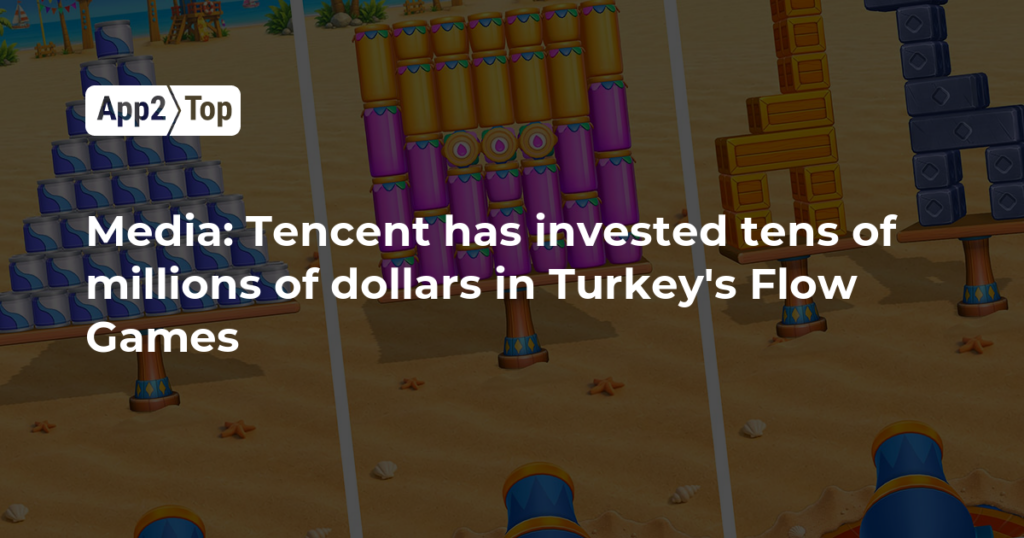
Smash Fest is a mobile game built around firing a cannon and destroying arrangements of objects. Its App Store description emphasizes fragile jars, heavy stones, aiming, and chain reactions within colorful three dimensional environments. The game combines shooting with puzzle solving, presenting an interaction that is immediately understandable while making success dependent on how a projectile affects the arrangement ahead.
Players can observe a structure, aim their shot, and attempt to create an effective collapse through the resulting impact. This structure gives Smash Fest a clear visual premise because a short demonstration can communicate the objective through an intact target, a projectile, and the destruction that follows. Such clarity may help explain the format’s potential appeal to prospective players, although the available reporting does not establish which marketing methods contributed most strongly to its adoption.
The gameplay depends on making movement, impact, breakage, and collapse feel connected to the player’s actions. Physics based destruction creates challenges involving cause and effect, requiring players to anticipate how an impact will move objects and whether that movement will trigger a larger chain reaction. A successful physics puzzle allows players to form a hypothesis, test it, and understand why the resulting outcome succeeded or failed.
An unstable arrangement can encourage prediction, while the collapse provides feedback about the chosen shot. If the result appears disconnected from the player’s input, the central interaction becomes less convincing. Likewise, if every level can be completed through the same obvious approach, the initial novelty may diminish, while outcomes that appear excessively unpredictable can make success feel dependent on chance.
These are general design considerations rather than confirmed descriptions of undisclosed Smash Fest systems. They explain why maintaining a physics based mobile game involves more than introducing new decorative objects. The developer must preserve understandable interactions while providing enough variation to sustain interest over time. Smash Fest’s commercial significance therefore extends beyond its installation figures because it represents an identifiable gameplay concept that Flow Games can continue developing, refining, and supporting.
Flow Games reported that Smash Fest surpassed 23 million worldwide downloads following its global launch in May 2026. Separately, AppMagic estimates cited in the original funding coverage indicated approximately 10.2 million downloads during July. These figures demonstrate substantial reported distribution, but they do not establish the complete process through which players discovered and installed the game. The reviewed disclosures do not provide a verified breakdown of paid advertising, organic discovery, store featuring, referrals, or other acquisition channels. The easily demonstrated nature of destruction gameplay may help communicate its objective, but that remains an interpretation of the game’s design rather than a confirmed explanation of the studio’s marketing performance.
Downloads also measure a different aspect of performance from engagement and monetization. A cumulative installation milestone does not establish how many players are currently active, how frequently they return, or how many make purchases. A mobile game can accumulate substantial downloads while experiencing very different outcomes in retention, advertising performance, and customer value. The more revealing commercial questions concern whether players continue using the game, how their behavior changes over time, and what it costs to acquire them. Without those measurements, the 23 million download milestone demonstrates reach while leaving the economics of that audience partly unresolved.
AppMagic estimates cited by PocketGamer.biz placed Smash Fest’s gross lifetime player spending at almost $8.9 million at the time of reporting. Approximately $8.3 million was attributed to iOS and $526,000 to Android, while monthly spending estimates indicated $692,000 in June and $3.4 million in July. These figures provide evidence of commercial activity, but they are independent market estimates rather than audited financial disclosures from Flow Games. Their publication date also matters because a lifetime spending estimate recorded during October 2026 should not be presented as a continuously updated total. The differences between platform spending estimates may be commercially relevant, but the available information does not independently establish the precise reasons for that distribution.
The reported figures can be summarized as follows:
- More than 23 million downloads: Flow Games’ reported worldwide installation milestone following Smash Fest’s May 2026 global launch.
- Approximately 10.2 million July downloads: An AppMagic estimate cited in the original funding coverage.
- Almost $8.9 million in lifetime player spending: AppMagic’s estimated gross spending figure at the time of reporting.
- Approximately $8.3 million from iOS: The estimated portion of lifetime player spending attributed to Apple’s platform.
- Approximately $526,000 from Android: The estimated portion attributed to Android.
- Approximately $692,000 in June spending: The reported AppMagic estimate for that month.
- Approximately $3.4 million in July spending: The corresponding estimate for July.
These figures should not be interpreted as a complete financial statement for Smash Fest or Flow Games. A source cited in the coverage indicated that advertising supplied most of the game’s revenue, but the reviewed reporting did not disclose a verified advertising revenue amount. Consequently, estimated player spending cannot establish total revenue because advertising income may represent an additional and substantial component of the business. Nor can estimated spending or advertising activity independently establish profitability. Marketing expenditure, development costs, salaries, platform deductions, and other operating expenses influence how much money the company ultimately retains.
The figures are useful indicators of commercial scale, particularly when considered alongside reported download growth and Tencent’s investment. However, they are insufficient for calculating a reliable profit margin, customer acquisition payback period, or business valuation without additional financial information. Download growth may demonstrate the ability to reach a large audience, while monetization estimates suggest spending activity, but neither establishes whether the economics remain sustainable over time. Understanding the durability of Smash Fest’s business would require more detailed information about retention, advertising income, acquisition costs, and operating expenses.
Flow Games has stated that it intends to accelerate Smash Fest’s growth, expand its team, and strengthen its international presence. Subsequent reporting also describes ambitions to develop additional mobile games. These objectives establish the company’s broad direction following its investment announcements, although the public information does not provide a specific budget allocation for each activity. Growth could involve improvements to onboarding, additional content, technical development, broader promotion, or monetization work, but the available announcement does not identify which areas will receive particular amounts of funding.
The most appropriate use of capital depends on the company’s actual operational constraints. If a mobile game loses players early, increasing advertising expenditure alone may expand an existing retention problem. If engagement remains strong but content production is slow, additional development capacity could offer greater value. These examples illustrate why investment deployment should be connected to evidence from the product rather than the financing amount alone. The announcement confirms Flow Games’ plans to support Smash Fest and expand its operations, while future product updates, staffing changes, and commercial results will provide a clearer account of how the company allocates its resources.
Team expansion is one of the company’s stated priorities, but the reviewed funding coverage does not establish a recruitment timetable, fixed hiring target, or specific vacancies. It would therefore be inaccurate to suggest that particular departments have already received approved headcount or that a specific number of employees will be recruited. For a studio supporting an established game while considering additional releases, hiring can serve several functions. Engineering teams may contribute to technical reliability, designers may develop new content, and analysts may help interpret player behavior. However, these examples describe common development roles rather than confirmed job openings at Flow Games.
Increasing staff numbers also creates organizational responsibilities. New employees require clear roles, effective onboarding, and access to appropriate decision makers. Expansion without improved coordination can increase operating expenses before it increases productive output. The significance of Flow Games’ hiring ambitions will therefore depend on whether additional capacity addresses actual bottlenecks and supports the company’s development priorities. A larger team can enable more ambitious projects, but maintaining consistent product judgment, accountability, and an understanding of the player experience remains important as the organization grows.
Flow Games has also outlined an ambition to continue developing mobile games for international audiences, although the reviewed coverage does not identify confirmed new titles, release dates, or genres. Expanding beyond Smash Fest could reduce the company’s dependence on a single product, whose performance may be affected by changing player preferences, acquisition costs, competition, and the natural lifecycle of a mobile game. Additional successful releases could provide a broader commercial foundation, but developing them requires investment before any return is established.
New projects may require prototyping, testing, production, and launch preparation, all of which can compete with the resources needed to support Smash Fest. Early testing can help determine whether a concept communicates its purpose clearly and encourages players to return, while broader production requires confidence that the idea can support further investment. The company’s intention to develop additional mobile games therefore represents a meaningful expansion of its ambitions, but the results will depend on whether it can establish repeatable development practices without weakening support for its existing title.
Smash Fest remains central to understanding Tencent’s investment because it provides an operating product with reported download growth and estimated commercial activity. The game’s destruction based mechanics give Flow Games an identifiable concept to refine, while its existing audience creates opportunities to evaluate retention, content, and monetization improvements. The funding may support these priorities alongside hiring and future product development, but the transaction itself does not establish that every planned expansion will succeed. The company’s progress will be more clearly demonstrated through sustained player engagement, effective resource allocation, and the performance of its existing and future games.
Tencent’s Investment in Turkey’s Mobile Gaming Industry and What It Means for Turkish Developers
Tencent’s investment in Flow Games fits within a broader pattern of international financial activity involving Turkish mobile game developers. On September 24, 2026, Circle Games announced a $25 million Series A financing round led by Tencent. Wilson Sonsini, which advised Circle Games on the transaction, independently confirmed the financing in its client announcement. This provides another example of Tencent backing a developer connected to Turkey’s gaming industry during the same period. An earlier transaction involved Tencent subsidiary Miniclip’s acquisition of Masomo in 2019, which Masomo confirmed through its own announcement. UK company records also identify Miniclip as a person with significant control from January 2019.
These transactions demonstrate repeated engagement with Turkish developers, although their structures should not be treated as interchangeable. Leading an investment round differs from acquiring a company because the ownership position, governance arrangements, and relationship with the founders may vary substantially. Tencent’s reported participation in Flow Games’ financing does not establish an acquisition, while Miniclip’s transaction involving Masomo was specifically described as one. Similarly, Circle Games’ Series A represents a separate investment involving another developer. Comparing the transactions accurately requires maintaining these distinctions rather than assuming that every Tencent related deal creates the same ownership or operational relationship.
The examples nevertheless provide useful context for Flow Games’ announcement because they show continued international financial interest in Turkish mobile game businesses. Such interest can be connected to access to experienced development teams and products with the potential to reach audiences beyond their domestic markets. However, a studio’s geographical location does not independently determine its commercial prospects. Investors must still evaluate individual products, team experience, performance indicators, and transaction terms. Flow Games’ reported financing is therefore better understood as part of an established pattern of international engagement with Turkish mobile gaming rather than an isolated geographical experiment.
For other Turkish developers, the Flow Games transaction demonstrates that an Istanbul studio with a growing mobile product can attract substantial international financing. It also brings additional attention to the talent, companies, and professional networks operating within the same development community. The experience of Flow Games’ founding team at developers such as Good Job Games, Peak, Fomo Games, Bigger Games, and Dream Games contributes to that context, showing connections between established studios and newer businesses. However, previous industry experience and geographical proximity to successful companies do not guarantee that another developer will receive comparable investment or reproduce the same commercial results.
The most transferable aspect of the Flow Games story concerns the importance of demonstrating product performance through relevant evidence. Downloads establish distribution, while retention helps explain whether players continue finding value in the experience. Monetization provides information about commercial activity, and acquisition costs help determine whether growth can support itself. These measurements describe different aspects of a mobile game’s business, meaning no single milestone is sufficient to establish long term commercial success. A large download count may attract attention, but sustained engagement and manageable costs are necessary to understand the quality of that growth.
The Flow Games transaction also illustrates the difference between financial backing and demonstrated business performance. Tencent’s reported contribution and the company’s confirmed cumulative funding establish substantial access to investment capital, while Smash Fest’s downloads and player spending estimates describe aspects of the operating product. The funding does not automatically establish profitability, and the download milestone does not reveal the number of active or paying users. Evaluating the business requires considering how these measurements relate to one another rather than treating them as equivalent indicators of success.
Greater access to financing can also create competitive consequences within a development community. Studios with substantial capital may compete more aggressively for experienced employees, advertising inventory, and player attention. Smaller developers operating in the same environment may face increased pressure to define their products clearly and manage spending carefully. These are potential consequences of a more competitive funding environment rather than confirmed effects directly attributed to the Flow Games transaction. Their significance would depend on subsequent hiring activity, marketing expenditure, and the development strategies adopted by the companies involved.
For Flow Games itself, the investment creates opportunities to strengthen Smash Fest, expand its organization, and pursue new mobile titles. Those ambitions are meaningful because they extend beyond maintaining the company’s existing game, but they also introduce additional responsibilities. Supporting an established product while developing new concepts requires decisions about staffing, production capacity, and the allocation of capital. A company that expands too quickly may face higher operating costs before new projects generate commercial returns, while insufficient investment in its existing product could limit the value of the audience already acquired. The appropriate balance depends on internal performance information that has not been publicly disclosed.
The transaction’s wider significance will therefore depend on execution rather than the funding headline alone. If Flow Games converts investment into sustained player engagement, effective team expansion, and additional successful products, the deal could provide a stronger example of studio development within Turkey’s mobile gaming industry. Conversely, financing by itself cannot determine whether those ambitions will be achieved. The company must still manage product performance, operational growth, and the demands of developing further games.
Tencent’s involvement also demonstrates why the distinction between financial investment and ownership control is important when interpreting international gaming transactions. Providing most of a reported financing package may establish prominence within the deal, but it does not automatically reveal board representation, voting rights, founder ownership, or strategic authority. The available information does not establish that Tencent acquired Flow Games or obtained majority control, making stronger claims about governance or a future takeover unsupported by the reviewed reporting. The same caution applies when comparing investments across different Turkish developers, since financing rounds and acquisitions can create substantially different relationships.
Ultimately, Tencent’s investment in Flow Games brings together several developments: the reported $46 million financing package, the company’s confirmed $49 million cumulative funding, the commercial activity surrounding Smash Fest, and broader international interest in Turkish mobile game developers. The transaction provides capital that may support further growth, but the company’s future will depend on the durability of its audience, the effectiveness of its development practices, and its ability to turn investment into lasting products. For the wider Turkish industry, the announcement demonstrates access to international financing while reinforcing the importance of measurable performance and sustainable execution.

Frequently Asked Questions (FAQs)
- How much did Tencent reportedly invest in Flow Games?
Tencent reportedly contributed approximately $34.5 million to Flow Games, based on its estimated share of around three quarters of the $46 million financing package described in the original reporting. App2top presented this approximate amount in its October 15, 2026 coverage. However, the figure remains a reported estimate rather than a separately confirmed payment disclosure from the company. It also does not establish Tencent’s ownership percentage, Flow Games’ valuation, or the governance rights associated with the investment. - Did Flow Games raise $46 million or $49 million?
Both figures appeared in reporting, but they describe different aspects of the company’s financing. The $46 million amount refers to the funding package initially reported by PocketGamer.biz on October 13, 2026. The $49 million figure represents Flow Games’ subsequently confirmed cumulative funding across its investment rounds, reported on October 16. The amounts should not be added together because the cumulative total already includes financing received through the company’s funding history. Neither figure independently establishes the studio’s valuation or profitability. - Did Tencent acquire Flow Games?
The available reporting describes Tencent’s involvement as an investment rather than a confirmed acquisition. Although Tencent was reported to have supplied most of the $46 million financing package, that does not automatically mean it acquired majority ownership or control of Flow Games. The publicly reviewed information does not disclose the company’s resulting ownership structure, voting rights, or governance arrangements. Any claim that Tencent purchased the studio outright or obtained control would therefore require additional evidence beyond the funding announcement. - Which other investors backed Flow Games?
Flow Games identified Makers Fund, Arcadia Gaming Partners, and Ludus Ventures alongside Tencent among its investors. Their inclusion confirms that the company’s financing involved several sources of capital rather than Tencent alone. However, public reporting does not provide a complete breakdown of how much each investor contributed or whether they participated under identical financial terms. Their involvement may offer access to different forms of business experience and professional networks, but specific operational responsibilities or services were not established in the announcement. - Where is Flow Games based?
Flow Games is based in Istanbul, Turkey, and operates within the country’s mobile gaming industry. The studio is associated with Smash Fest, and Apple’s App Store identifies Flow Games Bilisim Yazilim ve Pazarlama Anonim Sirketi as the game’s developer. Its founding team has been described as having experience at established mobile development companies, including Good Job Games, Peak, Fomo Games, Bigger Games, and Dream Games. This background connects Flow Games with Istanbul’s wider mobile development community, although its commercial performance must be evaluated independently. - What kind of game is Smash Fest?
Smash Fest is a mobile game combining cannon shooting with physics based destruction puzzles. Players aim projectiles at arrangements of objects, attempting to create effective impacts and chain reactions that cause structures to collapse. Its App Store description highlights fragile jars, heavy stones, aiming, and colorful three dimensional environments. The gameplay centers on understanding how a shot affects surrounding objects, making the relationship between player input and visible destruction important to the experience. Flow Games launched the title globally in May 2026. - How many downloads has Smash Fest achieved?
Flow Games reported that Smash Fest surpassed 23 million worldwide downloads following its global launch in May 2026. Separately, AppMagic estimates cited in the original funding coverage indicated approximately 10.2 million downloads during July. These figures demonstrate substantial reported distribution, but they do not establish how many people remain active or how frequently they play. Downloads also should not be confused with paying customers or total revenue, since installations measure reach rather than sustained engagement or monetization. - Does Smash Fest’s estimated player spending include all revenue?
No. AppMagic estimates placed Smash Fest’s gross lifetime player spending at almost $8.9 million at the time of reporting, including approximately $8.3 million attributed to iOS and $526,000 to Android. However, those figures concern estimated player spending rather than total business revenue. Separate coverage indicated that advertising supplied most of the game’s revenue, but it did not disclose a verified advertising income amount. Consequently, the available estimates cannot establish total revenue or profitability, which also depends on operating expenses and other financial factors. - Will Flow Games hire more employees and release more games?
Flow Games has stated that it intends to expand its team, accelerate Smash Fest’s growth, strengthen its international presence, and continue developing additional mobile games. These objectives indicate plans to increase its development capacity and broaden its product portfolio. However, the reviewed announcements do not identify specific recruitment targets, confirmed vacancies, new game titles, genres, or release dates. The practical outcome will depend on how the company allocates its funding between supporting Smash Fest, expanding its organization, and developing future projects. - Why is the story associated with October 15?
October 15, 2026, is associated with App2top’s coverage of Tencent’s reported investment in Flow Games. The original PocketGamer.biz report appeared earlier, on October 13, describing a $46 million financing package led by Tencent. Subsequent reporting on October 16 confirmed that Flow Games had raised $49 million cumulatively and identified additional investors. These dates represent different stages of the same developing investment story rather than separate announcements of identical funding rounds.

Conclusion
Tencent’s investment in Turkey’s Flow Games represents a substantial financing development centered on Smash Fest. The initial reports described a $46 million funding package led by Tencent, while subsequent company confirmation established $49 million in cumulative investment. These figures represent different aspects of the financing and should not be confused. Smash Fest provides the commercial context, with significant reported downloads and independent estimates of player spending, although questions about retention, advertising revenue, operating costs, and profitability remain unanswered.
The funding gives Flow Games opportunities to expand Smash Fest, strengthen its team, and develop additional mobile games. Its long term significance will depend on how effectively the studio uses that capital. For Turkey’s gaming industry, the transaction provides another example of international investment and the importance of measurable product performance.
Sources and Citations
- Source: PocketGamer.biz — Turkish Developer Flow Games Secures $46m in Funding Package Led by Tencent: Reports the initial $46 million financing package, Tencent’s estimated contribution of approximately $34.5 million, and AppMagic estimates for Smash Fest downloads and player spending. The article also notes that advertising reportedly accounts for most of the game’s revenue.
Citation: Paige Cook, PocketGamer.biz, “Exclusive: Turkish Developer Flow Games Secures $46m in Funding Package Led by Tencent,” October 13, 2026. Read the article. - Source: PocketGamer.biz — Flow Games Confirms $49m in Total Funding from Tencent and VC Investors: Confirms $49 million in cumulative funding and identifies Tencent, Makers Fund, Arcadia Gaming Partners, and Ludus Ventures as investors. It also covers the studio’s plans to expand its team and grow Smash Fest.
Citation: Paige Cook, PocketGamer.biz, “Flow Games Confirms $49m in Total Funding from Tencent and VC Investors,” October 16, 2026. Read the article. - Source: App2top — Media: Tencent Has Invested Tens of Millions of Dollars in Turkey’s Flow Games: Summarizes the reported Tencent-led investment, the estimated $34.5 million contribution, and Smash Fest’s download and in-app purchase revenue estimates. Its October 16 update names the other investors following Flow Games’ funding confirmation.
Citation: App2top, “Media: Tencent Has Invested Tens of Millions of Dollars in Turkey’s Flow Games,” October 15, 2026. Read the article. - Source: Hitmarker — Flow Games Confirms $49 Million in Funding and Plans to Expand Its Team: Covers the confirmed funding total, the four named investors, Smash Fest’s reported download growth, and the studio’s plans for team expansion and future mobile games. It also clarifies that the announcement does not specify individual vacancies or a recruitment timetable.
Citation: Hitmarker, “Flow Games Confirms $49 Million in Funding and Plans to Expand Its Team,” October 19, 2026. Read the article. - Source: Apple App Store — Smash Fest!: Official store listing identifying Flow Games Bilisim Yazilim ve Pazarlama Anonim Sirketi as the developer and describing the game’s
Recommendations
- Magic: The Gathering – A Complete Draft Guide to The Hobbit
- More Details on the Switch 2 Version of Diablo 4
- Rendering Multiple Camera Angles Simultaneously in Blender with The View Keeper
- Assassination Classroom: Why the Iconic Sci-Fi Anime Is Still a Must-Watch as It Hits Assassination Classroom on Netflix in June
- Scarlet Review Literary Journal: Submission Guidelines, Themes, Deadlines, and Contact Info (2026)
- The Best Video Games of 2026 (So Far): Top-Rated Releases, Biggest Hits, and Must-Play Games Dominating the Year
- Hunter: The Reckoning – Deathwish Revealed at Xbox Partner Preview Showcase: Release Window, Story, Gameplay, and Platforms
- Resident Evil Requiem is likely the series’ biggest launch ever — 5 million units sold in under a week
- Voidtrain Brings Four-Player Co-Op Train Building and Survival to New Platforms
- Pokémon Pokopia Event Announced: Dates, Rewards, and How to Join the Latest Limited-Time Event



































































































