







In This Article (18 sections)
The Defiant: Overview, Release Status, Platforms, Developer, and Public Reveal
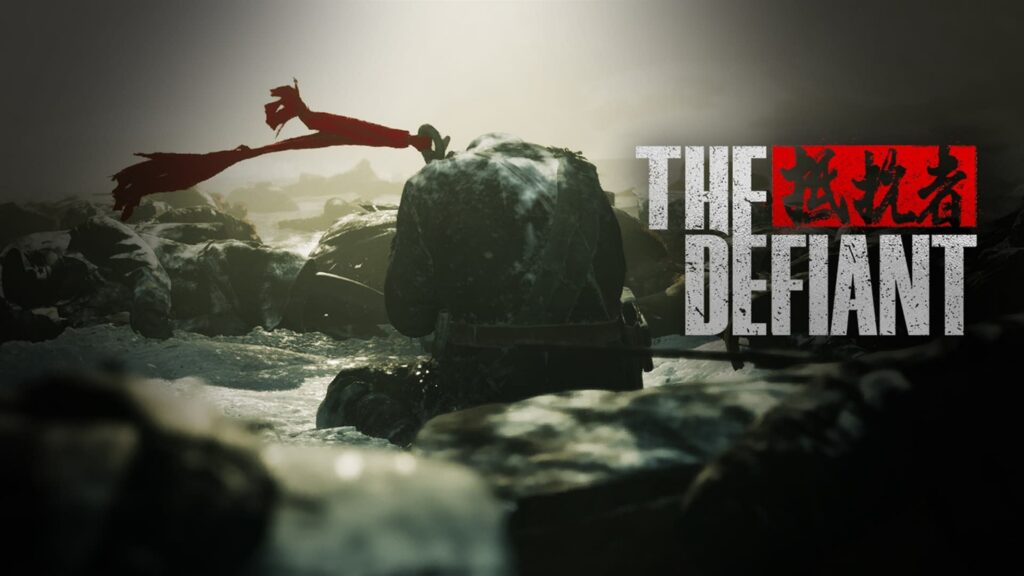
The Defiant brings China’s wartime resistance into the foreground of a cinematic first-person shooter. Developed by Hoothanes and published internationally through 4Divinity, the project combines a historical setting with a campaign built around combat, infiltration, and espionage. Its central proposition is not simply another collection of World War II battlefields, but a story told through people resisting occupation in China. The game’s public profile expanded during 2026 through new gameplay footage, confirmation of console versions, and a Gamescom Opening Night Live appearance. However, an announced platform, a promotional trailer, and a completed release specification are different things. Understanding The Defiant requires separating its established identity from features that remain incompletely documented.
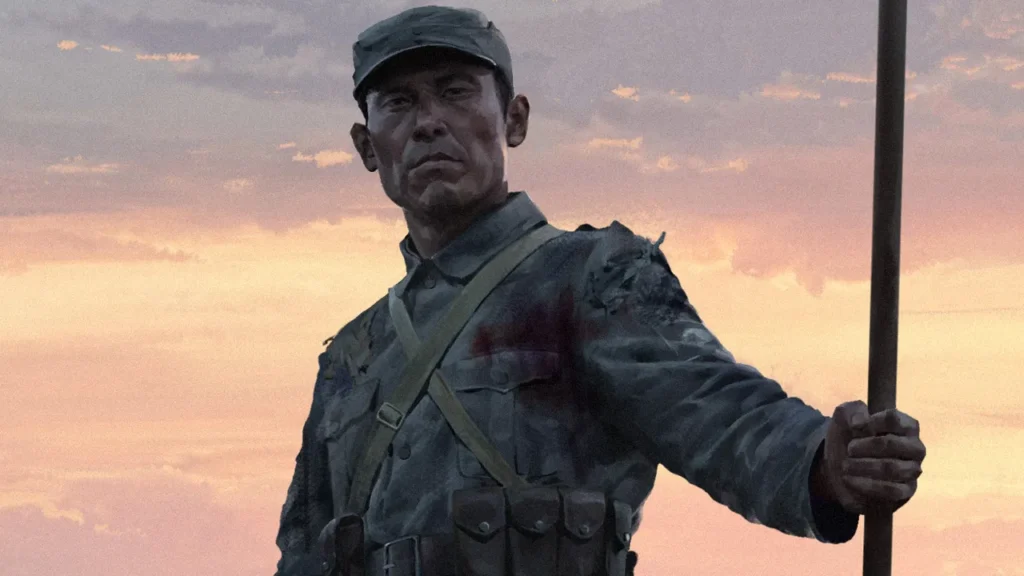
The Defiant is a historical first-person shooter centered on China during the Second Sino-Japanese War. Its publisher describes a campaign involving resistance fighters, dangerous streets, and villages affected by war. A companion is also part of the published premise, with the relationship intended to give the journey an emotional dimension beyond its firefights. The important distinction is its narrative emphasis. Rather than presenting its setting only as scenery for combat, the announced concept connects military action with survival under occupation. The publishing announcement explicitly identifies a single-player campaign and a mixture of action, stealth, espionage, and puzzle elements.
That combination creates an interesting design opportunity. A resistance story can make the purpose of an encounter matter as much as its difficulty. Passing through a checkpoint, protecting information, and surviving an ambush could feel meaningfully different even when they share the same basic movement and shooting controls. Those possibilities should not be confused with a verdict on the finished game. A compelling historical premise does not establish the quality of enemy behavior, mission structure, writing, or weapon handling. The Defiant’s appeal currently rests on a clearly communicated direction; its eventual success will depend on how convincingly the playable campaign delivers that direction.
Release Date Status and Announcement Chronology
As of September 18, 2026, Steam still labels The Defiant as “Coming soon.” A specific release date has not been established by that listing. The announcement chronology helps explain the confusion surrounding launch timing. GCL announced the publishing agreement on September 5, 2025. A further official trailer announcement followed on January 29, 2026. PlayStation 5 and Xbox Series versions were reported on July 30, 2026, without a release date accompanying that announcement. These are development and marketing milestones, not interchangeable release commitments. A trailer appearing during a particular year does not necessarily promise that the game will ship in that year. Likewise, the availability of a wishlist page does not mean preorders, public testing, or final certification have begun.
The useful information to watch next is a dated announcement that clearly identifies the platforms covered. A broad release window would narrow expectations, while an exact date would provide a firmer basis for planning. Until then, a precise launch prediction would be speculation rather than verified reporting. This distinction also protects against misleading countdowns. Without a public deadline, there is no reliable basis for calculating how many days remain until launch.
Announced Platforms and Platform Caveats
The announced platform lineup is PC through Steam, PlayStation 5, and Xbox Series X|S. Gematsu’s July 30, 2026 report attributes the console announcement directly to publisher 4Divinity and developer Hoothanes. Earlier coverage requires context. The September 2025 publishing announcement described a project initially developed for PC, with console platforms still under consideration. The later announcement therefore represents a meaningful update rather than evidence that all console details were already settled from the beginning.
Platform confirmation answers where the game is planned to appear, but it does not answer every purchasing question. It should not be treated as proof of identical graphics settings, matching resolutions, shared saves, or cross-platform multiplayer. Those are separate implementation decisions. For the same reason, the safest platform comparison is not yet a ranking.
A PC version may offer different configuration options from a console release, but the value of those options depends on the finished software. Console players will need platform-specific performance information, while PC players need complete requirements and representative testing. The central takeaway is straightforward: The Defiant is no longer a project whose public plans mention only a PC version. Its announced audience includes both major current console families.
Developer Hoothanes and Publisher 4Divinity
Hoothanes is the development studio behind The Defiant. The publishing agreement identifies the company as Hangzhou Hoothanes Technology Co., Ltd. and names Kong Yuheng as its founder. Under the announced agreement, 4Divinity’s responsibilities include marketing, distribution, platform negotiations, and release strategy, subject to the agreement’s conditions. 4Divinity is part of GCL’s publishing business. GCL describes the company as operating from Singapore and Hong Kong and working with international partners to publish and market games across PC, console, and mobile platforms. That is a description of the publisher’s broader business, not an announcement that The Defiant itself is coming to every device category it serves.
The developer-publisher distinction is important when interpreting announcements. Hoothanes is responsible for creating the game, while the publishing relationship supports its commercial presentation and distribution. A publisher’s portfolio size should not be used to infer the size of an individual development team. The same caution applies to production claims. An international publishing agreement establishes a business relationship; it does not independently establish a particular budget, staffing level, or finished-game quality. For prospective players, the practical benefit is a clearer chain of official information. Development statements from Hoothanes and release communications from 4Divinity carry more weight than unsourced summaries circulating elsewhere.
Gamescom Appearance and Trailer Analysis
The Defiant appeared at Gamescom Opening Night Live on August 25, 2026. GCL confirmed the appearance in an August 26 announcement. The publisher’s accompanying description emphasized a cinematic WWII shooter moving between infiltration, close-range firefights, sniping, and larger assaults. The chronology matters because this was not the game’s first public gameplay reveal. Gematsu had already reported a new gameplay trailer alongside the console announcement in July. Gamescom should therefore be understood as another major presentation of the project, rather than its initial introduction.
The most useful breakdown concerns what the presentation was intended to communicate. Its historical identity establishes the campaign’s perspective. Its mixture of combat styles suggests changes in pace rather than an uninterrupted sequence of similar firefights. Its cinematic positioning indicates that atmosphere and story are being promoted alongside shooting mechanics. Those messages are meaningful, but they have limits. A promotional montage cannot establish how frequently a mechanic appears, how flexible a level is, or how reliably enemies respond to unexpected player behavior.
A dramatic assault could represent a brief set piece rather than the campaign’s dominant structure. Likewise, trailer presentation should not be treated as a performance benchmark. The decisive evidence will come from extended, representative gameplay with the platform and build identified. Gamescom strengthened awareness of The Defiant, but awareness and finished-game evaluation remain different stages.
Wishlist, Following, and Update Priorities
The publisher’s official The Defiant page includes a Steam wishlist link, providing a direct route to the relevant store entry. Using that route helps avoid confusion with similarly named products or unofficial pages. After opening the store page and signing into Steam, a player can add the game to their wishlist. Valve describes wishlists as a way to track interest and receive release or eligible discount notifications. Delivery can depend on account verification, notification preferences, and other platform conditions.
Following serves a related but different purpose. Valve explains that following a game allows its announcements and events to appear in the player’s activity feed and Steam News Hub. This is particularly useful during development, when an update may concern features or testing rather than an immediate launch. Wishlisting should not be mistaken for purchasing the game or receiving access to it. It expresses interest; it does not guarantee participation in a closed test.
The most useful updates to prioritize are those that resolve practical uncertainties: a release date, complete hardware requirements, a detailed co-op explanation, and platform-specific footage. A new trailer may be welcome, but a clear statement answering one of those questions can be more valuable when deciding whether the game suits a particular player.
Story, Historical Setting, Campaign Locations, and Cinematic Direction
The historical background needs careful dating. Japanese expansion into northeast China preceded the full-scale war usually associated with 1937. The Mukden Incident occurred on September 18, 1931, and was followed by Japan’s conquest of Manchuria. On July 7, 1937, fighting near the Marco Polo Bridge escalated into full-scale war between China and Japan. These connected developments explain why accounts of China’s resistance can discuss both the early and late 1930s.
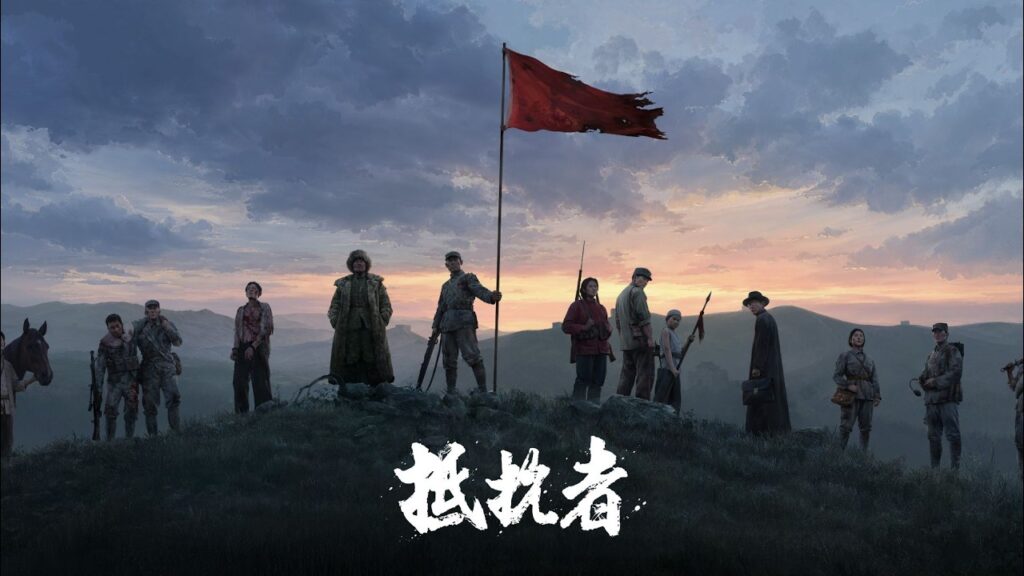
The Defiant’s public description places its story within this wider wartime experience rather than restricting its identity to a single conventional battlefield. Its announced environments include occupied settlements, forests, supply routes, and urban areas under enemy control. That framing matters narratively. Resistance is not necessarily a continuous sequence of frontal attacks. It can involve uncertainty about who controls a street, whether information will reach its destination, and what exposure might mean for people beyond the immediate combatants.
The historical context was also politically complex. Chinese Nationalists and Communists were distinct forces, and their relationship formed part of the conflict’s wider background. A game’s use of the collective language of resistance should not be mistaken for a claim that every Chinese organization had the same leadership, methods, or priorities. The campaign’s strongest potential lies in connecting individual experiences to that larger setting without making a small number of playable episodes stand in for the entire war.
The game’s published scenario material references the Northeast Anti-Japanese United Army, clandestine radio activity, canal-related resistance, and the Taihang Mountains. Its environmental descriptions also include snowy forests, guarded lanes, and villages behind enemy lines. Steam specifically identifies Shanghai’s “Isolated Island” period in connection with underground radio operators. These references suggest different kinds of dramatic space. A city setting can support tension through proximity, surveillance, and restricted movement. A forest can make visibility and isolation more prominent. A mountainous environment can create a sense of exposure or separation even before an encounter begins.
Interpreting Setting References and Historical Accuracy Claims
That is an interpretation of the announced settings, not confirmation of particular level mechanics. The presence of mountains does not establish climbing systems, and the mention of canals does not prove a freely navigable water network. Location names describe the campaign’s frame; they do not automatically define its traversal options. A further distinction is the difference between historical inspiration and literal reconstruction. Naming a real region does not mean every playable street or path will reproduce an identifiable historical location at exact scale. The most promising outcome would be geographical variety that changes the player’s circumstances, rather than several visually different backdrops supporting essentially identical encounters.
The Defiant is being presented as historically grounded, but that is not the same as independently verified accuracy. The publisher emphasizes historically rooted weapons and a human-centered account of resistance. Those statements establish the production’s stated intention, not a completed historical audit. A useful assessment would examine several different questions. Environmental accuracy concerns architecture, clothing, signage, and objects. Military accuracy concerns equipment, organizations, and the circumstances of combat. Narrative accuracy concerns the treatment of events, motivations, and the experiences represented by the story.
These categories need not succeed or fail together. A detailed firearm model can appear in a scene with compressed chronology. A fictional conversation can express a historically plausible dilemma without reproducing a documented exchange. The important issue is whether the game’s inventions are presented responsibly and whether they distort the broader setting. The conflict’s chronology also matters.
Chronological Distinctions and Dramatic Framing
The invasion of Manchuria in 1931 and the expansion to full-scale war in 1937 were connected but distinct developments. Collapsing them into an undifferentiated backdrop would obscure changes in the circumstances of resistance. Ultimately, The Defiant should be evaluated as a historical dramatic work rather than automatically treated as a documentary. Its educational value could lie in prompting further investigation, provided players distinguish its playable narrative from a comprehensive account of the war.
Unreal Engine 5 is confirmed as The Defiant’s development technology. GCL’s Gamescom communication also describes a team combining filmmaking and game-development experience, consistent with the project’s emphasis on cinematic presentation. However, an engine name is not a complete graphics specification. Epic’s documentation describes Lumen as a dynamic lighting and reflections system, with different settings and implementation choices. The existence of such technology within Unreal Engine does not, by itself, establish which features a particular game enables or how those features behave on each platform.
This distinction is particularly important when discussing ray tracing, advanced geometry, upscaling, and frame rates. Those subjects require game-specific confirmation. They should not be inferred simply because a trailer looks detailed or because another Unreal Engine 5 game supports them. Cinematic storytelling should also be judged separately from visual fidelity. A convincing scene depends on more than surface detail: framing, timing, character behavior, sound, and the transition back to player control all matter. For The Defiant, the most revealing test will be whether those elements reinforce its resistance narrative rather than repeatedly interrupting it. The engine provides a technical foundation. It does not guarantee emotional effectiveness, stable performance, or consistent image quality throughout a full campaign.
Gameplay, Weapons, Stealth, Co-Op, and Combat Expectations
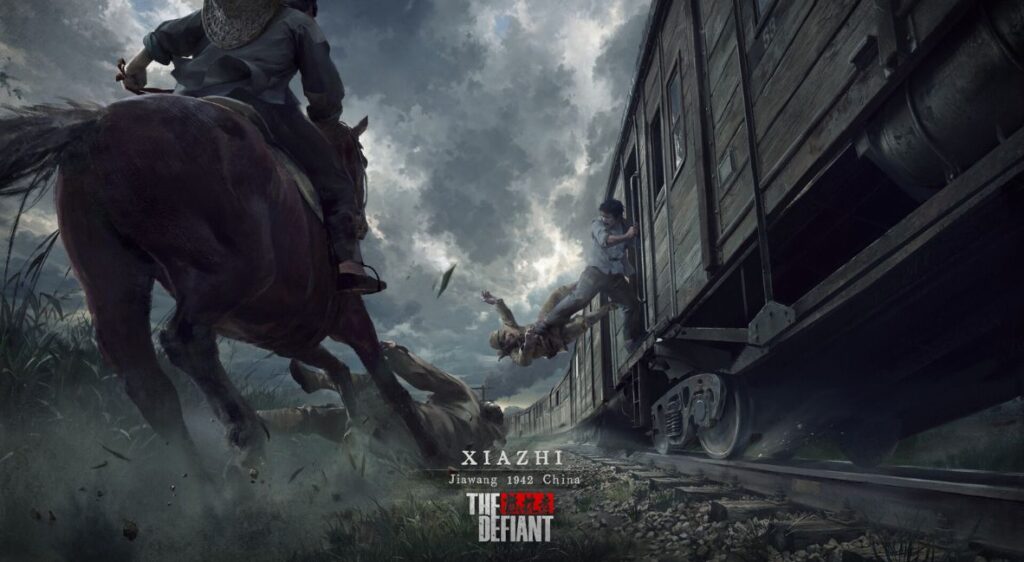
The publisher has explicitly described a gameplay mixture involving stealth infiltration, close-quarters combat, sniping, urban espionage, code-breaking, vehicular combat, and large-scale assaults. These are announced components of the experience, rather than conclusions drawn solely from the game’s historical setting. Their potential value lies in contrast. Stealth can create anticipation before an encounter, while close-range action can force immediate decisions. Sniping can change how space is read, and an intelligence-focused objective can make observation more important than ammunition expenditure.
The design challenge is making those transitions coherent. A campaign becomes more interesting when changing mechanics reflects changing circumstances. It becomes less convincing when each new activity feels detached from the character’s situation or exists only to introduce another spectacle. There are also important questions that the announced feature mix does not resolve. “Stealth” can describe anything from a short scripted sequence to a flexible system with multiple routes and recoverable mistakes. “Vehicular combat” does not necessarily mean freely drivable vehicles throughout the campaign. “Espionage” does not automatically establish branching dialogue or an open-ended social simulation.
The Defiant should therefore be approached as a narrative shooter promising varied mission activities, not as a confirmed sandbox containing every system associated with those terms. The quality of integration will matter more than the length of the feature list.
Weapon Specifics and Naming Caveats
Steam’s weapon description specifically names the Hanyang 88, Mauser C96, and SIG Bergmann Model 1920. The Hanyang 88 provides a useful example of the distinction between historical background and game behavior. New Zealand’s Te Papa museum identifies it as a bolt-action magazine rifle derived from the German Gewehr M1888, with production beginning in 1895. Its origins therefore predate the conflict depicted in The Defiant by decades. That background can enrich an arsenal without establishing how a weapon will be balanced. Historical age, design, or appearance does not determine a game’s damage values, handling, ammunition availability, or usefulness in a particular mission.
Weapon naming also deserves care. Earlier publisher material referred more broadly to the Hanyang Rifle, Mauser Military Pistol, and MP18 submachine gun. Those older labels should not be silently substituted for the more specific names in the current store description. For players, the meaningful question is whether the weapons feel distinct and appropriate to the campaign’s circumstances. A convincing historical shooter can communicate scarcity, familiarity, and danger through handling and encounter design without requiring every firearm to behave like a modern progression-system upgrade. Detailed rankings, attachment recommendations, and exact ballistic claims would be premature without a representative playable build.
Co-Op and Multiplayer Listing Limitations
Steam’s official feature panel lists single-player, online co-op, and LAN co-op. “Local Co-Op” also appears among its user-defined tags. These two parts of a Steam page should not be treated as identical evidence. Valve explains that tags can be applied by developers, players, and Steam moderators. Their purpose includes describing games and supporting discovery, and their prominence can change as users contribute. A tag is therefore not a substitute for a detailed mode announcement.
Most importantly, a co-op feature label does not establish that the entire story campaign supports cooperative play. It does not specify player count, progression sharing, or whether cooperative content is separate from the principal narrative. LAN functionality should not be conflated with split-screen play either: those describe different arrangements. Networking details also require their own confirmation.
Steam supports multiple approaches to multiplayer, including peer-to-peer connections and dedicated servers. The presence of Steam multiplayer features does not identify which architecture a particular game uses. The responsible reading is therefore limited but useful: cooperative support is advertised, while the listing alone is insufficient to describe its complete structure. Players primarily interested in playing the story together should seek an explicit campaign co-op statement rather than assume one from the available labels.
PC Requirements, Language Support, Localization, and Technical Unknowns
The listed minimum PC requirement is 8 GB RAM, while the recommendation is 16 GB RAM. Both specify 100 GB of available storage. Operating system, processor, and graphics requirements remain TBD. The sound-card, VR-support, and additional-notes fields are also unresolved. Those figures do not form a complete compatibility guide. Meeting a memory requirement cannot establish whether a computer’s processor or graphics hardware is sufficient. Without a resolution, quality preset, and frame-rate target, even a completed specification can leave important performance questions unanswered.
Unreal Engine’s own documentation illustrates why configuration matters. Epic describes different rendering quality levels and performance budgets for Lumen, with trade-offs between visual quality and computational cost. Those are engine-level explanations, not benchmarks for The Defiant, but they demonstrate why the engine name alone cannot predict a game’s requirements. The storage figure should also be read narrowly. Available installation space is not necessarily the amount of data transferred during a download. It should not be interpreted as a promise about compression, patch sizes, or the eventual space required after updates.
Finally, an unresolved VR field is not a VR announcement. A placeholder should remain a placeholder until the developer identifies an actual supported mode or version. For hardware planning, the sensible next step is to wait for complete requirements and representative testing rather than build an upgrade decision around the RAM figures alone.
Language Support and Localization Caveats
The listing marks English, Simplified Chinese, and Traditional Chinese for interface, full audio, and subtitles. It marks French, Italian, German, Spanish to Spain, Russian, Turkish, Czech, Japanese, Polish, Portuguese to Brazil, and Spanish to Latin America for interface support only. That produces 14 listed interface languages, not 14 fully voiced language options. Valve distinguishes between store-page translation and in-game localization. A translated product description does not, by itself, establish the languages available inside the game. Steam also separates interface, subtitle, and full-audio declarations, making it important to check the individual columns rather than only the total language count.
For a story-driven game, those distinctions can materially affect accessibility. A player might be comfortable navigating translated menus but still need subtitles to follow dialogue. Another might prefer listening to a performance without dividing attention between the action and text. Localization quality is a separate question from listed support. Historical terminology, character relationships, and emotional tone require careful adaptation. A language checkbox confirms an advertised support category; it cannot demonstrate the quality of translation, recording, synchronization, or subtitle timing.
The same applies to audio preferences. The ideal presentation would make language choices clear and practical, but the exact flexibility of the finished game’s options should be judged from its actual settings rather than assumed from the store matrix.

Frequently Asked Questions (FAQs)
- What kind of game is The Defiant?
The Defiant is a historical first-person shooter developed by Hoothanes and published internationally through 4Divinity. Its announced direction focuses on a narrative campaign set during China’s resistance against Japanese invasion, with combat, infiltration, stealth, espionage, and puzzle elements all mentioned in official descriptions. The important point is that the setting is not being presented as a generic battlefield backdrop. The game’s identity is tied to resistance under occupation and the people involved in that struggle. - Has The Defiant received an exact release date?
No exact release date was verified for this article. The public release information remains undated, and Steam still presents the game as coming soon rather than listing a specific launch day. Earlier announcements, trailers, and showcase appearances should be understood as marketing or development milestones, not as release-date confirmations. Until Hoothanes or 4Divinity provides a newer dated announcement, a specific day, month, or launch window should not be presented as confirmed. - Is The Defiant coming to PlayStation and Xbox?
Yes. The Defiant is announced for PlayStation 5 and Xbox Series X|S, alongside the previously established PC version through Steam. This confirms that the game is planned for current-generation consoles, not just PC. However, platform confirmation does not automatically answer technical questions. Resolution, frame rate, graphics settings, save compatibility, and any cross-platform features still require separate confirmation from the developer or publisher. - Does Unreal Engine 5 guarantee advanced ray tracing or 60 FPS?
No. Unreal Engine 5 provides a technical foundation and access to modern rendering features, but it does not guarantee that every game using it will include advanced ray tracing, a particular lighting setup, or a fixed 60 FPS target. Developers still decide which engine features to use, how they are configured, and how performance is balanced on each platform. Epic’s own documentation describes different quality levels and performance budgets, which is why the engine name alone cannot prove the finished game’s frame rate or visual settings. - Can the whole campaign be played in co-op?
That has not been fully established. Steam feature labels list online co-op and LAN co-op, which confirms that some form of cooperative support is advertised. However, those labels do not explain whether the entire story campaign supports co-op, how many players can join, whether progress is shared, or whether co-op is limited to a separate mode. Players specifically interested in playing the full campaign with someone else should wait for a detailed co-op explanation rather than assuming campaign-wide support from the store tags alone. - Are all listed languages fully voiced?
No. Steam separates language support into different categories, including interface, subtitles, and full audio. The Defiant’s listing marks some languages for full audio, subtitles, and interface, while others are listed only for interface support. That means the total number of supported languages should not be read as the number of fully voiced language options. Players who need subtitles or voice acting in a specific language should check the individual language columns rather than relying on the headline language count. - Was Gamescom 2026 the first reveal of The Defiant?
No. The Defiant had already received earlier announcements and gameplay footage before its Gamescom 2026 appearance. The August 2026 Gamescom presentation was still important because it gave the project another major public showcase, but it was not the game’s initial reveal. A July report had already introduced its PlayStation 5 and Xbox Series X|S plans alongside a new gameplay trailer. Gamescom should therefore be treated as a visibility milestone, not the beginning of the game’s public history. - Does the historical setting make The Defiant a military simulator?
Not necessarily. A historical setting identifies the period, conflict, and subject matter, but a military simulator is defined by how realistically its systems behave. The Defiant is being presented as a cinematic first-person shooter with stealth, combat, espionage, and story-driven elements. That does not rule out historical detail, but it also does not prove that the game will simulate weapons, tactics, injuries, command structures, or battlefield conditions with uncompromising realism. Its historical ambitions and its shooter design should be evaluated separately. - Is the Hanyang 88 a real historical weapon?
Yes. The Hanyang 88 was a real Chinese bolt-action rifle based on the German Gewehr M1888. Te Papa’s collection identifies it as a Chinese rifle whose production began in the late 19th century, meaning it predates the main wartime period depicted in The Defiant. Its historical existence supports its inclusion in the game’s arsenal, but that does not determine how it will feel or perform in gameplay. Damage, recoil, accuracy, ammunition availability, and mission usefulness are balance decisions that still depend on the finished game. - What is the difference between wishlisting and following the game?
Wishlisting and following serve different purposes on Steam. Wishlisting helps track a game as a potential purchase and can support notifications about release or eligible discounts, depending on account settings and Steam’s systems. Following a game is more about updates: it can bring announcements, events, and developer posts into Steam’s activity and news surfaces. Using both is useful for an unreleased game like The Defiant because one tracks purchase availability while the other helps keep up with development and release information.
Conclusion
The Defiant’s strongest distinguishing feature is its perspective: a cinematic WWII shooter centered on resistance in China, developed by Hoothanes and supported by 4Divinity’s international publishing effort. Its announced combination of historical environments, narrative focus, and varied mission activities gives it a clear identity within the genre.
The appropriate response is informed interest rather than assumptions about the finished product. A persuasive trailer cannot establish campaign consistency. An engine choice cannot guarantee performance. A multiplayer label cannot fully describe cooperative play.
The game’s eventual significance will depend on how these elements work together. Convincing characters, readable combat, meaningful changes in mission pace, and responsible treatment of history would make its setting more than a novelty. Until the remaining details are established, the clearest assessment is that The Defiant has a distinctive premise and an increasingly visible public presence, while its final execution still requires direct evaluation.
Sources and Citations
- Steam, official The Defiant listing: Documents Steam app ID 3184960, the “Coming soon” release status, single-player, online co-op, LAN co-op, language support and provisional PC requirements. The retrieved listing specifies 8 GB minimum RAM, 16 GB recommended RAM and 100 GB storage, while processor and graphics requirements remain TBD. English is marked for interface, full audio and subtitles, but the same coverage is not listed for every supported language. These are advertised storefront details, not independent performance tests or a complete multiplayer specification. (Steam Store)
Citation: The Defiant on Steam - 4Divinity, official product page: Describes The Defiant as a first-person shooter set during the Second Sino-Japanese War in China in the 1930s and 1940s. It identifies occupied streets, war-torn villages and a loyal companion as parts of the advertised experience, and provides official screenshots and the Steam wishlist link. The description does not independently establish the companion’s detailed mechanics or the finished campaign’s structure. (4Divinity)
Citation: The Defiant: Official 4Divinity Product Page - GCL Global Holdings, official publishing-agreement announcement: Published September 5, 2025. Confirms the global publishing agreement between 4Divinity and Hangzhou Hoothanes Technology, identifying the developer and publisher relationship. It describes a single-player campaign combining firefights, stealth, espionage and puzzle elements. At that stage, development was initially focused on PC, with console platforms under consideration, making this a historical publishing reference rather than the final console announcement. (GCL Global Holdings Ltd.)
Citation: GCL Subsidiary 4Divinity Signs Publishing Agreement for The Defiant - GCL Global Holdings, official trailer announcement distributed through GlobeNewswire: Published January 29, 2026. Confirms Unreal Engine 5 development and advertises stealth infiltration, close-quarters combat, sniping, urban espionage, code-breaking, vehicle combat and larger assaults. It also names the Hanyang Rifle, Mauser Military Pistol and MP18 submachine gun. This is publisher-supplied information about intended features, not a hands-on assessment. The announcement concerns the release of a trailer, not the commercial release of the game. (GlobeNewswire)
Citation: GCL Announces Trailer for Upcoming WWII Release The Defiant - Gematsu, Sal Romano, console-platform announcement: Published July 30, 2026. Reports that PlayStation 5 and Xbox Series versions were announced alongside the previously confirmed PC Steam version, with no release date provided. It includes the accompanying gameplay trailer and an overview explicitly attributed to 4Divinity. This establishes that the named console versions were public before the later Gamescom presentation. (Gematsu)
Citation: Second Sino-Japanese War First-Person Shooter The Defiant Adds PS5, Xbox Series Versions - GCL Global Holdings, official Gamescom trailer recap: Published August 26, 2026. Confirms that The Defiant’s trailer appeared during Gamescom Opening Night Live on August 25, while other titles from the publisher appeared at the Future Games Show on August 26. The publication date and presentation date therefore describe different events. The release also reiterates the game’s cinematic first-person-shooter direction, Chinese wartime setting and Unreal Engine 5 development. (GlobeNewswire)
Citation: GCL’s Publishing Subsidiary 4Divinity Spotlighted New Trailers During Gamescom 2026 - U.S. Department of State, Office of the Historian, historical background on 1931: Explains the September 18, 1931 Mukden Incident, the subsequent Japanese conquest of Manchuria and the Stimson Doctrine. This supports distinguishing the earlier conflict in northeastern China from the full-scale war that followed in 1937. It is historical context, not evidence identifying which battles or locations appear in The Defiant. The page belongs to the Office’s retired, no-longer-maintained Milestones collection. (Office of the Historian)
Citation: The Mukden Incident of 1931 and the Stimson Doctrine - U.S. Department of State, Office of the Historian, historical background on 1937–1941: Identifies the July 7, 1937 Marco Polo Bridge clash as the escalation into full-scale war between China and Japan, and explains the conflict’s relationship with growing U.S.-Japanese tensions. This supplies a historical framework for the game’s setting without treating promotional claims of authenticity as independent historical verification. This page also belongs to the retired Milestones collection. (Office of the Historian)
Citation: Japan, China, the United States and the Road to Pearl Harbor, 1937–41 - Museum of New Zealand Te Papa Tongarewa, Hanyang 88 collection record: Identifies its specimen as a Type 88 “Hanyang Rifle,” manufactured by Hanyang Arsenal circa 1900, and describes the rifle as a 7.92 mm bolt-action magazine weapon derived from the German Gewehr M 1888. The museum records production from 1895 to 1947. This supports the weapon’s historical background, but does not establish its damage, handling, animation accuracy or other characteristics in the game. (Te Papa Collections)
Citation: Bolt Action Rifle, Type 88 “Hanyang 88” - Valve, Steamworks localization documentation: Explicitly distinguishes store-page translation from in-game localization and explains the separate Interface, Full Audio and Subtitles options for each language. This is the appropriate reference for interpreting The Defiant’s language table without assuming that an English promotional page proves English voice acting, or that interface support automatically includes translated subtitles and recorded dialogue. (Steamworks)
Citation: Steamworks Documentation: Localization and Languages - Valve, Steamworks tag documentation: Explains that tags can be applied by developers, players with eligible accounts and Steam moderators, and that their weighting can change through community input. This supports treating user-defined labels as discovery and classification information rather than a definitive feature specification. In particular, a “Local Co-Op” tag should not substitute for an explicit announcement of shared-screen or split-screen functionality. (Steamworks)
Citation: Steamworks Documentation: Steam Tags - Valve, Steamworks wishlist documentation: Explains how wishlisting records interest and can trigger notifications when a game enters Early Access, launches fully or receives a qualifying discount. It also documents account preferences, verified-email requirements and notification limits. This supports describing wishlisting as an availability-tracking mechanism, not a guarantee that every trailer, development update or announcement will generate an email. (Steamworks)
Citation: Steamworks Documentation: Wishlists - Epic Games, Unreal Engine networking overview: Explains client-server networking, replication, listen servers and dedicated servers, including their different hosting arrangements and trade-offs. This provides the technical background for discussing multiplayer architecture. It does not establish which arrangement Hoothanes selected for The Defiant, nor does Unreal Engine’s networking support itself confirm cross-play, a particular player count or dedicated-server availability for the game. (Epic Games Developers)
Citation: Unreal Engine Documentation: Networking Overview - Epic Games, Lumen rendering documentation: Describes dynamic global illumination and reflections, their project settings, and software- and hardware-ray-tracing options. This explains a rendering capability available within Unreal Engine 5, but is not evidence that The Defiant uses Lumen, enables hardware ray tracing or offers identical lighting settings across platforms. Those claims require game-specific confirmation. (Epic Games Developers)
Citation: Unreal Engine Documentation: Lumen Global Illumination and Reflections - Epic Games, Nanite rendering documentation: Explains Unreal Engine’s virtualized geometry system, automatic detail management, streaming and handling of highly detailed meshes. Epic also notes that practical limits remain and performance must be measured against the actual content and hardware. This provides general technical context, not confirmation that The Defiant uses Nanite or a basis for promising particular visual quality, frame rates or hardware requirements. (Epic Games Developers)
Citation: Unreal Engine Documentation: Nanite Virtualized Geometry
Recommendations
- Echoes of Aincrad Crafting Guide: Recipes, Materials and Unlock Requirements
- Did Christopher Nolan’s Depiction of the Gods Pay Off in The Odyssey?
- Castlevania: Belmont’s Curse Runs at Only 30 FPS on Nintendo Switch
- EA Sports College Football 27 Preview: Defense Wins Championships
- Jurassic World Evolution 2 Complete Edition Comes to Nintendo Switch 2 on July 30, 2026
- Unity-Based Tool for JRPG Game Development: RetroGig’s Retro JRPG Template for SNES/PSX-Style RPG Systems
- Keanu Reeves & China Miéville BRZRKR: Light Draws Breath — Release Date, Story, Creative Team & Variant Covers
- CD Projekt Raises Profit Goals with Witcher 4, 5, and 6 Coming: 5 Billion PLN Target Explained
- Creepshow Official Announcement Trailer Reveals a New Anthology Horror Game Experience
- GTA 6 Leans Into Vice City’s Influencer Hustle Where Looks Matter



































































































