






In This Article (7 sections)
The Forge: Steel Frontier IGN Fan Fest 2026 Reveal, Development and Story
The Forge: Steel Frontier is a science fiction action RPG developed by Cat Pounce Game Production and published by Right Mind. The game gained attention during IGN Fan Fest 2026: Fall Edition, where its official announcement trailer introduced fast mech combat, extensive customization, and a story centered on a mercenary pilot and a mysterious sentient machine. The event’s Steam showcase ran from October 12 to October 15, 2026, featuring numerous game announcements and exclusive reveals.
The central Fan Fest livestream was scheduled for October 14 at 10 a.m. Pacific Time and 1 p.m. Eastern Time, within the broader Steam event window. The developer also announced the game’s participation ahead of the showcase. This separates three milestones that can otherwise become confused: the project appearing publicly, its inclusion in IGN’s event and its eventual commercial release. Fan Fest provided a larger stage for the game, but was not an announcement that development had finished.
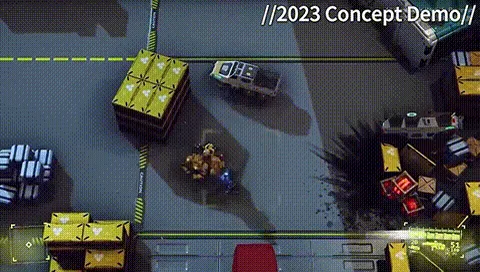
IGN’s presentation describes an evolution from a 2023 concept trailer to current production gameplay footage. That development history is useful context for the announcement: the game did not suddenly emerge fully formed during Fan Fest. The reveal connects an earlier expression of its mech action concept with a more developed presentation. It does not, by itself, establish when full production began or how much of the campaign is complete.
The developer’s public activity also predates the October showcase. An August 2026 post from CChaBouzu announced that the game’s Steam page was available and invited players to wishlist it. Japanese coverage identified the creator as an animator who had been sharing development footage. The transition from those individual updates to a major showcase gives newcomers a clearer introduction to the project without making the earlier material irrelevant. It also explains why players following independent mech games may recognize its movement before encountering the full English title.
A September development update provides another concrete example of the work taking place between those appearances. CChaBouzu reported that new assets made the mech’s limb animations easier to read and mentioned reworking occlusion culling. The latter concerns how unseen objects are handled during rendering, rather than a new combat ability. For a game built around quick changes of direction and forceful attacks, readable animation is particularly valuable: players need to distinguish movement into an attack from movement out of danger. The update points to ongoing presentation work, not a declaration that every animation or technical system is final.
The game follows Ivan, a mercenary pilot exploring the frontier planet Dormant Dragon alongside Machine Spirit, a mech described as having a soul. Their journey takes them from orbital command platforms to battlefields devastated by war, where they encounter dangerous enemies, uncover conspiracies and become involved in a conflict over a mysterious rare mineral. The resource has attracted outside forces seeking control of the planet, placing Ivan and Machine Spirit in a position where their decisions could determine Dormant Dragon’s future.
Ivan is portrayed as an independent survivor attempting to find his place within a much larger conflict. Although the developers have confirmed his identity and profession, details about his background, previous allegiances and motivations remain undisclosed. Machine Spirit adds another layer to the narrative because it is presented as more than ordinary military equipment. Its description suggests some form of consciousness, although whether that comes from artificial intelligence, supernatural forces or another explanation remains unknown.
The relationship between Ivan and Machine Spirit appears central to the story. Official descriptions frame important choices as involving both the pilot and his mech, suggesting that their partnership may influence the narrative beyond combat. However, the developers have not confirmed whether Machine Spirit communicates independently or possesses a distinct personality.
As a narrative premise, Ivan’s mercenary status creates tension between personal survival and responsibility for the place where he fights. He is not introduced as an established ruler or the commander of an entire army, so the conflict can be approached through the experience of someone caught within it. The rare mineral supplies a practical reason for outside intervention, while the conspiracies leave room to question whether the objectives presented to Ivan reflect the interests of everyone affected by the fighting.
Machine Spirit also gives customization a potentially different emotional meaning. Improving an ordinary vehicle is a matter of equipment; improving a machine treated as a companion can become part of the player’s attachment to that character. That is an interpretation of the premise, rather than confirmation of a relationship system. The story’s references to choices likewise do not establish branching campaigns, multiple endings or a morality meter. Its strongest stated hook is the partnership itself, with the wider political conflict giving that partnership something consequential to confront.
Dormant Dragon’s rare mineral provides the foundation for the wider conflict. Although its name, properties and technological applications have not been revealed, its importance is evident from the competing forces arriving to claim it. The story combines survival, military conflict and hidden political interests, with Ivan gradually becoming involved in events extending beyond ordinary mercenary work.
The contrast between orbital command platforms and damaged ground environments is also narratively useful. It allows the setting to distinguish where a conflict is directed from where it is endured. Seen through a mercenary’s perspective, that contrast could give Ivan reasons to question who benefits from each assignment. The synopsis does not identify specific missions, but its movement between these spaces offers a broader frame than a succession of isolated arena battles. The key story question is how Ivan’s immediate need to survive connects with the larger consequences of his work.
The IGN announcement trailer emphasizes the game’s identity as a fast action experience rather than a traditional simulation of heavy machinery. It highlights agile movement, powerful weapons and aggressive combat encounters while introducing the science fiction setting. However, features such as multiplayer, unrestricted exploration and a specific campaign length have not been officially confirmed.
The published imagery combines armored machines with industrial environments, damaged structures and cold outdoor terrain. Cargo containers, metal frameworks and rocky surroundings provide recognizable shapes against which the machines can move. The screenshots also show the mech from outside its body, allowing its silhouette and physical actions to remain visible. The invitation to step into a cockpit describes the player’s role as a pilot; it should not be read as a promise that the entire game uses a first person cockpit camera.
The published gameplay interface shows separate HP and EN bars alongside weapon and ammunition information. This provides more context than a purely cinematic trailer because it reveals some of the information players may track during a fight. The labels indicate distinct combat resources, although their exact rules and balancing remain unexplained. What matters for readability is that the player can follow those indicators while watching both the mech and surrounding threats, without losing the sense of speed that the action is intended to deliver.
That external presentation puts considerable emphasis on choreography. A mech can communicate weight through its posture and the force of a hit without moving slowly throughout an encounter. This is the balance suggested by the footage: mechanical strength expressed through fast, deliberate actions rather than through prolonged immobility. The visual appeal therefore depends on more than explosions or weapon size. How clearly an attack begins, connects and ends will be just as important to making the movement understandable during sustained play.

The Forge: Steel Frontier Mech Combat, Weapons, Enemies and Customization
Combat is one of the main attractions of The Forge: Steel Frontier, combining responsive movement, ranged attacks, melee weapons and defensive techniques. Players can customize their mech using weapon parts and action modules collected throughout levels, allowing different combinations suited to individual combat preferences. The developers emphasize speed, precise controls and satisfying impact feedback rather than slow mechanical movement.
Earlier gameplay coverage expands on what that agility involves. Published footage shows the mech moving quickly across snowy ground and using a projected wire to travel through uneven terrain. These sequences suggest that movement is intended to remain interesting between exchanges of fire, rather than functioning only as a dodge button. Wire assisted traversal can be seen in the development material, but its availability across the final campaign and any associated restrictions have not been explained.
Close combat also extends beyond simply swinging a blade. Japanese coverage of the promotional footage describes a shoulder throw performed against another mech, alongside direct physical attacks. A throw gives the choreography a different character from sword strikes or gunfire, emphasizing the machines as articulated bodies capable of grappling. The footage demonstrates that action, but does not establish that every enemy can be grabbed or that a complete wrestling system exists. Larger opponents, different enemy shapes and the eventual rules governing these moves will determine their practical role.
The weapon system supports different engagement distances. Official examples include heat daggers for close combat and heavy howitzers for powerful ranged attacks. Players can combine firearms and blades to create varied attack sequences, while additional weapon modules remain in development. This flexibility suggests that combat strategies can change depending on equipment choices and enemy encounters.
The most interesting possibility in this equipment system is not merely carrying several powerful weapons, but combining tools that solve different problems. A close combat option can support aggressive approaches, while a ranged weapon gives the player something useful to do before committing to that approach. As an illustration of the stated design, a player might maintain distance while assessing an enemy, move in when an opening appears and withdraw before another attack begins. That example is not a prescribed combo or a confirmed optimal strategy; it shows why movement and weapon choice need to be considered together.
Defensive techniques are equally important. The game’s combat philosophy, described as React, Parry, and Punish, encourages players to respond to attacks through movement, blocking and carefully timed counterattacks. Dodging changes position, whereas blocking potentially allows a player to hold ground. A successful counterattack then depends on recognizing when an opponent is vulnerable rather than simply pressing an attack button more often. How generously the game allows these responses remains unknown, so the parry emphasis should not automatically be interpreted as evidence of an especially punishing difficulty level. The appeal is the possibility of choosing an appropriate response, not merely surviving a test of reaction speed.
Confirmed gameplay features include:
- Mech customization: Collect weapon components and action modules to modify combat capabilities.
- Melee and ranged combat: Combine firearms, blades, heat daggers and heavy artillery.
- Responsive movement: Dodge incoming attacks and reposition during encounters.
- Defensive mechanics: Use shields, blocking and properly timed responses to create counterattack opportunities.
- Equipment progression: Discover new components while exploring levels and defeating enemies.
- Story exploration: Travel between orbital installations and planetary battlefields while investigating the ongoing conflict.
Weapon components and action modules are worth distinguishing because they point toward two related forms of progression: changing the tools a mech carries and changing what it can do. The developers have not published a complete module catalogue, but the terminology suggests that customization is intended to affect combat behavior rather than operate only as a collection of cosmetic changes. It does not yet confirm unrestricted replacement of every limb, a detailed weight budget or a separate engineering simulation.
Collecting components within levels also gives exploration a purpose beyond reaching the next fight. A newly discovered option could encourage a player to revisit an established approach and try a different combination. That is where the action RPG description becomes most relevant: mechanical familiarity can develop alongside the equipment available to the player. However, the announced system should not be expanded into assumptions about randomized loot, crafting recipes or rarity tiers. The useful question is whether each new component offers a meaningful alternative, not how many unannounced progression systems might eventually surround it.
The game’s enemies include human opponents and fantasy creatures, according to its official content description. Combat features mild violence and light blood effects without graphic gore or dismemberment. Although the story suggests multiple hostile forces competing over Dormant Dragon, the developers have not revealed a complete faction list or detailed enemy classifications. The developer’s content description additionally mentions mildly suggestive character designs and revealing outfits, while stressing that these are not the main gameplay focus. This sits alongside the stated emphasis on exploration and story progression rather than graphic violence.
The Forge: Steel Frontier is currently presented as a single player experience. Its official description confirms exploration, combat, equipment upgrades and narrative progression, but does not establish competitive multiplayer, cooperative missions or an unrestricted open world.
The project is being developed by Cat Pounce Game Production, with Right Mind handling publishing. As of October 14, 2026, SteamDB lists The Forge: Steel Frontier as the only game associated with the developer’s current Steam catalogue. The project remains in development, with additional combat equipment and weapon modules still being created.

The Forge: Steel Frontier Release Date, Platforms, PC Features and Demo Availability
As of October 14, 2026, The Forge: Steel Frontier has no confirmed release date. Its official Steam listing identifies the planned launch as To be announced, meaning no specific month, quarter or year has been established. Although the announcement trailer introduced the game to a wider audience during IGN Fan Fest 2026, it did not confirm when players will be able to purchase or play the finished version.
Windows PC through Steam is currently the only announced platform. Neither the developer nor publisher has confirmed versions for PlayStation 5, Xbox Series X|S, Nintendo Switch, Switch 2, macOS or Linux. Future ports remain possible, but no console release plans have been officially established.
The current minimum PC requirements listed on Steam include:
- Operating system: Windows 10.
- Processor: A compatible 64 bit processor.
- Memory: 2 GB RAM.
- Graphics: DirectX 9.0 compatible hardware.
- Storage: 8 GB of available space.
These specifications may change before launch because the game remains under development. The fuller listing names an AMD Phenom II X2 555 at 3.2 GHz or an Intel Core 2 Duo E8500 at 3.17 GHz, alongside an NVIDIA GeForce 9600GT or ATI Radeon HD 5870. It also specifies a DirectX 9 sound device and recommends an Xbox 360 controller for Windows or an equivalent device. These details expand the abbreviated requirements above, but no associated resolution or frame rate target is given. They should not be treated as proof that a particular computer will sustain a locked frame rate with maximum settings.
The listed input features indicate an emphasis on gamepad play. SteamDB’s record of the store metadata includes full controller support, a gamepad preference and support entries for DualShock and DualSense controllers, including USB connections. These are PC controller features, not announcements of PlayStation editions. For players interested in the movement system, the practical benefit is the prospect of handling navigation, attacks and defensive actions through a controller rather than assuming that a mech game requires a specialized cockpit setup.
Steam lists interface and subtitle support for English, Simplified Chinese, Traditional Chinese, Japanese, Korean, Russian, Spanish for Spain and Spanish for Latin America. Full audio support is not marked for any of those eight entries. The listing therefore confirms planned text localization without establishing the final voice acting arrangements or proving that the finished game will contain no spoken dialogue.
Accessibility metadata includes adjustable difficulty, saving at any time, custom volume controls, contrast controls, play at the player’s own pace and playability without timed input. These entries are encouraging alongside the fast combat presentation, but the exact implementation has not been demonstrated. In particular, a general accessibility label does not explain whether timing assistance affects parries, menus, traversal or another part of the experience. Details about individual options will be more useful than assuming that a store label guarantees a specific assist mode.
There is also a practical distinction between supporting a controller and demonstrating a comfortable handheld experience. Text size, menu navigation, performance and the visibility of enemies all matter when the same action is viewed on a smaller screen. The current information does not provide enough evidence to judge those factors firsthand. For this particular game, clear animation and readable attack effects would be especially important because its appeal relies on following quick mechanical movements. A full interface demonstration would therefore add information that a short combat montage cannot supply.
Players interested in following The Forge: Steel Frontier can already add it to their Steam wishlists. To do so, users simply need to sign into their Steam accounts, locate the game’s official store page and select Add to your wishlist. Steam can then notify them when the game becomes available. No purchase or preorder is required to wishlist the title.
Pricing is another detail still to be established. The available product information does not provide a purchase price, so there is no supported basis for quoting a launch cost or comparing the value of different editions. For the same reason, the project’s scope cannot be inferred from the absence of a price. A later announcement pairing cost with a clearer view of campaign content and progression would provide a firmer basis for judging what the finished package offers.
There is currently no publicly available demo or dedicated Steam Playtest registration for The Forge: Steel Frontier. The IGN announcement trailer provides an introduction to its gameplay and presentation, but does not represent a downloadable version. Although the developers may introduce a demo or testing opportunity later, no such program has been confirmed.
With its combination of customizable mech combat, a mysterious sentient machine and a conflict surrounding Dormant Dragon’s valuable resources, The Forge: Steel Frontier presents an ambitious science fiction adventure. Its fast combat mechanics and unusual partnership between Ivan and Machine Spirit distinguish its premise, while additional gameplay demonstrations and future announcements will determine how those ideas develop before release.

Frequently Asked Questions (FAQs)
- What type of game is The Forge: Steel Frontier?
The Forge: Steel Frontier is a science fiction action RPG focused on fast mech combat, equipment customization, exploration and storytelling. Players control a mercenary pilot operating alongside a powerful mech, combining ranged weapons, melee attacks and defensive abilities. The game is currently designed as a single player experience. - Who is the protagonist of The Forge: Steel Frontier?
The protagonist is Ivan, a mercenary pilot exploring the frontier planet Dormant Dragon. He becomes involved in a conflict surrounding the planet’s rare mineral while fighting alongside Machine Spirit. Although his role is confirmed, the developers have not revealed detailed information about his background, previous allegiances or personal history. - What is Machine Spirit?
Machine Spirit is Ivan’s mech, officially described as a machine with a soul. Unlike conventional combat equipment, it appears to have a deeper connection to the game’s narrative and the decisions affecting Dormant Dragon. However, the developers have not explained whether its consciousness comes from artificial intelligence, supernatural origins or another source. - Where is The Forge: Steel Frontier set?
The game takes place primarily on Dormant Dragon, a frontier planet affected by warfare and competition over a mysterious rare mineral. Players will explore environments ranging from orbital command platforms to devastated planetary battlefields. These locations form the setting for the conflict involving Ivan, Machine Spirit and the forces seeking control of the planet’s resources. - What weapons can players use?
Players can use different melee and ranged weapons, including heat daggers and heavy howitzers. The combat system allows weapon components and action modules to be collected and equipped, supporting different fighting styles. Players can combine firearms with blades while using evasive movement and defensive techniques to respond to enemies. - Is The Forge: Steel Frontier multiplayer?
No multiplayer mode has been announced. The official Steam listing currently identifies The Forge: Steel Frontier as a single player game, focusing on Ivan’s journey and his partnership with Machine Spirit. Cooperative missions, competitive battles and other multiplayer features have not been confirmed. - Is The Forge: Steel Frontier coming to PS5 or Xbox Series X|S?
There is currently no confirmed PlayStation 5 or Xbox Series X|S release. Windows PC through Steam is the only officially announced platform as of October 14, 2026. Console versions could potentially be considered later, but neither Cat Pounce Game Production nor Right Mind has announced such plans. - When will The Forge: Steel Frontier be released?
An official release date has not been announced. As of October 14, 2026, the Steam listing continues to show the planned release date as To be announced. Players will need to follow future developer announcements or Steam updates for confirmation of the launch schedule. - Is there a The Forge: Steel Frontier demo?
No public demo or dedicated Steam Playtest is currently available through the game’s official store listing. Players can watch the announcement trailer to understand its combat style and setting, but a downloadable gameplay build has not been announced. Any future demo would require confirmation from the developer or publisher. - Can The Forge: Steel Frontier already be wishlisted?
Yes. The Forge: Steel Frontier already has an official Steam store page where players can add the game to their wishlists. This allows them to follow its availability and receive notifications when it becomes available. Wishlisting is free and does not require purchasing or preordering the game.

Conclusion
The Forge: Steel Frontier combines fast mech combat with a personal story centered on Ivan and Machine Spirit, a mech described as possessing a soul. Their journey across Dormant Dragon involves warfare over a mysterious rare mineral, hidden conspiracies and decisions that could determine the planet’s future.
Developed by Cat Pounce Game Production, the game emphasizes responsive combat, weapon customization and flexible fighting styles. Players can combine firearms and blades, equip action modules and use weapons ranging from heat daggers to heavy howitzers. Dodging, blocking and counterattacks further support its action RPG gameplay.
Its appearance at IGN Fan Fest 2026 introduced the project to a wider audience, although several details remain unconfirmed. There is currently no announced release date, console version or public demo. The Forge: Steel Frontier is confirmed for Windows PC through Steam, where players can already add it to their wishlists.
Sources and Citations
- Steam, Official The Forge: Steel Frontier Store Page: Confirms Cat Pounce Game Production as developer, Right Mind as publisher, the Windows PC platform, single-player support, and the release date as “To be announced.” The official description also details Ivan, Machine Spirit, Dormant Dragon, the rare mineral conflict, mech customization, weapon parts, action modules, dodging, blocking, heat daggers, heavy howitzers, and the minimum system requirements. Steam Store
Citation: Steam, The Forge: Steel Frontier - IGN, The Forge: Steel Frontier Announcement Coverage: IGN was cited in the supplied article as the source for the game’s announcement trailer and its appearance during IGN Fan Fest 2026. Pasted text
Citation: IGN - IGN Nordic: The supplied article also identifies IGN Nordic as carrying announcement-trailer coverage connected to the game’s IGN Fan Fest 2026 reveal. Pasted text
Citation: IGN Nordic - SteamDB, The Forge: Steel Frontier Database Page: Confirms App ID 4489960, Cat Pounce Game Production, Right Mind, Windows support, prerelease status, and the release date as “To be announced.” SteamDB also reproduces the official premise involving Ivan, Machine Spirit, Dormant Dragon, and its rare mineral. SteamDB
Citation: SteamDB, The Forge: Steel Frontier - IGDB Press Kit, The Forge: Steel Frontier: Confirms PC as the listed platform and provides the game’s official premise: mercenary pilot Ivan fights alongside Machine Spirit, a mech with a soul, while competing forces target the rare mineral on Dormant Dragon. IGDB.com
Citation: IGDB, The Forge: Steel Frontier Press Kit - IndieBunny, The Forge: Steel Frontier: Provides independent coverage of the title, identifying Cat Pounce Game Production as developer, Right Mind as publisher, PC as the platform, and describing Ivan, Machine Spirit, and the conflict surrounding Dormant Dragon’s mineral resources. Its trailer coverage is dated August 22, 2026. indiebunny.com
Citation: IndieBunny, The Forge: Steel Frontier
Recommendations
- Echoes of Aincrad Crafting Guide: Recipes, Materials and Unlock Requirements
- Did Christopher Nolan’s Depiction of the Gods Pay Off in The Odyssey?
- Castlevania: Belmont’s Curse Runs at Only 30 FPS on Nintendo Switch
- EA Sports College Football 27 Preview: Defense Wins Championships
- Jurassic World Evolution 2 Complete Edition Comes to Nintendo Switch 2 on July 30, 2026
- Unity-Based Tool for JRPG Game Development: RetroGig’s Retro JRPG Template for SNES/PSX-Style RPG Systems
- Keanu Reeves & China Miéville BRZRKR: Light Draws Breath — Release Date, Story, Creative Team & Variant Covers
- CD Projekt Raises Profit Goals with Witcher 4, 5, and 6 Coming: 5 Billion PLN Target Explained
- Creepshow Official Announcement Trailer Reveals a New Anthology Horror Game Experience
- GTA 6 Leans Into Vice City’s Influencer Hustle Where Looks Matter



































































































