











In This Article (32 sections)
The Walking Dead: a Telltale Game Series Story, Gameplay, and Complete Saga Explained
The Walking Dead: A Telltale Game Series is an episodic graphic-adventure saga about survival, moral responsibility, grief, family, and the lasting consequences of decisions made under extreme pressure. Set in the same universe as Robert Kirkman’s original comic-book series rather than the television adaptation, the games introduce an original cast led by Lee Everett and Clementine. Their relationship becomes the emotional foundation of a story that stretches across four core seasons, one downloadable anthology episode, and a separate Michonne miniseries. The complete Definitive Series includes 23 episodes and more than 50 hours of gameplay, covering a long and often painful journey through a world where walkers are always dangerous, but human choices often matter even more.
The series begins during the opening phase of the walker outbreak, when Lee Everett, a convicted murderer being transported to prison, survives after the police vehicle carrying him crashes. He eventually reaches a nearby house and discovers Clementine, a young girl whose parents had traveled to Savannah before the crisis and who has been surviving alone after her babysitter became a walker. Lee chooses to protect Clementine and help her find safety, but that decision gradually becomes more than a practical survival arrangement.
He becomes her guardian and parental figure, while Clementine gives him a chance to act with courage and compassion after the collapse of his former life. Their bond defines the first season’s moral center and continues to influence Clementine’s decisions long after Lee’s role in her life begins.
Clementine’s Growth Across the Seasons
Clementine’s growth forms the larger arc of The Walking Dead: A Telltale Game Series. She starts as a vulnerable child hiding in a treehouse and depending on adults for protection, but repeated losses force her to become increasingly self-reliant. In Season Two, she must navigate conflicts among unstable adults while learning how little safety remains in the world around her. In A New Frontier, she appears as a hardened teenage survivor searching for AJ, carrying the emotional weight of everything she has already endured.
By The Final Season, she has become AJ’s guardian and must decide what he should learn about violence, mercy, loyalty, and responsibility in a world he never knew before the outbreak. Alongside Clementine’s journey, the broader saga also examines Lee’s search for redemption, Javier García’s divided family, Michonne’s unresolved trauma, and AJ’s struggle to understand morality in a broken world.
Unlike an action-focused zombie game, The Walking Dead: A Telltale Game Series places its greatest emphasis on conversations, character relationships, exploration, timed dialogue, environmental interactions, and difficult decisions. Walkers remain a constant threat, but the most important conflicts usually revolve around trust, leadership, revenge, loyalty, and the compromises people make to stay alive. Gameplay often puts the player inside conversations and dangerous situations with limited time to respond, and silence can be a valid choice. Characters may remember what the protagonist says, while earlier decisions can affect later dialogue, relationships, available scenes, and selected deaths. Action sequences rely on quick-time events, while slower sections allow players to examine locations, collect objects, and speak with other survivors.
Moral Consequences and Spoiler Warning
The result is a story that is not simply about escaping walkers, but about whether people can preserve empathy after law, stability, and social order have disappeared. The series repeatedly presents situations where every available decision has a cost: saving one person can endanger another, mercy can create future danger, and violence can damage relationships or teach younger survivors the wrong lesson. Its central drama comes from the pressure of choosing when no option is clean, especially when children such as Clementine and AJ must learn how to survive by watching the adults around them. This guide contains major spoilers for every season, including character deaths, final decisions, and alternate endings.

The Walking Dead Telltale Games in Order, Seasons, Episodes, and Season 1 Story Guide
The best way to play The Walking Dead Telltale games is in release order, because that structure preserves the intended introduction of characters, the transfer of important choices, and the gradual development of Clementine’s story. The recommended order begins with The Walking Dead: Season One, which is the essential starting point because it introduces Lee Everett, Clementine, Kenny, Lilly, and the first major survivor group while establishing the lessons and memories that continue throughout the later seasons. After Season One, players should continue with The Walking Dead: 400 Days, an anthology episode included with Season One that takes place at several points during the first 400 days of the outbreak and introduces characters and circumstances connected to Season Two.
The next entry in the complete play order is The Walking Dead: Season Two, where Clementine becomes the playable protagonist and the story directly addresses the consequences of losing Lee and the other members of her original group. After Season Two, The Walking Dead: Michonne fits into the order as a three-episode miniseries released between Season Two and A New Frontier, although it does not continue Clementine’s story.
Instead, it follows the comic-book version of Michonne during a period when she was absent from Rick Grimes’s group. The third core season, The Walking Dead: A New Frontier, follows afterward, with Javier García becoming the principal playable protagonist while Clementine remains a crucial character and is playable during selected flashbacks. The order ends with The Walking Dead: The Final Season, where Clementine returns as the main playable protagonist and her relationship with AJ brings the core game story to its conclusion.
Complete Play Order and Episode Counts
The complete recommended play order is Season One, 400 Days, Season Two, Michonne, A New Frontier, and The Final Season. Players interested only in Clementine’s central narrative can treat Michonne as optional, but 400 Days is better played because it provides background for several Season Two characters. The Definitive Series contains all six parts of this complete order in one collection. In terms of structure, there are four core seasons in The Walking Dead Telltale game series: Season One has five main episodes, Season Two has five episodes, A New Frontier functions as the third season and has five episodes, and The Final Season has four episodes.
Together, the four core seasons contain 19 episodes. When 400 Days, which is one anthology episode, and The Walking Dead: Michonne, which has three episodes, are included, The Walking Dead: The Telltale Definitive Series contains 23 unique episodes and more than 50 hours of advertised gameplay. The four-season description refers specifically to Clementine’s main saga, while Michonne is considered a miniseries and 400 Days is downloadable content connected to the first season.
Season One Episodes 1 Through 3
Season One follows Lee Everett as he attempts to protect Clementine during the first months of the outbreak, and it contains five episodes: “A New Day,” “Starved for Help,” “Long Road Ahead,” “Around Every Corner,” and “No Time Left.” Episode 1, “A New Day,” begins with Lee being transported to prison after his conviction for killing a state senator who had an affair with his wife. The police vehicle crashes after striking a walker, allowing Lee to escape and eventually reach Clementine’s house, where he finds her hiding in a treehouse.
After leaving with her, Lee encounters Hershel Greene and Kenny’s family before reaching Macon, where a group of survivors is sheltering inside Lee’s family pharmacy. The episode forces the player to choose whether to save Carley or Doug during a walker attack, while also deciding how much of Lee’s criminal history he will reveal to the group.
Episode 2, “Starved for Help,” takes place after the survivors establish themselves at a motor inn, where food has become scarce and Lee must decide how to distribute a limited number of rations. The group meets the St. John family, who operate a dairy farm and claim to have food and electrical protection, but the farm is eventually exposed as a cannibal operation. During the crisis, Larry suffers a heart attack, forcing Lee to choose between helping Lilly attempt to revive her father or assisting Kenny in preventing Larry from potentially reanimating. The episode deepens the growing division between Kenny and Lilly while showing that apparently safe communities can conceal serious danger.
Episode 3, “Long Road Ahead,” destroys the motor-inn group’s remaining stability as bandits attack the camp, Duck is bitten, and Katjaa dies by suicide before Duck can be prevented from turning. Lilly becomes convinced that someone has been stealing supplies, and her paranoia ends with Carley being shot or Doug being killed while intervening. Lee may abandon Lilly beside the road, or she can later escape with the group’s vehicle. The survivors continue by train, where Lee teaches Clementine how to use a firearm and explains why she must keep her hair short enough that walkers cannot grab it. Those lessons become lasting symbols of Clementine’s transition from a protected child to a survivor.
Season One Episodes 4 and 5
Episode 4, “Around Every Corner,” brings the group to Savannah, where Kenny hopes to find a boat and Clementine has been communicating through her radio with an unknown man who claims to know her parents. Lee and the others investigate Crawford, a settlement that removed children, elderly people, and anyone considered medically burdensome. Crawford has already collapsed by the time the group encounters it, demonstrating the weakness of a society built entirely on exclusion. Ben’s earlier actions are also exposed, and Lee can either save him or allow him to fall. By the end of the episode, Clementine disappears, and Lee is bitten while searching for her.
Episode 5, “No Time Left,” follows Lee’s final attempt to rescue Clementine, with different survivors potentially helping him depending on earlier choices. Lee can also have his bitten arm amputated, although the procedure does not prevent his death. Clementine’s captor is revealed to be the Stranger, the owner of the station wagon from which Lee’s group may have taken supplies. He blames the group for the destruction of his family and believes Lee is unfit to protect Clementine.
Lee defeats the Stranger and guides Clementine through walker-filled Savannah, where she sees that her parents have become walkers while Lee’s condition continues to deteriorate. After Clementine drags him into a secure room, Lee gives her final survival instructions, and the player must tell Clementine either to shoot him before he turns or leave him restrained. Lee dies in every version, but that final decision determines the emotional character of their last separation.
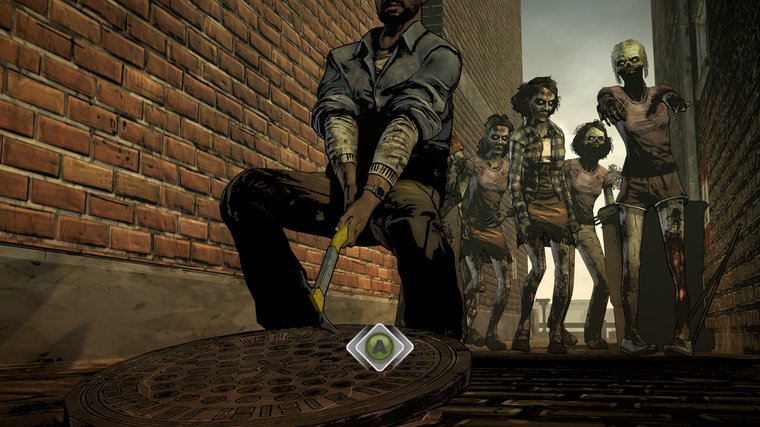
The Walking Dead Telltale Season 2, a New Frontier, the Final Season, 400 Days, and Michonne Story Guide
The Walking Dead Season Two: Complete Story, Choices, and Endings
The Walking Dead: Season Two continues Clementine’s story after Lee’s death and places the player directly in the role of a young survivor surrounded by adults who repeatedly expect her to solve problems they cannot manage themselves. The season contains five episodes: “All That Remains,” “A House Divided,” “In Harm’s Way,” “Amid the Ruins,” and “No Going Back.” Its opening episode, “All That Remains,” begins with Clementine traveling alongside Omid and Christa, but that fragile stability ends when Omid is killed during an encounter with an armed scavenger at a rest stop.
Sixteen months later, Clementine and Christa are attacked and separated, forcing Clementine to continue alone. After she is bitten by a dog, she encounters a cabin group that mistakes the wound for a walker bite and locks her in a shed. Clementine obtains medical supplies and treats the injury herself, proving how much she has learned since The Walking Dead Season One and establishing the season’s central idea: she may still be a child, but survival has already forced her to act with the resolve and practical skill of an adult.
The second episode, “A House Divided,” introduces William Carver, the authoritarian leader pursuing the cabin group. After leaving the cabin, Clementine and the others reach a ski lodge, where she discovers that Kenny survived the events in Savannah and is now living with Sarita and a new group. The reunion offers Clementine a connection to her past, but it is quickly interrupted when Carver arrives. He executes Walter and can also kill Alvin depending on earlier events before taking the survivors prisoner. These events make the choices in The Walking Dead Season Two increasingly important because earlier decisions can influence later relationships and outcomes.
Carver’s Downfall and Clementine’s Final Trial
In “In Harm’s Way,” the group is brought to Howe’s Hardware, Carver’s fortified community, where he argues that brutality, discipline, and forced labor are necessary to rebuild civilization. Clementine helps organize an escape with Luke, Kenny, Jane, Mike, Bonnie, and the cabin survivors. After the group overthrows Carver, Kenny kills him, and the escapees cover themselves with walker remains to move through an approaching herd. The plan succeeds only partially, leading to additional deaths and separations that leave the group more fractured than before.
“Amid the Ruins” focuses on the aftermath of the escape and the growing emotional cost of survival. Carlos, Sarita, Nick, and Sarah can die before the survivors regroup, and Rebecca gives birth to a son named Alvin Junior, whom the group calls AJ. Jane leaves because she fears becoming emotionally attached to Clementine and the baby, while Rebecca’s health deteriorates after childbirth. When Rebecca dies during travel and reanimates while holding AJ, Clementine or Kenny shoots her, triggering a confrontation with a Russian survivor group. The final episode, “No Going Back,” pushes the group’s internal tensions to their breaking point.
Luke dies after falling through the ice of a frozen lake, and Kenny’s violent treatment of Arvo frightens Mike and Bonnie, who may attempt to leave with Arvo and the group’s supplies. During the confrontation, Arvo shoots Clementine. She later awakens with Kenny, Jane, and AJ, but Jane becomes convinced that Kenny is too dangerous to remain with. She hides AJ in a vehicle and returns without him, allowing Kenny and Clementine to believe the baby has died. Kenny attacks Jane, and Clementine must decide whether to shoot him or allow him to kill her.
Season Two Endings and Thematic Reflections
The Walking Dead Season Two has several ending routes, making it the core season with the greatest number of visibly different final destinations. Clementine can remain with Jane at Howe’s, leave Jane and continue alone with AJ, stay with Kenny, enter Wellington without Kenny, refuse Wellington and remain with him, or leave the surviving adult behind.
These endings reflect The Walking Dead Season Two’s larger conflict between dependence and independence, especially as Clementine is forced to judge whether the adults around her are protectors, liabilities, or dangers to the child she is now helping keep alive. The choices also shape the emotional framing of Clementine’s next stage, because Season Two ends not with a single stable destination but with a series of possible futures defined by trust, loss, and the burden of caring for AJ.
The Walking Dead: A New Frontier Story and Choices
The Walking Dead: A New Frontier shifts the principal perspective to Javier “Javi” García, a former professional baseball player traveling with his sister-in-law Kate, nephew Gabe, and niece Mariana. Clementine remains a major supporting character and is playable during selected flashbacks, which reveal what happened to her and AJ after The Walking Dead Season Two.
The season consists of five episodes: “Ties That Bind (Part One),” “Ties That Bind (Part Two),” “Above the Law,” “Thicker Than Water,” and “From the Gallows.” “Ties That Bind: Part One” establishes the García family’s history and the disappearance of Javi’s brother, David. Years into the outbreak, Javi is captured while searching a junkyard for supplies, but Clementine helps him escape and leads him to Prescott, a fortified community. When Javi later returns to his family, members of the New Frontier attack, Mariana is killed, and Kate is seriously wounded, pulling the family into a larger conflict.
Clementine’s Secret and Richmond’s Power Struggle
“Ties That Bind: Part Two” follows the survivors back to Prescott, only for New Frontier forces to destroy the settlement by releasing walkers into it. Javi, Clementine, Kate, Gabe, Tripp, Eleanor, Conrad, and the other survivors then travel toward Richmond. During the journey, Clementine reveals that she was once a member of the New Frontier. After hearing her story, Conrad proposes using her as leverage to gain entry to Richmond, leaving Javi to either accept the plan or kill Conrad to protect Clementine. In “Above the Law,” David is revealed to be alive and to hold authority within Richmond.
Clementine explains that she joined the New Frontier with AJ, but when AJ became dangerously ill, she attempted to take medicine without authorization. She was expelled while AJ remained behind, and David later reveals that AJ survived beyond the point Clementine had feared. Javi’s group also discovers that New Frontier forces have been raiding and destroying nearby settlements under Joan’s direction, turning Richmond’s leadership into a direct threat to surrounding communities.
“Thicker Than Water” develops the power struggle inside Richmond as Joan moves against David and manipulates a public execution involving Tripp and Ava. Javi must make decisions involving David, Kate, Gabe, Dr. Lingard, and the future leadership of the community, while the episode emphasizes that choosing someone to save does not always produce the outcome Javi expects. The Walking Dead: A New Frontier uses these choices to continue the series’ focus on consequences and branching character relationships.
From the Gallows Final Choices
“From the Gallows” begins after Richmond’s defenses are breached and walkers enter the city. Kate wants to repair the breach and save the residents, while David believes Richmond is lost and wants to leave.
After fighting Javi, David departs with Gabe, and Kate attempts to stop the walker invasion. Javi must choose whether to follow David and Gabe or help Kate, while Clementine’s response is influenced by choices made during her flashbacks. The resulting combination determines whether Kate, Gabe, and David survive. Richmond is eventually stabilized, Javi can become an important leader there, and Clementine learns where AJ was taken before leaving to find him.
The Walking Dead: The Final Season and Clementine’s Ending
The Walking Dead: The Final Season returns Clementine to the primary protagonist role after she has recovered AJ and spent years raising him. Her challenge now mirrors Lee’s responsibility in Season One: she must teach a child how to survive without allowing the apocalypse to erase his humanity. The season contains four episodes: “Done Running,” “Suffer the Children,” “Broken Toys,” and “Take Us Back.”
In “Done Running,” Clementine and AJ crash their car while searching for food and are rescued by teenagers from Ericson’s Boarding School. The school, led by Marlon, appears capable of becoming the permanent home Clementine has been searching for, but that hope is complicated when she learns that Marlon surrendered Minerva and Sophie to a raider group in exchange for the school’s safety. Brody reveals the truth, and Marlon accidentally kills her during an argument. Clementine exposes him in front of the other students, and after Marlon surrenders and is no longer an immediate threat, AJ shoots him.
The killing forces Clementine to confront the difference between necessary violence and execution, especially because AJ is learning morality through her reactions. This continues one of the defining themes of the Walking Dead games: Clementine is no longer simply surviving the decisions of adults, but actively teaching the next generation how to survive.
“Suffer the Children” follows Clementine and AJ after they are expelled from Ericson and encounter Abel and Lilly, who now serves a faction called the Delta. The Delta kidnaps young survivors and forces them to participate in a larger war, while Lilly tries to persuade Clementine that sacrificing individual freedom is necessary for collective survival. Clementine and AJ return to Ericson and help prepare its defenses, and players can also deepen Clementine’s relationship with Louis or Violet. The school resists the Delta’s attack, but several residents are captured.
Rescue Mission and Lilly’s Moral Choice
In “Broken Toys,” Clementine plans a rescue mission aboard the Delta’s riverboat and learns that Minerva is still alive and has become loyal to the group that took her. Clementine reaches the captives and confronts Lilly, leaving AJ with a major moral choice: he can kill Lilly or spare her. If he kills her, the decision reinforces his belief that repeated violence may be justified. If he spares her, Lilly remains capable of attacking and kills James.
The moment demonstrates one of the Walking Dead series’ central moral problems, as mercy may preserve the protagonist’s principles while increasing immediate danger. An explosive destroys the riverboat and allows the survivors to escape, and “Broken Toys” was the first episode released after Skybound took responsibility for completing the season following Telltale’s closure.
“Take Us Back” brings Clementine, AJ, Tenn, Louis, Violet, and the other survivors toward Ericson while Minerva, already bitten, leads a walker herd toward them and attacks near a bridge. An earlier conversation in which Clementine either trusts or distrusts AJ’s judgment determines how he responds to the danger. If Clementine trusted him to make difficult decisions, AJ shoots Tenn to save Louis or Violet; if she refused to trust him, he hesitates, causing a different death.
Clementine then suffers a serious axe wound and is bitten on the damaged leg. Inside a barn, the story appears to place her in the same position Lee faced at the end of Season One, with Clementine telling AJ to kill her or leave before she turns. AJ rejects both options and amputates her leg. The story initially allows the player to believe Clementine died, but she later appears alive at Ericson, where AJ successfully prevented the infection from killing her and brought her home.
The game closes with Clementine and AJ no longer traveling, having found a defensible community where Clementine is respected and AJ can grow up among other young survivors. The Walking Dead: The Final Season therefore gives Clementine an ending centered on survival, community, and her transition from a child protected by Lee into a mentor responsible for AJ.
The Walking Dead: 400 Days Story and Connections
The Walking Dead: 400 Days fits directly between Season One and Season Two, telling five connected stories centered around a Georgia truck stop. Its playable survivors are Vince, Wyatt, Russell, Bonnie, and Shel, and their stories unfold across the first year of the outbreak: Vince’s story begins on Day 2, Wyatt’s takes place on Day 41, Russell’s on Day 184, Bonnie’s on Day 220, and Shel’s story begins on Day 236 before continuing later.
The epilogue occurs on Day 400, when Tavia arrives and offers the survivors a place in a larger community. Player decisions determine which survivors accept Tavia’s invitation, and the community she represents is Howe’s Hardware, the settlement controlled by Carver in The Walking Dead Season Two.
Bonnie becomes a major Season Two character regardless of the final 400 Days combination, while Vince, Wyatt, Russell, Shel, and Becca can make smaller appearances depending on their decisions. Although The Walking Dead: 400 Days is not required to understand Clementine’s story, it gives Howe’s more context, shows how some of its residents arrived there, and explores the gradual transformation of society during the first year rather than focusing on a single group.
For players following the complete Walking Dead Telltale timeline, 400 Days is an important optional chapter because it connects the first season with the events that follow. Its anthology structure also demonstrates how the series can tell multiple survivor stories while keeping the same larger world and continuity.
The Walking Dead: Michonne Story and Timeline
The Walking Dead: Michonne is more independent than 400 Days and does not intersect directly with Clementine’s main storyline. The miniseries follows the comic-book version of Michonne during her absence from Rick Grimes’s group between comic issues 126 and 139, and it contains three episodes: “In Too Deep,” “Give No Shelter,” and “What We Deserve.”
Its story examines Michonne’s guilt over leaving her daughters, her time aboard a boat led by Pete, and her conflict with Norma and Randall’s Monroe community. Because it belongs to the comic continuity rather than Clementine’s direct arc, its placement after Season Two is based primarily on release order rather than a precise event connecting it to Clementine.
For players following the full Walking Dead Telltale play order, Michonne works best as a separate miniseries rather than as a required continuation of Clementine’s storyline. Its narrative expands the broader universe while keeping its characters and conflicts largely separate from the main four-season Clementine saga.
The Walking Dead Telltale Series Timeline
Taken together, The Walking Dead Telltale games form a connected story centered primarily on Clementine, with Javier, Michonne, and the survivors of 400 Days expanding the universe. Season One establishes Clementine’s relationship with Lee, Season Two follows her development as an increasingly independent survivor, A New Frontier shifts the main playable perspective to Javi while continuing Clementine’s story, and The Final Season returns Clementine to the protagonist role.
The recommended Clementine-focused Walking Dead order is Season One, 400 Days, Season Two, A New Frontier, and The Final Season. The Michonne miniseries can be played separately because it follows the comic-book continuity and does not directly continue Clementine’s storyline.
The most important feature across the Walking Dead Telltale series is the way player decisions carry emotional and narrative consequences. Choices involving Kenny, Jane, AJ, David, Kate, Gabe, Louis, Violet, Lilly, and other characters can alter relationships, deaths, dialogue, and later scenes. While not every decision radically changes the overall story, the cumulative effect makes different playthroughs feel distinct.
For players looking for a Walking Dead guide, understanding the difference between major and minor choices is especially useful. Some decisions immediately determine who survives, while others primarily affect later conversations, relationships, or how characters respond to Clementine and Javi. The series is designed around this mixture of branching outcomes and a larger narrative structure that continues toward its established story conclusions.
The result is a Telltale adventure series where the central appeal is not simply defeating walkers. The Walking Dead games are built around difficult decisions, character relationships, sacrifice, survival, and the consequences of choosing who to trust. Clementine’s journey from a frightened child in Season One to a survivor and guardian in The Final Season provides the connective tissue that makes the complete series memorable.

The Walking Dead Telltale Characters, Clementine and Lee’s Story, and How Choices Shape the Series
The Walking Dead Telltale games are anchored by a large cast, but Clementine is the central figure of the complete series. She begins as Lee Everett’s companion in Season One, becomes the playable protagonist of Season Two, remains a major character in A New Frontier, and returns as the protagonist of The Final Season. Her growth gives the four-season story its continuity, transforming her from a frightened child hiding in her family’s treehouse into a capable survivor, guardian, and leader.
Lee Everett, the playable protagonist of Season One, is equally essential to that foundation. Before the outbreak, he was a history professor at the University of Georgia who was convicted of killing a state senator involved with his wife. The collapse of society destroys the legal future awaiting him, but his decision to protect Clementine gives him an opportunity to redefine himself during the final months of his life.
Clementine’s story begins when Lee finds her alone in her family’s home after her parents have traveled to Savannah and her babysitter has become infected. She survives by hiding in her treehouse and communicating with Lee through a walkie-talkie, and Lee initially helps her because she is a child alone in a dangerous situation. Their relationship soon becomes parental, with Lee considering Clementine’s safety whenever the group decides where to travel, whom to trust, and how much danger to accept.
From Lee’s Lessons to Season Two
During Season One, Clementine learns how quickly adults can become unreliable, violent, desperate, or afraid, while Lee teaches her practical survival skills that continue to matter years later: how to use a gun, watch her surroundings, keep her hair short so walkers cannot grab it, and remain prepared to act. His behavior also teaches less obvious lessons, because depending on the player, Lee can model honesty, restraint, loyalty, aggression, forgiveness, or secrecy.
Lee’s story is shaped by guilt and redemption. He cannot undo the killing that led to his conviction, but he can decide what kind of person he will be after the outbreak begins. The player can influence his personality by choosing whether he is honest with Clementine about his past, whether he supports or challenges Kenny, whether he tries to preserve group unity, and whether he responds violently to threats. Even with those variations, Lee’s defining objective remains consistent: protecting Clementine.
His final journey through Savannah is undertaken despite knowing that a walker bite will kill him, and after Clementine discovers her parents as walkers, she soon faces the loss of Lee as well. She either shoots him before he turns or leaves him restrained, and that final separation becomes one of the defining emotional memories of her life.
After escaping Savannah, Clementine reunites with Omid and Christa, but that fragile safety does not last. Omid is later killed, and Clementine becomes separated from Christa, leaving her to survive alone before joining the cabin group in Season Two. She confronts Carver, escapes Howe’s, reunites with Kenny, and helps protect Rebecca’s newborn child, Alvin Junior, or AJ. After Rebecca dies, Clementine becomes one of AJ’s primary protectors, and her Season Two ending determines whether she initially continues with Kenny, Jane, or no adult companion. Those routes change the flashbacks shown in A New Frontier, but every path eventually leaves Clementine responsible for AJ, reinforcing her progression from someone who needed protection into someone who must provide it.
AJ, Ericson, and Clementine’s Final Transformation
AJ’s role becomes central because he was born after civilization collapsed and has no personal understanding of ordinary schools, laws, courts, or peaceful communities. Clementine and AJ later join the New Frontier, but when AJ becomes sick, Clementine attempts to obtain medicine and is expelled while AJ remains in the group’s care. Believing she has lost him, Clementine becomes more distrustful and emotionally guarded. Her encounter with Javier García gives her another opportunity to cooperate with others, and while helping Javi’s family, she learns that AJ survived and was transferred to McCarroll Ranch.
She leaves Richmond to search for him, and The Final Season later includes a flashback showing her attack on McCarroll Ranch, where she finds AJ but is forced to kill his caretaker while escaping. Although she succeeds in recovering him, the violence adds to the guilt and emotional burden she carries.
Years later, Clementine and AJ reach Ericson’s Boarding School, where Clementine encounters a community made primarily of people close to her own age. The school offers a realistic chance to stop traveling, but she must help its residents confront Marlon’s betrayal and the Delta’s attacks before it can become a home. Her hardest responsibility is raising AJ, because she wants him to survive without losing his empathy. Every lesson she gives him about killing, mercy, trust, and authority influences how he interprets future danger.
The Final Season deliberately parallels Lee and Clementine: Clementine occupies Lee’s former role, while AJ occupies Clementine’s. When Clementine is bitten, AJ faces a version of the decision Clementine faced in Savannah, but instead of accepting that she must die, he amputates her leg and saves her. Clementine survives and returns to Ericson, completing her transformation from a child searching for protection into a leader who has helped establish a home.
The Series’ Supporting Cast and Their Influence
Several other characters shape Clementine’s development and the wider story of the series. Kenny is one of the longest-serving supporting characters, appearing throughout Season One, returning in Season Two, and potentially appearing in A New Frontier flashbacks. He is resourceful and fiercely loyal, but repeated bereavement makes him increasingly volatile. Jane, introduced in Season Two, is an independent survivor who teaches Clementine useful techniques, including methods for distracting walkers, but she fears becoming emotionally dependent on others; her decision to hide AJ creates the final confrontation with Kenny.
Luke, a member of the Season Two cabin group, is generally more patient with Clementine than many of the other adults and becomes one of the group’s principal organizers. Lilly begins as a member of the Macon survivor group, but conflict over leadership, her father’s death, and the theft of supplies contribute to her breakdown. When she returns in The Final Season, she has become a Delta commander willing to kidnap children for use as soldiers.
A New Frontier broadens the cast through Javier García, the season’s principal protagonist. Javi is a former professional baseball player whose story centers on his relationships with Kate, Gabe, Mariana, and David. Unlike Clementine, he spends the beginning of the outbreak protecting an existing family, which makes his season especially focused on family obligation and sibling rivalry. David García, Javi’s brother and a leader within Richmond, has military instincts that make him effective during crises, but his anger, jealousy, and need for control repeatedly damage his relationships. The Final Season introduces major Ericson characters, including Louis and Violet, who are important members of the school and potential romantic partners for Clementine.
Louis uses music and humor to preserve hope, while Violet is more guarded and initially skeptical of outsiders; Clementine’s decisions affect their trust and their roles within the school. Tennessee, or Tenn, is an idealistic Ericson student who believes people may eventually create a peaceful future, and his unwillingness to abandon Minerva creates the final bridge crisis. Outside Clementine’s main storyline, Michonne leads the separate three-episode miniseries, where her story focuses on grief, survivor’s guilt, family memories, and the difficulty of returning to meaningful relationships after trauma.
How Choices Affect Relationships and Endings
Choices matter in The Walking Dead Telltale games, although they do not create completely separate stories after every decision. Their impact is strongest in relationships, dialogue, temporary branches, character behavior, and selected endings. Characters remember whether the protagonist supported them, lied to them, threatened them, or refused to help, and those memories can influence later conversations or determine who volunteers to assist during dangerous situations. Some decisions replace one character with another, such as saving Carley instead of Doug, which changes the companion present through much of Season One.
Other choices allow characters to survive longer and produce additional scenes before the story eventually returns to a shared route. Major endings can also vary: Season Two has several possible final locations and companions, A New Frontier can end with different members of the García family alive, and The Final Season changes the fates of several Ericson students, Lilly, and James.
At the same time, the series often brings major events back together. Lee is bitten regardless of many earlier choices, Clementine eventually becomes separated from AJ regardless of her Season Two ending; and Clementine survives The Final Season regardless of the instruction she gives AJ in the barn. The choices therefore matter most as authorship within a controlled story rather than total control over every outcome.
Players do not decide every major event, but they do decide how the protagonists respond, which relationships they preserve, and what moral meaning the journey carries. That approach supports the series’ central focus on character and consequence: the world may force certain losses, but the player shapes the values Clementine, Lee, AJ, and the people around them carry through those losses.

The Walking Dead Telltale Choices, Definitive Series Content, and Whether it is Worth Playing Today
The Walking Dead Telltale choices are best understood as a combination of relationship consequences, temporary branches, determinant survival, long-term memories, and ending variations rather than as a system that creates completely separate stories after every major decision. Relationship consequences appear throughout every season, shaping how characters interpret the protagonist’s behavior and whether they respond with trust, resentment, loyalty, or suspicion later on. Supporting Kenny during the Larry crisis can strengthen Lee’s relationship with him, while opposing him can create lasting tension.
Treating Clementine honestly affects her trust, and Javi’s treatment of David, Gabe, and Kate changes how the García family understands his motives. These choices may not always rewrite the entire plot, but they strongly influence the emotional texture of each season and the way the player’s version of Lee, Clementine, Javi, and AJ is remembered by others.
Many decisions create temporary branches that alter scenes, dialogue, and short-term problem-solving before the central plot eventually reconnects. The Doug and Carley choice in Season One is an early example: both characters have different personalities and abilities, so saving one changes conversations and available moments for a significant stretch of the story. However, the broader storyline later converges when Lilly’s breakdown causes the surviving character’s death. Other choices involve determinant characters who can survive for different lengths of time. Ben may die at Crawford or remain alive into the final episode, Conrad can die early or continue through much of A New Frontier, and Louis, Violet, and Tenn have outcomes connected to Clementine’s decisions and AJ’s final judgment.
This structure means the series often values how events unfold, who witnesses them, and what emotional weight they carry as much as the final destination itself.
Season Two Endings and Later Consequence Systems
Season Two contains the most extensive ending branch in the core series, with the player’s response to Kenny and Jane determining Clementine’s companion and destination. Those endings are not merely cosmetic, because A New Frontier includes different flashbacks explaining what happened afterward. Even so, the third season eventually reconnects the routes by separating Clementine from AJ. A New Frontier handles consequence differently by combining Javi’s final priorities with Clementine’s decision-making profile.
The player may focus on Richmond, Kate, David, or Gabe, while Clementine may follow Javi or choose another objective, and the resulting combination determines which García family members survive. The Final Season then turns Clementine’s guidance of AJ into a continuing consequence system. AJ remembers whether Clementine defended his killing of Marlon, described him as dangerous, approved of mercy, and trusted him to make difficult decisions, making his later actions feel tied to the lessons the player has helped teach him.
The Final Season’s most important consequences often come from AJ’s interpretation of Clementine’s moral instruction. Trusting AJ has a direct result at the bridge, where he decides that saving Louis or Violet requires shooting Tenn. Refusing to trust him causes hesitation, allowing Tenn to survive while another character dies.
The Lilly decision creates another major moral conflict. Ordering AJ to kill her prevents Lilly from attacking again, but AJ fires repeatedly and becomes more confident in lethal solutions. Sparing Lilly avoids an immediate execution, but it results in James’s death. Romantic and friendship choices also matter within the season’s character relationships: Clementine can develop a romantic relationship with Louis or Violet, or remain friends with both, and those paths change private scenes, conversations, and the emotional context of the final return to Ericson.
Save Continuity and Definitive Series Content
Save continuity is part of the experience, but it depends on the edition being played. Choices created inside The Walking Dead: The Telltale Definitive Series transfer automatically from one included season to the next, allowing a playthrough started in the collection to carry its save data into subsequent seasons within the same package. However, official Skybound support states that saves from earlier standalone releases cannot be imported into the Definitive Series.
A New Frontier and The Final Season include story-building systems that can reconstruct important earlier decisions, which helps players continue the narrative even when older save files are unavailable or incompatible. This distinction is important for anyone returning to the series after playing separate earlier releases, because the Definitive Series is designed as a unified collection rather than a direct importer for older standalone save data.
The Walking Dead: The Telltale Definitive Series contains all four core seasons, 400 Days, and The Walking Dead: Michonne, bringing together 23 episodes and more than 50 hours of advertised gameplay. The collection applies the “Graphic Black” visual presentation associated with The Final Season to earlier episodes, using heavier shadows and comic-inspired visual contrast, while dynamic lighting was also added to episodes that did not previously receive the upgrade.
It includes improvements to character performances, lip synchronization, gameplay presentation, and interface elements, and it places the complete saga inside a unified front end while recreating classic menus and music from earlier releases. The advertised bonus content includes an art gallery, a three-dimensional model viewer with character voice lines, a music player containing more than 40 tracks, a documentary short titled “Return of the Walking Dead,” and more than ten hours of developer commentary.
There is one important limitation with the Definitive Series bonus material. Skybound’s official support page states that the developer-commentary feature is non-functional inside the game client and that there are no active plans to restore it. The external links and passwords previously used to access that material are also no longer active. The episodes and other core collection features remain included, but buyers should not treat accessible developer commentary as a guaranteed working feature. The collection is still the most convenient complete edition for playing the full saga in one place, especially because it includes the four core seasons, 400 Days, and Michonne together, but the current commentary limitation should be considered when evaluating its advertised extras.
Why the Series Remains Worth Playing Today
The Walking Dead Telltale game series remains worth playing today because its central strengths are character writing, performance, emotional investment, and moral tension rather than technical spectacle. Season One remains the essential experience because of Lee and Clementine’s relationship, and its emotional power comes from making the player responsible for Lee’s conduct while keeping his inevitable death in view. Season Two is less focused, but it gives Clementine difficult questions about dependency, authority, trauma, and the danger of trusting unstable protectors, while its multiple endings make it one of the most replayable parts of the series.
A New Frontier sits further away from the Lee-and-Clementine structure, but it expands the world by examining family conflict and the politics of a large survivor community through Javier, a sympathetic protagonist whose priorities differ meaningfully from Clementine’s. The Final Season offers the strongest mechanical presentation and completes the generational pattern at the heart of the saga: Lee protects Clementine, Clementine protects AJ, and AJ eventually saves Clementine.
The older seasons do have limitations that new players should understand. Character movement can be stiff, technical problems may occur, and environmental puzzles are generally simple. Some choices that appear decisive also lead back to predetermined events, which may feel restrictive for players expecting an action game, an open world, or unlimited branching. For players interested in interactive drama, character-centered storytelling, moral dilemmas, and emotionally difficult decisions, however, The Walking Dead: A Telltale Game Series remains highly rewarding. Its choices matter most as expressions of character, trust, loyalty, mercy, and survival rather than as an endlessly branching simulation, and that controlled structure is central to why its most important moments still carry emotional weight.
Frequently Asked Questions (FAQs)
- What is the correct play order for The Walking Dead Telltale games?
The recommended order is Season One, 400 Days, Season Two, The Walking Dead: Michonne, A New Frontier, and The Final Season. This follows release order, which preserves the intended introduction of characters, the progression of Clementine’s story, and the way major choices carry forward across the series. - Is The Walking Dead Telltale series connected to the television show?
The games are not set in the television continuity. They share continuity with Robert Kirkman’s comic-book universe instead, although most of the major characters and events in the game series are original to Telltale’s story. - How many episodes are in the complete series?
The four core seasons contain 19 episodes in total. When 400 Days and the three episodes of The Walking Dead: Michonne are included, the full Definitive Series contains 23 episodes. - How long does it take to complete The Walking Dead: A Telltale Game Series?
The Definitive Series advertises more than 50 hours of gameplay. Players who explore carefully, take time with dialogue choices, pause often, or replay scenes to see alternate outcomes may spend considerably longer with the complete series. - Is 400 Days required before Season Two?
It is not required to understand Clementine’s main story, but it provides useful background for Season Two. The episode introduces Bonnie and several characters connected to Howe’s Hardware, and playing it also allows its ending decisions to affect minor appearances in Season Two. - Is The Walking Dead: Michonne required to understand Clementine’s story?
No. Michonne is a standalone comic-continuity miniseries set between issues 126 and 139. It does not directly connect to Clementine, Lee, Javier, or AJ, so players focused only on Clementine’s main arc can treat it as optional. - Can choices carry between seasons?
Choices made inside the Definitive Series transfer automatically into later seasons within that collection. Standalone saves cannot be imported into the Definitive Series, but A New Frontier and The Final Season include story builders that can reconstruct important earlier decisions. - Does Clementine die in The Final Season?
No. Clementine is bitten, but AJ amputates her injured leg and prevents her from dying. She survives, returns to Ericson’s Boarding School, and remains there with AJ. - How many endings does Season Two have?
Season Two has several broad ending routes involving Kenny, Jane, Wellington, Howe’s, or Clementine continuing alone with AJ. Some of those routes also include smaller variations based on additional decisions made near the end of the season. - What is the best edition for a new player?
The Walking Dead: The Telltale Definitive Series is the most complete edition because it includes all four seasons, 400 Days, Michonne, graphical upgrades, galleries, music, and other bonus material. However, Skybound currently identifies the advertised developer-commentary feature as non-functional.

Conclusion
The Walking Dead: A Telltale Game Series is a character-driven examination of what survival means when every institution has collapsed. Walkers create the setting, but the central story concerns people attempting to preserve trust, family, identity, and compassion.
The complete play order is Season One, 400 Days, Season Two, Michonne, A New Frontier, and The Final Season. Four core seasons tell Clementine’s main story, while the additional releases expand the world through the first 400 days of the outbreak and Michonne’s comic-book journey.
Lee Everett provides the saga with its moral beginning. His decision to protect Clementine allows him to become more than the crime that defined his former life. Clementine carries his lessons through repeated losses, eventually becoming AJ’s guardian. AJ then completes the cycle by refusing to let Clementine meet Lee’s fate.
Player choices cannot rewrite every major event, but they determine relationships, dialogue, character behavior, determinant deaths, and multiple endings. More importantly, they make the player responsible for the values demonstrated to Clementine and AJ.
That intergenerational structure is the series’ greatest achievement. Lee teaches Clementine how to survive. Clementine teaches AJ how to live among other people. AJ saves Clementine, allowing all three characters’ stories to culminate in the permanent home Lee originally wanted her to find.
Sources and Citations
- Official Definitive Series Sources
- Skybound Games / Steam — The Walking Dead: The Telltale Definitive Series:
- The Walking Dead: The Telltale Definitive Series on Steam — Official product page for the complete collection, including the four seasons, 400 Days, Michonne, Graphic Black presentation, improved visuals and audio, interface improvements, galleries, concept art, model viewer, developer commentary, and other advertised features.
- Skybound Support — Definitive Series save-data guidance:
- Can I import my saves from previous releases of The Walking Dead into the Definitive Series? — Confirms that saves made within the Definitive Series automatically carry into the next included season, while saves from previous standalone releases cannot be imported.
- Skybound Support — Developer commentary status:
- I can’t watch the Developer’s Commentaries — Current official support notice confirming that developer commentary is non-functional, with no current timeline or plans to restore it, and that previously provided external links and passwords are no longer active.
- Skybound Support — Definitive Series FAQ:
- The Telltale Definitive Series Game FAQ — Central Skybound support page containing the Definitive Series save, commentary, language, platform, and troubleshooting articles.
- Individual Season Sources
- Steam — The Walking Dead:
- The Walking Dead on Steam — Official store description identifying the original game as a five-part adventure set in the universe of Robert Kirkman’s comic series and establishing Lee Everett and Clementine’s Season One story.
- Steam — The Walking Dead: Season Two:
- The Walking Dead: Season Two on Steam — Official description covering Clementine’s continuation, her struggle to survive after Season One, and the effect of previous Season One and 400 Days decisions.
- Steam — The Walking Dead: A New Frontier:
- The Walking Dead: A New Frontier on Steam — Official product page for Javier García’s story, Clementine’s role, the New Frontier community, and the season’s central premise.
- Steam — The Walking Dead: The Final Season:
- The Walking Dead: The Final Season on Steam — Official Steam product page for the fourth season and Clementine’s concluding story.
- Story and Character References
- Walking Dead Wiki — Season 1 (Telltale):
- Season 1 (Telltale) — Useful reference for the Season One chronology, Lee Everett’s background, his first meeting with Clementine, the major episode events, and the conclusion of Lee’s story.
- Walking Dead Wiki — Lee Everett:
- Lee Everett (Telltale) — Character background covering Lee’s history, relationship with Clementine, Season One role, bite, and eventual fate.
- Walking Dead Wiki — Clementine’s Neighborhood:
- Clementine’s Neighborhood — Reference for Clementine’s home, Lee’s arrival there, and the opening events of A New Day.
- Walking Dead Wiki — A New Day:
- A New Day (Telltale) — Episode-level reference for the beginning of Season One and its characters and chronology.
- Season Two, Carver, Kenny and Jane
- Walking Dead Wiki — Howe’s Hardware:
- Howe’s Hardware — Covers the location’s role in 400 Days, Season Two, and A New Frontier, including Carver’s community, the cabin group, and its later appearances.
- Walking Dead Wiki — William Carver:
- William Carver (Telltale) — Reference for Carver, his leadership of the Howe’s Hardware community, his conflict with Clementine’s group, and his Season Two storyline.
- Walking Dead Wiki — Carver’s Group:
- Carver’s Group — Covers the cabin group’s capture, Howe’s Hardware, Carver’s community, and the herd attack.
- 400 Days and Michonne
- Walking Dead Wiki — 400 Days:
- 400 Days — Reference for the standalone Season One episode, its chronology, release information, and relationship to the broader Telltale series.
- Walking Dead Wiki — The Walking Dead: Michonne:
- The Walking Dead: Michonne — Confirms the three-episode structure, standalone release, and placement of Michonne’s story between comic issues #126 and #139.
Recommendations
- NBA 2K26 Official Season 8 Trailer Breakdown, Rewards, Release Date, and What Players Should Expect
- Goblin Company Guide: Co-Op Mining, Survival, and Giant Crystal Hunts
- Canceled Star Wars FPS Is Playable Again – Why “First Assault” Feels Amazing and Sad at the Same Time
- Bloodborne Remake Reportedly Shot Down By FromSoftware As Bluepoint Games Scrambled For Ideas (Bloomberg Report, Bluepoint Shutdown, What Happens Next)
- PixelJunk Yodelee Golf: Everything We Know About the Open-World Cozy Golf Adventure
- Mega Man: Dual Override Hit by SAG-AFTRA “Do Not Work” Order as Ben Diskin Exits
- Dinoblade is Set to Hit Half a Million Wishlists Soon as Steam Hype Surges
- Pentagon Reveals First Wave of UFO Files as the Internet Tries to Make Sense of Them: Full Breakdown of Declassified UAP Documents
- Elden Ring Walkthrough: Complete Main Story Order, Boss Guide, Maps, and 100% Progression Checklist (Base Game + Shadow of the Erdtree)
- Discord delays age verification rollout to second half of 2026 following backlash: what’s changing and what users need to know



































































































