







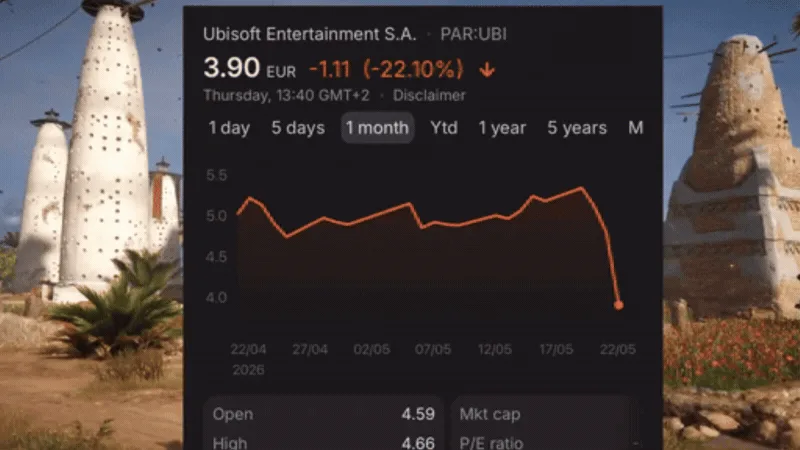
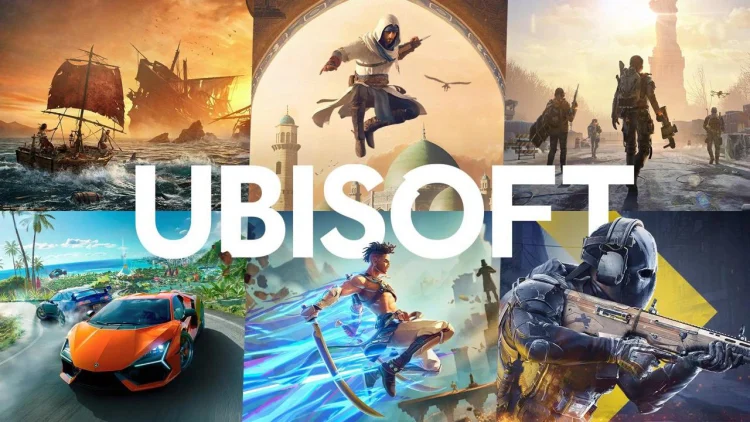
The gaming industry entered another turbulent financial cycle after reports surrounding Ubisoft’s massive financial losses raised concerns across the AAA market. Ubisoft’s recent struggles became one of the biggest gaming industry news stories this week because the publisher represents one of the largest and most recognizable companies in modern gaming. When a publisher responsible for franchises like Assassin’s Creed, Far Cry, Rainbow Six, The Division, and Watch Dogs faces severe financial pressure, investors, developers, and players all pay attention.
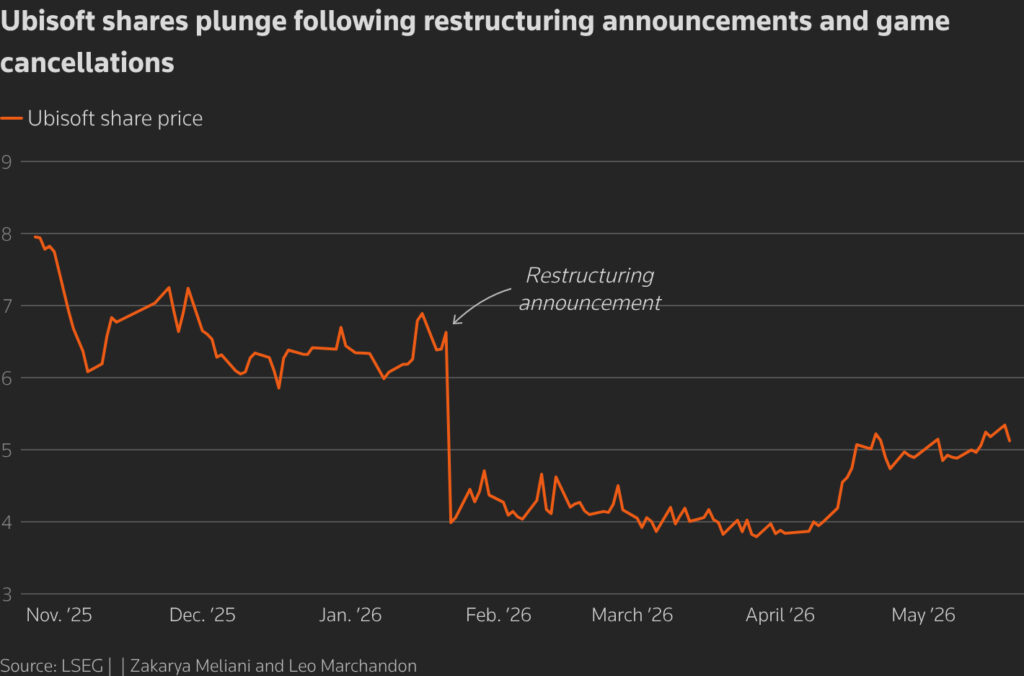
Ubisoft reportedly lost approximately 1.3 billion in market value and financial performance declines across a difficult period that included delayed projects, underperforming releases, restructuring costs, studio closures, layoffs, and weaker live-service momentum. The situation became even more important because it reflects larger industry trends impacting nearly every major publisher in 2026.
The modern AAA industry now faces escalating production costs, development cycles that stretch beyond five or six years, increasing player expectations, live-service fatigue, subscription pressure, and investor demand for constant growth. Ubisoft’s situation is not happening in isolation. Instead, it has become one of the clearest examples of how dangerous large-scale AAA publishing has become in the current market.
Many analysts believe Ubisoft expanded too aggressively during the previous generation while relying heavily on open-world formulas and live-service strategies that no longer guarantee success. Rising budgets combined with delayed launches created a scenario where projects needed enormous sales numbers simply to break even.
At the same time, competition intensified across every major platform. Publishers are now competing not only with other AAA games but also with free-to-play ecosystems, subscription libraries, mobile games, long-term live-service giants, and user-generated content platforms that dominate player engagement.
Ubisoft’s losses therefore represent more than one company struggling financially. They symbolize the broader instability affecting the modern AAA business model.
In This Article (13 sections)
Ubisoft Financial Results Analysis
Ubisoft financial results analysis reveals several major pressure points affecting the company simultaneously. The publisher experienced weaker revenue performance due to delayed launches, reduced player spending in some live-service ecosystems, and inconsistent commercial performance from recent releases.
One of the biggest issues involved project delays. Delays have become increasingly expensive because modern AAA development teams often include hundreds or even thousands of developers spread across multiple global studios. Every extra year of development significantly increases operational costs.
Marketing expenses also continue to rise. Major AAA launches now require enormous advertising campaigns across digital platforms, social media, streaming partnerships, conventions, influencer promotions, and television marketing. If a game underperforms after those investments, publishers absorb massive financial damage.
Ubisoft additionally faced restructuring expenses as the company attempted to reorganize teams and reduce costs. Studio adjustments, layoffs, canceled projects, and pipeline changes create immediate financial hits even when designed to improve long-term efficiency.
Another major factor is changing consumer behavior. Players are spending more time in persistent ecosystems such as Fortnite, Roblox, Call of Duty Warzone, Minecraft, Genshin Impact, and GTA Online. This reduces the amount of time and money available for traditional premium releases.
Ubisoft’s heavy dependence on open-world formulas also created criticism from parts of the gaming audience. While franchises like Assassin’s Creed remain commercially powerful, some players believe Ubisoft releases became too structurally similar over time. Repetition concerns can reduce excitement and weaken long-term franchise momentum.
The company’s financial analysis also highlights how risky modern blockbuster development has become. A single major underperforming game can now affect publisher-wide financial forecasts for years.

Why Ubisoft Is Losing Money and Restructuring in 2026
Several overlapping industry problems explain why Ubisoft is losing money in 2026. The issue is not one failed release or one bad quarter; instead, the losses reflect structural problems affecting the entire AAA publishing model. Development costs increased dramatically during the PlayStation 5 and Xbox Series X generation, as high-end graphics, advanced lighting systems, massive open worlds, motion capture, cinematic storytelling, online infrastructure, and post-launch support all require huge budgets. Many modern AAA games reportedly cost hundreds of millions of dollars to produce when marketing is included, meaning publishers need extremely high sales numbers to generate profit.
Longer development timelines have also created instability. Some major projects now remain in development for six to eight years, and during that time, technology changes, player trends shift, engines evolve, and internal creative goals may restart multiple times. Live-service expectations created another major challenge, as publishers spent years chasing recurring revenue models inspired by games like Fortnite and GTA Online. However, the market became overcrowded, and many live-service projects failed to maintain player populations long term. Ubisoft invested heavily in multiplayer and live-service concepts during the industry-wide rush toward engagement-driven ecosystems, but not every project achieved the sustained success publishers expected.
Economic conditions have also affected player spending patterns globally. Consumers became more selective with purchases, while subscription services increased competition for attention. A player paying monthly for Game Pass, PlayStation Plus, or multiple live-service ecosystems may buy fewer premium releases annually. At the same time, pressure from shareholders and investors intensified. Public gaming companies are expected to demonstrate growth even during difficult industry periods, and when projections fall short, stock value can decline quickly. All of these problems combined to create the financial environment Ubisoft now faces.
Ubisoft’s layoffs and restructuring represent another major shift occurring across the industry. Nearly every major publisher has implemented cost-cutting measures during the past few years, especially after the rapid expansion period that occurred during the pandemic gaming boom. Many publishers hired aggressively while engagement numbers surged globally, but once growth stabilized, companies faced oversized operational costs. Ubisoft responded with restructuring initiatives aimed at reducing expenses and streamlining production pipelines, including project cancellations, workforce reductions, studio adjustments, and operational reorganizations.
The challenge with restructuring is that it creates both short-term and long-term consequences. Financially, layoffs may reduce future expenses, but severance costs and organizational disruption can create immediate financial losses. Creatively, layoffs may also affect morale and production consistency, as developers remaining inside studios often face uncertainty regarding project stability and future employment security. The broader industry trend shows that publishers are trying to move away from excessive project sprawl. Many companies previously pursued numerous simultaneous AAA projects alongside multiple live-service initiatives, but that strategy became difficult to sustain as budgets increased. Ubisoft’s restructuring therefore reflects a wider industry correction rather than a completely isolated event.
Ubisoft’s Upcoming Releases and Recovery Plan
Ubisoft’s upcoming releases and recovery plan remain critical to the company’s future. Publishers facing financial struggles typically depend on major upcoming launches to stabilize investor confidence and revenue forecasts. The Assassin’s Creed franchise continues to represent Ubisoft’s strongest commercial pillar, with future entries, expansions, and platform support remaining central to the publisher’s recovery strategy.
Rainbow Six Siege also remains an important long-term ecosystem because it continues generating engagement years after release. Maintaining successful live-service communities has become essential for publisher stability, especially as companies look for reliable revenue beyond one-time premium game sales. Ubisoft additionally appears focused on improving production efficiency. Industry observers expect the company to prioritize fewer large-scale projects with stronger commercial potential instead of pursuing excessive simultaneous development initiatives.
Another possible recovery strategy involves stronger partnerships and licensing opportunities. Large publishers increasingly rely on transmedia expansion, subscription agreements, cloud partnerships, and collaborative publishing deals to diversify revenue. Mobile expansion may also become more important, as mobile gaming continues generating enormous revenue globally and publishers increasingly attempt to adapt major franchises for that market.
Ubisoft’s long-term recovery will likely depend on balancing innovation with financial discipline. Investors want profitable consistency, while players want fresh experiences that justify premium pricing. Successfully balancing those goals remains one of the hardest challenges in modern gaming.

Take-Two’s GTA 6 Comments and Confidence in AAA Gaming
The GTA 6 CEO response became another major talking point in gaming business discussions this week. Take-Two Interactive CEO Strauss Zelnick addressed industry conditions while discussing confidence surrounding GTA 6 and the future of AAA gaming. His comments attracted attention because Grand Theft Auto 6 is widely expected to become one of the largest entertainment launches in history, and whenever Take-Two leadership discusses the industry, investors and analysts closely examine every statement.
Zelnick emphasized confidence in premium entertainment experiences while acknowledging broader industry challenges. His comments suggested that truly exceptional blockbuster releases can still achieve enormous success despite market difficulties affecting other publishers. This distinction matters because many analysts now believe the AAA market is becoming increasingly polarized. The biggest franchises continue generating enormous engagement and revenue, while mid-tier projects face greater financial risk.
GTA 6 therefore represents more than a game launch. It symbolizes whether massive premium AAA development can still justify escalating production costs at the highest level. Industry observers expect GTA 6 to potentially reshape financial expectations across gaming once again, especially if it launches successfully and reinforces the argument that premium blockbuster development remains highly profitable at the highest quality levels.
Strauss Zelnick’s industry comments focused heavily on quality, player demand, and long-term franchise management. Take-Two leadership has repeatedly emphasized the importance of releasing projects only when they meet internal quality standards. This approach contrasts with concerns surrounding rushed launches and unstable releases that damaged several major publishers in recent years.
Zelnick also highlighted the entertainment resilience of gaming compared to other media sectors. Interactive entertainment continues attracting massive global audiences even during economic uncertainty. However, his comments also acknowledged that development timelines have become increasingly complicated. Creating massive open-world experiences with cinematic production values requires unprecedented coordination across technology, storytelling, design, networking, and live-service infrastructure.
The Take-Two CEO also discussed patience regarding release schedules. Investors often pressure publishers for faster launches, but rushed development can create catastrophic long-term consequences. This philosophy became especially relevant after multiple high-profile AAA failures across the industry damaged consumer trust.
Take-Two leadership statements about GTA 6 remain carefully controlled because the game carries extraordinary expectations. Every public comment from executives generates widespread analysis throughout the gaming industry. Leadership messaging consistently emphasizes confidence in Rockstar Games and the development process, with the company believing GTA 6 will establish new benchmarks for interactive entertainment.
Analysts also interpret Take-Two’s confidence as a sign that the company expects GTA 6 to significantly outperform typical AAA financial models. The scale of anticipation surrounding the project is unprecedented, as few entertainment products in any industry generate comparable attention years before launch. Take-Two executives also understand that GTA 6 carries enormous strategic importance, with the game potentially influencing console sales, digital revenue trends, streaming engagement, creator ecosystems, and broader investor confidence across gaming.

AI in Game Development and the Pressure to Control AAA Costs
AI in game development continues to divide CEO opinions across the industry. Many executives view artificial intelligence as a tool capable of improving efficiency, reducing repetitive tasks, and accelerating content production. Publishers are increasingly exploring AI-assisted workflows for animation, voice systems, quality assurance, environment generation, testing, localization, and development support.
Some executives argue that AI may help control ballooning production costs. As AAA budgets continue increasing, companies are searching for methods to improve efficiency without sacrificing scale. In reality, most current AI implementation appears focused on workflow assistance rather than complete replacement of development teams.
However, others warn that overreliance on AI could damage creativity, reduce originality, and create ethical concerns involving labor displacement. Critics argue that gaming succeeds because of creativity, artistic direction, and human design instincts rather than automated production systems. The discussion has become more intense as layoffs increased throughout the industry, with many developers fearing that publishers may attempt to replace portions of the workforce with automation technologies.
Ubisoft’s losses also connect to a larger question about AAA budgets. Publishers are beginning to question whether unlimited budget escalation remains sustainable, especially when massive productions require enormous financial risk and development spans most of a console generation. The traditional AAA model depended on growing player spending and expanding global markets, but development expenses now rise faster than many publishers can comfortably sustain.
Ubisoft’s situation demonstrates how dangerous large-scale production can become when releases underperform or experience delays. As a result, publishers may begin reducing risk exposure by focusing on fewer major projects, smaller development scopes, or stronger monetization strategies. Some companies may also prioritize established franchises over experimental new intellectual properties because recognizable brands provide safer commercial forecasting. The downside is that reduced experimentation could limit creative diversity within the AAA space.
Live-Service Risks for Major Publishers
Live-service strategy risks for big publishers have become increasingly obvious over the last several years. Publishers initially viewed recurring monetization ecosystems as the future of gaming revenue, especially because successful live-service games can generate income for many years through expansions, cosmetic purchases, battle passes, and seasonal content.
However, maintaining long-term engagement has proved extremely difficult. Players only have limited time, and dominant live-service ecosystems already control enormous portions of player attention. Many publishers underestimated how hard it would be to compete against entrenched giants.
Live-service games also require constant updates, server support, balance adjustments, moderation systems, and community management. These operational costs remain high long after launch, and if player populations decline rapidly, publishers may struggle to justify ongoing support expenses.
Ubisoft invested heavily in live-service ambitions during the industry-wide trend toward engagement ecosystems. The mixed results contributed to broader financial instability and showed why live-service strategies can create major risks when they fail to maintain long-term player demand.
Why Game Development Timelines Keep Slipping
Game development timelines keep slipping because AAA games are now dramatically more complicated than they were in previous generations. Developers are building massive open worlds with cinematic presentation, advanced AI systems, online networking, photorealistic visuals, accessibility systems, cross-platform support, and long-term post-launch content. Each of these features adds more complexity to production and increases the chances of delays.
Production pipelines have also become more globalized. Large projects may involve dozens of support studios across multiple countries, and coordinating thousands of contributors creates enormous logistical challenges. Technology transitions further complicate development, as engine upgrades, hardware changes, and evolving platform requirements can force teams to rebuild systems repeatedly during production.
Player expectations continue to rise as well. Audiences now expect stable performance, high frame rates, realistic graphics, detailed animations, and extensive content at launch. Social media pressure also affects timelines because games receive intense scrutiny immediately after reveal announcements. Publishers fear backlash from unstable launches, leading to additional delays intended to improve polish. The combination of these factors explains why modern development schedules frequently extend far beyond original projections.
This Week’s Gaming Industry News and Investor Reactions
The biggest gaming industry news this week centered on financial instability, executive commentary, restructuring, and the future sustainability of AAA development. Ubisoft’s financial struggles dominated headlines because they reflect broader concerns affecting the entire industry. Investors closely monitored the situation to evaluate how other publishers may perform moving forward.
At the same time, Take-Two leadership discussions surrounding GTA 6 generated optimism about the commercial power of truly massive premium releases. AI discussions also intensified as executives debated how automation technologies may reshape development pipelines over the next decade. The industry therefore appears divided between financial caution and blockbuster ambition, with publishers simultaneously reducing costs while preparing some of the largest entertainment launches ever created. This contradiction defines the current gaming landscape.
Investor reactions to game publisher earnings depend heavily on forecasting confidence. Investors are often less concerned about short-term fluctuations than long-term growth expectations. When publishers announce delays, cancellations, layoffs, or weak engagement trends, investor confidence can decline rapidly. Gaming stocks are especially volatile because blockbuster releases strongly influence quarterly performance.
Executives therefore spend significant time reassuring shareholders about upcoming projects, monetization strategies, and long-term pipelines. Strong franchises remain critical because they provide predictable revenue expectations, and investors favor publishers with recognizable intellectual properties capable of generating recurring engagement. However, even major brands face risk when budgets become excessively large. Ubisoft’s financial struggles reinforced investor concerns about rising production costs and uncertain release schedules throughout the industry.
What to Watch Next in Gaming Business News
What to watch next in gaming business news involves several major trends that may define the future of the industry. The first is whether publishers continue reducing workforce sizes and restructuring operations. Cost-cutting measures will likely remain common while companies attempt to stabilize spending.
The second major trend involves GTA 6 and its market impact. The game’s commercial performance may influence investor confidence across the entire AAA sector. Third, AI implementation will continue expanding throughout development pipelines, and industry leaders will closely monitor how publishers integrate automation technologies without damaging creativity or public trust.
Another major area to watch involves subscription ecosystems. Companies continue experimenting with digital distribution models, cloud infrastructure, and recurring engagement strategies. Finally, development timelines will remain a critical issue. Publishers must find ways to control production costs without sacrificing quality. The companies that solve this balance most effectively may define the next era of gaming.
Frequently Asked Questions (FAQs)
- What caused Ubisoft to lose 1.3 billion?
Ubisoft’s losses resulted from delayed projects, restructuring costs, underperforming releases, rising development expenses, weaker live-service performance, and broader industry challenges affecting AAA publishing. - Why are AAA game budgets becoming so expensive?
AAA budgets continue rising because modern games require advanced graphics, cinematic storytelling, massive worlds, online infrastructure, motion capture, live-service support, and large global development teams. - What did Strauss Zelnick say about GTA 6?
Strauss Zelnick expressed confidence in GTA 6 and emphasized the importance of delivering high-quality premium entertainment experiences despite broader industry challenges. - Are live-service games still profitable for publishers?
Some live-service games remain extremely profitable, but many publishers struggled to sustain player engagement because the market became overcrowded. - Why are game development timelines getting longer?
Development timelines increased due to larger project scopes, higher player expectations, advanced technology requirements, engine complexity, and global production coordination challenges. - How are investors reacting to gaming industry earnings reports?
Investors are becoming more cautious regarding publishers with unstable release schedules, escalating budgets, and uncertain monetization strategies. - Could Ubisoft recover financially?
Ubisoft could recover through successful upcoming releases, stronger franchise performance, improved production efficiency, and more disciplined budget management. - How is AI affecting game development?
AI is increasingly used for workflow assistance, testing, animation support, localization, and content generation, although the technology remains controversial. - Why are gaming layoffs increasing?
Layoffs increased because publishers expanded rapidly during the pandemic gaming boom and later attempted to reduce operational costs amid slower growth. - What is the biggest gaming business story right now?
The biggest story involves the tension between rising AAA development costs and the industry’s dependence on massive blockbuster successes like GTA 6.

Conclusion
Ubisoft’s financial struggles became one of the clearest warnings yet about the growing risks inside the modern AAA gaming industry. Rising budgets, longer development timelines, restructuring pressures, live-service instability, and changing player behavior are forcing publishers to reconsider how blockbuster games are produced and monetized.
At the same time, comments from Take-Two leadership surrounding GTA 6 demonstrate that confidence still exists in premium gaming experiences capable of reaching enormous global audiences. The contrast between Ubisoft’s difficulties and Take-Two’s optimism highlights the increasingly polarized nature of the gaming market.
The next several years may determine whether the current AAA model remains sustainable. Publishers must balance creativity, technological ambition, financial discipline, player trust, and investor expectations in ways that have become more difficult than ever before.
Gaming remains one of the largest entertainment industries in the world, but the business landscape surrounding it is evolving rapidly. The companies capable of adapting to these changes while maintaining high-quality releases will likely define the future generation of interactive entertainment.
Sources and Citations
- Reuters Ubisoft financial reports and restructuring coverage
Citation: Reuters coverage of Ubisoft restructuring, canceled projects, financial outlook changes, and investor reaction. - Reuters Ubisoft company news hub
Citation: Reuters business reporting archive covering Ubisoft financial reports, restructuring efforts, and corporate developments. - IGN GTA 6 and gaming industry business analysis coverage
Citation: IGN analysis and reporting discussing GTA 6 market impact, publisher expectations, and wider gaming industry conditions. - Game Developer AAA development cost and layoffs analysis
Citation: Game Developer industry analysis focused on AAA production costs, layoffs, restructuring, and sustainability concerns across major publishers. - VGC Strauss Zelnick and Take-Two reporting
Citation: Video Games Chronicle reporting on Strauss Zelnick comments, Take-Two Interactive statements, and GTA 6 business expectations. - Bloomberg gaming industry financial trends coverage
Citation: Bloomberg reporting and financial analysis related to publisher restructuring, AAA development costs, and broader gaming market trends. - GamesIndustry.biz investor and publisher earnings analysis
Citation: GamesIndustry.biz coverage of investor reactions, earnings reports, layoffs, and publishing industry financial performance. - The Verge AI in gaming coverage
Citation: The Verge reporting on artificial intelligence in gaming, AI-assisted development, industry concerns, and gaming technology trends. - Reuters Take-Two GTA 6 financial reporting
Citation: Reuters reporting on Take-Two financial forecasts, GTA 6 launch timeline, and investor expectations surrounding the release. - GamesRadar AAA game budget and layoffs analysis
Citation: Analysis of rising AAA game development costs, layoffs, studio closures, and publisher restructuring pressures.
Recommended
- Secrets to Blender Photorealism: How to Make Your Renders Look Real
- Best Blender Add-ons for Camera Management: Why The View Keeper Stands Out
- Wake up Samurai: Keanu Reeves Reportedly Takes Lead Role in Japanese Stop-Motion Wood Sculpture Film HIDARI Explained
- The Adventures of Cliff Booth IMAX Release Date and Theater Window
- Killing Floor Dev Tripwire Interactive Lays Off 23 Employees: What Happened, Why It Matters, and What’s Next
- Romestead Preview – A Dark Fantasy-Cozy RPG Set in Ancient Rome
- Hytale Dev Addresses Copycat Game: What Happened
- Gears of War Movie Director Shares Major Netflix Update
- Avatar Aang Movie Footage Leak: What We Know About the Alleged Paramount+ Leak Before Release
- Physics in Unity: Complete Guide to Rigidbodies, Colliders, Joints, FixedUpdate, and Performance



































































































