






In This Article (13 sections)
Uncharted 4 Original Amy Hennig Story, Cut Characters and Scrapped Missions
Ten years after its release, Uncharted 4: A Thief’s End entered a new phase of scrutiny. On May 10, 2026, the game’s tenth anniversary, a feature length documentary by researcher Michael Kemp, better known as Thekempy, provided the most extensive reconstruction yet of the scrapped Amy Hennig era version of the game. The documentary assembled discarded development files, motion capture footage, concept art, early gameplay fragments, developer information, and other surviving material to reconstruct what Naughty Dog’s original version of Uncharted 4 may have looked like before the project changed direction.
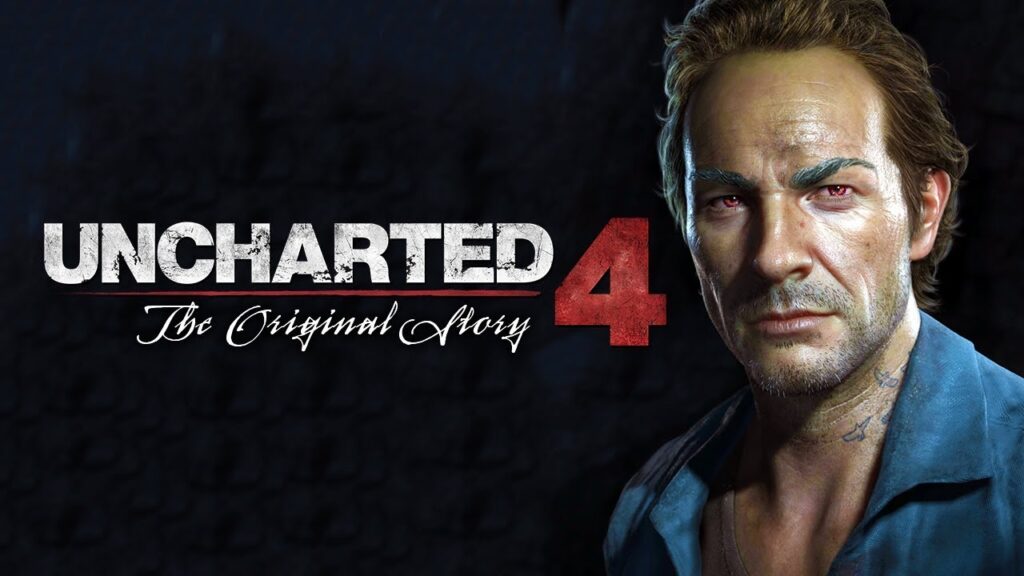
The reconstruction suggests that the lost version was considerably more developed than a collection of preliminary concepts. It contained alternate storylines, different playable characters, removed missions, unused mechanics, performance captured scenes, and a darker emotional direction. Some important foundations survived into the retail game, particularly the mystery surrounding pirate captain Henry Avery and the legendary pirate colony of Libertalia, but the supporting cast, pacing, character relationships, and emotional focus changed substantially after Hennig left Naughty Dog in 2014.
One of the most surprising discoveries involved playable characters. Early versions reportedly allowed players to control Victor Sullivan and Henry Avery, creating a broader perspective than the final campaign’s overwhelming focus on Nathan Drake. A playable Henry Avery sequence reportedly took place during a 1695 flashback, potentially allowing players to directly experience part of the historical pirate story rather than discovering it primarily through journals, environments, and other clues.
Sully’s playable material similarly points toward a more experimental narrative structure. Switching perspectives could have allowed the story to present important events outside Nathan’s immediate experience and provide more variety in how the campaign communicated its story. The final game ultimately concentrated much more tightly on Nathan and his emotional journey.
Cast Changes and Sam’s Antagonistic Role
The reconstruction also provided additional context for actors who had worked on the game before its creative restructuring. Alan Tudyk, Todd Stashwick, and Graham McTavish were involved in major roles during development before performances were removed, altered, or recast. Todd Stashwick was reportedly cast as Sam Drake, while Tudyk portrayed an earlier version of the antagonist role that eventually developed into Rafe Adler.
Charlie Cutter was also expected to have a substantially larger role. Nolan North later discussed Cutter’s greater involvement in the earlier version, supporting the idea that Hennig’s campaign placed more emphasis on an ensemble cast rather than narrowing its attention around Nathan, Sam, and Elena.
Sam Drake underwent one of the most significant transformations. In the final game, Sam is Nathan’s long lost older brother whose apparent desperation draws Nathan back into treasure hunting. Hennig’s version reportedly introduced Sam as a considerably more antagonistic and disruptive presence connected with Nathan’s buried guilt and unresolved history.
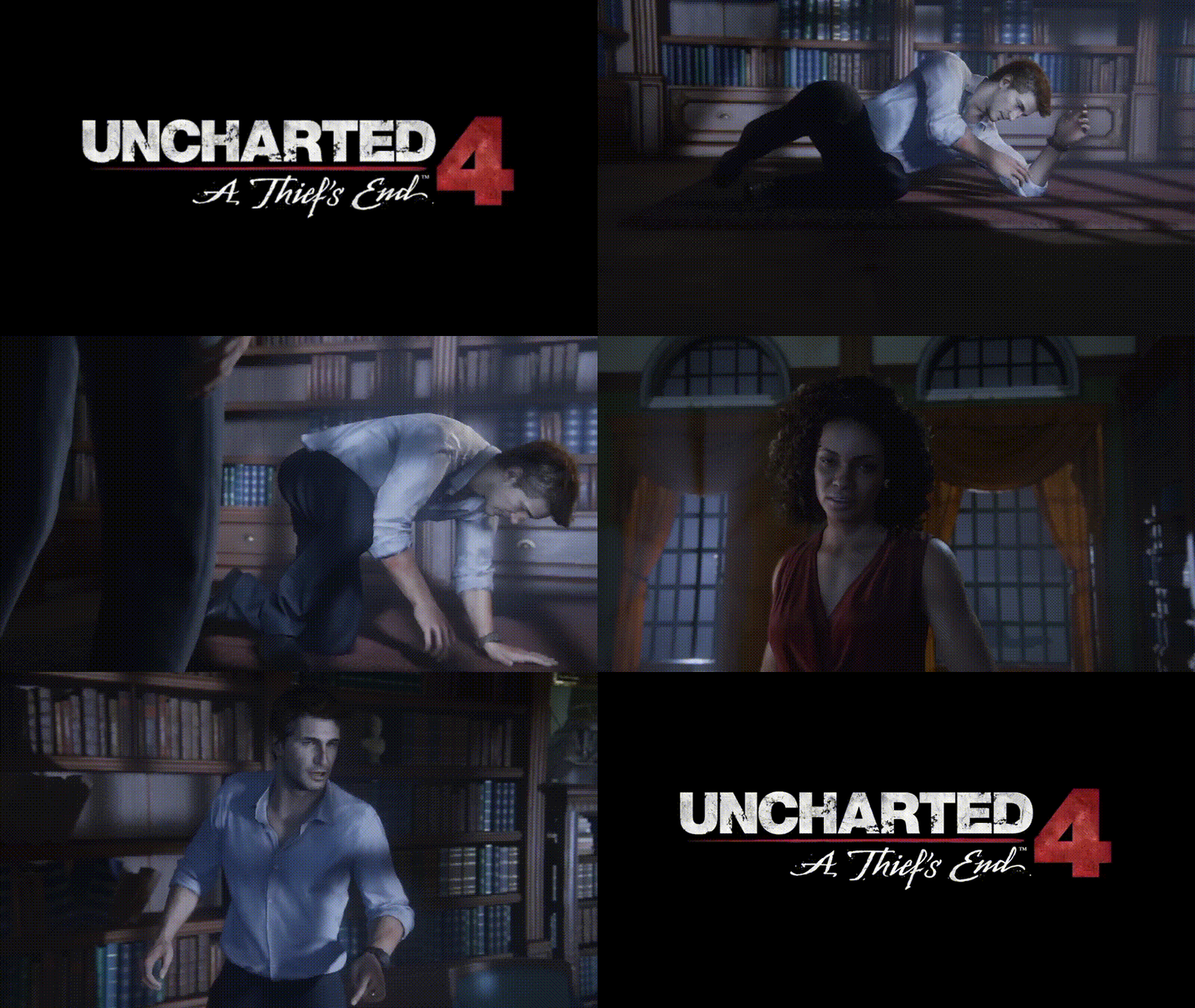
That earlier characterization corresponds more closely with the mysterious 2013 teaser for Uncharted 4, which used a darker monologue centered on betrayal, resentment, and revenge. Stashwick later confirmed that he performed the dialogue used in that teaser before the project was rewritten.
Hennig envisioned Sam as a source of emotional conflict whose relationship with Nathan would develop gradually rather than beginning with the sympathetic dynamic found in the finished game. After the leadership transition, the character became more vulnerable and family oriented. Neil Druckmann later discussed the challenge of convincing players to care about a brother Nathan had never mentioned during the previous games.
Pirate Foundations, Scrapped Missions, and New Evidence
Despite those character differences, major elements of the treasure hunt were already established. Henry Avery, Libertalia, pirate history, greed, betrayal, and obsession were fundamental components of Hennig’s version. The eventual rewrite did not discard those foundations, but it changed how they related to Nathan’s personal life.
The earlier version also appears to have contained several missions and mechanics absent from the retail release. One sequence reportedly involved Nathan, Elena, and Sully exploring Avery’s shipwreck underwater. Another placed Nathan on a tiny sandbar where survival mechanics involved catching fish, cracking coconuts, and attempting to survive while stranded.
Other discarded ideas included social stealth, crowd blending, and a ballroom dancing sequence. These concepts suggest an adventure that experimented with a wider variety of situations beyond traditional firefights and stealth encounters. Reports describing the earlier build as less combat focused similarly point toward greater emphasis on exploration, atmosphere, environmental interaction, and cinematic adventure.
The playable Henry Avery flashback may have been the most structurally unusual discarded concept because it would have taken players directly into the pirate era that forms the historical foundation of the story. The finished game instead leaves much of that history for Nathan and the player to reconstruct through exploration.
Taken together, the removed sequences suggest that Hennig’s version emphasized mystery, ensemble storytelling, adventurous experimentation, and interpersonal conflict. Elena apparently had more direct involvement, Cutter occupied a larger position in the cast, Sam was more antagonistic, and alternate playable perspectives broadened the narrative beyond Nathan.
The 2026 documentary made these differences particularly significant because it added visual development evidence to information that had previously existed largely through interviews, actor recollections, and scattered reports. Recovered footage, motion capture material, unused environments, and concept art helped transform years of discussion about the lost version into a more detailed reconstruction of a game that had already progressed substantially before being reworked.
How Uncharted 4 Changed After Amy Hennig Left and Became Nathan Drake’s Final Adventure
The decisive transformation occurred during 2014. Sony had officially teased the PlayStation 4 exclusive sequel in November 2013 while Amy Hennig remained attached to the project, and the earliest promotional material reflected the darker direction associated with her version. In March 2014, Hennig departed Naughty Dog, followed shortly afterward by game director Justin Richmond.
Neil Druckmann and Bruce Straley, coming from their work on The Last of Us, subsequently assumed leadership of Uncharted 4. By June 2014, they were officially leading development, beginning a transition that reshaped much of the story while retaining several important foundations from the earlier version.
Sony publicly maintained that development would continue, but the game’s creative direction changed significantly. Druckmann and Straley later discussed the need to reshape the project into a version they could personally connect with. Rather than continuing an inherited story unchanged, they substantially reworked its characters, structure, and emotional focus.
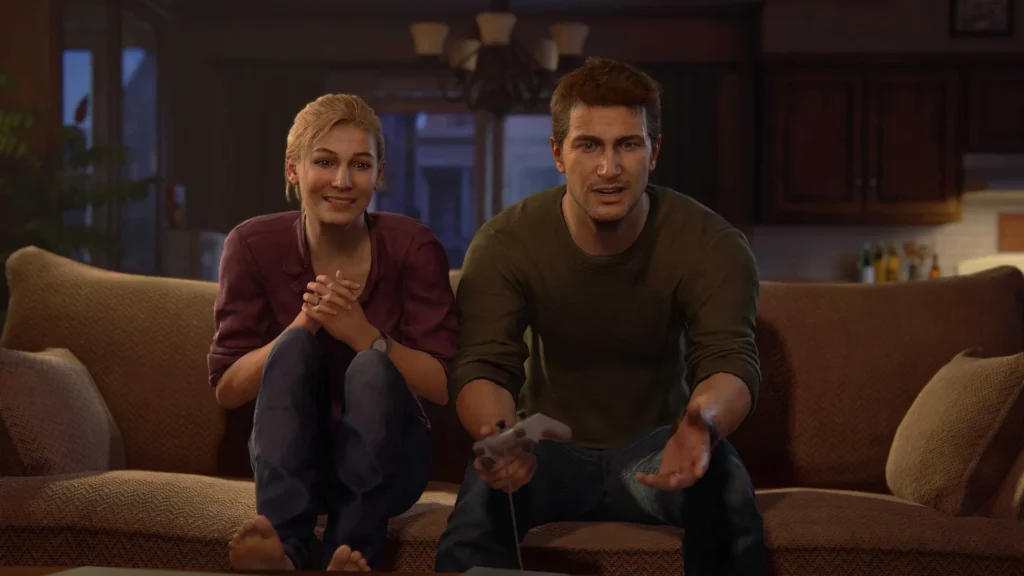
The retail version became more introspective. Nathan’s marriage to Elena developed into one of the central emotional relationships, while themes involving retirement, adulthood, regret, domestic life, obsession, and the difficulty of abandoning adventure became increasingly important.
New childhood flashbacks established Nathan and Sam’s shared history, helping explain a relationship that had not appeared in the previous games. Sam changed from the more antagonistic presence associated with Hennig’s version into the emotional catalyst that draws Nathan back toward his former lifestyle. Nadine Ross, who was absent from Hennig’s draft, became another major character.
The Rewrite’s Broader Impact on Story and Gameplay
The rewrite also sought a more definitive ending. Druckmann later explained that the project needed an ending capable of satisfying the new creative direction, placing particular emphasis on completing Nathan Drake’s character arc rather than simply delivering another adventure that could lead indefinitely into further sequels.
This change affected gameplay pacing as well as narrative structure. The final game incorporated quieter conversations, optional dialogue, broader traversal spaces, expanded stealth, and slower character focused moments. It retained the franchise’s cinematic spectacle and globe trotting adventure but placed those elements inside a more reflective story.
Several months of earlier development work were reportedly discarded during the transition. Nolan North later discussed the extent of material abandoned following the leadership change, reinforcing that the process was a major creative restructuring rather than a routine revision late in production.
Nevertheless, Hennig’s version and the final game share considerable DNA. Henry Avery and Libertalia remained central. Pirate history, treasure hunting, rope traversal, exploration, greed, betrayal, and large cinematic sequences survived in different forms. Environmental ideas and broad concepts from the earlier development period also continued into the finished project.
The most important difference lies in what those elements ultimately served. Hennig’s version appears to have emphasized ensemble adventure, mystery, darker interpersonal tension, and a wider variety of experimental situations. The final version uses the pirate treasure hunt to examine Nathan’s inability to completely abandon his old life.
Elena became particularly important to that transformation. Instead of merely participating in another adventure, she represents Nathan’s life outside treasure hunting and forces him to confront what his secrecy and obsession are doing to their relationship. Sam functions as the opposite pressure, pulling Nathan toward the excitement and danger he claims to have left behind.
Committing to Nathan Drake’s Final Adventure
Naughty Dog eventually committed fully to presenting the game as Nathan Drake’s final adventure. The objective was not to kill the character or end the series through tragedy. Instead, the story focused on personal growth and voluntary retirement.
Nathan survives the events of the game, repairs his relationship with Elena, reconnects with his family, and eventually finds a way to live with his adventurous instincts without returning to the destructive treasure hunting lifestyle that repeatedly endangered him and those around him.
This thematic goal shaped the final structure. Rather than escalating endlessly toward a darker sacrifice, the conclusion provides Nathan with an opportunity to mature. His farewell is therefore based on emotional closure rather than death.
The development timeline demonstrates how two creative identities contributed to the game. Hennig established substantial foundations before her departure, while Druckmann and Straley transformed those foundations into the final narrative. After the leadership transition in 2014, Naughty Dog continued revealing larger environments, exploration, stealth, and cinematic gameplay while refining the rewritten story.
Following delays and continued development, Uncharted 4: A Thief’s End launched on May 10, 2016. Exactly ten years later, the anniversary documentary returned attention to everything that changed during that complicated development process.
Uncharted 4 Tenth Anniversary Deep Dive and Why Its Lost Version Still Fascinates Fans
The 2026 anniversary documentary became significant within the PlayStation community because it brought together years of fragmented information about Uncharted 4’s development. Instead of relying entirely on rumors, it assembled recovered footage, developer comments, motion capture evidence, unused concept art, actor testimony, and discarded gameplay material into a more coherent reconstruction.
The timing strengthened its impact. May 10, 2026 marked exactly ten years since Uncharted 4: A Thief’s End launched, naturally creating renewed interest in how Naughty Dog produced one of PlayStation’s most recognizable releases. The anniversary provided an opportunity to examine not only the game players received but the substantially different version that might have existed.
The cut material is particularly fascinating because it represents alternative approaches to ideas that remained important in the finished game. A playable Henry Avery sequence would have transformed pirate history from something players investigate into something they directly experience. Sully’s playable material could have expanded the story beyond Nathan’s perspective, while Cutter’s larger role and Elena’s greater involvement would have created a more ensemble driven campaign.
The underwater sequence involving Nathan, Elena, and Sully would similarly have emphasized group adventure, while the sandbar survival section could have slowed the campaign down and introduced environmental survival mechanics unusual for the franchise. Social blending and ballroom interactions suggest experimentation with infiltration and cinematic interaction beyond the stealth takedowns and gunfights that remained central to the final game.
These ideas do not necessarily establish that the discarded version would have been better or worse. They demonstrate that Naughty Dog explored a considerably different structure before settling on the finished campaign. The existence of performance captured scenes and developed gameplay material makes that alternate version more tangible than many abandoned concepts from other games.
Contrasts Between Final and Early Versions
The final version’s critical success adds another layer to the fascination. Fans are not investigating the remains of a cancelled project or a game remembered primarily as a failure. They are comparing an acclaimed retail release with an alternate version that contained enough completed work to make the question of what might have been unusually compelling.
The surviving evidence is also extensive. Early promotional material exists alongside actor testimony, interviews, recasting information, leadership changes, unused assets, and the anniversary reconstruction. Each provides another piece of the development timeline and helps explain how much the project evolved between its first teaser and its 2016 release.
The contrast between Sam’s two characterizations captures that transformation particularly well. The earlier version appears to have used him as a threatening connection to Nathan’s past, while the final version makes him a sympathetic brother whose return exposes Nathan’s unresolved desire for adventure. Both approaches create conflict, but they produce substantially different emotional stories.
The same is true of the campaign’s overall structure. Hennig’s version appears more experimental and ensemble driven, with alternate playable characters and unusual scenarios broadening the adventure. The final game narrows the emotional perspective around Nathan and uses the treasure hunt as the setting for a story about marriage, family, obsession, maturity, and letting go.
The anniversary material consequently does more than catalog deleted content. It demonstrates how major AAA games can change even after substantial production work has already been completed. Characters can be recast, entire missions abandoned, gameplay ideas removed, and story motivations rewritten while other foundational elements survive into the finished product.
Why the Lost Version Remains a Compelling What-If
That complicated history is why Uncharted 4 remains one of PlayStation’s most compelling development “what if” stories. The lost version contained recognizable pieces of the game players know, but arranged around a different emotional and structural vision. Amy Hennig’s project appears to have emphasized ensemble adventure, mystery, interpersonal tension, and experimental gameplay, while the 2016 release became a more intimate and reflective conclusion to Nathan Drake’s story.
Neither version can be understood simply as the opposite of the other because the final game continued using important concepts developed earlier. The enduring fascination comes from seeing where those creative paths separated and imagining how the playable Henry Avery sequence, darker Sam Drake, larger roles for Elena and Cutter, survival sequences, social stealth, and other discarded ideas might have changed one of Naughty Dog’s most celebrated games.

Frequently Asked Questions (FAQs)
- Was Amy Hennig’s entire version of Uncharted 4 discarded?
No. Several major foundations from Amy Hennig’s version survived the development overhaul, including Henry Avery, Libertalia, the pirate treasure mystery, rope traversal, and other broad adventure concepts. However, the character relationships, emotional themes, pacing, playable perspectives, and several missions changed considerably after the new creative leadership took over. - Was Sam Drake originally supposed to be a villain?
Not exactly. Amy Hennig described Sam as more of an antagonistic force connected to Nathan’s past rather than a conventional villain. His earlier characterization appears to have involved more resentment, conflict, and unresolved history with Nathan. The final game substantially softened this dynamic and presented Sam as a more sympathetic brother whose problems draw Nathan back into adventure. - Did Amy Hennig’s version include Nadine Ross?
No. Hennig later confirmed that Nadine Ross was not part of her version of the story. The character was introduced after Neil Druckmann and Bruce Straley assumed leadership and the narrative underwent its major rewrite, eventually becoming an important figure connected to Rafe Adler and the hunt for Avery’s treasure. - Were Nathan Drake’s childhood flashbacks always planned?
No. The childhood sequences involving Nathan and Sam were reportedly introduced after the leadership change. These flashbacks became important to the final game’s version of the brothers because they established their shared childhood and helped explain a relationship that had never been mentioned during Nathan’s previous adventures. - Who originally played Sam Drake before the rewrite?
Todd Stashwick was reportedly cast as Sam Drake during Amy Hennig’s version of development. He also performed the dark monologue used in the game’s 2013 teaser, which reflected the more antagonistic direction originally planned for the character. The role was later recast as part of the broader restructuring. - Which playable characters were removed before release?
The tenth anniversary deep dive revealed that Victor Sullivan and Henry Avery were playable during earlier versions of development. The Henry Avery material reportedly included a 1695 flashback, which would have allowed players to directly experience part of the pirate history that the finished game instead explores largely through environmental clues and historical discoveries. - Why did Naughty Dog rewrite the game?
The major rewrite followed leadership changes after Amy Hennig and game director Justin Richmond left Naughty Dog in 2014. Neil Druckmann and Bruce Straley subsequently took control and reshaped the project around a different emotional direction, placing greater emphasis on Nathan’s marriage, family, maturity, retirement, and creating a definitive conclusion to his story. - Did the rewrite affect gameplay mechanics too?
Yes. The changes extended beyond characters and narrative. Earlier development included ideas such as social stealth, crowd blending, survival gameplay, alternate playable characters, a ballroom sequence, and different missions. Some concepts were removed entirely, while other parts of the game were redesigned around the final campaign’s stronger focus on Nathan Drake. - Did Naughty Dog officially confirm every detail from the anniversary documentary?
No. The documentary was an independent reconstruction rather than an official Naughty Dog production. It combined recovered development assets, motion capture material, concept art, interviews, actor testimony, and other available evidence. While some details correspond with previous statements from developers and actors, the documentary itself should not be treated as official confirmation from Naughty Dog of every reconstructed element. - Why are fans still fascinated by the cut content?
The lost version offers a rare look at an alternate direction for an acclaimed PlayStation blockbuster that had already undergone substantial development. Fans can compare a darker Sam Drake, playable Sully and Henry Avery, expanded roles for other characters, and experimental missions with the more intimate final game, making Uncharted 4 one of PlayStation’s most compelling development “what if” stories.
Conclusion
The story behind Uncharted 4: A Thief’s End is no longer simply a tale of deleted scenes and abandoned ideas. It is the story of a massive PlayStation production that evolved dramatically during development while still preserving traces of both creative visions inside the finished product.
Amy Hennig’s version appears to have emphasized darker interpersonal conflict, ensemble storytelling, more adventurous mission structures, and greater gameplay experimentation. Neil Druckmann and Bruce Straley’s final version transformed those foundations into a more introspective farewell centered on Nathan Drake’s emotional closure, marriage, and retirement.
The 2026 anniversary deep dive matters because it finally gave fans tangible evidence of the lost version rather than vague rumors. Through recovered footage, unused concepts, actor testimonies, and reconstructed gameplay ideas, the documentary revealed how profoundly Uncharted 4 changed before release.
What emerged in 2016 became one of PlayStation’s defining exclusives. But the original Amy Hennig vision remains one of gaming’s most fascinating alternate histories, proving that Uncharted 4 was shaped by two ambitious creative directions that still captivate fans a decade later.
Sources and Citations
- Alan Tudyk interview coverage, October 20, 2015 : Alan Tudyk: I Left Uncharted 4 Over “Weird Changes” to Script, reporting his comments to IGN about recording material for the original project and leaving after changes to its leadership and creative direction. Ars Technica
- PlayStation Blog, official announcements from 2013 to 2016 : Uncharted on PS4 Revealed, E3 2014 Reveal Trailer, Extended E3 Gameplay Demo, and Updated Release Date, documenting the original announcement, subsequent showcases, and the delay to May 10, 2016. PlayStation.Blog
- Game Informer, June 2, 2014 : A Candid Interview With Evan Wells and Christophe Balestra, discussing departures from Naughty Dog and confirming that Neil Druckmann and Bruce Straley had been appointed to lead the project. gameinformer.com
- GameSpot, developer interviews and story revisions : Uncharted 4 Story Changed “100 Percent” After New Directors Came On and We Are Bringing Closure to Drake’s Journey, covering Druckmann’s comments about the rewritten story and the team’s intention to conclude Nathan Drake’s character journey. GameSpot
- The Verge, March 5, 2014 : Uncharted Writer and Director Amy Hennig Leaves Naughty Dog, documenting Sony’s confirmation of her departure and its statement at the time that the game’s development timeline would remain unaffected. The Verge
- GamesRadar+, May 11, 2026 : Uncharted 4 Dataminer Uncovers Lost Version From Amy Hennig, examining Thekempy’s reconstruction of the earlier project, including unused scenes, a larger emphasis on Elena, Charlie Cutter’s return, and alternative gameplay concepts. GamesRadar+
- PlayStation LifeStyle, February 20, 2019 : Amy Hennig Described the Differences Between Her Uncharted 4 Plans and the Final Product, summarizing her USgamer interview about Sam’s initially antagonistic role, retained pirate history, and the absence of Nadine and childhood flashbacks from her version. playstationlifestyle.net
- Kotaku, May 11, 2026 : Uncharted 4 Anniversary Deep Dive, covering Thekempy’s documentary, discarded storylines, and unused playable characters. kotaku.com
- Push Square, May 11, 2026 : See the Alternate Version of Uncharted 4 You Never Got to Play, presenting the anniversary documentary and discussing the rewritten story, removed levels, and development material repurposed after the change in directors. Push Square
- Insider Gaming, May 11, 2026 : Uncharted 4 Documentary Reveals Gameplay and Story Differences in Amy Hennig’s Version, outlining discarded levels, alternative casting for Sam and Rafe, Charlie Cutter’s planned return, and unused gameplay mechanics. Insider Gaming
- Nolan North interview coverage, April 20, 2022 : Naughty Dog Scrapped Uncharted 4 Work Done by Amy Hennig, reporting North’s CouchSoup discussion about discarded recording work, Charlie Cutter’s substantial original role, and changes to the cast. PlayStation LifeStyle
- Todd Stashwick interview coverage, April 21, 2014 : Uncharted 4 Actor Recast After Following Naughty Dog Writer to EA, reporting Stashwick’s confirmation to IGN that his role had been recast and documenting his voiceover performance in the original teaser. GameSpot
Recommended
- Willy Wonka Animated Movie Announced: Netflix’s Charlie vs the Chocolate Factory Release Date, Cast, Plot & Latest News
- Warhammer 40,000: Darktide Best Skitarii Build for Crits, Chordclaw, and Survivability
- Crunchyroll Stealth Dropped the Best Romance Anime of the Season: The Fragrant Flower Blooms With Dignity
- Fable Delayed to February 23, 2027: Ralph Fulton Explains the GTA VI Decision
- Nintendo Finally Puts Super Mario Galaxy Music on Spotify: Official Playlist Has 130 Tracks (Galaxy 1 + Galaxy 2)
- How do I align the camera to a specific axis in Blender?
- Toy Story 5 Review: Story, Ending Explained, Cast, and What Critics Are Saying About Pixar’s Toy Meets Tech Sequel
- Steam Deck 2 Update: Why New Gaming Handheld Processors Still Aren’t Good Enough for Valve
- Ubisoft Sets Ghost Recon 25th Anniversary News for August 6



































































































