











In This Article (19 sections)
How to Download Unreal Engine 5.8 Preview (Epic Games Launcher, GitHub, Linux)
Epic Games has officially released the Unreal Engine 5.8 Preview build, giving developers early access to a massive set of rendering, animation, world-building, procedural generation, and MetaHuman workflow improvements before the final stable release. As with previous preview versions, UE 5.8 is intended for testing and production planning rather than shipping final commercial projects, but the scale of the upgrades already makes it one of the most important preview releases in the Unreal Engine 5 generation.
Developers using Windows and macOS can access Unreal Engine 5.8 Preview directly through the Epic Games Launcher. Inside the launcher, users can open the Unreal Engine Library tab and install the 5.8 Preview version alongside existing stable releases such as UE 5.7 or UE 5.6.
Source builds are also available through Epic Games GitHub Repository for developers who need custom engine modifications, Linux compilation, or access to bleeding-edge development branches. Access to the GitHub repository requires linking an Epic Games account with GitHub.
Linux users can compile UE 5.8 Preview from source using Epic’s Linux toolchain documentation. Epic continues expanding Linux parity in 5.8, especially with MetaHuman Animator support and broader creator workflow compatibility. Developers building on Ubuntu and similar distributions can use Setup.sh and GenerateProjectFiles.sh before compiling the engine through Make or IDE workflows.
Because this is still a preview release, Epic recommends avoiding migration of critical production projects without creating backups. Plugin compatibility, rendering regressions, and API changes may still occur during the preview cycle.
Unreal Engine 5.8 Preview Release Notes: Biggest New Features Explained
Unreal Engine 5.8 Preview introduces one of the broadest feature expansions since UE5 originally launched. The release heavily focuses on scalability, procedural world building, cinematic production, animation systems, and rendering performance.
The largest additions include Mesh Terrain workflows, major Procedural Content Generation upgrades, Procedural Vegetation Editor improvements, Nanite-ready vegetation creation tools, MetaHuman Crowds scalability, Direct Mesh Controls, expanded MetaHuman Animator support, and production-ready MegaLights.
Epic is also pushing toward much larger open worlds with improved runtime streaming, procedural editing workflows, and artist-friendly environment generation systems. UE 5.8’s focus clearly targets large-scale game development, virtual production, simulation projects, and next-generation cinematic pipelines.
Animation and rigging teams benefit from major upgrades to Control Rig Physics Beta and new Direct Mesh Controls systems that reduce friction between rigging and deformation workflows.
MetaHuman pipelines also receive major upgrades. Mesh to MetaHuman now supports simultaneous head and body conforming workflows, while MetaHuman Crowds dramatically increases scalable digital human rendering capacity.
Meanwhile, Steam Frame experimental support hints at Epic preparing for future XR and display ecosystem integrations.

Mesh Terrain in Unreal Engine 5.8: What it is and How it Works
Mesh Terrain is one of the headline additions in Unreal Engine 5.8 Preview. It fundamentally changes how developers can construct terrain systems by moving beyond the limitations of traditional heightmap-based landscapes.
Instead of relying entirely on landscape heightfields, Mesh Terrain allows developers to generate and manipulate terrain using static mesh-based systems. This enables dramatically more complex overhangs, cliffs, caves, vertical terrain layers, and highly detailed geological formations that are difficult or impossible with conventional landscape workflows.
Mesh Terrain also integrates tightly with Nanite, allowing extremely dense terrain geometry without the traditional polygon-count concerns that older rendering pipelines struggled with.
This approach gives developers more artistic freedom while maintaining scalability for large worlds. Terrain can now behave more like modular geometry while still supporting procedural workflows and streaming systems.
For open-world creators, this solves several long-standing problems involving terrain fidelity, terrain deformation flexibility, and biome variation.
Developers building fantasy worlds, sci-fi environments, or photorealistic geological regions benefit especially from Mesh Terrain because it supports more cinematic environmental detail without forcing teams to rely heavily on custom hacks or external terrain stitching solutions.
Mesh Terrain + PCG Integration: Building Massive Environments with Procedural Tools
One of the most important aspects of Mesh Terrain in UE 5.8 is its deep integration with Procedural Content Generation systems.
PCG tools now interact directly with Mesh Terrain surfaces, enabling procedural placement of vegetation, rocks, structures, roads, decals, water systems, and environmental assets across highly complex terrain topologies.
This dramatically improves scalability for large open worlds because developers can generate massive environments while maintaining procedural logic and biome consistency.
Instead of manually decorating environments, creators can establish procedural rulesets that automatically adapt to terrain slope, material layers, elevation, biome types, and environmental conditions.
Because Mesh Terrain supports non-traditional terrain structures such as cliffs and caves, PCG systems can now populate previously difficult geometry types more naturally.
The integration also improves iteration speed. Designers can regenerate portions of worlds rapidly while preserving procedural logic and maintaining manual artistic direction where necessary.
Large-scale RPGs, survival games, military simulators, and cinematic exploration titles stand to benefit heavily from these workflows because environment teams can create significantly larger maps with reduced manual labor.
PCG Manual Edits in UE 5.8: Edit Procedural Content Without Breaking the Logic
A major complaint surrounding earlier procedural workflows involved the difficulty of making manual edits without permanently breaking procedural generation systems. Unreal Engine 5.8 directly addresses this issue.
PCG manual editing improvements allow artists and level designers to adjust procedural content while preserving the underlying procedural logic. This means creators can override specific placements, modify assets, reposition generated objects, or refine areas manually without destroying the procedural framework underneath.
This hybrid procedural-manual workflow is critical for AAA development because fully procedural worlds often require artistic polishing and gameplay-specific adjustments.
Developers can now achieve a balance between automation and handcrafted detail more effectively.
These upgrades reduce repetitive environment work while still giving artists granular control over final presentation quality. It also helps teams avoid destructive workflows that previously forced expensive regeneration passes after small edits.
The result is a more production-friendly procedural ecosystem that aligns better with real-world game development pipelines.
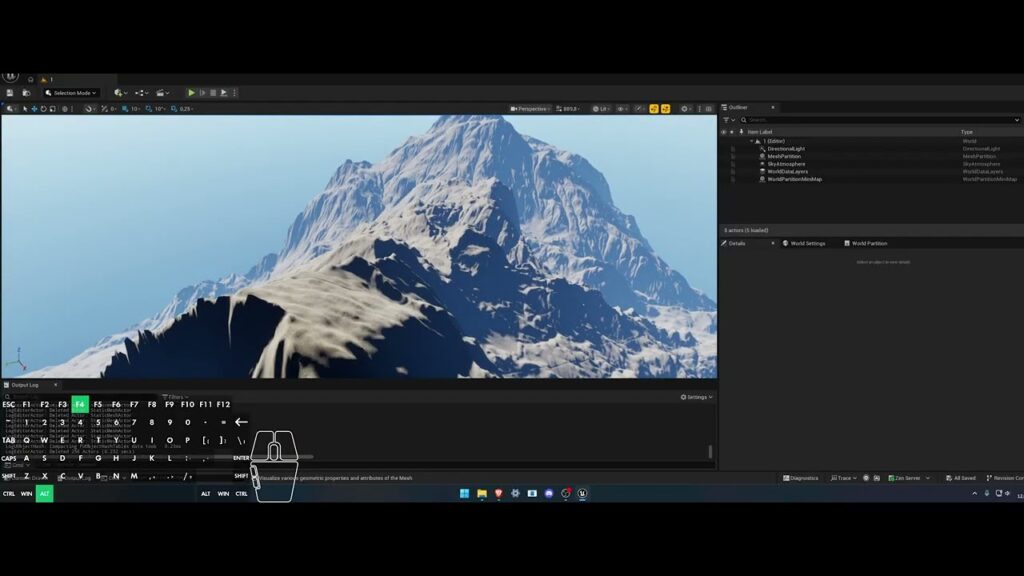
Procedural Vegetation Editor (PVE) Improvements in UE 5.8 Preview
The Procedural Vegetation Editor receives extensive upgrades in Unreal Engine 5.8 Preview.
Epic’s goal with PVE improvements is to streamline the creation of highly detailed vegetation ecosystems directly inside Unreal Engine without requiring excessive reliance on external tools.
The editor now provides improved procedural controls, better scattering systems, enhanced species variation handling, more efficient environmental rule systems, and expanded ecosystem simulation behavior.
Vegetation placement can react dynamically to environmental variables such as moisture, elevation, terrain angle, density masks, biome logic, and sunlight exposure.
Developers can build forests, jungles, wetlands, grasslands, deserts, and stylized ecosystems more efficiently than before.
The upgraded workflows are particularly important because vegetation is one of the most performance-intensive and labor-heavy aspects of large-world game production.
Epic is positioning PVE as a scalable solution for next-generation world creation.
Nanite-Ready Vegetation in Unreal Engine 5.8: Creating High-Quality Plants In-Editor
Nanite-ready vegetation workflows represent another major leap forward in UE 5.8 Preview.
Developers can now generate high-fidelity vegetation assets directly in-editor while maintaining compatibility with Nanite rendering systems. This allows foliage assets to contain dramatically more geometric detail than traditional vegetation pipelines permitted.
Historically, foliage relied heavily on alpha cards and aggressive LOD systems because rendering dense geometry at scale was too expensive. Nanite changes this equation by allowing highly detailed geometry to render efficiently.
UE 5.8 improves this workflow further by simplifying the creation and deployment of Nanite-compatible vegetation systems.
Artists can build trees, bushes, flowers, vines, and ecosystem assets with greater realism while reducing visual artifacts associated with older foliage rendering methods.
This also improves lighting quality because true geometry interacts with global illumination, shadows, reflections, and occlusion more accurately than flat card-based foliage systems.
The result is more cinematic vegetation rendering, especially in dense forests and photorealistic environments.
Importing Vegetation Meshes from DCC Tools into UE 5.8 PVE Workflows
Unreal Engine 5.8 also improves interoperability between Digital Content Creation tools and the Procedural Vegetation Editor pipeline.
Artists working in applications such as Blender, Maya, Houdini, or SpeedTree can import vegetation meshes more efficiently into UE 5.8 workflows while preserving procedural metadata and ecosystem compatibility.
This reduces friction between external asset creation and Unreal Engine deployment.
Developers can bring in custom vegetation libraries, Nanite-ready foliage meshes, procedural plant systems, or stylized vegetation assets without rebuilding major portions of the ecosystem logic manually.
Import pipelines now better support scalable vegetation management and procedural adaptation.
For Blender artists, these workflows pair particularly well with advanced asset ecosystems and procedural environment pipelines. Teams working on cinematic vegetation rendering or advanced Unreal Engine environment production may also benefit from optimized asset management tools such as PixelHair by Yelzkizi when building detailed character-focused scenes alongside high-density vegetation worlds.

MetaHuman Crowds Plugin in UE 5.8: Scaling from Tens to Thousands of Characters
MetaHuman Crowds is one of the most technically ambitious additions in UE 5.8 Preview.
The new plugin is designed to scale realistic digital human rendering from small groups into thousands of simultaneously active crowd characters.
Traditional high-quality MetaHuman rendering has historically been extremely resource-intensive. Rendering large crowds using cinematic-quality humans often required aggressive compromises.
MetaHuman Crowds introduces scalability systems that optimize animation, LOD behavior, shader complexity, character variation, and rendering management.
This enables stadium crowds, city populations, cinematic battle scenes, live events, simulations, and virtual production environments at scales previously difficult to achieve using high-quality digital humans.
Epic’s broader strategy appears focused on bridging the gap between hero-quality MetaHumans and scalable crowd simulation systems.
This has major implications for film production, sports simulation, open-world games, virtual concerts, metaverse applications, and cinematic storytelling.
Mesh to MetaHuman Updates in 5.8: Head and Body Conforming (Simultaneous Option)
Mesh to MetaHuman workflows continue evolving in UE 5.8.
One of the biggest updates is simultaneous head and body conforming. Earlier workflows focused primarily on facial conversion, but UE 5.8 expands the process to better support full-character reconstruction.
Developers and artists can now conform custom scans, sculpted meshes, or photogrammetry data to MetaHuman standards more efficiently.
This significantly improves digital double creation, stylized character adaptation, and custom avatar workflows.
The simultaneous conforming option also streamlines iteration because creators no longer need separate disconnected processes for head and body alignment.
This helps preserve anatomical consistency and accelerates character production pipelines.
Studios focused on virtual humans, digital actors, or next-generation RPG character systems benefit heavily from these improvements.
MegaLights in Unreal Engine 5.8: What “Production Ready” Means for Lighting Performance
MegaLights reaching “production ready” status is one of the most important rendering milestones in UE 5.8 Preview.
MegaLights are designed to handle scenes containing extremely high numbers of dynamic lights while maintaining stable performance and scalability.
Traditional real-time rendering pipelines often struggle when scenes contain many overlapping dynamic lights. Performance drops rapidly due to shading complexity and shadow calculations.
MegaLights significantly improves this scenario by optimizing light evaluation, visibility calculations, and rendering efficiency.
For developers, “production ready” means the system has matured beyond experimental testing and is now stable enough for serious project deployment.
This is especially important for cyberpunk cities, nighttime environments, interiors with dense lighting setups, virtual production stages, and cinematic sequences.
Combined with Lumen and Nanite, MegaLights helps Unreal Engine move closer to film-quality lighting workflows in real time.
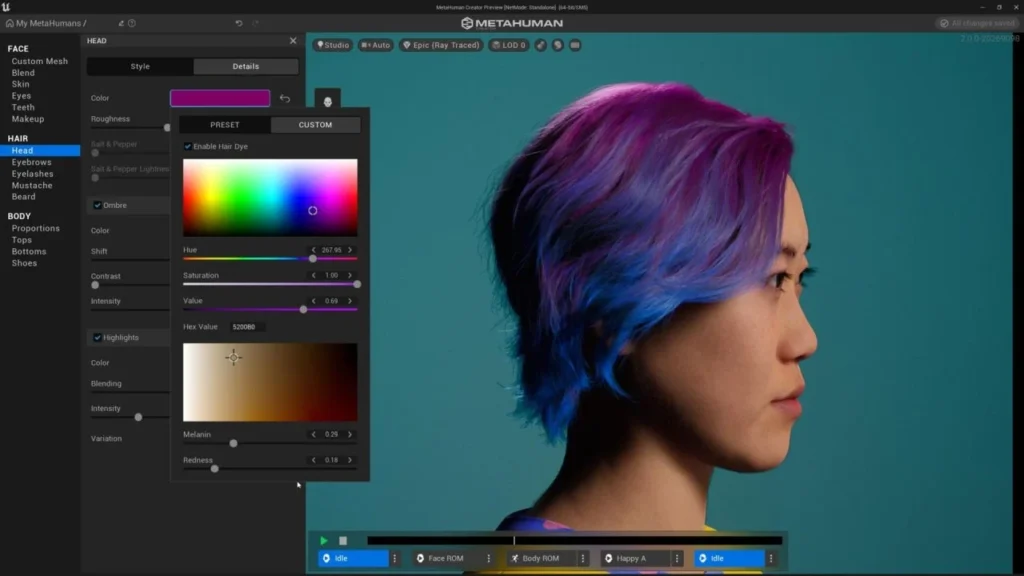
Control Rig Physics Beta in UE 5.8: New Features for Animators and Riggers
Control Rig Physics Beta expands animation proceduralism inside Unreal Engine.
Animators and riggers can now integrate more advanced physics behavior directly into Control Rig systems, enabling dynamic secondary motion, procedural reactions, physically responsive rigs, and simulation-enhanced animation workflows.
This reduces reliance on external simulation passes and improves real-time iteration.
Characters, creatures, cloth systems, props, mechanical rigs, and environmental animation systems can all benefit from procedural physics integration.
Because Control Rig operates natively inside Unreal Engine, teams gain faster iteration speed compared to traditional export-heavy pipelines.
The Beta improvements also make Unreal Engine increasingly attractive for animation-centric productions, cinematics, and virtual production work.
Direct Mesh Controls (DMC) in UE 5.8: Control Rig Controls Directly on Skeletal Mesh
Direct Mesh Controls introduce a more intuitive rig interaction workflow.
With DMC, artists can manipulate Control Rig systems directly on Skeletal Mesh surfaces instead of relying exclusively on separate control widgets or abstract rig interfaces.
This improves usability, reduces viewport clutter, and speeds up animation workflows.
Animators can interact with characters more naturally because controls are visually integrated with the mesh itself.
The workflow is especially valuable for facial animation, deformation refinement, posing, and cinematic animation tasks.
Direct Mesh Controls also align with Epic’s broader push toward more artist-friendly workflows that reduce technical friction between tools and creative output.
MetaHuman Animator 5.8 Preview: Linux and MacOS Support Details
MetaHuman Animator support expands significantly in Unreal Engine 5.8 Preview.
Epic is extending compatibility beyond traditional Windows-centric workflows by introducing broader Linux and macOS support.
This is a major development for cross-platform studios and creator pipelines.
MetaHuman Animator enables high-quality facial animation capture using video input and machine-learning-driven facial solving technology.
The expanded platform support allows more creators to integrate MetaHuman facial pipelines into existing production environments without maintaining Windows-exclusive infrastructure.
Linux support is particularly important for VFX studios, rendering farms, and enterprise pipelines that rely heavily on Linux-based infrastructure.
macOS compatibility also improves accessibility for independent creators and cinematic artists working inside Apple ecosystems.

UE 5.8 Steam Frame Support (Experimental): What Developers Need to Know
Unreal Engine 5.8 Preview includes experimental Steam Frame support, signaling potential future expansion into XR and immersive display ecosystems.
Although details remain limited during the preview phase, Steam Frame support appears focused on improving compatibility with next-generation display technologies, immersive rendering environments, and advanced XR hardware integrations.
Because the feature remains experimental, developers should expect limitations, API changes, and incomplete tooling during the preview cycle.
Studios exploring VR, XR, simulation systems, virtual production, or immersive cinematic workflows may still find the feature valuable for early testing and pipeline planning.
Epic’s inclusion of Steam Frame support also demonstrates continued investment in expanding Unreal Engine’s compatibility with evolving hardware ecosystems.
Frequently Asked Questions (FAQs)
- Is Unreal Engine 5.8 Preview stable for commercial games?
UE 5.8 Preview is primarily intended for testing and evaluation. Developers should avoid shipping final commercial projects using preview builds because APIs, rendering systems, and plugins may still change before the final release. - What is Mesh Terrain in Unreal Engine 5.8?
Mesh Terrain is a new terrain workflow that uses mesh-based terrain systems instead of traditional heightmap-only landscapes, enabling more complex terrain geometry and better Nanite integration. - Does UE 5.8 improve procedural generation workflows?
Yes. Unreal Engine 5.8 significantly improves Procedural Content Generation systems, manual editing workflows, terrain integration, and ecosystem scalability. - What are MegaLights in Unreal Engine 5.8?
MegaLights are advanced lighting systems designed to support extremely large numbers of dynamic lights while maintaining improved rendering performance. - What is the MetaHuman Crowds plugin?
MetaHuman Crowds is a new scalability system that allows developers to render and manage large populations of MetaHuman characters efficiently. - Can Linux users run MetaHuman Animator in UE 5.8?
Yes. Unreal Engine 5.8 Preview expands MetaHuman Animator support to Linux alongside macOS compatibility improvements. - Does UE 5.8 improve Nanite vegetation workflows?
Yes. UE 5.8 adds better Nanite-ready vegetation creation systems and improved procedural vegetation editing pipelines. - What are Direct Mesh Controls in UE 5.8?
Direct Mesh Controls allow animators to manipulate Control Rig systems directly on Skeletal Meshes for faster and more intuitive workflows. - Is Steam Frame support fully finished in UE 5.8?
No. Steam Frame support is currently experimental and intended for early testing rather than final production deployment. - Where can developers download Unreal Engine 5.8 Preview?
Developers can download the preview through the Epic Games Launcher or compile source builds through Epic’s GitHub repository.

Conclusion
Unreal Engine 5.8 Preview represents one of the most ambitious UE5 updates so far, combining major rendering improvements, procedural generation advancements, animation workflow upgrades, MetaHuman scalability systems, and next-generation environment creation tools into a single release cycle.
Mesh Terrain and advanced PCG integration could fundamentally reshape large-world production workflows, while MegaLights, Nanite vegetation, and MetaHuman Crowds continue pushing Unreal Engine closer to real-time cinematic fidelity at scale.
At the same time, workflow-focused upgrades such as PCG manual edits, Direct Mesh Controls, Control Rig Physics Beta, and expanded MetaHuman Animator platform support show Epic prioritizing creator efficiency alongside graphical innovation.
Although the preview build remains a testing environment rather than a final production release, Unreal Engine 5.8 already signals where Epic intends to push real-time development pipelines next: larger worlds, denser environments, more scalable digital humans, faster procedural workflows, and increasingly film-quality rendering performance in real time.
Sources and Citations
- Epic Games Unreal Engine Download Page
- Link: https://www.unrealengine.com/download
- Citation: Epic Games official Unreal Engine distribution platform and installation documentation.
- Epic Games Unreal Engine GitHub Repository
- Link: https://github.com/EpicGames/UnrealEngine
- Citation: Official Unreal Engine source repository containing UE 5.8 Preview source access and Linux build workflows.
- Note: You must link your Epic Games account to your GitHub account to access this private repository.
- Epic Games Unreal Engine Documentation
- Link: https://dev.epicgames.com/documentation/en-us/unreal-engine
- Citation: Official Unreal Engine 5.8 documentation and feature reference materials.
- MetaHuman Official Website
- Link: https://www.unrealengine.com/metahuman
- Citation: Official MetaHuman platform documentation covering MetaHuman Animator, Mesh to MetaHuman, and MetaHuman ecosystem workflows.
- PixelHair by Yelzkizi
- Link: https://www.unrealengine.com/marketplace/en-US/product/pixelhair
- Citation: PixelHair asset ecosystem referenced for advanced Unreal Engine cinematic and character workflow integration.
Recommendations
- Ahoge Hair: Meaning, Cultural Significance, and 3D Modeling Techniques
- Every Marvel & DC Voice Actor in INVINCIBLE: Full Cast Crossover Guide
- Top Ways to Make 3D Characters: Blender, FaceGen, Metahuman, and CC3 Compared
- The Blood of Dawnwalker Studio Uses AI, but There’s No AI Assets in the Game: Rebel Wolves Explains
- Jacksepticeye Co-Produces Bloodborne Animated Movie: Everything We Know About Sony’s R-Rated Animated Adaptation
- Pokémon Scalpers Are Now Reselling Limited Edition Pop-Tarts: Target Drop, Prices, and How to Find Them
- BioShock 4 Has Taken So Long to Release
- The Best Laptops for Gaming and Schoolwork in 2026 (student-Friendly Buying Guide)
- World of Warcraft Just Got Its Most Expensive Housing Microtransactions Yet: $75 Cozy Treehouse Retreat Bundle Explained
- Bluey and “Bluey’s Best Day Ever!” Have Arrived at Disneyland – Everything You Need to Know About the New Interactive Experience



































































































