










In This Article (9 sections)
Unrailed 2: Back on Track Gameplay and Co-Op Overview
Unrailed 2: Back on Track is a fast-paced cooperative survival and strategy game centered around building a functioning railway system while the train is constantly moving forward. Players must work together in real time to gather resources, craft and place tracks, and ensure the train does not derail as it travels through increasingly complex environments.
The game builds on the original formula by expanding biome variety, introducing more dynamic hazards, and adding deeper progression systems. Unlike traditional strategy games where players have unlimited time, Unrailed 2 forces constant decision-making under pressure. Every second counts, and coordination becomes the difference between success and failure.
At its core, the gameplay loop revolves around gathering wood, stone, and other materials, crafting rails, and extending the train’s path ahead of its movement. The challenge escalates as terrain becomes more hostile and unpredictable, requiring teams to adapt quickly and communicate efficiently.
Co-op gameplay is the foundation of Unrailed 2: Back on Track, and success depends heavily on teamwork. Each player typically takes on a loose role, although roles are not strictly fixed. Effective teams naturally divide responsibilities such as resource gathering, track placement, and obstacle management.
Communication is essential. Players should constantly call out resource shortages, upcoming terrain changes, and train direction adjustments, as even small delays can lead to derailment or resource bottlenecks. The most effective co-op teams maintain a steady rhythm: one or two players focus on harvesting materials, while others stay near the track-building zone. As the train speeds up, this balance becomes more important, requiring rapid adaptation and role switching.
Playing solo is possible but significantly more difficult, as players must multitask constantly without support. Co-op is designed to scale difficulty in a way that rewards coordination over individual skill.

Core Railway Building, Route Planning, and Resource Management
The central objective in Unrailed 2: Back on Track is to construct an endless railway path while a constantly moving train advances forward. The train never stops, meaning players must always stay ahead of it by laying tracks in real time. This turns a simple construction task into a high-intensity survival loop where every decision affects the entire team’s progress.
The challenge lies in balancing speed and accuracy. Players must mine resources, craft rails, and place them strategically to avoid dead ends or inefficient routes. Poor planning leads to wasted materials and eventual derailment. As the game progresses, the train increases in speed, forcing players into a cycle of constant optimization. Early stages allow for slower, more deliberate planning, while later stages demand near-perfect execution under pressure.
Survival depends heavily on efficient train-building strategies. One of the most effective approaches is to maintain a buffer of pre-built tracks ahead of the train’s path. This buffer prevents sudden terrain changes from causing derailments and gives players more time to react. Building too close to the train increases pressure and reduces decision-making time.
Route planning is a dynamic process that evolves as new terrain is revealed. Because the map is partially procedural, no two runs are identical, so players cannot rely on memorization. Instead, they must analyze the terrain in real time and decide whether to take longer but safer paths or risk shorter, more dangerous routes. Effective route planning often involves scouting ahead whenever possible, with one player temporarily moving forward to identify hazards and resource nodes so the team can prepare accordingly.
Resource management is just as important as track placement. Without a steady supply of materials, track construction halts and the train quickly derails. Wood and stone are the primary resources, and players must constantly balance gathering, transportation, and crafting. Efficient teams often assign dedicated gatherers who focus on mining and returning materials to the crafting zone.
Resource batching is another key strategy. Instead of crafting individual rails constantly, teams should gather large quantities of materials and produce multiple tracks at once. This reduces downtime and improves efficiency. Carrying efficiency can also be improved by optimizing movement routes between resource nodes and the train, avoiding unnecessary detours, and prioritizing high-yield resource clusters. As resource scarcity becomes more pronounced later in the game, early-game stockpiling becomes an essential survival tactic.
Smart placement is critical throughout every run. Straight lines are efficient, but they are not always optimal; curved paths can help navigate difficult terrain and conserve resources. Good planning reduces wasted materials and ensures smoother progression through increasingly difficult sections.
Biomes, Environmental Hazards, and Boss Fight Strategy
Biomes in Unrailed 2: Back on Track are designed to significantly alter gameplay conditions. Each biome introduces unique environmental hazards, terrain structures, and resource distribution patterns, forcing teams to adjust their strategy as conditions change.
Forest biomes are typically the easiest, offering abundant wood but dense obstacles like trees and rivers. Desert biomes reduce visibility and introduce heat-based hazards that slow players down. Snow biomes add slippery terrain, making precise movement more difficult. Later biomes become increasingly complex, combining multiple hazard types such as moving terrain, aggressive wildlife, and unpredictable weather systems. Some biomes also restrict resource availability, forcing players to travel further from the track to gather materials.
Understanding biome-specific challenges is crucial for long-term survival. Teams that fail to adapt their strategy to environmental conditions will quickly fall behind, especially as the train speeds up and resource demands increase.
Boss encounters introduce sudden spikes in difficulty and require coordinated team responses. These bosses often appear at key progression points and attempt to disrupt the railway system through destruction, obstruction, or environmental manipulation. Some bosses may block track placement, while others destroy existing rails or spawn hazards that force players to divert resources away from construction.
The key to winning boss encounters is prioritization. Teams must decide whether to continue building or temporarily focus on neutralizing the boss threat. In most cases, maintaining train momentum is more important than fully eliminating the boss. Successful strategies often involve assigning one or two players to manage the boss while the rest of the team continues railway construction, ensuring that progress does not stall completely.
Train Upgrades, Character Progression, and Branching Path Choices
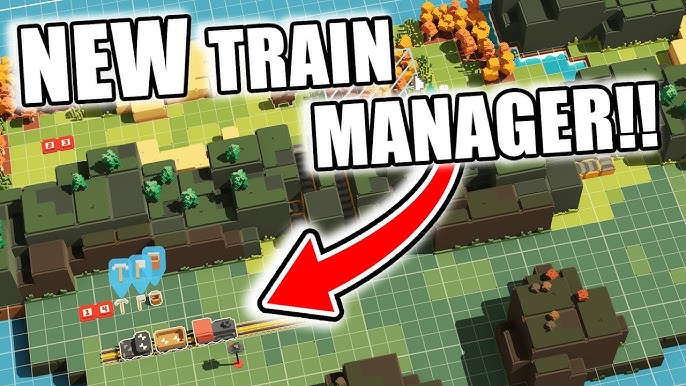
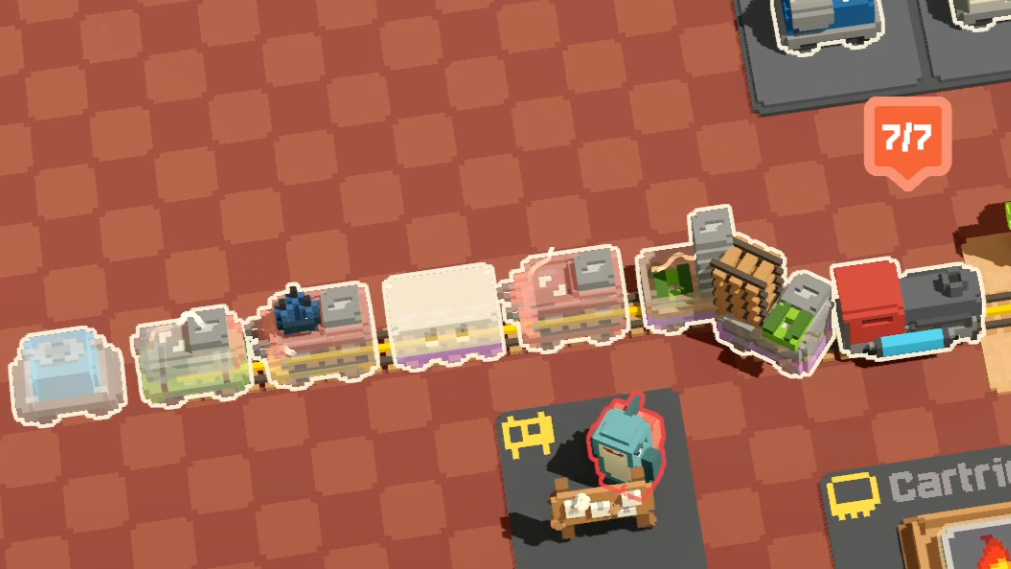
Upgrading the train in Unrailed 2: Back on Track is essential for long-term progression. Engine upgrades typically increase speed, durability, or efficiency, while wagons provide specialized functions such as extra storage or crafting enhancements. Faster engines increase difficulty, but they also reward skilled teams with higher progression potential. Storage wagons allow teams to carry more materials, reducing downtime during resource-gathering phases.
Some upgrades introduce utility features such as improved braking systems or enhanced resistance to environmental hazards. Choosing the right upgrade path depends on the team’s playstyle and how well players can manage the added pressure that comes with stronger, faster progression.
Character progression adds another layer of long-term depth to the gameplay. Unlike run-based upgrades, these improvements persist across sessions, allowing players to gradually become more efficient over time. Upgrades may include faster movement speed, improved resource-gathering efficiency, or enhanced crafting speed. These improvements help offset the increasing difficulty in later stages.
Permanent progression encourages repeated playthroughs and rewards consistent performance. It also allows new players to gradually scale up their skill level without being overwhelmed immediately. Branching paths further increase replayability by offering multiple route options during each run, with paths often varying in difficulty, resource availability, and risk level.
Choosing a branch is a strategic decision. Safer paths may offer fewer rewards, while riskier routes provide more resources but include greater hazards. This system ensures that no two playthroughs are identical, encouraging experimentation and long-term engagement.
Co-Op Roles, Beginner Mistakes, and Handling Obstacles
Team roles in Unrailed 2: Back on Track are flexible but essential for optimizing performance. The most common roles include gatherers, builders, scouts, and support players. Gatherers focus on collecting raw materials, builders stay near the train and ensure continuous track placement, scouts move ahead to identify terrain and resource locations, and support players manage emergencies, repair disruptions, and assist where needed.
The most efficient teams rotate roles dynamically depending on situational demands. This flexibility prevents bottlenecks and ensures that no single player becomes overwhelmed. It also helps teams respond more effectively when obstacles, random events, or unexpected hazards disrupt the flow of a run.
New players often make mistakes that significantly reduce survival time. One of the most common errors is poor resource management, especially failing to gather enough materials during the early stages. Another frequent mistake is overcrowding the track-building area, which leads to confusion and misplaced rails. Beginners also tend to chase resources too far from the train, causing delays.
Ignoring biome-specific hazards is another critical error. Each environment requires different strategies, and treating all areas the same leads to quick failure. Obstacles and random events are designed to disrupt momentum and force adaptation, including fallen trees, rivers, rock formations, or sudden environmental shifts.
The best approach is proactive removal. Players should clear obstacles before they reach the train’s path whenever possible. In emergency situations, quick rerouting is necessary. Random events often require immediate team coordination, and assigning roles during chaos ensures that at least one player maintains track progress while others handle disruptions.

Frequently Asked Questions (FAQs)
- What is Unrailed 2: Back on Track about?
Unrailed 2: Back on Track is a cooperative survival and strategy game where players must build railway tracks while a train continuously moves forward. The challenge comes from gathering resources, crafting rails, clearing obstacles, and adapting to dangerous biomes before the train reaches the end of the track. - Can you play Unrailed 2 solo?
Yes, Unrailed 2 can be played solo, but it is significantly more difficult. Since one player has to handle gathering resources, crafting tracks, placing rails, scouting, and responding to hazards, solo play requires faster decision-making and constant multitasking. - What is the main objective?
The main objective is to keep the train moving safely by continuously building tracks ahead of it. Players must prevent derailment by managing resources, planning routes, and reacting quickly to terrain changes, hazards, and unexpected events. - Are there different biomes?
Yes, the game includes different biomes, and each one changes how players approach a run. Some areas may have dense obstacles, limited resources, slippery terrain, reduced visibility, or environmental hazards that force teams to adjust their strategy. - How important is teamwork?
Teamwork is extremely important because the game is built around cooperation. Efficient teams divide responsibilities between gathering, building, scouting, and handling emergencies, making it much easier to keep the train on track as the difficulty increases. - Do bosses affect gameplay?
Yes, bosses can significantly disrupt gameplay by blocking track placement, destroying rails, or creating hazards that slow the team down. During these encounters, players need to decide whether to focus on the boss, continue building, or split responsibilities to keep progress from stopping completely. - What upgrades are available?
Players can upgrade engines, wagons, and character abilities. Engine and wagon upgrades may improve speed, durability, storage, crafting, or utility, while character upgrades can improve movement, gathering, or crafting efficiency over time. - Is resource management important?
Yes, resource management is one of the most important parts of the game. Without enough wood, stone, or other required materials, players cannot craft tracks, which quickly leads to derailment. Good teams gather early, stockpile when possible, and avoid wasting materials on poor routes. - Does the game have replayability?
Yes, Unrailed 2 has strong replayability because of procedural generation, branching paths, different biomes, hazards, upgrades, and changing team strategies. Since no two runs play out exactly the same way, players are encouraged to experiment and improve over multiple attempts. - What happens if the train derails?
If the train derails, the run ends, and players must restart from the beginning or from the last checkpoint, depending on the mode. This makes preparation, communication, and quick reactions important for surviving longer runs.

Conclusion
Unrailed 2: Back on Track delivers a high-intensity cooperative experience built around teamwork, rapid decision-making, and adaptive strategy. Its blend of procedural environments, escalating difficulty, and real-time construction mechanics creates a gameplay loop that is both chaotic and deeply engaging. Mastery requires coordination, resource discipline, and the ability to respond quickly to changing conditions across multiple biomes and threat types.
Sources and Citations
- Steam Official Page – Unrailed 2: Back on Trac
https://store.steampowered.com/app/2211170/Unrailed_2_Back_on_Track/ - Steam (Developer description / Early Access features & systems)
https://store.steampowered.com/app/2211170/Unrailed_2_Back_on_Track/ - Metacritic Game Details (official summary of mechanics & structure)
https://www.metacritic.com/game/unrailed-2-back-on-track/details/ - Gamepressure – Gameplay & mechanics breakdown
https://www.gamepressure.com/games/unrailed-2-back-on-track/z66835 - Gematsu – Official announcement + developer feature overview
https://www.gematsu.com/2023/11/unrailed-2-back-on-track-announced-for-pc - Gamepressure – genre and mechanics framing (real-time resource/track management)
https://www.gamepressure.com/games/unrailed-2-back-on-track/z66835 - Metacritic description (procedural co-op + RTS-like coordination loop)
https://www.metacritic.com/game/unrailed-2-back-on-track/details/ - Steam Tags & design framing (strategy, survival, co-op real-time chaos systems)
https://store.steampowered.com/app/2211170/Unrailed_2_Back_on_Track/
Recommended
- Zorro: Exclusive New Trailer for French Series Starring Jean Dujardin, Everything We Know
- Banijay Group Acquires Tipico Group: Deal Details, New Banijay Gaming Division, and What It Means for European Sports Betting
- Christopher Nolan Confirms The Odyssey Runtime Is Shorter Than Oppenheimer But Still an “Epic Film” ([AP Summer Movie Preview])
- The Ivors Academy Announces Ivors Composer Awards With New Video Game Music Category – Everything You Need to Know
- Mina the Hollower: the Duchess Boss Guide, Phase 1 & Phase 2 Strategy, Attack Patterns, Weaknesses, and Pro Tips
- Samson Coming To Consoles This Fall: Everything We Know
- All Actors and Cameos in 007 First Light (2026) – Full Cast List, Voice Actors, Celebrity Cameos, and Hidden Appearances Explained
- Skibidi Brainrot with Metahuman: How to Recreate Viral Trends Using Unreal Engine 5



































































































