










In This Article (8 sections)
Vampire Crawlers Overview, Release Context, and Review Verdict
Vampire Crawlers: The Turbo Wildcard from Vampire Survivors enters an oversaturated roguelike deckbuilder space, but Vampire Survivors developer Poncle gives the genre a fresh spin with a spin-off that is hard to put down. That fresh spin is not simply a matter of placing familiar weapons on cards. Vampire Crawlers rebuilds the original game’s snowballing power fantasy as a first-person dungeon crawler in which card order, mana management, route planning, character synergy, permanent upgrades, weapon evolutions, and deliberately overpowered combinations all feed into one compulsive progression loop.
Developed by Poncle and Nosebleed Interactive and published by Poncle, Vampire Crawlers launched on April 21, 2026. Its official description calls it a turn-based, card-driven “blobber” with roguelite elements, while its central Turboturn system allows players to think through every card or play an entire hand at high speed without sacrificing the accuracy of the outcome.
The most impressive achievement is how naturally the Vampire Survivors formula survives the genre change. The perspective, combat model, and level structure are different, but the essential rhythm remains recognizable: begin with modest tools, collect experience, acquire increasingly absurd upgrades, discover interactions that appear stronger than intended, and eventually turn the screen into a celebration of projectiles, multipliers, damage numbers, and collapsing monsters.
Vampire Crawlers is a single-player, turn-based roguelite deckbuilder presented through a first-person, grid-based dungeon-crawling perspective. Poncle describes it as a card-driven “blobber,” a term associated with old-school role-playing games in which a party moves through enclosed environments as a single unit. Instead of controlling several visible adventurers, the player sees the dungeon through one shared viewpoint and advances one square at a time.
The game is a spin-off rather than a sequel to Vampire Survivors. Poncle founder Luca Galante explained that its purpose is to take the original game’s core principles, including accessibility, immediacy, affordability, replayability, and spectacle, and apply them to another established genre. Familiar characters, enemies, locations, stats, weapons, treasure chests, evolutions, humor, and musical style return, but they are reorganized around tactical card play.
Each run begins with a selected Crawler and a small starting deck. Players enter a multi-floor dungeon, examine the map, choose routes, fight enemy formations, earn experience, acquire cards, collect gems, open chests, improve statistics, and search for the shovel that allows access to the next floor. A typical level is divided into five floors, with enemy locations, items, and floor bosses visible on the map, allowing players to plan the sequence in which they approach encounters.
Combat uses familiar Vampire Survivors equipment in card form. Knife, Whip, Cross, Garlic, Santa Water, Spinach, Pummarola, Spellbinder, Duplicator, and other recognizable items become attacks, buffs, healing tools, resource generators, or components in weapon evolutions. That reuse gives returning players immediate context without preventing newcomers from learning the systems independently.
The result is neither a conventional dungeon crawler nor a conventional deckbuilder. Exploration establishes the order and risk of encounters, while combat turns card sequencing into an escalating combo puzzle. The two halves support the same goal: building a machine that begins sensibly and ends by overwhelming the rules.
Vampire Crawlers is worth playing in 2026, especially for players who enjoy deckbuilding but prefer faster progression, clearer synergies, and a less punishing structure than many traditional roguelikes. It rewards thoughtful construction without demanding that every run become a slow exercise in probability calculation. Its low price, substantial unlock system, strong presentation, and unusual combo mechanic make it one of the more distinctive deckbuilders released in 2026.
The value proposition is particularly strong. Poncle set the standard price at £8.99, $9.99, €9.99, or ¥1,200, with possible regional and console variations. The developer estimates that completing the game takes approximately 20 to 30 hours, with additional time required to obtain every unlock. That is a substantial amount of structured content before accounting for experimental runs, character challenges, achievement hunting, or Endless Mode.
Player reception also indicates that the central design has connected with a large audience. At the time of research in July 2026, Steam showed 94% positive English-language reviews and 94% positive recent reviews. Steam’s all-language total was listed as Overwhelmingly Positive. Because user-review percentages can change, those numbers should be understood as a July 2026 snapshot rather than a permanent rating.
Professional reviews reached a similar conclusion. GameSpot awarded Vampire Crawlers an 8 out of 10, praising its combo multipliers, accessible strategy, familiar content, and intentionally unbalanced endgame. Game Informer also scored it 8 out of 10, while TheXboxHub gave it 4.5 out of 5. The recurring criticism was not that the systems fail, but that powerful permanent upgrades and repeatable draw-and-mana engines can eventually reduce the difficulty.
That reduced late-game resistance will divide players. Anyone seeking a relentlessly difficult card game built around narrow margins may find Vampire Crawlers too generous. However, the relative lack of punishment is consistent with the Vampire Survivors philosophy. The reward for learning the systems is not merely surviving; it is becoming so powerful that combat begins to resemble a controlled fireworks display. Version 1.5 also strengthened the postgame by introducing Endless Mode. After completing the game and finding the associated Relic, players can activate Endless Mode in previously cleared dungeons, continue beyond the normal floors, and face increasingly difficult encounters without relying on a preset Jeweller configuration.
Vampire Crawlers succeeds because it understands which parts of Vampire Survivors must survive the transition. It does not preserve automatic combat, an isometric camera, or unrestricted arena movement. Instead, it preserves escalation, immediate feedback, affordable pricing, frequent progression, recognizable equipment, absurd synergy, spectacular audiovisual rewards, and the fantasy of turning a vulnerable starting character into an unstoppable engine. The final verdict is highly recommended. Vampire Crawlers is a clever, generous, and dangerously replayable spin-off that demonstrates how a crowded genre can still feel fresh when one central mechanic reorganizes every familiar idea around it.

Gameplay Loop, Turboturn System, Dungeon Exploration, and Vampire Survivors Comparisons
A Vampire Crawlers run begins with character selection. The chosen Crawler determines a four-card starting deck, and one of those cards represents the Crawler. Playing that character card applies an immediate benefit and leaves the Crawler active for a limited duration, during which an ongoing ability may trigger from certain card colors, attacks, statistics, or other conditions.
As progression systems open, the player can bring as many as three Crawlers into a run. This changes character selection from a simple choice of starting weapon into a party-building decision. A Crawler that rewards red cards may complement one that improves Amount, while another character might provide additional draw, Area, experience, healing, or duration-based benefits.
After entering a dungeon, the player moves through corridors one grid square at a time. The floor map reveals enemies, treasures, important objects, and the boss, so exploration is less about being lost and more about choosing an efficient order. Fighting ordinary enemies can provide experience and strengthen the deck before a difficult encounter, but additional battles may consume health. Rushing toward a valuable chest or sub-boss may produce an early power spike, but attempting it with an undeveloped deck can end the run.
Combat follows a recognizable deckbuilder structure. Each turn provides a hand of cards and a finite amount of mana. Cards that remain unplayed are discarded at the end of the turn, a new hand is drawn, and the discard pile is reshuffled when the draw pile is depleted. Cards can attack enemies, provide armor, restore health, increase statistics, draw additional cards, recover mana, activate a Crawler, or create other effects.
The decisive layer is card order. Playing cards in ascending mana order increases a combo multiplier that strengthens later cards. An inexpensive support card is therefore not merely a small action; it can be the first step toward a multiplied attack, heal, armor gain, maximum-health increase, or resource effect. Experience earned during encounters leads to level-ups and new rewards. Chests may offer gems, power-ups, or available weapon evolutions. Gems can alter individual cards by reducing costs, increasing damage, producing extra effects, improving draw, or enabling more specialized interactions. Certain Relics unlock additional systems, including gem slots, Arcana, evolution tracking, map information, and control over gem availability.
The run continues through successive floors until the dungeon is completed or the player is defeated. Regardless of the result, accumulated coins and completed challenges can unlock characters, cards, gems, Arcana, Relics, and permanent upgrades. Failure therefore rarely feels like a complete loss. It is usually another step toward a stronger starting position or a new mechanic.
The Turboturn system is the defining feature of Vampire Crawlers. Despite its name, it does not impose a real-time timer. Players can inspect every card, read every effect, calculate a sequence, and proceed slowly. Alternatively, they can play cards almost as quickly as they can select them. The engine preserves the logical order of every effect even when animations, projectiles, damage calculations, buffs, and triggered abilities begin overlapping.
Its foundation is the Combo Stack Relic, which is obtained during the tutorial. Once active, playing a card can empower the next card with a higher mana cost. A zero-cost card improves an eligible one-cost card; that one-cost play can improve a two-cost card; and the sequence can continue upward. Each successful step raises the multiplier applied to the next qualifying effect. The multiplier is not restricted to direct damage. A combo can improve healing from Pummarola, increase the maximum health granted by Hollow Heart, strengthen armor, enlarge a statistical buff, multiply resource generation, or magnify another utility effect. This makes support cards as important as weapons because the best target for a multiplier may depend on the encounter.
Wild cards are essential combo extenders. They can be played for free and allow the chain to continue into another cost, making it possible to stretch a sequence far beyond the ordinary zero-to-one-to-two pattern. Poncle’s official description explicitly presents stacks of 10, 20, or 30 cards as achievable goals and treats an infinite sequence as the system’s theoretical extreme.
A simple turn might begin with a zero-cost duration card, proceed into a one-cost buff, continue into a two-cost attack, and then use a Wild to preserve or redirect the chain. A more advanced deck can draw additional cards and recover mana near the end of the sequence, providing the resources to begin another climb without giving the enemy a meaningful opportunity to respond.
The system creates an important distinction between card value and sequencing value. A modest card that fills a missing mana step may contribute more to total damage than a powerful card that cannot be integrated into the chain. Likewise, reducing the cost of a card is not automatically beneficial if the change damages the deck’s cost curve. Version 1.5 made large hands easier to manage by adding sorting options based on mana cost or card color, along with a unified deck view showing cards in the hand, draw pile, and discard pile. These quality-of-life improvements are especially useful once Turboturn chains become long enough that card organization affects execution speed.
Dungeon exploration is presented from a first-person viewpoint, with movement occurring one square at a time. Floors contain enemies, chests, breakable light sources, vending or upgrade interactions, unusual objects, walls, and a boss. The map usually exposes the major points of interest, converting exploration into route optimization. The route should reflect the current deck. A weak starting hand may benefit from ordinary encounters that provide safe experience before a sub-boss. A strong early draw may justify attacking an elite enemy to obtain better rewards sooner. Chests can be delayed while the player searches for evolution components, and healing items can be left untouched until the floor has been cleared.
Enemies can sometimes be avoided, which creates a meaningful choice between safety and growth. Skipping encounters conserves health and shortens the run, but fighting everything generates more experience, levels, cards, and possible gems. A deck that avoids too much combat may reach the boss without the damage or sustain needed to win. Breakable light sources deserve attention because they can contain coins, temporary cards, or healing chicken. The Guiding Light Relic marks these objects on the map, making it easier to clear a floor systematically. Healing should not be consumed automatically; leaving chicken on the floor until after the boss can preserve health for the transition to the next level.
Bosses test more than raw damage. Many ordinary enemy formations can be erased by long draw-and-mana loops, but bosses may retaliate after a certain number of cards have been played. This makes card efficiency, armor, healing, and amplified finishers more important than endlessly cycling inexpensive actions. The five-floor structure gives each dungeon a clear arc. Early floors develop the deck, middle floors reveal whether its engine is coherent, and later floors test whether it can survive scaling enemies and boss mechanics. Finding the shovel opens the way downward, although Poncle’s surreal presentation does not always treat “down” as a strict geographical rule.
Vampire Survivors places the player in a top-down arena where weapons activate automatically and enemy waves grow until the character is overwhelmed or the run reaches its scheduled conclusion. Most immediate decisions concern positioning and level-up choices. Vampire Crawlers retains the same escalation but replaces real-time movement and automatic attacks with grid exploration and direct card sequencing.
The two games share more than visual assets. Both are built around rapid feedback, frequent unlocks, recognizable statistics, dramatic power growth, weapon evolutions, treasure chests, character-specific bonuses, repeated runs, and the pleasure of discovering combinations that can dominate entire screens. Poncle has not merely transferred the characters into an unrelated card game; it has translated the original progression philosophy into a format where players personally trigger every step of the destruction.
The difference is the scale of decision-making. Vampire Survivors asks players to assemble a build and then watch that build operate continuously. Vampire Crawlers asks them to assemble the build and execute it turn by turn. The original offers the satisfaction of macro-level planning, while the spin-off adds the smaller tactical pleasure of determining which card should open a sequence, which effect deserves the largest multiplier, whether to save mana, and when to stop extending a chain.
Exploration also changes the pace. Instead of circling a large open map while enemies converge, players examine compact dungeon floors, decide whether to avoid or confront enemies, and choose when to claim treasures. The map usually provides enough information to make routing a strategic problem rather than a navigation test. Vampire Crawlers is consequently more deliberate, but it is not necessarily slower. Once a deck becomes reliable, animations can stack while cards are played rapidly, allowing an optimized hand to resolve with the audiovisual intensity associated with Vampire Survivors. The player may still pause and calculate every interaction, but the game does not require that pace.
The strongest connection is emotional rather than structural. Both games begin with vulnerability and end by encouraging the player to feel impossibly powerful. Vampire Crawlers preserves that transformation while adding more control over how the final spectacle is produced.

Cards, Combos, Evolutions, Characters, Progression, and Permanent Upgrades
There is no single universally best Vampire Crawlers card because value depends on the selected Crawlers, available gems, Arcana, current dungeon, and the mana curve of the deck. The strongest decks usually contain several functional layers rather than a collection of individually powerful attacks. The first layer is a reliable combo opener. Zero-cost cards are valuable because they start ascending sequences without consuming mana. Spellbinder is one of the strongest examples: it costs zero mana and increases Duration, making it useful both as a combo starter and as a way to keep Crawler effects active longer. In builds that depend on persistent Crawler abilities, this combination of tempo and scaling can be more important than immediate damage.
The second layer is resource continuity. Cards that draw, restore mana, or increase mana capacity allow a turn to continue after the starting hand should have ended. Any Tome can be valuable for this purpose, while Sharp Mind is a strong early Arcana because it carries unused mana into the next turn. A resource card placed late in a multiplied chain can generate enough draw or mana to support another sequence. The third layer is scalable support. Spinach improves Might and works particularly well with characters or attacks that benefit from repeated damage increases.
Pummarola supplies healing, while Hollow Heart can increase maximum health. Armor cards become more valuable when combined with effects that preserve armor between turns or convert accumulated defense into damage. Because Turboturn multipliers apply to support effects, these cards can produce enormous long-term value.
The final layer is a payoff. A high-cost attack should justify the mana and deck space it consumes by clearing groups, damaging bosses, or exploiting the statistics generated by earlier cards. A deck with excellent setup but no decisive finisher may cycle attractively without ending an encounter efficiently. Character synergy should guide card selection. Pasqualina benefits from purple-card play and Area, so cheap purple cards and wide attacks support her identity. Gennaro rewards red cards and increases Amount, making Knife, Spinach, and repeated projectile generation natural choices. Mortaccio benefits from blue cards, armor, Bones, Duration, and Amount.
Deck size also matters. New rewards are tempting, but every added card reduces the frequency with which key components appear. Limited rerolls, skips, and banishes can help preserve consistency after their associated upgrades are unlocked. The objective is not always to make the smallest possible deck, because stronger floors demand additional power, but every new card should serve the character engine, repair the cost curve, enable an evolution, or solve a specific defensive problem.
Gems should reinforce a card’s role rather than merely add unrelated effects. Damage multipliers belong on frequently repeated attacks or reliable finishers. Draw and mana effects are most useful on cards that appear at stable points in the combo chain. Cost-changing gems should be evaluated against the entire sequence. A card made cheaper may become individually efficient while removing the only bridge between two important costs.
One of the strongest documented builds centers on Mortaccio. He is unlocked after defeating 444 Skeletons, begins with Bone cards and an armor card, and increases Amount when blue cards are played. His strategy is to maintain his Crawler effect, generate Bones through armor interactions, and increase the number of projectiles until the deck begins functioning with minimal manual intervention. Spellbinder is a key part of that engine because its zero mana cost starts combos while its Duration increase keeps Mortaccio active.
With Mortaccio in play, applying armor adds more Bones. Those zero-cost Bones can interact with Golden Armor, while Duplicator cards increase the scale of the projectile barrage. The Your Shield My Liege Arcana makes armor persist between turns, dramatically improving both survival and any offensive effect based on armor.
The Mortaccio setup becomes more destructive with Might, Area, and Amount gems. Reverse Combo can be applied to Golden Armor so that Bone cards benefit from additional combo interactions. Decimate can make an upgraded card deal a fixed percentage of enemy health, while Triple Damage provides a straightforward multiplier. This is a specialized build, but it demonstrates how Crawler identity, card color, Arcana, gems, defense, and Turboturn sequencing can form one integrated engine.
Gennaro offers a simpler early-game combination. His starting deck includes Knife and Spinach, his abilities reward red-card play, and his kit increases Amount. Repeated Knife cards generate more attacks, Spinach raises Might, and red cards trigger his bonus damage. Gems placed on Knife amplify an already frequent action, making this an accessible route for players who want immediate offense without managing a complicated defensive loop. Pasqualina supports a different approach.
Purple cards increase her hand size, while playing her Crawler card raises Area. A strong Pasqualina deck therefore uses inexpensive purple cards to expand the hand and build a combo, then finishes with attacks that benefit from increased Area. This produces effective crowd control without giving up the ability to include a focused boss attack.
The most broadly powerful archetype is the draw-and-mana loop. Cards or gems that draw additional cards are placed near mana-generating effects, allowing the player to replace the resources spent earlier in the turn. Wilds or cost-resetting tools connect one ascending sequence to the next. When the loop becomes stable, a deck can cycle repeatedly and prevent ordinary enemies from acting. However, an infinite-looking loop is not always the correct answer.
Some bosses trigger attacks according to the number of cards played rather than the number of completed turns. Against those encounters, excessively long cycling can expose the player to repeated retaliation. Efficient combo construction and a strong payoff may be safer than extending a chain merely because additional cards are available.
Weapon evolutions return from Vampire Survivors, but Vampire Crawlers adapts them to its card-and-chest structure. When the required cards are present, interacting with a suitable chest can present one or more evolution choices. The player may select an available evolution, choose another eligible combination, or decline and cash out when the offered upgrade does not suit the build.
The currently documented evolution combinations are:
- Bloody Tear: Whip and Hollow Heart
- Holy Wand: Magic Wand and any Tome
- NO FUTURE: Runetracer and any Armor
- Thousand Edge: Knife and Bracer
- Hellfire: Flame Wand and any Spinach
- Thunder Loop: Thunder Ring and Duplicator
- Death Spiral: Axe and any Candelabrador
- Soul Eater: Garlic and any Pummarola
- Unholy Vespers: King Bible and Spellbinder
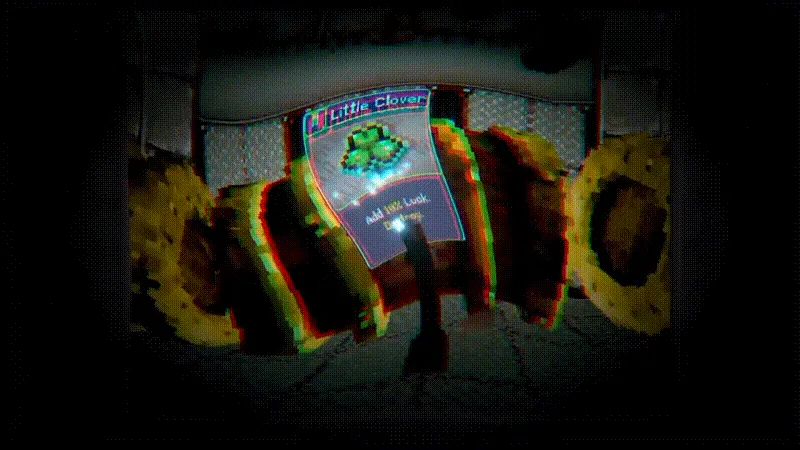
- Heaven Sword: Cross and Clover
- Gorgeous Moon: Pentagram and Crown
- Phieraggi: Phiera Der Tuphello, Eight the Sparrow, and Tirajasú
- Valkyrie Turner: Shadow Pinion and Wings
- Mannajja: Song of Mana and Skull O’Maniac
- La Borra: Santa Water and Attractorb
- Vicious Hunger: Gatti Amari and Stone Mask
- Vandalier: Peachone and Ebony Wings
The strategic complication is timing. Opening a chest immediately may waste an opportunity if the required partner card has not yet appeared. When a floor still contains enemies and possible level-ups, it can be better to continue fighting until the deck contains an eligible pair and only then return to the chest. Once the available chests on a floor are gone, another evolution opportunity may not appear until the floor boss has been defeated.
Evolutions should not be pursued automatically. A combination may be powerful in isolation but still conflict with the deck’s color synergy, mana curve, or Crawler abilities. A player using Gennaro may value Thousand Edge because Knife already supports his starting strategy. A duration-focused deck may naturally reach Unholy Vespers because Spellbinder is useful even before the evolution becomes available. Evolution planning is strongest when both component cards contribute to the run rather than existing solely as a recipe. The Grim Grimoire Relic records discovered evolutions and unions, reducing the need to memorize every pair. Version 1.5 also added indicators during level-ups when an offered card belongs to a previously discovered evolution involving something already owned.
Crawlers function as both party members and build-defining cards. A selected Crawler influences the four-card starting deck, provides initial weapons or support effects, and appears as a playable card. When that card is used, it produces an immediate statistical effect and remains active long enough to trigger a continuing passive ability. The roster documented shortly after release contained 22 Crawlers: Antonio Belpaese, Imelda Belpaese, Pasqualina Belpaese, Gennaro Belpaese, Arca Ladonna, Porta Ladonna, Lama Ladonna, Poe Ratcho, Dommario, Krochi Freetto, Pugnala Provola, Poppea Pecorina, Concetta Caciotta, Yatta Cavallo, O’Sole Meeo, Mortaccio, Bianca Ramba, Suor Clerici, Giovanna Grana, Christine Davain, Gallo, and MissingN0. Most are unlocked by completing a specified challenge and then purchased from the Tavern with coins.
Unlock requirements encourage experimentation. Pasqualina becomes available after reaching level 20 with Imelda in the Inlaid Library. Gennaro requires clearing the Mad Forest. Arca and Porta are tied to repeated Fire Wand and Lightning Ring play. Poe requires Garlic use, Mortaccio requires Skeleton defeats, and several other Crawlers are rescued from coffins in particular dungeons. MissingN0 sits at the end of a more demanding challenge involving Red Death.
Starting decks are deliberately compact. The four-card foundation lets a Crawler’s identity appear immediately while leaving enough room for the run to develop in different directions. Gennaro starts with Knife and Spinach, providing direct projectile offense and Might scaling. Mortaccio begins with Bones and armor, creating the foundation for his defensive projectile engine. Pasqualina is designed around purple-card play, hand-size growth, Area, and crowd control.
As additional party slots become available, choosing complementary Crawlers becomes as important as selecting cards. Three individually strong characters can still create an unfocused deck if their colors and trigger conditions compete. A better party has a coherent resource engine, a shared preference for certain colors or statistics, and at least one answer to bosses.
Duration deserves particular attention because Crawler cards do not necessarily remain active indefinitely. A character with a powerful trigger is only useful while present, so Spellbinder, Duration upgrades, Duration gems, or Arcana that return Crawler cards can have a larger effect than another ordinary attack.
Vampire Crawlers uses several overlapping progression systems. Gold earned during runs can purchase new Crawlers and permanent statistical improvements. Challenges and achievements unlock cards, gems, Arcana, characters, and other additions to the future reward pool. Relics introduce entire mechanics, while the Blacksmith and Jeweller provide greater control over card customization and gem availability.
Permanent upgrades include familiar Vampire Survivors statistics such as Might, Recovery, Duration, Luck, Greed, health, armor, and mana-related improvements. These bonuses gradually reduce the difficulty of earlier dungeons and make more ambitious builds viable in later stages. There are two sensible early purchasing philosophies. An economy-first approach prioritizes Greed because each rank increases coin acquisition, then invests in Might to accelerate encounters. A consistency-first approach buys Recovery for healing after encounters, Reroll for better reward control, Duration to keep Crawlers active, and then Might and Luck. Both work; the better choice depends on whether early runs are ending from insufficient health, weak damage, or poor reward selection.
Relics are among the most important unlocks because they add features rather than merely increasing numbers. Combo Stack enables ascending-cost multipliers. Gem Hammer allows gems to be added to cards. Polentír unlocks the Arcana Tent. Grim Grimoire records discovered evolutions. Stardust Anvil opens the Blacksmith’s Workshop, where additional gem slots can be added to cards. Guiding Light reveals breakable light sources, while other Relics expose enemies, alter gem frequency, accelerate gameplay, or change overkill behavior.
Arcana function as run-defining passive modifiers. Over the Top returns a Crawler to the top of the deck after it leaves, supporting characters whose activation effects should be repeated. Your Shield My Liege retains armor between turns, enabling defensive engines and armor-based damage. Sharp Mind carries unused mana forward, helping early characters access expensive cards or prepare a larger future turn.
The abundance of unlocks is a major reason failed runs remain satisfying. Even an unsuccessful attempt may complete a character requirement, reveal a card, earn enough coins for a power-up, advance an achievement, or teach an evolution pairing. This broad progression web closely resembles Vampire Survivors even though the moment-to-moment mechanics are different.

Beginner Tips, Difficulty, Replayability, Platforms, Price, and Final Recommendation
The most important beginner habit is to play cards in ascending mana order. A zero-cost card followed by a one-cost card and then a two-cost card will usually produce more total value than playing the same cards randomly. The multiplier can improve attacks, healing, armor, statistics, and maximum health, so every hand should be examined for a possible sequence before cards are committed.
The second habit is to avoid adding every reward. A card should improve the mana curve, support the selected Crawler, enable an evolution, provide missing defense, or strengthen the resource engine. An impressive but unrelated attack can make the deck less reliable by delaying the cards that actually define the build.
Early coins should solve the problem that is ending runs. Greed and Might are excellent for accelerating long-term growth, while Recovery and Reroll provide immediate safety and consistency. Upgrade points can be reset, so early purchases are not permanent mistakes. Duration is also more valuable than it first appears. Crawler cards often supply the strongest passive triggers in a build, but those benefits disappear when the character leaves play. Spellbinder, Duration gems, permanent Duration upgrades, and Arcana that recycle Crawlers can turn a brief bonus into the engine for an entire encounter.
Break every light source. Braziers, candles, and similar objects can provide coins, single-use cards, or healing chicken. After obtaining Guiding Light, use the map to verify that none remain. Avoid consuming chicken at full or nearly full health; it can be left on the floor and collected after the boss before moving onward.
Do not open every chest immediately. When pursuing an evolution, first check whether both required cards are in the deck. If a partner is missing and enemies remain, gain more levels before using the chest. An unopened chest preserves the possibility of evolving later on that floor.
Use the cash-out option when a chest, station, or reward offers nothing useful. A mismatched gem can dilute future availability or tempt the deck into an unfocused direction. Coins contribute to permanent progression and may be more valuable than an upgrade that does not support the current run. Revisit cleared dungeons deliberately. Earlier levels are useful for farming gold, leveling newly unlocked Crawlers, completing weapon-use challenges, discovering evolution combinations, and testing experimental decks with less risk. GameSpot’s beginner guidance specifically recommends combining gold runs with character and evolution objectives.
Finally, do not confuse a long turn with a good turn. Draw-and-mana loops are powerful, but bosses can punish excessive card play. Once a sequence has produced enough damage or defense to solve the encounter, ending efficiently may be safer than continuing for spectacle alone.
Vampire Crawlers begins with meaningful difficulty. Early permanent statistics are low, reward manipulation is limited, and many mechanics remain locked behind Relics. Dungeon routing matters because a premature sub-boss fight can consume too much health, while avoiding too many encounters can leave the deck underdeveloped for the final floor. The difficulty changes as progression accumulates. More rerolls improve card consistency, permanent statistics reduce early danger, stronger Crawlers establish better starting decks, and gem control increases the likelihood of obtaining transformative effects. Eventually, experienced players can create near-infinite card engines that prevent ordinary enemies from taking meaningful turns.
This power curve is both a feature and the game’s main weakness. GameSpot regarded the overpowered endgame as a reward for mastering preceding challenges. Game Informer observed that near-indestructible builds could reduce engagement, and TheXboxHub argued that the same reliable draw-and-mana patterns eventually made runs easier and more repetitive. These interpretations differ in tone, but they describe the same design outcome: Vampire Crawlers wants players to break it, and successful rule-breaking can eventually reduce tactical resistance.
Replayability comes from the interaction of 22 Crawlers, random card rewards, color-based triggers, gem modifications, Arcana, Relics, evolutions, dungeon layouts, challenge conditions, and permanent upgrades. Changing only the Crawler can alter which colors, statistics, and mana costs deserve priority. Adding multiple Crawlers creates another layer of party synergy. Players can also increase friction by disabling selected Relics or limiting upgrades. Relics are toggleable, allowing systems such as map assistance, accelerated speed, or other advantages to be removed when a more demanding run is desired.
Endless Mode provides the clearest official answer to late-game mastery. It becomes available after completion through a new Relic, works in previously cleared dungeons, increases difficulty, and allows players to continue beyond the normal floor count. The Jeweller is disabled in this mode, forcing builds to rely more heavily on ordinary random gem availability. Vampire Crawlers is therefore highly replayable, but its motivation differs from a strict high-difficulty roguelike. The appeal is less about proving that every run can be survived under severe constraints and more about discovering increasingly extravagant ways to dominate the system.
Vampire Crawlers: The Turbo Wildcard from Vampire Survivors was released on April 21, 2026. It was developed by Poncle and Nosebleed Interactive and published by Poncle. The game launched on Steam, Nintendo Switch, Xbox, and PlayStation. Storefront and review listings identify Windows, macOS, PlayStation 5, Nintendo Switch, and Xbox Series X|S versions. On Xbox, it is also available through Xbox on PC, Xbox Play Anywhere, supported handheld access, and cloud gaming through eligible Game Pass services.
The official standard price is £8.99 in the United Kingdom, $9.99 in the United States, €9.99 in Europe, and ¥1,200 in Japan. Poncle also published regional pricing and noted that console restrictions can cause small differences. Temporary sales, bundles, and subscription access can reduce the effective cost. Vampire Crawlers joined Xbox Game Pass on its release date. Microsoft listed it for cloud, Xbox Series X|S, handheld devices, and PC through Game Pass Ultimate and PC Game Pass. It was explicitly promoted as a day-one Game Pass release.
Mobile versions were still planned for later in 2026 at the time of the official FAQ. Poncle had not promised cross-save at launch, although the studio stated that it was investigating the feature in connection with the mobile ports. Controller support is included, and Steam demo progress can carry into the full Steam version.
The Turboturn system gives Vampire Crawlers its own identity. Ascending mana costs transform every hand into a sequencing puzzle, while Wilds, draw effects, mana recovery, gems, Duration, Crawler triggers, and weapon evolutions create enough flexibility for experimentation. The system is accessible at the beginning and impressively exploitable later. Dungeon exploration is comparatively simple, but it gives card battles useful context. Choosing whether to fight, when to open a chest, which route reaches a reward, and how much health to preserve adds structure without slowing the game excessively. The five-floor format also produces a satisfying arc from fragile opening deck to overpowered final build.
Its primary weakness is the same power fantasy that makes it compelling. Permanent upgrades, Arcana, gem control, and stable card loops can eventually flatten the difficulty. Players seeking endless resistance may need Endless Mode, disabled Relics, restricted upgrades, or self-imposed deck rules to maintain tension. For most players, that weakness does not outweigh the game’s strengths. At its modest price, Vampire Crawlers offers a well-developed campaign, extensive unlocks, memorable character builds, satisfying evolutions, strong replay value, and one of the most entertaining combo systems in the 2026 deckbuilder field. It is familiar without feeling derivative and tactical without becoming exhausting.

Frequently Asked Questions (FAQs)
- What type of game is Vampire Crawlers?
Vampire Crawlers is a single-player, turn-based roguelite deckbuilder mixed with a first-person, grid-based dungeon crawler. Poncle describes it as a card-driven “blobber,” meaning players move through enclosed dungeon spaces one square at a time from a first-person view. Instead of fighting in real time like Vampire Survivors, players resolve battles through card play, mana management, and combo sequencing. Each run involves exploring multi-floor dungeons, fighting enemy groups, collecting gems, earning experience, opening chests, evolving familiar Vampire Survivors weapons, and improving the deck as the run develops. Between runs, players can unlock new Crawlers, cards, Arcana, Relics, and permanent upgrades, so even failed attempts usually contribute to long-term progression. - Is Vampire Crawlers a sequel to Vampire Survivors?
No. Vampire Crawlers is a spin-off, not a direct sequel to Vampire Survivors. Poncle has presented it as a way to take the spirit and progression philosophy of Vampire Survivors and rebuild it inside a different genre. That means it uses familiar characters, weapons, enemies, items, stats, evolutions, humor, and musical style, but the actual gameplay structure is very different. Vampire Survivors is built around real-time survival, automatic attacks, and top-down movement, while Vampire Crawlers is built around turn-based card decisions and dungeon routing. The connection is strongest in the way both games start small and gradually become absurdly powerful, but Vampire Crawlers asks players to manually create that escalation through card order, deck construction, and resource management. - When was Vampire Crawlers released?
Vampire Crawlers was released on April 21, 2026. It launched on the same date across major PC and console storefronts, giving players access to the game on multiple platforms from day one. It also joined Xbox Game Pass on its release date. That day-one Game Pass availability made it easier for Xbox and PC Game Pass players to try the spin-off without buying it separately, while players on other platforms could purchase it through their respective storefronts. - What platforms is Vampire Crawlers available on?
Vampire Crawlers launched on Steam, Nintendo Switch, Xbox, and PlayStation. Confirmed versions include Windows, macOS, PlayStation 5, Nintendo Switch, Xbox Series X|S, and Xbox on PC. On Xbox, the game also supports Xbox Play Anywhere, meaning eligible players can access it across supported Xbox and PC versions through the same purchase or entitlement. Poncle’s official FAQ also stated that mobile versions were planned for later in 2026. However, mobile availability was not part of the initial launch lineup, and cross-save had not been promised at launch. Players interested in mobile versions should check the latest official platform updates before assuming feature parity with the PC or console releases. - Is Vampire Crawlers on Xbox Game Pass?
Yes. Vampire Crawlers was added to Xbox Game Pass on April 21, 2026, the same day it launched. Microsoft listed it for cloud, Xbox Series X|S, handheld access, and PC through Game Pass Ultimate and PC Game Pass. The Xbox version also supports Xbox Play Anywhere, which is useful for players who move between Xbox consoles and PC. Game Pass availability makes the game especially easy to sample, but subscription libraries can change over time, so players should confirm its current status in the Game Pass catalog if they are checking after launch. - How much does Vampire Crawlers cost?
Poncle’s official standard pricing is £8.99, $9.99, €9.99, or ¥1,200, though exact prices can vary slightly by region, storefront, console policy, temporary discounts, or bundle offers. At that price, Vampire Crawlers is positioned as a budget-friendly release rather than a full-priced roguelike deckbuilder. The value is strong because Poncle estimated the main completion time at around 20 to 30 hours, with more time needed for full completion and every unlock. That estimate does not include extra experimentation with different Crawlers, Endless Mode, achievement hunting, or replaying dungeons to test new card combinations. - How does the Turboturn combo system work?
Turboturn rewards players for playing cards in ascending mana order. For example, a zero-cost card can empower a one-cost card, which can then empower a two-cost card, continuing the chain and increasing the effect of later cards. The system encourages players to think about sequencing rather than simply playing the strongest card first. The multiplier is not limited to damage. It can improve attacks, healing, armor, maximum health, statistics, mana recovery, draw effects, and other utility cards. Wild cards are especially important because they can extend or redirect a combo chain, helping players continue a sequence beyond what the hand would normally allow. Despite the name “Turboturn,” players are not forced to act quickly. They can study the hand carefully or play rapidly while the game still resolves every interaction in the correct order. - How many characters are in Vampire Crawlers?
Guides published shortly after release documented 22 playable Crawlers. Each Crawler has a specific unlock condition, usually tied to completing a challenge, clearing a dungeon, using certain weapons, defeating certain enemies, or rescuing characters from coffins. After meeting the requirement, the character generally needs to be purchased from the Tavern with coins. Each Crawler matters because they are not just cosmetic choices. A Crawler determines the starting deck, appears as a playable card, and provides effects that can shape the entire run. As progression continues, players can eventually bring up to three Crawlers into a run, turning character selection into a party-building decision based on colors, stats, card effects, and synergy. - What are the best cards for beginners in Vampire Crawlers?
The best beginner cards are usually cards that make the deck more consistent rather than cards that only look powerful in isolation. Inexpensive combo starters are valuable because they help begin ascending-cost sequences. Spellbinder is especially useful because it costs zero mana and increases Duration, which helps keep Crawler effects active for longer. Spinach is strong because it improves Might, while Pummarola provides healing and Hollow Heart increases maximum health. Draw and mana tools are also important because they let turns continue after the first few cards are played. Sharp Mind is a helpful early Arcana because it carries unused mana into the next turn, making larger future turns easier to set up. For a straightforward beginner route, Gennaro’s Knife-and-Spinach foundation is especially accessible because Knife provides direct offense and Spinach improves damage scaling without requiring a complicated engine. - Does Vampire Crawlers have an Endless Mode?
Yes. Version 1.5 introduced an unlockable Endless Mode for players who have completed the game. After obtaining the required Relic, Endless Mode can be activated in previously cleared dungeons, allowing runs to continue beyond the normal floor structure. Endless Mode is designed for players who want more postgame challenge after permanent upgrades and strong card engines begin to make regular dungeons easier. It increases the difficulty and disables the Jeweller, which means players cannot rely as heavily on preset gem control. Instead, they must work more with ordinary random gem generation, making the mode a better test of flexible deckbuilding and long-term survival.

Conclusion
Vampire Crawlers: The Turbo Wildcard from Vampire Survivors is proof that a roguelike deckbuilder can enter a crowded market and still establish a recognizable identity. Its innovation is not based on an enormous collection of unfamiliar rules. Instead, it takes a clear central idea, multiplying cards by playing them in ascending mana order, and connects nearly every other system to that sequence.
Characters determine starting decks and color synergies. Gems alter how individual cards participate in the chain. Arcana change the rules surrounding armor, mana, and Crawler availability. Weapon evolutions reward planned card acquisition. Dungeon routes determine when the deck is tested and when important rewards are claimed. Permanent upgrades gradually transform uncertain runs into carefully engineered displays of excess.
The game’s late-stage generosity can reduce difficulty, but it also fulfills the promise established by Vampire Survivors. Mastery is expressed through domination. A successful deck does not merely scrape past the final enemy; it produces so many overlapping triggers, projectiles, buffs, multipliers, and resource effects that the original four-card starting hand becomes difficult to recognize.
For players interested in the best Vampire Crawlers cards, powerful card combos, weapon evolutions, character builds, Game Pass availability, or a more accessible alternative to punishing roguelike deckbuilders, Poncle’s spin-off is an easy recommendation. It is affordable, substantial, mechanically distinctive, and built around the kind of one-more-run momentum that can turn a brief session into an entire evening.
Sources and Citations
- Poncle / Steam Community – Vampire Crawlers FAQ and developer announcements — covers TurboTurn, release plans, demo progression, difficulty, starting decks, character selection, and other development details.
Steam Community – Vampire Crawlers News & FAQs - Steam Store – Vampire Crawlers: The Turbo Wildcard from Vampire Survivors — official store listing with developer/publisher, April 21, 2026 release date, price, platforms, system requirements, and game description.
Steam Store – Vampire Crawlers - Xbox Wire – “Xbox Partner Preview | Vampire Crawlers: Breaking Down the Surprise Vampire Survivors Spin-Off with its Creator” — official Xbox interview covering the game’s dungeon-crawling, deckbuilding, characters, cards, and development.
Xbox Wire – Vampire Crawlers Developer Interview - Xbox Wire – “How Vampire Crawlers Keeps the Soul of Vampire Survivors Alive in a Whole New Genre” — official gameplay analysis covering TurboTurn, dungeon exploration, deckbuilding, relics, progression, and the launch platforms.
Xbox Wire – How Vampire Crawlers Keeps the Soul of Vampire Survivors Alive - Xbox Wire – “Coming to Xbox Game Pass: Kiln, Hades II, Vampire Crawlers, and More” — confirms Vampire Crawlers’ April 21, 2026 Game Pass launch and supported Game Pass platforms.
Xbox Wire – Vampire Crawlers Game Pass Announcement - Poncle / Steam Community – Version 1.5 update and Endless Mode — the official Steam news feed contains the 1.5/QoL update information, including Endless Mode, deck view, card sorting, Jeweller changes, and other fixes.
Steam Community – Vampire Crawlers Announcements - GameSpot – “Vampire Crawlers Review – Pixel-Perfect Pandemonium” — review covering progression, Relics, deckbuilding, upgrades, and overall gameplay.
GameSpot – Vampire Crawlers Review - GameSpot – “Vampire Crawlers Beginner’s Tips” — beginner guide covering upgrades, chests, evolutions, Cash Out, and the Grim Grimoire.
GameSpot – Vampire Crawlers Beginner’s Tips - GameSpot – “Vampire Crawlers – All Relics And Where To Get Them” — detailed Relic locations and their gameplay effects.
GameSpot – All Vampire Crawlers Relics and Locations - GameSpot – “Vampire Crawlers – All Weapon Evolutions” — documents the weapon evolution combinations and associated mechanics.
GameSpot – All Vampire Crawlers Weapon Evolutions - Game Informer – “Vampire Crawlers Review: Dazzling Dungeons” — review covering the deckbuilding roguelite mechanics, progression, stages, builds, and late-game experience.
Game Informer – Vampire Crawlers Review - TheXboxHub – “Vampire Crawlers: The Turbo Wildcard from Vampire Survivors Review” — review discussing progression, difficulty, builds, rewards, completion time, and late-game repetition.
TheXboxHub – Vampire Crawlers Review - PC Gamer – Vampire Crawlers guides — I could not reliably retrieve the specific PC Gamer upgrade/Mortaccio guide URLs from the available search results, so I would not substitute an unverified link.
- VGC – Vampire Crawlers character-unlock guide — I could not reliably verify the specific VGC character-unlock article URL from the available results, so I would not invent a link for it.
- Version 1.5 cross-reference — Nintendo Everything also reproduces the official 1.5 patch details, including Endless Mode and the Switch 2 resolution update.
Nintendo Everything – Vampire Crawlers Version 1.5 Patch Notes
Recommendations
- Honkai Star Rail Next Update And Banners (4.1 & 4.2): Release Date, Characters, Schedule, And Leaks
- Call of Duty Modern Warfare 4 Grounded Skins Explained: Infinity Ward Promises Authentic Cosmetics and Narrative-Driven Design
- Scopely Invests in Studio AuKnow, New Studio from Final Fantasy VII Rebirth and Umamusume Veterans
- Psycho Dead: Official Release Window Trailer and Everything We Know: Gameplay, Story, Release Date & Psychic Horror Details
- PixelHair vs. Manual Hair Grooming in Blender: Which is Better?
- Edge of Eternity Developer Midgar Studio Ordered to Dissolve After Failing to Find a Buyer
- Best Camera Settings in Blender for Rendering
- Echoes of Aincrad Weapon Tier List: Best Weapon Types Ranked
- Halo Studios is “Actively Developing” Halo 2 and Halo 3 Remakes, It’s Claimed (What We Know)
- Ninjala 2: the Uncharted Planet Release in 2027, Switch 2 Open-World Sequel Explained



































































































