






In This Article (9 sections)
Zero Parades: For Dead Spies Review and Whether It Is Worth Playing
Zero Parades: For Dead Spies is an ambitious narrative role-playing game and spiritual successor to Disco Elysium, although it does not quite reach the same benchmark. Released for PC on May 21, 2026, it is ZA/UM’s second major narrative RPG and entered a market prepared to compare every political argument, internal monologue, dice roll, and dialogue choice with the studio’s earlier success.
Those comparisons are understandable because Zero Parades uses many familiar foundations, including an isometric perspective, dialogue-heavy progression, dice-based checks, politically charged worldbuilding, eccentric characters, and skills that interrupt conversations. Its protagonist’s damaged mind also functions as both a storytelling device and a character-development system. However, this is not Disco Elysium 2. It is a separate espionage story set in another universe, featuring a different protagonist and a more mechanically demanding approach to risk and failure.
As of July 16, 2026, the PC version holds a Metascore of 83 based on 58 critic reviews. Its English Steam reviews are classified as “Very Positive,” with 86 percent of 1,332 reviews rated positively. These scores reflect a widely admired and ambitious RPG with substantial strengths, but also clear shortcomings that prevent it from matching the more singular achievement of Disco Elysium.
At its best, Zero Parades is tense, funny, politically alert, visually striking, and willing to let failure reshape the story rather than end it. Its strongest scenes transform conversations into conflicts and treat psychological pressure as a resource. Dramatic Encounters, the Exert mechanic, reactive dialogue, and a fractured network of former allies create meaningful tension without relying on a conventional combat system.
The game is worth playing for fans of narrative RPGs, political fiction, unconventional espionage stories, and elaborate dialogue systems. Conversations are not brief interruptions between action scenes; they are the central experience. Players spend much of the game reading, listening, examining motives, investigating small details, changing clothing for statistical advantages, following social connections, and deciding whether difficult skill checks are worth the psychological cost.
This structure will not suit everyone. Players looking for traditional combat, fast progression, constant cinematic spectacle, or a straightforward spy thriller may find the pacing exhausting. The opening hours can also feel slow and disorganized, with political history, personal trauma, local culture, and international conspiracy initially presented as disconnected fragments. Many of those elements eventually come together, but the game requires patience before revealing its broader design.
For its intended audience, Zero Parades offers something few modern RPGs attempt. It builds suspense through uncertainty instead of gunfights, turns exhaustion and deteriorating perception into meaningful systems, and understands that a complicated failure can be more memorable than a clean success. Its investigation, characters, choices, and espionage mechanics are strong enough to justify the journey, even when the game follows a template established more effectively elsewhere.
The best approach is to treat Zero Parades: For Dead Spies as its own work rather than demand another Disco Elysium. Players who spend the campaign measuring every scene and character against that earlier game may focus more on the similarities than the new ideas. Those willing to accept it as a denser, more mechanically elaborate spy RPG are more likely to appreciate its distinct strengths and find it worth playing.

Zero Parades: For Dead Spies Story and Disco Elysium Comparison
Zero Parades: For Dead Spies follows Hershel Wilk, an experienced intelligence operative known by the cryptonym CASCADE. Five years before the main story, a disastrous mission in the city-state of Portofiro destroyed her intelligence network, scattered her friends and assets, and left her confined to the Freezer, an institutional punishment where disgraced operatives disappear beneath endless administrative work.
Hershel is unexpectedly returned to active service and sent back to the city associated with her defining failure. The mission is already compromised when she arrives. PSEUDOPOD, the agent meant to brief her, is found catatonic in a makeshift safe house above a photo shop, leaving his instructions inaccessible. With her contact effectively “zeroed out,” Hershel must reconstruct the assignment through incomplete evidence, unreliable memories, damaged relationships, and whatever remains of her professional instincts.
Portofiro is more than a setting for the investigation. It is a politically unstable and economically weakened city caught between local interests and powerful international forces. The communist Superbloc, the technologically dominant and culturally aggressive La Luz, and the global development bank EMTERR influence its commerce, media, policing, entertainment, infrastructure, and social identity. Their struggle is not presented as a conventional war but as a contest over who will control Portofiro’s future and how much of its culture will survive.
Hershel’s immediate objective is to discover what her agency wants and prevent another catastrophic failure. Her personal challenge is more complicated. She must confront the people she abandoned, investigate what happened to the Whole Sick Crew, and decide whether rebuilding the network represents reconciliation, manipulation, professional necessity, or another form of exploitation. The game’s mystery therefore extends beyond enemy agents and hidden objectives to examine Hershel’s guilt, manufactured identities, and uncertainty about which version of herself is real.
Zero Parades is not a direct sequel to Disco Elysium. It does not continue Harry Du Bois’ story, take place in Revachol, share the same fictional universe, or feature returning characters. It is a separate espionage RPG with its own protagonist, political history, terminology, factions, and setting. Describing it as a spiritual successor is still appropriate because its design clearly develops ideas associated with ZA/UM’s earlier game.
Both titles use an isometric perspective, extensive dialogue trees, dice checks, passive skill interruptions, politically charged worldbuilding, unusual clothing bonuses, surreal incidents, and an internal progression system built around ideas. They also replace conventional RPG combat with conversations, investigations, physical challenges, and psychologically demanding decisions. The similarities are especially noticeable during the opening, which begins with a troubled protagonist in a damaged room, voices emerging from darkness, an incapacitated man, and an early character-building choice based on broad archetypes.
The differences become clearer as the campaign develops. Hershel has an established history and knows who she is, even when recent events and parts of reality become unreliable. She cannot simply discard her past and build a completely new identity. Instead, players decide which parts of an already complicated person she will confront, excuse, reject, or use as professional tools.
Zero Parades also introduces three persistent pressure conditions, a more flexible Conditioning system, Exertion during dice checks, and Dramatic Encounters that turn dangerous situations into multi-stage decisions. Exertion allows players to push uncertain rolls at an additional psychological or physical cost, while failure is more likely to redirect an interaction than simply remove an option. These features give the game a more visibly mechanical and strategically demanding structure.
Disco Elysium remains the stronger RPG overall. Its literary voice is more distinctive, its central investigation is more focused, and its internal skills have clearer personalities. The relationship between Harry and Kim Kitsuragi also provides an emotional anchor that Zero Parades never fully replaces. Several reviewers found Hershel’s internal voices useful but less individually memorable, with some of their observations and tonal interruptions blending together.
Zero Parades nevertheless advances the formula in meaningful ways. Its pressure systems make Hershel’s condition a continuous concern, Dramatic Encounters give moments of danger a stronger mechanical identity, and Exertion forces players to decide whether success is worth additional damage. Players who value literary cohesion, unforgettable companionship, and a concentrated mystery will probably prefer Disco Elysium, while those drawn to tactical dialogue, resource pressure, dynamic failure, and espionage tension may prefer parts of Zero Parades.
The story begins five years after the collapse of the Whole Sick Crew, an intelligence network made up of technicians, infiltrators, criminals, officials, and other specialists. Hershel survived the failed operation and remained useful to her agency, while the rest of the group was abandoned or scattered. Her return to Portofiro forces her to reconnect with former allies who remember what she did and may no longer accept being treated as disposable assets.
Without clear instructions from PSEUDOPOD, Hershel investigates local factions, cultural trends, minor social conflicts, commercial products, media personalities, and political interference. Many early leads appear absurd or disconnected, making the opening hours feel slow or shapeless. Gradually, those fragments reveal connections between foreign influence, consumer culture, intelligence operations, personal betrayal, and the destruction of Hershel’s former network.
The external conflict concerns control of Portofiro, while the internal conflict centers on Hershel’s responsibility. La Luz exports technology, entertainment, fashion, and authoritarian influence. EMTERR turns economic assistance into political leverage, while the Superbloc claims ideological authority even as it treats operatives such as Hershel as replaceable instruments. Portofiro’s residents experience the consequences through debt, work, nightlife, music, gossip, and survival rather than through open warfare.
Its deeper themes include repentance, cultural homogenization, consumerism, empire, post-industrial decline, fragmented ideology, and the relationship between art and capital. One of its strongest ideas is that espionage requires more than lying to other people. It demands repeated changes to the self until the operative can no longer distinguish a genuine personality from another constructed identity.
The investigation eventually shows that Portofiro’s conspiracy is not contained in one hidden room or controlled by one obvious villain. It is visible in what residents purchase, whom they trust, which institutions hold their debts, and how foreign power enters ordinary life. Zero Parades does not surpass Disco Elysium, but its damaged protagonist, compromised spy network, reactive failures, and politically layered investigation give it a distinct identity within the same narrative RPG tradition.

Zero Parades: For Dead Spies Cascade, Gameplay, Dialogue, and Meaningful Choices
CASCADE is the cryptonym of Hershel Wilk, a veteran Operant Bureau agent described as brilliant, burnt out, tormented, and possibly cursed. She is not presented as a glamorous super-spy or an unstoppable action hero. Hershel remains highly capable of infiltrating locations, manipulating people, interpreting evidence, lying under pressure, and surviving dangerous encounters, but her competence is repeatedly undermined by exhaustion, institutional neglect, emotional damage, incomplete information, and the consequences of her previous operation.
Hershel is best understood as an anti-Bond whose story is built around professional deterioration rather than power fantasy. Unlike Harry Du Bois from Disco Elysium, she remembers her name, occupation, and essential history. Her fractured identity comes from years of conditioned personalities and false covers rather than complete biographical amnesia. Her 15 skills operate as voices within that divided psyche, offering conflicting interpretations of people, evidence, danger, and Hershel herself. The central role-playing question is therefore not simply who Hershel is, but which version of her will control the mission.
Players can emphasize professional discipline, intuition, manipulation, physical action, ideological certainty, emotional sensitivity, paranoia, or deliberate detachment. None of these approaches can erase what happened in Portofiro five years earlier. Hershel has already survived the operation that destroyed her reputation, and her return forces her to decide whether that survival creates a responsibility to repair the damage or merely provides another opportunity to exploit the people involved. The game is most compelling when redemption and professional manipulation become difficult to separate.
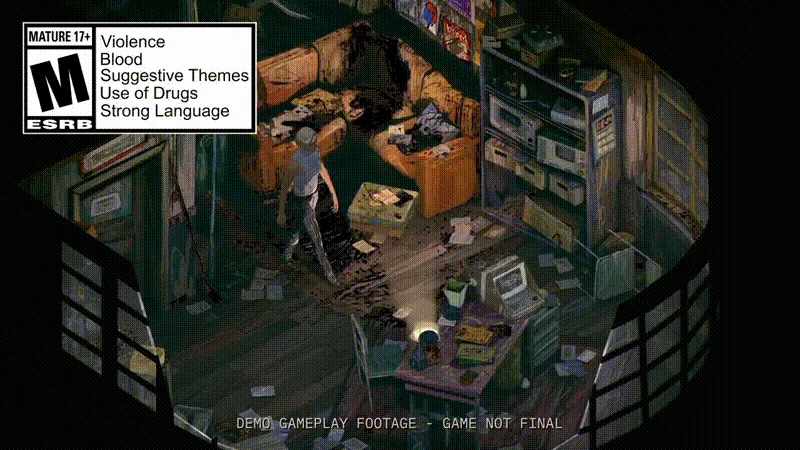
Zero Parades: For Dead Spies is an isometric, single-player narrative RPG built around exploration, dialogue, investigation, equipment management, and dice-based checks. Players move through Portofiro, examine environments, gather objects, manage tasks, speak with residents, and develop Hershel’s abilities. The game has no dedicated real-time or turn-based combat system. Violence can occur, but physical danger is handled through narrative choices, skill checks, and multi-stage Dramatic Encounters rather than a separate battle interface.
Hershel’s 15 skills affect active rolls, passive observations, dialogue choices, environmental discoveries, and the advice offered by her internal voices. Players can begin with a preset archetype or create a more customized skill distribution. Although the game contains fewer skills than Disco Elysium, their usefulness can change significantly depending on the situation. An ability that appears minor during an ordinary investigation may become essential during an escape, deception, or confrontation.
Clothing and held items modify these abilities, allowing Hershel to create temporary character builds for particular problems. An outfit may improve one skill while weakening another, encouraging players to inspect a challenge, leave the conversation, adjust equipment, use an item, and return with better odds. The system provides useful flexibility, although repeatedly changing clothes can feel artificial during emotionally urgent scenes.
Fatigue, Anxiety, and Delirium form the game’s central pressure system. These conditions rise or fall according to Hershel’s decisions, circumstances, consumables, and attempts to force an advantage. Coffee may reduce Fatigue while increasing Anxiety, while alcohol can provide an immediate benefit at the cost of greater Delirium. Stressful conversations and dangerous situations can push these pressures beyond safe levels, imposing penalties or causing more lasting harm.
Exertion connects those conditions directly to skill checks. A normal check uses two dice, but choosing to Exert adds a third and keeps the best two results, improving the chance of success. The advantage comes with additional pressure or another related consequence, creating a recurring decision about whether an important success is worth making Hershel less reliable later. Conditioning develops the Thought Cabinet concept by allowing Hershel to reinforce discovered ideas that grant bonuses, alter rules, unlock perspectives, or change how certain interactions function. These ideas are adopted more quickly than thoughts in Disco Elysium, reflecting a spy trained to switch mental frameworks under pressure.
Dramatic Encounters give dangerous moments a distinctive visual and mechanical structure. During critical confrontations, time slows or stops, the scene loses color, and several possible actions appear. Players choose Hershel’s response and accept the result of an attribute-influenced roll. Failing one stage does not necessarily end the encounter. Instead, it changes the next problem and forces Hershel to improvise from a weaker position, providing an espionage-focused substitute for conventional combat.
Dialogue remains the primary system for investigation, characterization, conflict, and choice. Conversations combine what an NPC says, how Hershel responds, what her skills notice, what her Conditioning allows her to understand, and what the player suspects is being concealed. Passive checks can reveal lies, political references, gestures, records, or hidden opportunities without requiring a visible roll. Failing one may leave Hershel with an incomplete or inaccurate interpretation that influences later interactions rather than producing no result.
Active checks display their probability of success and are affected by skills, clothing, conditions, earlier discoveries, previous decisions, and situational modifiers. Some can be attempted again after improving the relevant ability or finding new information, while others are one-time choices whose consequences remain in the story. Players must decide whether to roll immediately, investigate further, change equipment, spend a skill point, or accept that delaying could create another problem.
Failure usually moves the story forward. An unsuccessful check may embarrass Hershel, damage a relationship, increase pressure, block one method, reveal an unexpected clue, or force a riskier solution. This approach makes reloading less necessary because failed checks may contain unique writing, alternate routes, or consequences that make a playthrough more personal. The dialogue presentation received mixed responses, with praise for its performances and extensive voice work alongside criticism of missing or inconsistent spoken lines and internal voices that are not always as distinct as those in Disco Elysium.
Choices matter throughout Zero Parades, even when their effects are delayed. Hershel’s former contacts remember how she treated them, what she failed to do, and whether she approaches them as friends or useful assets. Dialogue decisions shape trust, cooperation, available information, and the intelligence network she can rebuild. The important question is not only whom Hershel trusts, but which people still have a reason to trust her.
Skill-check outcomes can alter character interpretations, future modifiers, quest routes, and available solutions. Side activities that initially appear unrelated may later affect the main investigation, while some decisions close content and others reveal material that a different version of Hershel would never encounter. Dramatic Encounters make consequences more immediate by changing each later stage after a failed attempt to hide, escape, resist, deceive, or intervene.
The final sections respond to the state of Hershel’s investigation, the allies she recruited or alienated, and the way she resolved major conflicts. Multiple conclusions and unavailable quests provide substantial replay value, although not every decision transforms the ending. Some choices primarily affect local dialogue, characterization, temporary modifiers, or the efficiency of a particular approach. Even so, Zero Parades remains highly reactive, treating failed and morally questionable playthroughs as valid versions of Hershel’s story rather than defective alternatives to a perfect result.

Zero Parades: For Dead Spies Characters, Best Features, Problems, and Playtime
The Whole Sick Crew forms the emotional center of Zero Parades: For Dead Spies. Five years before the main story, its members served as Hershel Wilk’s intelligence network in Portofiro. By the time she returns, betrayal, institutional pressure, neglect, and the consequences of their failed operation have scattered the group. Reconnecting with them is therefore more than a practical requirement. Each reunion forces Hershel to confront how she used these people, what she abandoned, and whether they still have any reason to trust her.
PSEUDOPOD is the first major contact Hershel encounters after returning. He was supposed to brief her on the assignment but is found physically alive and mentally absent, leaving her without the instructions she expected. Karolina, known as Kindred, was the network’s youngest member and occupied a position somewhere between student, junior asset, and younger sibling. Hershel trained her in infiltration and interrogation before Karolina entered an experimental Dream Study. Ramses, or Radian, handled surveillance and audio forensics and was also one of Hershel’s closest genuine friends.
The remaining members have equally important connections to Portofiro. Tempo, cryptonym Taxman, has become an influential figure in the city’s underworld and can obtain almost anything through legal or illegal channels. Vespar, known as Virtue, is linked to the carabineros, Portofiro’s elite investigative police, giving him access to official information and criminal informants despite complications caused by his drinking. Eszti, or Estoc, worked deep inside the government as a liaison with EMTERR and warned Hershel that the original network had been compromised before being abandoned during the collapse. HOLOCENE, whose real identity remains unknown, served as second-in-command and cryptography specialist, combining impressive decoding abilities with theories that may be perceptive, paranoid, or both.
Unlike Disco Elysium, Zero Parades does not give its protagonist a permanent companion equivalent to Kim Kitsuragi. Hershel often investigates alone, reinforcing her isolation but preventing any single relationship from receiving the same continuous development. The broader supporting cast compensates with variety. Merchants, officials, criminals, teenagers, political opportunists, media figures, and cultural obsessives make Portofiro feel socially active beyond the central conspiracy. Characters such as music seller Petre and clothing merchant Carmuna also show how apparently comic personal details can reveal wider anxieties about money, culture, and foreign influence.
The game’s strongest feature is its treatment of failure. Instead of training players to reload until every roll succeeds, Zero Parades regularly turns missed checks into alternate narrative paths. Failure may produce unique dialogue, change a relationship, expose another side of Hershel, or create a new practical problem. The experience becomes more personal once the player stops trying to construct a flawless operative and accepts that mistakes are part of this version of Hershel’s story.
Fatigue, Anxiety, and Delirium strengthen this design by measuring how much the mission is consuming her. Exertion lets players improve the odds of an important roll by accepting additional pressure, turning a mechanical decision into a small act of characterization. Dramatic Encounters are similarly effective, combining a distinctive visual presentation with sequential choices and escalating consequences. These sequences create urgency without relying on conventional gun-based combat and provide some of the strongest moments in the game’s espionage fantasy.
Portofiro’s visual design and worldbuilding are equally impressive. Bold colors, decaying buildings, tourist spaces, improvised businesses, political symbols, and surreal interruptions give each district a recognizable identity. The game rarely explains its factions through one convenient speech. Instead, political and economic power appears through clothing, music, imported technology, banking arrangements, policing, entertainment, consumer products, and local resentment. This approach can make the opening feel scattered, but it eventually gives the city unusual social and political depth.
Hershel herself is another major strength. She may be less immediately theatrical than Harry Du Bois, but her established history gives each choice a different moral weight. Players cannot pretend that her previous actions belonged to another person because the Whole Sick Crew remembers them. Different skill builds also create substantial replay value by changing passive observations, dialogue choices, checks, relationships, and available paths. A second playthrough can reveal information that the first version of Hershel was incapable of noticing.
The game’s biggest weakness is how closely it follows the structure established by Disco Elysium. Its isometric exploration, opening sequence, dialogue interface, clothing bonuses, internal voices, thought-based progression, and dice checks repeatedly invite comparison. The similarities are not automatically a problem, but they make every weaker line, awkward system, or unclear design choice more noticeable.
Hershel’s internal voices are useful and occasionally clever, yet they do not always possess sharply separated personalities. Several can blend together in tone, making her divided mind feel less like a chaotic internal debate and more like variations of the same narrator. The first five or six hours can also be difficult to follow because the game introduces political terminology, cultural satire, local history, personal trauma, and seemingly unrelated activities before explaining how they connect.
Its spy fantasy can feel limited during ordinary investigation. Hershel frequently gathers information by asking direct questions in public rather than relying on subtle surveillance, elaborate disguises, deception, or tactical infiltration. Certain missions allow her to adopt a cover or use specialized clothing, but much of the routine investigation resembles detective work more than covert intelligence gathering.
The writing is rich but uneven. Its strongest passages are politically sharp, funny, and emotionally precise, while others bury simple ideas beneath extended metaphor or dense references. Reviews also identified comma splices, typographical problems, and inconsistent voice presentation, including missing or mismatched spoken lines. Some critics praised the performances, while others found the narrator and recurring skill voices tiring over a long campaign.
Inventory management creates additional friction because clothing bonuses encourage frequent outfit changes. Building statistically useful combinations can be amusing, but repeatedly entering the equipment interface becomes cumbersome, especially during emotionally urgent scenes. Launch-period reviews also reported bugs and Steam Deck performance concerns. Updates were released after launch, and the game later received official Steam Deck verification, although demanding areas and long handheld sessions may still require realistic expectations.
Completion time depends heavily on reading speed, voice playback, optional dialogue, failed checks, and exploration habits:
- A focused main-story playthrough takes approximately 21 hours.
- A run with a meaningful amount of side content averages around 30 hours.
- A completionist playthrough is estimated at roughly 40 hours.
- Players exploring many alternate possibilities may spend 35 to 60 hours.
Someone moving quickly through the primary assignment may finish in about 20 to 25 hours, while a more natural first playthrough with side investigations, careful reading, equipment management, and exploration will likely take 25 to 35 hours. Seeing most optional content requires considerably longer, and one campaign cannot reveal every passive observation, relationship outcome, inaccessible quest, or alternate conclusion. A second playthrough with a substantially different skill build can uncover new information even when following a broadly similar route.

Zero Parades: For Dead Spies Platforms, PC Requirements, Steam Deck Support, and Final Verdict
As of July 16, 2026, Zero Parades: For Dead Spies is available on PC through Steam, GOG, and the Epic Games Store, with GeForce Now support also announced. The Steam edition includes achievements, cloud saves, Family Sharing, and Remote Play features, while the GOG version offers an offline installer and does not require GOG Galaxy.
A PlayStation 5 edition remains officially scheduled for 2026, although the PlayStation Store does not list a specific release date. Its confirmed PS5 features include offline single-player play, DualSense vibration, and trigger effects. No Xbox Series X|S, Nintendo Switch, or Nintendo Switch 2 version is currently listed.
Steam Deck support is official, with ZA/UM promoting the game as Steam Deck Verified and supporting controller-based handheld play. However, one launch-period review reported performance issues on the device, so verification does not guarantee identical performance in every environment or under all graphical settings.
The official PC requirements are:
- Minimum: 64-bit Windows 10, Intel Core i5-6500, 16 GB RAM, Nvidia GTX 1060 with 6 GB of GDDR5 memory, and DirectX 11
- Recommended: 64-bit Windows 11, Intel Core i5-10400, 16 GB RAM, Nvidia 2070-class graphics card with 8 GB of GDDR6 memory, and DirectX 11
The official storefront describes the recommended card as an “Nvidia GTX 2070,” although buyers should focus on the stated 2070 performance class and 8 GB memory target. Neither the Steam nor GOG requirements currently provide a storage-space figure.
The launch version includes full English interface text, subtitles, and voice acting. German, Russian, Simplified Chinese, and Latin American Spanish text options are also listed on Steam. Reported accessibility settings include adjustable text size, a dyslexia-friendly font, interface color controls, and customizable outlines for characters and interactive objects.
Zero Parades: For Dead Spies is a worthy spiritual successor to Disco Elysium, although it does not replace or equal it. The game demonstrates that a dialogue-driven RPG without conventional combat can support an espionage story and introduce a more mechanical approach to psychological pressure. Exertion turns improved odds into a meaningful sacrifice, Dramatic Encounters create action through choices and checks, and failure frequently opens alternative paths rather than ending progress.
Its strongest elements include the damaged relationships within the Whole Sick Crew, the politically layered city of Portofiro, and the way international influence, consumer culture, local identity, and personal guilt become part of the same conspiracy. Once the slow opening begins to converge, the game develops into an absorbing psychological and political spy thriller filled with difficult decisions and memorable consequences.
Several weaknesses prevent it from reaching Disco Elysium’s standard. The opening follows familiar structural ideas too closely, the internal voices are less distinctive, inventory management remains inconvenient, and routine investigation does not always deliver the surveillance, deception, and covert infiltration promised by the spy premise. The script can also become unnecessarily dense when a more direct approach would be stronger.
Even with those limitations, Zero Parades is more than an imitation. It earns a strong recommendation for players who enjoy literary RPGs, slow-building conspiracies, morally compromised protagonists, political worldbuilding, and dialogue choices with lasting consequences. Anyone seeking traditional combat, rapid action, or a straightforward cinematic spy adventure is less likely to enjoy its deliberate and heavily text-driven approach.
Frequently Asked Questions (FAQs)
- Is Zero Parades: For Dead Spies a direct sequel to Disco Elysium?
No. Zero Parades takes place in a separate fictional universe and does not continue the stories of Harry Du Bois, Kim Kitsuragi, Revachol, or any other Disco Elysium character. It is commonly described as a spiritual successor because it uses a similar isometric viewpoint, dialogue-driven role-playing, dice checks, political writing, internal skill voices, and a protagonist shaped by psychological conflict. - Do I need to play Disco Elysium before Zero Parades?
No previous knowledge is required because there is no narrative continuity between the two games. New players can begin with Zero Parades without missing important characters, events, or worldbuilding. Experience with Disco Elysium may make its interface and role-playing systems feel more familiar, although judging Zero Parades independently may make it easier to appreciate its espionage setting and different protagonist. - Does Zero Parades: For Dead Spies have combat?
It does not include a conventional real-time or turn-based combat system. Dangerous situations are handled through dialogue choices, dice checks, scripted actions, and Dramatic Encounters that present several possible responses. Violence can still occur, but the game resolves it through narrative decisions and skill-based consequences rather than moving the player into a separate battle mode. - Do choices and failed skill checks change the story?
Yes. Decisions can affect relationships, available information, quest routes, future modifiers, recruitment opportunities, and the conditions surrounding the ending. Failed checks usually move the story in a different direction instead of immediately ending the mission. Some failures create unique conversations, misunderstandings, or alternate solutions that would not appear after a successful result. - How long is Zero Parades: For Dead Spies?
A focused main-story playthrough takes approximately 21 hours. Completing a meaningful amount of side content increases the average to around 30 hours, while a completionist run is estimated at roughly 40 hours. Reading speed, exploration, failed checks, equipment management, and listening to the voice acting can extend the total considerably. - What platforms is Zero Parades: For Dead Spies available on?
The game is currently available on PC through Steam, GOG, and the Epic Games Store. A PlayStation 5 version is officially planned for 2026, although no exact PS5 release date was listed as of July 16, 2026. No Xbox Series X|S, Nintendo Switch, or Nintendo Switch 2 edition is currently announced. - Is Zero Parades: For Dead Spies Steam Deck Verified?
Yes. ZA/UM has confirmed that the game is Steam Deck Verified and has promoted its support for handheld and controller-based play. However, one launch-period review reported performance problems in certain situations. Players may therefore need to adjust settings depending on later patches and the frame-rate or visual quality they prefer. - Who is the main character in Zero Parades: For Dead Spies?
The protagonist is Hershel Wilk, an experienced intelligence operative known by the cryptonym CASCADE. Five years before the main story, a disastrous operation destroyed her spy network in Portofiro and left her disgraced. She is later recalled from administrative exile and sent back to investigate a new conspiracy while confronting the former allies she abandoned. - Does Zero Parades: For Dead Spies have full voice acting?
The Steam listing identifies full English audio support, and a large amount of the game’s dialogue is voiced. However, several reviews reported missing, inconsistent, or mismatched spoken lines in some scenes. Players who prefer reading at their own pace can adjust or disable parts of the voice presentation rather than listening to every line. - Is Zero Parades better than Disco Elysium?
Overall, Disco Elysium remains the more distinctive and cohesive RPG, particularly in its writing, internal skill personalities, focused mystery, and emotional relationships. Zero Parades offers several mechanical strengths of its own, including Exertion, three pressure conditions, faster Conditioning, Dramatic Encounters, and more dynamic failure states. It is best approached as a strong companion to Disco Elysium rather than a replacement that clearly surpasses it.

Conclusion
Zero Parades: For Dead Spies succeeds because it eventually stops behaving like a test of whether ZA/UM can reproduce Disco Elysium and becomes a test of whether Hershel Wilk can survive another version of herself.
Its espionage story is not always as covert as it should be, and its writing occasionally confuses density with depth. The shadow of Disco Elysium remains visible in its opening structure, internal voices, equipment system, and dialogue presentation. Those similarities make the game immediately familiar, but they also establish standards it cannot consistently match.
What emerges beyond that shadow is still remarkable. Portofiro is a richly imagined city shaped by global finance, cultural expansion, political resentment, entertainment, memory, and economic abandonment. Hershel is a compelling protagonist because the player cannot erase her responsibility. The Whole Sick Crew gives every act of recruitment a personal cost. Exertion and pressure make success dangerous. Dramatic Encounters turn a combat-free RPG into a genuinely tense thriller.
For players who value choice-driven narratives, literary worldbuilding, psychological systems, eccentric characters, and consequences that extend beyond simple success or failure, Zero Parades: For Dead Spies is one of the strongest RPGs of 2026. It does not reach the singular benchmark set by Disco Elysium, but it does not need to reach that height to justify its existence. It is a complicated, intelligent, occasionally frustrating, and frequently brilliant spy story that deserves to be evaluated as more than the echo of another game.
Sources and Citations
- Steam, “Zero Parades: For Dead Spies.”
https://store.steampowered.com/app/3061440/Zero_Parades_For_Dead_Spies/ - GOG, “Zero Parades: For Dead Spies.”
https://www.gog.com/game/zero_parades_for_dead_spies - PlayStation Blog, “Zero Parades: For Dead Spies – Gameplay Overview.”
https://blog.playstation.com/2026/05/21/zero-parades-for-dead-spies-gameplay-overview/ - PlayStation Blog, “Meet the Characters of Zero Parades: For Dead Spies.”
https://blog.playstation.com/2026/05/21/meet-the-characters-of-zero-parades-for-dead-spies/ - PlayStation Store, “Zero Parades: For Dead Spies.”
https://store.playstation.com/concept/10016097 - PC Gamer, “Zero Parades: For Dead Spies Review.”
https://www.pcgamer.com/search/?searchTerm=Zero+Parades+For+Dead+Spies - GamesRadar+, “Zero Parades: For Dead Spies Review.”
https://www.gamesradar.com/search/?searchTerm=Zero+Parades+For+Dead+Spies - TechRadar, “Zero Parades: For Dead Spies Review.”
https://www.techradar.com/search?searchTerm=Zero+Parades+For+Dead+Spies - PCGamesN, “Zero Parades: For Dead Spies Review.”
https://www.pcgamesn.com/search?search=Zero+Parades+For+Dead+Spies - RPG Site, “Zero Parades: For Dead Spies Review.”
https://www.rpgsite.net/search?search=Zero+Parades+For+Dead+Spies - Console Creatures, “Zero Parades: For Dead Spies Review.”
https://www.consolecreatures.com/?s=Zero+Parades+For+Dead+Spies - Qualbert, “Zero Parades: For Dead Spies Review.”
https://qualbert.com/ - I Dream of Indie, “Zero Parades: For Dead Spies Review.”
https://idreamofindie.com/ - Metacritic, “Zero Parades: For Dead Spies.”
https://www.metacritic.com/game/zero-parades-for-dead-spies/ - HowLongToBeat, “Zero Parades: For Dead Spies.”
https://howlongtobeat.com/game/zero-parades-for-dead-spies
Recommendations
- Battlefield 6 is Getting Naval Combat and a Top Gun Collaboration: Release Dates, Maps, Jets, and Modes
- Cyberpunk: Edgerunners Season 2 Returns To Netflix This Fall
- The Relic First Guardian Blends Korean Folklore With Relic-Based Action RPG Combat
- Metro 2039 Release Date, Story, and How Russia’s War Fundamentally Changed the Game
- The Sims 4 Infant Update Finally Fixes Dirty Diapers, Baby Autonomy, and Annoying Infant Bugs
- Cat Mail Co. Beginner Guide: 9 Essential Tips for Your First Shifts
- Rayman Legends Retold Releases October 1, 2026: Everything We Know About the Remake
- First Trailer for Apothecary Diaries Anime Movie Reveals Maomao’s New Hidden Treasure Mystery
- How To Unlock Each Marathon Faction and Level Up Faster in Bungie’s Marathon
- Why Hearthstone Still Isn’t on Consoles: Blizzard’s Latest Explanation, Real Barriers, and What Could Change



































































































