









In This Article (7 sections)
World of Warcraft: Forever Review in Progress, IGN’s Early Impressions and Launch Experience
World of Warcraft: Forever begins its launch period with an encouraging early assessment from IGN, whose initial review draws on approximately 30 hours of prerelease beta gameplay. The coverage provides an early indication of the game’s appeal, although its overall quality, long term progression, and community experience still require further evaluation. Blizzard is presenting Forever as a permanent addition alongside modern World of Warcraft and Classic, featuring a reimagined version of original Azeroth, revised gameplay systems, and a journey to level 60.
The early assessment raises an important question for returning players: whether familiar locations can provide another meaningful adventure when quests, character options, and underlying mechanics begin to change. IGN’s review in progress offers useful observations about exploration, presentation, and the opening experience, while Blizzard’s published information establishes the content and features players can expect. These are different forms of evidence because announced features do not automatically demonstrate their quality, balance, or lasting appeal.
A review in progress allows critics to publish observations while continuing to explore a large game. This approach is particularly relevant to massively multiplayer online roleplaying games, where progression, group activities, and community interactions unfold over extended periods. IGN’s initial Forever coverage is based on prerelease beta play, with further assessment expected as the reviewer spends additional time with the full release. The observations discussed here come from publicly available excerpts of that initial coverage rather than a completed final verdict.
Early gameplay can reveal whether movement feels responsive, quests provide understandable instructions, combat is satisfying, and environments encourage exploration. However, the first several hours cannot establish how character progression develops across 60 levels, whether later activities remain engaging, or how the community changes after release. Guild recruitment, crafting demand, dungeon organization, and shared knowledge can significantly influence an MMO once a larger population begins playing regularly.
The available IGN excerpts express enthusiasm about returning to Azeroth and approval of several enhancements. The reviewer reported ending the beta journey at level 13 in Westfall, deliberately leaving more content to discover after release. The coverage also raised concerns about the realmless structure, particularly whether dividing social spaces could undermine roleplaying communities. These observations identify both the immediate appeal of the reimagined world and a potential challenge involving its social design.
A visually appealing environment can encourage exploration, while a satisfying quest chain can make the early journey memorable. However, neither guarantees that players will develop lasting relationships or repeatedly encounter familiar people. The realmless structure therefore deserves evaluation based on its practical effects, including whether roleplaying groups can gather consistently, public meeting places encourage recurring encounters, and communities maintain continuity across different sessions.
IGN’s provisional assessment also reflects the limited amount of available endgame content during the initial review period. Blizzard has scheduled Barrow Deeps, Hyjal Summit, and Onyxia’s Lair to open on December 9, 2026. Consequently, launch impressions cannot establish how those raids perform with the live population or whether their encounters provide satisfying long term challenges.
Nevertheless, leveling should not be treated merely as preparation for endgame. The journey itself represents a substantial part of Forever, making quest variety, travel, character development, and group availability important factors in evaluating the complete experience. Players exploring slowly with friends may encounter different strengths and frustrations from those leveling independently or preparing for competitive raids. A final review should account for these differences rather than assuming one approach represents every player.
Blizzard’s beta testing period ran from September 17 through October 21, 2026, while the global launch was scheduled for November 4 at 3:00 p.m. PST, corresponding to November 5 at midnight in Nigeria. These dates distinguish the testing environment from the live service. Beta testing can reveal mechanical problems, unclear quests, interface issues, and balance concerns, while launch introduces a broader population with different expectations, equipment, and levels of familiarity.
The size and behavior of the live player population can change how the same content feels. Areas that were comfortable during testing may become crowded, while group encounters can become easier or harder depending on the availability of suitable companions. Players may also approach decisions differently after release because character progression, currency, professions, and guild membership become lasting commitments rather than temporary experiments.
For these reasons, early impressions should be revisited under ordinary playing conditions. Busy evenings, quieter periods, repeated activities, and changing community behavior can reveal strengths or weaknesses that were not apparent during beta testing. The most useful assessment will distinguish observations supported by actual experience from features that still require extensive evaluation.
Forever also invites comparisons with World of Warcraft Classic because both draw heavily from the original Azeroth experience. However, Blizzard describes Forever as an expansion and reinterpretation of the original continents rather than an identical recreation. The game retains a level cap of 60 while revisiting abilities, talent trees, progression systems, and portions of the world.
This approach means that familiarity with Classic does not guarantee identical gameplay. Returning players may recognize locations and general progression routes while discovering different character options, revised combat interactions, and new destinations. For some, these changes introduce welcome uncertainty into familiar environments. Others may prefer the established relationships between abilities, encounters, and rewards found in earlier versions.
The concept is often described as Vanilla Plus, meaning an extension of original World of Warcraft through additional content and selected improvements. Blizzard’s stated direction emphasizes maintaining class identity, addressing weaknesses in existing toolkits, and supporting continued development beyond a temporary seasonal experience. However, the term does not establish a single interpretation of what players want.
Some players may prefer additional quests and locations with minimal mechanical changes, while others may consider improved interfaces, broader specialization options, and revised combat systems essential. The important question is whether individual changes improve the overall adventure without removing qualities that made the original experience distinctive.
For example, a revised talent could make an underused ability more valuable while preserving a class’s strengths and weaknesses. Similarly, an additional travel route might make it easier to meet friends without eliminating the importance of geography. These changes should be judged by their practical effects rather than assuming that convenience or familiarity is automatically beneficial.
The strongest comparison between Forever and Classic will therefore focus on how successfully the revised systems work together. Forever’s long term appeal depends on whether its new content, progression structure, and gameplay adjustments create a coherent experience that feels recognizable while offering meaningful reasons to return.

World of Warcraft: Forever Graphics, Questing, Classes, Skyborne Race and Exploration
World of Warcraft: Forever introduces environmental improvements designed to refresh Azeroth while maintaining the original game’s visual identity. Blizzard has highlighted flowing rivers in Elwynn Forest, mist surrounding Darkshore’s waters, and moonlight filtering through Ashenvale. These enhancements aim to improve atmosphere without completely replacing the established appearance of familiar locations.
Visual presentation plays an important role in an exploration focused MMO. Lighting can influence whether a location feels welcoming or dangerous, while changes to water, weather, and environmental detail can help distinguish regions. However, attractive scenery must also remain functional during ordinary gameplay. Character visibility, spell effect clarity, interface readability, and performance during crowded encounters are equally important.
Consistency remains an area Blizzard is addressing. The company has acknowledged that high definition Skyborne characters can appear visually inconsistent alongside standard definition models and environments. To address this, Blizzard is developing standard definition Skyborne character models and Druid forms for early 2027, while also revising aspects of the existing high definition versions. These improvements are planned additions rather than features available for complete evaluation at launch.
The broader visual assessment should therefore examine the presentation currently available rather than judging the game solely through promotional screenshots or future commitments. Environmental atmosphere contributes to immersion, but visual consistency and practical readability determine how successfully those improvements support extended gameplay sessions.
Questing represents another major part of Forever’s redesigned experience. Blizzard advertises more than 1,000 new quests throughout the level 1 to 60 journey, giving players additional reasons to explore both familiar and reimagined areas. However, the number of quests does not independently establish their quality. Their effectiveness depends on pacing, variety, objectives, storytelling, and how naturally they connect to surrounding locations.
A satisfying quest chain can introduce a regional problem, encourage exploration, and gradually reveal more demanding challenges. Repetitive objectives or excessive travel without meaningful progression could produce the opposite effect. The most useful review will examine whether quests continue introducing interesting situations rather than relying entirely on the eventual reward of reaching maximum level.
Blizzard also provides different presentation options through its Classic and Enhanced presets. These include different default settings for quest guidance, inventory presentation, and character visuals, while allowing players to adjust individual features. This flexibility means two players can experience the same quest differently depending on their preferred level of assistance.
A player following highlighted objectives may progress more directly, while someone relying primarily on written directions may spend more time interpreting clues and exploring. Reviewers should therefore identify their settings when discussing navigation and quest pacing. Slow progression can feel rewarding when new levels introduce useful abilities and discoveries, but frustrating when extended periods offer little variation.
Combat systems have also received substantial attention. Blizzard’s overview emphasizes deliberate encounters, distinct class strengths, threat management, and the continued importance of crowd control. Its stated design target suggests that ordinary solo enemies should take approximately 10 to 15 seconds to defeat, although this is a development goal rather than a universal measurement of actual combat.
The revised talent system introduces a new 16 point milestone alongside familiar progression milestones. Talents begin at level 10, while Dual Specialization becomes available at level 40. These additions affect how character builds develop, making early combat impressions insufficient for evaluating the complete range of available abilities and combinations.
Class balance involves more than damage output. Survivability, resource management, utility, group contribution, and the purpose of individual abilities all influence how satisfying a class feels. A skill that appears unnecessary against an ordinary enemy may become valuable during a difficult encounter or unexpected attack. A thorough assessment must therefore examine how abilities interact across solo gameplay, dungeons, and coordinated group activities.
Blizzard has also expanded the original race and class combinations, introducing six additional options:
- Orc Mages: Allow Orc characters to use the Mage class.
- Troll Warlocks: Introduce Warlock gameplay to Troll characters.
- Undead Paladins: Expand Paladin availability to Undead characters.
- Human Hunters: Allow Humans to select the Hunter class.
- Gnome Priests: Add Priest as an option for Gnome characters.
- Dwarf Shamans: Introduce Shaman gameplay to Dwarf characters.
These combinations provide additional opportunities for character creation and roleplaying without establishing that any particular pairing is stronger than the others. Their appeal extends beyond numerical advantages because players may want to pursue character concepts that were previously unavailable.
Blizzard has also described racial ability revisions intended to preserve distinctive utility while bringing offensive contributions closer together. Its design overview outlines two active and two passive racial abilities for each race. However, the effectiveness of these changes requires testing across different encounters because similar offensive potential does not guarantee identical usefulness in every situation.
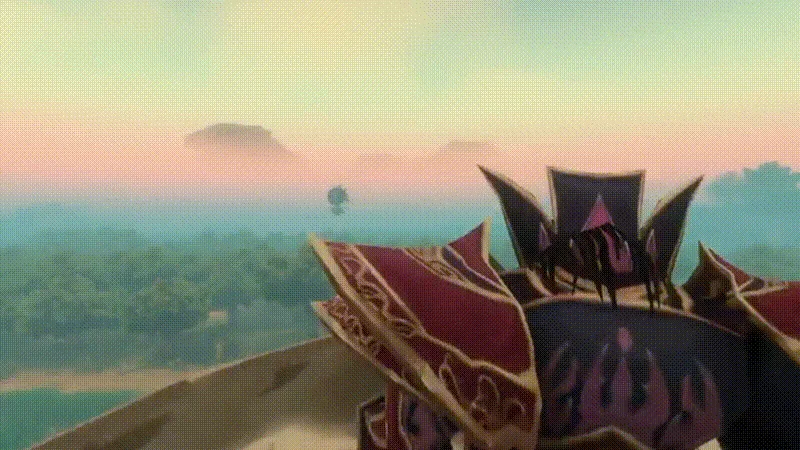
The Skyborne represent one of Forever’s most significant character additions. Their starting experience takes place on Zephras Isle and covers levels 1 through 12. Players select a faction during character creation, with Horde aligned Windshapers gaining access to Shaman and Alliance aligned High Order Skyborne gaining access to Mage. Both groups can also choose Warrior, Hunter, Rogue, and Druid.
Blizzard’s introduction connects the Skyborne to a history involving Highborne exiles and elemental wind spirits. Character customization includes hairstyles, markings, appearance options, and distinctive Druid forms. These features establish a recognizable identity, although their effectiveness depends on how successfully the starting experience communicates the race’s history, motivations, and connection to the wider world.
Access requirements are also important. Blizzard states that the Skyborne race and Zephras Isle starting experience require the Skyborne Heroic Pack or a higher edition. By comparison, access to Forever itself is included with an eligible World of Warcraft subscription or game time. This distinction means players interested in the new race must consider its additional purchase requirement when evaluating the overall value.
Forever’s exploration content extends beyond the starting experience. Blizzard identifies Mount Hyjal, Shen’dralas, the Riverglades, and Zephras Isle among its new or reimagined destinations. The Riverglades contains more than 150 new quests covering much of the progression experience from the mid 30s into the mid 40s.
These additions suggest that new discoveries are intended to continue throughout leveling rather than appearing only in the opening areas. Their quality will help determine whether players remain interested after the initial excitement of character creation fades. Effective exploration depends on meaningful geography, memorable locations, rewarding discoveries, and activities that encourage players to move beyond the most direct progression route.
The Legacy System provides another form of progression. Players earn account wide Legacy Points through challenges and can spend them on individual characters across Professions, Adventure, and Resourcefulness. At launch, the spending cap is 16 points per character, and Blizzard states that players do not need alternate characters to reach that limit.
This system offers additional rewards for varied activities, although its practical value depends on how naturally it fits ordinary gameplay. A successful implementation would recognize different interests without making exploration feel like a series of compulsory optimization tasks.
Together, the revised environments, expanded questing, character combinations, Skyborne race, and Legacy System establish Forever as more than a visual recreation of the original game. However, their combined effectiveness requires evaluation across the full leveling experience, including whether the systems complement one another and continue offering meaningful decisions.

World of Warcraft: Forever Dungeons, Raids, Multiplayer Performance and Final Review Expectations
Group activities represent an essential part of World of Warcraft: Forever, with Blizzard introducing nine new dungeons designed for five players across levels 13 through 60. These additions provide opportunities for cooperative gameplay throughout progression rather than limiting group activities to the level cap. Early examples include Hall of Thanes beneath Ironforge and Ruins of Lordaeron above the Undercity, while later locations include Blackmaw Hold and Shaper’s Terrace.
The quality of these dungeons will depend on more than their number or visual presentation. A useful review should consider how naturally players discover dungeon quests, organize groups, travel to entrances, and understand encounters. Effective dungeon design also needs to give different classes opportunities to contribute through damage, healing, protection, crowd control, and other abilities.
Group content becomes more memorable when players must communicate, respond to unexpected situations, and recover from mistakes. Encounters that reward cooperation can strengthen the social experience, while confusing mechanics or excessive organizational requirements may create frustration. The availability of companions throughout leveling will therefore be important when evaluating how accessible the dungeons feel.
Blizzard has also announced three initial raids scheduled to open on December 9, 2026:
- Barrow Deeps: A raid designed for 10 players.
- Hyjal Summit: A raid designed for 20 players.
- Onyxia’s Lair: A raid designed for 40 players.
These different group sizes influence the experience beyond encounter difficulty. Larger raids require more extensive recruitment, scheduling, coordination, and preparation, while smaller groups may place greater responsibility on individual participants. Replacing absent members and maintaining consistent participation can also affect how enjoyable organized content becomes.
Because these raids are scheduled to open after the initial launch period, they cannot be fully assessed through prerelease beta impressions or the earliest launch sessions. Their encounter balance, technical performance, reward structure, and long term appeal require further evaluation once players have access.
Blizzard also specifies that players must belong to the same ruleset and faction to group together, join guilds, participate in dungeons, and raid. These restrictions matter during character creation, particularly for friends planning to explore the game together. Choosing incompatible factions or rulesets could prevent players from participating in the activities they intended to share.
The broader multiplayer experience also depends on the social environment created by the game’s structure. IGN’s early concern about the realmless system raises questions about whether communities can develop recognizable meeting places, maintain relationships, and organize activities consistently. These issues are particularly important for roleplaying groups that rely on recurring interactions and shared spaces.
A final review should examine how successfully the game encourages cooperation beyond organized encounters. Public areas, spontaneous assistance, guild recruitment, and opportunities to meet familiar players can influence whether the world feels socially connected. Strong multiplayer design should make interaction worthwhile before participation becomes routine.
Technical performance represents another major area requiring continued assessment. Problems such as frame rate drops, delayed ability responses, disconnections, and login queues can all interrupt gameplay, but they have different causes and should not be treated as identical issues.
A useful performance review should identify the hardware, graphics settings, location, and conditions involved in each observation. Smooth performance in a quiet starting area does not establish that the same system will perform equally well in crowded cities or raids containing numerous characters and spell effects.
Launch issues also require careful interpretation. An isolated report may identify a problem worth investigating, but it does not demonstrate how widespread that issue is. Repeated reports become more informative when they include timing, region, circumstances, and evidence that the problem can be reproduced. Confirmed fixes should also be assessed to determine whether they resolve the underlying issue.
Interface reliability and accessibility are additional considerations. Blizzard identifies gamepad support as being in beta, with further improvements planned. The company also notes that a keyboard remains necessary for certain activities, including chat. These limitations should be considered when evaluating the experience for players who prefer controller input.
However, the available early review material does not establish a comprehensive technical verdict. Performance and stability need continued testing under ordinary conditions, including busy periods, extended sessions, and demanding group encounters. Potential problems should be distinguished from issues actually observed during play.
A final review of World of Warcraft: Forever must connect all these systems into an assessment of the complete experience. Updated environments, additional quests, expanded character creation, and new group activities provide substantial content, but their combined value depends on how successfully they support the hours between major progression milestones.
The full leveling journey needs evaluation across its entire range. Early progress may feel rewarding because of frequent abilities, new locations, and discoveries, while later stages must continue providing meaningful challenges and development. Quest design, equipment progression, character abilities, and encounter variety all contribute to whether the journey remains engaging.
Endgame content requires similarly broad consideration. Raid encounters matter, but preparation, group organization, reward distribution, and reasons to return after completing activities are equally important. A game may offer enjoyable individual encounters while still struggling to provide a sustainable progression structure.
Community development may be more difficult to measure, but it remains central to the experience. Players need opportunities to form relationships, recognize familiar groups, and find assistance without necessarily belonging to established guilds. A technically functional multiplayer system does not automatically guarantee a connected social environment.
The final assessment should also separate features available at launch from future commitments. Planned improvements, additional character models, and scheduled content can demonstrate Blizzard’s direction, but they cannot replace an evaluation of the game players can currently access.
For returning players, Forever’s appeal comes from combining recognizable Azeroth locations with meaningful changes to progression and exploration. For newcomers, its success will depend on how clearly those systems are introduced and whether the game provides satisfying reasons to continue playing.
The strongest final verdict will identify which audiences Forever serves best, which compromises remain important, and whether its expanded content and revised systems form a cohesive adventure. IGN’s early impressions provide an encouraging starting point, but the complete experience requires further evaluation across leveling, group activities, technical performance, and long term community development.

Frequently Asked Questions (FAQs)
- Is IGN’s World of Warcraft: Forever review finished?
No. IGN’s initial World of Warcraft: Forever coverage is a review in progress based on approximately 30 hours of prerelease beta gameplay. The reviewer reached level 13 in Westfall and deliberately left additional content to explore after launch. The early impressions provide useful observations about the world and opening experience, but they do not represent a final verdict on progression, raids, performance, or long term multiplayer systems. - When did World of Warcraft: Forever launch?
Blizzard scheduled World of Warcraft: Forever to launch globally on November 4, 2026, at 3:00 p.m. Pacific Standard Time. This corresponds to midnight on November 5 in Nigeria. The launch followed a beta testing period that ran from September 17 through October 21, 2026. The release makes the full game available for continued evaluation beyond the initial prerelease impressions. - Does Forever require a separate subscription?
No. Blizzard states that World of Warcraft: Forever is included with an existing eligible World of Warcraft subscription or game time. Players do not need a separate subscription specifically for Forever. However, optional upgrade editions provide additional benefits, and certain content, including the Skyborne race and starting experience, requires a qualifying edition. - What is WoW Forever’s level cap?
World of Warcraft: Forever has a level cap of 60. Blizzard describes the game as a continuing experience designed to expand through additional content without increasing that cap. This allows future development to focus on new activities, quests, encounters, and progression systems while maintaining the established maximum character level. - Are the Skyborne included with basic access?
No. Access to the Skyborne race and its Zephras Isle starting experience requires the Skyborne Heroic Pack or a higher edition. Although Forever itself is included with an eligible subscription or game time, players who want to create Skyborne characters must obtain the required upgrade. The additional content includes the race’s starting area, customization options, and associated character choices. - Can Skyborne characters join either faction?
Yes. Skyborne characters can join either the Horde or the Alliance, with the faction selected during character creation. Horde aligned Windshapers can become Shamans, while Alliance aligned High Order Skyborne can become Mages. Both factions also have access to Warrior, Hunter, Rogue, and Druid classes. These differences make faction selection important when planning a character. - How many new dungeons does Forever introduce?
Blizzard lists nine new dungeons designed for five players, covering character levels 13 through 60. These additions provide cooperative activities throughout the leveling journey and near the level cap. Examples include Hall of Thanes, Ruins of Lordaeron, Blackmaw Hold, and Shaper’s Terrace. Their overall quality will depend on encounter design, accessibility, group coordination, and progression rewards. - When do the first raids open?
The first three World of Warcraft: Forever raids are scheduled to open on December 9, 2026. Barrow Deeps supports 10 players, Hyjal Summit supports 20 players, and Onyxia’s Lair supports 40 players. Their different group sizes create varying coordination and recruitment requirements. Because they open after launch, their encounter balance and overall quality require evaluation once players can access them. - Does the Legacy System require multiple characters?
No. Blizzard states that players can earn enough Legacy Points to reach the launch spending cap using a single character. The system provides account wide points through challenges, with character specific spending across Professions, Adventure, and Resourcefulness. The initial spending limit is 16 points per character. Alternate characters provide additional ways to participate, but they are not required to reach the cap. - Will standard definition Skyborne models be available?
Yes. Blizzard has announced plans to introduce standard definition Skyborne character models and Druid forms in early 2027. These additions are intended to improve visual consistency with the original World of Warcraft environments and character models. Blizzard is also revising aspects of the existing high definition versions. However, the final quality and effectiveness of these improvements can only be assessed after they become available.

Conclusion
World of Warcraft: Forever’s early reception offers an encouraging introduction to Blizzard’s reimagined Azeroth, but its long term success will depend on whether familiar locations develop into a consistently rewarding adventure. A complete assessment must consider questing, class progression, exploration, multiplayer cooperation, technical performance, and community engagement. While IGN’s initial impressions highlight the game’s potential, different players may experience its strengths and weaknesses differently. The review in progress provides an opportunity to evaluate these elements as more content becomes available, with a final verdict depending on how successfully Forever delivers a cohesive and enjoyable experience beyond its opening hours.
Sources and Citations
- IGN via V5 – Review So Far: Beta Impressions
- Source: V5 – World of Warcraft: Forever Review So Far: Carries IGN’s initial review-in-progress, based on approximately 30 hours of beta gameplay. Covers exploration, slower Classic-style progression, new zones, class changes, and concerns about the realmless structure.
- Citation: Marks, Tom. (November 4, 2026). “World of Warcraft: Forever Review So Far – Beta Impressions.” IGN. Syndicated coverage via V5. Gaming News Roundup+1
- Gaming News Roundup – November 4, 2026
- Source: Gaming News Roundup – World of Warcraft: Forever Review So Far – Beta Impressions: Reproduces IGN’s initial review-in-progress and beta impressions, including the 30-hour playtime, positive early assessment, and the review’s concerns about the realmless structure.
- Citation: IGN. (November 4, 2026). “World of Warcraft: Forever Review So Far – Beta Impressions.” Reproduced by Gaming News Roundup. Read the reproduced review. Gaming News Roundup
- Blizzard Entertainment – Forever Now Live
- Source: World of Warcraft: Forever Now Live!: Official launch announcement confirming the November 4, 2026 launch, new and reimagined zones, more than 1,000 quests, the Skyborne starting experience, character options, experience presets, rulesets and other major gameplay features.
- Citation: Blizzard Entertainment. (November 3, 2026). “World of Warcraft: Forever Now Live!” World of Warcraft News. Read the official announcement. World of Warcraft+1
- Blizzard Entertainment – Forever Upgrades
- Source: Pre-Purchase World of Warcraft: Forever Upgrades and Begin Your Next Journey in Azeroth: Details the Skyborne Heroic Pack, Skyborne Epic Pack and Warcraft Forever Collection, subscription requirements, included game time, beta access from September 17 to October 21, 2026, and early name reservation dates.
- Citation: Blizzard Entertainment. (September 12, 2026). “Pre-Purchase World of Warcraft: Forever Upgrades and Begin Your Next Journey in Azeroth.” World of Warcraft News. Read the official upgrades announcement. Blizzard News+1
- Blizzard Entertainment – What’s New and What Feels Familiar
- Source: WoW: Forever—What’s New and What Feels Familiar: Explains the Classic and Enhanced experience presets, interface settings, controller support, character progression, class changes, the Legacy System and the realmless ruleset structure. It also confirms that players must share the same faction and ruleset to group, join guilds, enter dungeons and raid together. Access requires a World of Warcraft subscription or game time.
- Citation: Blizzard Entertainment. (November 3, 2026). “WoW: Forever—What’s New and What Feels Familiar.” World of Warcraft News. Read the official guide. Blizzard News+1
- Blizzard Entertainment – Forever Deep Dive Panel Recap
- Source: World of Warcraft: Forever Deep Dive Panel Recap: Covers the developers’ explanations of class identity, combat pacing, itemization, revised racial abilities, new race-and-class combinations, professions, camping and the account-wide Legacy System.
- Citation: Blizzard Entertainment. “World of Warcraft: Forever Deep Dive Panel Recap.” World of Warcraft News. Read the official panel recap. Blizzard News+1
- Blizzard Entertainment – Class Deep Dives
- Source:
Hunter and Druid
Mage and Shaman
Paladin
Rogue and Warlock
These official developer deep dives explain revised class abilities, talent trees, class-specific combat changes, progression milestones and build flexibility. They also confirm that talents become available at level 10 and Dual Specialization unlocks at level 40. - Citation: Blizzard Entertainment. (September–October 2026). “World of Warcraft: Forever Class Deep Dives.” World of Warcraft News. Hunter and Druid; Mage and Shaman; Paladin; Rogue and Warlock. Hunter and Druid+3
- Source:
- Blizzard Entertainment – Create the Hero You Want to Be
- Source: Create the Hero You Want to Be in World of Warcraft: Forever: Confirms expanded race-and-class combinations, including Orc Mages, Troll Warlocks, Undead Paladins, Human Hunters, Gnome Priests and Dwarf Shamans, alongside the new Skyborne race.
- Citation: Blizzard Entertainment. (September 22, 2026). “Create the Hero You Want to Be in World of Warcraft: Forever.” World of Warcraft News. Read the official article. World of Warcraft+1
- Blizzard Entertainment – Meet the New Skyborne
- Source: WoW: Forever – Meet the New Skyborne: Details the Skyborne’s origins, Zephras Isle level 1–12 starting experience, Horde and Alliance factions, available classes, racial abilities, character customization, voices and unique animations.
- Citation: Blizzard Entertainment. (September 22, 2026). “WoW: Forever Meet the New Skyborne.” World of Warcraft News. Read the official Skyborne guide. World of Warcraft+1
- Blizzard Entertainment – Skyborne Visual Updates
- Source: World of Warcraft: Forever – The Future of Skyborne Visual Updates: Explains Blizzard’s planned visual refinements to HD Skyborne Druid forms and confirms that Standard Definition Skyborne character models and Druid forms are in development for early 2027.
- Citation: Blizzard Entertainment. “World of Warcraft: Forever – The Future of Skyborne Visual Updates.” World of Warcraft News. Read the official visual update. Blizzard News+1
- Blizzard Entertainment – Legacy System
- Source: Get to Know the World of Warcraft: Forever Legacy System: Explains account-wide Legacy Points, 65 progression challenges, character-specific perks, the three Legacy trees (Professions, Adventure and Resourcefulness), cosmetic rewards and the 16-point spending limit per character at launch.
- Citation: Blizzard Entertainment. (September 23, 2026). “Get to Know the World of Warcraft: Forever Legacy System.” World of Warcraft News. Read the official Legacy System guide. World of Warcraft+1
- Blizzard Entertainment – Explore the New Dungeons
- Source: Explore the New Dungeons of World of Warcraft: Forever: Details all nine new five-player dungeons, their locations, level ranges, storylines and access requirements across the Eastern Kingdoms and Kalimdor.
- Citation: Blizzard Entertainment. (October 20, 2026). “Explore the New Dungeons of World of Warcraft: Forever.” World of Warcraft News. Read the official dungeon guide. World of Warcraft+1
- Blizzard Entertainment – Raid Overview
- Source: World of Warcraft: Forever Raid Overview – Locations, Raid Sizes, and Attunement: Confirms the December 9, 2026 raid opening for level 60 players and details the three raids: Barrow Deeps (10 players), Hyjal Summit (20 players) and Onyxia’s Lair (40 players). It also explains raid locations, boss encounters and the attunement requirement for Onyxia’s Lair.
- Citation: Blizzard Entertainment. (October 20, 2026). “World of Warcraft: Forever Raid Overview—Locations, Raid Sizes, and Attunement.” World of Warcraft News. Read the official raid guide. World of Warcraft+1
Recommendations
- GTA 6 Physical Edition Controversy: Retailers Refuse to Sell the Game Without a Disc
- It’s Official: KPop Demon Hunters is Going on a World Tour, Full Details, Cities, Cast, and What Fans Can Expect
- What a Jak and Daxter Remake Might’ve Looked Like Back in 2019: The Lost Pitch, Footage, and What It Means for Fans
- Resident Evil 4 Is the Best Selling Remake of This Console Generation
- The Simpsons Boss on Monopoly Go Crossover Deal
- Ved: Recure – Official Demo Launch Trailer: Steam Demo, Gameplay Breakdown, and Release Date Updates
- The Dune 3 Trailer And There Is So Much Going On: Full Breakdown of Dune: Part Three Teaser, Story Clues, Cast, and Release Date
- Shift At Midnight: Achievement Guide
- Marathon’s Final Level Is Locked Behind Its Most Annoying Mission — How to Unlock Cryo Archive
- Kingdom Hearts IV Targets Late 2027: Voice Acting Update and 25th Anniversary Exhibition



































































































