







Zero Parades: For Dead Spies, Official PC Launch Trailer has quickly positioned itself as one of the most intriguing narrative-driven espionage RPG reveals in recent memory. Blending psychological depth, systemic storytelling, and dense spy fiction themes, the game appears to build on the legacy of character-driven RPGs while carving its own identity through surveillance-heavy mechanics and moral ambiguity.
In This Article (19 sections)
Zero Parades: for Dead Spies Official PC Launch Trailer Breakdown and Analysis
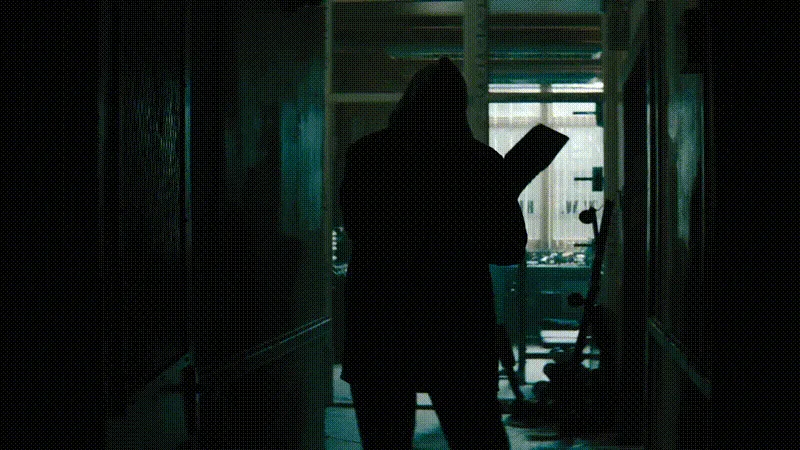
The Zero Parades: For Dead Spies Official PC Launch Trailer introduces a bleak, politically fractured world where espionage is not glamorous but deeply psychological and morally corrosive. The trailer emphasizes fragmented narration, distorted memory sequences, and surveillance imagery such as wiretaps, classified dossiers, and encrypted communications.
One of the most striking elements in the trailer is its non-linear storytelling approach. Instead of presenting a clear mission structure, it shows overlapping timelines, suggesting that players will experience reality through an unreliable and psychologically unstable protagonist. Scenes of interrogation, covert infiltration, and memory reconstruction hint that truth in the game is not fixed but constantly shifting based on player decisions and mental state.
The tone is deliberately unsettling, with minimal action emphasis and heavy focus on dialogue, internal monologue, and psychological breakdowns.

Zero Parades: for Dead Spies Release Date for PC and Supported Platforms Explained
As of the information presented in the Zero Parades: For Dead Spies Official PC Launch Trailer, the game is confirmed for PC release first. The trailer positions PC as the lead platform, suggesting optimization for high narrative fidelity, branching systems, and deep UI interaction typical of complex RPG interfaces.
While additional platforms have not been clearly detailed in the trailer, industry expectations suggest potential future expansion to consoles depending on reception. The current focus remains on PC due to the game’s reliance on text-heavy systems, skill checks, and layered decision-making mechanics.
The release timing is framed as “launch window” based, implying that final date confirmation may follow additional developer updates.
Who is Hershel Wilk (CASCADE) in Zero Parades: for Dead Spies Story Explained
Hershel Wilk, associated with the CASCADE intelligence structure, appears to be a central narrative figure within Zero Parades: For Dead Spies. The trailer suggests Wilk is either the protagonist or a key operative tied to a collapsing intelligence network.
CASCADE is implied to be a covert organization operating across political fault lines, likely functioning as both intelligence agency and psychological control system. Hershel Wilk’s identity appears fragmented, suggesting possible memory manipulation, identity reconstruction, or psychological conditioning.
His role in the narrative likely revolves around unraveling conspiracies that may include internal agency corruption, false flag operations, and the manipulation of global intelligence flows.
Zero Parades: for Dead Spies Gameplay Features and Spy RPG Mechanics Overview
Zero Parades: For Dead Spies emphasizes narrative RPG systems over traditional action gameplay. Core mechanics appear to revolve around:
- Deep dialogue trees with branching consequences
- Investigation-based progression systems
- Surveillance and counter-surveillance mechanics
- Psychological state tracking
- Skill-based narrative unlocking
The gameplay loop suggests that players will gather intelligence, analyze contradictions in information, and navigate morally ambiguous decisions that affect both external events and internal psychological stability.
Rather than linear mission completion, the game appears to encourage emergent storytelling driven by interpretation and inference.

Zero Parades: for Dead Spies Skill Check System and Choice-Based Gameplay Explained
The skill check system in Zero Parades: For Dead Spies is a central gameplay pillar. Similar to narrative RPG frameworks, outcomes are determined by a combination of character stats, psychological state, and hidden probability factors.
Skill checks are likely tied to:
- Persuasion and interrogation success
- Decryption of classified information
- Physical infiltration outcomes
- Psychological resilience during trauma events
Unlike traditional RPGs, failures are not necessarily negative outcomes but branching narrative divergences that may open new investigative paths. This reinforces the game’s emphasis on storytelling over success/failure binary systems.
Zero Parades: for Dead Spies Combat System or No Combat RPG Design Explained
The trailer strongly implies that Zero Parades: For Dead Spies minimizes or entirely removes traditional combat systems. Instead of combat encounters, tension is driven through:
- Dialogue confrontations
- Psychological breakdown sequences
- Strategic decision-making under pressure
- Surveillance avoidance mechanics
If any physical conflict exists, it is likely abstracted through narrative skill checks rather than real-time combat. This positions the game closer to interactive fiction and investigative RPG hybrids rather than action RPGs.
Zero Parades: for Dead Spies Setting in Portofiro and World Lore Details
The setting of Portofiro is depicted as a politically unstable, surveillance-heavy environment where multiple factions compete for control over intelligence networks.
The world of Zero Parades: For Dead Spies appears to be built around Cold War-inspired espionage fiction, modern surveillance capitalism, and fractured state systems. Portofiro itself is likely a fictionalized geopolitical hub representing ideological conflict zones.
Key world elements include:
- Competing intelligence agencies
- Civilian surveillance infrastructure
- Black market information economies
- Psychological warfare programs
The environment reinforces paranoia as a constant state rather than a temporary condition.

Zero Parades: for Dead Spies How it Connects to Disco Elysium Spiritually
Zero Parades: For Dead Spies shares a clear philosophical lineage with narrative RPG design associated with deeply introspective storytelling traditions. Spiritually, it appears to align with games that prioritize internal conflict, ideological fragmentation, and narrative consequence over mechanical complexity.
Like similar narrative-driven RPGs, it emphasizes:
- Identity instability
- Political ideology clashes
- Psychological deterioration
- Language-driven worldbuilding
The connection is not necessarily direct continuity but rather thematic evolution, shifting from existential urban decay to espionage-driven psychological disintegration.
Zero Parades: for Dead Spies Psychological Systems Fatigue Anxiety and Delirium Explained
One of the most innovative systems hinted in Zero Parades: For Dead Spies is its psychological modeling layer. The protagonist’s mental state directly influences gameplay interpretation.
Key psychological states include:
- Fatigue: reduces clarity of perception and decision reliability
- Anxiety: increases failure probability in high-stakes interactions
- Delirium: introduces hallucinations or distorted narrative interpretations
These systems ensure that gameplay is not purely external but deeply internal, where reality itself may be unreliable depending on mental condition.
This creates a layered storytelling approach where truth is subjective and mechanically variable.
Zero Parades: for Dead Spies Trailer Story Clues and Hidden Details Breakdown
The Zero Parades: For Dead Spies Official PC Launch Trailer contains several subtle narrative hints:
- Repeated imagery of broken mirrors suggests fractured identity
- Overlapping voiceovers imply conflicting internal personalities or surveillance interference
- Classified documents hint at erased or rewritten missions
- Glitches in visual presentation suggest memory corruption or simulation instability
These details collectively reinforce the idea that the protagonist may not fully trust their own perception of events.

Zero Parades: for Dead Spies Espionage Gameplay and Spycraft Mechanics Guide
Espionage mechanics form the backbone of gameplay. Players are expected to operate as intelligence agents navigating hostile environments using:
- Surveillance tracking tools
- Covert infiltration strategies
- Information triangulation systems
- Behavioral profiling of NPCs
- Counterintelligence deception techniques
Success depends not on reflexes but on interpretation of incomplete information. Spycraft becomes a cognitive puzzle rather than a physical challenge.
Zero Parades: for Dead Spies Character Progression and Skill Tree Systems Explained
Character progression in Zero Parades: For Dead Spies appears non-traditional. Instead of linear stat upgrades, progression is likely based on:
- Psychological adaptation
- Knowledge acquisition
- Relationship evolution
- Ideological alignment shifts
Skill trees may reflect cognitive domains such as perception, deception, interrogation, and resilience rather than physical attributes.
This reinforces the game’s focus on intelligence and interpretation over combat strength.
Zero Parades: for Dead Spies Story Themes of Politics Identity and Memory
The narrative core of Zero Parades: For Dead Spies revolves around three central themes:
- Politics: competing ideological systems shaping truth
- Identity: fractured sense of self under surveillance pressure
- Memory: unreliable recollection influenced by manipulation or trauma
These themes intersect to create a story where truth is not objective but constructed through perception, propaganda, and psychological instability.

Zero Parades: for Dead Spies PC Requirements and Performance Expectations
Although exact specifications are not detailed in the trailer, Zero Parades: For Dead Spies is expected to prioritize CPU and memory performance over graphical intensity due to its narrative-heavy structure.
Expected performance characteristics:
- Moderate GPU requirements
- High CPU usage for branching narrative calculations
- Significant memory usage for dialogue and state tracking systems
- SSD recommended for seamless loading of narrative states
The game is likely optimized for stable frame pacing rather than high-end graphical fidelity.
Zero Parades: for Dead Spies Early Impressions and Player Expectations After Launch Trailer
Early impressions from the Zero Parades: For Dead Spies Official PC Launch Trailer suggest strong anticipation among narrative RPG fans. The emphasis on psychological storytelling, espionage depth, and systemic narrative branching has generated expectations of a highly replayable and intellectually demanding experience.
Players expect:
- Deep narrative variability
- Meaningful decision consequences
- Complex character psychology systems
- Dense worldbuilding tied to political espionage
The game positions itself as a cerebral alternative to mainstream action-heavy RPGs.

Frequently Asked Questions (FAQs)
- What is Zero Parades: For Dead Spies about?
It is a narrative-driven espionage RPG focused on psychological storytelling and intelligence operations. - Is there combat in Zero Parades: For Dead Spies?
Combat appears minimal or absent, replaced by dialogue and decision-based systems. - Who is Hershel Wilk?
He is a central figure tied to the CASCADE intelligence structure and possibly the protagonist. - What is CASCADE?
A covert intelligence organization central to the game’s narrative conflict. - Where is the game set?
In a fictional region called Portofiro, a politically unstable surveillance-heavy environment. - What kind of gameplay does it have?
Spy RPG mechanics focused on investigation, dialogue, and psychological systems. - Does the game have skill checks?
Yes, outcomes depend on skill-based narrative systems. - What platforms is it on?
Currently confirmed for PC. - What are the psychological systems?
Fatigue, anxiety, and delirium affect perception and gameplay outcomes. - Is it similar to other narrative RPGs?
It shares thematic and structural similarities with deep narrative-driven RPG design philosophies.

Conclusion
Zero Parades: For Dead Spies, Official PC Launch Trailer presents a deeply atmospheric espionage RPG centered on psychological instability, political tension, and narrative complexity. By removing traditional combat and focusing on intelligence systems, identity fragmentation, and unreliable perception, the game positions itself as a unique entry in the modern narrative RPG landscape. Its emphasis on player interpretation and psychological consequence suggests a highly replayable experience built on uncertainty and moral ambiguity.
Sources and Citations
- Official ZERO PARADES: For Dead Spies PC Launch Trailer — Official PC launch trailer and release reveal materials from ZA/UM.
- ZERO PARADES: For Dead Spies Official Announcement Trailer — Original reveal trailer introducing the espionage RPG premise and psychological narrative themes.
- ZERO PARADES: For Dead Spies Official PC Release Date Trailer — Release date trailer showcasing dialogue-driven gameplay, character setup, and espionage-focused storytelling.
- ZA/UM Features & Gameplay Trailer Coverage by RPG Site — Breakdown of skills, conditioning systems, dramatic encounters, and spycraft gameplay mechanics shown in promotional footage.
- Zero Parades Interview – ZA/UM Writers Discuss Spy RPG Design — Developer interview commentary about literary inspirations, espionage themes, and narrative RPG direction.
- ZERO PARADES Interview – Gameplay Systems and Espionage RPG Mechanics — Discussion of tabletop-inspired systems, dialogue mechanics, and espionage-focused gameplay philosophy.
- PlayStation Blog Gameplay Breakdown for ZERO PARADES — Official gameplay overview explaining dramatic encounters, psychological systems, and narrative progression mechanics.
- Steam Store Page for ZERO PARADES: For Dead Spies — Official gameplay feature descriptions covering conditioning systems, skills, psychological mechanics, and RPG structure.
- GamesRadar Analysis of Zero Parades Spycraft Systems — Analysis of narrative RPG design, skill checks, spycraft mechanics, and psychological tension systems inferred from gameplay footage and public demos.
- PC Gamer Review Discussing Psychological Systems and Espionage Themes — Coverage of mental-state mechanics, stress systems, dialogue structure, and espionage role-playing design.
- TechRadar Review on Political Themes and Narrative RPG Structure — Discussion of branching narrative systems, ideological storytelling, and psychological gameplay mechanics.
- GamesRadar Review on Espionage RPG Structure and Thematic Comparisons — Analysis comparing the game’s spy-fiction structure to narrative RPG conventions and psychological storytelling traditions.
Recommended
- Malta to Simplify Tax System for iGaming Companies: New VAT and Gaming Tax Changes Explained
- 13 Years After It Was Cancelled, Star Wars: Battlefront III Prequel “Star Wars: First Assault” Is Playable On PC (Here’s What We Know)
- Data Visualization Tool Using Blender: Build 3D Charts, Scientific Plots, and Animated Renders (2026 Guide)
- Essential Fallout Tips: Supply Lines, VATS, Ammo, Power Armor Training, Fallout TV Lore, and More
- Apple Arcade Just Got Two Indie Gems: DREDGE+ and Unpacking+ Arrive on iPhone, iPad, Mac, and Apple TV
- Netflix’s New Shark Horror Movie Thrash Starring Bridgerton’s Phoebe Dynevor Is Surprisingly Watchable Despite Mixed Reviews
- Bizarre Lineage: What it Is, How to Play, Best Stands, Codes, Raids, and Beginner Progression Guide
- Best 10 Water Simulation Add-ons in Blender: Everything You Need to Know Before You Install
- Saros: How to Get the “Fall from Grace” Trophy (Environment Kill Guide + Best Setup)
- Realistic Character Creation Process in Blender: Step-by-Step Workflow for Artists



































































































