


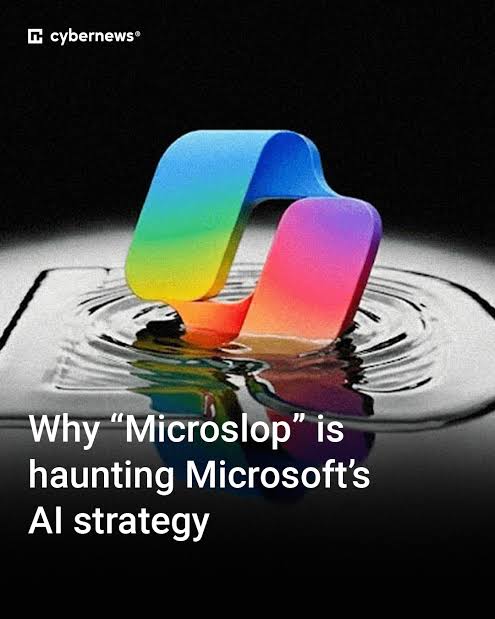
What does “Microslop” mean and why is it trending
“Microslop” is a derisive play on “Microsoft,” replacing “soft” with “slop” to characterize the company’s AI initiatives as low-quality or poorly executed.
- Origin: The term gained momentum after Merriam-Webster named “slop” (referring to low-grade AI content) its 2025 Word of the Year.
- Usage: It has become viral shorthand on social media for users to mock intrusive or “trashy” AI features being pushed into the Windows ecosystem.
Why people are calling Microsoft Copilot “Microslop”
Users have targeted Copilot as the primary example of “Microslop” due to its aggressive integration into Windows 11, Office 365, Paint, and Notepad.
- User Grievances: Complaints center on the “forced” nature of the AI, which some liken to an intrusive version of the old “Clippy” assistant.
- Quality Concerns: Ongoing bugs and performance issues in Windows have led users to view these AI additions as “half-baked” rather than beneficial.
Microsoft Copilot Discord server explained
Microsoft launched an official Discord server in late 2024 to gather feedback and build a community around Copilot.
- Evolution: Originally a positive space for enthusiasts, the community grew increasingly critical throughout 2025 as AI features expanded into more system areas.
- Current State: By early 2026, the server became a primary hub for user discontent and “Microslop” memes.
Microsoft banning the word “Microslop” on Discord
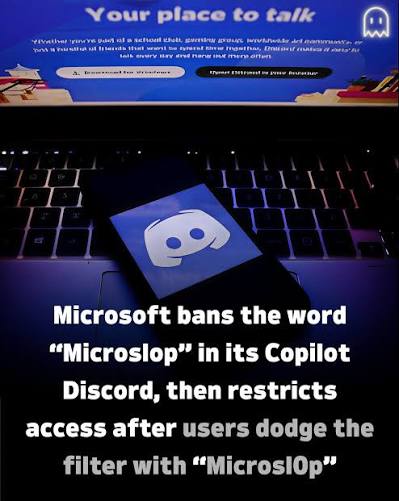
In February 2026, Microsoft moderators added “Microslop” to an auto-moderation blacklist on the official server.
- The Filter: Any message containing the word was automatically blocked from public view.
- Backlash: The quiet implementation of this filter was seen as heavy-handed censorship, leading to a significant PR fiasco.
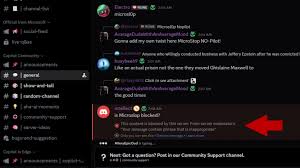
“Your message contains a phrase that is inappropriate” Discord filter
When the filter intercepted a message, the sender received an automated notice: “Your message contains a phrase that is inappropriate.”
- The Label: By framing a humorous critique as “inappropriate,” Microsoft equated the nickname with profanity or harassment.
- Function: Using Discord’s AutoMod, the system silenced the term entirely, ensuring no other users could see the attempted post.
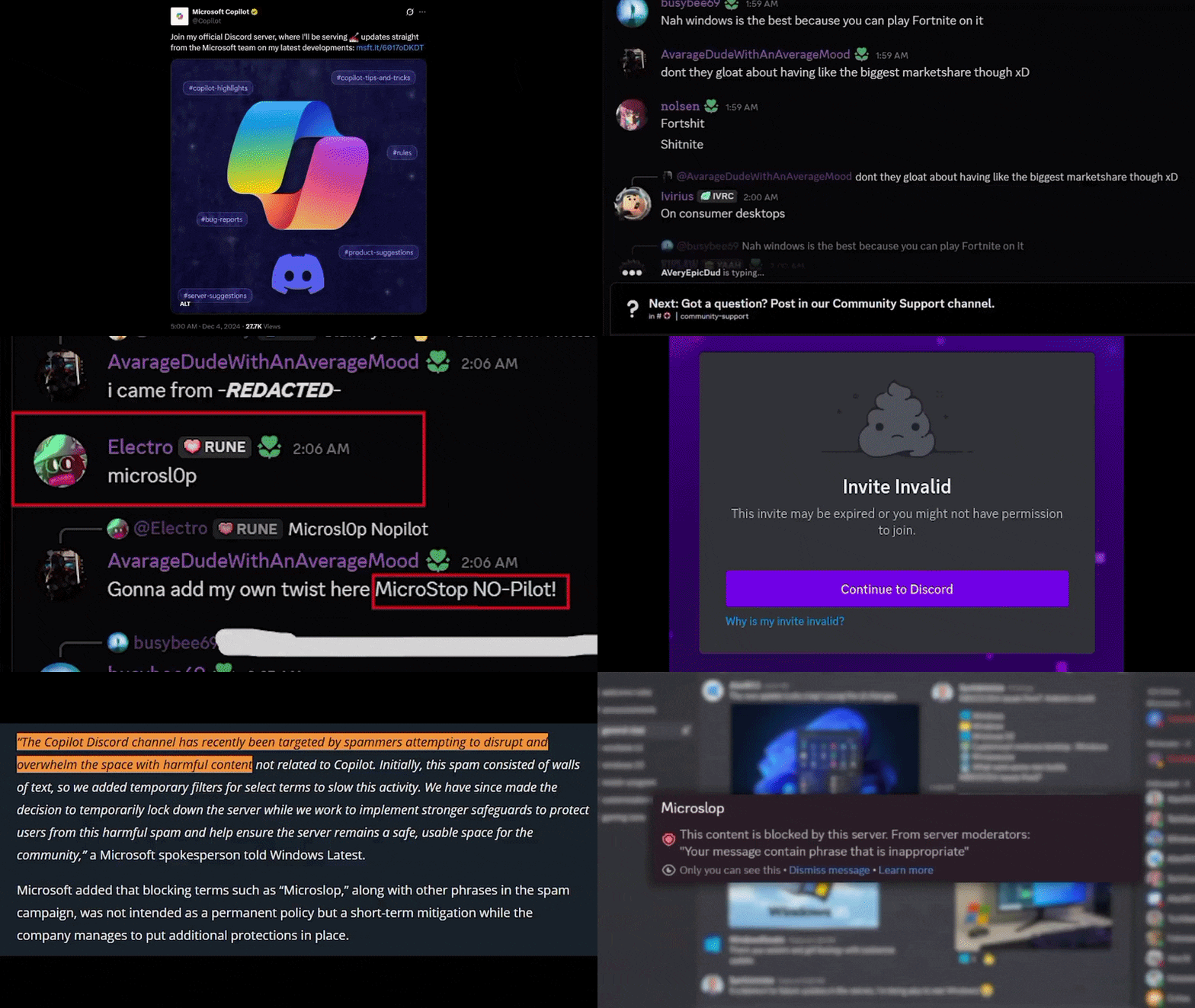
Microsl0p and Micr0slop: the Microslop ban workarounds
The ban immediately triggered a “cat-and-mouse” game as users found ways to bypass the keyword filter.
- Substitutions: Users used look-alike characters, such as “Microsl0p” (with a zero) or varied capitalization.
- New Nicknames: Creative variations like “MicroStop NO-Pilot” and “Sloppysoft” emerged to evade the specific block on the original term.
Copilot Discord lockdown: channels restricted and posting disabled
As the community revolted against the filter, Microsoft escalated its moderation tactics.
- Mutes and Bans: Individual accounts were muted or kicked for repeatedly attempting to bypass the word filter.
- Server Freeze: Moderators eventually placed the server in “lockdown mode,” making channels read-only and disabling posting permissions for the general membership.
Discord message history hidden on the Copilot server
To contain the viral spread of the meme, Microsoft attempted to scrub the server’s digital footprint.
- History Purge: Approximately two days of chat logs from late February were hidden or deleted.
- Access Denied: Users were prevented from viewing past messages in key channels like #general, effectively resetting the conversation to hide the wave of spam.
Microsoft statement on Copilot Discord spam and temporary filters
Microsoft eventually broke its silence, framing the incident as a defense against a “coordinated spam attack.”
- The Defense: The company claimed the filters were “temporary” and intended to stop content “not related to Copilot” from disrupting the community.
- Safeguards: Microsoft argued the lockdown was necessary to implement “stronger safeguards” and ensure a “safe, usable space.”
Streisand effect: why the Microslop ban backfired
The attempt to suppress the nickname resulted in a classic Streisand effect, where the act of censorship drew global attention to the term.
- Media Coverage: Major tech outlets like PC Gamer and Gizmodo reported on the ban, moving the niche insult into the mainstream.
- Viral Impact: By trying to kill the meme, Microsoft ensured “Microslop” would become a permanent part of the tech lexicon.
Slopilot and other new nicknames after the Microslop ban
The censorship attempt inspired a wider glossary of slop-themed insults.
- “Slopilot”: A popular rebranding of Copilot suggesting the tool is both “slop” and “slow.”
- “Fellow Sloppers”: A term of solidarity used by community members to identify with the protest.
AI “slop” backlash and Microsoft’s Copilot controversy
The “Microslop” saga is part of a larger rebellion against the perceived degradation of software quality.
- Privacy Fears: Features like “Windows Recall” (an AI activity log) sparked “creepy” invasive fears.
- Reliability: Many professionals feel “AI slop” produces error-prone outputs unsuitable for serious work, leading to a loss of trust in the Microsoft brand.
Is “Microslop” still banned on Microsoft’s Copilot Discord
As of March 2, 2026, the word is no longer banned.
- Reversal: Microsoft rolled back the specific filter and lifted the server lockdown after the initial uproar.
- Current Status: Users are now permitted to use the term, and moderators appear to be tolerating the meme to avoid further controversy.
Lessons for brands: responding to memes and AI criticism online
The incident serves as a case study in modern community management.
Address Root Causes: Brands are encouraged to fix the underlying product issues driving the criticism rather than silencing the critics.ssue rather than shooting the messenger. In an era of instant viral moments, being a good sport online can save a lot of grief, whereas trying to strong-arm the conversation often backfires.
Avoid Overreaction: Banning a joke often validates it and signals that a company is “thin-skinned.”
Can a company ban words on an official Discord server
Yes, companies (or any server owners) can technically ban words on their Discord server. Discord provides moderation tools, including AutoMod and bots, that allow administrators to filter out messages containing certain keywords. This means an official server like Microsoft’s Copilot community can set up a rule to automatically block or flag messages with specific terms (just as they did with “Microslop”). It’s completely within the server owner’s rights to enforce such a policy – joining a Discord server is like entering a moderated forum, and you agree to abide by its rules.
Many brand-run servers ban obvious things like hate speech, profanity, or off-topic promotion using these tools. However, banning a particular word (especially one that’s simply critical or mocking) is a moderation choice, not a platform requirement. Discord itself doesn’t ban the word “Microslop” globally or anything; this was a decision by the Microsoft server’s moderators. One thing to keep in mind is that while companies can ban words, doing so for a term that represents customer criticism can be risky. As we’ve discussed, it may alienate users or cause bad PR. So, yes – it’s allowed and technically easy to do, but whether it’s a good idea is another matter.
Why banning “Microslop” made it spread faster
Banning “Microslop” ended up making it spread faster due to the Streisand effect. When Microsoft tried to suppress the meme by filtering it out on Discord, it unintentionally advertised that meme to a much wider audience. Here’s why: people on the Discord immediately started talking (outside the server) about how Microsoft banned the word, which itself became news. Social media loves a “forbidden” joke – it adds a layer of irony and rebellion. By declaring Microslop off-limits, Microsoft essentially challenged the internet to amplify it. Users created new variations, posted about it on Reddit and Twitter, and tech news sites reported the ban as an interesting scoop.
All that attention meant that folks who had never heard the term “Microslop” were suddenly seeing it everywhere with the context that “Microsoft tried to ban this and failed.” Psychologically, telling the internet “you can’t say this” is like throwing gasoline on a fire – it triggers people’s tendency to resist censorship and indulge in the forbidden.
Another aspect is that Microsoft’s ban validated the term’s perceived truth. To many, it signaled that the company was stung by the nickname, so they repeated it even more as a form of protest or humor. In summary, banning “Microslop” turned a contained meme into a viral phenomenon by creating a story around it. Attempts to erase it only gave it more notoriety, proving the adage that the surest way to make something infamous online is to try to ban it.

Frequently Asked Question (FAQs)
- What is the origin of the term “Microslop”?
“Microslop” is a nickname derived from combining “Microsoft” and “slop.” It originated as internet slang to criticize Microsoft’s AI outputs (like Copilot) as being low-quality “slop.” The term gained popularity after “slop” was named 2025’s word of the year in reference to AI content, and users started using “Microslop” to mock Microsoft’s AI features. - Who started the Microslop meme?
There isn’t a single individual who “started” it publicly – it emerged organically within tech communities. It likely percolated on forums or social media as a reaction to Microsoft’s AI updates. By late 2025, discontented Windows users and insiders were using “Microslop” on platforms like Reddit, Twitter, and Discord to vent about unwanted AI changes. It really caught mainstream attention when Microsoft themselves reacted to it in 2026. - Why did Microsoft ban the word “Microslop” on Discord?
Microsoft’s official reason was that the Copilot Discord server was being spammed with the term “Microslop” in a way that disrupted the community. They treated it as a moderation issue – implying that spammers or trolls were flooding the chat with that word, so they added it to a filter to slow down the spam. Unofficially, it’s clear Microsoft also found the term derogatory and wanted to curtail a negative nickname for their product. The ban was an attempt to keep the community “on topic” and free of memes that made the company look bad. - How did users find ways around the Microslop ban?
Almost immediately, users discovered they could bypass the filter by altering the word slightly. For example, they would replace the letter “o” with a zero – typing “Microsl0p” or “Micr0slop” – which the filter didn’t catch. Others used creative spelling like “Micro$lop” or inserted punctuation. Even completely new nicknames like “Slopilot” (for Copilot) emerged. These workarounds slipped past the exact-match filter and allowed users to continue the joke despite the ban. - Did Microsoft ban or punish users who said “Microslop”?
During the peak of the Discord incident, yes – some users reported that they were temporarily muted or even banned from the Copilot server for repeatedly trying to post “Microslop” (or its variants). The moderators were actively enforcing the rule, so if someone kept spamming the forbidden word or evading the filter, they could get kicked. However, these bans were likely moderation actions in the heat of the moment. There’s no indication Microsoft is banning users across the board for using the term outside of that context (and once the filter was lifted, saying “Microslop” in the server became permissible again). - How long did the Microslop Discord ban last?
The strict ban was fairly short-lived – on the order of a day or two. The issue came to a head around March 1, 2026. By March 2, 2026 (within hours of media coverage), Microsoft had put the server into lockdown mode and issued their statement. According to an update from Microsoft, by the evening of March 2 the word was no longer banned on the Discord. So the direct filter on “Microslop” was removed very quickly after the backlash. The Discord server itself was unlocked soon after as well. In summary, the ban and server lockdown lasted perhaps a day or so before things started reverting to normal. - What is the Streisand effect, in simple terms?
The Streisand effect is an internet-age phenomenon where trying to hide or censor something just makes people more interested in it. It’s named after singer Barbra Streisand, who once tried to suppress photos of her house – and in doing so, drew way more attention to those photos. In the context of Microslop: Microsoft’s attempt to ban the term made it a much bigger deal than it originally was. By forbidding it, they unintentionally made “Microslop” famous. Essentially, the harder you try to silence a piece of information (or a joke, or a meme), the more loudly it tends to echo across the internet. - What are some other nicknames users came up with besides “Microslop”?
Aside from Microslop itself, users brainstormed a bunch of spinoffs: “Slopilot” (a jab at Copilot) became popular, carrying the “slop” theme. Some jokingly called the company “Sloppysoft.” Others said “Microflop” or “Micro$lop,” playing on the old “Micro$oft” gag. There was also “MicroStop No-Pilot,” a clunky phrase someone tried as a protest slogan. These were all meant to be humorous digs at Microsoft’s expense. While none of these alternates became as universally recognized as Microslop, they underscore how the community responded with even more humor when the original term was challenged. - How has Microsoft responded to the backlash now (beyond the Discord ban)?
Publicly, Microsoft’s main response was the statement framing the issue as a spam problem and temporarily shutting down the Discord to address it. They haven’t issued any formal apology for banning “Microslop” specifically – likely because that would mean acknowledging the nickname directly. However, there are signs Microsoft is aware of the broader user dissatisfaction: reports have emerged that Microsoft is reevaluating its AI strategy in Windows 11, possibly dialing back some Copilot integrations and rethinking features like the “Recall” that users hated. This isn’t directly because of the Microslop meme, but the meme and backlash are symptoms of the user sentiment that is driving those reevaluations. In short, Microsoft is in damage-control mode: they quietly reversed the Discord ban and are now focusing on convincing users that Copilot and other AI features can be useful (or at least not annoying) in future updates. - Can memes like this actually influence a big company like Microsoft?
Indirectly, yes. While a company like Microsoft isn’t going to admit “we changed our policy because of a meme,” they do pay attention to public sentiment and community feedback. A widespread meme can be a sign of reputational damage or user dissatisfaction. In this case, “Microslop” encapsulates real complaints. If those complaints gain enough traction (through memes, press coverage, etc.), they can influence Microsoft’s decisions. For example, negative feedback (serious or humorous) likely contributed to Microsoft deciding to ease up on pushing AI so hard and to focus more on core improvements. Additionally, the PR lesson from the failed ban will influence how Microsoft handles community relations going forward – they’ll probably think twice about trying to censor criticism so bluntly. So while the meme itself isn’t a policy-maker, it’s a carrier of user voice, and smart companies do listen (even if reluctantly) when that voice gets loud.

Conclusion
The saga of Microsoft attempting to ban “Microslop” on its Copilot Discord – only to have the internet “Microslop” even harder – will likely go down as a cautionary tale in tech PR. In trying to muzzle a mocking nickname, Microsoft ended up amplifying it to a far bigger audience. The incident laid bare the tension between a company eager to push AI as the next big thing and a user base increasingly frustrated with how those AI features are implemented.
There are immediate takeaways: heavy-handed moderation can backfire disastrously, and community sentiments (even in meme form) shouldn’t be dismissed outright. Microsoft has since reversed the ban, reopened its Discord, and signaled a willingness to recalibrate its AI strategy to address user concerns.
But the damage to its image – encapsulated in that four-letter word “slop” – will take time to undo. Going forward, Microsoft and other tech giants might approach such situations differently: perhaps by engaging with the community’s humor, acknowledging valid criticism, and fixing underlying issues, rather than trying to scrub the criticism from their official channels.
In the end, the “Microslop” affair isn’t just about a banned word; it’s a reflection of a disconnect between a company’s ambitions and its customers’ experiences. Bridging that gap will require more than just good moderation – it will require Microsoft to deliver products that users genuinely want to use (so that they stop calling them slop). Until then, the internet has a new favorite nickname to remind tech companies what happens when you don’t listen to your users.
Sources and citation
- PC Gamer Microsoft banned the word “Microslop” in its Copilot Discord server, then began restricting access after users started posting “Microsl0p” and other funnies.
- Gizmodo Microsoft Bans Term “Microslop” From Official Discord Server.
- Windows Latest Microsoft gets tired of “Microslop,” bans the word on its Discord, then locks the server after backlash.
- Futurism Microsoft Bans the Word “Microslop” on Copilot Discord, Gets So Humiliated That It Locks Down the Whole Server.
- Boing Boing Microsoft tried to ban the word “Microslop” and it backfired badly.
- PCWorld Microsoft says stop calling it Microslop, or you’re banned.
- TechRadar Microsoft gets heavy-handed on Copilot Discord server, reportedly blocking “Microslop” posts and heading down a dangerous path.
- Windows Central (the background piece from your list) — You won: Microsoft is walking back Windows 11’s AI overload — scaling down Copilot and rethinking Recall in a major shift.
- Reddit r/technology thread Microsoft gets tired of “Microslop,” bans the word on its Discord, then locks the server after backlash.
- Reddit comment permalink “Classic Streisand effect… Microsoft just ensured ‘Microslop’ will be the default term for the next decade.”.
- Reddit comment permalink “Good example of Streisand effect. I had never heard about Microslop until now…”.
- Windows Latest media assets from the incident:
- Related extra: Windows Central also ran a direct March 2 story on the Discord incident itself — Microsoft accidentally kicked off a Copilot revolt by banning the word “Microslop” on Discord.
Recommended
- Flow Made With Blender Wins Oscar: Latvia’s Indie Animated Feature Film Making History
- How do I make the camera orbit around an object in Blender?
- Devil May Cry Netflix Series: Release Date, Plot, Cast, and Everything We Know So Far
- Can I use real-world camera settings in Blender?
- What Is Camera Focal Length in Blender?
- VTuber Model Guide: Everything You Need to Know About Creating and Using VTuber Avatars
- Real-Time Hair for AAA Games: Full Tutorial and Workflow Using ZBrush, Maya, Blender, and Marmoset
- How to Simulate Water-Drenched 3D Hair in Blender
- Interactive Materials in Unreal Engine: How to Create Dynamic and Responsive Surfaces in Real Time
- A Beginner’s Guide to The View Keeper Add-on for Blender