









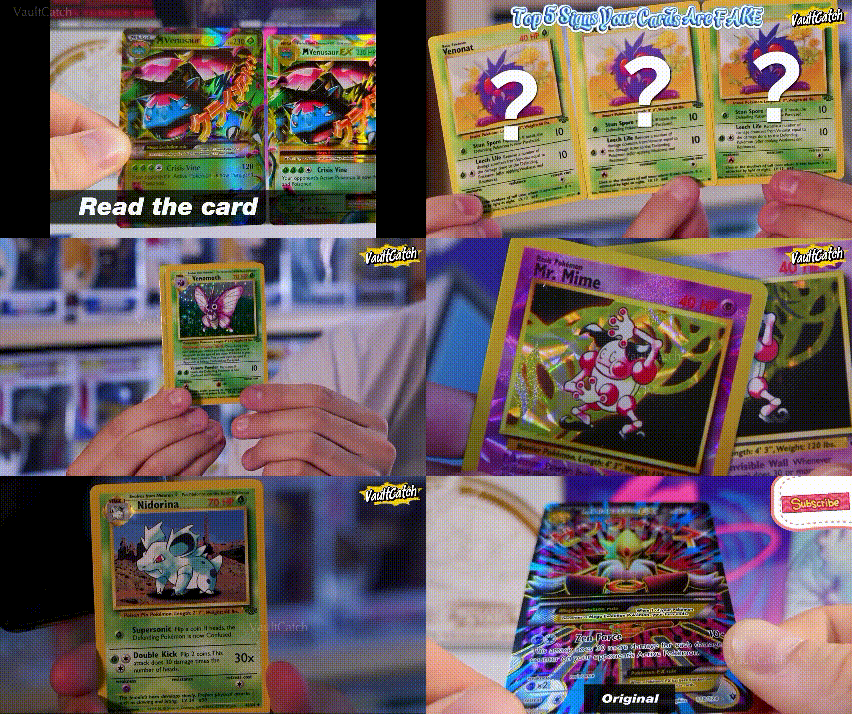
How to Tell if a Pokémon Card is Fake at a Glance
The back of the card is often the most immediate indicator of authenticity.
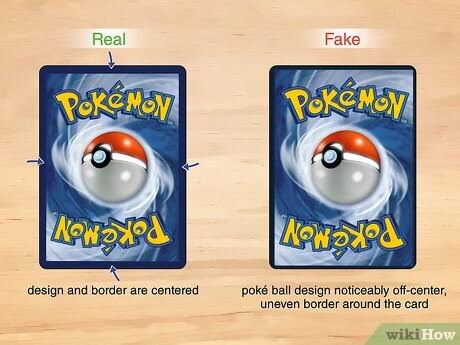
- Back Design: Authentic English cards feature a standardized blue swirl with subtle light-and-dark gradients. Fakes often lack this depth, appearing as a flat, uniform light blue.
- Printing Clarity: Real cards possess sharp artwork and crisp text. Blurry lines or inconsistent alignment are common traits of counterfeit products.
Common Signs of Fake Pokémon Cards
Counterfeiters often struggle with the precision required for official printing.
- Errors in Text: Look for incorrect fonts, uneven letter spacing, or spelling mistakes, such as omitting the accent in “Pokémon.”
- Visual Flaws: Red flags include misaligned borders, off-color printing (such as purplish hues on the back), and holographic foil bleeding into non-holo areas like the text box.
Pokémon Card Light Test
The light test measures the density of the cardstock.
- Opacity: Authentic cards use layered cardstock with a black core that blocks most light.
- Translucency: Because fakes often use cheaper paper without a proper core, they appear translucent and “glow” when held up to a bright light.
Pokémon Card Texture Test
The tactile feel of a card can reveal its origin.
- Surface Feel: Real cards have a sturdy build with a satin or matte finish. Fakes often feel flimsy, plastic-like, or overly glossy.
- Embossing: Special cards like Full Art or VMAX feature raised ink and textures. The absence of this physical texture on a card that requires it is a definitive sign of a fake.

Pokémon Card Holo Pattern Check
Holographic patterns are set-specific and difficult to replicate exactly.
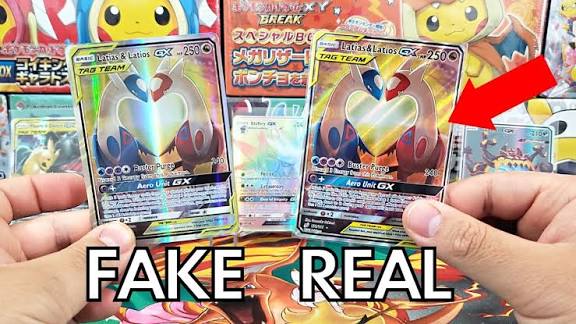
- Pattern Consistency: Real cards have regular, controlled foil patterns (e.g., parallel lines). Fakes often use generic, chaotic, or overly reflective material.
- Shine Direction: Authentic holos reflect light in a specific, intended direction, whereas fakes may glow uniformly from all angles.
Pokémon Card Edge Layering Test
Authentic cards are constructed with a specific “sandwich” method.
- The Black Core: Inspecting the side of a real card reveals a thin black layer between two white layers of cardstock.
- Sloppy Fakes: Most counterfeits are printed on a single sheet of white card and will lack this dark interior stripe.
Pokémon Card Size and Cut Check
Official cards must adhere to strict manufacturing dimensions.
- Standard Size: A genuine card measures exactly 63.5 mm by 88 mm.
- Alignment: Borders on a real card should be even on all four sides. Uneven white space or corners with an incorrect radius suggest a counterfeit.
Pokémon Card Set Symbol and Number Check
Every card must match the data of its official expansion.
- Verification: Check that the set symbol, collector number (e.g., 158/202), and copyright year all align with the official release.
- Discrepancies: Fakes often use the wrong symbol for a specific year or set, which can be verified using official databases.
How to Avoid Buying Fake Pokémon Cards Online
Prevention is the best strategy for collectors.
- Reputable Sellers: Purchase from stores with guaranteed authenticity and clear return policies.
- Market Value: Be wary of rare cards priced significantly below their normal market value; “too good to be true” deals are usually counterfeits.
- Buyer Protection: Use platforms that offer counterfeit claim processes to ensure you can reclaim your money if a fake is delivered.
What to Do if You Accidentally Bought Fake Pokémon Cards
If a counterfeit card is discovered, take immediate action to secure a refund.
Official Support: Some platforms allow you to mail in suspected fakes for expert verification to facilitate a full refund.
Gather Evidence: Take clear photos comparing the fake card to official database scans.
Report the Seller: Use “not as described” or “counterfeit” reporting tools on marketplaces like eBay or TCGplayer.
Frequently Asked Questions
- What is the fastest way to tell if a Pokémon card is fake?
The quickest indicator is the back design color and pattern. Real cards have a deep, multi-tone blue swirl on the back, whereas fakes often use a flat, pale blue. Also check at a glance for blurry printing or misaligned borders. In practice, comparing the suspect card to a known genuine card (even just side-by-side under light) will reveal obvious differences immediately. - How reliable is the light test?
The light test can help, but it must be used carefully. Genuine Pokémon cards block most light due to their black core, so you should see almost no illumination through a real card. Fake cards often allow more light through. However, light tests can vary by card era (some real cards are semi-translucent). Use it as one tool among others: if a card passes too much light even compared with a known real card, it’s suspicious. - Why is card texture important?
Authentic cards use a specific layered cardstock and usually feel slightly textured or satin-like under your fingers. Counterfeit cards often feel overly smooth, papery, or flimsy because they use different materials. If a card feels “off” (too shiny, too thin, or plastic-like) compared to others in your collection, that’s a warning sign of a fake. - Do real Pokémon cards always have the accent on “Pokémon”?
Yes. Official cards always write “Pokémon” with the accent on the é. If a card spells it as “Pokemon” without the accent, it is definitely a counterfeit. This applies to English-language cards of all sorts. This small detail is often overlooked by counterfeiters, but it’s an easy and reliable check. - What should I look for in the holographic pattern?
Real holographic cards use specific foil patterns that match other cards in the same set. These patterns will be uniform (same lines or design repeated). Fake cards often have random or overly shiny foil without consistent pattern, or even bleed of foil into non-holo areas. Tilt the card and compare the holo effect to a verified sample: if it doesn’t look like the known pattern (too sparkly, different color, etc.), it’s likely fake. - Why is the black core layer important?
The black core is part of how real cards are made. It shows up as a dark stripe inside the card edge. If you shine light on a real card’s edge, you’ll see this black layer (or a very dark line). Fake cards often lack this black core and will look all-white or flimsy inside. Checking for the black core (either by light or very gently bending to see the layers) is a strong authenticity check. - Is the rip test safe to use on any card?
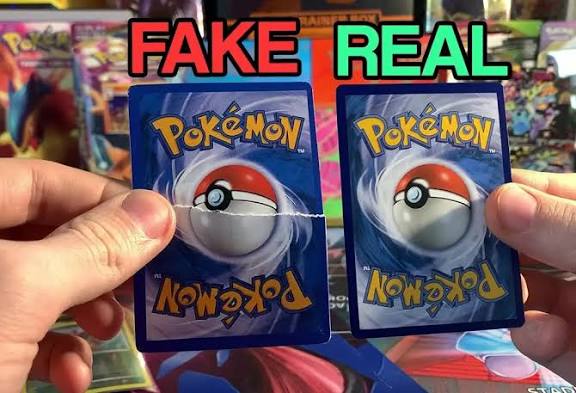
Generally no, especially not on rare or valuable cards. The rip test destroys the card by design, and experts advise against it. While it can reveal the black core (if a card has one), it’s a last resort. Instead, use non-destructive methods above. If you do use it, only do so on very low-value cards where you don’t mind destroying it – but even then, be prepared: a real card will tear showing the black layer, whereas a fake will not. - What card dimensions should a genuine card have?
All standard Pokémon cards (except jumbo promos) measure 63.5 mm × 88 mm (2.5″ × 3.5″). If a card is noticeably smaller, larger, or has uneven cutting so the printed image is off-center, it’s likely fake. Also ensure the printed borders are even on all sides – authentic cards have consistent border widths. Uneven borders or misaligned centering usually indicate a counterfeit. - How can I check a card against an official version?
Use reputable databases. Websites like Pokémon’s official TCG database, Bulbapedia, or PokéBeach have images of every card. Compare your card to a high-quality scan from one of those sources. Pay attention to every element: colors, text placement, symbols, and even minor details like holo pattern. If anything doesn’t exactly match, the card is fake. - What should I do if I confirm a card I bought is fake?
Immediately contact the seller or retailer with your proof (photos, scans). If you bought online, file a counterfeit claim with the marketplace or payment provider. For example, TCGplayer lets you submit a suspected card to their support for expert review and refund. Keep any receipts and be ready to ship the card back if needed. If buying locally, return to the store with evidence. In any case, most platforms will refund confirmed counterfeit purchases.
Conclusion
No single test is perfect, but together these checks form a powerful toolkit to authenticate Pokémon cards. Start with easy non-destructive checks: compare the card back and holo pattern, inspect printing and text, and feel the card’s texture. Use the light and edge tests to confirm the internal layer. Verify dimensions and set markings. Finally, cross-reference any uncertainties with official scans and reliable databases. By systematically applying these 15 methods, collectors at any level can identify virtually all counterfeit cards. Keeping your collection genuine means always being a little skeptical of “too good to be true” deals and using these tells whenever a card’s authenticity is in question.
Sources and Citation
- Pokémon Support, “Did I purchase fake or counterfeit cards?”, updated Jan. 30, 2026.
- Ungraded, “How to Spot Fake Pokémon Cards” (Fake Card Database).
- ZenMarket, “How To Tell If A Pokemon Card Is Fake: The Complete Guide For Collectors”, Aug. 26, 2022.
- Bind Safe, “How to Tell If a Pokémon Card Is Fake: A Collector’s Guide”, Jan. 17, 2026.
- CenterGrade, “How to Spot Fake Pokemon Cards: Essential Tips for Collectors”, Aug. 24, 2025.
- CardShellz, “Best Pokemon Card Sleeves: Collecting & Gameplay” — the “Pokemon Card Sizes: What You Need to Know” section is on this page, and the live page is dated Feb. 28, 2026.
- TCGplayer Help: “TCGplayer Safeguard”, plus the related official counterfeit-claim pages “What is TCGplayer’s Refund and Return policy?” and “How do I know if an item is counterfeit?”.
Recommended
- Top 20 Ugliest Video Game Characters: A Celebration of Unconventional Design
- Top 10 Cyberpunk 2077 Mods to Transform Your Night City Experience
- A Beginner’s Guide to The View Keeper Add-on for Blender
- What Is a Foley Artist? A Complete Guide to the Art of Sound Design
- Secrets to Blender Photorealism: How to Make Your Renders Look Real
- How to Create Warhammer Sisters of Battle Characters with MetaHuman in Unreal Engine 5
- Managing Camera Settings and Reducing Scene Clutter in Blender Projects with The View Keeper
- How do I simulate a drone camera in Blender?
- World of Warcraft: Midnight Review So Far (2026) — Early Access Impressions, Housing, Prey System, and What’s Next
- What Is the Purpose of the Camera View in Blender?