






Sin & Siege PC Game Reveal
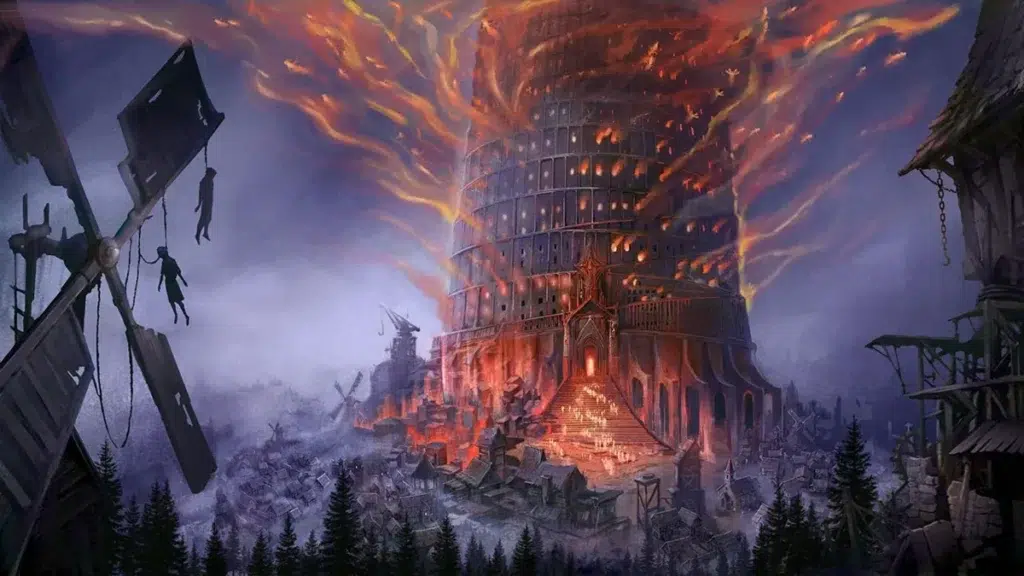
Sin & Siege has been officially revealed as a PC strategy title with an announcement trailer, an active Steam listing, and an opt-in playtest flow. The Steam store page frames the game as a “rogue-lite strategy” about rebuilding Hell’s shattered circles while defending a central objective called the “Heart of Darkness” from “Forces of Light.”
Around launch of the announcement beat in late March 2026, the Steam Community “Official Announcements” feed posted a reveal-style message encouraging players to watch the trailer and join the playtest. Separate outlet coverage in Japan and Taiwan similarly reported an announcement cadence that included the trailer and playtest availability.
A quick clarification is useful because of naming overlap: there is also a separate Steam entry titled SinSiege (without the ampersand) described as an action rogue-like/tower defense hybrid. That is not the same game as Sin & Siege (Steam app 3834300).
What Is Sin & Siege?
Based on the primary sources available today, Sin & Siege is a single-player PC strategy game that blends (1) run/cycle-based structure, (2) base building and management, and (3) wave or phase-based defense against holy attackers. The Steam description casts the player as “Hell’s Architect and Warden,” tasked with rebuilding the infernal circles, growing demon forces, and holding the Heart of Darkness against repeated incursions from the Forces of Light.
In the most concrete mechanical language publicly available, official materials present the loop as alternating phases of “growth and defense,” powered by harvesting and processing souls, converting them into “Sins” and other resources used for construction and military preparation. Third-party coverage explains the loop in similar terms, describing a build-up stage (capture/process sinners and expand infrastructure) followed by a defense stage (hold off wave-based attacks), repeated across a fixed number of turns in at least one described scenario.
A notable and unusual thematic hook is that “sin” is not just flavor text. The game positions the Seven Deadly Sins as an explicit management system that powers different branches of the economy (and, by extension, how a run develops).

Sin & Siege Heaven vs Hell Strategy Game Explained
Sin & Siege frames its central conflict as an asymmetrical war between a rebuilding Hell and an attacking Heaven/“Forces of Light.” In the official store copy, the threat is existential: the player is expected to protect the Heart of Darkness “at any cost,” implying that the entire run hinges on whether that core survives the onslaught.
Hell’s side is positioned as a production-and-defense engine. The Steam Community announcement describes “sinful souls” arriving in “unlimited numbers,” which shifts the typical strategy question from “how do I acquire scarce resources?” to “how do I process and allocate a flood of inputs efficiently while still building defenses?” That same official post emphasizes extraction outputs Sin and Soul Fragments as key fuels for the infernal economy.
The “Forces of Light,” by contrast, are presented as relentless raiders. External reporting describes a wave structure in the defense phase where holy units push toward the Heart of Darkness, and the player must repel them using prepared defenses, demon forces, and direct magical interventions. The Steam store page also characterizes the attackers in more mythic terms (“holy monstrosities”), reinforcing that this is not a purely abstract faction war but a spectacle-driven “Heaven vs Hell” strategy fantasy.
Sin & Siege Gameplay Details
Public information currently supports a gameplay structure built around repeated “cycles” (or turns) that alternate between building/management and defense/combat. The Steam store page describes “growth and defense” cycles where players harvest dark souls, extract Sins, erect structures, and spawn “warriors of the pit,” then prepare to repel the next assault.
External coverage adds specifics that help translate that marketing language into a practical loop. Reports describe a build phase where sinners are captured, souls are collected, and processing buildings (torture-adjacent infrastructure among them) convert souls into resources that finance expansion and demon upgrading; then a defense phase with wave battles aimed at the Heart of Darkness.
Several additional “nuts-and-bolts” details come from the project’s Steam Community news history. By July 2025, the developer’s update referenced adjustable game speed (x1–x3), a pause feature, barracks logic for creating demon warriors, and early work on the combat portion including selecting four warrior classes. While these are older development notes, they matter because they confirm that pacing controls and discrete combat roles are planned parts of the design rather than afterthoughts.
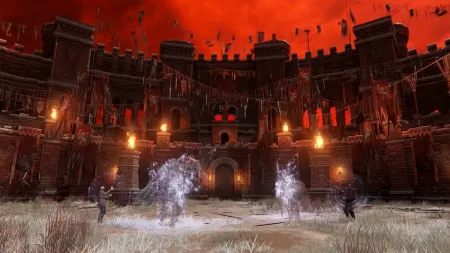
Sin & Siege Roguelite Strategy Features
Sin & Siege self-identifies as a “rogue-lite strategy,” and the public materials point to a run-based structure rather than an endless sandbox city-builder. The Steam store’s “each cycle” language, combined with external descriptions of a turn-limited survival objective (holding for a set number of turns), fits a roguelite loop where each run is an attempt to survive escalating pressure with an economy you assemble under time/turn constraints.
At the same time, it is important to draw a boundary between what is confirmed and what is typical of the roguelite label. Currently available primary sources do not explicitly document long-term meta-progression (e.g., permanent unlock trees between runs), permadeath rules, or procedural generation specifics. What is clearly supported is the existence of repeated cycles/phases, resource processing, expanding circles/territories, and increasingly strong “Forces of Light” responses as the player grows.
One clue about structure comes from the developer’s own site, which describes expanding by “capturing territories” that open new circles of Hell an approach that can naturally support roguelite “maps” or “runs” made of discrete territorial steps. Combined with official language about establishing Hell as an “engine” of suffering and order, the game appears designed to reward optimization and iteration key qualities in strategy roguelites even before meta-progression is detailed publicly.
Sin & Siege Base Building and Defense Mechanics
Sin & Siege’s base building is not framed as peaceful settlement growth. It is framed as building an industrial system under siege, where every facility must justify its footprint in terms of processing throughput, resource conversion, and defense readiness.
On the building side, multiple sources align on the core economy: sinners flow into Hell; their souls (and associated “sin” attributes) are captured, processed, and converted into the currencies needed to expand infrastructure and field demons. The official Steam copy emphasizes that players harvest dark souls and extract Sins to “erect structures and spawn warriors,” explicitly linking base building and army building to the same resource stream.
The defense side is described as assaults directed at the Heart of Darkness. Coverage from Automaton and 4Gamers describes wave-based attacks where prepared defenses and demon troops are used to repel holy enemies, and each successfully defended wave advances the overall turn/run count.
A distinctive combat wrinkle (as described by external reporting) is that the player is not purely an overseer: they can directly intervene by casting spells, including projectile attacks, slowing enemies, and healing allies. That design choice tends to have major strategy implications: direct intervention provides a “skill expression” layer that can save a run when the base is suboptimal, but it can also become an optimization target (choosing which spells to prioritize, and when to spend attention on managing workers versus micromanaging combat).

Sin & Siege Hell Management Gameplay
In Sin & Siege, “Hell management” is not simply cosmetic dungeon dressing; it is the resource management core of the game. The official Steam Community post describes the main resource as sinful souls arriving in unlimited supply, with players expected to capture them and extract Sin and Soul Fragments to keep the infernal machine running.
The developer’s website expands the management pitch into a broader strategy-sim framing: the player develops a demon settlement in Hell, manages resource production, “negotiates” with residents of the underworld, and defends against “liberation campaigns of good.” Even if the exact negotiation mechanics have not been publicly detailed, the presence of that language suggests the game aims for more than a single-resource conveyor belt leaning toward a management sim where different systems (economy, workforce, expansion, defense) pull on each other.
Workforce assignment is a key part of this “Hell as a factory” identity. External coverage describes assigning demons to tasks such as construction, production, harvesting, and torturing sinners, while the official Steam Community post similarly describes demons who “build and toil,” “sow and reap,” and create/train new demons. This is a familiar colony-sim structure workers are the bottleneck except here the “input material” is an endless stream of sinners rather than finite map resources.
Sin & Siege Seven Deadly Sins Systems, progression, and economy
The Seven Deadly Sins are presented as the foundational pillars of the game’s economy and progression. In theological tradition, the “seven deadly sins” are commonly listed as pride, greed, lust, envy, gluttony, wrath, and sloth. Sin & Siege adapts that vocabulary into a mechanical framework where each sin “powers a distinct branch of the infernal economy,” and different kinds of souls provide corresponding advantages.
Multiple sources provide concrete examples of how the system works:
- The Steam store text states that Sloth powers farms, manufactories, and quarries, and Lust governs propagation. It also describes “souls burdened” by specific sins granting benefits, giving the example that Gluttons multiply farm output and the Slothful are “compelled to toil faster.”
- The Steam Community announcement adds that Greed helps stockpile resources, Sloth improves worker effectiveness, Lust supports multiplication, and Wrath improves results when holy warriors attack.
- The developer’s own site describes the overall concept: each mortal sin is responsible for part of Hell’s infrastructure, giving examples such as Sloth for producing resources, Greed for trade, and Gluttony for food.
- External reporting aligns with these examples and adds more applied framing: sins correspond to unique economy/combat domains (for example, sloth improving farms/factories, lust for reproduction/expansion, wrath for combat), and different “sin-type” souls provide additional bonuses that shape the run’s optimization choices.
Strategically, this system accomplishes two things at once. First, it creates a multi-lane economy where “progress” is not just “more resources” but “the right mix of resource lanes and modifiers.” Second, it ties the player’s choices to a legible thematic model—sin literally fuels Hell—so even complex optimization has a coherent fictional justification.

Sin & Siege Demons, Souls, and Infernal Economy
The infernal economy in Sin & Siege appears to revolve around three linked components: (1) the supply and processing of souls, (2) the production and allocation of Sins and other resources, and (3) demon labor as the force that moves resources through the system.
Souls are the foundational input. Official messaging frames them as arriving continuously “unlimited numbers” of sinful souls entering the player’s domain creating an economy defined by throughput and conversion efficiency. The same official post specifies that the player catches souls and extracts Sin and Soul Fragments, positioning these as “key fuel” for the infernal engine.
Sins appear to function like both currency and specialization. Official store copy describes extracting Sins from souls to erect structures and spawn warriors, while the dedicated Seven Deadly Sins section positions each sin as an economic pillar with unique effects and bonuses tied to soul types. This implies that “Sin” is not merely a single pooled currency; rather, it may be a set of differentiated resources or modifiers tied to specific subsystems (production, propagation, stockpiling, combat, and more).
Demons are the labor and military layer. The official announcement highlights demons as workers who build, farm, train demons, capture/torment sinners, and generally keep the machine running; external coverage echoes that demon assignment across tasks is part of the management gameplay. In practical strategy terms, that often means the player’s fundamental tradeoff is not “do I have enough resources?” but “do I have enough worker time and infrastructure capacity to convert incoming souls into the specific outputs I need before the next attack?”
The economy is also explicitly militarized. The store page warns that focusing too heavily on alluring economic buildings without maintaining defense is “fatal,” reinforcing that this is a siege economy where every throughput increase must be matched with border fortification and fighter development.
Sin & Siege Developer and Publisher Details
Sin & Siege lists its developer as Nova xPress and its publisher as HeroCraft PC on Steam.
The developer’s own site provides unusually direct transparency about the studio’s structure. The “About the studio” page states that the studio is a one-person operation (at least at the time of writing), naming the developer as Petrov Alexey and describing his background outside the game industry. The same page describes his toolchain as GameMaker and Aseprite, and mentions that he previously had experience with Python before moving into game development.
That production context matters for interpretation of the game’s design scope. A solo-developed strategy-management title normally must rely on systems depth, readable art direction, and strong core loops more than on extravagant cinematic production. The public-facing materials are consistent with that: a pixel-art/2D presentation and a systems-forward pitch built around cycles, worker assignments, resource conversion, and defense.
One more development detail appears in the Steam Community’s July 2025 post: the developer noted ongoing active work, with specific features recently added (pause, speed controls, barracks logic, early combat development). This is useful because it anchors the project as long-running (public Steam presence at least by mid-2025) and systematically iterating toward a combined management + combat structure.
A brief software-version note is appropriate because core tools referenced by the developer have undergone naming/version changes that can confuse readers. The developer describes using “GameMaker.” Official branding guidance from GameMaker states that the names “GameMaker:Studio” and “GameMaker Studio 2” are no longer used, and that the product is now branded simply as “GameMaker.” In other words, references to “GameMaker Studio 2” in older community discussions may still map to the same tool family the developer is describing today, despite the name shift.

Why Sin & Siege Stands Out Among Strategy Games
Even at the reveal stage with much still undisclosed Sin & Siege stands out on several confirmed axes.
- It treats the economy as a processing problem, not a scarcity problem. Official messaging emphasizes an endless stream of sinful souls. That framing is uncommon in management strategy, where the dominant challenge is typically acquiring limited inputs; here the challenge is building the right conversion pipelines fast enough while maintaining defenses.
- It hardwires theme into mechanics via the Seven Deadly Sins. Rather than using “sins” as mere narrative dressing, the game ties sins to economic lanes and to benefits based on soul types, making moral vocabulary part of the optimization layer.
- It blends macro strategy with moments of active intervention. External reporting describes player-cast spells during defense (projectiles, slows, healing), creating an additional layer beyond typical tower defense “place and watch.” This potentially raises run variance and skill expression, especially in a roguelite format where each run’s economy may differ.
- It has a clear “siege clock.” Coverage describing survival across a set number of turns (10 in at least one described structure) signals a run-like arc with a definable win condition, which is structurally different from open-ended colony sims or city builders.
Finally, the production story (solo developer, systems-forward pitch) suggests a game built around deep loops rather than shallow variety—often the best-case scenario for niche strategy audiences that value replayable optimization over one-time spectacle.
Sin & Siege Steam Page and Wishlist Info
Sin & Siege has an official Steam store page where players can wishlist the game, follow it, and request access to a Steam playtest. The page explicitly includes a “Join the Sin & Siege Playtest” section explaining that access is requested through Steam and that the developer will notify players when more participants are allowed.
Steam also lists feature flags relevant to players planning their libraries: the store page indicates single-player support and Steam Family Sharing (with the caveat that prerelease titles may not behave like released ones). The store listing shows 12 supported interface/subtitle languages (including English, Russian, French, German, Spanish variants, Japanese, Korean, and Chinese variants).
For readers tracking development signals, SteamDB an unaffiliated public database that mirrors Steam metadata also shows that the Steam entry has a playtest and detects “GameMaker Engine” as the technology. Because SteamDB is a third-party reflection of Steam data rather than an official publisher statement, it is best used as a corroborating technical hint rather than the sole basis for design claims.

Sin & Siege Release Date for PC
As of March 31, 2026 (Africa/Lagos time), the Steam store page lists the PC release date as “To be announced.” No firm public launch window is confirmed in the accessible primary sources beyond that status, though the late-March announcements and playtest availability indicate the project is in an externally playable phase.
Sin & Siege System Requirements on PC
The Steam store page includes published minimum and recommended PC system requirements. Notably, the CPU and GPU lines appear identical between minimum and recommended on the current listing, while the DirectX version differs.
- Minimum requirements listed on Steam include:
- Windows 10 (64-bit), Intel Core i5-4670 (quad-core) or AMD Ryzen 3 2200G (quad-core), 4 GB RAM, NVIDIA GeForce 1650 (4 GB) or “AMD Radeon RTX570 (4 GB)” (as written on Steam), DirectX 11, and 100 MB storage.
- Recommended requirements listed on Steam include:
- Windows 10 (64-bit), Intel Core i5-4670 (quad-core) or AMD Ryzen 3 2200G (quad-core), NVIDIA GeForce 1650 (4 GB) or “AMD Radeon RTX570 (4 GB)” (as written on Steam), DirectX 12, and 100 MB storage.
Because these requirements are coming from a store listing that can change during development, they should be treated as provisional—particularly the GPU naming on the AMD line, which may reflect a typo or placeholder.
Sin & Siege Trailer and First Look Breakdown
An “Announcement Trailer” is part of the public reveal package for Sin & Siege, referenced directly by the Steam Community announcement and by multiple outlets covering the game’s reveal. SteamDB’s metadata for the Steam listing also labels a trailer entry as “Announcement Trailer,” reinforcing that this is the intended first-look asset tied to the store page.
Even without relying on frame-by-frame scrutiny, the combined sources clarify what the “first look” is meant to communicate:
- The setting and perspective: Coverage describes a 2D, pixel-art presentation and characterizes the gameplay as a strategy/tower-defense hybrid, and the developer’s site describes a side-view roguelite strategy about growing a demon settlement in Hell.
- The central objective: The Heart of Darkness is repeatedly emphasized as the core structure whose survival defines success, and the invaders are framed as holy forces intent on destroying it.
- The core gameplay rhythm: The official store page’s “growth and defense” cycles are echoed by external summaries describing a construction phase (capture/process souls; build; summon/raise demons) followed by a defense phase (wave attacks; player spells; survive turns).
- The signature differentiator: The Seven Deadly Sins are highlighted in the official materials as pillars of the infernal machine, and outside reporting focuses on this as the most distinctive system hook sins powering different economic or combat domains and influencing bonuses derived from processed souls.
For SEO readers who want a precise takeaway: the first-look messaging positions Sin & Siege as a run-structured, economy-driven Hell-builder that mixes colony-sim labor assignment with tower-defense survival, distinguished by a Seven Deadly Sins economy model and an “endless souls” resource premise.
Frequently Asked Questions (FAQs)
- Sin & Siege is what genre of PC game?
Sin & Siege is described on Steam as a “rogue-lite strategy,” and public coverage characterizes it as a 2D strategy/tower-defense hybrid with base building, management, and wave defense against holy attackers. - Is Sin & Siege single-player or multiplayer?
The Steam store page lists it as single-player. - What is the Heart of Darkness in Sin & Siege?
The Heart of Darkness is presented as the central core of the player’s base and the main objective that must be protected from the Forces of Light. - What do “sinful souls” do in gameplay?
Official messaging describes sinful souls as the main resource stream: players capture them and extract Sin (and Soul Fragments) to fuel the infernal economy, build structures, and grow demon forces. - Are the Seven Deadly Sins just story flavor, or a real system?
They are presented as a real system. Official text says each sin powers a distinct branch of the economy, and sources describe sin-aligned souls granting corresponding bonuses (with examples like Sloth, Lust, Gluttony, Greed, and Wrath tied to production, propagation, stockpiling, and combat). - Does Sin & Siege include a playtest on Steam?
Yes. The Steam store page includes a “Join the Sin & Siege Playtest” section where players can request access, and the Steam Community announcement explicitly invites players to join the playtest. - Who is making and publishing Sin & Siege?
Steam lists Nova xPress as the developer and HeroCraft PC as the publisher. The developer’s site further describes the project as being made by a solo developer under the Nova xPress name. - Is Sin & Siege turn-based, real-time, or both?
The Steam store copy describes “cycles” split into growth and defense, while external reporting describes a structure where each defended wave advances the turn count and victory can involve surviving a fixed number of turns (10 in one described structure). This suggests a turn/round structure layered on top of real-time-style defense action, but the exact timing model may evolve during development and playtests. - What are the current PC system requirements?
Steam lists Windows 10 (64-bit), a midrange quad-core CPU (i5-4670 or Ryzen 3 2200G), 4 GB RAM, and a GTX 1650 / (as written) “Radeon RTX570,” with DirectX 11 minimum and DirectX 12 recommended, and 100 MB storage. - Where can Sin & Siege be wishlisted?
The official Steam page provides wishlist and follow options, along with request access for the playtest.
Conclusion
Sin & Siege’s reveal positions it as a PC-first, systems-driven Heaven-vs.-Hell strategy game built around an unusually explicit “sin economy”: souls arrive continuously, are processed into Sin-based advantages, and are converted into the infrastructure and demon forces needed to survive repeated assaults on the Heart of Darkness. With its growth/defense cycle structure, worker-assignment framing, and a defense phase that reportedly includes player-cast spells, the game’s pitch targets strategy players who enjoy optimizing production lines under siege pressure rather than building indefinitely in safety. The most decision-relevant current facts solo-driven development context, publisher association, open playtest presence, and provisional PC requirements are all visible in public sources today, even as the final release date remains unannounced.
Sources and citation
- Steam store page- Sin & Siege
https://store.steampowered.com/app/3834300/Sin__Siege/ - Steam Community official announcement / community hub- Sin & Siege
https://steamcommunity.com/app/3834300 - Nova xPress official site
https://novaxpress.ru/ - Automaton Media coverage- Sin & Siege announcement
https://automaton-media.com/articles/newsjp/20260327-432672/ - 4Gamers coverage- Sin & Siege
https://www.4gamers.com.tw/news/detail/78076/sin-and-siege - SteamDB metadata- Sin & Siege
https://steamdb.info/app/3834300/info/ - Blender Foundation- Blender 3.3 LTS release notes
https://www.blender.org/download/releases/3-3/ - Epic documentation- Using Alembic for Grooms in Unreal Engine
https://dev.epicgames.com/documentation/en-us/unreal-engine/using-alembic-for-grooms-in-unreal-engine - Epic documentation- Importing Grooms into Unreal Engine
https://dev.epicgames.com/documentation/en-us/unreal-engine/importing-grooms-into-unreal-engine - GameMaker official branding guidance
https://gamemaker.io/en/legal/brand - Britannica- Seven deadly sins background reference
https://www.britannica.com/topic/seven-deadly-sins
Recommended
- Metahuman Animator: How to Animate Realistic Characters in Unreal Engine 5
- How to Get the Best Hair Highlights for Realistic Rendering
- Simplifying Camera Control in Blender with The View Keeper Plugin
- Bluey and “Bluey’s Best Day Ever!” Have Arrived at Disneyland – Everything You Need to Know About the New Interactive Experience
- How do I change the camera aspect ratio in Blender?
- A Quiet Place: Part III Cast Update: Jack O’Connell Joins as Emily Blunt and Cillian Murphy Return
- Managing Blender Scenes with Multiple Cameras Using The View Keeper
- How do I make the camera move along a curve in Blender?
- Walton Goggins Shares Unexpected Inspiration Behind The Ghoul In Fallout 76 & Fallout Season 2: Behind the Voice, Character, and Gaming Legacy
- Dead by Daylight’s All-Kill: Comeback Adds Game’s First Urban Map — Trickster’s Delusion, Kwon Tae-young Perks, and Release Date