









Meta description (SEO): In March 2026, Epic Games confirmed layoffs affecting over 1,000 employees, citing a downturn in Fortnite engagement and the need for $500 million+ in cost savings. This report explains what Tim Sweeney said afterward, why many critics called his response “out of touch,” and why some people urged him to resign.
The backlash around the main keyword—“Epic CEO Tim Sweeney Pisses Everyone Off With ‘Out of Touch’ Response To Putting 1,000 Game Makers Out Of Work. people calling on Sweeney to resign”—stems from a combination of the layoff scale, Epic’s stated rationale, the timing (including a recent in-game currency price change), and the tone of Sweeney’s public follow-up posts in the days after the cuts.
Tim Sweeney backlash explained
In late March 2026, Epic Games publicly posted an internal note from CEO Tim Sweeney confirming the company was laying off “over 1000” employees. That announcement quickly became part of a broader industry conversation about live-service game economics, post-pandemic slowdowns, and the wave of game industry job cuts.
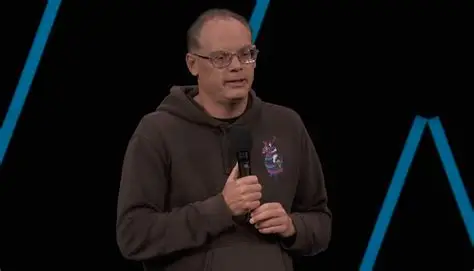
The backlash widened after Sweeney posted on X (as quoted by multiple outlets) suggesting employers would soon see a “stream of resumes” from “once-in-a-lifetime quality” candidates because Epic allegedly never lowered its hiring bar and the layoffs were not performance-based. In commentary coverage, critics argued this framing sounded like corporate self-congratulation at a moment when workers were suddenly unemployed and entering a crowded labor market.
Separately, a later wave of outrage developed around a widely shared story of a laid-off employee with terminal brain cancer and resulting insurance concerns, prompting Sweeney to apologize publicly and say Epic was “in contact with the family” and would “solve the insurance.”

Epic Games layoffs 2026 explained
Epic’s March 24, 2026 memo states the company was laying off over 1,000 employees, describing the situation as a repeat of earlier painful restructuring (“I’m sorry we’re here again”). Reuters also reported the cuts as more than 1,000 jobs, framing them within a broader slowdown in games industry growth and the costs of sustaining engagement in live-service titles.
Multiple sources (including Epic’s memo, AP, and Reuters) converge on this basic timeline:
- March 10, 2026: Epic/ Fortnite announced a V-Bucks pricing change starting March 19, citing increased operating costs (“The cost of running Fortnite has gone up a lot…”).
- March 19, 2026: Fortnite published that it had returned to Google Play worldwide (Android).
- March 24, 2026: Epic announced layoffs of over 1,000 employees, tying the cuts to an engagement downturn and broader cost pressures.
- March 25, 2026: Sweeney’s post-layoff X messaging triggered “out of touch” criticism and (in some cases) resignation calls, according to coverage of the reaction.
- March 30, 2026: Sweeney apologized over the viral insurance-related case involving a terminally ill laid-off employee, saying Epic would address the insurance problem.
AP reported Epic said it would have roughly 4,000 employees after the layoffs, and characterized the cuts as about 20% of the company’s workforce.
Why Epic Games laid off 1,000 employees
Epic’s official explanation is centered on a downturn in Fortnite engagement beginning in 2025 that left the company “spending significantly more than” it was making, requiring major cuts to keep Epic funded.
Epic’s memo also separates the causes into two categories:
- Industry-wide pressures: slower growth, weaker spending, tougher “cost economics,” weaker console sales versus the prior generation, and competition for user time from other entertainment (including online/social experiences).
- Epic-specific challenges: difficulty delivering “consistent Fortnite magic,” still being early in returning to mobile and optimizing for global smartphone audiences, and costs/risks from being an “industry vanguard” in distribution/policy battles.
Reuters added context that live-service games face rising costs because they depend on frequent, expensive new content to retain players, and reported Epic’s view that engagement declines are occurring even for blockbuster titles.

Epic Games layoffs and Fortnite engagement decline
Epic’s memo explicitly dates the engagement downturn to 2025 and links it to a mismatch between revenue and spending. Reuters similarly reported a drop in Fortnite engagement as the central driver and noted broader live-service fatigue pressures on engagement.
Reuters provided a specific external datapoint: it reported that Fortnite topped U.S. monthly active players on PlayStation and Xbox in the prior month, but average playtime fell sharply, citing analyst Mat Piscatella of Circana. This detail matters to the layoff narrative because it suggests Fortnite can remain large in reach while weakening in the engagement intensity that supports live-service monetization.
AP also highlighted that Epic described games like Fortnite as competing for attention against social media and other online entertainment, reinforcing the idea that engagement is not only about game quality but also about time-allocation competition.
Epic Games cost cutting and 500 million savings plan
Epic’s March 2026 note states the layoffs were paired with over $500 million in identified cost savings from contracting, marketing, and closing open roles, positioning this combination as a move toward stability. Reuters also reported the expected $500 million savings and the same broad buckets (contracting, marketing, open roles).
This matters for understanding the backlash: critics who focused on leadership accountability argued that the memo’s framing implies a structural cost problem that grew large enough to require both mass layoffs and unusually large non-headcount savings targets.

Was AI responsible for the Epic Games layoffs?
Epic’s official position is unambiguous: Sweeney wrote that the layoffs “aren’t related to AI.” AP also reported Epic said the cuts were not AI-driven, instead linking them to macroeconomic and industry changes, plus Epic-specific challenges.
In the same memo passage, Sweeney framed AI as a potential productivity booster rather than a headcount replacement rationale, stating Epic wanted as many great developers making content and tech as possible.
Epic Games layoffs severance package details
Epic’s March 2026 memo describes a severance and benefits package with multiple components, including:
- At least four months of base pay, with more based on tenure.
- Extended Epic-paid healthcare coverage, with the memo giving the U.S. example of six months of paid coverage.
- Stock and equity adjustments, including accelerated vesting through January 2027 and extended time (up to two years) to exercise equity.
Because healthcare continuity is a major stress point in U.S. layoffs, the benefits details became newly salient in the later insurance controversy, which raised questions about what severance healthcare did (and did not) cover in a specific family’s circumstances.

Tim Sweeney out of touch response controversy
The “out of touch” controversy largely centers on tone, timing, and implied responsibility. The layoffs message (internal memo published publicly) conveys regret and financial necessity; the later public X post, by contrast, reads to critics like a recruitment-oriented endorsement of the laid-off workers’ talent—without matching emphasis on human impact.
Coverage capturing the critical reaction points to how the post can be interpreted as reframing a job loss crisis as a benefit to employers (“stream of resumes”) and a brand statement about Epic’s hiring standards, rather than a worker-centered message addressing instability, healthcare stress, and the industry’s limited hiring capacity.
What Tim Sweeney said after Epic layoffs
Sweeney’s publicly posted March 24 memo includes several core claims and commitments:
- The layoffs were driven by a Fortnite engagement downturn starting in 2025 and a spending/revenue imbalance.
- Epic identified $500 million+ in additional cost savings (contracting, marketing, open roles).
- The cuts were not related to AI, and Epic still wants many developers building content and technology.
- Epic’s forward plan emphasized: building stronger Fortnite seasonal content and live events, accelerating developer tools, and evolving from Unreal Engine 5/UEFN toward Unreal Engine 6.
- The memo promised severance, healthcare extensions, and equity-related measures for impacted employees.
After the memo, the widely discussed X post (as quoted in coverage) asserted that employers would soon see resumes from “once-in-a-lifetime quality” people, and that Epic’s layoffs were not performance-based “rightsizing.”

Tim Sweeney resign calls after Epic layoffs
Reporting on the immediate reaction notes that, alongside broader criticism, some people explicitly called for Sweeney to resign, with the “pile-on” framing appearing in headlines and reaction writeups.
Kotaku’s coverage linked the resignation talk to perceptions that Sweeney’s post sounded self-aggrandizing and tone-deaf, and that mass layoffs following major strategic bets are a leadership accountability issue rather than a talent quality issue.
What Tim Sweeney’s X post means for laid off developers
There are two competing interpretations of the post’s practical meaning for laid-off developers, both supported by how the message was framed publicly:
First, as a reference signal: by emphasizing that laid-off staff were top-tier and not cut for performance reasons, the message can function like a large-scale recommendation to hiring managers scanning candidates from Epic. (This is an inference about intent and effect, based on how the message is framed toward “employers.”)
Second, as an accelerant of anger: multiple reactions argue that “resume hype” does not solve the core problems of a tight labor market, and may come across as minimizing the immediate hardship of job loss—especially in a sector experiencing repeated, high-volume layoffs.
A more concrete “what it means” outcome is visible in the job-search infrastructure created by affected workers: for example, PocketGamer.biz reported a laid-off employee (Lee Graham) helped build an “Awesome People List” site to make displaced workers easier for recruiters to find, reflecting how quickly laid-off staff moved to self-organize visibility tools.
How the gaming industry reacted to Tim Sweeney’s post
Reactions came from both high-profile community voices and recognized industry professionals.
Kotaku reported multiple critical reactions, including from Michael Douse (publishing director at Larian Studios) and from a former technical lead and union representative, who argued that stating layoffs are not performance-based can damage morale for remaining employees.
Beyond that, commentary from veteran developers also became part of the story. GamesRadar and PC Gamer reported that Chet Faliszek (a former Valve writer) criticized the situation and contrasted Epic’s actions with Gabe Newell’s leadership model, raising questions about motivation and stability when a massively successful company conducts layoffs of this scale.
Industry reporting also consistently framed Epic’s layoffs as part of a wider sector dynamic where studios are restructuring in response to changes in growth, costs, and consumer behavior.
Why developers are angry at Tim Sweeney
Developer anger—based on aggregated reporting and public reaction—clusters around a few recurring themes:
- A theme of leadership accountability: critics argue that when the stated reasons for layoffs relate to strategic spending and long-term bets, the burden should be understood as managerial, not employee-driven.
- A theme of tone and priorities: the “stream of resumes” framing is interpreted by some as centering Epic’s reputation and employers’ benefit rather than unemployment hardship, making it feel emotionally misaligned with the moment.
- A theme of repeated disruption: because Epic already conducted major layoffs in 2023 (and publicly framed them as stabilizing), the return to mass layoffs in 2026 is treated by critics as evidence that deeper structural issues persist.
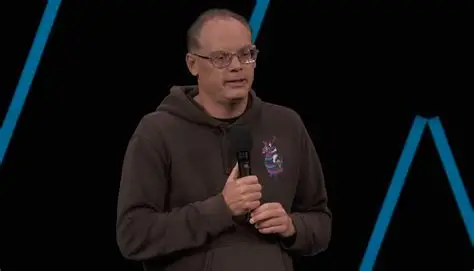
Tim Sweeney criticism from players and game developers
Player criticism during this period also intersected with monetization controversy. Fortnite’s March 10 announcement described a reduction in V-Bucks value per dollar starting March 19, framed as necessary because operating costs “gone up a lot.”
The proximity of that pricing change to the March 24 layoffs fueled a combined narrative in coverage: a game is asking players for more (or delivering less currency per purchase) while the company is simultaneously cutting jobs and saying it must reduce costs.
Separately, criticism from industry peers and developers focused on the public messaging itself—the “out of touch” framing—rather than only the layoffs or monetization.
Epic Games layoffs compared to 2023 job cuts
Epic’s September 28, 2023 memo announced layoffs of around 830 employees (about 16%), and also included divestitures/spin-offs (Bandcamp divestiture and spinning off most of SuperAwesome). AP’s 2026 reporting also referenced the 2023 round as the prior major layoff baseline.
The similarities are striking:
- Both memos describe Epic as spending more than it earns and needing a more sustainable cost structure.
- Both acknowledge Fortnite’s centrality to the company’s economics and the difficulty of maintaining profitability while pursuing ambitious ecosystem goals.
But there are also meaningful differences, especially for affected workers:
- Scale: 2026 is over 1,000 layoffs, versus about 830 in 2023.
- Severance terms: 2023 offered six months of base pay (per Epic’s memo), while 2026 offered at least four months (with more based on tenure).
- Stabilization messaging: 2023’s FAQ section included an explicit “Will there be more layoffs? No,” claiming the changes would stabilize the business. The 2026 memo contains no comparable guarantee, instead emphasizing “extreme” market conditions and a need to rebuild again.

Epic Games controversy and the future of Fortnite
The layoffs were not the only operational change: multiple outlets reported Epic would wind down three Fortnite modes—Rocket Racing, Ballistic, and Fortnite Festival Battle Stage—connected to engagement performance.
Game Informer reported Fortnite posted that some modes failed to attract and retain a large enough player base, with Ballistic and Festival Battle Stage ending April 16, 2026 (Fortnite update 40.20), and Rocket Racing continuing until October 2026. PC Gamer reported the same shutdown schedule and tied the decision to mode underperformance at the scale Epic needed.
From Epic’s own roadmap framing, the company intends to refocus on “fresh seasonal content, gameplay, story, and live events,” while also pushing developer tool evolution from Unreal Engine 5/UEFN toward Unreal Engine 6 and planning “huge launch plans” toward the end of 2026.
Mobile distribution also remains part of Epic’s stated challenge set. In the 2026 memo, Sweeney described Epic as early in returning to mobile and optimizing for global smartphones. Fortnite’s March 19 post announcing its return to Google Play worldwide supports that mobile-return narrative as an active operational priority.
Epic Games layoffs latest news and reactions
As of March 30, 2026, one of the biggest follow-on stories involved a laid-off employee with terminal brain cancer and claims about the loss of life insurance coverage, which went viral and prompted public response from Sweeney.
The Guardian reported Sweeney apologized and said Epic would “solve the insurance,” adding that medical information confidentiality meant the condition was not a factor in layoff decisions. Game Informer similarly reported the text of Sweeney’s response and the family’s confirmation that discussions with Epic were underway.
Also on March 30, PocketGamer.biz reported that affected staffers were building job-market support tools, including the “Awesome People List” site created by Lee Graham to help recruiters browse displaced talent across disciplines, illustrating how workers mobilized to counteract the shock of the cuts.

Frequently Asked Questions (FAQs)
- When did Epic Games announce the 2026 layoffs?
Epic posted Sweeney’s memo dated March 24, 2026, stating it was laying off “over 1000” employees. - How many employees were laid off?
Epic’s memo says “over 1000.” AP reported the cuts as 1,000 employees and described them as roughly 20% of the workforce. - Why did Epic Games lay off 1,000 employees?
Epic’s memo cites a downturn in Fortnite engagement starting in 2025 that left Epic spending significantly more than it was making, along with broader market pressures. - What is the “$500 million savings plan”?
Epic stated the layoffs plus over $500 million in identified savings (contracting, marketing, closing open roles) would put the company in a more stable place. - Were the layoffs caused by AI replacing workers?
Epic explicitly said the layoffs aren’t related to AI. - What did Tim Sweeney post that people called “out of touch”?
Coverage quotes Sweeney posting that employers would see a “stream of resumes” from “once-in-a-lifetime quality” people and that the layoffs weren’t performance-based “rightsizing.” - Did people really call for Tim Sweeney to resign?
Reporting on the backlash stated that some critics did call for him to resign, tied to perceptions of tone-deafness and mismanagement. - What severance did Epic say it would provide in 2026?
Epic’s memo said severance would include at least four months of base pay (more based on tenure), plus extended healthcare coverage, with six months cited for U.S. employees, and equity/vesting adjustments. - How does the 2026 layoff compare to Epic’s 2023 layoffs?
Epic’s 2023 memo described layoffs of around 830 employees (16%) and included divestitures; the 2026 memo describes over 1,000 layoffs and a $500M+ savings push. - What does this mean for Fortnite going forward?
Epic’s memo says it will focus on stronger seasonal content and live events and accelerate tool development (UE5/UEFN toward UE6). Reporting also says Epic is winding down Rocket Racing, Ballistic, and Festival Battle Stage as part of broader restructuring.

conclusion
The March 2026 Epic Games layoffs became a flashpoint not only because of their size (over 1,000 employees) but because Epic tied them to a multi-year engagement downturn, described extreme market conditions, and paired them with a $500 million+ cost-savings drive—signals of deeper structural pressure in the live-service model.
The backlash against Tim Sweeney intensified when his public follow-up messaging (as quoted in coverage) framed the layoffs partly as an employer opportunity to hire elite talent—language many observers read as emotionally mismatched to the severity of job loss, prompting “out of touch” criticism and even some resignation calls. Subsequent events—especially the viral insurance-related case and Sweeney’s apology—kept the story in the news cycle and underscored how layoffs can trigger cascading human impacts beyond severance lines in a memo.
sources and citation
- Epic Games — “Layoffs at Epic” (September 28, 2023)
https://www.epicgames.com/site/en-US/news/layoffs-at-epic - Fortnite News — “Upcoming Fortnite V-Bucks Pricing Alignment” (September 27, 2023)
https://www.fortnite.com/news/upcoming-fortnite-v-bucks-pricing-alignment-in-october-2023 - Major News Coverage (September 2023)
- Reuters — “Epic Games to lay off about 16% of staff”
https://www.reuters.com/technology/epic-games-lay-off-about-16-staff-memo-2023-09-28/ - Associated Press — “Fortnite maker Epic Games laying off 16% of workforce”
https://apnews.com/article/epic-games-layoffs-fortnite-16-percent-e696238b97c0f1d07c080b06b6f00e9f - The Verge — “Epic Games is laying off about 830 people”
https://www.theverge.com/2023/9/28/23894264/epic-games-layoffs-16-percent-employees-mediatonic-super-awesome - Industry Reaction and Follow-up
- Kotaku — Coverage of Epic Games CEO Tim Sweeney’s memo and industry reaction
https://kotaku.com/epic-games-layoffs-fortnite-tim-sweeney-1850882143 - PC Gamer — “Tim Sweeney says Epic has been spending ‘way more money than we earn’”
https://www.pcgamer.com/epic-games-layoffs/ - The Guardian — Coverage of the broader impact on the gaming industry
https://www.theguardian.com/games/2023/sep/29/fortnite-developer-epic-games-to-lay-off-830-staff - PocketGamer.biz — “The Epic Games Awesome People List”
https://www.pocketgamer.biz/news/82542/epic-games-colleagues-create-the-epic-games-awesome-people-list/ardian (March 30, 2026): There is no “insurance controversy” report involving Epic Games from this date.
Recommended
- A Quiet Place: Part III Cast Update: Jack O’Connell Joins as Emily Blunt and Cillian Murphy Return
- Duskbloods is still coming this year, exclusive to Nintendo Switch 2 — 2026 release update + everything we know about The Duskbloods
- The Most Efficient Way to Create 3D Ponytails in Blender
- How do I make the camera move along a curve in Blender?
- Daredevil: Born Again Season 2 Review – A Darker, Grittier Marvel Comeback That Surpasses Season 1
- How do I export a camera from Blender to another software?
- How to Create Realistic Hair Using the New Hair Tools, Geometry Nodes, and Hair Curves in Blender
- FBC: Firebreak just got its last ever major update (Open House), plus a permanent price drop and free Friend’s Pas
- $270 Stranger Things: The Complete Series Blu-ray Collection Announced — 25 Discs, 148-Page Artbook, and Exclusive Hellfire Club D20 Dice
- Conversational AI in Unreal Engine: Integrate (MetaHuman, ReadyPl AayerMe, Convai etc) for Real-Time Interactive Characters