





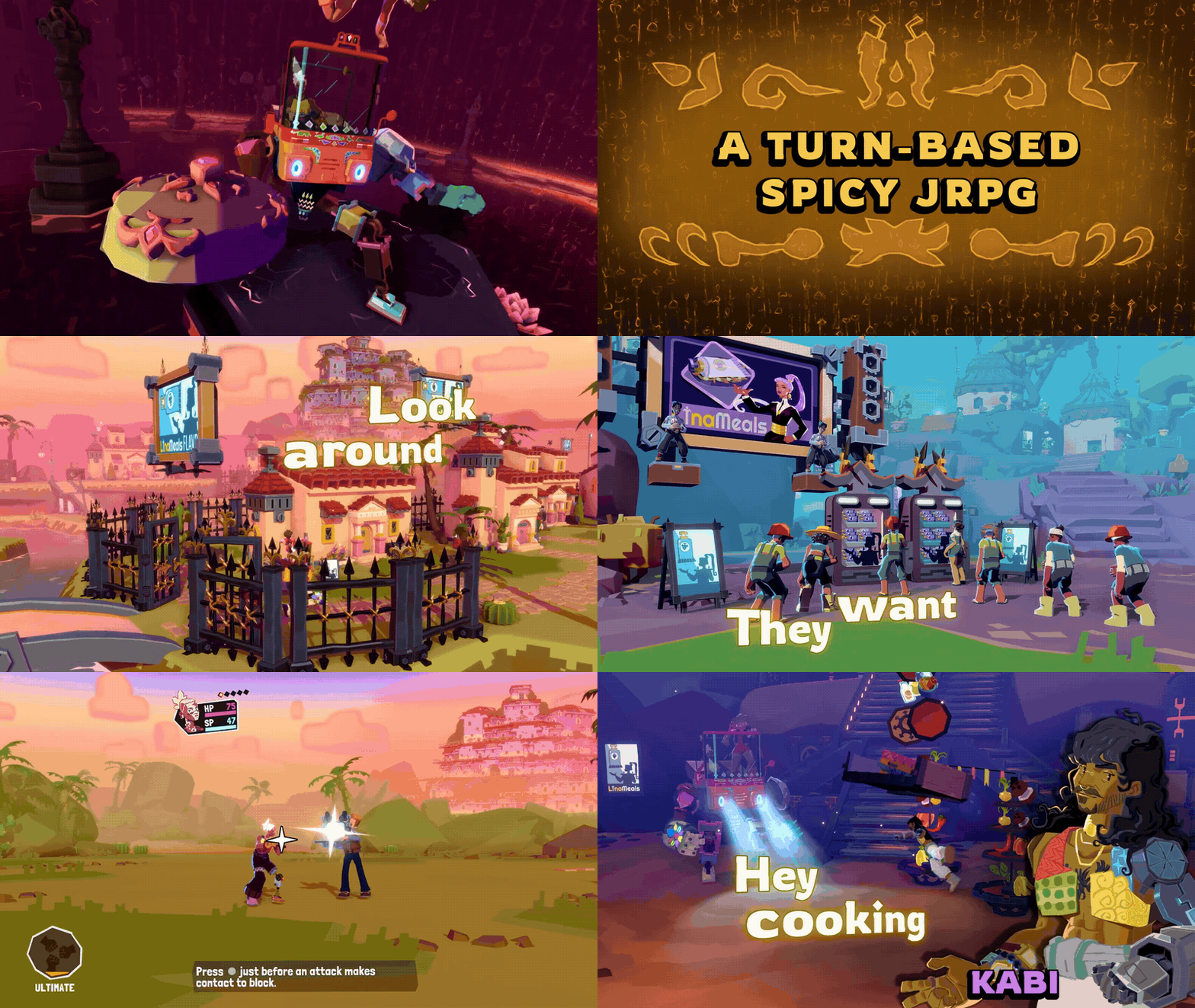
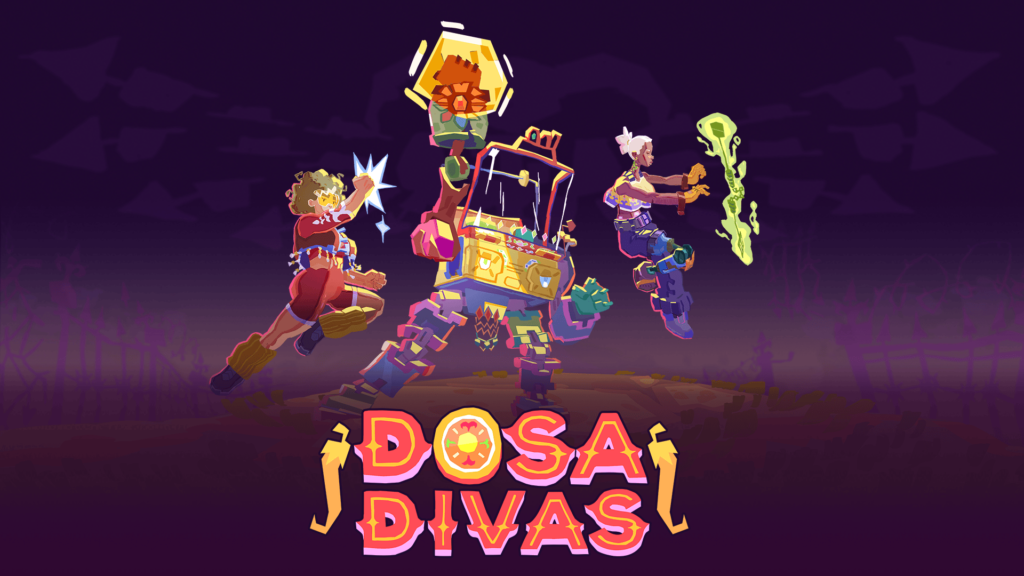
If you are searching for Dosa Divas: The Kotaku Review, the most accurate bottom line is this: Dosa Divas is a short, stylish, narrative-first indie RPG from Outerloop Games, published with Outersloth, that shines because of its writing, art direction, cultural specificity, and emotional core more than because of its systems depth. Official materials describe it as a “spicy narrative turn-based RPG” about two sisters and their spirit-mech fighting a fast-food empire, and official store pages confirm it launched on April 14, 2026 for PC, PS5, Xbox Series X|S, Nintendo Switch, and Switch 2.
Critically, the game has landed in the solid-but-divisive range rather than the instant-classic tier. Kotaku praised the art, cast, and battle ideas while sharply criticizing the cooking loop and compressed storytelling; other reviewers broadly echoed the same split, even when they were more positive overall. As of April 16, 2026, Metacritic listed a 73 PC metascore from eight critic reviews, which fits the current consensus: memorable, heartfelt, and original, but mechanically uneven.
Dosa Divas Kotaku Review: Everything You Need to Know Before Playing
Before playing, the most important thing to understand is that Dosa Divas is not trying to be a giant, endlessly replayable systems RPG. It is a compact, authored game that mixes light exploration, food gathering, cooking minigames, timed-input turn-based combat, and a story about family rupture, cultural loss, and reconciliation. That means players who value character writing, style, and theme will likely connect with it more than players looking for deep buildcraft or highly emergent combat design.
Kotaku’s review is useful because it catches the game’s core contradiction: the narrative talks about cooking as an intimate, healing act, but the moment-to-moment cooking loop can feel procedural and repetitive. At the same time, Kotaku is not dismissive of the whole project; it explicitly praises the art direction, cast, and “rock-solid” RPG foundation. Other critics were often warmer, but many of them still flagged either the short runtime, side-content thinness, or cooking limitations.
What Is Dosa Divas? Gameplay, Story, and Core Features Explained
Officially, Dosa Divas is a narrative turn-based RPG in which sisters Samara and Amani travel with an ancient spirit-mech to fight a “rotten fast food empire,” reconnect communities with traditional food, and repair broken relationships. Its core features are clearly defined in publisher materials: flavor-based turn-based combat, platforming and traversal through villages in the mech Goddess, ingredient gathering through foraging, fishing, and barter, made-to-order meals for villagers, combat buffs from food, a reputation system tied to helping communities, and cosmetic/mechanical customization for the mech.
What makes the design stand out is that food is not just aesthetic dressing. It is built into almost every layer of the game: the plot, the economy, the battle system, the healing items, the side progression, and the game’s social themes. That integration is one reason the game feels distinctive even when some critics argue that the individual mechanics are simpler than the premise suggests.
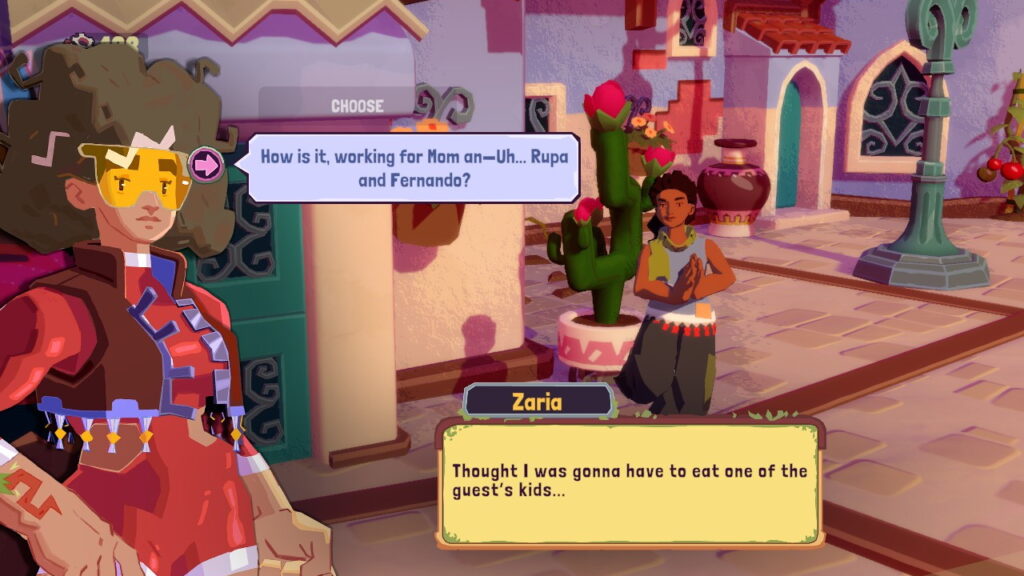
Dosa Divas Review Summary: Strengths and Weaknesses at a Glance
At a glance, the strengths are remarkably consistent across reviews: strong writing, vivid animation, a colorful and culturally grounded world, memorable character dynamics, and a turn-based battle system with enough timing and flavor-matching strategy to stay engaging through much of the campaign. The most common weaknesses are also consistent: repetitive cooking and ingredient loops, limited combat expansion over time, side activities that can feel like padding, and a story that sometimes squeezes too many thematic threads into too little runtime.
That makes the safest summary for readers and searchers alike very clear: Dosa Divas is a good, sometimes very good, indie RPG whose best qualities are artistic and emotional, while its weakest qualities are mechanical repetition and limited scope.
Dosa Divas Story Explained: Sisters, Food, and Fighting a Corporate Empire
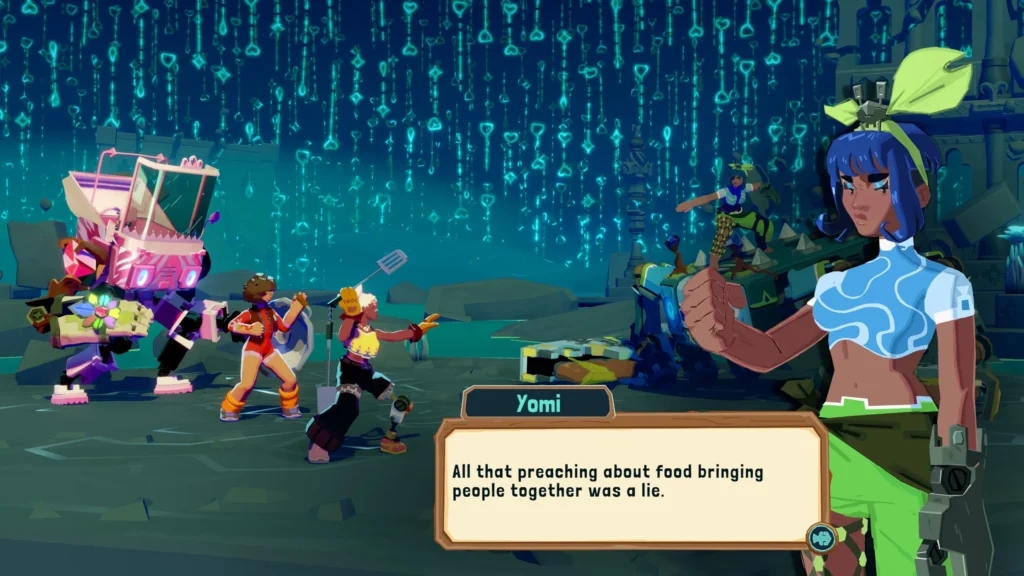
The story follows Samara and Amani as they reunite after years apart and travel across a world where cooking has been pushed aside by an oppressive fast-food corporation run by their estranged younger sister, Lina. Official and critical descriptions consistently frame the central conflict as both personal and political: the sisters are trying to heal their family after the collapse of the family restaurant, while also resisting a corporate system that has turned food into standardized paste and disconnected people from memory, tradition, and community.
That framing matters because Dosa Divas is not only “about food” in a cozy or culinary sense. It treats food as an emotional language and as a site of social struggle. Critics repeatedly note that the game’s strongest dramatic material comes from the family itself: estrangement, regret, grief, neglected relationships, and the possibility of repair. Some reviewers also note that the game pulls in mortality and “one last meal” imagery, giving the story more weight than its playful surface initially suggests.
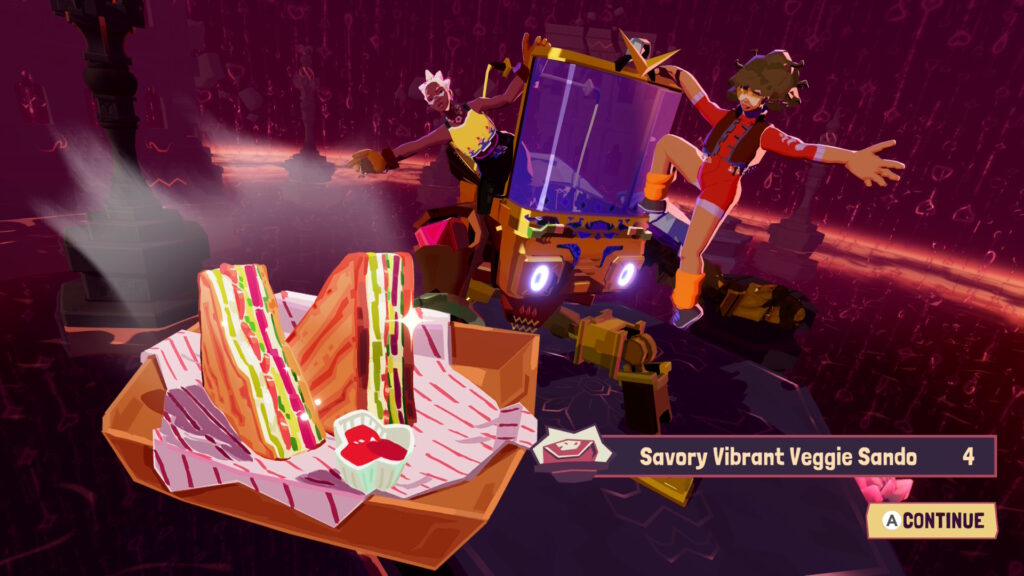
Dosa Divas Characters Guide: Amani, Samara, and the Mech Goddess
The central trio is built around Amani, Samara, and the spirit-mech Goddess, while their estranged sister Lina functions as the emotional and corporate antagonist. Reviews and official materials consistently identify Amani and Samara as the player-facing sisters trying to restore both family ties and cooking traditions, while Goddess serves as party member, transport, mobile kitchen, and tank in battle. Lina, by contrast, embodies the story’s commercialization and severance from tradition.
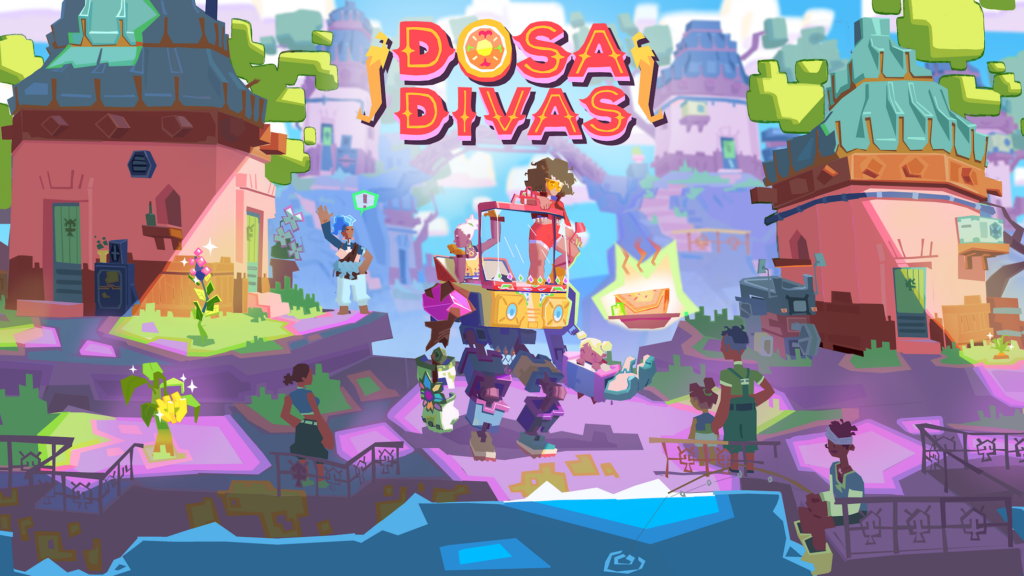
Goddess in particular is one of the game’s most distinctive character-design ideas. Official Xbox and interview material describes the mech as an ancient spirit-machine that can be customized with different parts, wraps, and accessories, and the developers say its look draws inspiration from decorated auto rickshaws and tuk-tuks across South and Southeast Asia. That combination of transportation, combat role, and cultural design reference helps explain why the “mech goddess” stands out in coverage of the game.
Dosa Divas Themes Explained: Food, Family, Culture, and Capitalism
Few recent indie RPGs tie theme and mechanic together as directly as Dosa Divas tries to do. Official launch material says the game wants to explore food as a way of reconnecting communities with each other and their culture, and it explicitly frames the loss of traditional food as a form of cultural erasure. That is not merely background lore; it is the central thesis of the game’s worldbuilding.
That theme becomes sharper when placed beside comments from studio co-founder Chandana Ekanayake and feature reporting on the studio. In 2025 coverage, Ekanayake described food as one of the first ways people become willing to engage with cultures other than their own, and WIRED’s reporting tied the game’s development to Outerloop’s desire to humanize immigrant experiences and underrepresented cultures. Critics then added a second layer by emphasizing how the game also deals with grief, memory, love, trauma, and imperfect family relationships.
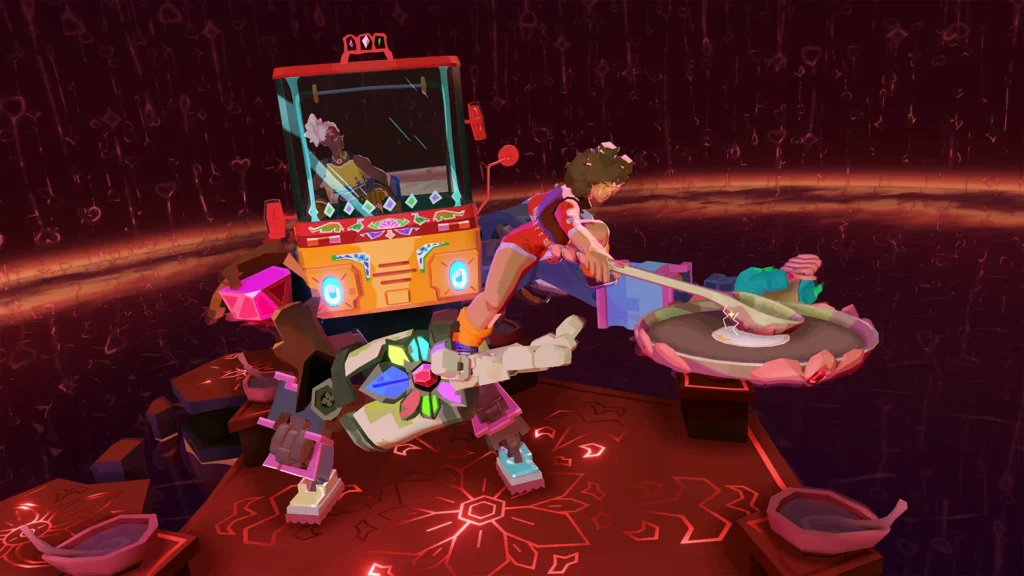
How Cooking Mechanics Work in Dosa Divas (And Why They’re Controversial)
Mechanically, cooking in Dosa Divas begins with gathering ingredients through foraging, fishing, battle rewards, and barter. Players then prepare recipes through a series of simple cooking minigames. The resulting meals serve two roles: they fulfill villagers’ requests to increase reputation and move story threads forward, and they act as consumables that heal, buff, restore Spirit Power, or cure status problems in battle. In other words, cooking is progression, quest structure, and battle support all at once.
The controversy comes from how differently critics reacted to that loop. Kotaku argued that ingredient gathering and meal delivery feel stiff, depersonalized, and too fetch-quest-like for a game built around the emotional meaning of cooking. Other critics were more forgiving or openly positive: some called cooking a fun or flexible complement to the story, and others described it as a welcome change of pace. The split is not about whether cooking matters; everyone agrees it matters. The disagreement is whether the minigames and quest loop are expressive enough to support the narrative weight the game places on them.
Dosa Divas Combat System Breakdown: Flavor-Based Turn-Based Battles
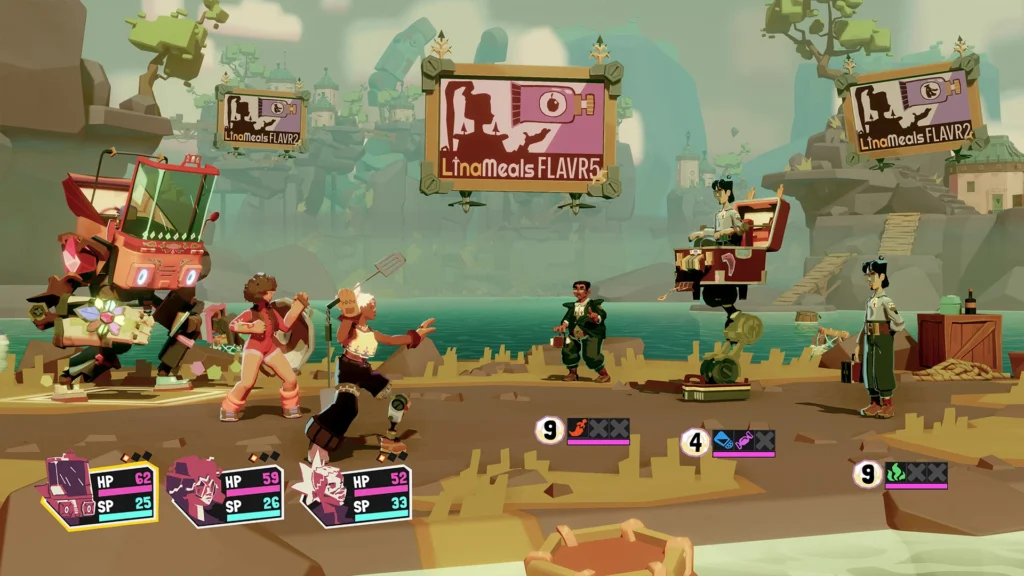
Combat is built around five flavor profiles—salty, sweet, spicy, sour, and savory—rather than the usual fire, ice, thunder-style elemental set. Enemies are weak to one flavor at a time, and hitting that weakness reduces their shield until they become “Stuffed,” a stunned state that opens them to heavy damage. On top of that, the battle system uses timed hits and timed blocks, boost points that multiply offense, Spirit Point-based skills, and Ultimate attacks that can damage multiple enemies or support the whole party. Official material also emphasizes that the system is intentionally readable: players match the right flavor to the displayed weakness rather than memorizing a complicated elemental chart.
Critics generally agree the battle system works, but they disagree on how far it evolves. Kotaku found the flavor-matching and resource decisions genuinely exciting, especially against standard enemies. GamesRadar said it was perfectly serviceable but not the main draw. Noisy Pixel argued that combat eventually reveals most of what it has to offer too early, leaving less room for escalation late in the game. The consensus is that the combat is a real strength compared with the cooking, but not usually the game’s ultimate selling point.
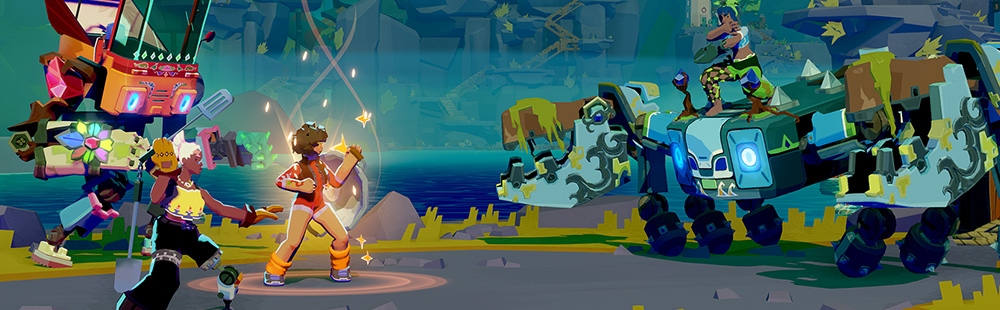
Dosa Divas Art Style and Soundtrack: A Vibrant Indie Experience
On presentation, the game earns some of its strongest praise. Kotaku highlighted its slick animation and lavishly illustrated world; GamesRadar praised both the art and the soundtrack; other reviewers described the world as colorful, textured, culturally rich, and visually unlike most contemporary indie RPGs. Even reviews that were mixed on mechanics repeatedly singled out the game’s presentation as one of its clearest successes.
The music has a firmer factual anchor too: the official Steam soundtrack page says the score was composed by Ramsey Kharroubi and released as an official soundtrack alongside the game on April 14, 2026. Critically, reviewers have described the music as funk-tinged, upbeat, and danceable, which aligns with the game’s bright, slightly angular, movement-forward style.
Why Dosa Divas Feels Unique Among Modern Indie RPGs
What makes Dosa Divas feel unique is not any single mechanic in isolation. The uniqueness comes from how many layers are aligned toward one idea: food as memory, identity, and resistance. Official studio material says Outerloop is a minority-led, fully distributed indie studio focused on accessible games with depth about underrepresented cultures and themes. In Dosa Divas, that mission is visible not only in dialogue or lore, but in battle categories, healing systems, traversal design, visual references, and the structure of helping communities through meals.
That is also why the game has drawn outsized attention relative to its budget. Coverage outside conventional review channels emphasized that the game is trying to humanize immigrant and diasporic experiences through a format that remains funny, colorful, and mechanically approachable rather than solemn or didactic. Even critics who found the systems thin generally agreed that Dosa Divas has a powerful identity of its own.
Dosa Divas Pros and Cons: What the Kotaku Review Gets Right
Kotaku gets the pros right in a way that the broader review landscape largely supports. The game’s art direction is consistently praised. Its character writing and family dynamics are repeatedly described as layered, heartfelt, and memorable. The combat, while not universally hailed as brilliant, is commonly treated as structurally sound and more successful than the cooking side. Even critics more positive than Kotaku still tend to praise exactly these same qualities first.
Kotaku also gets the cons right, especially when it comes to the underbaked nature of the cooking loop and the stress that the short runtime puts on the story’s many themes. That criticism is echoed by Noisy Pixel’s remarks about padding and limited scope, by other reviews noting that the loop wears thin, and by aggregate review blurbs pointing to repetitive minigames or lack of depth. Where Kotaku is harsher than some peers is in how strongly it argues that the cooking system undermines the whole thematic project; some reviewers clearly enjoyed that layer more than Kotaku did.
Is Dosa Divas Worth Playing? Full Kotaku Review Verdict
Yes, Dosa Divas is worth playing for the right audience. If you want a concise indie RPG with strong writing, unusual cultural texture, a memorable cast, and a world built around food as both metaphor and mechanic, the game gives you something genuinely rare. If you want deep endgame systems, lots of optional content, or a highly sophisticated cooking simulator, it is easier to see where the limitations show.
A precise verdict would be this: Dosa Divas is easier to recommend to story-first RPG players than to mechanics-first RPG players. That is not a knock on the game so much as a statement of emphasis. Across current coverage, its strongest case remains emotional resonance and presentation, not complexity for complexity’s sake.
Dosa Divas vs Other RPGs: How It Compares to Thirsty Suitors and Similar Games
The closest comparison is Thirsty Suitors, Outerloop’s earlier game. Both projects center South Asian family dynamics, humor, and reconciliation, and both pair social/emotional storytelling with stylized gameplay. Dosa Divas differs by leaning harder into classic turn-based RPG structure and by making food—not romance, breakup history, or skate culture—the organizing principle for nearly everything the player does.
In design lineage, the developers themselves cite Octopath Traveler and Bravely Default for boosts and shield-break ideas, while also pointing back to older timed-input influences like Super Mario RPG and Paper Mario: The Thousand-Year Door. Critics, meanwhile, have compared its vibe or emotional range to Jet Set Radio, Venba, and Clair Obscur: Expedition 33. Those are comparison points, not perfect matches, but together they explain the game’s unusual mix of color, intimacy, and active-turn combat.
How Long Is Dosa Divas? Game Length and Replay Value Explained
The clearest current estimate is that Dosa Divas is an eight-to-ten-hour game. Kotaku said it beat the main game and most side tasks within ten hours, GamesRadar finished the story in about nine hours with some extras still remaining, and Polygon described it as having a tidy eight-to-ten-hour runtime. That makes it short by RPG standards, but intentionally so.
Replay value appears modest rather than massive. There is some incentive in cleaning up side tasks, experimenting with recipes, and customizing Goddess, but multiple reviews argue that the game’s side content and progression systems are not expansive enough to make replay its primary draw. The stronger selling point is a focused first playthrough, not a long-term lifestyle game loop.
Dosa Divas Release Date, Platforms, and Where to Play
The official release date is April 14, 2026. Official publisher and storefront sources confirm availability on PC via Steam, PlayStation 5, Xbox Series X|S, Nintendo Switch, and Nintendo Switch 2. The Steam page also lists a playable demo, and the official site links directly out to platform storefronts.
One fact-check note is important here because you asked for zero errors: Kotaku’s review card appears to list April 14, 2025, but the official publisher page, Steam page, Nintendo store page, Xbox launch coverage, and other current review metadata all point to April 14, 2026. In addition, earlier press coverage used the names Project Dosa and Dosa Divas: One Last Meal, while the current official live title is simply Dosa Divas. This article therefore uses the official 2026 release date and current launch title.
Frequently Asked Questions (FAQs)
- What kind of RPG is Dosa Divas?
It is a narrative turn-based RPG with timed inputs, flavor-based weaknesses, cooking minigames, traversal in a spirit-mech, and village-based community progression. Official descriptions repeatedly frame it as a story-rich, food-centered RPG rather than a huge systems sandbox. - Who are the main characters?
The game centers on Amani, Samara, and Goddess, with Lina serving as the estranged sister whose fast-food empire drives the conflict. Most review and official descriptions present those four as the emotional backbone of the story. - How does combat work?
Combat uses five flavor attack types, timed hits, timed blocks, boost points, Spirit Point skills, and a “Stuffed” stun state after shield breaks. The system is designed to be readable and approachable, since you match flavors directly rather than memorize a complicated weakness chart. - Why are the cooking mechanics controversial?
Because the game makes cooking thematically central, some critics expected the cooking loop to feel especially expressive. Kotaku thought it felt too mechanical and fetch-quest-driven, while other reviewers found it fun enough or even charming. The debate is really about execution, not importance. - Is cooking optional?
Not really. Cooking is tied to feeding NPCs, increasing reputation, advancing some story progression, and making battle items that heal or buff the party. You can vary how much you engage with side requests, but the cooking system itself is foundational. - How long is the campaign?
Expect roughly 8 to 10 hours for a first run. Current review coverage is surprisingly consistent on that point, with most reported completion times landing in the nine-to-ten-hour range. - What platforms is it on?
As of launch, Dosa Divas is available on PC, PS5, Xbox Series X|S, Nintendo Switch, and Nintendo Switch 2. The official site and storefront listings line up on that platform set. - Is there a demo?
Yes. The Steam product page lists a downloadable demo for Dosa Divas. - Do you need to play Thirsty Suitors first?
No. Based on official descriptions and review coverage, Dosa Divas is a standalone game. It shares creative DNA with Outerloop’s earlier work, but it is not presented as a direct sequel and does not require prior story knowledge. - Who should buy Dosa Divas right now?
Players who want a short, heartfelt, visually distinctive indie RPG should be the happiest. Players specifically hunting for deep tactical complexity, extensive side content, or a best-in-class cooking sim should go in with more measured expectations.
Conclusion
The most accurate reading of Dosa Divas: The Kotaku Review is that Kotaku identified the game’s central weakness correctly without invalidating its real strengths. Dosa Divas is a vibrant, culture-rich, emotionally smart indie RPG whose art, writing, and core identity rise above its repetitive cooking loop and limited scale. For story-driven players, it is easy to recommend. For players who need deeply layered systems to stay invested, it is better approached as a strong small game rather than a fully loaded RPG epic.
Sources and Citations
- • Official game page and press kit — primary release date, platforms, systems, soundtrack details
- https://www.nintendo.com
- • Steam game page — platform listing and release metadata
- https://store.steampowered.com
- • Nintendo store listing — official platform availability and release information
- https://www.nintendo.com/store/
- • Xbox launch article — platform release framing and official communication
- https://news.xbox.com
- • Steam soundtrack page — official soundtrack release and listing
- https://store.steampowered.com
- • Kotaku review — critical analysis and framing
- https://kotaku.com
- • GamesRadar+ review — consensus and thematic interpretation
- https://www.gamesradar.com
- • WIRED feature — cultural framing and analysis
- https://www.wired.com
- • PC Gamer coverage — reveal reporting and industry context
- https://www.pcgamer.com
- • RPG Site interview and release reporting — developer commentary and launch details
- https://www.rpgsite.net
- • TheSixthAxis review — critical reception
- https://www.thesixthaxis.com
- • Noisy Pixel review — gameplay and narrative analysis
- https://noisypixel.net
- • WellPlayed review — critical impressions
- https://www.well-played.com.au
- • Loot Level Chill review — gameplay and design evaluation
- https://lootlevelchill.com
- • Polygon coverage — runtime and structural reporting
- https://www.polygon.com
- • Metacritic critic index — aggregated critical consensus
- https://www.metacritic.com
Recommended
- The Best Nioh 3 Skills for Samurai and Ninja: Must-Have Unlocks, Combos, and Builds (2026 Guide)
- Bridgerton and Star Wars Stars Join The Last of Us Season 3 as Lev and Yara: Cast, Characters, and What It Means
- Famous 3D and AI Virtual Influencers and Avatars: Exploring the Digital Trendsetters of 2025
- Why PixelHair is the Best Asset Pack for Blender Hair Grooming
- Nacon Subsidiaries Enter Insolvency Proceedings: Spiders, Kylotonn, Cyanide, and Nacon Tech Explained
- Can you have multiple cameras in one Blender scene?
- How do I parent a camera to an object in Blender?
- The Original Hollow Knight Just Got an Update to Fix a Glitch With a Final Boss: Radiance Bug Fix Explained
- Can I add motion blur to a Blender camera?
- Dungeons & Dragons Left Impressed After Astronaut Shows How to Roll a D20 in Zero-G, Proving Roleplaying in Space Is Absolutely Possible