









In early April 2026, German astronaut Rabea Rogge posted a short video from orbit demonstrating how to roll a 20-sided die (d20) in microgravity.
The simple technique – toss the die gently so it spins, catch it, and read the number through the gap between fingers – quickly went viral on Instagram. Rogge’s caption (“roleplaying in space is absolutely possible”) and the official D&D Instagram account’s witty reply (“anything you roll in space is a critical success”) cemented the moment as a fan-favorite. Rogge is the first German woman in space, flown on SpaceX’s Fram2 private mission to polar orbit in April 2025, which drew additional media interest.
This report provides a detailed timeline of the viral video, explains the physics of dice-rolling in microgravity, profiles Rogge and the Fram2 mission, surveys official and community reactions (with quotes), and analyzes the feasibility and implications of playing tabletop RPGs like D&D in space.
We compare real-life constraints to D&D lore (including Spelljammer), explore methods for rolling dice without losing them, and assess how zero-G gaming could shape future hobbyist and astronaut leisure. Tables compare dice-rolling methods and mission specs; mermaid diagrams illustrate the timeline and key relationships. A 10-question FAQ addresses common points, and all claims are cited to primary sources whenever possible.
How did the astronaut roll a d20 in zero gravity
In Rabea Rogge’s video, she solves the “how to roll a die in space” puzzle with a straightforward toss-and-catch technique. Floating in the Crew Dragon cabin with Earth in the background, Rogge holds an iridescent glass d20 and lightly flicks it upward along one edge to impart spin. In microgravity there is no downward pull, so the die simply drifts and rotates slowly in midair. Rogge then closes her fist around the die and peeks through the gap between her thumb and forefinger to read the result (in the clip it lands a “7”).
She explains aloud that she and the crew “experimented a little” with different methods, and found this spin-and-catch approach works best. In essence, she gives the die just enough impulse to spin and then immediately secures it by catching – avoiding any long free drift.
This method matches other accounts: Nerdist Magazine reports Rogge “throws the d20 gently in the air, letting it spin for a moment in the zero-gravity atmosphere. Then, she catches it in her palm and determines the roll by seeing what number peeks out of the hole between her thumb and pointer finger”.
GamesRadar likewise notes she “spin[s] the d20 upward…catch it, and see which number is visible between your fingers and thumb”. Physically, this works because in microgravity the die’s motion is governed by Newton’s laws without gravity. By tossing it, Rogge gives it linear momentum (it will travel at constant velocity) and angular momentum (it will continue spinning). By catching it before it floats away, she traps the die so it stops, and the last face showing is the result. No exotic tools are needed – just careful tossing and immediate catching.
The simplicity of the solution was part of the viral appeal: as PC Gamer wryly notes, a bit of “English” (spin) on the die and a quick fist-catch was all it took.

Comparison of Microgravity Dice-Rolling Methods
Method Description Pros Cons Sources Spin-and-catch (astronaut) Flick die to spin, then catch and read number Simple, no extra gear needed; captures result immediately Requires dexterity; only one die at a time Magnetic tray & dice Roll steel dice on a ferro-magnetic surface Dice stick on landing, easy retrieval Dice may not bounce freely (affects randomness) Velcro or tethered Attach dice or tray to surface (Velcro, string) Prevents dice from drifting at all Limits dice motion; messy or impractical for many dice Vacuum “air hockey” Use airflow to simulate downwards force Allows freer rolling while controlling motion Complex equipment; consumes power Digital RNG (app) Use computer or phone randomizer instead Fully reliable, no physical dice needed Breaks immersion; requires device (though ISS has computers)
Who is Rabea Rogge and why is her d20 space video going viral
Rabea Rogge is a 29-year-old German engineer and polar scientist who became the first female astronaut from Germany. Born in Berlin, she earned degrees in electrical engineering and robotics (studying at ETH Zurich and working on Arctic robotics) before taking leave from her PhD studies for a once-in-a-lifetime spaceflight. Rogge flew as the pilot of the SpaceX Crew-Resilience on the Fram2 mission (launched March 31, 2025) alongside mission commander Chun Wang and colleagues from Norway and Australia.
The Fram2 mission was a privately funded polar-orbit flight (named after the polar ship Fram), marking the first human spaceflight to circle both the North and South Poles. During Fram2, Rogge conducted scientific experiments (including growing mushrooms in space) and outreach projects, and she studied autonomous navigation under extreme conditions.
As a polar robotics researcher invited on an exploratory mission, Rogge embodies the spirit of adventure reflected in her mission. (Alexander Gerst, a veteran German ESA astronaut, even publicly congratulated Rogge as “the first German woman in space”.)
Rogge is also a noted tabletop RPG enthusiast. In interviews she calls herself a “pen & paper nerd”. This hobby background makes her dice-rolling experiment natural. She posted the video on Instagram on April 4, 2026 (titled with a playful reference to D&D), and it quickly caught on: Nerdist reported it had over 258,000 likes within days. The clip’s combination of space visuals, D&D humor, and novelty made it highly shareable. Major gaming and news outlets like PC Gamer, Dexerto, and Nerdist covered the story within 2–4 days, bringing the video to millions of viewers.
Fans in the tabletop community cheered that a “real astronaut” had answered their geekiest question. The viral appeal is amplified by Rogge’s down-to-earth (pun intended) demonstration and her enthusiastic conclusion: “Roleplaying in space is absolutely possible.”
In short, Rogge’s credentials (first German woman in space, space scientist) combined with the fun D&D angle explain why her video went viral across social media and gaming press.

Can you really play Dungeons & Dragons in space
Yes – in principle, playing Dungeons & Dragons (or other tabletop RPGs) in orbit is feasible.
Astronauts have limited free time aboard spacecraft and space stations, but they do engage in leisure activities, including board and card games, as part of psychological health and team bonding. For example, Canadian astronaut Chris Hadfield famously brought a Velcro-backed Scrabble set to the ISS, securing letters to the board to prevent floating. ISS crews have also played chess (with Velcro bases on pieces) and other games during off-duty hours. NASA psychologists explicitly encourage gaming for mental well-being during missions. As Works That Work magazine notes, games like chess and Scrabble “allow crew members to engage with each other socially, free of making a mistake that could damage the space station”.
In practical terms, the constraints of space travel (microgravity, limited space, finite mission duration) impose some challenges for a full D&D session. Dice and books can be small and light, but the microgravity environment means all pieces must be secured (with Velcro or containers) to avoid drifting. Communication with Earth-based players would suffer about half a second of lag one-way, which is negligible for most roleplaying (and the Artemis II astronauts have joked they “have no excuse” not to play D&D en route to the moon). Crew schedules are busy, but astronauts typically have weekends off and about 2–3 hours of personal time per weekday. A short campaign or one-shot could fit into this downtime.
No crew has yet publicly run a full D&D campaign in orbit, but Rogge’s demonstration proves the core mechanic (dice rolling) can work. Dexerto notes even the NASA Artemis II crew could “have the option of playing D&D to pass the time” if they chose. In April 2022 NASA released The Lost Universe, a free space-themed RPG adventure inspired by Hubble, underscoring the Agency’s openness to integrating storytelling and science. All evidence suggests that with minimal gear and a bit of ingenuity, an astronaut party could indeed sit around a table in microgravity (or at least float in a circle) to game, making D&D in space not only possible but a fun morale booster.
How to roll dice in zero gravity without losing them
In microgravity, a tossed object will drift until stopped. To roll dice safely without losing them, astronauts must keep each die under control. Rogge’s approach – catching each die immediately – inherently prevents loss. Beyond that, there are several practical methods:
- Containment or Securing: Fix the die to a board or surface after rolling using Velcro or tape (similar to how Scrabble tiles are used on the ISS). This guarantees the die won’t float away, but it requires attaching something to the die or table.
- Magnetic Dice/Tray: Use steel dice and roll them on a magnetized mat or tray. The magnets hold the die when it comes to rest, preventing drift. (A user on RPG StackExchange suggests alternating magnet domains so dice don’t bounce too high.) This method works well but can slightly bias how far the die rolls (magnet drag).
- Bubbler or Vacuum Table: Create a “balloon blower” or vacuum-based rolling surface – like a reversed air-hockey table – that simulates a downward force. In practice this is complex and bulky, but could allow multi-dice rolls while keeping them on the table.
- Tether or Dice Bag: Attach a short string to each die (or use a dice tower with a surrounding wall) so rolled dice stay nearby. This is similar to the ISS practice of tethering tools. It adds some resistance to the roll and is cumbersome for many dice.
- Digital Rolls: Forego physical dice entirely and use an app or computer randomizer. ISS and spacecraft have computers (even internet) on board, so digital dice (or credit-card sized randomizers) provide a perfect random result with zero risk of floating. The obvious downside is loss of tactile element, but it’s a sure-fire method.
The best practical method depends on priorities. Rogge’s spin-and-catch requires no extra equipment and preserves the tactile fun, so it’s great for one die at a time. For a session involving many dice or players, a combination might be used: for example, magnet-tray plus secure storage. In any case, as Rogge shows, careful control of each throw is key – catch every die quickly so it doesn’t escape into the cabin. Table-top gamers facing microgravity (whether real astronauts or hard-core fans simulating space) should plan to secure or immediately retrieve dice with one of the above methods.

What the official Dungeons & Dragons response to the space d20 video means
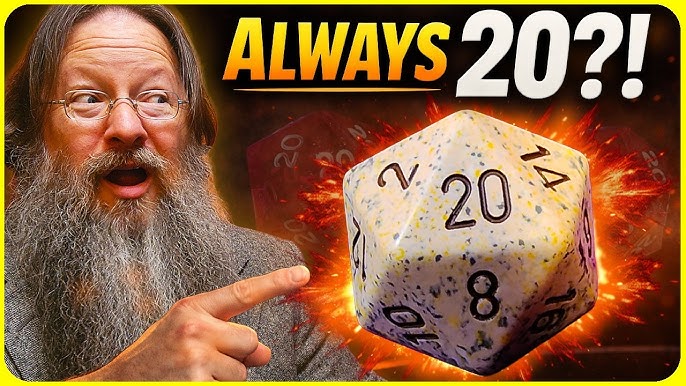
The official D&D response came via social media comment, but it was clear and humorous. On Rogge’s Instagram reel, the Dungeons & Dragons official Instagram account commented: “New rule — anything you roll in space is a critical success.”. This quip plays on D&D rules (a natural 20 is a critical hit) and serves as a playful endorsement that even Wizards of the Coast (the publisher) has noticed the stunt.
Beyond the joke, the reaction signifies that the D&D community (and its creators) view the event with delight and curiosity. Wizards of the Coast does not regularly comment on fan content, so this reply shows they find the space-roll genuinely entertaining and positive for the game’s image. It also suggests WotC recognizes the viral moment as a fun intersection of brand and pop culture. According to Dexerto, “as you’d expect, there were plenty of comments praising Rogge, and even the official D&D Instagram account responded” with that line.
In context, this response means D&D’s official stance is one of enthusiasm – not only do they think playing in space is “absolutely possible,” they laughably declare success is guaranteed! It has been reported widely (e.g. by Nerdist and Dexerto), indicating it became part of the viral news. For the community, an official mention validates the news, drives more attention, and entertains fans. It also sparked further joking: for example, lore-savvy players are quipping about how they might house-rule space sessions (so that fireball spells don’t burn the capsule!). In summary, the D&D team’s response means they’re in on the fun – endorsing Rogge’s video as a publicity win and encouraging fans to keep the interstellar dice-rolling memes going.
SpaceX Fram2 mission explained for Dungeons & Dragons fans
For context, the dice video took place during SpaceX’s Fram2 mission – a privately funded spaceflight in spring 2025. Fram2 was launched on March 31, 2025, atop a Falcon 9 from Kennedy Space Center. Its goal was to send four astronauts (all spaceflight first-timers) into a polar orbit – a first for human spaceflight – meaning the Dragon capsule Resilience flew over the North and South Poles. The crew (called “Fram2”) was led by entrepreneur Chun Wang of Malta, who chartered the flight, and included Jannicke Mikkelsen (Norway, commander), Rabea Rogge (Germany, pilot), and Eric Phillips (Australia, mission specialist). The mission was named after the historic Norwegian ship Fram, famous for polar exploration.
From a D&D fan’s perspective, think of Fram2 as a special expedition quest: a small party launching on a Capsule “spelljammer” (Crew Dragon) to explore a new “wild space” – Earth’s poles – that no one has seen from above. Their objectives included scientific experiments (22 total) – for example, growing mushrooms in microgravity and scanning human X-rays – akin to running experiments or “rituals” to study the plane they’re in. The capsule’s systems were mostly automated (no licensed pilot needed) as Rogge has noted, so the crew acted more like adventurers and scientists than classic heroes. The mission was planned for 3–5 days in low Earth orbit, after which the Dragon would splash down in the Pacific (another first for SpaceX).

Here are Fram2 mission specs relevant to gamers:
| Fram2 Mission Details | |
|---|---|
| Launch Date | March 31, 2025 (Falcon 9 rocket) |
| Spacecraft | SpaceX Crew-Resilience capsule (first polar-orbit human flight) |
| Crew (4) | – Commander: Chun Wang (Malta, backed mission funding)<br>- Vehicle Commander: Jannicke Mikkelsen (Norway)<br>- Vehicle Pilot: Rabea Rogge (Germany)<br>- Mission Specialist: Eric Philips (Australia) |
| Orbit | Polar (90° inclination, covering Arctic and Antarctic) |
| Duration | 3–5 days in orbit; splashdown in Pacific |
| Objectives | A total of 22 research experiments (e.g., grow mushrooms in space, X-ray human physiology, etc.) |
| Notable | First human flight to fly over both poles; first Pacific splashdown for SpaceX; funded by crypto entrepreneur |
Table: Key facts about SpaceX’s Fram2 mission.
Fram2 was a “private” mission – not a NASA or ESA program – but NASA staff still followed it. D&D fans might liken Wang to a modern-day patron financing a legendary voyage, with Rogge and co. as the chosen explorers.
Space.com’s launch article details the historic nature: “SpaceX just launched the first-ever human spaceflight to circle Earth over its poles”, capturing the sense of novelty. After launch, the crew would circle the globe, taking images and doing science. Importantly for our story, it was during this mission (about a year after launch) that Rogge found a quiet moment to test out her D20 technique. So in D&D terms, Fram2 was the dungeon (capsule) in which the hero (Rogge) rolled her “die of fate” beneath the stars, connecting tabletop adventure to real space exploration.
Why the zero-g d20 roll is such a big moment for tabletop RPG fans
For tabletop roleplayers, Rogge’s zero-G dice-roll is an iconic example of “life imitating art” – literally bringing a core D&D mechanic into real orbit. It highlights the playful belief that nobody can claim D&D is too geeky or impractical for any setting. The dramatic visuals (planet Earth backdrop) and the catchy quote “roleplaying in space is absolutely possible” resonated widely in the gaming press. To fans, it answered a long-running hypothetical: “What if we tried playing D&D in space?” Seeing it actually done (and done simply) was thrilling.
This moment is also symbolic of the growing overlap between gaming culture and space culture. Over the last decade, space-themed sci-fi has surged in popularity, and D&D itself recently released a space-fantasy setting (Spelljammer) in 2022. Rogge’s video bridges that fiction with reality. Media headlines like “Astronaut Rolls D20 in Space, so yes, you can play D&D in zero gravity” (PC Gamer) capture the excitement that something previously pure fantasy is now a mundane possibility. Even the planned Artemis II crew’s downtime was mentioned in this context; journalists joked they could hold a “campaign around the Moon” since the obstacle of gravity has now been dispelled.
From a community standpoint, the event sparked widespread commentary. Reddit and forums lit up with discussions ranging from “which character to play on Artemis II” to debates on the nature of gravity. Comments cited in the article show fans lightheartedly debating Shadowrun vs Warhammer in zero-G. Roleplaying fans relish these crossover moments, and the viral nature means even casual observers get a glimpse of TTRPG culture. As Nerdist quipped, “we’re sure to see some astronauts floating around willy nilly” and why not roll dice too?. Overall, this D20 roll became a touchstone – the new benchmark, perhaps, for “can it be done in space?” and a neat piece of pop culture trivia that “yes, an astronaut did do it.”
What roleplaying in space would actually look like
Envisioning a real RPG session in space requires considering the unique environment:
- Zero-G play area: Without tables or floors, players would float. One could imagine securing themselves and game materials with Velcro straps or seat belts. Dice could be rolled one at a time (spin-and-catch) or in a containment bag. Character sheets might be digital (tablets) or on clipboards affixed to walls. Players could face each other floating in a small circle, or each at their own workstation strapped in, passing game elements.
- Turn structure: Turns and initiative would work the same, but physical actions (like moving minis) might be slower and more deliberate. “Drawing a card from hand” means grabbing it from floating players or taped holders. Miniatures could be challenging; without gravity they might drift when placed on a battle grid, so usually one would use lasers or pointers on a mapped surface instead.
- Visuals and ambience: Imagine peering out a capsule window instead of a tavern door – the Earth, stars and aurora replacing tavern murals! The role of light and sound shifts: gravity-based dangers (like a pit trap) no longer function the same, but new challenges might arise (leaking air, malfunctioning thrusters). A creative DM could incorporate the zero-G into the narrative (e.g. space-dwelling monsters, or a shipboard encounter).
- Logistics: The ISS and Crew Dragon are small, so a game might be limited in scale (maybe only 2–5 players, likely the astronauts themselves unless remote players on Earth connect via video link). Air-to-ground communication has <0.5 second delay, so an Earth-based player (like a DM at Mission Control) could join in real time with negligible lag. The biggest hurdle is scheduling – astronauts have structured duties and limited sleep, but they do set aside personal time. If they chose to use part of their day off for a session, it would be possible (as long as it fits mission rules and radiation safety, etc.).
In short, roleplaying in space might look a bit like a cinematic scene: a few crew members drift gently in a circular formation, digital character sheets in one hand, dice bag in another, occasionally grabbing a floating health potion miniature. The background noise of air circulation, occasional comms, and perhaps mission control voices would accompany the session. The fundamental game (storytelling, decision-making, dice mechanics) remains unchanged; only the stage has gone to orbit. Rogge’s demonstration proved the critical mechanic (dice roll) can work, so a full session is just a matter of adapting accessories and acclimating to microgravity.
Enthusiasts hope that one day we might see actual space campaigns, either aboard stations or even orbiting luxury habitats, but for now this viral video is a tantalizing glimpse of the possibilities.
Can astronauts play tabletop games during space missions
Yes – astronauts regularly play tabletop and board games during missions as part of their recreation. Space agencies understand the importance of leisure for crew morale and mental health, so a small game library is often carried onboard. For example, books and decks of cards are common payloads. The Works That Work article notes that astronauts have two hours of leisure time per day and weekends off, and they have indeed taken games into orbit. American astronaut Gregory Chamitoff brought a lightweight chess set to the Shuttle, inventing “interplanetary chess” matches with ground players.
Astronauts have played Scrabble on the ISS (with Velcro-secured tiles), and even improvised “space darts” using safe materials. In modern times, crews have also used personal tablets and consoles for games.
The microgravity environment requires adaptations: all loose pieces must be secured. Scrabble letters were given Velcro backs so they could stick to the board. Without such measures, dice or tokens would float away (as happens sometimes, landing in air filters). Even drinks and food packs on ISS use Velcro or magnets. But with these fixes, gameplay is fully possible. NASA psychiatrist Gary Bevan has remarked that games “allow astronauts to detach from the seriousness and monotony of being ‘trapped’ in a dangerous workplace”.
No official rule forbids tabletop gaming – in fact, NASA and other agencies often encourage crew bonding activities. If a crew member has time on shift, they might initiate a quick card game or puzzle. Often, any session would be short (maybe a single battle or puzzle solve) given time constraints. Multi-day campaigns are harder due to mission duration limits.
However, for short missions like Fram2 (a few days), even a one-shot adventure with a small party isn’t out of the question. Overall, experienced astronauts certainly can play tabletop games during downtime, and many have done so in one form or another. The key is preparation (Velcro it down!) and accommodating the schedule – but as Rogge’s viral video shows, the physics won’t stop them from enjoying dice-rolling once in a while.

Best way to roll a d20 in microgravity
The best practical method is arguably Rogge’s own: spin the d20 and immediately catch it. It requires no extra equipment, preserves normal dice feel, and only needs practice. However, if one wants alternatives to ensure no dice are ever lost, the following are worth considering:
- Magnetic rolling surface: As one expert suggested, roll steel (magnetic) dice on a specially magnetized mat. The magnets hold the die once it stops, so you just read the result on the underside. This is good for fairness and keeps dice contained, but it slightly changes the physics (they won’t bounce and may roll shorter).
- Velcro-trayed dice: Use normal dice, but apply Velcro strips on a wooden dice-rolling tray (the board) and back of dice. Roll normally; dice stick where they land. This was practically done for board games like Scrabble on the ISS, and could work with polyhedral dice too.
- Containment bowls: A soft-sided bowl or bag with one open side could contain dice. You could shake within the bag in zero-G and then open it to see results, minimizing chance of float-aways. However, this loses the theatrical toss.
- Digital method: The simplest “astro-approved” roll is to use an app. Every ISS crew has laptops and tablets; a quick tap on a digital D20 app gives a random result without any physics at play. This sidesteps all microgravity issues, at the cost of that traditional roll feel.
- High-tech gadget: In future, one could imagine a small handheld “dice tumbler” – a clear tube with dice inside – that agitate with air or a stirring mechanism. The astronaut spins the handle and the tube’s air keeps the dice rolling inside. This would literally create a self-contained zero-G dice rollette. (This is speculative, but similar ideas exist for other zero-G devices.)
In sum, if you want the purest analog to normal play, Rogge’s spin-and-catch is best. For group play or multiple dice, a magnetic or Velcro solution might be preferable to ensure nothing floats off between turns. We summarize the pros and cons in the Dice Methods table above. No matter which way is chosen, the astronaut just needs to make sure each die is ‘grounded’ immediately after the roll.
Why Dungeons & Dragons and space exploration fit together so well
D&D and space share core themes of exploration, adventure, and the unknown. Just as D&D players explore fantasy worlds with a party of companions, real astronauts explore the literal final frontier as a team. Both pursuits require imagination and a spirit of curiosity. In fact, D&D has a long history of space-themed content (the Spelljammer setting) that treats space travel as a high-fantasy adventure. Rogge’s video bridges that gap, confirming that real cosmic travel can intersect with our games.
From a cultural viewpoint, many gamers are already drawn to science and technology (note Rogge’s engineering background). Likewise, space agencies recognize the value of games: NASA’s production of The Lost Universe RPG explicitly encourages players to learn science and embark on adventures in a sci-fi scenario. This is not a coincidence; roleplaying games often serve as STEM outreach and inspiration. For instance, NASA highlights that The Lost Universe “invites you to take on a classic villain (while also using and learning science skills)”. D&D’s emphasis on collaborative problem-solving and imagination dovetails nicely with astronaut training and public engagement goals.
Moreover, gaming media and space media communities have overlapping audiences. Fans of space movies like Project Hail Mary (which Nerdist referenced) are likely to be geek-culture consumers who also play D&D. Therefore, when a story of “D&D in space” surfaces, it sparks wide interest. It helps that D&D has iconic imagery (d20 dice) that make for striking visuals against the Earth.
We might also note, with a smile, that some D&D lore complements space themes: Spelljammer ships gliding among planets, astral monsters, etc. Many DMs have likely run space-campaigns of one sort or another. Real-world space exploration now proves you don’t need magic to have adventure among the stars – the physics and technology are magical enough. As Nerdist quipped, if space heroes like Rocky and Grace (Project Hail Mary protagonists) returned, “it would be amazing to see them playing a little D&D”. In short, roleplaying games and space both celebrate pushing beyond known boundaries, making their union feel very natural to fans and to sponsors (even Elon Musk has joked about running a game on Starship!).
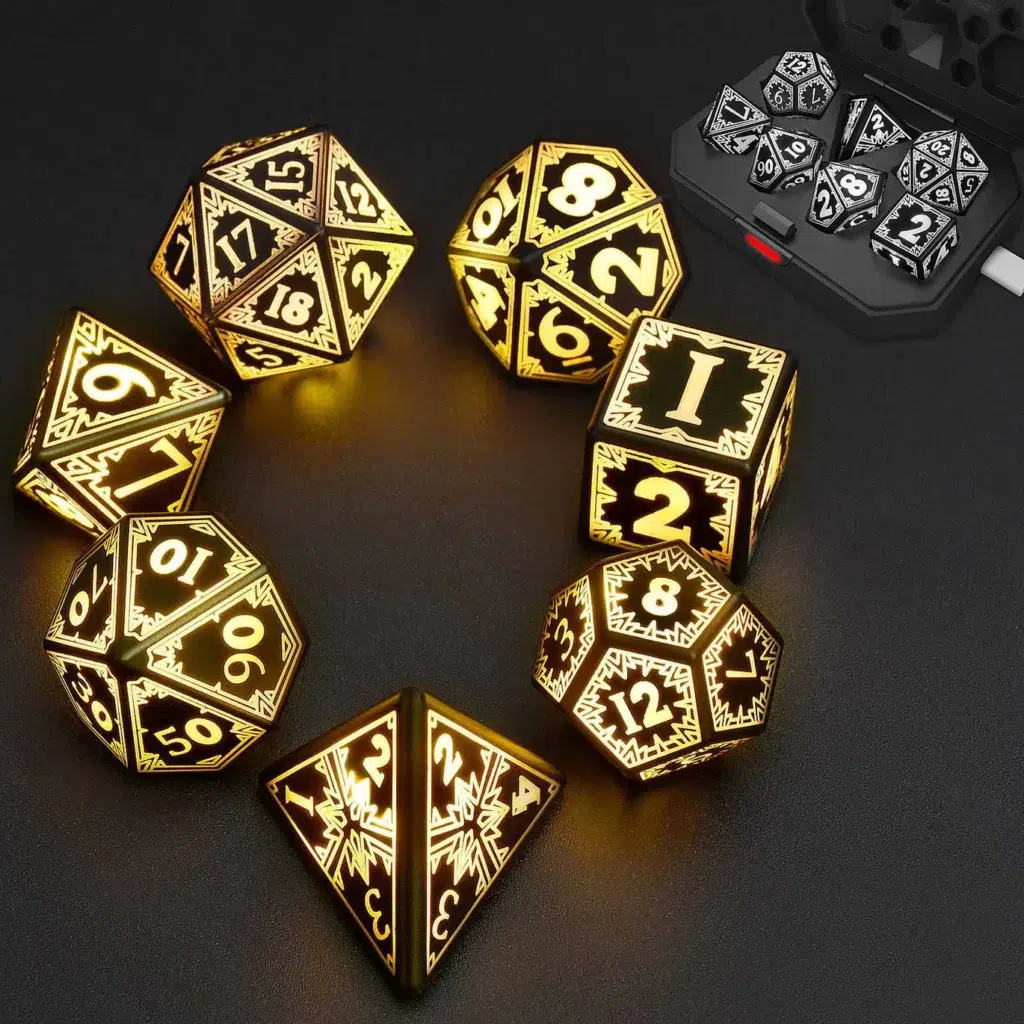
Could future astronauts play a full D&D campaign in orbit
Theoretically, yes – but with caveats. A full multi-session D&D campaign often takes weeks or months of regular play, which is longer than most crewed missions today. Current LEO missions last ~6 months, but the time is mostly filled with experiments. To run a campaign, a group of astronauts would have to commit a portion of multiple days to game sessions. However, future plans (like orbital hotels or Mars voyages) might afford the luxury of longer leisure stretches.
If a crew wanted to play a short campaign in orbit, they’d need: steady availability of players (same characters or rotating stand-ins), a Dungeon Master (astronaut or Earth partner via comms), and time. Space agencies might allow it as long as it doesn’t interfere with duties. (NASA even has a tradition of letting crews set up personal “experiments” for fun or outreach – a D&D campaign could be framed as a social experiment in crew psychology!)
Practically, all materials would need to be stowed: dice (with securing methods), digital or printed rulebooks, character sheets. By itself this is doable; one or two rulebooks and a set of dice weigh almost nothing. The bigger limits are mental bandwidth and schedule. On a cruise ship or on Earth, adventurers sometimes play all-night sessions. In space, crew members need sleep and regular rest (fatigue is a health risk). So sessions would likely be short (maybe 1–2 hour scenarios) and spread out.
Communication lag is not a barrier unless the DM is on Earth far away (even Mars delay would be seconds, not prohibitive for slow-paced games). If anything, remote gaming across time zones is already done by fans regularly, so adding a spacecraft wouldn’t be a huge leap technologically.
Given enough interest and planning, a small “party” of astronauts could conceivably run a campaign during a long mission. For example, the four Fram2 astronauts could have divided into a mini-party with Rogge as DM (hypothetically) and played a short adventure each free afternoon. This video suggests they had that possibility. In summary: a full campaign could be done in orbit, especially on future long-duration missions or space habitats. It would require advance permission and buy-in from mission planners, but nothing physically prohibits it other than human factors and time.
Spelljammer and real-life space roleplaying comparisons
Spelljammer, a classic D&D setting, envisions space as a swashbuckling fantasy realm: ships (spelljammers) fly between worlds, don’t need oxygen, and steampunk physics mingle with magic. Monsters from the Astral Sea roam “Wildspace” and characters meet planar beings. In Spelljammer, gravity is often invented (ships generate artificial gravity), and dice are assumed to behave normally as in any fantasy setting.
Compare this to reality: the only gravity on Rogge’s capsule came from its spin (which was none) or from sticking to surfaces. Real dice behave exactly as Newton’s laws dictate. There are no magical boosters or ambient breathable air. (Rogge’s die roll took place in a fully pressurized, Earth-normal environment; she didn’t have to invoke any spells to keep it in her hand.) Space itself is a hostile environment – extreme cold, radiation, vacuum – where breathing, speaking, or swinging a sword would require equipment. Spelljammer ignores these issues for the sake of fun, while Rogge’s experiment tacitly acknowledges them by staying inside the capsule.
Thematically, both Spelljammer and real space share wonder and the sense of infinite frontier. But Spelljammer imagines scenarios like boarding enemy ships in vacuum or battling star dragons, which are pure fantasy. In reality, the closest analogs might be working robotic arms or facing cosmic radiation – hardly as cinematic as slaying a space kraken. Rogge’s video is arguably more mundane by D&D standards, but it proves the mechanics of roleplay (dice rolling, decision-making) transcend the setting.
D&D fans jokingly note differences: e.g. “no fireball spells allowed, since the capsule would ignite!” or “initiative rolls get delayed due to reflex time in zero-G.” But as PC Gamer pointed out, you can play if you’re not throwing “leveled-up fireballs” (multiple dice) at once. In one sense, Spelljammer set the precedent that even in “space,” D&D can happen. Rogge’s demonstration is the real-world sequel: it doesn’t follow the Spelljammer canon, but it carries the same spirit of adventure beyond Earth.
Ultimately, Spelljammer is a cartoonish analogue – it tells us how it would feel to D&D in space (cool art, epic battles, magical ambiance). Rogge’s video tells us how it actually is (you toss and catch your die). D&D lore emphasizes story; Rogge emphasizes physics. Both are valid; together they remind us that the only limit to gaming is imagination (and maybe the vacuum of space).

What zero-gravity gaming could mean for the future of tabletop RPGs
Rogge’s zero-G D20 roll has captured imagination and may have several ripple effects for gaming’s future:
- Marketing & Publicity: It’s free publicity for tabletop gaming. Publishers like Wizards of the Coast have already highlighted it. This could inspire them (and others) to lean into space-themed products, limited editions (e.g. “Cosmic Dice”), or tie-in promotions with space missions.
- Game Design Innovation: Seeing how gameplay adapts to weightlessness might inspire new game mechanics. For example, designers might create “3D board games” where vertical play matters (as Leila Zucker imagined for Mars trips). Or they might design modules specifically set on real orbital platforms with rules for zero-G (beyond the official Spelljammer, something more “realistic”).
- Community Events: Fans might organize D&D sessions in microgravity simulations (like parabolic flight flights or neutral buoyancy pools). Conventions might have events themed around space ops, or a challenge to design the best “ISS campaign”.
- Astronaut Training / Outreach: Gamemastering could become part of astronaut outreach. NASA already uses the #NASATTRPG hashtag for its published game. Imagine NASA sponsoring D&D events with astronauts (Rogge could run a space-based one-shot after her mission).
- Entertainment in Space: As private space tourism grows (SpaceX Starship, orbital hotels, etc.), we could see actual RPG nights in orbit. Companies might offer D&D sessions as part of crew leisure. Board game manufacturers might consider microgravity modes (e.g. magnetic or illuminated components for easy tracking).
In all, “zero-gravity gaming” is a novel niche likely to grow. It proves to players that “game night” can literally be anywhere – Earth, ISS, or beyond. As one analyst quipped, it’s nice to know “we can get the first space campaign rolling”. What this means long-term is increased visibility of tabletop RPGs in broader culture, and possibly even tech crossovers (VR roleplay combined with space VR tours?). For now, the main effect is inspiration: gamers see Rogge’s clip and think, “If that can happen, what new stories can we tell?” The sky (or space) is now the limit, and future innovations in game design and community events will likely reflect this expanded horizon.
Frequently Asked Questions (FAQs)
- Did Rabea Rogge really roll a 20-sided die in space?
Yes. In a video posted April 4, 2026 on Instagram, Rogge showed herself tossing a D20 die in her cabin on the SpaceX Fram2 mission. She gave it a spin and caught it immediately, then revealed the result. It landed on 7 in that clip. The footage was genuine microgravity – she was in orbit around Earth at the time. - Why did this video go viral?
It was a novelty moment: combining a popular hobby (Dungeons & Dragons) with space. Fans had long joked about “how would you roll dice in space?” Rogge actually did it, with the Earth in the background. Major gaming sites (PC Gamer, Nerdist, Dexerto) picked it up within days, and the official D&D Instagram even commented on it. The humorous caption (“roleplaying in space is absolutely possible”) and impressive visuals drove shares and news coverage. - What is Rogge’s background and role on the mission?
Rabea Rogge is a German electrical engineer and roboticist (born in Berlin) who was selected as a mission pilot on SpaceX’s Fram2 flight. She took leave from her PhD to go to space. On Fram2, Rogge helped operate the Crew Dragon and conduct experiments. Notably, she is the first German woman to travel to space. - What exactly is SpaceX’s Fram2 mission?
Fram2 was a private mission launched March 31, 2025, to a polar orbit of Earth. Its commander was Chun Wang (who funded the flight), with Rogge as pilot. The four-day mission’s goal was to study polar regions and conduct experiments (e.g. growing mushrooms in space). It was the first manned flight over both poles and the first SpaceX splashdown in the Pacific. - What did the official D&D account say?
Wizards of the Coast’s official D&D Instagram account commented on Rogge’s video: “New rule — anything you roll in space is a critical success.”. In D&D terms, a natural 20 is a critical success, so they jokingly made that a universal rule for space. It shows they were amused and supportive of the event. - Can astronauts use normal dice in space?
Yes, but with caution. In microgravity, a rolled die will float unless stopped. Rogge used careful catch, and other methods (magnets, Velcro, bags) can secure dice. NASA astronauts have used magnetic or Velcro-backed games on ISS. So normal dice can be used if you control them – either by catching immediately or by attaching them to something. - Do real astronauts play tabletop games on ISS?
Yes. Astronauts bring board and card games for off-duty time. For example, ISS crews have played chess (with Velcro pieces) and Scrabble (with Velcro letters). Games are considered good for morale, and crews have downtime (about 2 hours per day plus weekends) where they can socialize. So playing D&D or similar is allowed if they want to use their break time. - Is “roleplaying in space” safe/easy?
It’s generally safe if done responsibly. All game pieces must be secured (no small unattached metal objects, etc., to avoid equipment hazard). The real challenge is scheduling around duties and microgravity. But Rogge’s demonstration shows the action of rolling dice is easy in zero-G. Actual roleplay would just require adapting the physical table to a floating environment. Safety-wise, it’s no more hazardous than any recreational activity in orbit. - How many views/likes did the video get?
Within a few days it had hundreds of thousands of likes. Nerdist reported 258,000 likes on Rogge’s Instagram post (Instagram views aren’t public, but that many likes suggests millions of impressions). It was shared widely on news and social media. - How does this compare to D&D lore like Spelljammer?
Spelljammer is a fantasy D&D setting where magic-powered ships travel space. In Spelljammer, space is a magical Astral Sea – nothing like real space physics. Rogge’s experiment is “realistic” (no magic, just physics). The spirit of adventure is similar, but Rogge proves you don’t need magic to roll a die in space – gravity is the only tricky part. Many fans see the humor in comparing Rogge’s microgravity roll to Spelljammer-style adventure.
Conclusion
The viral video of Rabea Rogge rolling a D&D d20 in zero gravity has captured the public imagination and answered a geeky question in the real world. It shows that with a clever spin and catch, a die roll works just as well in orbit as on Earth. The event highlighted Rogge’s pioneering role (first German female astronaut) and shone a spotlight on the Fram2 polar mission. Official and community reactions – from Wizards of the Coast’s critical-success joke to enthusiastic gamer media coverage – underscore how D&D culture and space exploration have intersected in a memorable way.
From a practical angle, Rogge’s demonstration validates that astronauts could indeed play D&D or other dice-based games during missions, provided they adapt to microgravity (by using methods like Velcro, magnets, or catching dice). Historical precedents (astronaut chess and Scrabble games) show space crews already value tabletop entertainment. Looking forward, this incident may inspire more integration of gaming into astronaut culture and even new game designs. Whether it’s a throwback Spelljammer session on the ISS or simply rolling dice on a future Moon base, Rogge’s zero-G roll proves that no height of space is too high for creative play.
In sum, “roleplaying in space” is not just possible but already a reality in at least one small way. It captures the adventurous ethos of both astronauts and gamers: two communities joined by curiosity and imagination. As Rogge’s voice concluded in her video, we can indeed rejoice – Dungeons & Dragons (and all RPGs) can go to the stars, one d20 roll at a time.
Sources and Citations
- Rogge’s Instagram reel — “Dice in space? …” (@rabearogge) — official reel from April 4, 2026.
- Nerdist — Watch: Astronaut Rolls d20 in Zero Gravity — Sarah Campbell, Apr. 7, 2026.
- PC Gamer — An astronaut rolled a D20 in space, so yes, you can play D&D in zero gravity — Jody Macgregor, Apr. 8, 2026.
- Dexerto — Astronaut proves you can play D&D in space after rolling D20 without gravity — Nathan Warby, Apr. 8, 2026.
- GamesRadar+ — Astronaut shows how to roll D&D dice in space, so Artemis II has no excuse not to run a campaign around the moon — Benjamin Abbott, page shows Apr. 8, 2026.
- Wargamer — D&D loving astronaut shows us how to roll a D20 in space — Mollie Russell, updated Apr. 8, 2026.
- Space.com — SpaceX launches private Fram2 astronauts on historic spaceflight over Earth’s poles — Josh Dinner; covers the March 31 launch, with page metadata showing Apr. 1, 2025.
- Works That Work — Zero-Gravity Games: How Astronauts Play in Space — Leanne Prain.
- Wikipedia — Rabea Rogge.
- Spaceflight Now — Meet the Fram2 crew: A cryptocurrency entrepreneur, a cinematographer, a robotics engineer and an Arctic explorer — crew/background context.
- RPG StackExchange — How do you roll dice in space? — includes Zeiss Ikon’s answer discussing a magnetic plate and steel dice.
- NASA Science — The Lost Universe — NASA’s tabletop role-playing game page.
Recommended
- The Cut Content Of Ghost Of Yotei: Every Scrapped Feature Explained
- Sitni Sati Releases FumeFX 7.0 for Maya with FumeFX GPU: Faster Smoke and Fire Simulation Explained
- 10 Tips to Start Clawing Your Way to Victory in Mewgenics (Beginner Strategy Guide)
- The Legend of Vox Machina Season 4 Release Date Announced: June 3, 2026 Premiere on Prime Video
- Super Mario Galaxy Tickets Are Going On Sale: Release Date, When Tickets Open, and How to Book Early
- Bloodborne Remake Reportedly Shot Down By FromSoftware As Bluepoint Games Scrambled For Ideas (Bloomberg Report, Bluepoint Shutdown, What Happens Next)
- 3D Grease Pencil Tutorial for Blender: How to Create 2D Art in 3D Space Step by Step
- Why The View Keeper Is the Best Blender Add-on for Scene Management
- How do I set up a panoramic camera in Blender?
- God of War Trilogy Remake Announced: Original Kratos Voice Actor TC Carson Returns — Fan & Community Reaction