








The State Duma has proposed to restrict the sale of loot boxes in games to minors in Russia, but the April 17, 2026 development is best understood as a political initiative rather than an enacted law. On that date, State Duma deputy Vitaly Milonov was reported to have sent an appeal to Roskomnadzor calling for limits on minors’ spending on loot boxes, with two publicly described tools: special “gamer cards” for younger players and stronger parental controls.
That distinction matters because the public reporting available on April 17 described an initiative to Roskomnadzor, not a passed law or a published federal bill text dedicated specifically to loot boxes. In other words, the issue has clearly entered Russia’s law-and-policy debate, but the final legal model, exact age threshold, compliance duties, and penalties remain open questions for now.
State Duma loot box restrictions for minors: what’s being proposed
What is publicly proposed so far is a restriction on minors spending money on loot boxes, not a blanket ban on all video games, all microtransactions, or all adult purchases. The reporting focused on paid randomized in-game items and on the risk that children can spend family money directly through online games without meaningful controls.
Just as important, the proposal currently appears to be policy guidance aimed at Roskomnadzor, not a finished legal text. That means the political signal is strong, but the legal architecture still has to be built if lawmakers want the restriction to move from a headline into an enforceable Russian rule.
Vitaly Milonov “gamer cards” idea to limit kids’ in-game spending
Milonov’s most attention-grabbing idea is the creation of special “gamer cards” for minors. RT and Duma TV both described this as a financial mechanism that would stop children from making direct loot-box payments, while App2Top noted that, in practical terms, such cards would likely need either a hard limit or a direct prohibition on that category of spending.
If that concept ever becomes law, the most plausible model would be a minor-linked payment instrument that can identify the user’s age status and then cap, delay, or refuse randomized in-game purchases. That part is still an inference from the public reporting, because no technical specification for a “gamer card” has been published yet.
Parental controls for loot boxes in Russia: how it could work
The cleaner and faster implementation path may be mandatory parental controls, because the main platforms already support similar tools. Apple lets parents use Ask to Buy, require purchase approval, and even disable in-app purchases entirely through Screen Time; Google Play allows purchase approvals and device-level parental controls; PlayStation lets family managers set child spending limits; and Xbox supports child-account protections and purchase PINs.
In a Russian loot-box law, that could translate into a rule that every loot-box purchase made from a minor account must either be blocked by default, routed through a parent approval flow, or tied to a monthly spending ceiling. Technically, that is far easier than banning an entire game because it targets the payment event itself.
Russia loot boxes and microtransactions: age limits and verification options
The current reporting uses broad language such as children, teenagers, and minors, but it does not identify a final age cutoff. That means lawmakers still need to decide whether the rule would cover everyone under 18, only younger children, or multiple brackets with different controls.
Russia already has a wider legislative conversation about age-gating and user identification in gaming. A broader video-game regulation bill, No. 795581-8, is listed on the State Duma system as under consideration, and public discussion around that framework has included user identification through Gosuslugi, biometrics, phone number, or another Russia-controlled authentication system. Separately, Moscow City Duma figures proposed mandatory age labeling for internet-distributed video games in January 2026. That does not automatically mean loot boxes will use the same model, but it shows the direction Russian regulators are already exploring.
Are loot boxes gambling in Russia? legal and regulatory arguments
The strongest argument for treating loot boxes as gambling-like under Russian law comes from the structure of the transaction itself. Federal Law No. 244-FZ defines gambling as a risk-based agreement on winnings, and defines a bet as money transferred as a condition of participation. A paid loot box plainly contains both money and randomness, which is why regulators in many countries keep returning to gambling analogies.
The strongest argument on the other side is that Russia still does not have a clear statute saying “loot boxes are gambling,” and Russian legal scholarship continues to treat their legal nature as unsettled. That uncertainty is part of the reason a 2026 proposal like Milonov’s matters: it suggests a shift away from relying only on broad gambling or child-protection concepts and toward more targeted rules for randomized in-game monetization.
Roskomnadzor and loot boxes: what oversight could look like
Roskomnadzor is central here because the proposal was sent to it directly, and Russian law already gives the federal communications and IT oversight system a role in child-information protection. Article 20 of Federal Law No. 436-FZ states that federal supervision over compliance with child-information law is carried out by the federal authority responsible for media, mass communications, information technology, and communications, along with other competent federal authorities. Roskomnadzor’s own regulations also list oversight of compliance with child-protection information law among its functions.
If loot-box limits are formalized, oversight could include checking age labels, verifying that technical measures exist to shield minors, reviewing complaint records, demanding visible disclosures, and using expert review where the classification of content or product design is disputed. The exact toolkit would depend on the final statute, but Russian law already provides a supervisory structure that could be extended to this area.
What counts as a loot box in games: definitions and examples
A practical legal definition is already visible in platform policy. Apple says apps offering “loot boxes” or other mechanisms that provide randomized virtual items for purchase must disclose the odds before purchase, and Google Play uses nearly the same logic for randomized virtual items. That is a strong working definition because it focuses on the two features regulators care about most: payment and randomness.
Using that standard, common examples include football card packs, weapon cases, sticker capsules, and gacha-style pulls. By contrast, a direct cosmetic purchase, a battle pass with fixed rewards, or ordinary DLC is usually not a loot box because the buyer knows what is being purchased in advance.
How loot box restrictions could affect FIFA/EA Sports FC packs and CS2 cases
Sports card packs are the easiest example for lawmakers because they are recognizable, heavily monetized, and already tied to probability disclosures in some markets. EA’s official FC 26 pack probabilities page shows that the company already operates within an odds-disclosure framework, which means any Russian rule on minors could be layered on top of existing disclosure infrastructure more easily than building something from scratch.
CS2-style cases are more legally sensitive because the rewards sit inside a broader trading and marketplace ecosystem. Valve’s official Counter-Strike material has long described decorated weapons as items players can get by opening weapon cases with keys, by trading, and by selling items on the Steam Marketplace, while Valve also restricted newly purchased container keys from being traded or sold in 2019. That combination of paid randomness, trading, and market visibility is exactly why CS2 cases tend to attract more gambling-style scrutiny than ordinary in-game cosmetics.
Impact on game publishers in Russia: monetization and compliance changes
If the proposal becomes law, publishers serving Russia would likely need to separate randomized monetization from ordinary DLC and direct cosmetic sales. The most likely compliance package would include tagging loot-box products, restricting them on minor accounts, adding Russian-language consent and disclosure screens, keeping transaction logs, and connecting purchases to age-verification or parental-approval tools. That is an inference from the public proposal and Russia’s broader gaming-regulation debate, but it is the most realistic business outcome.
For multinational publishers, the burden would not just be legal but operational. Companies would need Russia-specific billing rules, customer support policies, refund workflows, and platform-store coordination. If Russia also moves toward broader account verification in games, the compliance cost would grow further because loot-box access would become part of the account architecture rather than a simple storefront toggle.
App stores and payment providers: blocking loot box purchases by minors
The fastest enforcement route is probably payment-layer blocking. Apple, Google, Xbox, and PlayStation already provide approval systems, child-account controls, spending limits, or purchase authentication tools, so lawmakers would not need to invent the basic technology from zero. They would only need to decide when those tools must be used for loot boxes and who bears the compliance burden.
Because Milonov explicitly described the need for a financial mechanism that prevents direct spending, payment providers could also become part of the system if the initiative matures into law. That could mean declining certain purchase categories on minor-linked cards, requiring adult confirmation, or blocking loot-box transactions from child accounts altogether. The exact banking model is still speculative, but it flows directly from the proposal’s core logic.

How parents can prevent unauthorized child purchases in games
Even before any Russian law changes, parents already have practical tools. Apple allows Ask to Buy, Screen Time purchase blocking, and mandatory passwords; Google Play offers purchase approvals and parental controls by maturity level; Xbox recommends separate Microsoft accounts for each user and offers purchase PIN protection; and PlayStation lets family managers keep a child’s monthly spending limit at zero or raise it selectively.
The practical lesson is simple: the safest setup is a real child account, not a parent’s fully privileged payment account handed to a child. Most of the worst cases described in the debate happen when children can purchase with adult credentials or stored payment details without a second step.
Refunds and chargebacks for children’s in-game purchases: what to know
Russian civil law already matters here. Article 28 of the Civil Code says children aged six to fourteen may independently make only small everyday transactions, receive gratuitous benefits, or spend money given to them by a legal representative for a specific purpose or for free disposal. Article 172 says a transaction made by a child under fourteen is void, subject to the law’s exceptions. That means refunds are not automatic in every case, but age, consent, and how the money was provided are all legally important.
In practice, the first move is usually to use the platform refund process and document the purchase history immediately. Apple says eligible App Store purchases can be refunded; Google Play provides an official refund flow and notes that contacting the developer is often the quickest route; Xbox says digital-game refunds are typically available for requests made within 14 days if the game has not been significantly used; and PlayStation routes users to its refund request support. Chargebacks should be used carefully, especially on PlayStation, because Sony says an account can remain suspended if there is no lawful reason for the chargeback.
Loot box odds disclosure and transparency rules: what Russia might require
If Russia wants a moderate rather than a maximalist response, odds disclosure is the most obvious starting point. Apple already requires apps offering loot boxes to disclose the odds before purchase, and Google Play requires odds disclosure in advance and close to the purchase event for apps and games offering randomized virtual items. That gives Russian lawmakers a ready-made regulatory template.
A Russian transparency rule could go beyond a simple percentage table. Lawmakers might require publishers to disclose drop probabilities, guaranteed-drop rules, whether items are tradable or marketable, how many paid openings are possible per day for minors, and whether parental approval is mandatory. EA’s FC 26 probabilities page shows that at least some major publishers already have systems capable of publishing probability information at scale.
Penalties for selling loot boxes to minors in Russia: possible enforcement paths
No public source on April 17, 2026 set out a final penalty schedule for this specific loot-box initiative. So any precise sanctions talk is still provisional.
The nearest existing Russian enforcement analogy is Article 6.17 of the Code of Administrative Offenses, which punishes violations of child-information protection rules. That article provides for fines of 2,000–3,000 rubles for citizens, 5,000–10,000 rubles for officials, 5,000–10,000 rubles for sole proprietors, and 20,000–50,000 rubles for legal entities, with confiscation and even administrative suspension up to 90 days in some cases. If loot boxes are eventually regulated through a child-protection model, lawmakers could reuse a similar structure or create a loot-box-specific penalty grid.
When could Russia’s loot box restrictions become law? timeline and next steps
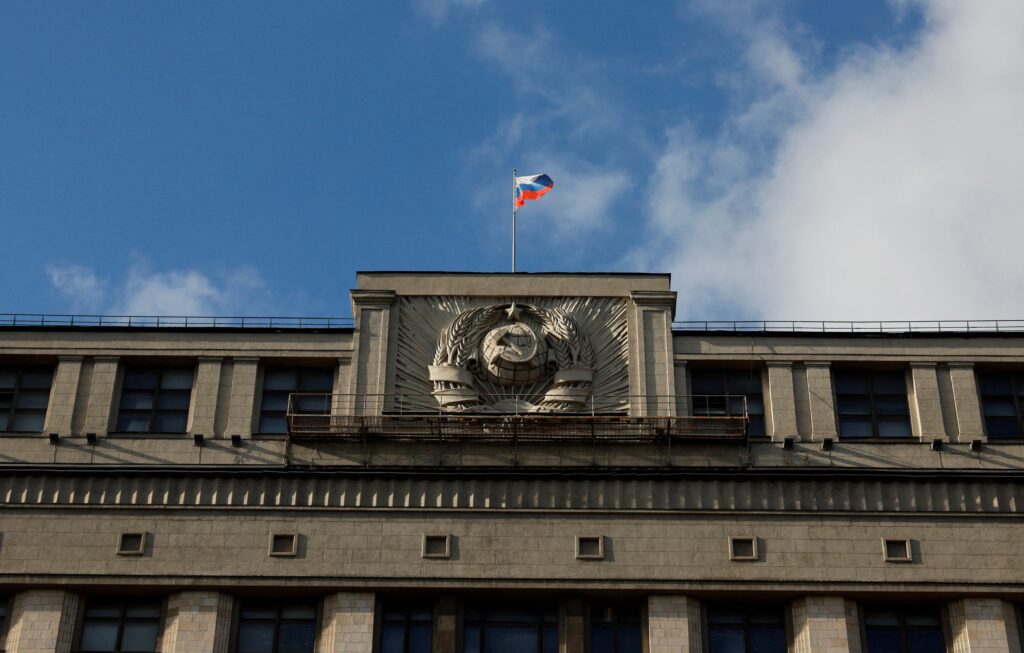
As of April 17, 2026, the immediate step is still the initiative sent to Roskomnadzor. For the restriction to become binding law, lawmakers would typically need either a dedicated federal bill or amendments to an existing gaming, child-protection, consumer, or payment statute. In the State Duma, bills ordinarily pass through three readings before moving onward in the legislative process.
That timeline could move quickly only if the political system decides to fold loot boxes into a broader gaming package that is already alive. Bill No. 795581-8 on the development and distribution of video games in Russia remains listed as under consideration, which means the wider regulatory environment for games is already active. But based on the public materials available now, loot-box restrictions for minors are still at the proposal stage rather than the final-law stage.
Frequently Asked Questions (FAQs)
- Is Russia’s loot box proposal already law? No. Public reporting on April 17, 2026 described an initiative sent to Roskomnadzor by State Duma deputy Vitaly Milonov, not an enacted law or a published loot-box bill text.
- Is Russia trying to ban all microtransactions for minors? Not from the public description so far. The reporting focused on loot boxes and other randomized in-game purchases, not every cosmetic, DLC pack, or subscription.
- Which games are most exposed if the proposal advances? Games built around paid randomness would face the most pressure, especially sports pack systems and case-opening ecosystems such as EA Sports FC Ultimate Team-style packs and CS2 cases.
- Would adults still be allowed to buy loot boxes? Probably yes, unless a future law goes much further than the proposal described on April 17. The current public framing is about protecting minors from direct spending on loot boxes.
- Could age verification become part of the rule? Yes, that is one of the most plausible outcomes. Russia is already discussing age labeling and user identification in the wider gaming-regulation space, including options such as Gosuslugi, biometrics, phone number, or another authentication system.
- Are loot boxes already officially classified as gambling in Russia? Not clearly. Russian gambling law defines gambling and bets in a way that invites that comparison, but loot boxes do not yet appear to have an explicit, settled classification as gambling under a dedicated Russian statute.
- Could Roskomnadzor really end up enforcing this? Yes, if lawmakers build the rule into Russia’s child-protection or online-information oversight framework. Roskomnadzor already has a role in supervision connected to child-information law.
- Would publishers have to disclose loot box odds in Russia? That is one of the most likely moderate reforms. Apple and Google already require odds disclosure for randomized virtual items, and Russia could copy that model or expand it.
- Can parents get money back for a child’s unauthorized in-game purchases? Sometimes, yes, but it depends on age, consent, the platform’s refund policy, and how the money was made available to the child. Russian civil law gives parents stronger arguments when the purchaser is under fourteen and outside the transactions children may legally make on their own.
- When might the proposal turn into a real law? There is no confirmed date yet. The next steps would normally be drafting, bill introduction, committee review, three readings in the State Duma, then the Federation Council, the President, and publication.

Conclusion
The State Duma has proposed to restrict the sale of loot boxes in games to minors in Russia, but the most accurate reading of the April 17, 2026 development is that it marks the start of a sharper regulatory push, not the end of the legislative process. The proposal is real, the political mood is real, and the tools being discussed gamer cards, parental controls, age-gating, and possibly disclosure rules fit the broader Russian movement toward tighter oversight of children’s access to online content and digital spending.
For publishers, the key risk is no longer whether loot boxes attract attention in Russia, but what exact legal form that attention will take. For parents, the message is immediate: existing platform tools already allow much stricter control than many families use. And for lawmakers, the next challenge is turning a politically popular idea into a rule that clearly defines loot boxes, identifies minors accurately, protects legitimate consumer rights, and can actually be enforced across stores, platforms, and payment systems.
Sources and citation
- Duma TV — “В России предложили ограничить траты детей в онлайн-играх”
https://dumatv.ru/news/v-rossii-predlozhili-ogranichit-trati-detei-v-onlain-igrah - RT — “В Госдуме призвали ввести геймерские карты для ограничения трат детей в играх”
https://russian.rt.com/russia/news/1621133-deputat-igry-deti-ogranichenie/amp - App2Top — “В Госдуме предложили ограничить продажу лутбоксов в играх несовершеннолетним”
https://app2top.ru/news/v-gosdume-predlozhili-ogranichit-prodazhu-lutboksov-v-igrah-nesovershennoletnim-239581.html - Государственная Дума / СОЗД — законопроект №795581-8
https://sozd.duma.gov.ru/bill/795581-8 - Consultant — Федеральный закон №436-ФЗ, статья 20
https://www.consultant.ru/cons/cgi/online.cgi?base=LAW&n=108808&req=doc - Consultant — КоАП РФ, статья 6.17
https://www.consultant.ru/document/cons_doc_LAW_34661/6cf7fd56ba2f8ca36e55ef067ade386bc0d080f6/ - Consultant — ГК РФ, статьи 28 и 172
Статья 28 — https://www.consultant.ru/document/cons_doc_LAW_5142/ | Статья 172 — https://www.consultant.ru/document/cons_doc_LAW_5142/d0387307c990225dbe60067cc5cbe0f0e60e1f95/ - Consultant — Федеральный закон №244-ФЗ, статья 4
https://www.consultant.ru/document/cons_doc_LAW_64924/baabe5b69a3c031bfb8d485891bf8077d6809a94/ - Apple — App Review Guidelines; Ask to Buy; Screen Time purchase controls
App Review Guidelines | Ask to Buy | Screen Time purchase controls - Google Play — Payments policy, purchase approvals, parental controls
Payments policy | Purchase approvals | Parental controls - Xbox Support — unauthorized purchase prevention and digital refunds
Prevent unauthorized purchases | Request a refund for digital games - PlayStation Support — family spending limits, refunds, and chargeback debt
Family spending limits / child spend limit reference | PlayStation Store refunds / unauthorized payments hub | Chargeback debt / suspension - EA — FC 26 pack probabilities
https://www.ea.com/games/ea-sports-fc/news/fc-pack-probabilities - Valve / Counter-Strike / Steam — case opening, trading, and marketplace references
Steam Community Market | CS case key listing | Steam Trade and Market Holds | Steam Trading - РИА Новости / Мосгордума — proposal for mandatory age labeling of online video games
РИА Новости | Мосгордума
Recommeded
- Halfbrick cuts 41 jobs: what happened at the Fruit Ninja and Jetpack Joyride studio (March 2026)
- Castlevania: Belmont’s Curse is a New Castlevania Game Coming in 2026 — Release Date, Trailer, Platforms, Story & Gameplay
- How to Auto Retopology in Blender: A Step-by-Step Guide for Clean 3D Meshes
- Capcom Promises No GenAI In Its Games, But Wants To Use The Tech For “Efficiency” — What Capcom Actually Said to Investors
- Expedition 33 Sequel? Writer Staying Quiet On Clair Obscur Franchise’s Future
- The Sims 4 Will Open an Official Marketplace to Let Content Creators Sell Mods: Release Date, “Moola” Currency, and Maker Program Explained
- All Playable Characters in Marathon: Bungie’s New FPS – Community Reactions, Developer Insights, and Unique Visual Style
- Just Days Before the Oscars, Netflix Closes Deal for Maggie Kang and Chris Appelhans to Return for KPop Demon Hunters 2
- Riot Details New Legends, Mechanics, and More For Riftbound’s Third Set, Unleashed: Release Dates, Ambush, XP, Hunt, and Baron Nashor Ultimate Rare
- How do I make the camera look at an object automatically in Blender?