





Capcom Generative AI Policy for Game Development
Capcom’s official policy on generative AI is divided into two strict mandates: no AI-generated content in the final game and the active use of AI as an internal tool to enhance development efficiency. Clarified during an investor briefing in early 2026, the company stated that while generative AI will not be used to create shipping game assets, it will be embraced behind the scenes to help developers work faster.
This decision stems from a commitment to original art styles and meticulous quality in franchises like Resident Evil and Monster Hunter. Capcom views generative AI as a “tool to improve efficiency and productivity” rather than a replacement for human creativity. This stance seeks a balance that respects fan concerns regarding AI “sloppiness” while acknowledging practical productivity benefits.
“Capcom Will Not Implement AI-Generated Assets into Game Content” Statement
The core of Capcom’s position is the unambiguous statement: “Our company will not implement any AI-generated assets into our video game content.” This policy covers graphics, audio, and all other materials that players interact with directly.
- Artist-Centric Approach: Fans have lauded this as a “pro-artist” stance, ensuring that monsters, characters, and dialogue remain handcrafted.
- Internal Utilization: Conversely, Capcom plans to “actively utilize” the technology across departments including graphics, sound, and programming to shorten development cycles.
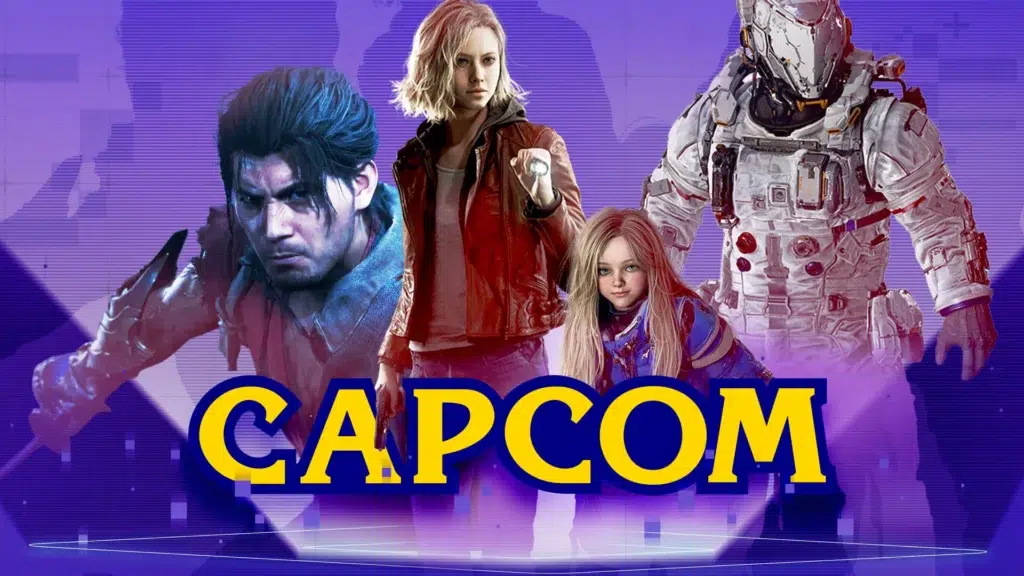
Capcom Investor Q&A March 2026 Generative AI Answer
The policy was formally revealed during an online briefing for investors in February 2026, with a summary released on March 23, 2026. Management addressed shareholder curiosity regarding AI’s potential to reduce costs versus the risk of fan backlash.
Capcom signaled that it is currently testing various AI methods across departments. By making the Q&A summary public, the company added credibility to its promise that reputation and quality will not be sacrificed for automated content creation.
Will Capcom Use Generative AI in Resident Evil Games?
Capcom will not use generative AI to create in-game assets for the Resident Evil series. For upcoming titles like Resident Evil 9 (Requiem), all creative elements are crafted by human developers.
- DLSS 5 Controversy: At Nvidia’s GTC 2026, Resident Evil Requiem demonstrated DLSS 5 “neural rendering.” While this AI technology upscales visuals in real-time, Capcom clarifies that this is an optional graphics setting powered by GPU software, not an “artistic asset” created by the studio.
- Creative Integrity: Capcom producers, such as Jun Takeuchi, emphasize that while AI is a useful tool for shortening workflows, it will not take over the creative side of horror aesthetics.
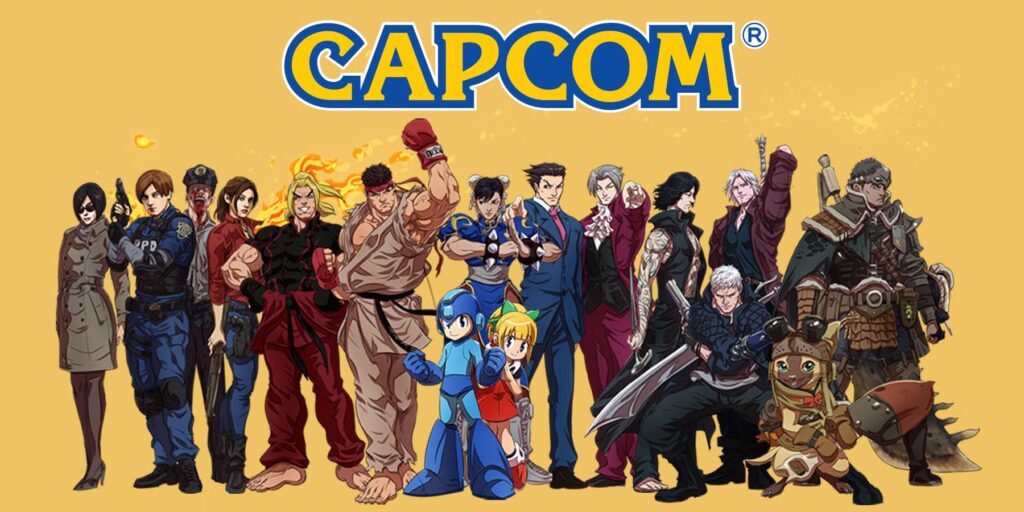
Will Capcom Use Generative AI in Monster Hunter Games?
The “no GenAI in games” rule applies equally to Monster Hunter. Future titles, such as Monster Hunter Wilds, will not feature monsters or armor designs created solely by AI.
- Creature Design: The franchise identity relies on unique, handcrafted ecosystems. Capcom technical director Kazuki Abe noted that AI is steered away from anything directly related to stories or character designs.
- Development Complexity: The coordination required for a monster’s combat behavior, weak points, and animations remains beyond the current scope of autonomous AI tools.
Capcom Using AI for Game Development Efficiency and Productivity
Capcom is utilizing AI to handle “grunt work” across several key departments:
- Graphics Efficiency: AI is used for rapid concept ideation. For example, a system using Google Gemini can generate thousands of ideas for background objects (like fictional TVs or signs) which artists then pick and refine.
- Sound Production: AI assists in creating sound effect variations, noise reduction, and temporary “placeholder” voice-overs. This allows sound engineers to focus on creative mixing rather than repetitive labor.
- Programming and QA: Capcom explores AI code assistants to suggest snippets and scripts. In Quality Assurance, AI helps simulate player behavior to detect bugs faster than manual testing alone.

Capcom AI Use for Graphics Pipeline Efficiency
The art creation process is heavily supported by AI for internal prototyping:
- Concept Ideation: Systems generate “high-quality results in seconds” for environment objects, allowing artists to iterate through concept stages rapidly.
- Procedural Generation: AI helps create base textures or automates the creation of Level-of-Detail (LOD) models for distant objects.
- Modeling Aids: AI plugins can generate varied crowds of trees or fill bookshelves with unique algorithmic variations based on a human artist’s style guide.

Frequently Asked Question (FAQs)
- What exactly did Capcom promise regarding AI in its games?
Capcom has committed to not using generative AI to create any assets—such as art, dialogue, or music—that appear in the final version of its games. During an investor Q&A, the company stated, “Our company will not be implementing any AI-generated assets into our video game content.” While AI will be used behind the scenes to improve development efficiency, these machine-generated elements will not be directly included in the product players purchase. - Why is Capcom against using AI-generated assets in game content?
This stance is rooted in a commitment to creative integrity and quality. Capcom believes handcrafted content is essential for authenticity and wishes to avoid the “lower-quality” or “sloppy” reputation often associated with AI. Furthermore, sidestepping AI-generated content mitigates legal risks, such as copyright infringement or intellectual property issues that arise if an AI inadvertently mimics existing protected works. - How will Capcom use AI technology then?
Capcom will utilize generative AI strictly as an internal development tool to boost productivity. This includes:
Idea Generation: Using systems to brainstorm hundreds of thousands of concepts for environment objects.
Programming: Automating repetitive coding tasks or debugging.
Sound: Creating variations of sound effects for designers to refine. The goal is for AI to handle labor-intensive processes, which are then reviewed and polished by human developers. - Will popular series like Resident Evil or Monster Hunter use AI content or characters?
No. Capcom’s policy is a blanket rule across all franchises. No enemies, artwork, or story elements in Resident Evil or Monster Hunter will be created solely by AI. While developers might use AI tools to generate internal variations (like zombie concepts) during the production phase, every asset in the final game remains human-made. High-end features like Nvidia’s DLSS 5 are considered optional graphics enhancements, not AI-generated game assets. - Did Capcom’s stance on AI come as a reaction to fan concerns?
Yes, in part. The policy follows negative reactions to “AI filters” in recent tech demonstrations and backlash faced by other studios using AI-generated art. By drawing this line, Capcom successfully reassured its community that it values human artistry over automated content, earning significant positive feedback and goodwill from its fanbase. - How does Capcom’s AI policy compare to other game companies’ approaches?
Capcom is one of the first to publicly set a hard boundary, though other Japanese firms share a cautious outlook.- Nintendo: Cautious due to copyright concerns and avoiding AI assets for now.
- Sega: Using AI for efficiency but proceeding carefully to avoid replacing creative roles.
- Square Enix/Bandai Namco: Experimenting with AI tools but remaining conservative regarding final game assets. Globally, most large studios view AI as a useful production aid but hesitate to put its output directly into games.
- Could Capcom change its stance on AI in the future?
While currently a matter of official company policy, Capcom could theoretically revisit this if the technology evolves to solve current ethical and quality issues. However, such a move would risk damaging the trust and brand value they have built with this promise. For the foreseeable future, “no GenAI in games” remains a guiding principle for the company. - What are examples of AI helping Capcom’s game development (that won’t directly be seen in-game)?
Key examples include:- Kazuki Abe’s Idea System: Uses Google Gemini and Imagen to propose designs for minor city signage or furniture, which artists then use as a baseline for handcrafted assets.
- Coding Assistants: Auto-generating “boilerplate” code to speed up the technical architecture.
- Audio Palettes: Generating multiple versions of a roar or ambient noise for sound designers to curate and integrate.
- Does “no GenAI content” mean Capcom won’t use things like procedural generation or other AI in gameplay systems?
No. The policy specifically targets creative assets (art, audio, text). Capcom can still use:- Procedural Generation: Algorithmic level or behavior creation.
- Machine Learning: Developing “smarter” enemy AI.
- Graphics Tech: Supporting DLSS or other AI-driven performance features that run on a user’s hardware. The restriction is on content creation, not the use of advanced algorithms within the game engine.
- How does Capcom’s AI policy benefit players and developers?
- For Developers: It provides a supportive environment where AI tools reduce drudgery and increase efficiency without threatening creative job security. Ultimately, this focus on human-led quality allows the team to spend more time refining the most important aspects of a game, leading to a superior final product.
- For Players: It ensures a high standard of polished, authentic, and ethically created content, free from the quirks of AI generation.
Conclusion
Capcom’s stance on generative AI – “No GenAI in its games, but yes to AI for efficiency” – strikes an admirable balance that prioritizes creative integrity while embracing technological advancement. In an era when AI technologies are rapidly reshaping industries, Capcom has drawn a clear line that resonates with both its player community and its development philosophy. What Capcom actually said to investors boils down to this:
- They will not incorporate AI-generated assets into game content, ensuring the artistry and personality of their games remain hand-crafted.
- Simultaneously, they are actively exploring generative AI as a behind-the-scenes tool to streamline game development, applying it in areas like graphics, sound, and programming to boost productivity.
Capcom’s stance also carries significant weight in the industry. It sets a precedent that other game companies can follow to navigate the AI revolution responsibly. Indeed, we see similar attitudes emerging from Capcom’s Japanese peers (Nintendo, Sega, etc.), validating the idea that generative AI should support human creators, not replace them. By openly addressing the issue, Capcom has earned goodwill – fans have praised the company for being “on a winning streak” and staying in tune with gamer sentiment. In a time when trust can be fragile, Capcom has bolstered its reputation as a player-first developer that values its creative teams.
It’s worth noting that technology never stands still. AI will continue to evolve, and the conversation in a few years may be different. But Capcom’s approach provides a model for adapting to new tech without losing sight of core creative values. Their commitment suggests that as AI tech matures, Capcom will continue to find ways to use it ethically and effectively – always keeping the human touch at the heart of their games. For now, Capcom fans can rest assured that the worlds of Raccoon City, Vallahan, Kamura Village, and beyond will remain as imaginative, immersive, and genuine as ever, even as the tools to build those worlds quietly improve in the background.
In conclusion, “Capcom promises no GenAI in its games” isn’t just a headline – it’s a pledge to maintain the artistry we love in Capcom titles. And “using the tech for efficiency” means we might get to enjoy those games with even more content and care put into them, possibly delivered faster, as AI helps shoulder some of the development burden.
Capcom has effectively said: We’ll use AI to help our artists and engineers, not to replace them. That philosophy not only future-proofs Capcom in a rapidly changing tech landscape, but it also honors the creative spirit that has defined Capcom’s legacy for decades. It’s a win-win stance – one that keeps players happy and creative teams empowered – and it may well become a gold standard for the industry as a whole.
Sources and Citations
- Capcom Investor Q&A Summary (March 2026) – Automaton West report, https://automaton-media.com/en/news/capcom-says-it-wont-use-ai-generated-assets-in-games-but-will-use-ai-for-development-efficiency/
- Game*Spark Japan article on Capcom’s AI policy, https://www.gamespark.jp/article/2026/03/18/139000.html
- PushSquare coverage of Capcom’s stance, https://www.pushsquare.com/news/2026/03/capcom-wont-use-ai-generated-assets-in-final-games
- PC Guide news article on Capcom’s AI stance, https://www.pcguide.com/news/capcom-confirms-no-ai-assets-in-final-games-but-will-use-ai-in-development/
- Reddit discussion thread in r/PS5 about Capcom’s statement, https://www.reddit.com/r/PS5/comments/1blxxxx/capcom_confirms_no_ai_generated_assets_in_games/
- Automaton West article on Kazuki Abe’s generative AI idea system, https://automaton-media.com/en/interviews/capcom-ai-idea-generation-kazuki-abe/
- Automaton West article on Capcom’s AI stance in development, https://automaton-media.com/en/news/capcom-generative-ai-policy-development/
- PC Gamer report on Japanese industry survey and Nintendo/Sega attitudes, https://www.pcgamer.com/japanese-game-companies-generative-ai-survey-nintendo-sega-capcom/
- VGC article on Sega’s stance, https://www.videogameschronicle.com/news/sega-ai-development-comments/
- PushSquare article referencing Nvidia DLSS 5 reactions, https://www.pushsquare.com/news/2026/03/resident-evil-requiem-dlss-5-ai-controversy/
- PC Guide article on Capcom devs and DLSS 5 reveal, https://www.pcguide.com/news/capcom-devs-react-to-nvidia-dlss-5-ai-rendering-reveal/
Recommended
- How do I change the camera aspect ratio in Blender?
- How to Tell If a Pokémon Card Is Fake: 15 Quick Tests Collectors Use (Texture, Light Test, Fonts & Holo)
- How do I simulate a GoPro-style camera in Blender?
- Diverse and Attractive Video Game Characters: Exploring Stellar Blade, Hades, and More
- Goro Abe, the Director Behind WarioWare, Has Parted Ways with Nintendo After 25+ Years
- Resident Evil Requiem: Japanese Players Fight “Immersion-Breaking” Censorship — Why Gore Is Blacked Out in Japan
- Steam Game Adds Playable Tofu Character After Complaints About Female Protagonist — Why Honcho’s “Mr. Tofu” Patch Went Viral
- Discover the Allure of Chrome Heart BraidsDiscover the Allure of Chrome Heart Braids
- Netflix Joins Blender: What Netflix Animation Studios Funding Means for Blender and the Community
- How to Make Blender Hair Work with Unreal Engine’s Groom System