





Few catalog releases in recent memory have raised as many technical questions as the new 28 Days Later 4K Blu-ray. The reason is simple: Danny Boyle’s 2002 horror landmark is not a conventional film-origin title that can be scanned from a pristine camera negative and effortlessly transformed into a showcase Ultra HD disc. Instead, 28 Days Later was built around early digital video, MiniDV tapes, and a deliberately rough aesthetic that became part of its identity.
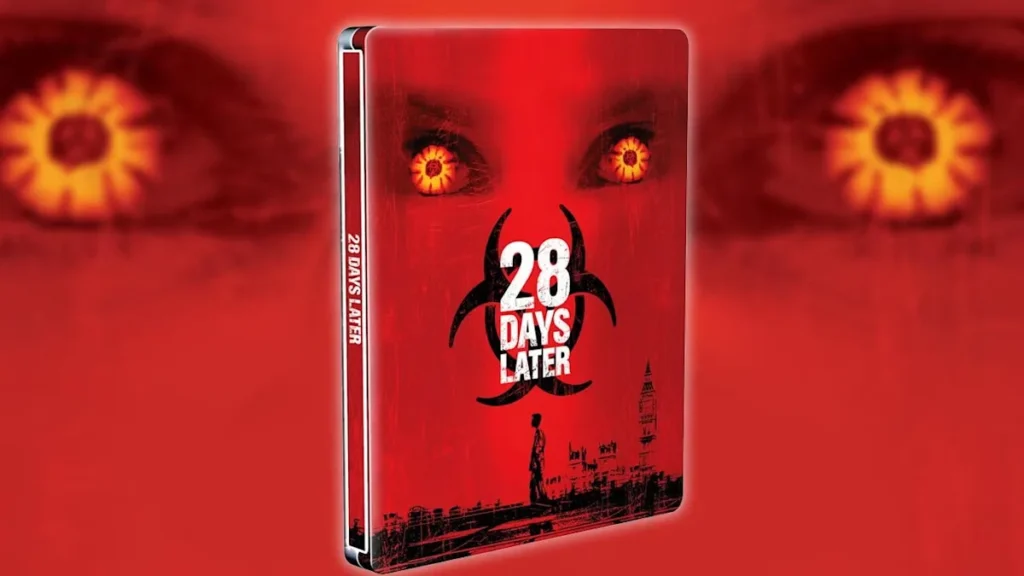
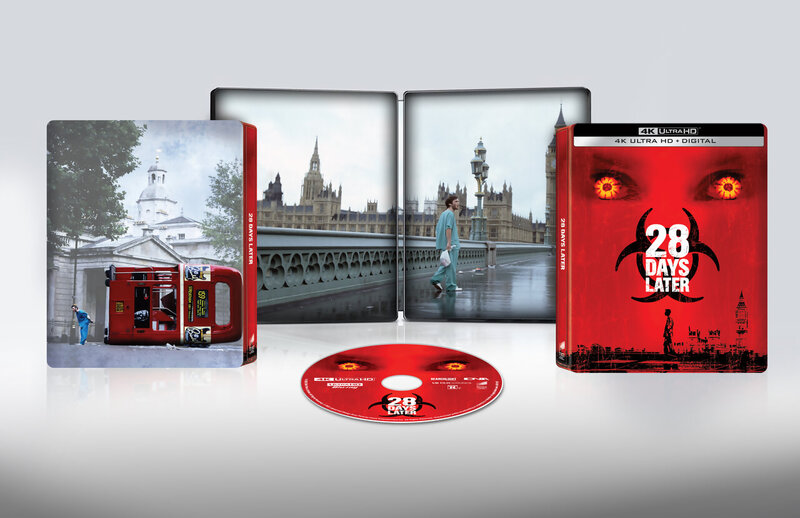
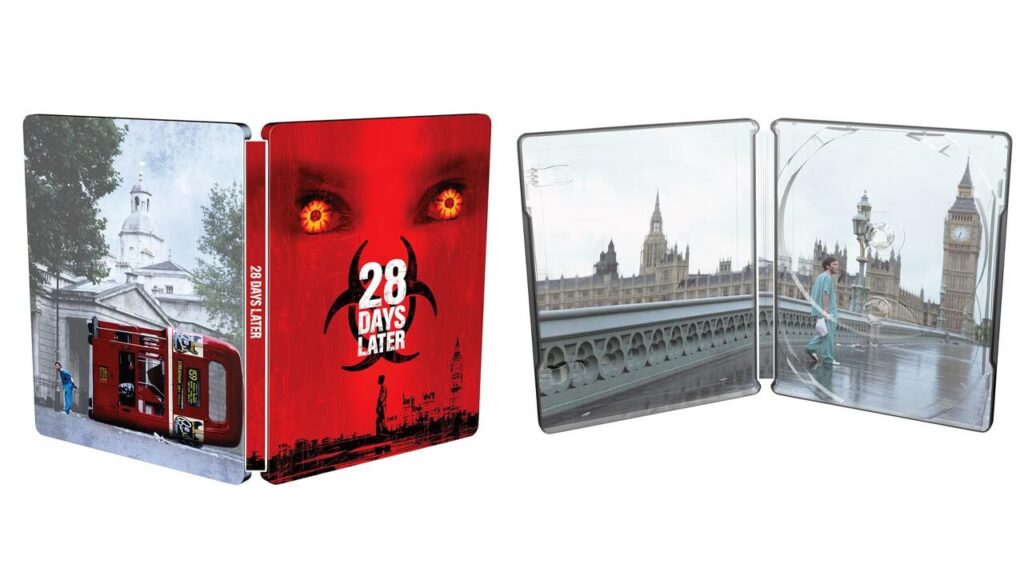
That is exactly why the upcoming 4K UHD release matters. It is not just another remaster. It is a test of how a studio can honor a movie whose most famous visual qualities came from technological limitation, not image perfection. Sony Pictures Home Entertainment has now officially announced the title for 4K UHD SteelBook release, with Dolby Vision and Dolby Atmos, making this the first time the film will be available in the format.
The main keyword around this release captures the core tension perfectly: 28 Days Later Is Getting A 4K Blu-ray Even Though It Wasn’t Built For It. That tension is not clickbait. It reflects a real archival and presentation challenge. The film was shot primarily on Canon XL1 MiniDV cameras because Boyle and cinematographer Anthony Dod Mantle wanted mobility, speed, and a harsh, unstable texture that fit the collapse of society shown in the story. The result was one of the most influential horror films of the 2000s, but also a movie whose native image characteristics were never designed for modern 4K home video expectations.
What makes this release exciting is not the promise of miraculous sharpness. It is the chance to see how far careful restoration, color correction, HDR grading, and format-sensitive mastering can go without erasing the film’s original identity. For collectors, horror fans, and home theater enthusiasts, this 4K debut is less about whether 28 Days Later can suddenly look like a modern large-format digital production and more about whether Sony can present it in the most faithful and best-preserved form yet.
28 Days Later 4K Blu-ray release date (September 1, 2026)
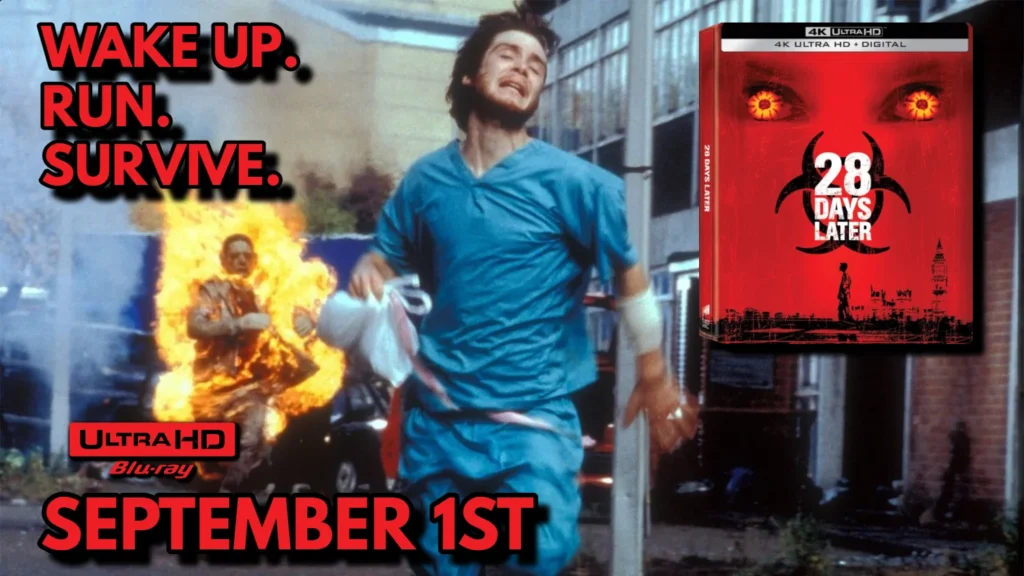
Sony Pictures Home Entertainment’s announced street date for the 28 Days Later 4K UHD Limited Edition SteelBook is September 1, 2026. Multiple release reports published in April 2026 align on that date, and Sony’s home entertainment announcement as quoted by trade coverage positions the disc as the film’s long-awaited 4K debut.
That release date matters because 28 Days Later has had a complicated home video history. The film’s existing Blu-ray reputation has long been constrained by its SD-origin material and out-of-print status, so the September 1, 2026 launch is not just another reissue. It is the first time Sony is giving the film a premium UHD collector release with a studio-approved HDR and Atmos presentation.
For collectors planning purchases around release calendars, this is clearly a late-summer/early-fall catalog event title rather than a quiet digital-only refresh. Sony is treating it as a prestige archival horror release, especially since it is coming in SteelBook packaging rather than a barebones standard UHD case at launch.
28 Days Later 4K steelbook preorder guide
As of the most recent April 2026 reporting, preorder links were not yet broadly live when the release details first surfaced. GameSpot noted that preorders were not live yet ahead of the September 1 launch, while High-Def Disc News specifically reported that the SteelBook was not yet available for preorder at Amazon or Walmart at the time of its write-up.
That means the practical preorder strategy is simple. Watch the major U.S. disc sellers first, especially Amazon and Walmart, because those are the retailers specifically referenced in early coverage. If Sony rolls out listings in stages, those stores are likely to be among the earliest major outlets visible to most buyers. At launch-announcement stage, though, availability was still pending rather than fully open.
Collectors who care about limited packaging should move quickly once listings appear. SteelBook editions can remain in stock for a while on some catalog titles, but horror collectors and franchise fans often create faster demand than standard catalog discs do. Because 28 Days Later has also been difficult to obtain on Blu-ray for years, the new UHD edition may attract both format upgraders and people simply trying to own a widely wanted version of the film again.
Is 28 Days Later real 4K or an upscale
The honest answer is that 28 Days Later is not “real 4K” in the way a 35mm-negative restoration or a movie finished from high-resolution digital camera files would be. The film was shot primarily on MiniDV using Canon XL1 cameras, which means most of the imagery originates from standard-definition digital video rather than a native 4K capture source. Sony’s own release description, as quoted in trade reporting, says the “assembled original source video” was used together with a section from original camera negative that appeared in the original theatrical release. That is a strong clue that this UHD is built from mixed source elements rather than from a single full-resolution film master.
So, yes, it is a 4K UHD disc in format terms, but no, most of the movie does not suddenly become native 4K photography. The more accurate description is that Sony has created a new 4K presentation from the best available original source materials, then graded it for HDR and approved it with Danny Boyle. That is a meaningful distinction. A UHD disc can still be worthwhile even when its source is lower resolution, especially if the grading, compression, encoding, and cleanup are handled well.
This also explains why expectations need to stay grounded. Buyers should not expect razor-sharp modern 4K image detail across the whole feature. They should expect a presentation that preserves the film’s smeary, unstable, distressed digital look while improving color handling, disc compression, black levels, and overall home-viewing quality compared with older releases.
Why 28 Days Later was shot on MiniDV and Canon XL1
28 Days Later was shot on MiniDV and Canon XL1 cameras for both practical and artistic reasons. Anthony Dod Mantle explained in American Cinematographer that if the film had been shot conventionally on 35mm, the production would likely have had to lose scenes because of cost and logistical limits. The tiny DV cameras made it possible to move quickly, occupy less physical space, and capture deserted London sequences under extremely narrow real-world time windows before the city returned to normal activity.
That logistical benefit was crucial. Dod Mantle said the deserted London images depended on the ability to shoot fast and with multiple compact cameras at once, including as many as eight Canon XL1 units for some sequences. Trying to do that with larger 35mm setups would have been far more difficult in central London, especially around commuter traffic and strict timing.
Just as important, the filmmakers believed the format fit the material. Dod Mantle said MiniDV’s harsh imaging characteristics matched the film’s violent, gritty, anarchic script. In other words, the look was not merely a budget compromise. It was turned into a storytelling tool. The smeared textures, blown highlights, unstable edges, and roughness all contributed to the unsettling mood that made the film feel immediate and broken in a way polished photography might not have.
28 Days Later 480p footage explained (why it looks low resolution)
The reason 28 Days Later looks low resolution is straightforward: much of it came from standard-definition digital video. Modern viewers are used to HD, 4K, and HDR workflows, but MiniDV-era cameras like the Canon XL1 were operating in a very different technological world. Trade and technical reporting on the film repeatedly point back to the fact that its iconic look comes from prosumer DV capture, not high-resolution cinema acquisition.
American Cinematographer’s 2003 production coverage is especially useful here because it explains how fragile the image chain already was at the time. Dod Mantle discussed concerns about the final theatrical print, how digital-origin imagery could be vulnerable in release, and how backgrounds, skies, contrast lines, and certain textures could become problematic during post and film-out. Those are not the concerns of a high-resolution master with lots of latent detail waiting to be extracted later. They are the concerns of a format already operating close to its limits.
That low-resolution character is therefore not a flaw that can be fully “fixed.” It is built into the source. Any remaster can stabilize, rebalance, and better present the image, but it cannot conjure absent detail that was never captured. That is why the 28 Days Later 4K discussion is so unusual. The film’s value is inseparable from its roughness.
How Sony remastered 28 Days Later for 4K HDR
Sony’s release details, as quoted in April 2026 reporting, state that the 4K UHD presentation uses the assembled original source video together with the section from original camera negative that was used in the original theatrical release. Those elements were then color corrected to take advantage of the wider color gamut available for the film’s 4K HDR debut, and both the picture and Atmos mix were approved by Danny Boyle.
That language matters because it suggests Sony did not simply take an old HD master and place it on a UHD disc unchanged. Instead, the studio appears to have gone back to the source assembly and rebuilt the presentation around the original video-origin material plus the higher-quality film-origin section that was already part of the theatrical version. This is still not the same thing as scanning a full camera negative for the whole feature, but it is a more substantial restoration effort than a casual repackaging.
Historically, the film already went through a sophisticated post path for theatrical release. American Cinematographer reported that the footage was upconverted to D-1, graded at MPC, enhanced and interpolated to 2K files, slightly blown up to 1.85:1, and then recorded onto intermediate stock via Arrilaser for film-out. The new 4K UHD therefore sits on top of a film with a long-standing hybrid analog-digital finishing history rather than a simple one-step videotape pipeline.
28 Days Later 4K Dolby Vision details
The new UHD disc supports Dolby Vision, with HDR10 compatibility also noted in early release coverage. That means compatible displays will be able to read dynamic metadata for scene-by-scene or shot-by-shot tone mapping, while non-Dolby Vision HDR-capable setups should still receive an HDR10 base layer.
What Dolby Vision can realistically add here is not miraculous detail but better management of contrast, highlights, color separation, and shadow presentation. Given the film’s DV origins, the biggest visible gains may come from how the grading handles bleak daylight, fire, blood, sky replacement work, and dark interiors, not from pure sharpness. Sony’s own quoted description emphasizes color correction to take advantage of the wider color gamut, which is exactly where HDR can help even on non-pristine source material.
Collectors should still keep expectations sensible. Dolby Vision does not erase the movie’s rough digital texture, and it should not. If the remaster works, the result will likely be a more controlled, richer, and more stable presentation of the intended look rather than a glossy transformation into a slick modern image.
28 Days Later 4K Dolby Atmos audio upgrade
Sony’s release information lists English Dolby Atmos alongside English 5.1 audio. That makes this 4K edition an audio upgrade as well as a video event, because previous home versions did not arrive packaged as a new Atmos showcase release with director approval attached to the final mix.
Atmos is likely to matter more than some casual observers expect. 28 Days Later is not just remembered for its image. It is remembered for dread, sudden eruptions of violence, ambient emptiness, and the emotional force of John Murphy’s score and the film’s broader sound design. A more expansive immersive mix can improve spatial tension, environmental cues, and sonic scale even if the picture remains intentionally rough.
Just as with the image, the key question is whether the new mix respects the film’s original character. Sony’s quoted materials say the Atmos mix was approved by Danny Boyle, which should reassure buyers who worry about aggressive revisionism.
What source materials were used for the 28 Days Later 4K transfer
The most specific publicly available explanation so far is that Sony used “the assembled original source video” along with “the section from original camera negative as used in the original theatrical release.” That wording comes from release reporting quoting Sony’s disc details, and it is the strongest source-based summary currently available for what materials fed the new transfer.
That description is important because it confirms this is not a straightforward all-film restoration and not a full-native-4K-from-camera-elements job either. Instead, it is a hybrid-source remaster shaped by the way the film was originally made and finished. Most of the movie’s source appears to remain video-origin, while at least one section benefits from original camera negative material already integrated into the theatrical presentation.
American Cinematographer’s original production report provides useful context for why source reconstruction is so tricky. The film’s footage moved from PAL MiniDV through D-1 mastering, grading, enhancement and interpolation to 2K files, and then film recording for theatrical prints. That history means there is no simple, uniform set of original high-resolution camera files waiting to be scanned in the modern sense.
28 Days Later 4K Blu-ray vs old Blu-ray quality comparison
The old Blu-ray was always dealing with the limitations of the source, and many viewers felt it never looked especially strong by Blu-ray standards. GameSpot bluntly notes that the standard Blu-ray “never looked great,” tying that directly to the movie’s low-resolution MiniDV origins.
The new UHD should therefore be judged less on absolute sharpness and more on whether it offers a better overall presentation package: cleaner encoding, better compression, more nuanced HDR grading, improved black levels, stronger color handling, and the new Atmos mix. Those are the areas where a 4K release can outclass an older Blu-ray even when the source was never high resolution to begin with.
One especially notable comparison point is the film’s final scenes, which GameSpot says were shot with an Arri camera in higher resolution and look noticeably better. That means the UHD may show more visible gains in those portions than in the bulk of the MiniDV-origin material. In practical terms, the upgrade may be uneven by design, because the original movie itself is uneven in source quality.
Will the 28 Days Later 4K release use AI upscaling
No publicly available Sony release detail reviewed here explicitly says the disc used AI upscaling. The available announcement language focuses instead on assembled original source video, original camera negative for the relevant section, HDR color correction, and director approval. That means any strong claim that Sony used AI upscaling would go beyond what the cited release materials currently confirm.
What can be said with confidence is that fans have raised the question because of the film’s SD origins. That concern is understandable. But based on the public information currently available, the accurate position is that Sony has described a source-based remaster and HDR grade, not an explicitly AI-branded enhancement workflow.
So the best answer for now is caution and precision: there is no confirmed public evidence in the announcement materials cited here that AI upscaling was used, and buyers should wait for hands-on reviews and disc analyses before turning that fear into a fact claim.
28 Days Later 4K Blu-ray special features list (commentary, deleted scenes, alternate ending)
Sony’s quoted disc details list a robust set of archival bonus features. These include commentary by director Danny Boyle and screenwriter Alex Garland, deleted scenes and alternate endings with optional commentary, the Pure Rage: The Making of 28 Days Later featurette, a Jacknife Lee music video, animated storyboards, still photo galleries, and the theatrical teaser and trailer.
This is important because collectors often worry that a premium 4K catalog release might strip legacy extras in favor of barebones presentation upgrades. That does not appear to be the case here. The UHD package, based on available reporting, preserves the film’s archival supplements while adding the headline-format improvements of Dolby Vision and Dolby Atmos.
For longtime fans, the commentary track may be the biggest draw after the remaster itself. Boyle and Garland remain central to the franchise’s identity, and their participation gives the package more historical value than a purely technical upgrade would.
28 Days Later 4K runtime, aspect ratio, and presentation specs
Early technical reporting lists the feature as a 2160p presentation framed at 1.85:1, with Dolby Vision HDR, Dolby Atmos, and English 5.1 audio. The steelbook release also includes a digital copy compatible with Movies Anywhere, according to early disc-coverage reporting.
The original feature runtime is generally listed around 113 minutes, or 1 hour and 53 minutes, which aligns with the established home-video presentation of the film. Even if some retailer databases may vary slightly in how they display run time formatting, the movie itself is not being presented as a radically altered cut based on the currently available UHD announcement details.
The aspect ratio matters more than it may seem. American Cinematographer documented how the production and post teams worked through MiniDV image tests, PAL XL1 framing choices, and a later blow-up to 1.85:1 for theatrical release. So when the UHD is described as 1.85:1, that lines up with the film’s long-established intended presentation rather than indicating a new reframing experiment.
Where to buy 28 Days Later 4K UHD Blu-ray (best retailers and availability)
At the time the release was first reported in April 2026, preorders were not yet broadly live. GameSpot said preorders were not live yet, and High-Def Disc News specifically noted that Amazon and Walmart had not opened listings at that stage.
That makes Amazon and Walmart the clearest retailers to monitor first, because they were explicitly identified in early release-watch coverage. Availability was still in the “announcement phase” rather than the “widely live preorder” phase as of those reports.
For buyers who care about avoiding aftermarket markups, the best move is to track the title as soon as listings appear rather than waiting until closer to street date. Because 28 Days Later has long had an out-of-print reputation on Blu-ray, legitimate retail stock at launch is likely to be more appealing than chasing secondhand prices later.
28 Days Later 4K release and the 28 Years Later movies connection
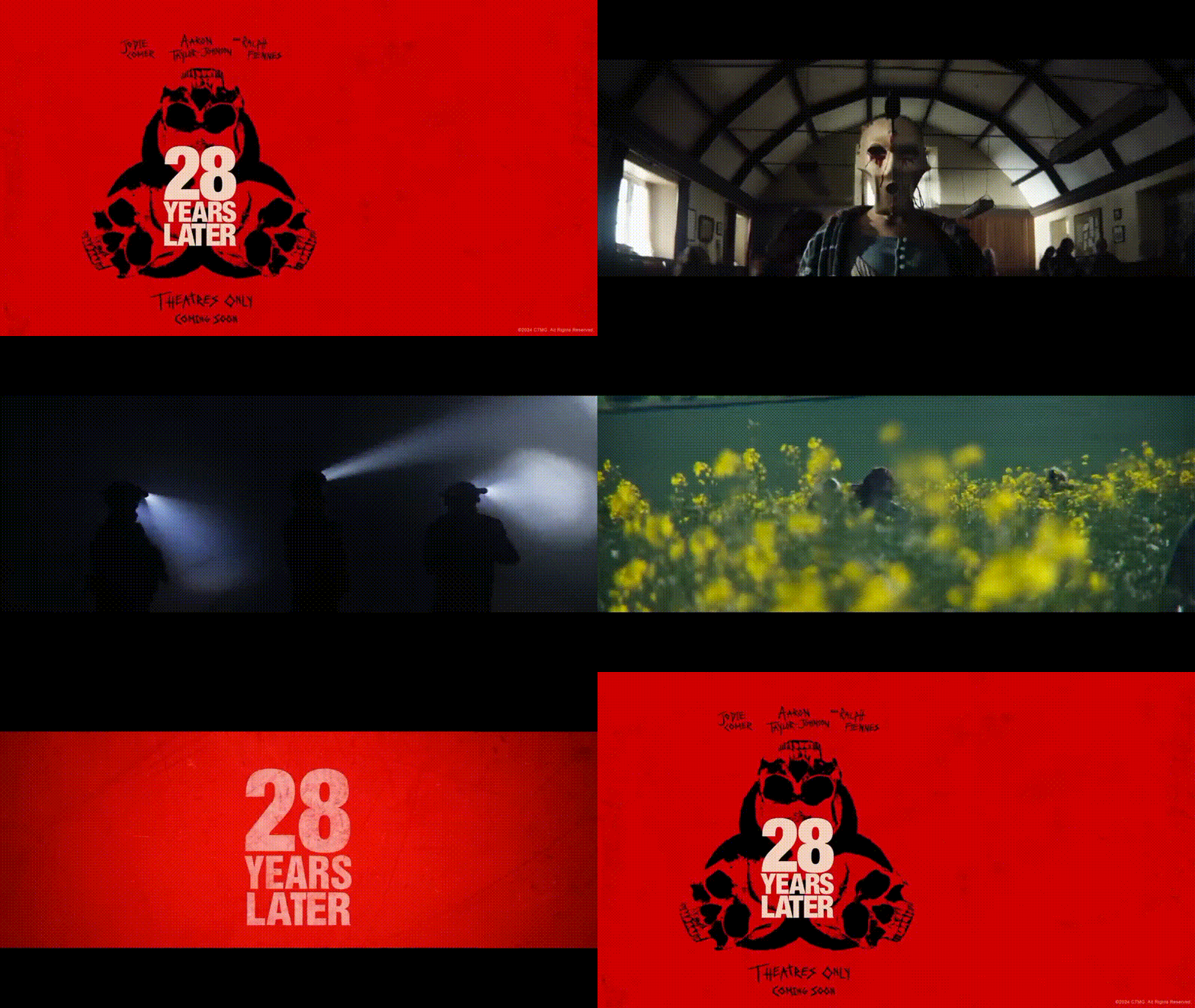
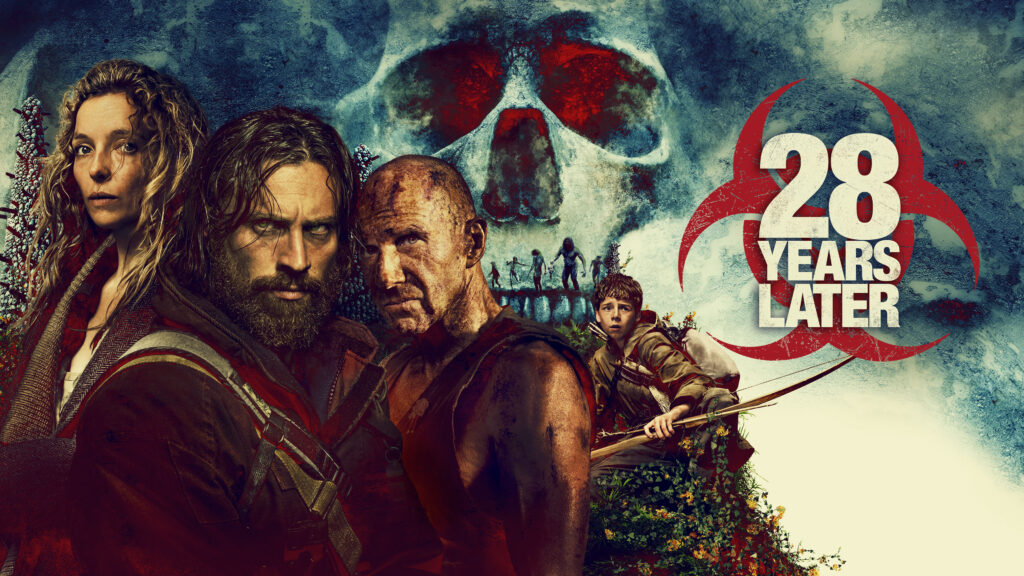
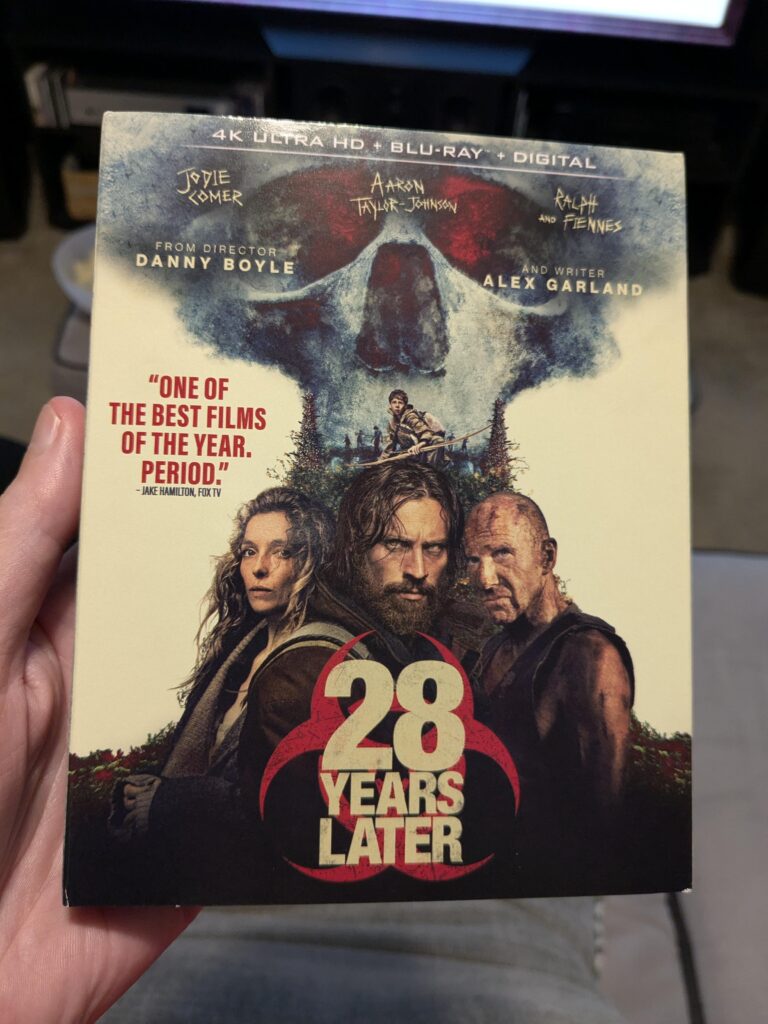
The timing of this 4K release is not accidental in a broader franchise sense. The 28 Days Later UHD arrives after the franchise’s return through 28 Years Later and the follow-up film 28 Years Later: The Bone Temple. GameSpot explicitly frames the 4K disc within that revived franchise momentum, noting that the newer films have put the series back into active circulation for modern audiences.
That connection runs deeper than marketing. GQ’s reporting on 28 Years Later explains that Danny Boyle and Anthony Dod Mantle consciously revisited the original film’s technological adventurousness when deciding how to shoot the newer entry, this time with iPhone 15 Pro devices for key scenes. Boyle described the original as a work born from instinctive use of then-contemporary lightweight technology, and the sequel revival deliberately echoes that spirit.
In that sense, the 28 Days Later 4K release lands at a moment when the franchise’s identity is being reasserted. The original film’s rough DV imagery is not an embarrassing relic the new movies are trying to escape. It is part of the series’ creative DNA. The UHD disc therefore functions both as a collector item and as a renewed historical statement about where the franchise’s visual language began.
FAQ questions and answers
- Is the 28 Days Later 4K Blu-ray officially confirmed?
Yes. Sony Pictures Home Entertainment has announced a Limited Edition SteelBook 4K UHD release for the film. - When does the 28 Days Later 4K UHD release come out?
The announced release date is September 1, 2026. - Will the disc include Dolby Vision?
Yes. The 4K UHD release is listed with Dolby Vision HDR support, with HDR10 compatibility noted in early coverage. - Will the disc include Dolby Atmos?
Yes. Sony’s quoted release details list English Dolby Atmos along with English 5.1 audio. - Was 28 Days Later originally shot in native 4K?
No. The film was primarily shot on MiniDV using Canon XL1 cameras, so most of its image originates from standard-definition digital video. - Is the 28 Days Later 4K disc a native-4K image upgrade?
Not in the usual sense. It is a 4K UHD presentation created from the assembled original source video and a section from original camera negative used in the theatrical release, then color corrected for HDR. - Why does 28 Days Later look rough and low resolution?
Because that look is built into the source. Boyle and cinematographer Anthony Dod Mantle chose MiniDV for speed, mobility, and an intentionally gritty aesthetic that matched the story. - Are preorders live yet for the 28 Days Later SteelBook?
At the time of the April 2026 reports cited here, preorders were not yet broadly live, including at Amazon and Walmart. - What extras are included on the 28 Days Later 4K Blu-ray?
The announced bonus features include commentary by Danny Boyle and Alex Garland, deleted scenes and alternate endings with optional commentary, the Pure Rage featurette, a Jacknife Lee music video, animated storyboards, still galleries, and the teaser and trailer. - Is there confirmed evidence that Sony used AI upscaling on the 4K release?
No confirmed public release detail cited here states that AI upscaling was used. The available materials describe a remaster from original source elements and HDR color correction.
conclusion
The reason the 28 Days Later 4K Blu-ray is so fascinating is that it forces home-video collectors to rethink what a UHD upgrade can mean. This is not a title that was ever going to become a pin-sharp demo disc through sheer resolution alone. Its identity comes from MiniDV, early-2000s digital roughness, and a restless production strategy that used limitation as creative fuel. American Cinematographer’s original reporting shows just how fragile and unconventional the image pipeline already was in 2002, and Sony’s 2026 UHD announcement shows that the new release is trying to work with that reality rather than pretend it never existed.
For that reason, the most sensible expectation is not “true 4K” in the marketing shorthand sense. It is the best officially approved home presentation the movie has received so far: restored from the available original elements, graded for Dolby Vision, upgraded with Dolby Atmos, and packaged with substantial legacy extras. If Sony has handled the mastering carefully, the 28 Days Later 4K UHD should succeed not by erasing the film’s battered digital texture, but by preserving it more faithfully and more thoughtfully than older releases ever did.
sources and citation
- American Cinematographer — “A Flexible Finish” (July 2003), pages 1–3
https://theasc.com/magazine/july03/sub/index.html - GQ — “How 28 Years Later Director Danny Boyle and Cinematographer Anthony Dod Mantle Used iPhones to Shoot a $100 Million Hit”
https://www.gq.com/story/28-years-later-iphones - GameSpot — “28 Days Later Is Getting A 4K Blu-ray–Even Though It Wasn’t Built For It”
https://www.gamespot.com/articles/28-days-4k-blu-ray-buying-guide/1100-6539484/ - Geek Vibes Nation — “Sony To Release The Danny Boyle Horror Classic ‘28 Days Later’ On 4K UHD Blu-Ray This September”
https://geekvibesnation.com/sony-to-release-28-days-later-on-4k-uhd-blu-ray-this-september/ - High-Def Disc News — “28 Days Later is coming to 4K SteelBook in September”
https://highdefdiscnews.com/2026/04/17/28-days-later-is-coming-to-4k-steelbook-in-september/ - Digital Camera World — “Is video fidelity a myth? 28 Days Later was shot in 480p!”
https://www.digitalcameraworld.com/cameras/video-cameras/is-video-fidelity-a-myth-28-days-later-was-shot-in-480p - Filmmaker Magazine — “DP Anthony Dod Mantle on ‘28 Years Later’”
https://filmmakermagazine.com/132924-interview-cinematographer-anthony-dod-mantle-28-years-later/
Recommended
- Redefining Representation: Authentic Black Hairstyles in Video Games
- Super Mario Galaxy Movie Set for Massive First Weekend With $350 Million Worldwide as Global Box Office Soars Past Projections
- Star Trek: Starfleet Academy Season 1 Review (2026) — Cast, Story, Ending, and Where It Fits in the Star Trek Timeline
- How do I create a depth map using the Blender camera?
- The Witcher 3 Secret DLC Rumors: CD Projekt Says No New Cyberpunk 2077 DLC Planned
- After Johnny Cage, Karl Urban Wants To Play Red Dead’s John Marston What It Means for a Red Dead Redemption Movie
- Best Blender Addons for Hobbyists: 15 Must-Have Tools for Faster Modeling, Animation, and Renders
- Intergalactic: The Heretic Prophet Controversy – Exploring the Backlash and Public Discourse
- Kena: Scars of Kosmora Revealed as Bridge of Spirits Sequel With First Gameplay Trailer — Release Window, Story, and Gameplay Details
- How The View Keeper Improves Blender Rendering Workflows