

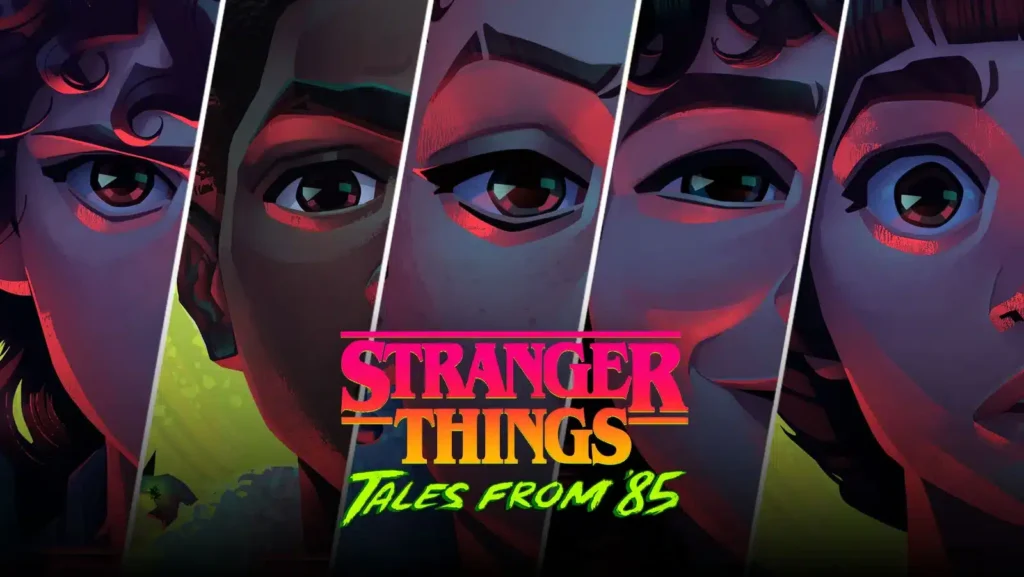
For readers searching the exact phrase “Stranger Things: Tales From ’85 Ending Explained With Showrunner Eric Robles – ‘There’s More to Read Into It’,” the cleanest answer is that the finale does three things at once: it finishes the Season 1 monster plot, explains how a new gate can exist after the Season 2 closure, and deliberately plants a new mutation in the Upside Down for future stories. The series is now streaming in full on Netflix, the season runs 10 episodes, and the official ending explainer plus multiple interviews with Eric Robles all point to a finale meant to be read as setup, not just spectacle.
Stranger Things: Tales From ’85 ending explained in full detail
Season 1 of Tales From ’85 begins in the winter gap between the mainline Stranger Things Seasons 2 and 3, when the kids think Hawkins has finally gone quiet. Instead, the story reveals a chain reaction of hybrid monsters created from leftover Upside Down matter and human experimentation, all of it building toward Chapter Ten, “Countdown.”
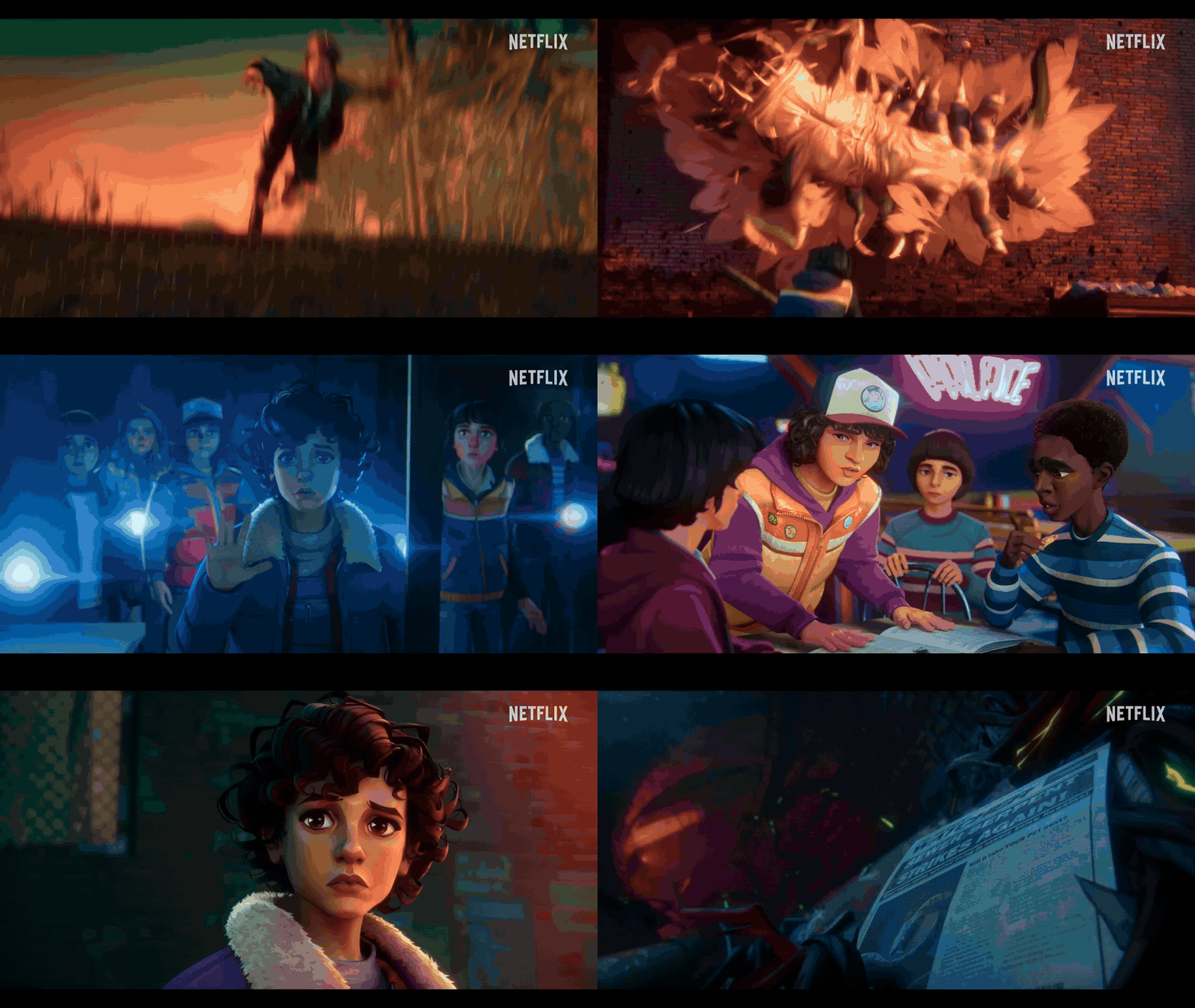
By the finale, the central conflict becomes clear: the Horde Queen is the source organism behind the new creatures, she is trying to force open a new gate, and the kids have to stop her before Hawkins suffers another full-scale breach. The ending resolves that immediate threat, but it also leaves behind a much bigger clue in the form of a glowing blue, Demogorgon-faced flower growing from the Queen’s corpse.
What makes the ending work is that it pays off nearly every strand seeded earlier in the season. Robles had already said before release that the show was not built as a random “monster of the week” exercise and that “every single piece” was designed to matter by the finale. That is exactly what Chapter Ten does: Mrs. Baxter’s science lessons, Daniel’s secret experimentation, Nikki’s outsider perspective, the kids’ improvised weapons, and the spores mythology all converge in one underground battle that closes the season’s mystery while clearly opening another.
What happens at the end of Stranger Things: Tales From ’85 episode 10
Episode 10 is officially titled “Countdown,” and its synopsis says the party must pull together because Hawkins’ future depends on it. In practice, that means the gang heads underground to stop the Horde Queen from opening a new gate to the Upside Down. Daniel Fischer is exposed as the real architect of the disaster, the Queen devours him along with multiple vials of his green serum, and that extra energy makes her even more dangerous.
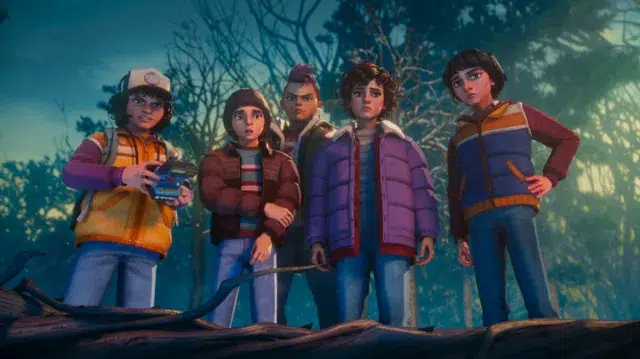
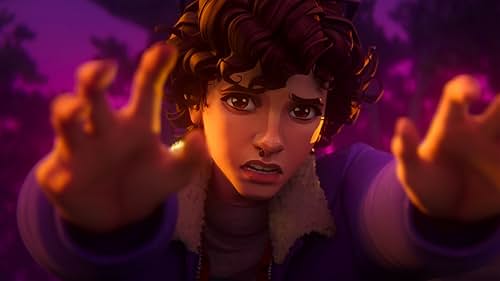
From there, the finale turns into a coordinated team battle. Will devises the plan, Dustin lures the Queen’s creatures away, Max and Lucas help clear out the swarm, Mike and Eleven keep the Queen from crossing fully into the gate sequence, and Nikki plus Mrs. Baxter work to restore the light blaster. When the Queen is seconds from succeeding, Nikki fires the repaired weapon, sears off the creature’s arm, and Eleven seals the gate with the Queen caught between dimensions. Three weeks later, Hopper extends Eleven’s curfew, Nikki and Mrs. Baxter are still in town, and the last sting reveals that the Upside Down side of the story is not over.
Who is the Queen monster in Stranger Things: Tales From ’85
The Queen is not a standard Demogorgon, Demodog, or Mind Flayer variant. The official explanation is that Daniel had been experimenting on an Upside Down vine he wrongly believed was harmless; once it fed on his glowing green serum, it evolved into the Queen, which then became the source from which all the season’s new creatures descended. That makes her less a classic “boss monster” and more a hybrid biological mother-node for the season’s entire ecosystem.
That hybrid identity matters because Robles repeatedly frames the entire series as “Hawkins Lab science meets Upside Down matter.” In other words, the Queen is the embodiment of the show’s central loophole: what happens when residual Upside Down biology remains in the human world and gets pushed forward by human experimentation. She is therefore both a creature and a proof-of-concept for a new kind of Stranger Things monster logic.
How Eleven defeats the Queen and closes the Upside Down gate
The finale is careful not to turn Eleven’s victory into a purely solo feat. Nikki’s timely light-blaster shot is what disables the Queen at the critical moment, and Mike’s support role matters because he helps distract the monster long enough for Eleven to act. The Queen’s arm is burned away, the monster still tries to drag itself through the opening, and then Eleven uses the last of her strength to seal the gate with the creature trapped between the two spaces, crushing it and apparently killing it.
That structure reinforces one of the season’s core themes: friends have to help friends. The official episode synopsis says the party must “pull together for a brave battle to stay alive,” and the ending takes that literally. Eleven provides the final psychic closure, but the win only happens because the kids’ planning, Nikki’s engineering, and the whole group’s coordination buy her the opening.

What the final scene’s blue flower means in Stranger Things: Tales From ’85
The official meaning of the last image is direct, even if its deeper symbolism is still withheld. Tudum’s ending explainer shows the Queen’s corpse lying in the Upside Down, then sprouting a stem with blue petals and a Demogorgon-like maw, and Robles says that image represents “the beginning” of a new mystery and chapter in the series. Radio Times independently describes the same tag as a Demogorgon-like flower blooming from the dead Queen while Vera Lynn’s “We’ll Meet Again” plays, which underscores that the story is threatening to return in a new form.
The safest interpretation is therefore not “this is a Demogorgon reborn,” but “the mutation cycle has entered a new stage.” Earlier in the season, Robles explains that these creatures reproduce by releasing spores as they die, which infect organic matter and generate new breeds. The blue flower looks like the Queen’s death translated into a higher-order mutation rather than a simple resurrection. That is why the shot feels bigger than a jump scare: it suggests evolution, inheritance, and escalation all at once.
Stranger Things: Tales From ’85 ending explained by Eric Robles
Robles’ accessible comments across Tudum, EW, and GamesRadar line up neatly. He says all the new creatures still carry the “DNA” of Upside Down life, he says the show’s monster premise comes from combining Hawkins Lab science with Upside Down matter, and he says the season was written so that every piece would matter by the end. Put together, his explanation of the finale is not mystical. It is causal. The Queen, the gate, the spores, and the flower are all part of one evolving biological chain reaction.
That same logic also explains why the finale feels both closed and open-ended. Robles gives the audience a tangible victory, but he never presents the Queen as the end of the underlying phenomenon. By defining the monsters as hybrids born from contamination, mutation, and reproduction, he makes the cliffhanger feel earned rather than arbitrary. The flower is not out of nowhere. It is the final extension of rules the season has already taught the audience to follow.
“There’s more to read into it” — what Eric Robles meant by the ending
The exact phrase “There’s more to read into it” circulated in headlines surrounding Robles’ ending interview, and even without the full text of that inaccessible article, his other public comments make the intended meaning fairly clear. He has said the flower begins a new chapter, that the season’s details were all placed for a reason, and that the team “plugs little holes” and drops small Easter eggs along the way. In other words, the ending is supposed to reward close reading.
So what is there to read into? First, the Queen dies while caught between worlds, which leaves behind a corpse that is neither fully “our world” nor fully native Upside Down anymore. Second, the show has already established that death triggers reproductive spread in these creatures. Third, the tag shot replaces random horror with a visually precise image: flower, glow, Demogorgon mouth. The most defensible conclusion is that Robles wants viewers to see the finale as the revelation of a larger life cycle, not merely confirmation that a sequel is possible.
How Tales From ’85 connects to Stranger Things season 3 timeline
Officially, Tales From ’85 sits between Seasons 2 and 3 during the winter of 1985. EW places it in that exact gap, right after the kids return to normal life and before the summer setting of Season 3, while Radio Times notes that the live-action series jumps ahead to late June 1985 for the Starcourt era. That means the animated story occupies the otherwise quiet period between the Snow Ball aftermath and the mall-summer shift in the original show.
The continuity question is a little more nuanced than the chronology. Radio Times reports that Robles described the show as its “own adventure” and said it cannot fit perfectly into the live-action timeline, even though it aims to start at the end of Season 2 and, if continued, tie back toward the beginning of Season 3. The best way to understand the connection, then, is that Tales From ’85 is timeline-adjacent and franchise-consistent rather than rigidly hard-canon in every detail. It connects most strongly through character state, mood, and mythological possibility.
What the Upside Down new creature tease means for the future
The final creature tease matters because it is not presented as a random surviving minion. The image grows out of the Queen’s body itself, which implies continuity between the defeated monster and whatever comes next. Since Robles describes the flower as the beginning of a new chapter and GamesRadar notes that the final shot is accompanied by a screeching Demogorgon-like bloom, the tease is functioning as a direct baton-pass from Season 1’s threat to a new one.
A careful inference is that the next threat will not simply repeat the Queen. It will probably intensify the hybrid idea. The Season 1 creatures were born from Earthside contamination; the flower appears to be the next stage of that contamination after the hybrid Queen has been forced back against the dimensional boundary. If that inference holds, future episodes would likely deal with monsters that are even less separable into “plant” versus “Upside Down” categories.
Who created the monsters in Stranger Things: Tales From ’85
The monsters were not created by Anna Baxter alone, even though the kids spend much of the season suspecting her. Tudum’s official explanation says Daniel is the hazmat-suited experimenter, a former Hawkins Lab Scientific Progress Committee member who stole Anna Baxter’s plant-revival research and continued the work on his own. Robles further explains that Daniel’s serum was a mixture of Anna’s vegetation research and DNA extracted from dead Upside Down vines. That hybrid serum reanimated a vine in a way Daniel did not anticipate, leading to the Queen.
The monsters then spread through spores. After the revived vine transforms, the new organisms release spores when they die, and those spores infect organic matter elsewhere in Hawkins, creating new breeds. That is why the season can feature multiple creature forms while still tracing them all back to one causal origin. Daniel created the disaster’s conditions; Anna supplied part of the science without meaning to; and the spores did the multiplying.
How the Upside Down gate reopening affects Stranger Things lore
The temporary reopening of a gate is one of the most important lore additions in the animated series. Until now, the clean assumption after Season 2 was that Eleven’s closure of the Hawkins Lab gate severed active access to the Upside Down. Robles’ loophole changes that math: if enough residual Upside Down biological material remains on Earth, and human science amplifies it in the wrong way, a new breach can form locally even without the original gate staying open.
At the same time, the series stops short of completely overturning existing lore. Robles also says the animated show is its own adventure, which suggests the gate event should be read as a contained exception rather than proof that gates can casually reappear whenever convenient. The cleanest lore takeaway is that the Season 2 closure still mattered, but not all contamination was removed with it. The danger was dormant, not erased.
Does Nikki stay in Hawkins after Tales From ’85 ending
Yes. The official ending explainer states plainly that the Baxter family is staying put, and the last human-world scenes show Mrs. Baxter unloading boxes at a new home while the gang heads over to play Dungeons & Dragons. GamesRadar and Radio Times both confirm the same outcome: Nikki survives, remains in Hawkins, and is welcomed into the group after the battle.
That survival matters because Nikki Baxter is not written as a disposable “new friend for one season.” Tudum describes her as the crew’s missing “barbarian,” and GamesRadar quotes Robles saying her story is not over and could continue if the audience embraces the show. Her presence at the final D&D session is not a farewell beat. It is written like an induction.
There is still a reason viewers ask how she squares with Season 3, where she is absent. Robles’ pre-release explanation was that 1980s friendships could be intense and temporary in ways that do not automatically imply death or betrayal. So the ending itself says Nikki stays in Hawkins for now; later continuity still leaves room for distance, drift, or future stories to explain why she does not become a visible part of the Season 3 summer status quo.
Hidden clues and Easter eggs in Tales From ’85 finale explained
The finale and the broader season are packed with franchise-aware details. One of the clearest is the horror-meta layer around Robert Englund: EW reports that Nikki’s garage includes a life-sized Freddy Krueger cut-out, which functions as both a general ’80s horror nod and a specific wink to Englund’s role in the franchise. The same coverage confirms that Englund voices Cosmo Russo, editor of The Weekly Watcher, which means the show folds a Season 4 guest star back into the animated branch while also layering in a horror Easter egg at the production-design level.
There are also payoff clues built into the season structure itself. Nikki is introduced as the party’s “barbarian,” and the ending pays that off with the gang giving her a custom D&D figure described as part bard and part berserker. The soundtrack choice of “We’ll Meet Again” over the final flower shot is another obvious clue, because it signals recurrence rather than closure. And Robles himself says the creative team enjoys plugging “little holes” and building Easter eggs into the show, which supports the idea that these touches are deliberate seeds rather than decorative references.

Will there be Stranger Things: Tales From ’85 season 2
As of April 24, 2026, all 10 episodes of Season 1 are streaming, but there is no public confirmation from Netflix of a Season 2 renewal. GamesRadar reports that Netflix has not yet greenlit another season, even though Robles has made clear that he wants to continue and sees room for more adventures.
The important distinction is between setup and approval. The cliffhanger absolutely plays like a Season 2 hook, and Robles explicitly says the team feels like it has only just started building this version of the world. He also says future stories could continue filling franchise gaps or even branch in a more expansive, “What If?”-style direction. So the ending wants continuation; the business decision just has not been announced yet.
What the ending reveals about future Stranger Things spin-offs
The ending suggests that future Stranger Things spin-offs will not be limited to live-action-style escalation or direct Vecna repetition. Instead, the animated branch is proving that the franchise can expand through smaller windows in the timeline, softer continuity rules, and monster concepts created through mutation rather than simple callback. Robles’ comments about both gap-filling and branching outward imply a flexible expansion model: some stories can act like “lost seasons,” while others could become more experimental, alternate-route adventures.
That makes the final flower reveal important beyond one season of television. It shows the franchise can generate new iconography inside familiar rules. The original threat language of Demogorgons, gates, spores, and Hawkins Lab is still present, but it has been recombined into something visually different. If the animated line continues, that is likely the template for future spin-offs too: recognizable DNA, new forms.

Frequently Asked Questions (FAQs)
- Is the Horde Queen really dead?
Physically, the finale presents the Queen as killed when Eleven seals the gate with the monster trapped in the closing breach. But the final flower proves the underlying mutation survived in some form. - Is the blue flower a Demogorgon?
Not exactly, at least not from the official explanation. What we are shown is a flower with blue petals and a Demogorgon-like mouth, which Robles describes as the start of a new mystery rather than a straightforward old-species return. - Was Daniel trying to destroy Hawkins on purpose?
The evidence points more to reckless ambition than pure apocalypse planning. Daniel stole and misused Anna Baxter’s work to chase scientific glory, but his actions still created the Queen and nearly reopened the Upside Down permanently. - Was Anna Baxter secretly the villain?
No. The season frames her as a suspect, but Tudum’s explainer says her experiments never got past the petri-dish stage. Daniel is the one who weaponized the research. - Does Nikki die in the finale?
No. Nikki lives, helps win the final battle with the light blaster, and ends the season playing D&D with the group. - Do Nikki and Mrs. Baxter leave Hawkins?
No. The official ending breakdown says they are staying, and the final human-world scenes confirm the Baxters are settling into a new home in town. - Is Tales From ’85 fully canon to Stranger Things?
It is officially placed between Seasons 2 and 3, but Robles has also said it is its own adventure and does not fit the live-action timeline perfectly. The fairest label is “soft canon” or “franchise-consistent midquel.” - How can a gate reopen if Eleven closed the Hawkins Lab gate in Season 2?
Robles’ loophole is that leftover Upside Down biological matter remained on Earth, and hybrid experimentation reactivated it into a new breach. The old closure still mattered; the contamination problem simply was not fully gone. - Is the ending obviously setting up Season 2?
Yes, creatively. The flower tag is a classic continuation hook, and Robles openly says he wants more adventures. But as of April 24, 2026, no renewal has been publicly announced. - Why is Will’s arc important in the ending discussion?
Because Nikki is not just a plot helper. Robles says she gives Will a rare nonjudgmental friend and even hints she can be read as a catalyst for the confidence he shows later in the wider franchise. That turns the finale into character groundwork as well as monster payoff.

Conclusion
The most accurate reading of the Tales From ’85 finale is that Season 1 ends with a real victory and an intentional warning. The kids stop the Horde Queen, close the immediate breach, and keep Hawkins standing. But Robles’ own explanations make it clear that the biology behind the threat has not been eradicated. It has mutated. That is why the blue flower matters so much: not because it randomly shocks the audience, but because it reveals that the season’s true villain was always the hybrid life cycle created when Hawkins Lab-era thinking collided with residual Upside Down matter. That is the hidden meaning worth carrying forward.
Sources and Citations
- Netflix Tudum ending explainer
https://www.netflix.com/tudum/articles/stranger-things-tales-from-85-season-1-episode-10-ending-explained - Netflix Tudum Eric Robles interview
https://www.netflix.com/tudum/articles/stranger-things-tales-from-85-eric-robles-interview - Entertainment Weekly Robles “loopholes” interview
https://ew.com/stranger-things-tales-from-85-loopholes-hawkins-lab-science-meets-upside-down-matter-exclusive-11869761 - Radio Times timeline and canon explanation
https://www.radiotimes.com/tv/sci-fi/stranger-things-tales-from-85-set-series-timeline/ - GamesRadar+ ending explained
https://www.gamesradar.com/entertainment/animation-shows/stranger-things-tales-from-85-ending-explained-nikki-new-monsters/ - GamesRadar+ Nikki absence explanation
https://www.gamesradar.com/entertainment/animation-shows/stranger-things-tales-from-85-boss-has-a-perfectly-valid-explanation-as-to-why-new-kid-nikki-isnt-in-season-3-of-the-main-show-it-wasnt-like-it-is-now/
Recommended
- Maya 2027 New Features EXPLAINED: Smart Bevel, Skin Tools, USD Workflows, Bifrost 3 & Arnold Updates
- Warner Bros. Reveals New Free Mobile Strategy Game of Thrones: Dragonfire Game
- Top Ways to Make 3D Characters: Blender, FaceGen, Metahuman, and CC3 Compared
- Developers With Foreign Legal Entities May Be Allowed to Include Games in the Russian Software Registry: Requirements, VAT Benefits, and What Changes in 2026
- Sparseal Launched New 3D Texturing App For iPad: Wafer Brings Stylized PBR Texture Painting to iPad
- How to Retarget Mixamo Animations to Metahuman in Unreal Engine Using the IK Retargeter
- Gears Of War Actor’s Gears 6 Fanfic Involves Marcus Fighting His Zombie Son
- Adobe Releases Photoshop 27.5: What’s New, Firefly Boards Integration, and How to Update
- Blender Add-Ons for Customizable Procedural Clouds: Best Tools for Volumetric Sky, Cloudscapes, and Fast Art Direction