



The latest debate around Attack on Titan did not begin with a new chapter or an anime sequel. It began in April 2026, when Hajime Isayama shared a museum message in Hita explaining that the ending still carried a “sense of insincerity” in his own eyes. His reason was strikingly specific: he believes he ended up portraying Eren Yeager with too much closeness and sympathy instead of fully committing to the more detestable figure he had originally imagined. Because the manga ended in April 2021 and the anime concluded in November 2023, those comments immediately reopened a debate that had already been raging for years.
What makes the 2026 statement so important is that it does not read like a total reversal. Instead, it reads like the clearest version yet of feelings Isayama had already been expressing in public. At his 2022 Anime NYC appearance, he said he still had doubts about whether he had landed the ending and apologized for still struggling with it.
In 2023, he also explained that he felt “tied down” to the conclusion he had envisioned when he was younger, even if part of him wished he had possessed the freedom to change it. Taken together, those remarks suggest that the new museum note is less a sudden confession than a late, unusually blunt clarification of what has troubled him since the finale first landed.
Attack on Titan creator ending regrets explained (“sense of insincerity” quote)
Isayama’s regret is easy to misread if it is reduced to “he hates the ending now.” That is not what the available reporting shows. The sharper reading is that he regrets the balance of the ending rather than the broad outline of the ending. In the museum statement, he says Eren became a protagonist who committed mass slaughter on an extraordinary scale, but that when it came time to depict him, he did not fully commit to presenting him as a “detestable figure.” Because he instead wrote Eren with emotional closeness and sympathy, he now says the conclusion retains a “sense of insincerity” in his own assessment.
That distinction matters because it separates plot from framing. The problem, in Isayama’s own formulation, was not simply that Eren died, that the Rumbling happened, or that the cycle of war continued. The problem was that the emotional presentation may have softened the moral clarity he originally wanted. In other words, the regret is about tone, perspective, and authorial distance from Eren more than about the skeleton of the finale itself.
What Hajime Isayama said about Eren Yeager in the Attack on Titan ending
The museum text lays out Isayama’s thinking in unusually direct terms. He says Eren was built around the idea of a victim becoming the perpetrator, and that Eren’s later confession was meant to show not only someone cornered by circumstances but someone who also carried an internal desire to do harm. He then contrasts that intention with the version of Eren that reached readers, acknowledging that the character had become beloved enough that he found himself writing Eren with sympathy instead of embracing the uglier version of him more completely.
This new statement lines up with what Isayama had said at Anime NYC in 2022. There, he explained that the anime adaptation had influenced him and shifted his portrayal of Eren toward more of a “good guy,” because he felt he had to make Eren’s intentions and decisions convincing to readers. Read together, the 2022 and 2026 comments form a coherent throughline: Isayama increasingly felt the burden of making Eren understandable, and he now seems to think that effort may have compromised the bluntness of the moral endpoint he originally intended.

Where the Isayama “insincerity” statement came from (museum message details)
The statement came from a new exhibition at the Attack on Titan in HITA Museum that opened on April 24, 2026. Official promotional material stated that 26 pages of original artwork were selected by Isayama himself and accompanied by caption comments written by him in four languages: Japanese, English, Korean, and Traditional Chinese. Local reporting likewise said the newly displayed pages were chosen by Isayama and presented with his own commentary about the scenes and his feelings at the time he drew them.
That context is important because it means the “insincerity” language was not random paraphrase floating around social media. It belonged to a curated, officially promoted museum display tied to selected original pages and presented as part of a serious retrospective exhibition. Reporting from Popverse notes that the comments were visible as part of the new installation and were pointedly connected to Eren, the story’s conclusion, and the thematic logic of the series.
Attack on Titan creator interview reactions: how the community responded to the regrets
The immediate reaction to the new statement followed a familiar pattern. Coverage from major pop-culture outlets framed the museum note as renewed self-critique, an admission of lingering regret, or a startlingly candid reassessment of Eren’s ending. That framing alone shows how unusual the note felt in context: the press treated it as material enough to reopen a five-year-old argument.
The broader community response appears, by reasonable inference from those reports and from the older reaction record, to have split along long-established lines. One side read the note as vindication for the claim that the ending humanized Eren too much and blurred its condemnation of him. The other side took the opposite view, arguing that Eren’s remaining humanity is precisely what makes the finale tragic rather than simplistic. That divide is consistent with how reactions to both the manga ending in 2021 and the anime ending in 2023 were reported at the time.
Why Attack on Titan’s ending was divisive among manga and anime fans
The ending divided fans because it tried to do several difficult things at once. It wanted Eren to be monstrous without becoming a one-note cartoon, wanted readers to understand him without absolving him, wanted the Rumbling to feel both horrifying and psychologically legible, and wanted the story to end with emotional intimacy while also insisting that violence solves nothing permanently. That combination produced wildly different readings. Some readers saw the ending as bold and coherent; others felt it was rushed, tonally confused, and too soft on genocide.
A second source of division was execution. Even people who accepted the larger themes often argued over whether the final chapter communicated them cleanly enough. The most contested points included Eren’s confession to Armin, the handling of Mikasa’s feelings, the role of Ymir, and the bleak epilogue in which conflict very clearly outlives Eren’s plan. The anime adaptation later improved reception for many viewers, but it did not erase the core dispute over what the ending was actually trying to say.
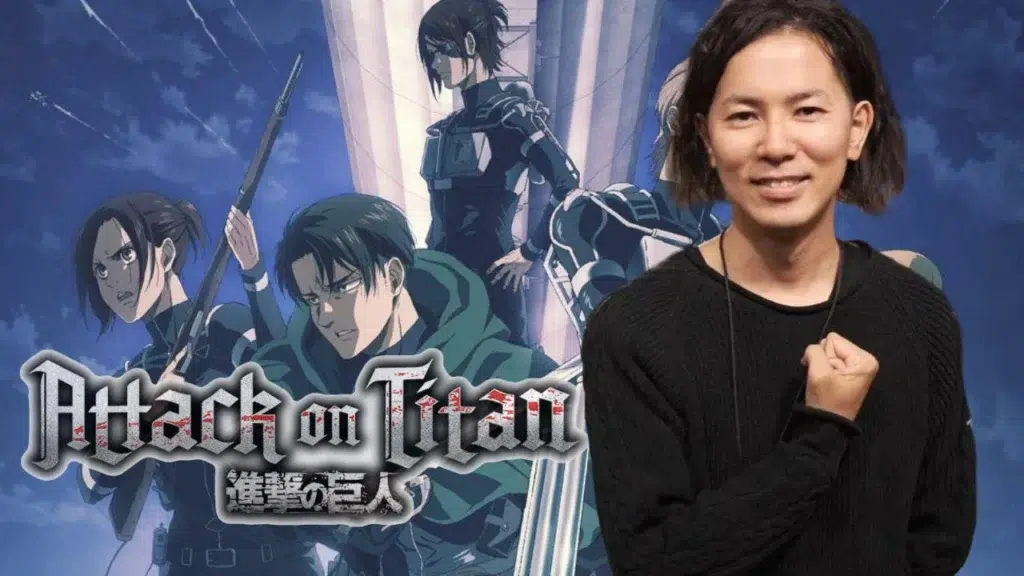
Attack on Titan ending backlash timeline (why fans were upset in 2021)
The backlash has a clear timeline. First, the manga’s final chapter was scheduled for April 9, 2021, and the immediate reaction after publication was sharply polarized. Within days, a petition calling for an alternative ending appeared on Change.org. Later in 2021, fan dissatisfaction became organized enough that AoT no Requiem launched as a dedicated unofficial rewrite project, explicitly describing itself as a fan-made alternate ending that replaces chapters 137 through 139 and noting that it began in 2021 in negative response to the official ending.
The next major public milestone came in late 2022, when Isayama appeared at Anime NYC and admitted he still had doubts about whether he had landed the ending, even apologizing for his continued struggle with it. Then, in November 2023, the anime finale arrived and was reported as receiving a noticeably warmer response overall, even though it still drew harsh criticism from some viewers. By 2025, coverage around the franchise’s Global Impact Award was explicitly framing that earlier backlash as excessive and, in some cases, abusive.
Attack on Titan ending and Mikasa relationship debate (why it’s still controversial)
The Mikasa debate never went away because it sits at the crossroads of the ending’s biggest emotional and thematic tensions. For critics, Eren’s late romantic confession to Armin felt abrupt, underdeveloped, or even out of step with the story’s priorities. For defenders, the confession underscored that Eren was never a cool mastermind in the end but a frightened, selfish, emotionally stunted young man whose inner life was ugly and pitiable at the same time.
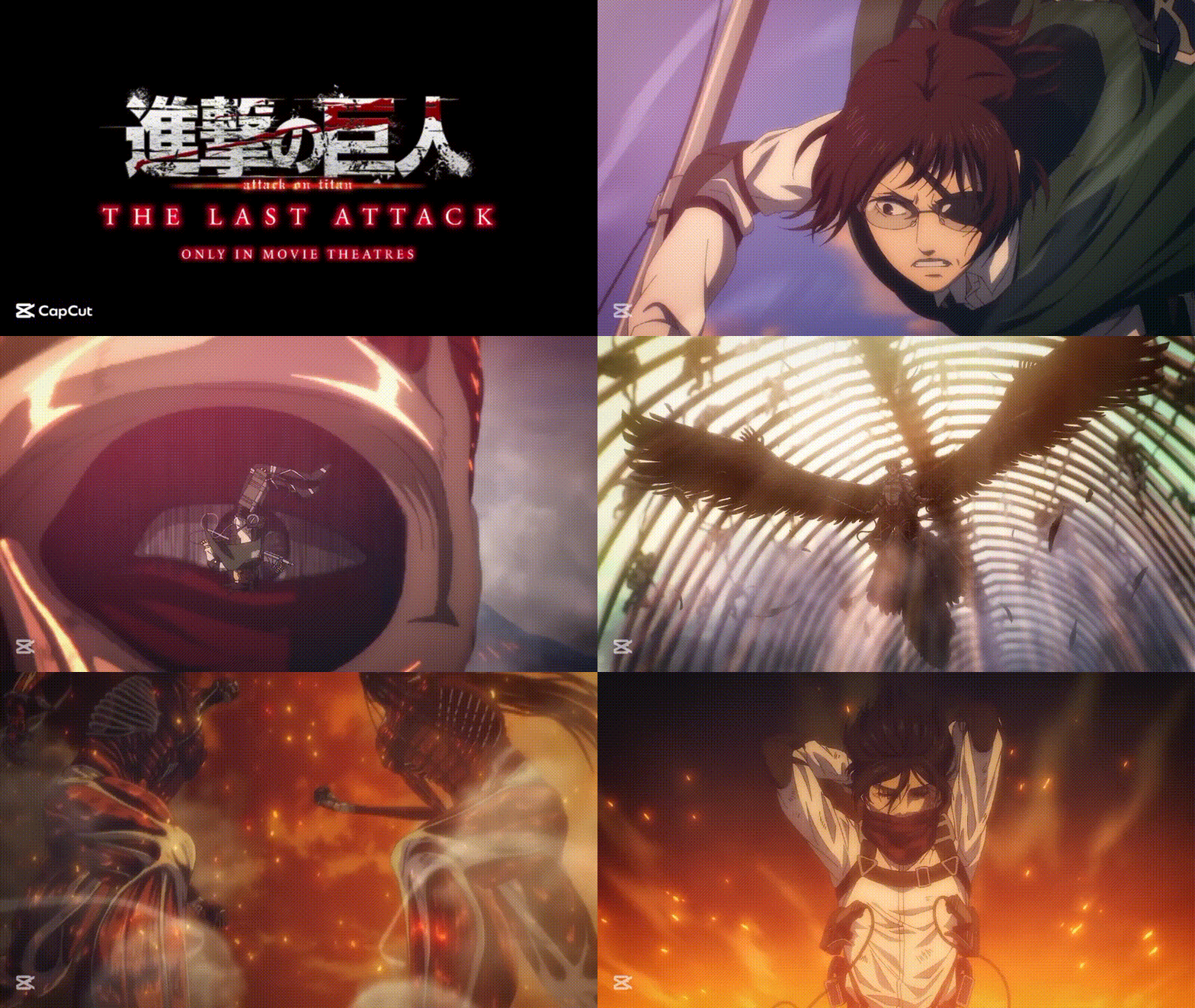
The anime softened some of that criticism by staging the material with more emotional texture, but the question of what Mikasa ultimately means to the story remained controversial. That debate sharpened again in 2026, when GamesRadar reported that a rerelease of The Last Attack included a post-credits scene interpreted as confirmation that Mikasa Ackerman married Jean Kirstein and built a family life after Eren’s death. Because the original manga and anime left that element more ambiguous, the added scene reopened long-running arguments over whether the ending should have left Mikasa’s future more interpretively open.
What fans wanted instead: most common alternative Attack on Titan ending theories
The most common alternative ending ideas generally fell into three camps. One was the Akatsuki no Requiem or “ANR” line of theory, which imagined Eren completing the Rumbling and surviving as a haunted victor. Another was the broader “anime original ending” or “AOE” theory, which predicted that the anime would diverge radically from the manga, sometimes through a multi-timeline approach and sometimes through a cleaner moral or thematic rewrite. A third was not just theory but production: the fan project AoT no Requiem, which explicitly set out to replace the canon ending with a different one.
What unites those alternatives is that they all try to solve the same perceived problem in different ways. Some wanted harsher consequences and a truly irredeemable Eren. Others wanted clearer romance resolution, cleaner anti-genocide messaging, or a structurally more elaborate ending twist. The popularity of these theories and projects shows that dissatisfaction was not merely emotional noise; it was also a sign that many fans felt the canon ending had left important narrative or thematic possibilities unexplored.
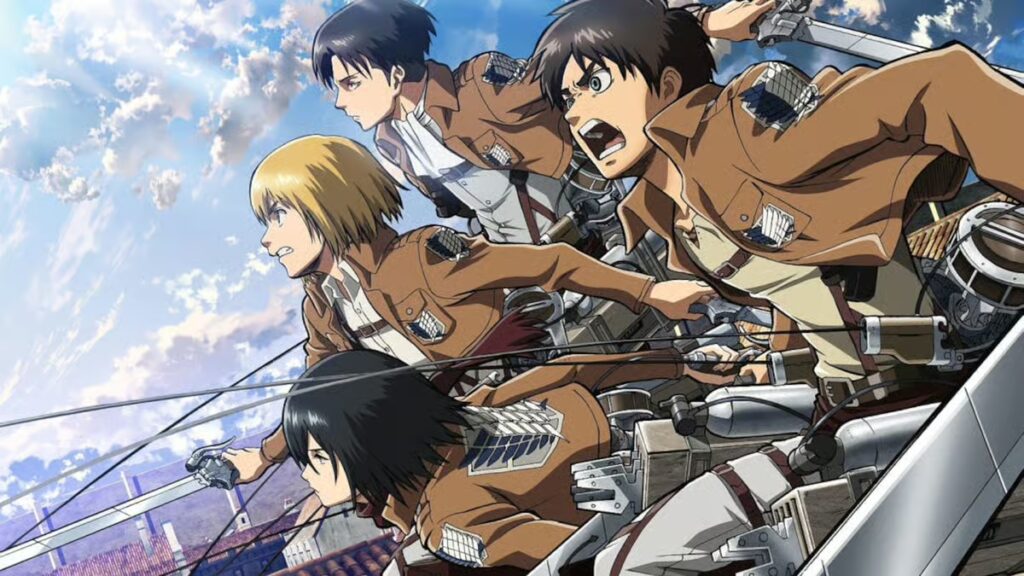
Attack on Titan ending explained: Eren’s final choices and what they mean
At the literal story level, the finale reveals that Eren chose the Rumbling as a catastrophic attempt to secure a future for his friends and Paradis while also acting on his own warped idea of freedom. The alliance stops him only after an enormous battle. Mikasa decapitates him, the Titan curse collapses, Titans revert to humans, and Eren’s hidden conversations with his friends are revealed. In those conversations, it becomes clear that Eren expected his friends to stop him and hoped they would be seen as heroes afterward.
What those choices mean is more unsettling than heroic. The finale does not present Eren as someone who solved history. It presents him as someone who bought time through atrocity and mistook annihilation for liberation. The world does not become permanently peaceful, and the post-credits material makes that brutal point explicit: conflict survives him. The ending’s emotional force comes from the fact that Eren’s plan is intimate in motive and monstrous in scale. He protects a handful of people by becoming a mass killer, and the story refuses to let that contradiction resolve into triumph.
Isayama on writing Eren as sympathetic vs “detestable” (creator intent breakdown)
The key to understanding Isayama’s regret is to place his 2026 museum note beside his 2022 Anime NYC comments. In 2022, he said the anime adaptation had pushed him toward making Eren feel more like a “good guy” and that he felt pressure to make Eren’s choice convincing. In 2026, he effectively says that this pull toward sympathy remained in the final product, and that he now sees it as a source of “insincerity.”
This suggests a creator torn between two valid artistic instincts. One instinct wanted Eren to remain psychologically human enough that his descent would feel tragic and comprehensible. The other wanted the story to preserve clear moral revulsion toward what he becomes. Isayama now appears to believe he leaned too far toward the first instinct, which is why his present-day commentary sounds less like a repudiation of Eren’s arc and more like dissatisfaction with how mercifully he framed it.
What “victim becomes the perpetrator” means in Attack on Titan’s story themes
The phrase “victim becomes the perpetrator” is the cleanest summary of Attack on Titan’s central thematic turn. It captures the way the series moves from a story about trapped victims resisting apparently inhuman monsters to a story about historical trauma reproducing itself through revenge, nationalism, and preemptive violence. In that sense, Eren is not an exception to the world of the story; he is its most distilled product.
The final season makes this theme legible by changing perspective. Once Marley and its citizens get interiority, the old categories of innocent self and monstrous other become unstable. The audience is forced to recognize that each side sees itself as encircled, threatened, and justified. Eren’s transformation from traumatized child into global aggressor is therefore not a random heel turn. It is the story’s thesis made personal.

How Attack on Titan’s final arc recontextualizes the entire series (season 4 themes)
Season 4 recontextualizes the whole series by proving that the Titans were never the final answer to the mystery; they were the vehicle through which the story could arrive at questions of empire, propaganda, inherited guilt, and the endless reproduction of war. When Isayama said at Anime NYC that he wanted readers to feel emotionally engaged with the Marley side and then confront Eren and the original cast as the enemy, he was describing the mechanism that turns the entire series inside out.
That reversal affects even the earliest arcs in hindsight. The walls stop being only symbols of physical confinement and become symbols of ideological confinement too. Freedom stops meaning escape from monsters and comes to mean escape from historical structures that keep creating new monsters out of wounded people. That is why the final arc feels so recontextualizing: it reveals that the story was always moving away from simple survival horror and toward a tragedy about how easily righteous pain becomes righteous violence.
Did Attack on Titan’s finale change in the anime vs the manga (differences overview)
The short answer is no, not in its broad plot outcome. The anime does not replace the manga’s ending with a fundamentally different ending. The same central events occur: Eren unleashes the Rumbling, the alliance confronts him, Mikasa kills him, the Titan curse ends, and the series closes on the return of conflict over time. Popverse explicitly noted that there were no major departures from the manga in the anime finale’s basic story arc.
What did change was tone, emphasis, and dialogue. The anime expands key conversations, clarifies character motivations, and spends more time on the emotional aftermath. Several critics pointed to the altered exchange between Armin and Eren as especially important. In the manga, Armin’s wording around Eren’s genocide was widely read as too conciliatory. In the anime, that scene is adjusted so Armin more clearly condemns Eren and accepts that they are headed toward ruin together rather than offering anything that sounds like gratitude for mass murder. Kotaku and Looper both highlighted this as one of the most meaningful changes.
The anime also changes reception by changing rhythm. It gives more breathing room to Mikasa’s grief, Armin’s anger and guilt, Ymir’s emotional framing, and the long passage of time that shows war returning in the distance. None of that changes the destination, but it changes how viewers arrive there. That is why so many discussions describe the anime as improving the ending without actually replacing it.
Is Attack on Titan’s ending better in hindsight (post-finale reappraisal)
There is strong evidence that the ending has been reappraised more favorably in hindsight, especially in its animated form. Reporting on the anime finale in November 2023 described the reaction as far more positive than the response to the 2021 manga ending. Later commentary went further, arguing that time, adaptation, and a calmer critical environment made the ending’s intentions easier to grasp.
That does not mean the ending has become universally loved. It has not. What seems to have changed is the center of gravity of the argument. Early backlash often focused on shock, disappointment, or the feeling of betrayal. Later reappraisal is more likely to focus on coherence: whether the finale’s bleakness, cyclical violence, and rejection of a clean heroic solution actually fit the work better than a more crowd-pleasing ending would have. Even some critics who still dislike the execution now concede that the anime made the same core ending easier to understand and emotionally absorb.

Will Hajime Isayama revisit Attack on Titan again (future projects and franchise plans)
The clearest answer, as of April 2026, is that Isayama appears more open to limited revisits and franchise-adjacent material than to a brand-new long-form sequel. Official English publication materials for Attack on Titan 35: FLY Collector’s Box Set confirm a June 2025 release including an exclusive “Volume 35,” a new manga chapter focused on Levi, rough layouts of the final chapter, and a new Isayama interview. That means he has already revisited the world in a supplementary form.
At the same time, public statements about Isayama’s workload point away from another massive serialization in the immediate future. Reporting from early 2026 says he wrote a message explaining that he is “no longer working” in the sense of daily manga production, that he does not think he could create another work like Attack on Titan, and that his only post-series manga work so far has been a 2025 one-shot. Meanwhile, franchise-side activity is clearly continuing: GamesRadar reported producer Tetsuya Kinoshita saying the team plans to continue with films like The Last Attack, concerts, and game collaborations. Based on the public record, the future of Attack on Titan looks more like controlled expansion than a straightforward sequel manga by Isayama.
Frequently Asked Questions (FAQs)
- Did Hajime Isayama say the Attack on Titan ending was bad?
Not exactly. His 2026 museum note criticizes the ending as having a “sense of insincerity” in his own view, but the criticism is specifically about how sympathetically he portrayed Eren rather than a blanket claim that the ending should be discarded. His earlier remarks at Anime NYC and in later interviews show continuing doubt, not a total reversal of the finale’s core direction. - What did Isayama mean by “sense of insincerity”?
He meant that he did not fully commit to depicting Eren as the detestable figure he now thinks the ending required. Instead, he wrote Eren with too much emotional closeness and sympathy, which, in his judgment, made the final moral framing feel less honest than intended. - Did Isayama always plan the Attack on Titan ending?
Broadly, yes. He has repeatedly said he knew the conclusion from early on, while also explaining that many details about how the characters would get there developed later. He also said he felt constrained by that original vision and wished, at least in some sense, that he had been freer to change it. - Did the anime completely change the manga ending?
No. The anime keeps the same major outcome, but it adjusts dialogue, pacing, emotional emphasis, and some framing. Critics widely pointed to the Armin and Eren conversation as the most important improvement, because the anime makes Armin’s moral stance much clearer. - Why did Eren choose the Rumbling?
The finale presents his choice as a mix of ideology, fatalism, selfish desire, and an attempt to give his friends a future. He wanted to destroy the world beyond Paradis, believed his friends would stop him, and expected them to be recognized as heroes afterward. The story does not treat that choice as noble; it treats it as catastrophic. - Why was the Attack on Titan ending so divisive in 2021?
Because readers argued over both message and execution. Some felt the ending was rushed, morally muddled, and emotionally inconsistent, while others thought it was a fittingly tragic culmination of the series’ themes. The immediate backlash was intense enough to produce petitions, rewrite projects, and years of follow-up debate. - Why is Mikasa still central to the controversy?
Because her role joins the ending’s biggest arguments: romance, sacrifice, memory, and moral agency. She is the one who kills Eren, which ends the Titan curse, but the emotional handling of her relationship with him remains one of the most disputed parts of the finale. - Did the 2026 rerelease confirm that Mikasa married Jean?
GamesRadar reported that a rerelease of The Last Attack included a post-credits scene showing Mikasa and Jean visiting a grave with descendants, and the article interpreted that as confirmation of a long marriage. Because the original manga and anime left the point more oblique, that reported scene became major new fuel for the debate. - Is AoT no Requiem an official alternate ending?
No. The project’s own site identifies it as a fan-made alternate ending, specifically a doujinshi and a work of fanfiction, not an official Isayama or Kodansha production. It was created as an unofficial alternative to the canon finale. - Is Hajime Isayama making a full Attack on Titan sequel?
There is no public announcement in the cited record of a full sequel manga by Isayama. What the sources do show is supplementary material such as Volume 35, plus franchise plans involving films, concerts, and game collaborations, alongside Isayama’s own statements that he no longer works as a daily serialized mangaka.

Conclusion
Isayama’s 2026 museum comment matters because it sharpens, rather than overturns, the meaning of the Attack on Titan ending debate. His complaint is not simply that the finale was misunderstood, nor that the ending’s events were wrong. It is that his own framing of Eren may have been too compassionate to fully match the darker moral account he had in mind. That one admission neatly explains why the ending has always felt, to different viewers, either devastatingly human or frustratingly compromised.
In that sense, the new quote does not close the debate. It explains why the debate never ended. Attack on Titan was always a story about what happens when cycles of fear, revenge, and inherited injury produce people who can still be understood without ever being excused. Isayama now seems to believe the final step of that argument was not delivered with total purity. Whether readers agree with him or not, the statement confirms that the contradiction at the heart of the finale was not only felt by fans. It was felt by the creator too.
Sources and Citations
- Official HITA Museum announcement
https://shingeki-hita.com/news.html - HITA Museum press release PDF
https://www.jrkyushu.co.jp/common/inc/news/newtopics/__icsFiles/afieldfile/2026/04/21/Attack_on_Titan_in_HITA_Museum_Selected_Original_Drawings_by_Hajime_Isayama_New_Exhibition.pdf - ABEMA Times local report
https://times.abema.tv/en/articles/-/10241982 - Popverse museum statement report
https://www.thepopverse.com/comics-attack-on-titan-creator-on-eren-yeager-portrayal-insincerity - Popverse Anime NYC transcript
https://www.thepopverse.com/attack-on-titans-hajime-isayama-brings-laughter-revelations-and-a-few-tears-to-anime-nyc - Kotaku anime finale breakdown
https://kotaku.com/attack-on-titan-eren-jaeger-finale-ending-anime-manga-1850995603 - Popverse ending explainer
https://www.thepopverse.com/attack-on-titan-ending-the-final-episodes-explained - Looper anime vs manga ending comparison
https://www.looper.com/1444690/attack-on-titan-manga-vs-anime-ending-differences-explained/ - GamesRadar fan reactions
https://www.gamesradar.com/attack-on-titan-ending-reaction-eren-mikasa/ - GamesRadar Mikasa fate report
https://www.gamesradar.com/entertainment/anime-movies/after-5-years-a-major-attack-on-titan-mystery-has-finally-been-resolved/
Recommended
- Street Fighter: Who’s Who in the New Movie Trailer – Full Cast, Characters, and Hidden Details Explained
- Nintendo’s Animal Crossing 25th Anniversary Nostalgic Surprise: New Horizons Mailbox Gift, Patch Notes, and Nintendo Music Drop
- Canva Starts Previewing a More Powerful Version of Its AI Assistant (Canva AI 2.0)
- How to Use Mesh to Metahuman for AAA Digital Doubles in Unreal Engine 5
- How do I create a handheld camera effect in Blender?
- Dragon Ball Xenoverse 3 Finally Revealed: Akira Toriyama’s Last New Designs, Age 1000 Story, and 2027 Release
- Blender 3D: How to Make a Character from Scratch – The Ultimate Step-by-Step Guide
- How do I make the camera look at an object automatically in Blender?
- Downloading 3D Models from Sketchfab: A Step-by-Step Guide