









In This Article (8 sections)
China’s AI Employment-Risk Review Framework and Which Projects it Covers
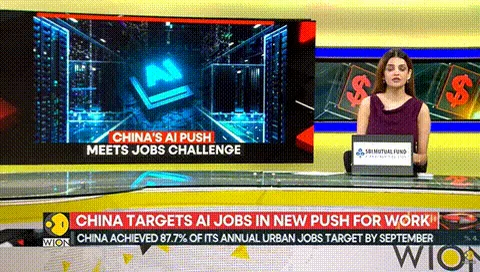
China’s new AI employment guidelines connect artificial intelligence development with employment protection, worker training, job transitions, and the creation of new opportunities. The General Office of the State Council issued the framework under document number 国办发〔2026〕29号, with the Chinese title 关于适应人工智能技术发展助力构建就业友好型发展方式的意见. The document is dated October 16, 2026, but was publicly released on October 23, while government websites that reproduced it later display their own publication dates. Those dates should remain separate because the document date, public release date, and republication dates describe different stages. The framework contains 18 tasks across six substantive areas covering job creation, employment-friendly adoption, digital capabilities, employment services, labor and social security protections, and systems for monitoring and responding to employment risks.
The October framework builds on earlier policy work rather than representing China’s first acknowledgment of AI-related employment disruption. The 2025 AI Plus policy already supported employment-risk assessments, worker training, human-machine cooperation, and directing innovation toward activities with job-creation potential. It also encouraged AI adoption in positions affected by worker shortages or dangerous conditions. A July 2026 National Data Administration implementation document covering human resources and social security likewise addressed employment effects and changes associated with AI adoption. The October guidelines therefore represent a more comprehensive employment-focused framework within an existing policy direction.
The clearest assessment requirement concerns AI application projects in market-access fields that could produce a substantial employment shock. For those projects, employment-risk assessment is intended to accompany the project review process, while projects in other fields should be assessed according to their actual circumstances. This provision concerns application projects and their possible workforce consequences rather than requiring every employee to obtain permission before using an AI tool. The reference to market access should also remain separate from the guidelines’ discussion of labor-intensive industries, since one concerns the setting for project review and the other concerns how adoption should be managed when many workers could be affected.
Including employment considerations during project review allows workforce effects to be examined while implementation choices may still be changed. A company considering a major automation project could evaluate which teams would be affected, how responsibilities would change, what vacancies exist, and how long retraining might require before committing to a full rollout. These are practical examples of preparation rather than a nationally prescribed application checklist. The guidelines do not publish a universal assessment form, a numerical definition of significant employment disruption, or one processing deadline for every project.
The distinction between assessment and approval is also important. Requiring employment consequences to be considered does not create a simple formula under which a certain number of proposed job losses automatically determines whether a project can proceed. The review process instead places workforce consequences alongside other considerations during project evaluation. Employers should therefore avoid treating the policy either as a blanket prohibition on automation or as a framework that leaves employment consequences outside technology planning.
Labor-intensive industries receive particular attention because the scale and speed of deployment can materially affect transition outcomes. The guidelines call for careful management of the scope, intensity, and pace of AI adoption in these sectors while supporting uses that address labor shortages or dangerous working conditions. A phased rollout could give employers time to determine which tasks truly disappear, which responsibilities change, and which new functions emerge before applying automation across every site. These possibilities are not promises that all displaced positions will be replaced, but they illustrate why implementation pace can matter as much as the technology itself.

Worker Transition Support, Advance Notice, Training, and Employment Protection
The policy’s stated objective is to coordinate technological progress and industrial upgrading with employment and improvements in living standards. It seeks to strengthen AI’s positive employment effects while reducing the disruption created when existing work is substituted. This approach recognizes that the economic consequences of AI cannot be understood only by comparing the final number of jobs created with the number eliminated. Newly created positions may demand different skills, appear in different regions, or become available long after current roles disappear. The transition between those states can therefore impose substantial costs on individual workers even when the broader economy eventually gains.
The guidelines encourage companies to explore unemployment buffer periods and provide advance notification to workers affected by large-scale AI adoption. A buffer period is useful only if workers receive enough information and practical support to prepare for the change. Simply announcing that a role may disappear offers limited value if employees do not know the timetable, available internal vacancies, or training requirements for alternative work. The national framework does not specify a fixed number of days for these buffer periods, a universal salary arrangement, or a new standardized severance payment, so those details should not be added when describing the policy.
Targeted transition assistance includes career guidance, skills training, job recommendations, and support for entrepreneurship for eligible workers affected by AI-related substitution. The policy also directs that relevant insured unemployed people receive unemployment insurance benefits promptly and in full under applicable rules. Eligibility remains important because the framework does not create an unconditional payment for every worker whose job changes due to AI. Effective transition support should also connect training with actual vacancies, since completing a course without realistic employment opportunities may do little to improve a worker’s situation.
China’s July 2026 human resources implementation policy already emphasized stronger links among job demand, training, skills evaluation, and employment services. That earlier work provides context for the October framework’s focus on transitions. An experienced worker may possess transferable knowledge even if routine parts of the job become automated, but moving into another role can still require time, credentials, income support, or a different location. Measuring transition success therefore requires more than counting course enrollment. Re-employment, job retention, earnings, and the quality of the new position offer stronger evidence that workers have moved successfully through the change.
The guidelines also combine specialist AI talent development with broader digital literacy. They support changes to university and vocational education, school-business cooperation, and dedicated training opportunities. Different workers need different levels of preparation, since developing AI systems requires specialist expertise while using an AI tool responsibly within an existing occupation may require narrower capabilities. Training is most useful when it reflects the responsibilities of the redesigned role rather than providing only a general introduction to AI.
Practical access to training also matters. Online courses and remote learning can expand availability, but workers still need time, suitable equipment, and a clear understanding of how the training connects with future employment. A company predicting that workers can move into new roles should therefore distinguish that forecast from a funded plan identifying actual positions, entry requirements, and training pathways. Advance notice becomes more valuable when employees can use the available time to complete that preparation before their previous jobs disappear.

Human-Machine Work, Recruitment Rules, Social Security, and Employment Monitoring
The framework addresses employment quality as well as employment quantity. It calls for protection of pay, rest and leave, and occupational health and safety as human-machine collaboration expands. It also supports improvements in social security arrangements for flexible workers and people in newer forms of employment. Retaining the same headcount does not necessarily mean workers are unaffected if automated scheduling, monitoring, or performance systems significantly change how work is organized. Employment policy therefore needs to consider the conditions under which people work alongside AI, not simply whether their jobs continue to exist.
Human oversight becomes important when automated systems influence tasks or workplace decisions. Workers need to know who can correct an inappropriate automated instruction, how recurring errors can be reported, and whether the responsible supervisor has authority to change the system’s behavior. A nominal human reviewer provides limited protection if that person cannot intervene meaningfully. The same concern applies to workload assumptions, since a system that schedules workers according to an unrealistic machine-calculated pace could increase pressure even without eliminating positions.
China’s policy also calls for regulation of AI use in human resources management and action against unlawful practices connected with algorithm misuse. Identified concerns include employment discrimination, fraudulent recruitment, privacy violations, and infringements of rest rights. Existing personal information protections remain relevant, including Article 24 of the Personal Information Protection Law, which addresses transparency and fairness in automated decision-making. For decisions that significantly affect an individual’s rights and interests, the law provides rights to request explanations and refuse decisions made solely through automated processes.
Recruitment systems can create different levels of risk depending on how they are used. A tool that organizes applications is different from a system that automatically rejects candidates without meaningful review. Employers therefore need to understand what information an AI system evaluates, how it reaches decisions, and whether mistakes can be challenged. Describing a product as intelligent or objective does not explain whether its outputs are fair or appropriate.
AI-related employment effects can also occur after hiring through task allocation, productivity scoring, scheduling, and other forms of algorithmic management. Limiting review to recruitment would therefore miss significant parts of the employment relationship. The October policy’s focus on algorithm misuse should be understood alongside existing worker and personal-information protections rather than as a separate system operating in isolation. The aim is broader accountability for how automated systems affect workers throughout employment.
The framework also calls for stronger data sharing, regional and industry monitoring, dedicated research, and early warning systems for employment risks. Monitoring differs from reviewing an individual project because several individually manageable deployments can combine into a larger regional or occupational disruption. If many employers reduce demand for the same occupation at roughly the same time, each company may expect workers to find jobs elsewhere even as the overall number of available positions declines. Broader monitoring is intended to identify those structural risks before they become more difficult to address.
Interpreting employment data still requires caution. Falling recruitment does not automatically prove that AI caused the decline, since changing demand, restructuring, ordinary turnover, and other economic factors may contribute. Useful monitoring therefore needs both quantitative indicators and evidence about actual adoption and staffing decisions. A warning system is valuable only when it identifies problems early enough for authorities, employers, and workers to respond meaningfully. Its success should also be judged by what happens after an intervention, not simply by how many risks are flagged.
New Job Creation, Small Business Support, and What Employers Should Do Next
China’s framework is not focused only on limiting displacement. It also seeks to expand AI-related employment, support entrepreneurship, and help micro, small, and medium-sized enterprises retain and create jobs. The detailed policy connects these goals with open-source ecosystems, accessible digital solutions, business incubation, specialist technical services, and wider development of the AI economy. This reflects an attempt to pair transition protections with measures intended to generate new forms of work. The value of those opportunities will depend on whether they are accessible to workers whose existing roles are changing.
For small businesses, lower-cost AI tools can make activities possible that previously required more staff or specialist expertise. A company might use AI to improve stock management, serve additional customers, or create a new service without immediately building a large technical department. Time savings do not automatically create additional jobs, but they can free capacity for expansion or allow businesses to enter markets that were previously uneconomic. The employment effect therefore depends on customer demand and management decisions as much as on the technology itself.
The quality of new opportunities also matters. Counting new businesses, vacancies, or occupations provides only part of the employment picture. Sustainable jobs require reliable demand, usable skills, reasonable earnings, and access to appropriate protections. The policy’s job-creation measures should therefore be evaluated together with its worker-transition measures. New opportunities provide the greatest benefit when displaced workers can realistically reach them.
For employers, the first practical step is to identify how a proposed AI system changes work before focusing only on technical features or productivity projections. This includes the tasks it supports, the work it may eliminate, the responsibilities it creates, and the occupations likely to be affected. Companies should then determine which project-review requirements apply to their circumstances, particularly when a proposed application falls within a market-access field and could create substantial employment disruption. Workforce analysis should be connected with technology planning rather than performed after major investment and staffing decisions are already irreversible.
A practical internal review could document assumptions about productivity, affected roles, deployment timing, retraining capacity, available vacancies, and likely transition pathways. These measures are not presented as a nationally mandated checklist, but they can help companies demonstrate that employment consequences were considered systematically. Employers should also distinguish forecasts from commitments. Saying that workers may move into other roles is weaker than identifying those positions, funding the necessary training, and setting a timetable for transition.
After deployment, companies can compare actual workforce outcomes with their original assumptions. Unexpected workload increases, persistent system errors, poor training outcomes, or higher-than-expected displacement may justify changing the rollout. Continued review is particularly important because the policy framework emphasizes monitoring and response rather than treating the initial assessment as the final word. Employment effects can change as systems improve, expand into additional departments, or alter the division of work between people and machines.
Detailed national assessment methods and implementation arrangements remain unresolved in the material provided. Employers should therefore follow subsequent national, sectoral, and local instructions as the framework develops. The October guidelines establish the direction clearly: technological development is expected to proceed alongside more deliberate consideration of employment consequences, worker transitions, training, job quality, and new opportunities. The practical test will be whether businesses and authorities can turn those principles into transitions that improve productivity without leaving affected workers without realistic paths forward.

Frequently Asked Questions (FAQs)
- What is China’s AI employment-risk review policy?
China’s AI employment-risk review policy is part of a broader employment-focused framework for managing the workforce effects of artificial intelligence. It requires employment consequences to be considered during the review of certain AI application projects in market-access fields that could cause significant employment disruption, while projects in other fields should be assessed according to their circumstances. The policy also addresses worker training, job transitions, social protection, employment monitoring, and the creation of new opportunities. Its purpose is therefore broader than simply counting how many jobs an AI system might replace. The framework attempts to connect technology adoption with decisions about how workers are prepared, protected, and supported through change. - When were the guidelines announced?
The guidelines were publicly released on October 23, 2026, while the underlying State Council document is dated October 16, 2026. Those dates describe different stages of the policy process and should not be treated as contradictory. October 16 is the date shown on the document itself, while October 23 is when the policy was publicly released. Some government websites reproduced the text on later dates such as October 24 or October 26. Those later dates generally reflect republication rather than a new policy announcement. - Does every business need permission to use AI?
No. The guidelines do not create a universal requirement for every company, employee, or AI tool to receive government approval before use. The clearest review provision concerns AI application projects in market-access fields that could create substantial employment disruption. Other projects may also receive employment-impact assessments depending on their circumstances, but the framework does not describe ordinary use of every AI assistant as a formal approval event. The scale, purpose, and workforce consequences of the deployment matter. Businesses therefore need to distinguish routine tool adoption from larger projects whose employment effects may trigger more formal review. - Does the policy ban AI-related job reductions?
No. The policy does not impose a blanket prohibition on automation, restructuring, or staffing reductions associated with AI. Instead, it directs employers and authorities to consider the employment consequences of adoption and encourages measures that can reduce disruption. These include advance notice, transition support, training, and more careful pacing of adoption in situations where large numbers of workers could be affected. Individual employment decisions still need to comply with other applicable labor and social protection rules. The framework is therefore focused on managing the transition rather than declaring that every AI-related reduction in work is automatically prohibited. - Which industries receive particular attention?
Labor-intensive industries receive specific attention because rapid AI adoption in those sectors could affect large numbers of workers at once. The guidelines call for careful management of the scope, intensity, and pace of deployment in such industries while also supporting AI use where there are labor shortages or dangerous working conditions. This does not mean the employment-risk framework applies only to labor-intensive sectors. The broader assessment approach can also apply to other AI projects depending on their circumstances and potential employment effects. The practical concern is the scale and concentration of disruption rather than a single industry label. - How long is the proposed unemployment buffer period?
The national policy does not specify a fixed number of days, weeks, or months for an unemployment buffer period. Instead, it encourages businesses to explore buffer arrangements and provide advance notice when large-scale AI adoption is expected to affect workers. The value of such a period depends on whether workers can use it to prepare for the change rather than simply waiting for a position to end. Useful support could include information about timelines, training options, vacancies, and transition assistance. Because the national framework does not set a universal duration or payment formula, those details should not be invented when describing the policy. - What support is planned for affected workers?
The framework calls for targeted assistance such as career guidance, skills training, job recommendations, and support for entrepreneurship for eligible workers affected by AI-related substitution. It also states that relevant insured unemployed people should receive unemployment insurance benefits promptly and in full under applicable rules. Training is intended to support realistic transitions rather than serve as an isolated activity. The policy also emphasizes links between job demand, skills development, and employment services so that workers are prepared for roles that actually exist. Success would therefore depend not only on providing courses but on helping people move into sustainable employment. - Will all affected workers need to become AI engineers?
No. The policy supports specialist AI talent development, but it also emphasizes broader digital literacy and occupation-specific skills. Many workers may need to learn how to use AI tools safely, check generated outputs, supervise automated processes, or handle exceptions rather than build AI systems themselves. The appropriate training depends on how the worker’s role changes and what jobs are realistically available. An employee moving from repetitive processing into review or customer support may need very different preparation from someone entering model development. The goal is therefore not to turn every displaced worker into an AI engineer, but to provide skills that match viable employment opportunities. - Does the policy address automated recruitment?
Yes. The framework identifies misuse of algorithms in human resources management as a concern and calls for action against problems such as employment discrimination, deceptive recruitment, privacy violations, and infringements of rest rights. This can apply to systems used to screen candidates, allocate tasks, score performance, or make other employment-related decisions. Existing personal information protections are also relevant, especially where automated decisions significantly affect a person’s rights or interests. Employers should therefore understand what their systems evaluate, how decisions are made, and whether people can challenge mistakes. Using AI in recruitment does not remove responsibility for fairness, transparency, and lawful handling of personal information. - What will determine whether the policy succeeds?
The strongest evidence of success will come from actual worker outcomes rather than the number of policies, training programs, or assessments completed. Useful measures include how quickly displaced workers find new employment, whether their earnings and working conditions remain sustainable, and whether training leads to real opportunities. Employers’ ability to manage transitions without unnecessary disruption will also matter, as will the durability of new jobs created through AI-related growth and small-business development. Monitoring should distinguish AI effects from broader economic changes so that interventions address the real causes of employment problems. The policy will therefore be most meaningful if it produces credible pathways from technological change to stable work rather than only documenting that disruption occurred.

Conclusion
China’s AI employment guidelines place workforce consequences more directly within decisions about technological adoption, linking productivity goals with employment-risk assessment, worker protection, training, and job creation. Their practical value will depend on whether those principles meaningfully influence project design, implementation speed, transition planning, and monitoring rather than remaining separate from business decisions.
For employers, a credible approach requires connecting expected efficiency gains with a realistic plan for affected roles, retraining, internal mobility, and compliance with existing worker protections. For employees, advance notice is most useful when it comes with accessible training, identifiable vacancies, income and social-security support where applicable, and enough time to prepare for change. The framework sets a clear policy direction, but its success will ultimately be measured by whether workers can move into sustainable employment and share in the economic benefits created by AI adoption.
Sources and Citations
- General Office of the State Council : Full policy dated October 16, 2026, covering AI employment risks and worker transition support. mee.gov.cn
Opinions on adapting to AI development to support employment friendly development - Xinhua and the State Council : October 23, 2026 overview of the framework’s six areas and 18 tasks. english.www.gov.cn
China issues guidelines to promote employment amid AI advances - Reuters : October 23, 2026 reporting on transition assistance, employment risks and algorithm misuse. MarketScreener
China urges government agencies to mitigate AI job displacement - National Data Administration : Joint implementation guidance published July 8, 2026, covering AI applications in human resources and social security. nda.gov.cn
Implementation opinions on advancing AI applications in human resources and social security - State Council : August 2025 AI Plus policy covering employment assessments, training and cooperation between people and AI. mee.gov.cn
Opinions on implementing the AI Plus initiative - China Human Resources Market Network : Chen Binkai’s analysis of AI’s employment effects, reproduced from Economic Daily on April 24, 2026. 有效应对人工智能对就业的影响
Effectively responding to artificial intelligence’s impact on employment - International Labour Organization : May 20, 2025 research measuring occupational exposure to generative AI. International Labour Organization
Generative AI and Jobs: A Refined Global Index of Occupational Exposure - National People’s Congress : Article 24 addresses transparency and fairness in automated decisions. The linked text is an official Cyberspace Administration reproduction. cac.gov.cn
Personal Information Protection Law of the People’s Republic of China - TokenPost : October 23, 2026 coverage of advance notification, worker buffer periods and AI adoption in labor intensive industries. TokenPost
China Urges Firms to Cushion Workers From AI Driven Job Displacement
Recommended
- Fable Romance Mechanics Revealed: How the RPG Handles Relationships, Marriage, and Lovemaking in the Reboot
- Mckenna Grace May Have Been First Pokemon Player To Sneak Cards Into The Oscars – What Happened?
- Stalker 2: Cost of Hope – Official Announcement Trailer | Xbox Partner Preview Showcase 2026: Release Date, Story, Duty vs Freedom, and New Locations
- Splinter Cell Remake Leak Reveals New Details: Release Window, Snowdrop Engine, And Stealth Features
- Dan Houser Explains Why He Won’t Play GTA 6 or Most Open-World Games
- Batman Issue #9 Reveals Major Status Quo Shifts for Gotham City: Operation Peregrine, TUCO Squads, and a Citywide Crackdown
- Resident Evil Requiem Mods: Best PC Mods, Install Guide, REFramework Tools, and Safe Modding Tips
- PlayStation Boss Teases Future Console Experiences Hinting at PS6 Handheld: “Leveraging Technologies that Work in Various Forms and Locations” Explained
- DragonSword: Awakening Release Guide: Orbis, Heroes, Combat, and Unreal Engine 5
- GTA 6 Fans Spot Tommy Vercetti Easter Egg over a Year After Trailer 2’S Release: Hidden Vice City Reference Explained



































































































