








The game’s combat combines traditional shooting mechanics with pinball inspired movement, requiring players to consider how firing affects both their attacks and their positioning. Unlike conventional shooters, where aiming at an enemy and moving toward it often support the same objective, the relationship between movement and combat can be more complicated. Firing in one direction may influence the player’s movement in another, making recoil an important factor when approaching enemies, avoiding danger or repositioning during an encounter. Conversely, firing away from an enemy could provide an advantage if the resulting recoil creates a safer approach.
This design encourages players to think beyond the crosshair and consider the consequences of every shot. Successfully hitting a target is only one part of the challenge, as the direction of fire can also affect movement and positioning. An attack that appears effective from an aiming perspective may create an unfavorable trajectory, while a shot directed away from the immediate threat could help the player move into a better position. Understanding when aiming and movement complement each other, and when they compete, appears fundamental to mastering the combat system.
For newcomers, the most useful expectation is an arcade combat experience built around the interaction between shooting and pinball physics. Familiarity with conventional shooters may help with selecting targets and timing attacks, while experience with pinball can help players anticipate movement trajectories. However, neither skill set fully explains the relationship between recoil, positioning and offensive decisions. Learning to use these mechanics together is central to understanding the game’s distinctive approach to combat.
In This Article (8 sections)
Appulse Galaxies Autumn Showcase 2026 Announcement, November 26 Release Date and Steam Availability
Appulse, the pinball inspired action game developed by Le Rado and published by Raw Fury, received an official release date announcement during the Galaxies Autumn Showcase on October 15, 2026. The showcase confirmed that the game is scheduled to launch on November 26, 2026, bringing renewed attention to its combination of pinball movement and shooting mechanics. However, the presentation was not the project’s first public appearance. Le Rado’s earlier concept page documented a March 2025 update announcing plans to develop the idea into a complete game, followed by a June 2026 update identifying Raw Fury as its publisher. The October showcase therefore represented an important release milestone rather than the beginning of the game’s development history.
This distinction matters when interpreting descriptions of Appulse as a new take on pinball revealed during the event. Although the showcase introduced its release schedule to a wider audience, the central concept had already been publicly discussed. The transition from an experimental idea to a dated commercial release is significant because it gives interested players a clearer opportunity to plan around the launch, explore the available demo and decide whether the game’s unusual control system appeals to them. A concept announcement introduces the possibility of a game, while a release date provides a specific target for its arrival.
Raw Fury’s official announcement and the Steam storefront both identify November 26, 2026, as the scheduled launch date. As of October 29, the complete game had not yet been released, meaning the date should be understood as the announced upcoming launch rather than evidence that the finished version was already available. This distinction is especially important when reading articles about the game because previews may discuss planned features, while impressions of the demo can only establish what players have experienced in the available build.
The announcement also does not establish every purchasing detail. A confirmed release date does not automatically reveal regional pricing, launch discounts, edition options or the exact worldwide unlocking time. Those details require separate store information or publisher confirmation. Players interested in purchasing Appulse should therefore distinguish its confirmed release schedule from commercial information that may still be subject to updates.
PC through Steam is the officially identified release platform for Appulse. The Steam listing describes the game as a single player experience and identifies support for achievements, cloud saves and leaderboards. It also lists ten supported interface and subtitle languages, with English additionally identified as supporting full audio. These features establish the available platform information and indicate that the game includes competitive elements without requiring direct multiplayer participation.
The single player designation is particularly relevant because Appulse uses leaderboards to provide a form of competition built around individual performance. Players can compare scores, improve routes and attempt more effective strategies without participating in direct matches against other people. This structure suits a game whose central challenge involves controlling movement and using weapons strategically. Repeated attempts can become opportunities to refine execution, understand the table’s geometry and discover more efficient approaches to scoring.
Leaderboards can also encourage players to experiment with strategies beyond simply surviving an encounter. A successful attempt may involve selecting better routes, improving attacks or learning how to manipulate movement more effectively. This gives the scoring system potential importance because performance can reflect the player’s understanding of the game’s mechanics rather than only the number of enemies defeated.
The confirmed Steam release does not establish versions for PlayStation, Xbox or Nintendo platforms. Likewise, availability on Steam should not automatically be interpreted as proof of compatibility with every handheld PC or operating system. Players should consider the specific hardware and version they intend to use, particularly because the game’s emphasis on precision and timing makes responsive controls and stable performance important to the overall experience.
The key confirmed release and development details include:
- Developer: Le Rado.
- Publisher: Raw Fury.
- March 2025: Le Rado documented plans to develop the original concept into a complete game.
- June 2026: An update identified Raw Fury as the project’s publisher.
- October 15, 2026: The Galaxies Autumn Showcase featured the official release date announcement.
- November 26, 2026: The scheduled release date.
- Confirmed platform: Windows PC through Steam.
- Game mode: Single player, with leaderboards providing competitive score comparisons.
- Steam features: Achievements, cloud support and ten supported interface and subtitle languages.
Le Rado’s role as developer and Raw Fury’s involvement as publisher are also worth distinguishing. Le Rado is responsible for creating the game, while Raw Fury handles its publishing and release activities. The early concept page identifies a core development team and supporting contributors, reinforcing that the project has a history extending beyond the October showcase. Development updates provide information about how the mechanics and content have evolved, while publisher announcements establish details such as the release schedule and broader promotional plans.
The game’s origins as an experimental concept help explain its unusual premise. A prototype can demonstrate whether combining pinball with shooting produces an interesting interaction, but transforming that idea into a complete commercial game requires more than proving the mechanic works. Progression, gameplay variety, readability and long term engagement become increasingly important as development moves beyond the initial experiment. The finished experience must provide reasons for players to continue improving their skills rather than relying entirely on the novelty of the combination.
This is particularly relevant to Appulse because its central mechanic depends heavily on how movement feels. A written description can explain that weapon recoil influences the player’s trajectory, but it cannot establish whether an individual player enjoys managing shooting and flippers together. The available demo therefore provides an important opportunity to assess the controls before purchasing the complete release.
Raw Fury’s October 15 announcement also includes a direct link to the official release date trailer, identified as “Appulse | Date Announcement | Coming November 26!”. This video provides a visual introduction to the relationship between the moving ball, surrounding obstacles and enemy positions. Players looking for footage associated with the November launch should distinguish this announcement trailer from earlier promotional material and prototype demonstrations, which may represent different stages of development.
The trailer is useful because it shows elements that can be difficult to communicate through text alone. Viewers can observe how the ball moves around the environment, how enemies are positioned and how firing affects the player’s path. Watching the ball’s trajectory before and after a shot can help explain why aiming involves more than selecting a target. The direction of movement created by recoil may be just as important as whether the attack connects with an enemy.
It is also useful to observe how much information the player must process during an encounter. Enemies, obstacles, scoring opportunities and movement can all compete for attention, making the readability of the action an important part of the experience. However, promotional footage presents selected moments and cannot establish the complete campaign length, long term balancing or performance across different computers. Those questions require broader evidence and, where possible, direct gameplay.
The November 26 release represents the next major milestone for Appulse, following its earlier concept development, publisher announcement and Galaxies Autumn Showcase appearance. With Steam confirmed as the release platform and a demo available for players to explore, the game’s immediate appeal lies in whether its unusual movement system remains satisfying beyond the initial introduction. The official release date gives players a clear schedule, while the available prelaunch material provides an opportunity to understand the mechanics before the complete version arrives.

How Appulse Combines Pinball With Top Down Shooting, Recoil Movement and Strategic Combat
Appulse combines traditional pinball movement with top down shooting, creating a combat system in which firing a weapon also influences the player’s trajectory. According to the official Steam description, weapon recoil pushes the ball in the opposite direction from the shot, allowing players to influence movement after using the flippers. This mechanic creates a direct relationship between aiming and navigation, making each attack a potential movement decision rather than simply a way to damage enemies.
The relationship between shooting and movement is the main feature distinguishing Appulse from a conventional arena shooter. In many action games, players can move toward a target while firing without the attack itself significantly affecting their direction. In Appulse, those actions are connected. Shooting toward an enemy can push the ball away from that direction, potentially changing its path through the table. Players therefore need to consider both what they want to hit and where they want the ball to travel afterward.
This creates two objectives within a single action. The first involves damaging an enemy or interacting with a target, while the second concerns the movement generated by recoil. A shot might successfully strike an opponent while pushing the ball toward an obstacle or hazardous area. Conversely, firing away from the immediate threat could generate movement that helps the player approach a more favorable position. The most effective action may therefore depend on how these consequences interact.
The game’s pinball mechanics introduce another layer of planning because movement is also influenced by flippers and the surrounding geometry. Players must understand how the ball travels through the environment and how firing changes that trajectory. A familiar shooting strategy may not always produce the desired outcome because the movement system responds directly to weapon use. This encourages players to consider the next few moments of an encounter rather than focusing exclusively on the immediate target.
For example, an enemy positioned beyond a hazardous route might appear to be an obvious target. Firing directly at it could deal damage, but the resulting recoil might push the ball into an unfavorable position. Repositioning first or attacking from another angle could produce a better overall result, even if the player sacrifices an immediate opportunity to shoot. This is a theoretical illustration of the confirmed mechanic rather than a description of a particular level or enemy encounter.
The system creates a different rhythm from conventional shooters where movement and aiming can often be managed independently. In Appulse, players must read the table’s geometry, anticipate how recoil will affect the ball and decide whether attacking immediately is worth the resulting movement. The relationship between offensive decisions and navigation makes positioning central to combat.
This also changes how players evaluate successful attacks. Hitting an enemy may provide an immediate benefit, but an effective shot could offer greater value if it also creates a useful trajectory. Similarly, a shot that misses a target might still influence movement in a way that helps the player avoid danger or reach another part of the table. The game’s appeal comes from recognizing how the two functions of firing interact.
The main gameplay considerations include:
- Pinball movement: Flippers and the surrounding table geometry influence how the ball travels.
- Weapon recoil: Firing pushes the ball opposite the direction of the shot.
- Target selection: Players must consider whether an attack is worthwhile based on the enemy’s position.
- Trajectory management: The movement created by recoil can help or complicate the player’s next action.
- Environmental awareness: Obstacles and hazards affect which shooting angles are useful.
- Strategic positioning: Repositioning before attacking may sometimes provide a better result than firing immediately.
- Repeated improvement: Learning how shots influence movement can support more efficient routes and stronger leaderboard performances.
These mechanics make Appulse an unusual combination of two familiar genres. Knowledge of conventional shooting games may help players identify targets and time attacks, while experience with pinball can help them anticipate movement and understand how the environment influences the ball. However, neither skill set independently explains the interaction between recoil and combat. Players must learn to use both systems together.
The design also has implications for progression and long term engagement. An inventive mechanic can attract attention quickly, but maintaining interest requires encounters and objectives that encourage players to develop a deeper understanding of it. Additional weapons or upgrades become meaningful when they change how players interact with movement, positioning or the surrounding table. Their value depends on the decisions they introduce rather than the number of features included.
A weapon that changes how the ball reacts to firing, for example, could theoretically influence the player’s approach to positioning. However, the specific effects of individual upgrades should not be assumed without confirmation from the game. The broader design question is whether new equipment expands the strategic interaction between shooting and movement or simply increases the range of available attacks.
The official trailer and demo are therefore particularly useful for evaluating the central mechanic. Footage can demonstrate the relationship between shooting and recoil, but direct play provides a clearer understanding of how difficult it is to manage the ball while responding to enemies and obstacles. The most important question is whether controlling the resulting trajectories feels predictable enough to reward practice.
Responsiveness and readability also matter because the player must process several types of information at once. Enemy positions, potential routes, environmental hazards and the ball’s current movement all influence the next decision. If these elements remain understandable during fast action, the mechanic can encourage satisfying strategic choices. If the action becomes difficult to read, players may struggle to connect their decisions with the resulting movement.
The single player structure and leaderboard support complement this design by encouraging repeated attempts. Players can focus on improving their understanding of the mechanics, refining routes and achieving stronger scores without needing direct multiplayer competition. This makes mastery of the movement system a potential source of replay value, particularly for those who enjoy learning how small changes in execution affect the outcome.
The game’s most distinctive feature is therefore not simply the presence of guns in a pinball environment. It is the way shooting becomes part of the movement system, forcing players to balance immediate attacks against the consequences of recoil. A successful approach requires understanding when offensive actions and navigation support each other and when one must temporarily take priority.
For newcomers, Appulse is best understood as an arcade action game built around pinball physics and strategic shooting. Its controls may initially appear familiar to players experienced with either genre, but the interaction between them creates a different challenge. With its November 26, 2026, release scheduled through Steam, the available demo offers an opportunity to determine whether this combination of flippers, recoil and combat provides the satisfying sense of control that the complete game will need to sustain.
Appulse Combat Mechanics: Weapon Recoil, Flippers, Roguelite Upgrades and the Boson Gun
Appulse combines pinball movement with shooting mechanics, creating a combat system where players must manage their trajectory, ammunition and positioning simultaneously. Unlike conventional shooters, firing a weapon does more than damage enemies because recoil also influences the ball’s movement. The game’s official combat guidance explains that touching a flipper replenishes ammunition, making flippers essential for both navigation and resource management. This creates a tactical relationship between attacking enemies, controlling movement and returning to a position where ammunition can be restored.
The importance of flippers extends beyond their traditional role in launching the ball around the table. They also serve as useful points for planning movement and maintaining offensive capabilities. Moving away from a flipper may provide a better angle for attacking an enemy, but it can leave the player with fewer options when ammunition becomes limited. Conversely, staying close to a reload opportunity may improve resource management while restricting access to other parts of the table. Players must balance these considerations according to the immediate danger and their intended route.
Weapon fire rate, magazine capacity and recoil are closely connected to this decision making. A weapon capable of firing rapidly may provide opportunities to damage enemies during brief encounters, but frequent shooting also affects ammunition consumption and movement. Since every shot can influence the ball’s trajectory, unnecessary attacks may create positional problems even when ammunition is available. The most effective approach involves considering where the ball will travel after firing rather than focusing exclusively on whether an attack will hit its target.
For new players, understanding the system becomes easier when its mechanics are considered individually before combining them. The movement created by a flipper establishes the initial trajectory, while weapon recoil changes that path. The resulting position then determines whether the player can reach another useful area, return to a reload opportunity or continue attacking. Learning these relationships helps establish why careful movement can be more valuable than constant firing.
The October 27 mechanics explanation also introduces Nudge, a recoil based recovery ability that can be used when ammunition is exhausted, subject to a cooldown. This provides another option for correcting movement when ordinary weapon fire is unavailable. However, the cooldown means players cannot rely on Nudge continuously. Using it immediately may solve a minor positioning problem, while preserving it could provide a valuable recovery option during a more dangerous encounter. The ability therefore adds another timing decision to a combat system already built around movement and resource management.
The relationship between recoil, ammunition and recovery tools establishes several important considerations:
- Flipper contact: Replenishes ammunition while also providing a way to redirect the ball.
- Weapon recoil: Changes movement in the opposite direction from firing, making every attack a potential positioning decision.
- Fire rate: Influences how frequently players can attack and how shooting affects their movement rhythm.
- Magazine capacity: Determines how much ammunition can be used before returning to a flipper or relying on another movement option.
- Nudge: Provides a recoil based recovery action when ammunition is exhausted, although its cooldown limits repeated use.
- Positioning: Determines whether attacking, reloading or recovering movement is the most useful immediate decision.
These mechanics encourage players to think about the complete encounter rather than treating combat and movement as separate activities. A successful attack may create a poor trajectory, while temporarily avoiding an enemy could place the ball in a position that supports a stronger follow-up. The most useful skill is recognizing when to prioritize damage and when to preserve control over movement.
Roguelite progression expands these decisions through randomized upgrade choices. Raw Fury describes level rewards that allow players to select one of three randomized cards, with improvements affecting the ball, weapon, ability or board. The official combat explanation also identifies upgrades involving ammunition, recoil, firing behavior and defensive benefits. This system allows players to develop different approaches during repeated attempts rather than following one fixed progression path.
The significance of these upgrades depends on how they interact with the game’s existing mechanics. A stronger individual statistic does not automatically create a better overall build. For example, increasing firing frequency may improve damage opportunities, but its usefulness depends on whether the player can maintain favorable positioning and manage ammunition efficiently. A faster weapon could become difficult to use effectively if frequent shots continually push the ball away from the desired route.
Movement improvements can provide benefits beyond simply reaching another location more quickly. More reliable control may help players recover from mistakes, maintain access to important areas or position themselves for better attacks. These advantages can indirectly improve survival and scoring without necessarily increasing weapon damage. Similarly, defensive upgrades may be more valuable to someone who frequently loses control of the ball than another increase in offensive power.
The most suitable build therefore depends partly on the player’s weaknesses and preferred approach. Someone who already controls movement confidently may benefit from upgrades that increase attack opportunities, while a player who repeatedly struggles to reach safe positions may find movement or defensive improvements more useful. Repeated attempts provide opportunities to identify which choices solve specific problems rather than relying immediately on a universal best build.
The randomized card system can also encourage experimentation because players may encounter different combinations of upgrades across runs. However, the quality of the progression system depends on whether those combinations create meaningful differences in gameplay. An upgrade becomes more interesting when it changes how players approach enemies, navigate tables or recover from mistakes, rather than merely increasing a number without altering their decisions.
Weapon variety provides another opportunity for different strategies, particularly through the Boson Gun, introduced in the October 16 demo update. According to the official announcement, the weapon fires two large, slow projectiles simultaneously and became available to discover in the revised demo. Its firing pattern distinguishes it from weapons that rely on faster or more frequent attacks, encouraging players to think carefully about timing and positioning.
The Boson Gun’s slow projectiles introduce several tactical considerations. Players may need to anticipate where an enemy will be when the projectiles arrive rather than aiming only at its current position. An unobstructed firing lane could become more valuable than a closer attack opportunity, while the ball’s own movement may influence when firing is practical. These factors make the weapon’s behavior important to evaluate rather than assuming that its large projectiles automatically make it more powerful.
The available description does not establish exact damage values, ammunition efficiency or a definitive ranking against other weapons. Large projectiles may appear impressive in promotional footage, but their practical value depends on how reliably they connect with targets and how their firing pattern affects movement. A weapon that performs well under one set of conditions may be less convenient when enemies move differently or the player needs a more flexible attack.
The most useful way to compare weapons is therefore through the decisions they encourage. Switching to the Boson Gun may change how a player approaches attack timing, firing distance or movement through the table. A weapon with a different firing pattern can also influence the rhythm of combat because recoil and ammunition remain connected to navigation. These differences matter more than declaring one weapon the strongest without confirmed performance data.
The relationship between weapon selection and movement is particularly important because Appulse does not allow players to treat shooting as an entirely separate action. A weapon’s firing behavior can influence how players maintain trajectories, approach reload opportunities and respond to hazards. This makes equipment choices part of the movement system rather than simply a method of increasing damage.
The combination of randomized upgrades and different weapons also creates opportunities for builds that emphasize particular strengths. A player might prioritize reliable movement and defensive recovery, while another focuses on frequent attacks and ammunition management. However, every approach must still account for the central interaction between recoil, flippers and the ball’s trajectory. Upgrades can improve certain aspects of performance, but they do not remove the need to understand the underlying controls.
The strongest feature of Appulse’s combat design is this connection between immediate actions and their wider consequences. Firing at an enemy, returning to a flipper, using Nudge or selecting an upgrade can influence subsequent decisions. The player is not simply choosing how to deal damage but also determining how to remain mobile and maintain control.
Ultimately, the effectiveness of the system will depend on whether its mechanics remain readable and consistent across repeated encounters. The official guidance establishes several connected tools, while the Boson Gun demonstrates how weapon variety can introduce different tactical questions. Players who learn to manage recoil, ammunition and movement together are likely to understand the game’s central challenge more clearly than those who approach it as a conventional shooter.
Appulse Spaceship Tables, Fleet Upgrades, Story and Space Cadet Pinball Inspiration
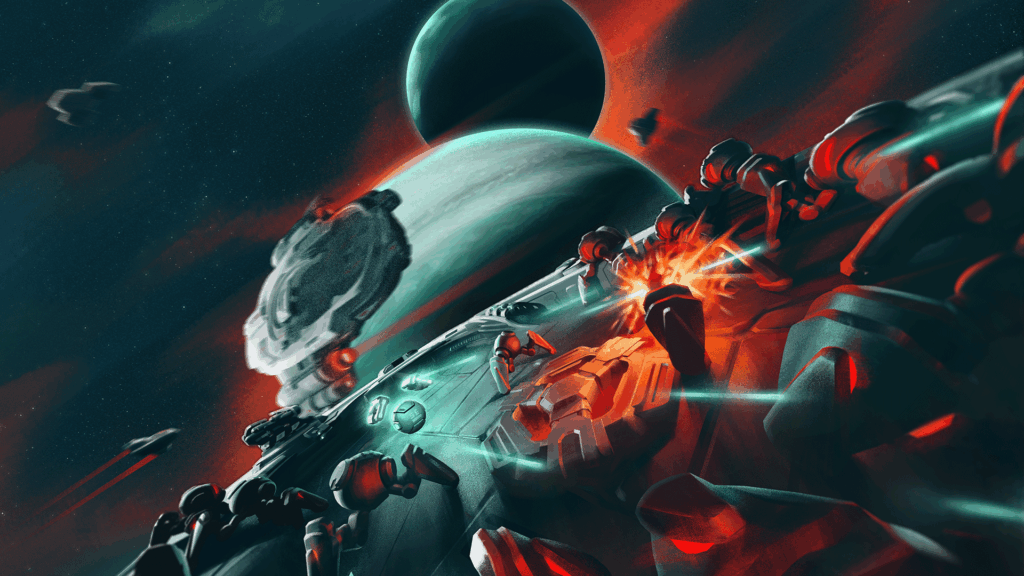
Appulse expands its pinball combat beyond individual encounters through a progression structure involving multiple spaceship tables, special quests and fleet upgrades. According to Raw Fury, players can reach other ships using an ejection cannon, with each boarding opportunity introducing additional challenges. The publisher also identifies fleet benefits such as drones, turrets and repair packs, while the October 27 mechanics explanation describes shuttle powerups that can be revisited and improved. These features give exploration a purpose beyond surviving the immediate encounter because traveling to another ship can influence the player’s future capabilities.
The inclusion of multiple spaceship tables is important because different environments can change how players approach the same core mechanics. Each table’s layout may influence movement routes, access to useful areas and the placement of threats. The value of this structure depends on whether the environments introduce meaningful differences in strategy rather than simply changing the surrounding appearance. A new table becomes more interesting when its arrangement encourages players to reconsider how they use flippers, recoil and positioning.
Traveling between ships also creates decisions about progression. Players may need to consider whether pursuing another area is worthwhile based on the available rewards, challenges and time required. A fleet upgrade could provide an advantage during later encounters, but reaching it may involve additional risk. This creates opportunities for exploration and combat to influence one another, making the decision to board another ship part of the overall strategy.
Fleet upgrades include drones, turrets and repair packs, providing different forms of support within the broader conflict. Offensive improvements may help players deal with enemies more effectively, while defensive or recovery oriented benefits may support longer attempts. The most useful choice depends on the circumstances and the problems a player is encountering. Additional attack power may offer limited value if most failures result from poor positioning or insufficient recovery options.
The shuttle powerups described in the October 27 mechanics post add another layer to progression because they can be revisited and improved. This suggests that players have opportunities to strengthen previously acquired benefits rather than treating every upgrade as a one time choice. The importance of those improvements depends on how they interact with the game’s combat and navigation systems.
The confirmed progression elements include:
- Multiple spaceship tables: Different environments connected through the game’s wider space setting.
- Ejection cannon travel: A method of reaching other ships and their associated challenges.
- Special quests: Additional objectives connected to boarding and exploring ships.
- Drones: Fleet upgrades identified by Raw Fury.
- Turrets: Additional fleet support available through the progression system.
- Repair packs: Recovery related benefits that can support continued survival.
- Shuttle powerups: Improvements that can be revisited and strengthened.
These systems can create competing priorities during a run. A player may prefer immediate offensive assistance, while another may benefit more from additional recovery or defensive support. The most useful upgrade is not necessarily the one offering the largest immediate advantage, but the one that addresses the circumstances most likely to cause failure. This connects fleet progression to the same decision making principles found in the combat system.
The broader structure also allows the game to give individual tables a purpose within a larger experience. Boarding another spaceship can represent an opportunity to strengthen the fleet or complete an objective rather than simply moving to a new scoring environment. However, the available information does not establish how every table differs or how complex each associated quest will be. Those details require experience with the complete game.
The story places Appulse within a conflict between the Vektor Dynamics fleet and the Iron Accord. Raw Fury’s announcement also identifies the Elysium Event as a mystery connected to the game’s science fiction setting. These elements provide a narrative framework for the arcade action, giving players a broader reason to move between ships and participate in successive encounters.
The available premise does not establish the detailed motives of every faction or explain the Elysium Event. It would therefore be speculative to invent character relationships, hidden objectives or an explanation for the mystery. The confirmed information establishes the opposing forces and the existence of an unresolved event, leaving the full narrative context for the finished game.
The story can nevertheless serve an important purpose within an arcade focused experience. A larger conflict provides context for why the player is defending particular locations, traveling between vessels and strengthening the fleet. It also helps connect individual encounters so that moving to another table feels like part of a continuing campaign rather than a transition between unrelated challenges.
The spaceship setting gives the game’s tables an identity beyond their geometry. Boarding a new vessel can represent progress through the conflict, while fleet improvements provide reasons to pursue additional objectives. These narrative connections may help distinguish environments and reinforce the sense that individual battles contribute to something larger. However, the premise alone does not establish how extensively the story will be presented.
There is no confirmed basis in the supplied information for assuming that Appulse features a lengthy cinematic campaign, branching narrative choices or multiple endings. The available announcements identify an intergalactic conflict and an unresolved mystery without specifying the complete storytelling structure. Players should therefore approach the narrative as an established framework for the action rather than expecting unannounced story features.
The game’s presentation also draws inspiration from Space Cadet Pinball, which Raw Fury explicitly identifies as a creative influence. This connection helps explain the combination of pinball mechanics and a futuristic spaceship setting. Space themed imagery fits naturally with pinball because launch mechanisms, illuminated routes and mechanical structures can be incorporated into the design of a table.
However, the influence should not be confused with an official continuation or remake of Space Cadet Pinball. Appulse uses a recognizable visual and mechanical foundation while introducing its own approach to movement and combat. The central difference is the addition of an armed ball whose weapon recoil can influence its trajectory, giving players another method of controlling movement and interacting with enemies.
Traditional pinball challenges players to anticipate the ball’s movement and respond using the table’s available controls. Appulse adds another layer by allowing firing decisions to alter the ball’s path. Instead of only reacting to movement, players must also consider how offensive actions change their position. This creates a different relationship between the player and the table, making navigation part of combat planning.
The Space Cadet Pinball influence may initially attract players familiar with futuristic pinball tables, but nostalgia alone does not establish how the game will feel. Similar visual ideas do not guarantee identical controls, pacing or difficulty. Appulse requires players to understand the relationship between flippers, weapon recoil and movement, which introduces a learning process beyond conventional pinball.
Its design also creates opportunities for different tables to challenge that understanding. A familiar movement technique may need adjustment when the surrounding geometry changes, while an upgrade could influence the player’s willingness to attempt a particular route. The value of the spaceship structure depends on whether those differences remain meaningful throughout the experience.
The strongest connection between the game’s inspirations and original features lies in how they support one another. Space Cadet Pinball provides a recognizable reference for the setting and table based movement, while the shooting mechanics introduce decisions that change how players navigate those environments. Fleet upgrades and interstellar travel then provide reasons to continue experimenting across different locations.
For players interested in Appulse, the important distinction is between the familiar foundation and the new systems built around it. The game is not presented as a straightforward recreation of an older pinball experience. It combines arcade movement with combat, randomized upgrades, spaceship exploration and a narrative conflict involving Vektor Dynamics and the Iron Accord.
The success of that combination will depend on whether the added mechanics preserve the immediate satisfaction of pinball while providing meaningful reasons to aim, reposition and experiment. Different spaceship tables, fleet upgrades and special quests offer opportunities to develop the central concept, while the Elysium Event provides an unresolved narrative element. Together, these features establish a broader structure around the game’s unusual combat system without confirming the complete scale of its story or every detail of its progression.

Frequently Asked Questions (FAQs)
- What is Appulse?
Appulse is a single-player action game that combines traditional pinball mechanics with top-down shooting and roguelite progression. Players control an armed ball that moves around spaceship-themed tables using flippers and weapon recoil. Firing a weapon damages enemies while also pushing the ball in the opposite direction, making positioning an important part of combat. The game also includes randomized upgrades, different weapons, and leaderboard challenges. - When is Appulse scheduled to release?
Appulse is officially scheduled to release on November 26, 2026, according to publisher Raw Fury and the Steam storefront. The date was confirmed during the Galaxies Autumn Showcase on October 15, 2026. As of October 29, the full game had not yet launched, although a playable demo was available. - What did Appulse announce at the Galaxies Autumn Showcase?
During the Galaxies Autumn Showcase on October 15, 2026, Appulse received an official release date announcement confirming its November 26 launch. The showcase also highlighted the game’s unusual combination of pinball movement and shooting mechanics. However, it was not the project’s first public appearance, since development had already been discussed earlier. - Who develops and publishes Appulse?
Appulse is developed by Le Rado and published by Raw Fury. Le Rado is responsible for the game’s mechanics, environments, and overall gameplay experience, while Raw Fury handles publishing and release activities. Their partnership was publicly identified in June 2026. - Is Appulse coming to consoles?
No console version has been officially confirmed. Appulse is currently scheduled to release on Windows PC through Steam on November 26, 2026. PlayStation, Xbox, and Nintendo versions have not been announced in the information reviewed. - What makes Appulse different from ordinary pinball?
Appulse gives the ball weapons that affect both combat and movement. Firing pushes the ball in the opposite direction through recoil, so players must think about where they want to shoot and where the shot will send them. Flippers remain important for movement and also replenish ammunition, connecting navigation, combat, and resource management. - What does the Boson Gun do?
The Boson Gun is a weapon introduced in the October 16, 2026 demo update. It fires two large, slow-moving projectiles at the same time, creating a different attack pattern from faster weapons. Its slower shots encourage careful timing and positioning, especially because weapon recoil also changes the ball’s movement. - Is an Appulse demo available?
Yes. A playable Appulse demo is available through Steam. It allows players to try the core mechanics, including flippers, shooting, and recoil-based movement before the full release. However, the demo represents only part of the complete game and should not be assumed to include every weapon, table, or progression feature. - Is Appulse a Space Cadet Pinball remake?
No. Appulse is not officially presented as a remake or sequel to Space Cadet Pinball. Raw Fury has identified the classic game as an inspiration, particularly for its futuristic presentation and space-themed pinball environments. Appulse introduces its own mechanics, including weapon recoil, combat, randomized upgrades, and roguelite progression. - Did the October update only add a weapon?
No. The October 2026 demo updates included more than the Boson Gun. While the October 16 update highlighted the new weapon, other changes also addressed gameplay additions, localization, presentation improvements, and fixes. The updates show that the developer was refining both content and the overall player experience ahead of release.

Conclusion
Appulse’s October showcase appearance gave its unusual pinball-shooter concept a concrete release schedule. Its most compelling idea remains the connection between attacking and moving: firing changes more than an enemy’s health, because it also influences where the player goes next.
That interaction provides a useful foundation for evaluating the rest of the game. Weapons matter when they change decisions. Upgrades matter when they support different approaches. Additional tables matter when their layouts demand fresh uses of familiar tools.
The current demo offers the clearest opportunity to explore those relationships before release. Players can use it to assess whether manipulating recoil, reading trajectories and planning attacks feels satisfying enough to support repeated attempts. The final game’s lasting appeal will depend on how effectively its broader progression develops that central interaction.
Sources and Citation
- Raw Fury, October 15, 2026: Official announcement confirming Appulse’s scheduled November 26 PC release, Galaxies Autumn Showcase appearance, gameplay premise, pinball-inspired combat mechanics and principal features.
https://rawfury.com/appulse-launches-november-26-on-pc/ - Steam, Appulse Official Store Page: Provides the game’s developer and publisher credits, release information, gameplay features, screenshots, supported platforms, system requirements and playable demo availability.
https://store.steampowered.com/app/3498700/Appulse/ - Le Rado, Appulse Concept: Developer-maintained project page documenting the original prototype, early gameplay design, experimental mechanics and development history leading toward the full commercial release.
https://lerado.itch.io/appulse - Appulse Steam Announcements, September and October 2026: Official developer updates explaining the game’s combat systems, release date announcement, demo improvements, gameplay adjustments and development progress ahead of launch.
https://steamcommunity.com/app/3498700/allnews/ - Appulse Steam Community, October 27, 2026: Developer explanation titled The Mechanics of Appulse, covering recovery tools, special abilities, shuttle systems, gameplay interactions and strategies for understanding the game’s pinball-inspired mechanics.
https://steamcommunity.com/app/3498700
Recommendations
- Attack on Titan Creator Hajime Isayama Admits Ending Regrets: Why He Says the Finale Felt “Insincere”
- Persona 4 Revival Changes Yosuke’s Controversial Homophobic Dialogue
- The Duskbloods Re-Emerges With First In-Game Footage in Nintendo Direct 2026
- MECCHA CHAMELEON Sells 20 Million Copies in Just Two Months
- AMD Ryzen 7 7700X3D Launch Date Confirmed for July 16 at $329: Specs, Gaming Performance, and AM5 Upgrade Details
- Assassin’s Creed: Black Flag Resynced July 2026 Rumor: Release Date, Remake Details, and What Ubisoft Has Teased
- Witchspire: Complete Guide to Luminaries (How They Work and Where to Find Them)
- The Lost Wild Explained: How the Terrifying Jurassic Park Meets Alien: Isolation Survival Horror Game Redefines Dinosaur Horror
- Collective Raises $40M Series B Plus $60M Nondilutive Financing for AI Bookkeeping
- Steve Huffman Says Reddit Will Become Primarily Logged In as AI Scraping Grows



































































































