











When Arco Recouped Its Development Costs After 100,000 Sales
Arco recouped its development costs after selling more than 100,000 copies worldwide approximately two years after launch, transforming a discouraging debut into a notable long term success story for an independently developed tactical role playing game. Game Developer reported the milestone on August 18, 2026, citing a direct exchange with Arco composer and sound designer José Ramón “Bibiki” García. Ramón confirmed that the project had broken even and said Steam accounted for the bulk of its sales. He also revealed that a significant portion of the game’s owners had played Arco on Steam Deck.
The game originally launched on August 15, 2024, meaning confirmation of the milestone arrived three days after its second anniversary. This timing supports the statement that Arco recouped its development costs approximately two years after launch. However, the public record does not identify the exact day, transaction or accounting period in which the project first crossed the threshold for breaking even. The unit sales and cost recovery milestones were announced together, but this does not prove that the 100,000th copy was the exact purchase that moved the project into profitability.
This distinction matters because recoupment is an accounting outcome rather than a simple sales counter. A game breaks even when the applicable revenue returned to the project equals the costs included in its recoupment calculation. This can happen before a public announcement because storefront reports, settlements and publisher accounts are generally processed over time. Storefront settlement schedules, refunds, regional taxes and revenue sharing arrangements can also create a delay between consumer purchases and the income formally recognized by the developer.
The result must therefore be interpreted carefully. The announcement confirms worldwide sales of more than 100,000 copies and the recovery of Arco’s development costs, but the developers and publisher have not disclosed the game’s development budget, gross consumer spending, net Steam receipts, sales for each platform, refunds, taxes, regional pricing adjustments, publisher split or total profit. The report also did not define every expense included in the recoupment calculation.
It would be inaccurate to estimate Arco’s earnings by simply multiplying more than 100,000 copies by its listed retail price. The confirmed conclusion is that the cumulative revenue returned to the project eventually became sufficient to recover the development costs recognized by its team. Arco was publicly confirmed as having recouped those costs by August 18, 2026, after approximately two years on sale, but the milestone should be understood as a confirmed commercial position rather than an exact real time financial event.
In This Article (9 sections)
When Arco Recouped Its Development Costs After 100,000 Sales
Arco recouped its development costs after selling more than 100,000 copies worldwide approximately two years after launch, transforming a discouraging debut into a notable long term success story for an independently developed tactical role playing game. Game Developer reported the milestone on August 18, 2026, citing a direct exchange with Arco composer and sound designer José Ramón “Bibiki” García. García confirmed that the project had broken even and said Steam accounted for most of its sales. He also revealed that a significant portion of the game’s owners had played Arco on Steam Deck.
The game originally launched on August 15, 2024, meaning the confirmation arrived three days after its second anniversary. This timing supports the conclusion that Arco recouped its development costs approximately two years after launch. However, the public record does not identify the precise day, transaction or accounting period in which the project first crossed the break even threshold. The announcement only confirms that Arco had already recovered its recognized development costs by August 18, 2026.
This distinction matters because recoupment is an accounting outcome rather than a simple sales counter. A game breaks even when the applicable revenue returned to the project equals the costs included in its recoupment calculation. This can happen before the achievement is publicly announced because storefront reports, settlements and publisher accounts are generally processed over time. Storefront settlement schedules, refunds, regional taxes and revenue sharing arrangements can also create a delay between consumer purchases and the income recognized by the developer.
The developers and publisher have not disclosed Arco’s development budget, gross consumer spending, net Steam receipts, sales by platform, refunds, taxes, regional pricing adjustments, publisher split or total profit. It would therefore be inaccurate to calculate a specific revenue figure by multiplying more than 100,000 copies by the game’s listed retail price.
The unit sales and break even milestones were announced together, but this does not prove that the 100,000th copy was the exact purchase that allowed the project to recover its costs. What can be stated confidently is that the cumulative revenue returned to Arco eventually became sufficient to cover the development costs recognized by its team, making the announcement a confirmed commercial position rather than an exact real time financial event.
Arco Sales, Break Even Timeline, and Revenue Explained
Arco sold more than 100,000 copies worldwide during the approximately two years following its August 15, 2024 release. The words “more than” are important because 100,000 represents a publicly disclosed threshold rather than the game’s exact lifetime total. The milestone covers worldwide sales across every available storefront, not Steam purchases alone. The official Arco website lists Steam, the Epic Games Store, Nintendo Switch and the Mac App Store as purchasing options. Steam offers Windows and macOS versions, while the Mac App Store provides another route for Apple users. Composer and sound designer José Ramón said most sales came from Steam, but neither he nor publisher Panic disclosed an exact Steam percentage or complete platform breakdown.
The confirmed worldwide sales figure should not be confused with review totals, concurrent player figures or third party ownership estimates. Steam does not publicly provide exact owner counts for every title. Review totals only cover owners who chose to submit a review, while concurrent player statistics indicate how many users were active at a particular time.
Third party services often estimate Steam ownership by applying formulas to reviews, followers or activity data, but those models are not substitutes for developer confirmed sales and can produce substantially different results for the same game. The most reliable available figure for Arco is therefore the direct confirmation that worldwide sales exceeded 100,000 copies. An exact total beyond that threshold had not been publicly disclosed when the milestone was reported.
Arco took approximately two years to break even because its enthusiastic critical and player reception did not immediately produce enough purchases. Only one week after launch, developer and artist Franek Nowotniak publicly said the game had sold badly despite receiving impressive reviews. He also said the developers remained far from recovering their costs after the applicable revenue split, revealing a substantial gap between Arco’s artistic reception and its initial commercial performance. Ramón described the game as already being considered a “hidden gem.” Although complimentary, that description highlighted the main difficulty: people who discovered and purchased Arco often responded positively, but too few customers were finding it during the crucial launch period.
Wishlist conversion contributed to the problem. In comments documented by GamesRadar+ shortly after release, Nowotniak explained that purchases converted exceptionally well into positive reviews, while wishlists did not convert into purchases as effectively as expected. This pattern shows how a game can earn an outstanding approval score while continuing to struggle financially. A review percentage measures satisfaction among customers who purchased and reviewed a product. It does not reveal how many potential customers saw the store page, understood the game’s concept or decided to buy it.
Arco also faced a positioning challenge because it did not fit neatly into a single established commercial category. It combined Mesoamerican fantasy, pixel art, exploration, narrative choices, revenge stories and combat that mixed turn based planning with real time execution. That originality gave the game a recognizable creative identity, but it also made Arco more difficult to describe through a simple comparison with a popular genre leader.
Established formats often have identifiable audiences and established search behavior, while an unfamiliar combination may require more explanation before customers understand its appeal. Nowotniak addressed this dilemma directly by observing that creators are encouraged to make new and original games, even though established genres can be easier to sell because their audiences are already identifiable. He said future projects would need to consider commercial appeal more explicitly.
The disappointing debut did not permanently determine Arco’s commercial outcome. Positive reviews, recommendations, promotions, bundles and continued storefront availability allowed new customers to discover the game over a longer period. By August 2026, the accumulated audience had become large enough to generate more than 100,000 worldwide sales and recover the project’s development costs. Arco therefore followed a long tail commercial path in which awareness and purchasing grew gradually rather than through the immediate surge commonly associated with a breakout release.
The 100,000 copy milestone establishes Arco’s commercial reach, while the confirmation that it recouped its costs establishes cost recovery. These measurements are connected, but they do not mean the same thing. Unit sales count the number of copies purchased, gross revenue measures the amount customers paid before deductions, and net revenue represents the money remaining after reductions such as consumption taxes, refunds, regional adjustments, storefront commissions and other contractual expenses. Profit is what remains only after the costs recognized by the project have been recovered, so selling 100,000 copies does not automatically indicate a particular amount of profit.
Arco was not sold at one uniform price in every country throughout its commercial life. Regional pricing meant customers in different markets could pay different amounts, while storefront promotions and game bundles could substantially reduce the effective selling price. Some transactions may also have been refunded, and applicable taxes could have been collected before revenue was distributed.
The storefront then retained its contractual share, after which the remaining proceeds may have been divided between Panic and the creators under an agreement that has not been released publicly. Multiplying 100,000 copies by the current list price would therefore produce only a hypothetical gross retail calculation. It would incorrectly assume every copy was sold on one platform, in one currency, at full price and without refunds or deductions.
The break even confirmation is nevertheless significant because it establishes that cumulative qualifying revenue eventually covered the relevant cost base. It also shows that Arco moved beyond the situation described shortly after release, when the developers said they remained far from recoupment after the revenue split. However, breaking even does not necessarily mean every developer received a high salary for every hour spent on the project.
Independent creators sometimes defer compensation, work below market rates or account for their own labor differently from expenses paid to outside contractors. A project can technically recover its recorded budget while still producing a modest effective return for its creators. The accurate summary is that Arco exceeded 100,000 worldwide sales and had recovered its development costs by the time the achievement was announced, while its precise gross revenue, net proceeds and profit remain undisclosed.

Steam’s Role in Arco Sales and Steam Deck Growth
There is no verified public figure showing how much money Arco made on Steam. Available reporting confirms that Steam generated the bulk of the game’s sales, but it does not state how many of the more than 100,000 worldwide copies came from Steam. It also does not reveal the average amount paid for each Steam copy or the net amount distributed after refunds, taxes, regional pricing, promotions and Steam’s share. A calculation using 100,000 copies and the game’s full list price would be unreliable because the sales milestone includes purchases from Nintendo Switch, the Epic Games Store and the Mac App Store in addition to Steam.
Arco also participated in promotions after release, including sales and bundles with other independent titles. These activities may have improved discovery and generated additional unit sales while reducing the average revenue received per copy. The publishing agreement creates another unknown because Panic published Arco, but the financial terms between the publisher and the four developers have not been released. It is therefore impossible to determine how Steam receipts were divided after storefront deductions.
Third party ownership calculators cannot provide a verified answer. These services generally estimate owners through public review totals or other visible activity, and their results can vary widely because each model uses different assumptions about how many owners leave reviews. SteamDB’s public page for Arco, for example, displayed materially different owner estimates from separate analytics providers. That disagreement demonstrates why modeled ownership figures should not be presented as confirmed financial data.
The available evidence supports two conclusions: Steam was Arco’s most important sales channel, and its revenue made a major contribution to the project’s eventual recoupment. It does not support a precise claim about how much money Arco earned on Steam, and that total will remain private unless the developers or Panic disclose platform level sales and net receipts.
Steam likely generated most of Arco’s sales because it combined a relevant PC audience, long term discovery features and compatibility with hardware used by many players interested in independent tactical games. This explanation is partly an inference because Ramón confirmed Steam’s sales dominance without publishing a formal analysis of every reason behind it.
Arco launched on Steam with a downloadable demo, wishlisting, user reviews, achievements, cloud saves, controller support and community features, giving it repeated opportunities to reach customers both before and after release. Promotions and bundles provided further chances to appear in storefront recommendations. Unlike a physical product that can disappear from retail shelves, a digital game can continue gaining visibility through discounts, themed events, recommendation algorithms and renewed media attention.
Steam reviews also created a persistent public signal of quality. As of early September 2026, Arco’s official Steam page displayed an “Overwhelmingly Positive” classification for English reviews, with 96 percent positive feedback among more than 1,600 English language submissions. This figure does not reveal total ownership, but it can reassure customers who discover the game long after its original launch campaign. Reviews accumulated over time can transform early enthusiasm into lasting social proof and help explain how Arco continued attracting customers during its gradual journey toward 100,000 sales.
Steam was particularly suitable for a compact, single player tactical RPG. Arco has modest storage requirements, supports controllers and works across Windows and macOS, while Steam Deck compatibility extends the same purchase to a handheld PC environment. The other storefronts serve more specific market segments. Nintendo Switch addresses its console ecosystem, the Mac App Store caters to Apple users who prefer purchasing outside Steam, and the Epic Games Store provides another PC channel with a different audience and feature ecosystem. These observations do not establish a precise causal percentage, but they help explain why Ramón’s statement that Steam produced the bulk of Arco’s sales is consistent with the game’s audience, technical design and long term commercial profile.
Steam Deck players represented a noteworthy part of that audience. Ramón told Game Developer that a “good chunk” of Arco’s owners had been playing on Valve’s handheld computer. This description confirms meaningful usage but does not provide a percentage and should not be converted into an invented Steam Deck sales total.
Arco’s gameplay is naturally compatible with handheld sessions because time pauses while players select their actions, reducing the need for uninterrupted rapid input. Each tactical decision is followed by a short period in which movement, enemy attacks and projectiles unfold simultaneously. This structure preserves the excitement of real time action while allowing players to plan before committing to their next move, making its relatively contained encounters suitable for shorter portable sessions.
Controller support also reduces the barrier to handheld play. According to SteamDB’s compatibility record, Arco is Steam Deck Verified. The listed testing information states that all functionality is accessible through the default controller configuration, appropriate controller icons are displayed, interface text is legible and the default graphics settings perform well.
The record notes that players using external controllers may need to switch the active controller manually through the Steam Deck Quick Access Menu, but this caveat does not prevent normal play through the handheld’s integrated controls. Arco’s pixel art presentation and relatively low system requirements are also well suited to portable hardware because the game does not depend on advanced graphical performance to communicate its environments, characters or projectile patterns.
Steam Deck participation may have supported Arco beyond direct purchases. Players who discovered the game through discussions of titles suited to handheld play could leave reviews, recommend it to others and continue using the same Steam library on another computer. That broader effect is plausible rather than directly measured. The confirmed facts are that Steam generated most of Arco’s sales, many owners played it on Steam Deck and the game carried Verified status, reducing uncertainty about its handheld compatibility.
Arco’s Release, Development, Platform Sales and Break Even Milestone
Arco was developed by Franek Nowotniak, Max Cahill, José Ramón “Bibiki” García and Antonio “Fáyer” Uribe, with Panic serving as the publisher. The official Arco website credits all four creators, while Steam lists Franek, Max Cahill, Bibiki and Fáyer as the development team. Steam’s copyright notice identifies Max Cahill, Franciszek Nowotniak, José Ramón García and Antonio Uribe in cooperation with Panic.
The creators formed an international and multidisciplinary team rather than a conventional large studio. Public credits associate Nowotniak closely with the pixel art presentation, García with composition and sound design, Uribe with writing and development, and Cahill with development and art. However, roles within a four person independent team can overlap extensively, so the creators should not be reduced to rigid job categories. Arco’s visual identity, systems, narrative and audio emerged from collaboration across these disciplines.
Panic’s involvement placed Arco within a publishing catalog known for distinctive independently developed games. A publisher may contribute funding, production assistance, quality assurance, platform coordination, distribution and marketing, but the exact scope of Panic’s financial and operational role in Arco has not been disclosed. The publishing agreement remains private, meaning no reliable public information establishes Panic’s investment, revenue percentage, recoupment priority or distribution of profits. It is therefore accurate to identify Panic as the publisher without making unsupported claims about its financial arrangement with the developers.
Arco was originally released on August 15, 2024. Steam lists that date, and Game Developer’s launch day interview described the game as becoming available on the same day. The initial release covered PC and Nintendo Switch, with the computer versions including Windows and Mac options. The game’s official website now directs customers to Steam, the Epic Games Store, Nintendo Switch and the Mac App Store. Steam also supports a macOS version, giving Mac players the choice of purchasing through Steam or Apple’s dedicated marketplace. August 15, 2024 remains the relevant original release date when discussing the game’s second anniversary. Later patches, discounts, physical editions and storefront changes do not replace its original launch date.
The release timing also provides essential context for the early reports about Arco’s poor commercial performance. Nowotniak’s comments reported on August 22, 2024 reflected approximately one week of sales. Those concerns were real and financially consequential, but they did not represent a complete lifetime forecast. The game had barely begun what ultimately became an approximately two year journey to selling more than 100,000 copies and recovering its development costs. By August 2026, continued sales had materially changed the commercial picture, showing why launch performance should be considered alongside longer term results when evaluating games that remain digitally available for years.
No reliable public figures divide Arco’s worldwide sales among Steam, Nintendo Switch, the Epic Games Store and the Mac App Store. Ramón said that Steam generated the bulk of sales, establishing it as the dominant channel without revealing the exact number or percentage. It is also unknown whether Nintendo Switch, the Epic Games Store or the Mac App Store was the second largest channel, since no individual total or percentage has been published for any storefront outside Steam.
A storefront listing confirms only that the game is available for purchase and does not reveal how many copies were sold there. Without a direct disclosure from Panic or the development team, exact claims about Arco’s Switch, Epic Games Store or Mac sales would be speculation. The figure of more than 100,000 copies must therefore be treated as a combined worldwide total, with Steam identified as the dominant but unquantified contributor.
Availability across several platforms was still commercially valuable. Nintendo Switch provided access to a conventional handheld and television console audience, while the Epic Games Store offered an additional PC marketplace. Steam and the Mac App Store gave Apple users two purchasing routes. Together, these storefronts widened Arco’s potential audience and reduced its complete dependence on one device category. They may also have helped players discover the game through different promotions and recommendation systems, even though the effect of each channel cannot be measured from the available sales information.
For Arco’s developers, breaking even means the project recovered the development expenses included in its financial accounting. This represented a decisive improvement from launch week, when Nowotniak said the team remained far from recouping its costs after the revenue split. The outcome demonstrates that a well reviewed independent game with a disappointing launch can gradually build enough demand to recover its investment, although it does not guarantee that every game in a similar position will achieve the same result.
Ramón also described the milestone in terms of personal satisfaction and the extraordinary feeling that more than 100,000 people had played something the team worked hard to create. For an international team of four principal creators, that audience represents a substantial creative footprint and shows that the game eventually reached players well beyond the relatively small audience suggested by its early performance.
Recoupment should not be exaggerated into proof that the developers became wealthy. Public reporting does not disclose the development budget, compensation arrangements, publisher share or amount of profit generated after the game broke even. If the team worked for several years at rates below a typical salary, recovering the project’s recorded costs could still result in a modest effective hourly return. Nowotniak’s launch period reference to earning less than minimum wage demonstrates why project level break even and individual financial security should not be treated as identical.
Financially, the milestone means that qualifying revenue was no longer being used exclusively to repay the counted cost base. Subject to the private publishing agreement and any continuing expenses, later net receipts could contribute income beyond recoupment. The result also gives the creators a meaningful commercial credential, since a project that sold more than 100,000 copies and recovered its costs can strengthen their position when pitching future games, discussing financing, negotiating publishing agreements or communicating with an established audience.

How Arco’s Combat Works and Why It Initially Struggled Despite Positive Reviews
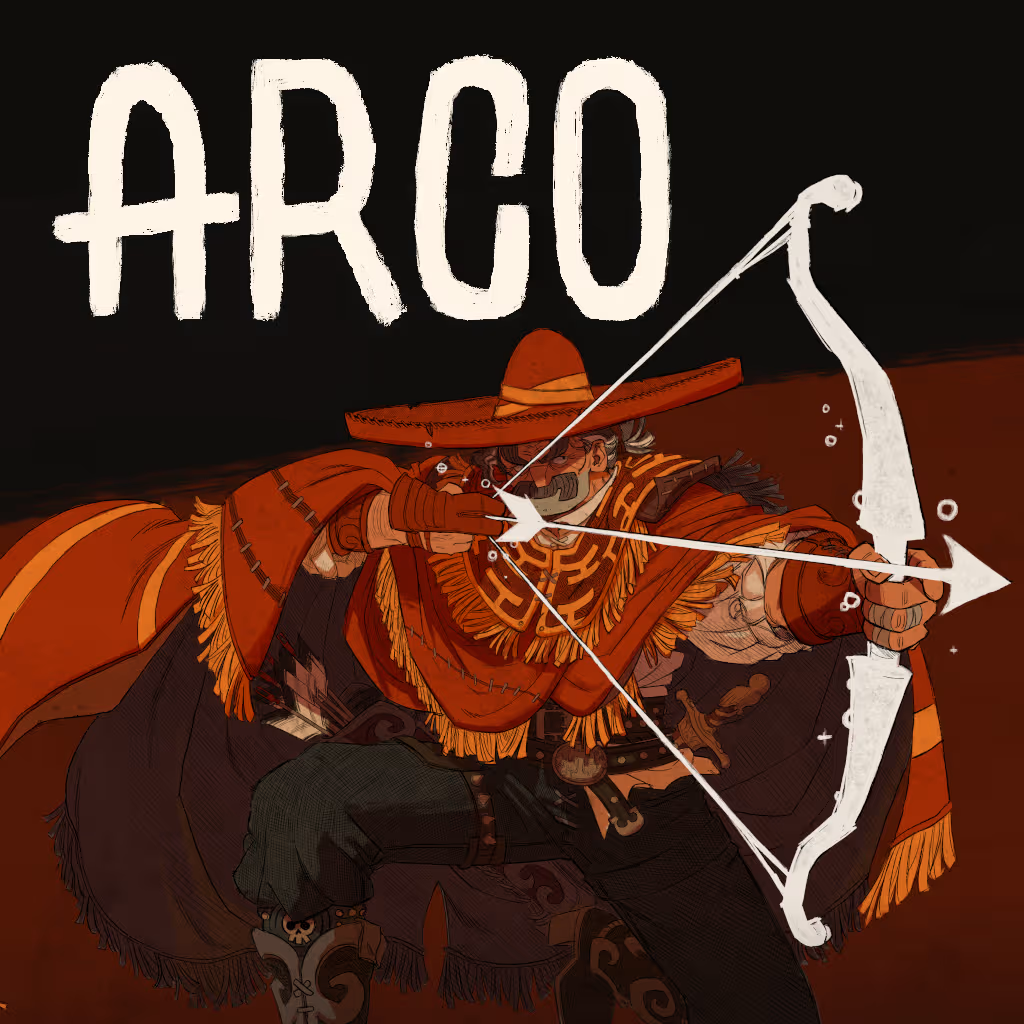
Arco describes itself as a Mesoamerican fantasy role playing game that combines turn based and real time combat. During each combat cycle, time freezes while the player selects movement, an attack or another action. Enemies prepare their behavior during the same cycle, and once the player commits, all queued actions unfold simultaneously. Time then freezes again, allowing the player to study the altered battlefield and choose another action. This creates a repeated sequence of planning, execution and reaction. Players have time to think, but they must anticipate moving enemies, incoming projectiles and environmental interactions instead of attacking opponents who will remain stationary.
The developers refined this system during production to remove unnecessary micromanagement. In an interview about Arco’s combat, Nowotniak explained that an earlier version required players to draw exact movement paths. The team eventually replaced that slower process with a more direct system that allowed players to select a destination and queue an action, preserving tactical control while helping battles move at a faster pace. The developers also experimented with a predictive timeline that would reveal what enemies intended to do. That feature was abandoned while the fundamental combat mechanics were still changing because developing too many interdependent systems at once caused adjustments to one mechanic to disrupt the others.
Experimentation remained central to the finished design. Death does not return the player to the beginning of the entire campaign as it might in a roguelike. Players can fail quickly, retry an encounter and test a different combination of movement, abilities or items. Items and abilities also interact in systemic ways. Uribe described an example in which the player could create a gas cloud and fire an arrow through it, causing the arrow to become poisoned before striking an enemy. The game does not explain every possible interaction, encouraging players to discover combinations through experimentation.
Narrative decisions can also influence combat through the guilt system. Each playable character may accumulate guilt based on choices made during the story, and higher guilt causes hostile spirits to appear on the battlefield. Unlike ordinary enemies, these supernatural manifestations do not completely obey the game’s paused time rules. They can pursue the character while other battlefield actions are frozen, placing additional pressure on the planning phase. This mechanic connects narrative conduct with tactical difficulty, ensuring that choices are not limited to dialogue outcomes and can instead alter the physical dangers encountered in later battles.
Despite the originality of these systems and an exceptionally positive response from early customers, Arco initially struggled to attract enough buyers. Within one week of release, its developers were discussing disappointing sales, weak wishlist conversion and the difficulty of persuading more people to notice the game. GamesRadar+ reported that Balatro creator LocalThunk highlighted a 98.65 percent positive review rate after the first week and expressed surprise that the game had not reached a broader audience. There was no true contradiction between the outstanding review percentage and the weak initial sales. A high review score measures satisfaction among the customers who purchased and reviewed the game, but that group can remain highly enthusiastic while still being commercially small.
Review scores do not show how many people encountered the marketing, visited the store page or converted a wishlist into a purchase. They also do not guarantee prominent placement in storefront recommendation systems or extensive coverage during a crowded release period. Arco’s unusual creative identity may have made the problem more difficult. Its Mesoamerican inspired fantasy setting, morally responsive guilt system, pixel art landscapes and hybrid tactical combat distinguished it from conventional role playing games, but that originality also made the concept harder to communicate through familiar genre descriptions. A customer who immediately understands a farming simulator or deck building roguelike may require more explanation to understand Arco’s simultaneous battles and intertwined revenge narratives.
Nowotniak argued that creators are often encouraged to develop unfamiliar ideas even though established genres offer clearer target audiences. Arco demonstrated the economic risk behind that tension. Marketing execution was another concern. Nowotniak acknowledged that the team had a marketing plan, but said the public perception that the game had received little promotion showed that the plan had not worked as intended.
Arco therefore did not immediately convert acclaim into strong sales. Instead, its critical praise and player satisfaction became assets that supported a longer commercial life. Positive reviews remained visible, players continued recommending the game, and later promotions created new opportunities for discovery. Its eventual sales and break even milestone suggest that this growing reputation gradually helped correct the awareness problem that had limited its launch performance.
Frequently Asked Questions[FAQs]
- Did Arco recoup its development costs?
Yes. Composer and sound designer José Ramón García confirmed that Arco had broken even by the time Game Developer reported the milestone on August 18, 2026. This means the project had generated enough qualifying revenue to recover the development costs included in its accounting, although the exact amount recovered was not revealed. - How many copies of Arco have been sold?
Arco sold more than 100,000 copies worldwide during approximately its first two years after release. However, 100,000 is only the publicly confirmed threshold rather than an exact lifetime sales total, so the game may have sold a higher number of copies by the time the milestone was announced. - When did Arco launch?
Arco launched on August 15, 2024. Its break even milestone was publicly reported on August 18, 2026, three days after the game’s second anniversary, showing that it took roughly two years of worldwide sales for the project to recover its development costs. - Did Arco sell 100,000 copies on Steam alone?
No public source confirms that Steam alone accounted for more than 100,000 copies. The reported figure covers worldwide sales across all platforms and storefronts where Arco was available. Steam generated the majority of purchases, but neither the developers nor publisher Panic disclosed its exact unit total. - How much revenue did Arco make?
Arco’s exact gross revenue, net revenue and profit have not been disclosed. Estimating revenue by multiplying its sales total by the standard list price would be misleading because many copies may have been purchased at discounted or regional prices. Taxes, refunds, storefront commissions and contractual revenue splits would also reduce the amount received by the project. - Which platform sold the most copies of Arco?
Steam was Arco’s leading sales platform, according to José Ramón García, who said it generated the bulk of purchases. However, no exact Steam percentage or unit total was provided, and the developers did not publish a complete sales ranking for the other platforms and storefronts. - Is Arco available on Steam Deck?
Yes. Arco is officially Steam Deck Verified, meaning it meets Valve’s compatibility standards for playing on the handheld. Ramón also said that a significant portion of the game’s owners had played it on Steam Deck, although he did not reveal a specific player count or percentage. - Who made Arco?
Arco was developed by Franek Nowotniak, Max Cahill, José Ramón “Bibiki” García and Antonio “Fáyer” Uribe. García served as the game’s composer and sound designer, while Panic handled publishing. The project was therefore created by a small independent development team with support from an established publisher. - Why did Arco sell poorly at first?
The developers said Arco initially struggled to attract enough attention and convert wishlists into actual purchases, even though it received excellent reviews. Its unusual combination of gameplay systems, visual presentation and themes also made it harder to connect with an immediately recognizable audience than a game based on a familiar or established formula. - What does breaking even mean for Arco?
Breaking even means Arco’s cumulative qualifying revenue became sufficient to recover the development expenses included in the project’s accounting. It does not reveal the size of the original budget, how the revenue was divided or how much money the developers personally received. It also does not necessarily mean the game had already generated a large profit beyond covering its costs.

Conclusion
Arco recouped two years after launch in the sense supported by the available evidence. The Mesoamerican fantasy RPG launched on August 15, 2024, sold more than 100,000 copies worldwide over approximately two years and was confirmed as having recovered its development costs by August 18, 2026.
Steam produced most of its sales, while Steam Deck players represented a meaningful part of the audience. Nintendo Switch, the Epic Games Store and Mac purchasing options expanded the game’s reach, although the developers have not published an exact platform breakdown.
The milestone completed a striking reversal from Arco’s first week. In August 2024, its developers said the game had sold badly, remained far from recoupment and struggled to convert attention into purchases despite outstanding player reviews.
By August 2026, continued discovery had carried Arco across a six-figure worldwide sales threshold and into break-even territory. Its positive reputation did not create an immediate blockbuster, but it helped sustain a commercial life long enough for the financial outcome to change.
The achievement should be recognized without inventing financial numbers. Arco’s development budget, Steam revenue, gross receipts, publisher split and final profit remain private.
What the evidence demonstrates is valuable enough: an original independent game can recover from a disappointing debut when its reputation endures, its platform fit is strong and new players continue discovering it. Arco was not an overnight success. Its defining commercial achievement was becoming sustainable over time.
Sources and Citations
- Game Developer, “Arco tops 100,000 sales in two years and breaks even,” August 18, 2026.
- Arco, “Official Arco Website,” game description, platform availability and creator credits.
- Steam, “Arco,” release date, developer and publisher credits, features, reviews and system requirements.
- Game Developer, “Why ‘fuck around and find out’ became the backbone of Arco’s combat,” August 15, 2024.
- GamesRadar+, “Dev of slept-on tactical RPG says it ‘sold badly’ despite glowing reviews,” August 22, 2024.
- SteamDB, “Arco Steam Charts,” Steam Deck compatibility and public Steam metadata, accessed September 2, 2026.
Recommended
- 007 First Light Had the Best Launch Among IO Interactive Games: Sales, Revenue Breakdown, Budget Analysis, and Performance Metrics Explained
- Forza Horizon 6’s Recommended PC Specs (2026): Minimum vs Recommended Requirements, 1440p/60FPS Targets, and Best Upgrade Tips
- The Godfather Book Series to Continue with New Connie Corleone Story in 2027: Everything We Know About the Upcoming Novel
- Remedy CEO Says GTA 6 Will Boost the Entire Games Industry, Not Hurt Competing Releases, as He Claims Big Launches “Raise the Tide”
- Expedition 33 Sequel? Writer Staying Quiet On Clair Obscur Franchise’s Future
- Build a Rocket Boy Has Reportedly Experienced Another Round of Layoffs: MindsEye Fallout and What Happens Next
- Peter Sarsgaard Joins the Last of Us Season 3: Cast, Character, and Story Details
- All Playable Characters in Marathon: Bungie’s New FPS – Community Reactions, Developer Insights, and Unique Visual Style
- Muramasa: Revenant Blades Official Announce Trailer Breakdown & Details



































































































