










Bodycam update, It’s self-balancing ragdoll system explained.
In This Article (19 sections)
What is Bodycam? Ultra-Realistic FPS Game Overview and Mechanics
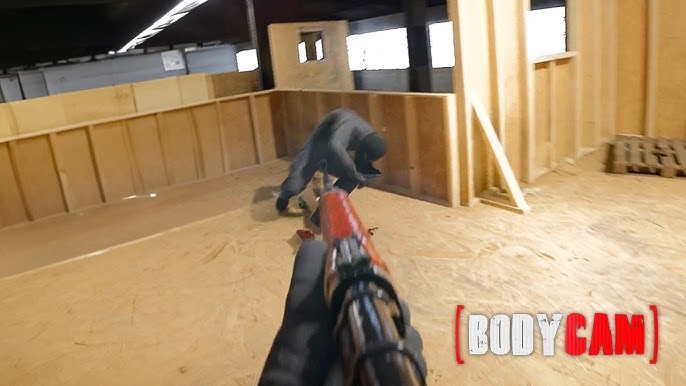
Bodycam is an ultra-realistic first-person shooter (FPS) designed to push the boundaries of immersion by simulating real-world camera behavior, human movement physics, and environmental interaction at a level rarely seen in modern gaming. Unlike traditional FPS titles that prioritize fast-paced arcade mechanics, Bodycam focuses on realism, using photorealistic rendering techniques and physical animation systems that mimic real human motion and weight distribution.
The core concept behind Bodycam is to replicate the perspective of a real body-worn camera, similar to what law enforcement or military personnel might use. This design choice results in a shaky, grounded, and sometimes unpredictable viewpoint that enhances immersion. Players experience gunfights, movement, and environmental traversal in a way that feels raw and unfiltered, emphasizing survival and tactical awareness over speed and reflex-based gameplay.
At its foundation, Bodycam integrates advanced physics systems and Unreal Engine 5 capabilities to create a simulation-like FPS environment. Every step, recoil, fall, and collision is calculated with emphasis on realism rather than scripted animation loops.
Bodycam Gameplay Explained: Why Its Realism is Changing FPS Games
The gameplay in Bodycam diverges significantly from traditional FPS conventions. Instead of relying on predictable movement patterns, players must adapt to momentum-based controls and physics-driven interactions. Sprinting, crouching, leaning, and aiming are all influenced by inertia and environmental conditions.
This shift in design fundamentally changes how players approach combat. Rather than rushing into engagements, players are encouraged to assess terrain, control breathing-like movement stability, and account for weapon sway caused by body motion. This creates a more tactical and suspense-driven experience.
What makes Bodycam particularly notable is its commitment to unpredictability. Even simple actions such as turning a corner or descending stairs can introduce realistic instability, forcing players to adapt constantly.
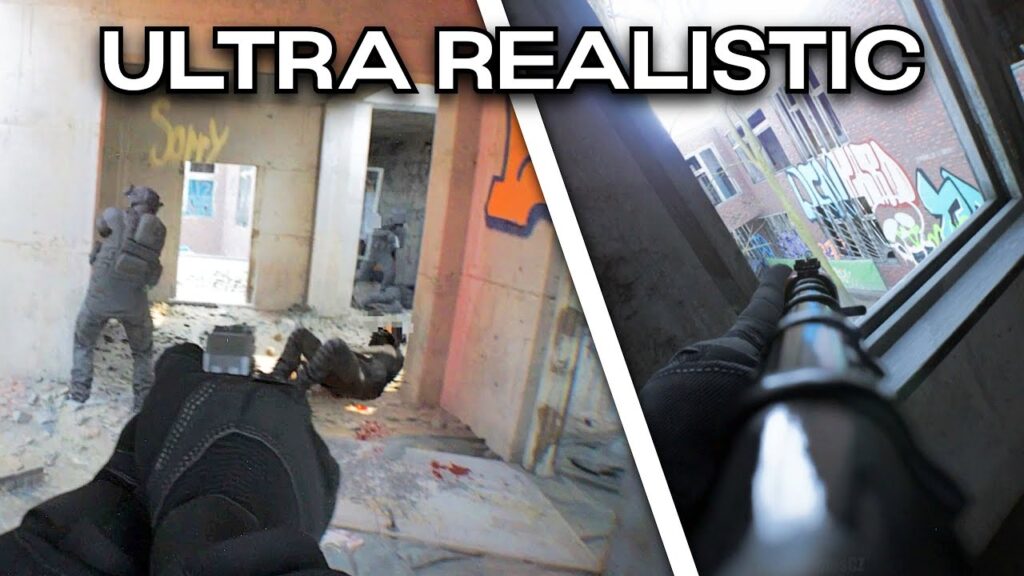
Ultra-Realistic FPS Bodycam Reveals New Self-Balancing Ragdoll System
One of the most discussed innovations in Bodycam is its self-balancing ragdoll system. This system enhances character physics by allowing player avatars to dynamically adjust posture and balance during movement, impacts, and falls.
Unlike traditional ragdoll systems that activate only upon death or specific triggers, Bodycam’s system operates continuously. It blends animation and physics in real time, ensuring that characters do not simply “collapse” unnaturally but instead attempt to stabilize themselves based on force direction, weight distribution, and environmental contact points.
Recent developer teasers suggest that this system is being significantly upgraded, with improved responsiveness, smoother transitions, and more accurate simulation of human balance recovery.
How the Self-Balancing Ragdoll System Works in Bodycam Physics Engine
The self-balancing ragdoll system operates through a hybrid physics-animation model. Instead of relying solely on pre-recorded animations, the engine calculates joint forces, torque, and center-of-mass adjustments in real time.
When a player moves, the system constantly evaluates posture stability. If the character begins to lose balance, such as after being hit, landing from a jump, or moving over uneven terrain, the system initiates corrective micro-adjustments. These include shifting weight distribution, adjusting limb positioning, and recalibrating center-of-gravity alignment.
In practical terms, this means characters no longer appear stiff or artificially animated. Instead, they behave like physically present bodies reacting to gravity, momentum, and external forces.
Bodycam New Update Features: What Developers Have Teased so Far
The upcoming update for Bodycam is expected to introduce several key enhancements beyond the ragdoll system. Developer teasers have hinted at improvements in:
- Physics-based character stability
- Enhanced environmental interaction
- More responsive weapon handling
- Improved movement transitions
- Better collision detection accuracy
- Refined animation blending system
These upgrades aim to reduce visual inconsistencies while increasing immersion. The focus appears to be on polishing the balance between realism and playability, ensuring that physics-driven mechanics remain engaging rather than frustrating.
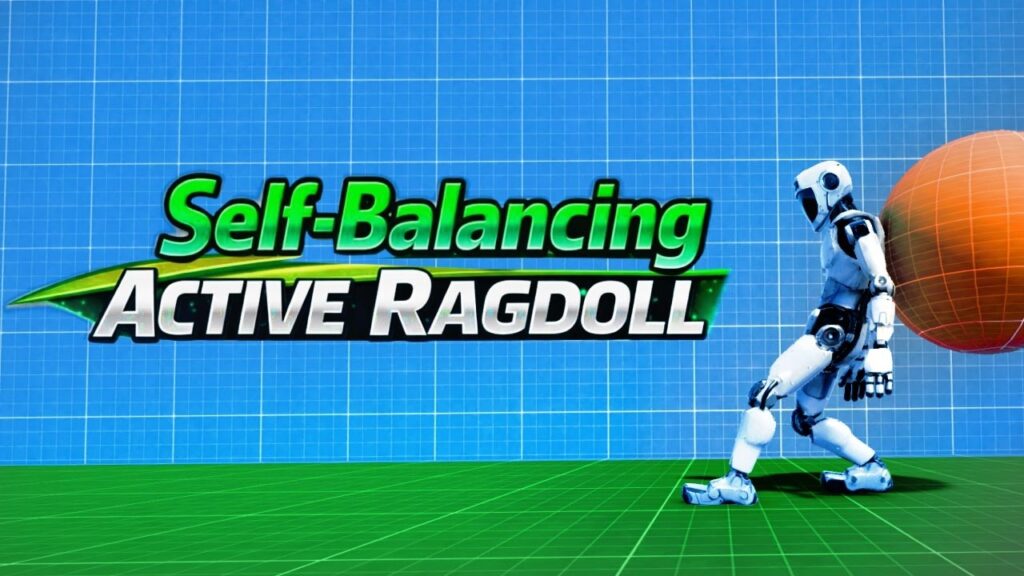
Why Bodycam’s Ragdoll Physics Feel More Real than Traditional FPS Games
Traditional FPS games often rely on canned animations that trigger under predefined conditions. While efficient, this approach limits realism, as character responses are predictable and repetitive.
Bodycam’s ragdoll system breaks away from this model by simulating continuous physical behavior. Instead of switching between animation states, the character exists in a constant physical simulation.
This results in more believable reactions to bullets, explosions, and environmental forces. For example, instead of a standard death animation, a character might stagger backward, lose balance gradually, and collapse in a direction influenced by momentum and terrain slope.
Bodycam Unreal Engine 5 Technology Behind Hyper-Realistic Movement
Bodycam is built using Unreal Engine 5, which enables advanced rendering techniques such as Nanite geometry and Lumen global illumination. However, its most significant advantage lies in its ability to support complex physics simulations alongside high-fidelity visuals.
The engine allows developers to combine skeletal mesh physics with procedural animation systems. This hybrid approach is what makes Bodycam’s movement feel grounded and responsive.
Unreal Engine 5 also supports high-resolution texture streaming and dynamic lighting, both of which contribute to the game’s photorealistic aesthetic. Combined with physics-driven animation, this creates a cohesive experience where visuals and mechanics reinforce each other.
Player Reactions to Bodycam’s Advanced Ragdoll Animation System
Player feedback surrounding Bodycam’s ragdoll system has been largely focused on its realism and unpredictability. Many players express admiration for how lifelike character movement appears, particularly during combat scenarios.
However, some players also note that the high level of realism can make the game more difficult to control compared to traditional FPS titles. The weighty movement system and unpredictable physics require a learning curve, especially for players accustomed to arcade-style shooters.
Overall, the community response highlights a growing appreciation for simulation-heavy FPS design, even when it challenges conventional gameplay expectations.

Bodycam Movement Improvements: Walking, Falling, and Recovery Mechanics
Movement in Bodycam is designed around physical authenticity. Walking speed is influenced by terrain, momentum, and player input intensity. Sudden directional changes introduce inertia effects, making movement feel heavier and more grounded.
Falling mechanics are particularly advanced. Instead of instant transitions, characters gradually lose balance depending on the force applied. Recovery systems attempt to stabilize the body mid-motion, allowing partial correction before a full collapse occurs.
These systems work together to simulate real human biomechanics, adding depth to even basic traversal actions.
Bodycam Graphics and Animation Upgrade Compared to Other FPS Games
Compared to traditional FPS games, Bodycam’s graphical fidelity and animation system stand out due to their integrated approach. Many games achieve realism through static high-quality models and scripted animations, but Bodycam relies on real-time physics interaction.
This creates a more cohesive visual experience where movement, lighting, and environment all react dynamically. The result is a game that feels closer to a simulation than a conventional shooter.
The combination of Unreal Engine 5 rendering and procedural animation systems places Bodycam in a unique position within the FPS genre.
Expected Release Date for Bodycam Self-Balancing Ragdoll Update
As of current developer communications and teaser releases, no official release date has been confirmed for the self-balancing ragdoll update. However, the frequency of recent previews suggests that the update is in advanced development stages.
Industry observers expect incremental rollout phases, possibly beginning with testing branches before full public deployment. This approach allows developers to fine-tune physics interactions and ensure system stability.

How Realistic Physics in Bodycam Impacts Competitive FPS Gameplay
The introduction of advanced physics systems significantly alters competitive gameplay dynamics. In traditional FPS environments, movement is predictable and optimized for reaction-based combat. In Bodycam, however, realism introduces variability.
Factors such as momentum, balance recovery, and environmental interaction mean that positioning and timing become more important than mechanical precision alone.
This shift may redefine competitive FPS standards by prioritizing tactical awareness and adaptability over raw speed.
Future of Ultra-Realistic FPS Games After Bodycam’s Innovation
Bodycam’s advancements may influence the broader FPS industry by encouraging developers to explore physics-driven gameplay systems. As hardware capabilities improve, more studios may adopt hybrid animation models similar to Bodycam’s approach.
Future FPS games could incorporate deeper biomechanical simulation, enhanced environmental interaction, and more immersive camera systems inspired by body-worn perspectives.
This trend may signal a shift toward simulation-first design philosophies in mainstream shooters.
PixelHair and Character Realism in FPS Game Development Workflows
PixelHair is increasingly referenced in modern game development pipelines as a tool for enhancing character realism, particularly in high-fidelity FPS environments. By simulating individual hair strands and dynamic motion response, PixelHair contributes to more believable character models.
In Bodycam-like systems, such tools help bridge the gap between visual realism and physical simulation. Hair movement reacting to acceleration, wind, and sudden impacts adds another layer of immersion, reinforcing the overall realism of character presentation.
How Tools Like PixelHair and the View Keeper Improve FPS Animation and Camera Systems
The View Keeper complements systems like PixelHair by enhancing camera stability, motion smoothing, and perspective realism. In FPS development workflows, maintaining a believable bodycam perspective requires careful balancing of motion blur, head bob, and environmental sway.
Together, PixelHair and The View Keeper help developers achieve a unified realism pipeline. While PixelHair improves character fidelity, The View Keeper ensures that the camera behaves like a physically mounted device rather than a floating viewpoint.
This synergy is essential for achieving the type of immersion seen in Bodycam-style FPS games.
Frequently Asked Questions (FAQs)
- What is Bodycam?
Bodycam is a realistic FPS game focused on physics-based movement and immersive camera simulation. - What makes Bodycam different from other FPS games?
It uses real-time physics and camera simulation instead of traditional scripted animations. - What is a self-balancing ragdoll system?
It is a system that allows characters to dynamically maintain or recover balance using physics simulation. - Does Bodycam use Unreal Engine 5?
Yes, it is built using Unreal Engine 5 for advanced graphics and physics integration. - Is Bodycam more realistic than other FPS games?
Yes, it prioritizes realism in movement, combat, and environmental interaction. - How does movement work in Bodycam?
Movement is momentum-based and influenced by physics, terrain, and player actions. - What improvements are coming in the new update?
Enhanced ragdoll physics, better animation blending, and improved stability systems. - Is Bodycam competitive-friendly?
It is more simulation-focused, which may challenge traditional competitive FPS styles. - What is PixelHair in game development?
It is a tool for realistic hair simulation in character modeling. - When will the update be released?
No official release date has been confirmed yet.
Conclusion
Bodycam represents a major evolution in FPS game design by merging ultra-realistic visuals with advanced physics-driven gameplay systems. The introduction of a self-balancing ragdoll system marks a significant step toward fully simulated character movement, where animation is no longer pre-defined but dynamically generated through real-time physical interaction.
As development continues, Bodycam’s innovations may influence the broader gaming industry, particularly in how realism, camera systems, and player movement are implemented in future FPS titles.
Sources and Citations
- Unreal Engine Documentation: Physics and Animation Systems
https://www.unrealengine.com - General Industry Analysis: FPS Game Design and Physics-Based Animation
https://www.gamedeveloper.com - Real-Time Character Simulation Research Papers (SIGGRAPH Proceedings)
https://www.siggraph.org - Game Physics and Ragdoll System Overviews, Developer Technical Resources
https://developer.nvidia.com
Recommendations
- All Free Mystery Gifts in Pokémon Legends: Complete List of Codes, Rewards & How to Redeem in 2026
- Dead as Disco is the Stylish Rhythm Beat-‘em-up that Mixes Batman Arkham Combat with Rock Star Energy
- Two Iconic Sci-Fi Universes Collide in Predator vs. Planet of the Apes – Release Date, Story, and What to Expect
- Wind in Unreal Engine 5: WindDirectionalSource, Foliage Wind, Niagara Forces, Cloth, and Groom Hair Setup
- The Debate Over Arcane’s Animation Style
- $70 Games Are Riskier Than Ever as Cheaper Games Dominate on Steam (What the Data Says in 2025–2026)
- 3D Interactive Caustics in Blender for Unreal Engine and Unity: Real‑Time and Baked Techniques
- Blender and NVIDIA GeForce RTX 5090: Everything You Need to Know
- Mountain Climbing Sim Cairn Is Getting Free DLC This Summer With On the Trail
- ALS Metahuman Motion Matching: How to Combine Realistic Movement and Character Animation in Unreal Engine 5



































































































