








The possible sale of Lesta Games has become one of the most closely watched transactions in Russia’s video game industry after investment company Dhamma was reportedly identified as a potential buyer of the state controlled gaming group. The development adds a new name to a privatization process that had already attracted attention because of reports linking former Formula 1 driver Nikita Mazepin and his UKM Group to the acquisition.
According to reporting by RBC on September 30, 2026, Moscow based joint stock company Dhamma has expressed interest in participating in the privatization of Lesta Games and has reportedly sent proposals to relevant government authorities. The same report said Dhamma could seek support from advertising and marketing group Okkam to help develop the gaming business if the acquisition is completed.
The report is significant because Lesta Games is not an ordinary Russian game developer. The company controls major domestic gaming operations associated with World of Tanks, World of Warships and Tanks Blitz, and it has remained commercially substantial despite the transition from private ownership to state control in 2025. Its principal operating entity generated approximately 29.05 billion rubles in revenue in 2025, according to data cited by Interfax, while net profit reached roughly 10.5 billion rubles.
Lesta Games Agency, one of the group’s key legal entities, had generated about 24.8 billion rubles in revenue in 2024, meaning its reported 2025 revenue represented further growth. Other reporting has cited net profit of approximately 10.1 billion rubles depending on the accounting basis and entity being discussed.
Dhamma’s reported interest can therefore be understood primarily through the economic value of Lesta Games and the unusually strong position the company occupies in the Russian gaming market. Lesta has established intellectual property, large scale live service games, experienced development teams and an existing player base. These characteristics make it considerably more attractive than acquiring a smaller studio whose value may depend primarily on the success of an unreleased game.
The company’s live service portfolio is another major attraction because games such as World of Tanks and World of Warships can generate recurring revenue through premium content, subscriptions, virtual goods and other monetization systems. Unlike a single player title that may produce most of its revenue around launch, established online games can continue generating cash flow for years if their communities remain active.
Dhamma could therefore be looking at Lesta as a mature technology and entertainment asset rather than simply as a traditional game development studio. The reported involvement of Okkam would also suggest an interest in strengthening marketing, advertising, data and artificial intelligence capabilities around the business. At the same time, there is an important distinction between reported interest and a confirmed investment agreement. Neither Lesta Games nor the Federal Property Management Agency, known as Rosimushchestvo, publicly confirmed the transaction when the initial reports emerged. Okkam also reportedly said its management was unaware of the proposed deal and did not confirm an affiliation with Dhamma.
As a result, the situation remains a developing acquisition story involving a valuable gaming asset, a Russian privatization process, competing potential buyers and substantial uncertainty over valuation, financing, and final ownership. Dhamma’s reported interest indicates that Lesta’s commercial performance and established gaming portfolio continue to attract potential investors, but it does not mean the company has already secured ownership of the group.
In This Article (8 sections)
Who Dhamma Is and Why Lesta Games Is a Valuable Acquisition Target
Dhamma is a relatively young Moscow based investment company. Public corporate records indicate that AO Dhamma was registered on October 15, 2025, with investment funds and similar financial activity listed among its principal areas of business. The company is headed by Denis Vyacheslavovich Fonov. The limited public history surrounding Dhamma is one reason the Lesta Games report attracted attention. Unlike a large technology company or established gaming publisher, Dhamma had only recently been created when reports connected it with one of Russia’s most valuable gaming businesses.
Denis Fonov, however, has a longer background in finance. Public professional information identifies him as having worked at Europe Finance, including in a vice president role involving financial analysis, risk strategies, hedging strategies and client transactions. Media reports concerning the Lesta Games acquisition also describe Fonov as having previously been part of management teams associated with Sberbank and VTB before moving into private business. That background is relevant because the proposed Lesta transaction would require financial structuring, negotiations with state authorities and potentially substantial capital. Dhamma’s public corporate profile suggests an investment and holding company orientation rather than a history of directly operating major entertainment properties.
The company reportedly has registered authorized capital of 100,000 rubles, although that figure should not be interpreted as the total amount available for a potential acquisition. Corporate authorized capital is not equivalent to an investor’s overall financial resources, and any eventual purchase could involve financing from partners, investment vehicles, debt or other sources.
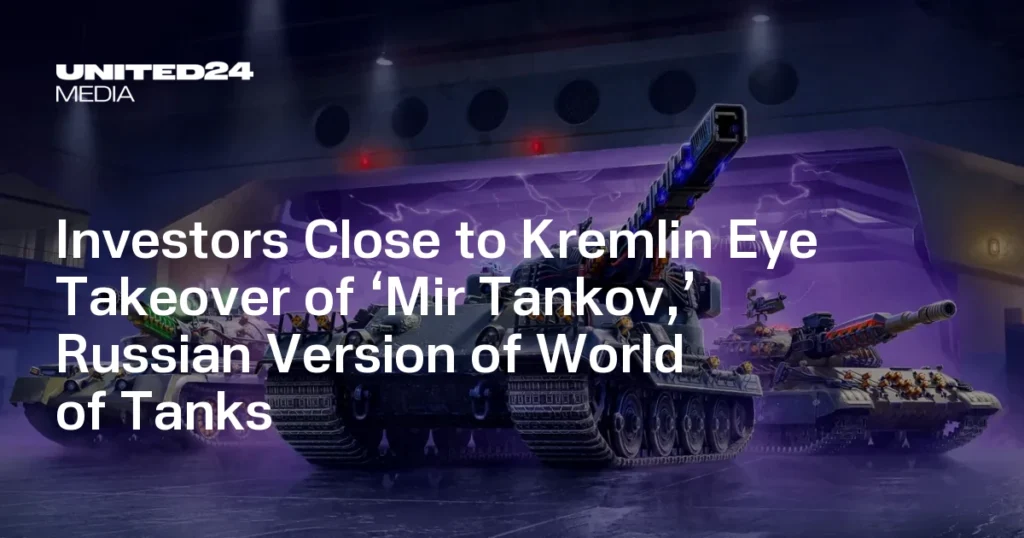
Lesta Games, meanwhile, is one of the most important game companies operating in Russia. Its current business developed out of the Russian and Belarusian operations associated with Wargaming, the company behind the internationally known World of Tanks and World of Warships franchises. Following Wargaming’s withdrawal from Russia and Belarus after the full scale invasion of Ukraine in 2022, local operations were separated and Lesta Games became responsible for the relevant regional business. The company subsequently developed and operated localized versions of major titles, including Mir Tankov, Mir Korabley and Tanks Blitz.
Lesta’s value comes from several areas. It has experienced personnel, established online infrastructure, recognizable game brands, large communities and monetization systems that have already been tested at scale. Earlier information from Lesta management placed the active audience of its games at approximately 6.5 million people, although audience figures can vary depending on the measurement period and methodology.
The company’s financial results also reinforce its importance. Revenue at Lesta Games Agency reached approximately 29 billion rubles in 2025, representing growth of about 17 percent year over year. Net profit remained in the multibillion ruble range even after the company lost certain IT related tax benefits following its transfer to state control. That combination of established intellectual property, a large player base and proven cash generation makes Lesta an attractive mature digital asset rather than simply a traditional development studio.
Lesta Games Privatization, State Ownership and Okkam’s Reported Role
Lesta Games entered Russian state ownership following a court process in 2025. The company’s previous ownership was associated with Malik Khatazhaev, while Wargaming founder Viktor Kislyi was also involved in the legal proceedings that preceded the transfer of the business to the state. By June 2025, Lesta’s principal assets had been transferred under state control, and Rosimushchestvo later became the owner of additional corporate structures connected with the group.
Reporting in September 2026 indicated that the government intended to sell Lesta directly to an interested private investor rather than through a conventional open auction. Deputy Finance Minister Alexey Moiseev said that month that the government planned to complete the sale during 2026 and was targeting the September to October period. He described Lesta as a very expensive asset but did not disclose an official sale price. On September 21, Moiseev added that an October transaction could not be ruled out, according to Interfax.
This timetable is important for Dhamma because its reported expression of interest emerged just as the privatization process was entering a potentially decisive stage. If the government remains committed to an October closing, prospective buyers would have relatively limited time to secure financing, negotiate the purchase terms and meet the relevant legal requirements.
The reported involvement of Okkam Group adds another dimension to Dhamma’s proposal. RBC’s sources reportedly said Dhamma planned to involve Okkam in the future development of Lesta Games, particularly through marketing expertise, IT development and artificial intelligence related solutions. Okkam is a major Russian advertising and marketing group with capabilities spanning media, creative services, data, ecommerce, consulting and technology. Its activities also include work involving artificial intelligence and data driven marketing, with its 2026 conference program featuring discussions on AI, data intelligence, generative AI and marketing technology.
Such expertise could be useful for Lesta because live service games depend heavily on player acquisition, retention, community engagement and monetization. Okkam’s capabilities in media strategy, analytics, creative work and AI could theoretically be applied to Lesta’s player ecosystem. Marketing campaigns could be optimized through behavioral data, while artificial intelligence could support content personalization, advertising production and customer analytics. Lesta’s established games also generate substantial behavioral information that could help improve audience segmentation and retention strategies.
However, Okkam has not confirmed the reported arrangement. Media reports said company representatives stated that management was unaware of the transaction and did not confirm whether Dhamma was affiliated with the advertising group. The relationship should therefore be treated as a reported proposal rather than a finalized partnership. If Dhamma ultimately acquires Lesta and Okkam becomes involved, the arrangement could combine investment ownership with specialist marketing, technology and data capabilities.
Even then, marketing expertise alone would not determine Lesta’s future success. Its development teams would still need to handle game updates, infrastructure, balancing, content production and service reliability. Any new owner would therefore need to preserve the technical capabilities that have made Lesta’s live service games commercially durable.
The ownership history also explains why the current privatization matters. Before state control, Lesta was associated with Malik Khatazhaev and the Russian operations separated from Wargaming. After the 2025 court proceedings, the Federal Property Management Agency assumed ownership of the relevant Lesta entities. Reporting in September 2026 indicated that Rosimushchestvo had become the owner of IT Technologies, a structure managing companies including Lesta LLC, Lesta Games Agency and Lesta Games Moscow. Boris Dobrodeev, the former head of VK and VKontakte, became Lesta’s general director in 2025 and provided the state controlled business with an experienced technology executive during the transition.
The privatization would represent another major change in Lesta’s ownership structure. Rather than remaining permanently under state control, the company is expected to return to private ownership if the government’s planned sale is completed. Dhamma’s reported interest therefore comes at a moment when the future ownership, financing and strategic direction of one of Russia’s largest gaming businesses remain unsettled.

Why Lesta Games Is Attracting Multiple Buyers and What the Company Could Be Worth
The strongest explanation for the competition surrounding Lesta Games is its combination of scale, profitability and established intellectual property. The company’s revenue increased even after the state takeover, reaching approximately 29 billion rubles in 2025, while profitability also remained substantial. For an investor, this creates a very different proposition from purchasing an early stage game studio because Lesta already operates products with millions of players and a proven history of monetization. Russia’s planned sale of the company also creates a rare opportunity to acquire a large domestic gaming business with an established market position at a time when the government is determining the future of assets that entered state control during broader changes in corporate ownership.
Valuation remains one of the biggest unresolved parts of the sale. Forbes previously placed Lesta at approximately $1.6 billion in its 2026 ranking of valuable Russian internet companies, while separate reports surrounding the transaction have cited much lower ruble based estimates. Russian Deputy Finance Minister Alexey Moiseev described the asset as very expensive but did not disclose an official asking price. Earlier reporting put the company at roughly 50 billion rubles, while sources connected with negotiations involving Nikita Mazepin suggested that a fair value could be closer to 30 billion to 35 billion rubles. Other reports have mentioned possible transaction values of around 45 billion to 50 billion rubles.
These figures should not be treated as an official government valuation or final sale price because they come from different reports and stages of the process. Lesta’s financial performance nevertheless helps explain why the numbers are substantial. A company generating roughly 29 billion rubles in annual revenue and more than 10 billion rubles in annual net profit can support a significant valuation, particularly when much of that revenue is tied to established live service franchises. At the same time, any buyer would need to account for risks including Lesta’s specific regulatory and geopolitical environment, its close exposure to the Russian gaming market and the long term challenge of maintaining player engagement.
Nikita Mazepin emerged as the most prominent reported potential buyer before Dhamma entered the story. Forbes sources reported in September that Mazepin, through UKM Group, was in advanced discussions to acquire Lesta Games. The negotiations were described as close to completion, with valuation among the issues being discussed. Mazepin’s representatives confirmed that UKM Group was pursuing opportunities in digital technology, fintech and artificial intelligence, although they did not publicly confirm the Lesta transaction itself.
Dhamma’s emergence creates a more competitive picture. If both parties are seriously pursuing the company, the government could potentially compare their proposals based on price, financing certainty, strategic plans, management capabilities and other transaction conditions. There is currently no reliable basis for identifying either Dhamma or Mazepin as the confirmed buyer. Both should therefore be treated as reported potential participants, with Mazepin linked to the process earlier and Dhamma appearing in later reports.
The differences between the reported valuations and the presence of multiple interested parties show why the sale has become such a significant investment story. Prospective buyers are not merely competing for a collection of development studios, but for control of an established gaming ecosystem with substantial cash flow and a large existing audience.
World of Tanks and World of Warships are central to that economic value. The Russian versions of these franchises have historically attracted large audiences and generated substantial commercial activity, with Lesta becoming responsible for the relevant regional versions after Wargaming withdrew from Russia and Belarus. Their live service structure means players continually return for new content, seasonal events, balancing changes and competitive activities, creating recurring monetization opportunities rather than relying mainly on one time sales. Tanks Blitz adds another important product and extends Lesta’s presence into a more mobile oriented gaming experience.
For prospective buyers, the opportunity is therefore not limited to preserving current revenue. An owner with stronger marketing, technology or investment resources could attempt to extend the lifespan of Lesta’s existing games while also funding new products. However, dependence on mature franchises can become a weakness if player interest declines, so any buyer would need to balance monetization with long term community trust and prepare for a future in which new intellectual property becomes increasingly important.
What New Ownership Could Mean for Lesta Games and Its Players
For players, the most immediate question is whether a change in ownership would significantly affect existing games. There is currently no evidence that a Dhamma acquisition, or a sale to another private investor, would automatically result in the closure, relaunch or major restructuring of Lesta’s services. The government’s stated objective has been to sell the operating business to an interested investor, and the company has continued running its games while under state control.
Any new owner would have strong financial incentives to preserve the existing player base. World of Tanks, World of Warships and Tanks Blitz represent the core commercial assets of the company, so disrupting those services without a compelling reason could reduce the value of the acquisition. The most realistic immediate priority would therefore be operational continuity while the new owner evaluates the company, its products and its long term strategy.
Changes could still appear gradually. A private owner might revise marketing strategies, monetization systems, update schedules, partnerships, community programs or investment priorities. The reported connection between Dhamma and Okkam could also result in greater emphasis on data driven marketing and player engagement if Okkam ultimately becomes formally involved, although that remains unconfirmed.
The transition from state to private ownership could also affect Lesta at a broader strategic level. A buyer investing tens of billions of rubles would presumably want to increase the company’s long term value, potentially leading to greater spending on new games, technology, infrastructure and additional regional or international opportunities where legally and commercially possible. Management could change as well. Boris Dobrodeev has led the company through the state controlled period, but a new investor could either retain the existing leadership or appoint executives with different priorities.
Artificial intelligence could become another area of investment. The reported proposal involving Okkam specifically mentions IT and AI related capabilities. If such plans were implemented, AI could potentially be used in marketing, customer analysis, content development and internal business processes. Those tools could help Lesta analyze audience behavior, improve engagement strategies and streamline some parts of its operations.
Game development would remain especially important because Lesta’s existing franchises are mature. Even successful live service games cannot be assumed to maintain the same level of revenue indefinitely, so a new owner would need to prepare for possible declines in the current portfolio. Investment in new intellectual property, technology and development capabilities could therefore become essential to sustaining the business over the longer term.
The central challenge would be balancing growth with preservation of the assets that currently make Lesta valuable. A new owner would need to maintain reliable services and player trust while seeking new revenue opportunities and preparing future products. For players, this means the most likely near term outcome would be continuity, while more substantial changes to development priorities, marketing, monetization and new game investment would probably emerge only after the buyer has completed its review of the business.
Frequently Asked Questions[FAQs]
- Is Dhamma buying Lesta Games?
Dhamma has reportedly expressed interest in acquiring Lesta Games, but there is no confirmed announcement that the transaction has been completed. RBC reported on September 30, 2026, that Dhamma had approached relevant government authorities about participating in the privatization process. At the time of the reporting, neither Lesta Games nor Rosimushchestvo publicly confirmed that Dhamma had secured the company, so it should still be described as a potential buyer rather than the new owner. - Who owns Lesta Games now?
Lesta Games is currently under Russian state control through structures associated with the Federal Property Management Agency, Rosimushchestvo. The company entered state ownership in 2025 following a court process that transferred control of its principal assets. The government has since indicated that it intends to return Lesta to private ownership through a sale to an interested investor, which is why several potential buyers have been linked to the company. - Who is Denis Fonov?
Denis Fonov is the head of Dhamma and is identified in public corporate records as the general director of AO Dhamma, which was registered in Moscow in October 2025. His professional background includes work at Europe Finance in areas such as financial analysis, risk management, hedging strategies and client transactions. Media reports have also associated him with previous management experience involving Sberbank and VTB, making his financial background relevant to a potentially large acquisition such as Lesta Games. - What is Dhamma’s connection to Okkam?
RBC sources reported that Dhamma planned to involve Okkam Group in the development of Lesta Games if an acquisition were completed. The reported areas of cooperation included marketing, IT development and artificial intelligence related capabilities, which could be useful for a large live service gaming business. However, Okkam has not confirmed that such a partnership exists and reportedly said its management was unaware of the proposed transaction, so the connection remains an unconfirmed part of Dhamma’s reported plans. - Is Nikita Mazepin still trying to buy Lesta Games?
Nikita Mazepin has previously been reported as a potential buyer through UKM Group. Forbes sources said in September 2026 that discussions were at an advanced stage, although no completed acquisition was announced. Mazepin’s representatives confirmed that UKM was pursuing investments in areas including digital technology, fintech and artificial intelligence, but they did not specifically confirm that Lesta Games was one of the transactions. As a result, Mazepin should still be treated as a reported potential buyer rather than a confirmed owner. - How much is Lesta Games worth?
There is no publicly confirmed final sale price for Lesta Games. Reports have cited several different estimates, including approximately 30 billion to 35 billion rubles as a possible current fair value and earlier figures closer to 50 billion rubles. These numbers come from different sources and stages of the sale process rather than an official final valuation. The Russian Finance Ministry has only described Lesta as a very expensive asset without publicly disclosing the price the government expects to receive. - What games does Lesta Games operate?
Lesta’s major gaming properties include Mir Tankov, the Russian version of World of Tanks, Mir Korabley, the Russian version of World of Warships, and Tanks Blitz. These are established online games with large player communities and recurring live service monetization. Their existing audiences, technical infrastructure and ability to generate revenue over long periods are major reasons Lesta is considered such a valuable gaming business. - When could Lesta Games be sold?
The Russian Finance Ministry indicated that the government wanted to complete the sale during the autumn of 2026, with September or October repeatedly mentioned as the expected period. On September 21, Deputy Finance Minister Alexey Moiseev said that an October transaction could not be ruled out. However, that timetable does not guarantee a specific closing date because financing, negotiations, legal requirements and the selection of a buyer could still affect when the privatization is completed. - Could a new owner change World of Tanks and World of Warships?
A new owner could eventually change parts of Lesta’s games, including development priorities, monetization systems, update schedules, marketing strategies and investment levels. There is currently no confirmed plan for any major restructuring, however. Because Mir Tankov, Mir Korabley and Tanks Blitz represent some of Lesta’s most important commercial assets, any buyer would have a strong incentive to preserve their existing communities and revenue while considering longer term changes. - Why is Lesta Games important to Russia’s gaming industry?
Lesta Games is one of Russia’s largest gaming companies and operates major live service titles with millions of players and substantial annual revenue. Its importance comes from the combination of experienced development teams, established game brands, large online communities and proven monetization systems. The privatization is therefore significant not only as a major corporate sale but also as an example of how Russia is handling valuable technology and entertainment assets that moved into state ownership before potentially returning to private control.
Conclusion
Dhamma’s reported interest in acquiring Lesta Games adds another major development to a privatization process that was already attracting attention because of Nikita Mazepin’s reported negotiations with the Russian state.
The investment company, established in Moscow in 2025 and headed by financier Denis Fonov, is reportedly seeking to participate in the privatization of Lesta. RBC’s reporting also indicates that Dhamma has proposed using Okkam Group’s marketing, IT and artificial intelligence capabilities to help develop the gaming business. Okkam, however, has not confirmed the proposed relationship, making it important to distinguish reported plans from established facts.
Lesta’s financial performance explains why the company is attracting serious attention. Revenue at its principal operating entity reached roughly 29 billion rubles in 2025, while profit remained above 10 billion rubles. The company also controls a portfolio centered on highly recognizable live-service games, including World of Tanks, World of Warships and Tanks Blitz.
The acquisition could ultimately come down to valuation, financing, strategic plans and the government’s assessment of competing proposals. Reported estimates ranging from 30 billion to 35 billion rubles to approximately 50 billion rubles show how uncertain the final price remains.
For players, the immediate outlook is more stable than the ownership headlines might suggest. Lesta’s existing games remain valuable precisely because of their established communities and recurring revenue, giving any prospective buyer a strong incentive to maintain service continuity. Longer term, however, a new owner could bring changes to investment, marketing, technology and game development.
The Russian government has indicated that it wants to complete the sale during 2026, with October emerging as a possible closing month. Until an official transaction is announced, however, Dhamma should be viewed as a reported potential buyer rather than Lesta Games’ confirmed new owner.
The broader significance of the story extends beyond one company. Lesta Games represents a rare combination of profitable online entertainment, valuable intellectual property, large-scale technology infrastructure and an established domestic audience. Whoever ultimately acquires the business will inherit one of the most strategically significant gaming assets in Russia, making the outcome of the privatization process important for investors, developers and millions of players.
Sources and citation
- RBC Dhamma Interested in Participating in Lesta Games Privatization
https://www.rbc.ru/ - RBC Lesta Games Privatization Planned for Autumn 2026
https://www.rbc.ru/ - Interfax Lesta Games Sale Could Take Place in October 2026
https://www.interfax.ru/ - Forbes Russia Lesta Games Privatization and Nikita Mazepin Negotiations
https://www.forbes.ru/ - Meduza Nikita Mazepin Reportedly in Talks to Acquire Lesta Games
https://meduza.io/ - RBC Companies AO Dhamma Corporate Records
https://companies.rbc.ru/ - Okkam Official Website
https://okkam.group/ - Okkam 2026 Conference and Industry Materials
https://okkam.group/ - RUSSOFT Official Website
https://russoft.org/ - RUSSOFT Russian IT Industry Statements and Lesta Games Nationalization Background
https://russoft.org/news/
Recommendations
- AOC AGON PRO AG276UZ Brings 4K 240Hz Gaming and Circular Polarization
- PC Gaming Revenue Outside the Top 20: Why Cyberpunk 2077, Elden Ring, and Skyrim Keep Selling
- Road To Empress 2 Complete Endings Guide
- ARC Raiders Official the Reaver Set Trailer: Reaver Bundle, Outfit, Raider Tokens, and DLC Details
- The Kingdom Come: Deliverance 2 Studio Somehow Has Time to Make a New Sequel and an Entire Lord of the Rings RPG, Warhorse Studios is Also Working on a “New Kingdom Come Adventure” Explained
- GTA 6 ‘Vampire’ Ferris Wheel Sparks Tech Expert Investigation Into Vice City’s Graphics
- The Wolf Among Us 2 Isn’t Dead, But the Telltale Engine Is Holding It Back – Full Development Update & Release News
- Crimson Desert Looks A Lot More Ordinary Running On A Regular PS5 – Full Performance Breakdown vs PS5 Pro
- SEGA Shows Total War: WARHAMMER 40,000 at Tokyo Game Show 2026: Gameplay, Demo and Release Updates
- NVIDIA RTX PRO 6000 Blackwell Price Surges Past $13,000: Specs, Performance, and AI Demand Explained



































































































