






In This Article (9 sections)
RTX PRO 6000 Blackwell Price Above $13,000 and Why the Workstation GPU Costs so Much
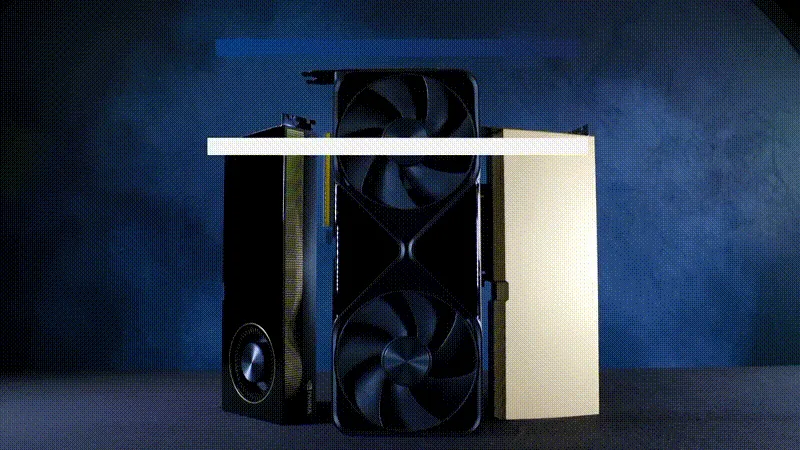
The NVIDIA RTX PRO 6000 Blackwell has appeared in 2026 workstation and enterprise retail listings at prices exceeding $13,000. The amount can vary according to region, system configuration, support coverage, and the distributor supplying the card, but the listings cited in the source place $13,000-plus pricing firmly within the current market range.
This is not a consumer graphics card aimed at buyers chasing the highest gaming frame rates. The RTX PRO 6000 Blackwell is designed for professional environments running artificial-intelligence models, complex rendering projects, engineering simulations, scientific workloads, and large datasets for extended periods.
Several workstation-specific features contribute to the premium:
- 96GB of GDDR7 memory for exceptionally large scenes, models, and datasets.
- ECC memory support to detect and correct certain memory errors.
- Certified professional drivers for supported creative and engineering applications.
- Enterprise reliability testing for sustained workloads.
- High-quality silicon selection intended to support stable professional performance.
- Long-duration operation in workstations, laboratories, and production systems.
Software certification also adds cost. Professional customers need dependable behavior in applications such as Autodesk Maya, Blender, SolidWorks, and major AI frameworks. Validating drivers and hardware across complicated production software requires substantially more testing than optimizing a consumer card mainly for current games.
The price therefore reflects more than the physical GPU. Enterprise buyers are also paying for large memory capacity, workload stability, application certification, error correction, validation, support arrangements, and the reduced risk of instability during valuable production work.

96GB GDDR7 Specs, Blackwell Architecture, AI Performance, and 2026 Price Drivers
The defining specification of the RTX PRO 6000 Blackwell is its 96GB of GDDR7 VRAM. That amount allows a single workstation to hold data that would exceed the memory capacity of most consumer graphics cards, including large AI models, detailed cinematic scenes, engineering assemblies, scientific datasets, and high-resolution simulation assets.
The principal specifications identified in the supplied material include:
| Feature | RTX PRO 6000 Blackwell |
|---|---|
| GPU architecture | NVIDIA Blackwell |
| Video memory | 96GB GDDR7 |
| AI hardware | Next-generation Tensor cores |
| Rendering hardware | Advanced ray-tracing cores |
| Interface | PCIe Gen 5 support |
| Memory features | High-bandwidth subsystem and ECC support |
| Primary market | Professional workstations and enterprise computing |
Blackwell improves AI matrix processing, instruction throughput, data movement, compute scheduling, and power distribution across the GPU. Its Tensor cores are intended for machine-learning operations, while its ray-tracing hardware supports accelerated professional visualization and real-time rendering previews.
For AI work, the large memory pool can support larger batch sizes, more model parameters, and more complex inference jobs without repeatedly transferring data between GPU memory and system storage. Suitable workloads include large-language-model development, computer-vision training, neural-network optimization, generative AI, and high-performance inference.
The card may also reduce the need for a multi-GPU configuration in smaller research or production environments. A workload that cannot fit inside one consumer card might fit within the RTX PRO 6000’s 96GB capacity, simplifying software configuration and reducing the communication overhead created when a task is divided between several GPUs.
The source does not provide a standardized benchmark table or precise percentage lead over earlier workstation products. Its performance case is therefore best understood through capability: larger projects can remain in memory, AI operations benefit from newer Tensor hardware, and sustained professional workloads receive a platform designed around reliability rather than brief benchmark bursts.
Pricing has risen because several pressures are occurring simultaneously. Global AI-compute demand continues to increase, advanced semiconductor manufacturing remains capacity-constrained, enterprise customers are competing for early production units, and high-density GDDR7 memory is expensive. The RTX PRO 6000 uses an unusually large quantity of that memory, making it especially sensitive to changes in module prices and supply.

RTX PRO 6000 Blackwell Vs. RTX 5090, Memory Bandwidth, and Who Should Buy It
The RTX PRO 6000 Blackwell and GeForce RTX 5090 belong to the same broad generation of high-performance NVIDIA hardware, but they serve fundamentally different markets. The RTX 5090 is a consumer and enthusiast card focused on gaming, content creation, and high frame rates. The RTX PRO 6000 is a professional product built around memory capacity, certified software, sustained reliability, and enterprise workloads.
| Category | RTX PRO 6000 Blackwell | RTX 5090 |
|---|---|---|
| Primary purpose | AI, rendering, simulation, scientific computing | Gaming and enthusiast creation |
| Memory | 96GB GDDR7 | Significantly lower capacity |
| Drivers | Certified professional drivers | Gaming-optimized drivers |
| Reliability focus | Extended sustained workloads | Consumer and enthusiast use |
| Error correction | ECC support | Consumer-oriented memory design |
| Pricing | More than $13,000 in cited listings | Consumer-tier pricing |
The RTX PRO model’s GDDR7 subsystem provides the bandwidth needed to move large quantities of data between memory and the GPU’s compute resources. This can improve throughput in ray-traced rendering, AI tensor operations, simulation, and other tasks that repeatedly process large datasets.
Compute performance is supported by next-generation CUDA cores, optimized Tensor cores, advanced ray-tracing cores, and improved scheduling under heavy workloads. The combination is intended to keep the card highly utilized during complex jobs such as large-model inference, detailed production rendering, or scientific calculations.
That does not make the RTX PRO 6000 a sensible premium gaming purchase. Games generally cannot take meaningful advantage of 96GB of VRAM, ECC support, professional certification, or enterprise validation. A gamer would pay several times more for capabilities that provide little practical benefit to an ordinary gaming library.
The intended buyers are AI research institutions, machine-learning engineers, animation and visual-effects studios, automotive simulation teams, engineering companies, scientific laboratories, medical-imaging organizations, and enterprises operating demanding local compute systems.
For those customers, the purchase decision should be based on workflow economics. When a $13,000-plus GPU shortens rendering cycles, fits an AI workload that otherwise requires several cards, reduces cloud-compute spending, or prevents production delays, the price may be justifiable. For an individual focused mainly on entertainment, it is impractical.

Rendering, Simulation, AI Training, Power Requirements, and Global Availability
In professional rendering, the RTX PRO 6000 Blackwell can support highly detailed scenes containing large texture sets, extensive geometry, advanced materials, and ray-traced lighting. Its memory capacity may allow artists to preview complicated projects without dividing assets into smaller sections or reducing scene quality simply to fit within VRAM.
Simulation is another major use case. The card can accelerate aerodynamic modeling, structural engineering, scientific visualization, robotics, medical workloads, and autonomous-vehicle testing. These applications often combine heavy mathematical processing with large datasets, making both compute capability and memory capacity important.
AI training and inference are central to the product’s positioning. A workstation equipped with the RTX PRO 6000 can be used for local model experimentation, computer vision, generative AI, neural-network development, and repeated inference without sending every task to an external cloud provider. Whether one card is sufficient still depends on the model, precision, batch size, and training method.
The GPU also creates substantial power and thermal requirements. The source does not provide one exact wattage, but it emphasizes the need for:
- A high-wattage workstation power supply.
- Strong enterprise-grade airflow or liquid-assisted cooling.
- A chassis capable of handling sustained heat output.
- Proper spacing and thermal management in rack-based installations.
- Power-delivery planning for long-duration compute workloads.
These requirements matter because a professional card may operate near full utilization for hours or days. Inadequate cooling can cause throttling, instability, and reduced hardware life, undermining the reason for purchasing an enterprise GPU in the first place.
Availability remains limited compared with ordinary GeForce cards. Many units are distributed through enterprise system integrators, authorized NVIDIA partners, workstation manufacturers, and data-center hardware providers rather than conventional gaming retailers. Regional allocations and large institutional orders can produce lead times lasting several weeks or months.

Max-Q Vs. Standard Workstation Edition, GDDR7 Shortages, and Blackwell Advantages
The supplied material discusses the possibility of efficiency-optimized and full-performance RTX PRO 6000 Blackwell variants. An efficiency-focused or Max-Q-style configuration would prioritize lower power consumption, reduced thermal output, and installation inside more compact workstations.
A standard full-performance edition would instead prioritize maximum sustained compute output, higher power limits, and fuller use of the GPU’s cores and memory bandwidth. The correct version would depend on the organization’s deployment environment rather than on one model being universally superior.
| Priority | Efficiency-focused configuration | Standard workstation configuration |
|---|---|---|
| Power consumption | Lower | Higher |
| Heat output | Reduced | Greater |
| Chassis suitability | Compact or thermally restricted systems | Full-size professional workstations |
| Performance priority | Efficiency and integration | Maximum sustained output |
| Typical use | Space- or power-limited deployment | Heavy rendering, simulation, and AI |
GDDR7 supply is one of the most important pricing pressures described in the source. The newer memory is more complicated to manufacture than established standards, production capacity remains limited, and AI infrastructure is creating intense demand for advanced memory products.
The impact is magnified by the card’s 96GB capacity. Even a modest increase in the price of each memory module can significantly raise the bill of materials when enough chips are required to provide such a large framebuffer. Restricted supply can also reduce the number of finished cards reaching distributors.
Blackwell’s professional value comes from more than memory. Its improvements include more efficient Tensor processing, stronger energy-per-compute characteristics, better movement of data between memory and processing resources, and enhanced support for workloads that divide or isolate compute resources.
These features are more valuable in enterprise environments than a simple gaming frame-rate comparison might suggest. A professional buyer cares about how much useful work is completed per hour, whether a dataset fits inside memory, how consistently a job runs, and whether the software stack has been validated. Blackwell is intended to improve that complete workflow rather than merely produce the highest consumer benchmark number.

Frequently Asked Questions (FAQs)
- What is the RTX PRO 6000 Blackwell used for?
The RTX PRO 6000 Blackwell is used for AI training and inference, professional 3D rendering, engineering simulation, scientific computing, visualization, and other enterprise workloads. Its 96GB memory capacity is especially useful when a model, scene, or dataset cannot fit inside an ordinary consumer GPU. It is designed for sustained production work rather than occasional short tasks. - Why is it so expensive?
Its price reflects the combination of 96GB of GDDR7 memory, Blackwell compute hardware, ECC support, professional driver certification, reliability testing, high-quality silicon selection, and limited supply. Enterprise distributors may also include specialist support or workstation integration in their pricing. Rising AI demand and expensive high-density memory further increase the cost. - Is it good for gaming?
It is technically capable of rendering modern games, but it is not a sensible gaming purchase. Most games cannot use its 96GB of VRAM, enterprise certification, ECC support, or professional driver features. A gaming-focused card provides much better value because the RTX PRO 6000’s largest advantages are designed for professional workloads. - How much VRAM does it have?
The card includes 96GB of GDDR7 VRAM. This unusually large capacity allows it to hold complicated rendering scenes, large AI models, high-resolution assets, and extensive simulation data in GPU memory. Keeping more information in VRAM can reduce slow transfers to system memory or storage. - What architecture does it use?
It uses NVIDIA’s Blackwell architecture. The architecture introduces newer CUDA, Tensor, and ray-tracing hardware alongside improvements to data movement, AI matrix processing, compute scheduling, and efficiency. Those changes are intended to benefit professional rendering, machine learning, and simulation. - Can it run AI models locally?
Yes. Local AI training and inference are among its primary use cases. The 96GB memory pool allows significantly larger models or batch sizes than most consumer GPUs can accommodate. Extremely large frontier-model training may still require several GPUs or data-center infrastructure, but many research, fine-tuning, inference, and computer-vision workloads can benefit from one powerful workstation card. - What is the price in 2026?
Retail and enterprise listings cited in the supplied material place the RTX PRO 6000 Blackwell above $13,000. The final price can vary according to region, taxes, support arrangements, workstation configuration, distributor margins, and product availability. A complete prebuilt workstation containing the card may cost considerably more. - Does it support ray tracing?
Yes. It includes advanced ray-tracing cores intended for accelerated professional visualization and rendering. These can help with realistic lighting, reflections, shadows, and ray-traced previews in supported creative applications. Its ray-tracing capability is useful for games too, but the card’s cost is justified mainly by professional work. - Who should buy it?
Suitable buyers include AI laboratories, machine-learning engineers, visual-effects and animation studios, scientific institutions, automotive companies, engineering teams, and enterprises that need large local GPU memory. A purchase makes the most sense when faster processing, reduced cloud costs, or shorter production cycles can repay the hardware investment. - Is it widely available?
No. Availability is limited and largely enterprise-focused. Units are commonly distributed through authorized partners, workstation manufacturers, system integrators, and data-center suppliers. Regional supply can be inconsistent, and organizations ordering several cards may encounter lead times of weeks or months.

Conclusion
The NVIDIA RTX PRO 6000 Blackwell stands as one of the most powerful and expensive workstation GPUs in 2026, driven by extreme AI demand, advanced architecture, and limited supply. Its pricing above $13,000 reflects not only hardware capability but also the broader global shift toward AI-driven computing infrastructure. While unsuitable for consumer gaming markets, it remains a critical tool for enterprise-scale innovation in machine learning, simulation, and professional content creation.
Sources and Citations
- NVIDIA Official Website
https://www.nvidia.com/ - NVIDIA Blackwell Architecture Overview – The Engine Behind AI Factories
https://www.nvidia.com/en-us/data-center/technologies/blackwell-architecture/
Recommendations
- Where To Find The Inner City Run Drift Zone In Forza Horizon 6
- Edge of Eternity Developer Midgar Studio Ordered to Dissolve After Failing to Find a Buyer
- Free 3D Sculpting Software: Best Tools for Artists on a Budget
- How to Save Blender Camera Settings: Complete Guide to Managing and Reusing Camera Views in Blender
- High-Level Metahuman Mocap Workflow: Professional Techniques for Unreal Engine 5 Animation
- Jiggle Physics for VTuber Avatar: How to Add Natural Hair & Outfit Movement in Live2D, VTube Studio, VRoid, and Unity
- Disney Won’t Give Moana a Sonic the Hedgehog-Style Revamp After The Rock’s Wig Backlash
- Nicolas Cage superhero detective in Spider-Noir: Release Date, Trailer, Cast, and Story (2026)
- No Straight Roads 2 Official Trailer (Southeast Asian Games Showcase 2026): Story, New Characters, Gameplay Details & Release Info Explained
- The ‘No Kings’ Anti-Trump Rallies Marvel Rivals Reference Explained



































































































