







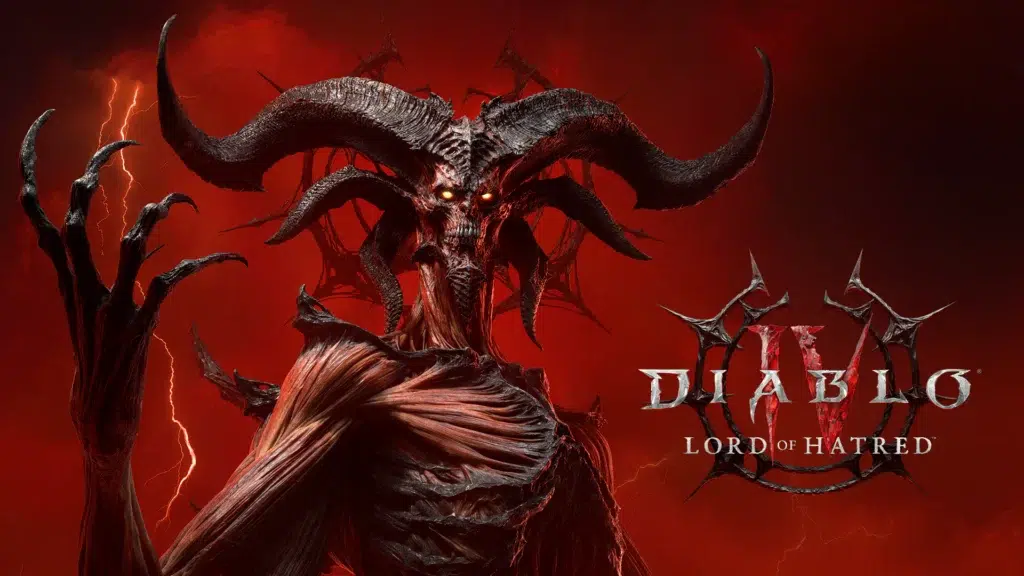
Diablo 4: Lord of Hatred is shaping up as more than a standard expansion. In public materials, Blizzard Entertainment positions it as the climactic confrontation with Mephisto after the events of Diablo IV: Vessel of Hatred, with Neyrelle still central to the fallout.
More importantly for endgame players, Blizzard is pairing that story finale with War Plans, Echoing Hatred, a Horadric Cube crafting overhaul, the Talisman and Charm system, a major skill-tree redesign, a loot filter, and two new classes. The official release date is April 28, 2026, and the expansion’s design language is consistent across Blizzard’s site, its February 2026 spotlight, and developer-update announcements: more player choice, more replay structure, and more reasons to keep optimizing a build after the campaign ends.
Because the expansion had not yet fully launched as of April 22, 2026, the clearest picture comes from Blizzard’s official materials, supported by pre-release reporting, interviews, and review coverage from outlets that played the content early. Taken together, those sources point to Lord of Hatred as Diablo 4’s largest endgame redesign since launch, and arguably the first time Blizzard has tried to turn the game’s many disconnected late-game loops into one overarching progression framework.
Diablo 4: Lord of Hatred new endgame explained (War Plans and systems overview)
The simplest way to understand Diablo 4: Lord of Hatred’s new endgame is that Blizzard is trying to centralize progression after the campaign instead of scattering it across unrelated activities. In the official spotlight, Blizzard says the campaign’s capital city becomes a streamlined endgame hub, and the two headline endgame systems are War Plans and Echoing Hatred.
Around those sit the other progression layers that make the new loop matter: the Talisman with Charms and Set Bonuses, the Horadric Cube, expanded skill customization, and a full-game loot filter. On the expansion website, Blizzard describes the post-campaign loop as being built around choice, mastery, and high-stakes rewards rather than just repeating one activity forever. That framing matters, because Lord of Hatred is not merely adding harder fights; it is reorganizing how Diablo 4 expects players to move through its endgame.
What are War Plans in Diablo 4 Lord of Hatred endgame progression system
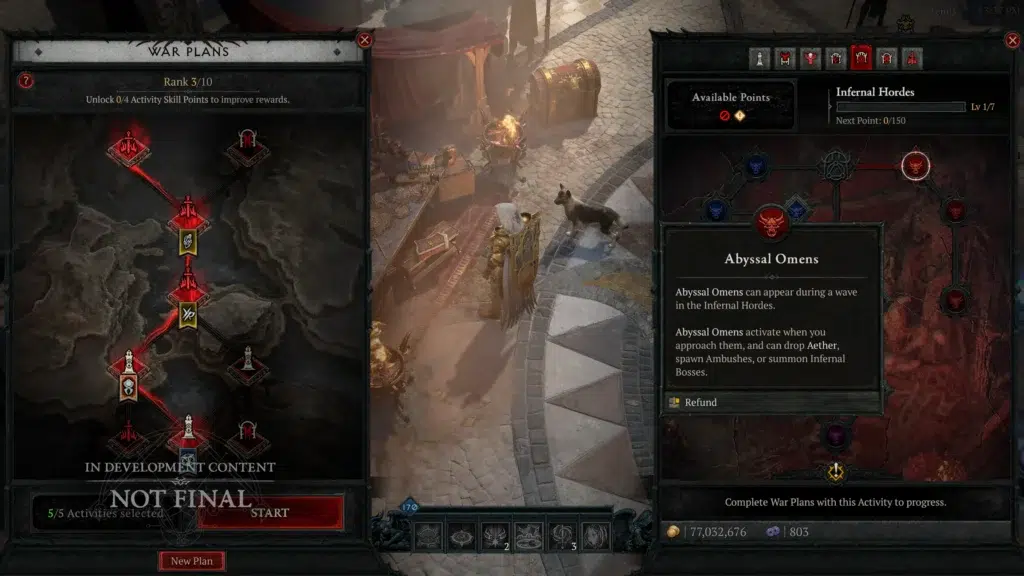
War Plans are the expansion’s signature answer to a long-standing Diablo 4 problem: too many endgame activities, but not enough connective tissue between them. Officially, War Plans let you create a chain of up to five activities from six endgame modes The Pit, Infernal Hordes, Helltides, Nightmare Dungeons, Lair Bosses, and Kurast Undercity and then run them seamlessly as one curated route. Blizzard also says War Plans feed progression into dedicated activity trees for all endgame modes, including Whispers of the Dead, letting you reshape how those activities play.
Examples Blizzard has already shared include injecting a randomly spawned The Butcher into Pit runs, letting bosses invade other content, and layering new conditions onto familiar loops. Early review coverage aligns with that pitch: Game Informer and GameSpot both describe War Plans as a playlist-style system that makes high-level content faster to enter, easier to parse, and more rewarding to chain together.
Diablo 4 Echoing Hatred mode guide endless endgame challenge explained
Echoing Hatred is Blizzard’s aspirational push mode inside Lord of Hatred. Officially, it is a hyper-rare event that becomes available when you find a Trace of Echoes from loot, and once inside you face infinite waves of enemies, escalating difficulty, randomized monster compositions, and the possibility of multiple bosses spawning in the same run. Blizzard’s own summary is clear about the intended loop: every run should feel different, every additional wave should stress your mechanics and buildcraft harder, and the rewards improve the longer you survive. That makes Echoing Hatred function less like a linear dungeon and more like an endurance benchmark for finished characters.
Early hands-on impressions back that up, with reviewers describing it as a post-campaign prestige activity that sits above ordinary farming and feels intentionally scarce because access itself is gated by a rare drop.
Diablo 4 Lord of Hatred endgame changes compared to previous seasons
Compared with previous seasons and even with the first expansion, Lord of Hatred looks broader and more permanent. Vessel of Hatred added Nahantu, Spiritborn, Mercenaries, Runewords, Party Finder, Dark Citadel, and foundational system updates such as a new difficulty structure and leveling/itemization changes. Season of Divine Intervention then reworked item journey, monster combat, defense, Season Rank, and Capstone Dungeons, while Season of Slaughter introduced The Butcher fantasy, Killstreaks, Bloodied Items, Bloodied Sigils, and its own fast seasonal loop.
Lord of Hatred builds on all of that, but its difference is scope: instead of adding one seasonal gimmick or one isolated activity, it connects Diablo 4’s core endgame modes through War Plans, adds a new apex challenge in Echoing Hatred, and layers in parallel loot and build systems that apply across the entire late game. That is why pre-release reviewers are already describing it less as “another season” and more as a full structural refresh for the game’s longevity.

Diablo 4 best endgame activities in Lord of Hatred expansion
The best endgame activities in Lord of Hatred are not a single mode, but a hierarchy of roles. War Plans is the best all-purpose system because it is the framework that links everything else together, gives you directed progression, and removes friction between runs. Echoing Hatred looks like the best aspirational challenge because it is explicitly tuned as an endless survival test with scaling rewards. The best “component” activities inside War Plans remain the familiar pillars Blizzard lists officially: The Pit for direct build pressure, Helltides for density and pace, Nightmare Dungeons for routeable repeatability, Lair Bosses for boss-focused farming, Infernal Hordes for sustained combat waves, and Kurast Undercity for another specialized node in the chain.
Reviewers who played the expansion early repeatedly come back to the same conclusion: War Plans makes these older activities feel more valuable because they now behave like part of one progression track instead of disconnected chores.
Diablo 4 new loot system explained Horadric Cube and legendary crafting
The new loot system hinges on two ideas: more loot bases mattering again, and more player control over what those items become. Officially, the Talisman introduces Charms and Set Bonuses once unlocked through the campaign, while the Horadric Cube adds a new item-manipulation layer for endgame chasing. Blizzard’s own examples are dramatic: the Cube can transmute a random affix onto Common, Magic, Rare, or Legendary gear, upgrade item rarity, reverse the process to remove unwanted affixes, and even convert a common item into a Unique of the same type.
PC Gamer’s developer interview adds the second crucial piece of context: Lord of Hatred is being built so lower-tier items can matter again, because they can drop with valuable traits and then be upgraded through the Cube into stronger gear.
The result is a loot model where legendary crafting is no longer just about finding finished orange items on the ground, but about finding promising raw material and transforming it into the item your build actually needs.
Diablo 4 loot filter system guide how to optimize endgame farming
Blizzard has confirmed the long-requested loot filter as a full-game quality-of-life feature arriving with Lord of Hatred, not as an expansion-only perk. Officially, Blizzard says the filter is designed to give players meaningful control over whether they are hunting a perfect Greater Affix, a build-defining Mythic Unique, or other precise item targets.
Developer interviews reported by PC Gamer make that practical: the team explicitly describes a future where you can make the game highlight only the item stats you care about and hide the rest. For endgame farming, that means the best use of the loot filter is not to create a giant broad rule set, but to define a narrow chase at a time specific Greater Affixes, one or two must-have offensive or defensive stats, or a narrow item class tied to the gear slot you are currently replacing. That recommendation is partly practical inference, but it follows directly from Blizzard’s stated goal of reducing floor clutter and making every visible drop more meaningful.
Diablo 4 Lord of Hatred crafting and gear optimization guide for endgame
The most efficient gear-optimization loop in Lord of Hatred is layered, not linear. First, the loot filter narrows what reaches your inventory. Second, the Horadric Cube lets you alter item rarity and affix structure, making weak-looking drops potentially salvageable into real build pieces.
Third, Tempering and Masterworking systems already reworked in Season of Divine Intervention remain the backbone of finishing gear: Tempering now lets you choose the exact affix from a recipe rather than rolling blindly, while Masterworking follows a more directed path toward a capstone bonus.
Fourth, the Talisman adds a parallel optimization track through Charms and Set Bonuses that does not compete directly with ordinary gear slots. Put together, that means endgame optimization in Lord of Hatred is less about waiting for one perfect natural drop and more about iterating toward one through filtering, crafting, deterministic affix targeting, and layered character-specific bonuses.
Early review coverage also suggests some Cube recipes are deliberately high-risk, high-reward, which reinforces that crafting itself is meant to become an endgame chase rather than a side utility.
Diablo 4 Lord of Hatred skill tree rework and endgame build customization
Lord of Hatred’s skill-tree rework is arguably as important as War Plans. Blizzard says every class gets a massively expanded, overhauled skill tree with greater control from the very start of character progression, and the company’s Sorcerer example is revealing: Hydra can now be tuned for attack speed, explosions, area burning, or even converted into Frost Hydras that interact with a different damage ecosystem.
Officially, Blizzard says the overhaul includes more than 40 reworked choices and 80 additional options, while Lord of Hatred owners also receive 20 bonus transformative skill variants. Reporting from Windows Central adds that Blizzard’s design goal is to strip out passive bloat from the main tree, front-load more meaningful active-skill decisions, and push more pure numeric growth toward Paragon instead. For endgame build customization, that means Lord of Hatred is not simply adding more nodes; it is changing the axis of buildcraft from “which passive percentages do I stack?” to “what function do I want this skill to perform inside my build?”
Diablo 4 new difficulty tiers and Torment levels explained in Lord of Hatred
The difficulty story behind Lord of Hatred begins before the expansion itself. Season of Divine Intervention and the late-2025 systems overhaul rebuilt progression around Capstone Dungeons, difficulty tiers, recommended Toughness, and Torment as an escalating performance ladder rather than a simple switch.
Blizzard also removed the old Armor and Resistance penalties per Torment difficulty and added Toughness as a clearer survivability readout. Official Capstone lists show Normal, Expert, Torment I, Torment II, and Torment III as part of that post-rework path. Then, in March 2026, PC Gamer reported from Blizzard interviews that Lord of Hatred expands Diablo 4’s Torment ladder from four tiers to 12, with Blizzard framing those tiers as smaller, more granular risk-versus-reward steps rather than giant walls.
The practical takeaway is that Lord of Hatred is designed around a much finer difficulty climb: players are expected to move upward more often, judge survivability more precisely, and get a clearer sense that harder content is paying them back for the risk.
Diablo 4 War Plans rewards and risk vs reward progression explained
War Plans rewards are not just more loot at the end of a run; the system is built around meta-progression. Blizzard’s official description says War Plans let you apply modifiers to activities and progress unique activity trees, while developer interviews reported by Windows Central explain the philosophy more directly: as you run content, you are not only making your character stronger, but also making the activities themselves more dangerous and more rewarding. That can mean bonus enemies, altered spawns, boss invasions into other content, or materials appearing in places they previously did not. PC Gamer’s March reporting shows the same philosophy at the difficulty level, where Blizzard explicitly describes Torment as opt-in risk and reward.
Put together, War Plans becomes the activity-side expression of that larger endgame philosophy: if you accept tougher modifiers, more volatile activity boards, and sharper build checks, you should be able to earn better loot, faster progression, and higher-value materials than a player who stays in bland baseline versions of those same activities.
Diablo 4 Lord of Hatred endgame farming strategies and tips
The smartest Lord of Hatred farming strategy is to respect the order in which Blizzard has locked these systems. First, finish the campaign, because Blizzard ties the streamlined endgame hub, War Plans loop, Talisman, and Horadric Cube to post-campaign progression.
Second, push one or two activity types that your build clears fastest, because War Plans activity-tree progression rewards focused repetition before broad diversification; that is a practical inference from Blizzard’s activity-tree design and from early reports on how those boards scale rewards.
Third, define your loot filter around one upgrade problem at a time instead of trying to solve every gear slot simultaneously. Fourth, move up Torment only when your character can keep clear speed and survivability in balance, since Blizzard is explicitly treating higher difficulty as a finer-grained risk-reward ladder.
Finally, treat Echoing Hatred as a finished-build destination rather than an early-farm routine, because access is gated behind a hyper-rare Trace of Echoes drop and the rewards improve with endurance.
Diablo 4 new classes Paladin and Warlock impact on endgame builds
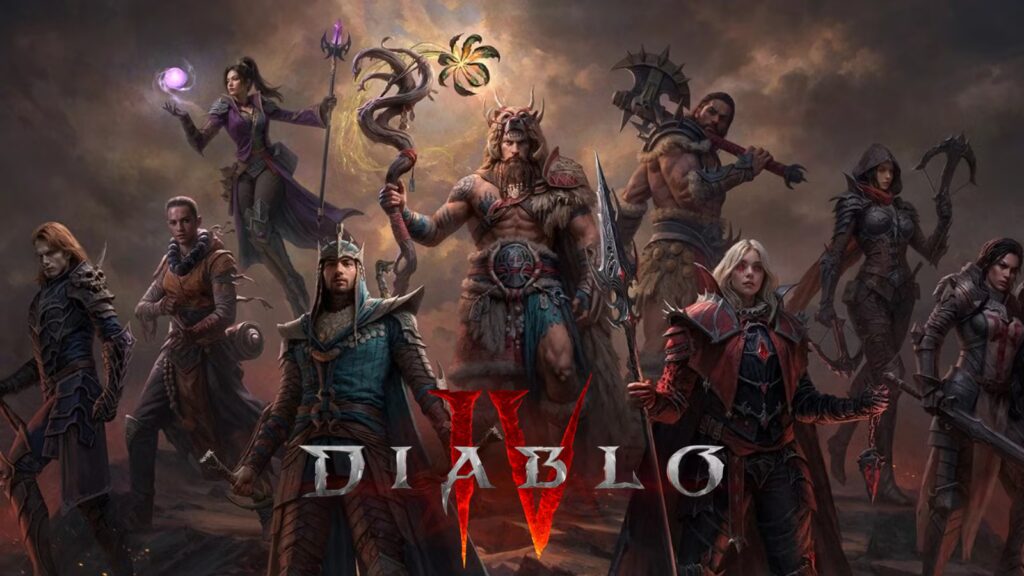
Paladin and Warlock do more than add two class fantasies; they widen Diablo 4’s endgame roles. Official Paladin materials show a class built around four archetypal playstyles and, crucially, Aura skills that buff both the Paladin and allies with attack speed, crit chance, armor, resistances, healing, and chained holy damage. That alone makes Paladin a natural fit for group pushing, support-leaning play, or hybrid tank-damage setups. Warlock, by contrast, is built around Wrath, Dominance, demon binding, and Soul Shards that define entire archetypes such as Legions, Vanguards, Masterminds, and Ritualists.
Officially, that gives Warlock access to summoner, frontline, shadow-control, and ritual-damage identities, all with a more self-contained power loop. Windows Central’s developer interview ties the two classes together by reporting Blizzard’s explicit intent: Paladin is the more “giving” class and Warlock the more “selfish,” with the broader system redesign encouraging party synergy rather than isolated class silos. In endgame terms, Paladin should expand support and team utility while Warlock should deepen aggressive solo and damage-centric archetypes.

Diablo 4 Lord of Hatred release date, Season 13 start time, and roadmap
The confirmed public release date for Diablo 4: Lord of Hatred is April 28, 2026. Blizzard’s official site and pre-purchase blog both repeat that date, and they also confirm the rollout split between the two new classes: Paladin is already playable through pre-purchase early access, while Warlock becomes playable when the expansion launches.
Blizzard has also scheduled a Lord of Hatred developer update for April 23, 2026 at 11:00 a.m. PT, promising final launch details, deeper coverage of skill trees, the Talisman, the Horadric Cube, and the endgame systems. What Blizzard had not published in its official written pre-launch materials by April 22, 2026 was a public launch hour on the Lord of Hatred page or a standalone written 2026 Diablo 4 roadmap.
The most recent official roadmap article remains the 2025 roadmap, which said only that a second expansion was coming in 2026. So the safe, confirmed position is this: April 28, 2026 is official, April 23 is the next official detail drop, and any exact “Season 13 start time” claims should be treated as unconfirmed until Blizzard publishes the final launch post.
Diablo 4 endgame overhaul 2026 what changed and why it matters
What changed in Diablo 4’s 2026 overhaul is not one system but the relationship between all of them. Blizzard and its interview partners consistently point to four long-term friction points the game has been trying to solve: endgame aimlessness, loot fatigue, passive-heavy buildcraft, and difficulty that did not always make progression feel meaningful.
Lord of Hatred attacks each problem with a matching system: War Plans gives the endgame a structured funnel and meta-progression, the loot filter and Horadric Cube make item evaluation more selective and more interactive, the skill-tree redesign makes abilities more transformative, and the expanded Torment ladder turns difficulty into a smoother risk-reward climb.
Importantly, Blizzard is also splitting the overhaul between expansion-exclusive systems and full-game updates, which means even non-owners benefit from the loot filter and skill-tree changes.
That is why this update matters. It is not only trying to make endgame longer; it is trying to make the reasons for playing longer feel clearer, cleaner, and more rewarding.
Frequently Asked Questions (FAQs)
- Is War Plans locked behind the Lord of Hatred campaign?
Yes. Blizzard presents War Plans as a post-campaign system, and its official materials describe the streamlined endgame hub and the major Lord of Hatred progression layers as opening after the campaign concludes. - Do War Plans replace Diablo 4’s older endgame activities?
No. Blizzard and developer interviews describe War Plans as additive rather than replacement content. The familiar late-game activities still exist; War Plans simply lets you chain them together, add modifiers, and progress their activity trees through one structured loop. - How many activities can a War Plan include?
A War Plan can include up to five activities, selected from a pool of six endgame modes according to Blizzard’s official spotlight coverage. - What unlocks Echoing Hatred?
Blizzard says Echoing Hatred is unlocked when you find a Trace of Echoes from a loot drop. The company also describes the event itself as hyper-rare, which suggests it is intended to stay scarce even for active endgame players. - Is the loot filter expansion-exclusive?
No. Blizzard explicitly lists the loot filter among the quality-of-life and major gameplay updates that arrive across the full game, regardless of expansion ownership. - Are the new skill tree reworks free for every class?
The base skill-tree overhaul is for everyone, across all classes. Blizzard does, however, reserve an extra set of 20 transformative bonus skill variants for Lord of Hatred owners. - Does the Horadric Cube matter only for legendary items?
No. Blizzard’s own examples show the Cube interacting with Common, Magic, Rare, and Legendary items, while developer interviews reported by PC Gamer say lower-tier drops are being made relevant again specifically because they can be upgraded through the Cube. - Can you play Paladin before April 28, 2026?
Yes. Blizzard’s official site and pre-purchase messaging say any Lord of Hatred pre-purchase unlocks Paladin early access immediately. - When does the Warlock become playable?
Blizzard’s official Warlock class article says Warlock becomes playable when Lord of Hatred launches on April 28, 2026. - Has Blizzard officially confirmed the exact launch hour for the season accompanying Lord of Hatred?
Not in the official written Lord of Hatred materials available by April 22, 2026. Blizzard had confirmed the April 28 release date and announced an April 23 developer update stream for final details, but the public Lord of Hatred pages did not yet publish a release-hour blog.

Conclusion
Diablo 4: Lord of Hatred looks like Blizzard’s most serious attempt yet to solve the question that has followed Diablo 4 since launch: what should players actually do once a character is powerful?
The official answer is a layered endgame where War Plans structures progression, Echoing Hatred tests finished builds, the Horadric Cube and Talisman deepen item chasing, the loot filter cleans up the hunt, and the skill-tree rewrite makes builds feel more expressive again. Add Paladin and Warlock on top, and Lord of Hatred starts to resemble not just a second expansion, but the template Blizzard wants Diablo 4’s next era to follow. The release date is set for April 28, 2026; the remaining open question is how much additional detail Blizzard reveals in its April 23 developer update before launch.
Sources and Citations
- Blizzard Lord of Hatred official website
https://diablo4.blizzard.com/lord-of-hatred - Blizzard February 2026 Diablo spotlight recap
https://news.blizzard.com/en-us/article/24247154/catch-up-on-the-diablo-30th-anniversary-spotlight - Blizzard Lord of Hatred pre-purchase article
https://news.blizzard.com/en-us/article/24247511/stand-against-mephisto-pre-purchase-lord-of-hatred - Blizzard Paladin class page / details
https://diablo4.blizzard.com/lord-of-hatred - Blizzard Warlock class deep dive
https://news.blizzard.com/en-us/article/24267728/master-hell-itself-with-the-warlock - Blizzard April 23 developer-update announcement
https://news.blizzard.com/en-us/article/24261474/lord-of-hatred-developer-update-stream-announce-blog - Blizzard Season of Divine Intervention blog
https://news.blizzard.com/en-us/article/24244465/vanquish-the-lesser-evils-in-season-of-divine-intervention - Blizzard Season of Slaughter blog
https://news.blizzard.com/en-us/article/24244648/become-the-butcher-in-season-of-slaughter - Blizzard Diablo 4 2025 roadmap
https://news.blizzard.com/en-us/article/24189529/the-age-of-hatred-persists-diablo-iv-2025-roadmap - Blizzard Vessel of Hatred expansion page
https://diablo4.blizzard.com/vessel-of-hatred - Windows Central Blizzard interview on War Plans, class synergy, and skill trees
https://www.windowscentral.com/gaming/diablo-4-lord-of-hatred-interview-endgame - PC Gamer interview on Torment difficulty expansion
https://www.pcgamer.com/games/rpg/blizzard-wants-diablo-4s-outrageous-damage-numbers-to-mean-something-again-in-lord-of-hatred-so-its-letting-you-crank-the-difficulty-up-to-near-impossible-levels-its-going-to-be-really-f-cking-hard/ - PC Gamer interview on Horadric Cube itemization and loot
https://www.pcgamer.com/games/rpg/diablo-4-lord-of-hatreds-new-crafting-system-will-bring-back-season-11s-sanctification-and-gives-bad-loot-the-potential-to-be-legendary/ - Game Informer Lord of Hatred preview
https://gameinformer.com/preview/2026/01/27/paladin-inbound - Game Informer Lord of Hatred review
https://gameinformer.com/review/diablo-iv-lord-of-hatred/embrace-the-hate - GameSpot Lord of Hatred review-in-progress
https://www.gamespot.com/reviews/diablo-4-lord-of-hatred-review-mother-knows-best/1900-6418484/ - GameSpot Lord of Hatred video review-in-progress
https://www.gamespot.com/videos/diablo-4-lord-of-hatred-review-in-progress-mother-knows-best/2300-6466828/ - Console Creatures Lord of Hatred review
https://www.consolecreatures.com/diablo-4-lord-of-hatred-review/
Recommended
- Cyberpunk Orion: Everything We Know About CD Projekt Red’s Next Cyberpunk Adventure
- Secrets to Blender Photorealism: How to Make Your Renders Look Real
- Call Of Duty’s Iconic Ghost Shows Up In New Fanta Ad, Making People Wonder About 2026’s Call Of Duty
- $270 Stranger Things: The Complete Series Blu-ray Collection Announced — 25 Discs, 148-Page Artbook, and Exclusive Hellfire Club D20 Dice
- Town of Zoz: Become a Shaman Chef & Uncover the Mystery of a Town in This Action Adventure
- Intergalactic by Naughty Dog: Rumors, Leaks, and What We Know About the Studio’s Potential Sci-Fi Project
- Famous 3D and AI Virtual Influencers and Avatars: Exploring the Digital Trendsetters of 2025
- Cloth Simulation in Blender vs Unreal Engine 5: Workflow Comparisons, Performance Insights, and Best Practices
- Marathon Sells 1.2 Million Copies Across Steam, PS5, and Xbox: Sales Split, Revenue Estimates, and What It Means for Bungie
- 11 Nioh 3 Tips to Help You Defeat the Yokai and Become Shogun (Beginner Combat & Exploration Guide)