




In This Article (7 sections)
Disney’s Cancelled Action Figure Face Off Fighting Game Explained
Long before Disney Infinity turned Disney’s enormous character catalogue into a digital toy box, the company considered another idea built around characters from separate franchises sharing the same space: a crossover fighting game reportedly titled Disney’s Action Figure Face Off. The project was publicly illuminated in 2026 when former Disney Interactive concept artist Ken Christiansen discussed it with retro gaming publication Time Extension. Christiansen explained that Kingdom Hearts helped break down Disney’s resistance to mixing characters from different fictional worlds. Once the Square Disney collaboration proved that audiences would accept and enthusiastically embrace such crossovers, Disney producers became more willing to entertain unusual concepts involving characters from Tarzan, The Lion King, Treasure Planet and other properties appearing together.
According to Christiansen, Disney’s Action Figure Face Off was conceived as a crossover game in which action figure versions of Disney characters could battle each other, creating a premise broadly comparable to Nintendo’s Super Smash Bros. series. The action figure concept was more than an aesthetic gimmick because Disney had historically been cautious about allowing characters belonging to independent fictional universes to interact.
Christiansen recalled resistance to ideas such as The Lion King crossing over with The Little Mermaid. Treating everyone as toys offered a simple workaround because the game would not necessarily claim that the original characters existed in the same canon. Instead, it could imagine action figures from numerous Disney properties sharing one play space and fighting one another.
The project apparently advanced far enough to reach prototype status before being cancelled, although public evidence about its mechanics remains scarce. As a result, descriptions beyond the action figure framing, crossover premise and comparison with Super Smash Bros. should be treated cautiously. Disney ultimately placed greater emphasis on comparatively predictable film and television tie in games rather than moving forward with the experimental fighter.
Its rediscovery is particularly intriguing because Disney eventually embraced almost the same fundamental principle in Disney Infinity, where characters from different Disney properties were represented as toys within a shared play environment. Disney officially described Infinity in 2013 as a platform where physical figures could be brought into a virtual Toy Box and mixed across Disney properties, making the cancelled Action Figure Face Off concept an interesting earlier example of Disney exploring the idea of bringing its separate franchises together through toys.

Disney’s Action Figure Face Off Origins, Concept Art and Kingdom Hearts Influence
Ken Christiansen is central to what is now known about Disney’s Action Figure Face Off because he worked as an artist at Disney Interactive during the relevant period and later preserved examples of his Disney-era artwork in his professional portfolio. His portfolio identifies a Disney Interactive period spanning 2000 to 2004 and includes concept material from several projects developed or pitched during those years. The surviving artwork is particularly important because little conventional documentation of the cancelled project exists publicly, with later reporting connecting the resurfaced material to the proposed crossover fighting game.
Speaking to Time Extension in 2026, Christiansen described how Disney teams sometimes prepared enormous foam-core presentation boards several feet long, filled with illustrations, branding and concept material, to communicate ideas to executives. Many concepts passed through this process without becoming completed games, but Action Figure Face Off reportedly progressed beyond a verbal pitch and reached the prototype stage. His description also explains why some surviving artwork appears highly polished. Elaborate illustrations could be produced relatively early to secure approval and funding, so their quality should not automatically be treated as evidence that a project had reached an advanced stage of production.
Christiansen’s account helps explain why Disney was considering such an unusual crossover at that moment. The original Kingdom Hearts challenged the company’s older assumptions about keeping fictional properties separate by placing Square Enix-created protagonist Sora alongside Donald Duck and Goofy as they travelled through numerous Disney worlds.
Christiansen said getting Disney comfortable with that kind of cross-property interaction had initially been difficult, but once Kingdom Hearts demonstrated that the idea could work, internal producers became more willing to consider other combinations. The series showed that characters could participate in a larger crossover while retaining their recognisable identities and visual styles. Rather than copying its action RPG format, Action Figure Face Off would apply the broader lesson that audiences would accept Disney worlds colliding to a multiplayer fighting game.
Disney’s Action Figure Face Off appears to have been conceived as a character-driven platform fighter or brawler built around Disney action figures. The toy premise provided a way to combine properties without literally merging their fictional universes. Christiansen recalled producers considering an idea similar in spirit to Toy Story: figures representing otherwise unrelated characters could occupy the same setting and fight because they were toys.
This effectively turned Disney’s fragmented character library into one imaginary toy shelf. Christiansen specifically referenced action figures from Tarzan, The Lion King and Treasure Planet, making those properties the strongest confirmed evidence regarding the intended character pool. A definitive final roster was never announced because the project did not reach commercial production, so speculative online roster lists should not be treated as confirmed.
Those properties demonstrate the variety the concept could have offered. Tarzan provided human and animal characters suited to physical combat, The Lion King introduced animals with very different body types, and Treasure Planet brought science-fiction weaponry and pirate imagery. These differences could have given the game a distinctive visual identity, but they would also have created challenges when translating radically different characters into a balanced combat system. In hindsight, the concept appears surprisingly modern, particularly because Disney was exploring it during the PlayStation 2 generation, when the company remained more protective about direct interaction among many of its properties.
The strongest comparison with Super Smash Bros. comes directly from Christiansen, who described Action Figure Face Off as a Smash Brothers-type idea. Both concepts draw their appeal from an all-star roster and unexpected matchups between recognisable characters from different properties. However, no complete design document or surviving public gameplay demonstration establishes how closely Disney’s project followed Nintendo’s rules.
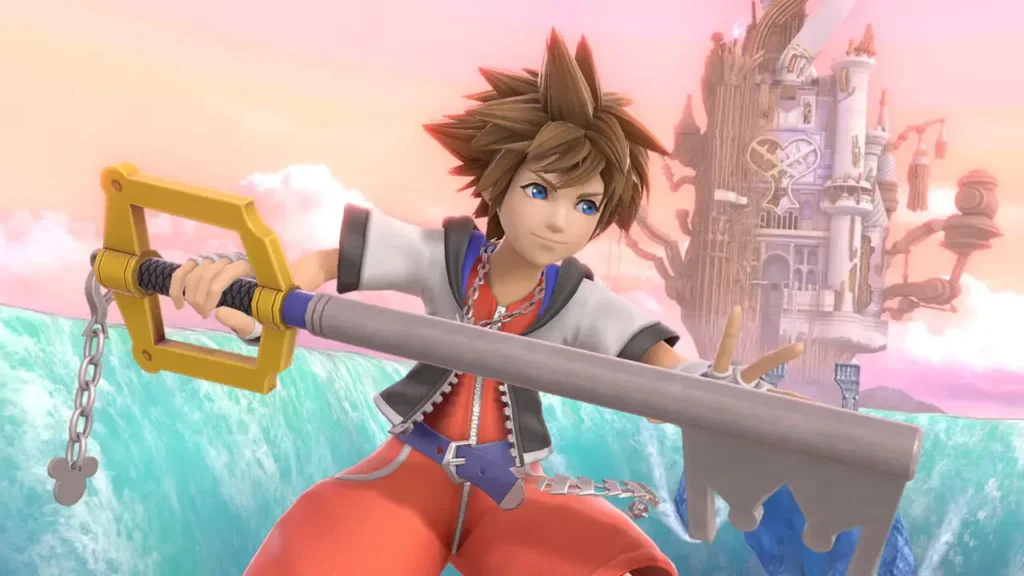
There is no reliable public evidence confirming percentage damage, ring-outs, four-player simultaneous combat, item systems or other familiar Smash mechanics. Because the success of Nintendo’s series also depends on its movement, stages, fighting systems and multiplayer structure working together, there is no basis for claiming that Disney had developed something comparable in complexity or quality. Action Figure Face Off is therefore best described as Smash-inspired in concept rather than as a completed equivalent. The connection became more ironic when Sora joined Super Smash Bros. Ultimate as its final downloadable fighter in October 2021. Nintendo identified him as the roster’s 86th fighter and highlighted his Kingdom Hearts-inspired Keyblade attacks, magic and aerial movement.
The action-figure premise also resembles ideas that became prominent years later through toys-to-life games. Disney entered that market with Disney Infinity in 2013, using physical character figures that could be placed on an Infinity Base and brought into the game. Its Toy Box encouraged players to collect characters, vehicles and gadgets while creating crossover experiences involving multiple Disney and Pixar properties.
There is no evidence that Action Figure Face Off planned similar electronic figure functionality, since its action figures appear to have belonged to the fictional premise rather than a physical peripheral system. Nevertheless, the conceptual resemblance is notable. Disney’s 2013 annual report described combining characters, stories and settings into personalised experiences as a major interactive initiative and noted that such an approach would have seemed unthinkable only a few years earlier. Action Figure Face Off appears to belong to the transitional period between the crossover model established by Kingdom Hearts and the broader character mixing later embraced by Disney Infinity.
Disney’s Action Figure Face Off Development, Activision Links and Cancellation
Action Figure Face Off emerged during a period when Disney Interactive was exploring ways to turn its intellectual property into games while still relying heavily on licensed movie and television projects. Christiansen recalled numerous internal concepts built around Disney’s extensive collection of properties, but projects connected directly to existing entertainment releases often had clearer funding paths. He cited games tied to Treasure Planet, Atlantis, Peter Pan 2 and Kim Possible as examples that could secure support more easily because they were associated with established film or television initiatives. A standalone crossover fighter represented a more speculative strategy, making Disney’s wider character library the attraction rather than relying on a specific movie that needed a companion product.
Evidence connecting Activision to Action Figure Face Off is more circumstantial than Christiansen’s confirmation of the Disney concept itself. Time Extension identified references on professional profiles belonging to former Activision employees, including software engineer Peter Walsh and associate producer Lara Sweeney, indicating that they had worked on the project.
This suggests Activision was attached in some development, production or publishing capacity, although the surviving information does not establish the exact arrangement. The intended platforms are similarly uncertain. One professional reference reportedly identified PlayStation 2 and PC, while another listed PlayStation 2, Nintendo GameCube and Xbox. Unreleased projects can change platforms during development, so neither list should be treated as a confirmed final release plan. PlayStation 2 is the only platform consistently associated with the project, while the involvement of PC, GameCube and Xbox remains unresolved.
The available evidence places Action Figure Face Off somewhere in the early 2000s. Christiansen’s Disney Interactive portfolio covers 2000 to 2004, while his recollections indicate that the concept appeared after Kingdom Hearts had begun demonstrating the viability of Disney crossovers. The reported platform references also place it within that console generation, but a precise development year has not been reliably established. The safest description is therefore an early-2000s Disney Interactive prototype rather than a project with a specific release year. This distinction matters because résumé dates, internal pitches, prototype work and formal development can represent different stages rather than one clearly defined production period.
According to Christiansen, Disney ultimately chose not to pursue the prototype and preferred safer projects such as film and television tie-ins. That decision fits the economics of licensed games during the period. A movie tie-in arrived with an existing marketing campaign, a predetermined release window and a familiar property at its centre. A standalone Disney crossover fighter would have required investment in a new gameplay identity whose appeal depended largely on the crossover itself. The idea was arguably ahead of Disney Interactive’s business strategy at the time, particularly because the company had not yet fully embraced treating its entire intellectual property catalogue as a shared interactive ecosystem.
Christiansen’s comments suggest that Kingdom Hearts had begun changing attitudes inside Disney, but institutional caution remained. The cancellation therefore appears to have been a business-priority decision rather than evidence that the concept was technically impossible. Action Figure Face Off advanced far enough to reach the prototype stage, yet Disney Interactive remained more comfortable supporting projects connected to established entertainment releases than committing to a standalone crossover fighter built around its wider character library.

Frequent Asked Questions (FAQs)
- Could Disney revive Action Figure Face Off today?
A modern Disney crossover fighting game is certainly conceivable because Disney now controls a much larger collection of major franchises and has considerable experience with crossover projects. Its partnership with Epic Games also demonstrates continued interest in large connected entertainment experiences. However, there has been no confirmed announcement that Disney’s Action Figure Face Off itself is being revived or redeveloped.sked Questions[FAQs] - What was Disney’s cancelled Smash Bros.-like game called?
Ken Christiansen identified the project as Disney’s Action Figure Face Off, a crossover fighting concept that would have brought characters from different Disney properties together. The characters were presented as action figures, giving the developers a way to mix otherwise unrelated Disney worlds within the same fighting game. - Was Disney’s Action Figure Face Off a real project?
Yes. Christiansen, a former Disney Interactive concept artist who worked during the period when the game was being developed, confirmed that the project existed. He also said it progressed beyond a simple idea and reached the prototype stage before Disney ultimately decided to cancel it. - Was Disney’s cancelled fighter inspired by Kingdom Hearts?
Yes, although the connection appears to have been more conceptual than mechanical. Christiansen explained that the success of Kingdom Hearts helped reduce Disney’s resistance to combining characters from separate franchises. That shift made it easier for producers to consider other crossover ideas, including a fighting game featuring characters from multiple Disney properties. - Was the Disney game officially a Super Smash Bros. clone?
Christiansen directly compared the concept with Super Smash Bros., indicating that Nintendo’s crossover fighting series was an important reference point. However, too little gameplay footage or design documentation survives publicly to determine whether Action Figure Face Off would have copied the same combat structure or simply used a similar crossover fighting concept. - Which characters were planned for Disney’s Action Figure Face Off?
Christiansen specifically referenced Disney properties such as Tarzan, The Lion King and Treasure Planet when discussing the crossover concept. These examples show that the developers were considering characters from several different Disney worlds, but no authoritative document revealing a complete final roster has surfaced publicly. - Why were the characters represented as action figures?
The action figure idea provided a simple explanation for why characters from unrelated Disney stories could appear together. Instead of suggesting that all of those characters existed within one canonical universe, the game could treat them as toys being played with in the same environment, similar to how children might combine figures from completely different franchises during imaginative play. - Was Activision involved with the cancelled Disney fighting game?
There is evidence suggesting that Activision was connected with the project. References found in the professional profiles of former Activision employees associate the company with Action Figure Face Off. However, the surviving information does not clearly establish Activision’s exact role, the nature of its agreement with Disney, or how far that involvement progressed before cancellation. - Which consoles would Disney’s Action Figure Face Off have been released on?
The available platform information is inconsistent. One source connects the project with PlayStation 2 and PC, while another lists PlayStation 2, GameCube and Xbox. Since the game was cancelled before reaching release, these listings may reflect different stages of development rather than a finalized launch plan, so no definitive platform lineup can currently be confirmed. - Did the cancelled game become Disney Infinity?
There is no evidence showing that Action Figure Face Off directly developed into Disney Infinity. The projects do share some noticeable ideas, particularly the use of toy versions of Disney characters and the ability to bring different properties together. However, Disney Infinity emerged years later and officially launched in 2013 with physical figures, play sets and its shared Toy Box system.

Conclusion
Disney’s cancelled Smash Bros.-like fighter was a genuine early-2000s concept called Disney’s Action Figure Face Off, and Ken Christiansen’s account provides the strongest evidence of how it originated. Kingdom Hearts had helped persuade Disney that characters from distinct properties could coexist without damaging their identities, opening the door to more adventurous crossover pitches.
The fighter’s solution was ingenious: turn the characters into action figures. By doing so, Disney could imagine figures from Tarzan, The Lion King, Treasure Planet and potentially other properties battling together without establishing a complicated shared canon. The project advanced to a prototype but lost out to the safer commercial logic of movie and television tie-in games.
Its cancellation looks especially fascinating in retrospect. Disney eventually released Disney Infinity, explicitly building an interactive Toy Box around physical figures and mixed Disney properties. Sora, meanwhile, eventually entered the franchise that had inspired Disney’s abandoned fighter when Nintendo added the Kingdom Hearts protagonist to Super Smash Bros. Ultimate in 2021.
The surviving evidence does not prove that Action Figure Face Off would have become a great fighting game. Too little is known about its mechanics, balance, stages or completed roster. What it does prove is that Disney was considering the modern crossover-game formula remarkably early—and that Kingdom Hearts helped make that once-uncomfortable idea seem possible.
Sources and Citations
- Time Extension: Jack Yarwood’s September 1, 2026 interview with Ken Christiansen examines the cancelled Disney’s Action Figure Face Off, its concept art and prototype. Contrary to the supplied title, the report explains that Kingdom Hearts helped make the crossover proposal possible, not that the fighter predated it.
Citation: How Kingdom Hearts Almost Paved the Way for a Smash Bros-Like Fighter From Disney & Activision - Ken Christiansen’s Official Portfolio: Displays his Disney Interactive concept work, including two Character Face-Off gameplay illustrations and Kingdom Hearts costume and environment concepts. This specific gallery provides a direct reference for the artwork discussed in the interview.
Citation: Disney Interactive 2000–2004 - Square Enix’s Official Kingdom Hearts Website: Provides official game information and trailers, including Sora’s adventures alongside Donald Duck and Goofy. Describes the series’ exploration of Disney and Pixar worlds, supplying context for its crossover approach.
Citation: Kingdom Hearts Official Website - Nintendo’s Sora Announcement: Announces Sora as the final downloadable fighter for Super Smash Bros. Ultimate, with an October 18, 2021 release. Covers his combat abilities, the Hollow Bastion stage and accompanying Kingdom Hearts music.
Citation: Sora From Kingdom Hearts Revealed as the Final DLC Fighter Coming to Super Smash Bros. Ultimate - The Walt Disney Company’s Disney Infinity Reveal: The matching January 15, 2013 announcement introduces the physical character figures, Infinity Base and customizable Toy Box. Explains how Disney and Pixar characters, vehicles and objects connect franchise-based adventures with player-created experiences.
Citation: Disney Interactive Reveals Ambitious Gaming Initiative, Disney Infinity - The Walt Disney Company’s Disney Infinity Launch Announcement: Published August 19, 2013, this release explains the relationship between physical figures, story-driven Play Sets and the Toy Box. Also covers supported platforms, Power Discs and additional characters planned for the game.
Citation: Disney Infinity Now Available in Stores Nationwide - The Walt Disney Company’s 2016 Annual Report: Provides the official financial account of Disney Infinity’s discontinuation, including inventory write-downs, severance and other asset impairments. This specific report supplies the relevant business information behind the broader investor-relations reference.
Citation: The Walt Disney Company 2016 Annual Report (PDF) - The Walt Disney Company’s Epic Games Partnership Announcement: Documents the February 7, 2024 announcement of Disney’s planned $1.5 billion investment in Epic Games and a multiyear collaboration. Describes a proposed games and entertainment universe connected to Fortnite, incorporating Disney, Pixar, Marvel, Star Wars and Avatar experiences.
Citation: Disney and Epic Games to Create Expansive and Open Games and Entertainment Universe Connected to Fortnite - Epic Games’ Disney Partnership Announcement: Presents Epic’s first-party description of the same collaboration, including a persistent social universe powered by Unreal Engine. Emphasizes opportunities to play, create and share Disney-related experiences; it documents the same agreement rather than providing independent reporting.
Citation: Disney and Epic Games to Create Expansive and Open Games and Entertainment Universe Connected to Fortnite
Recommendations
- Cancelled Disney Game
- Muramasa: Revenant Blades Official Announce Trailer Breakdown & Details
- Star Trek: Strange New Worlds Season 4 Trailer Teases Bold Final Adventures Ahead of July 23 Paramount Plus Premiere
- The Expanse: Osiris Reborn — Everything We Know So Far
- We Build LEGO Winnie the Pooh: A 100th Anniversary Set Worth the Hype for Disney and LEGO Fans
- “Thanks for Being Here! What’s Your Favorite Role I’ve Done So Far?” – Why Actors Ask Fans This Question and What It Reveals
- Avatar: the Last Airbender Netflix Season 2 Adaptation Explained, How Showrunners Recreated Iconic Moments Without Replacing the Original
- All Character and Specialist Locations in Fortnite Chapter 7 Season 3: Complete NPC Guide
- Summer Game Fest 2026 Time and Schedule: Full Event Start Times, Dates, Livestream Lineup, and What to Expect
- Dragon’s Dogma 2 Dark Arisen DLC October Release: New Region, Dragonsplague Changes, Customization, Abilities, and Full Feature Breakdown



































































































