





In This Article (9 sections)
EA Sports FC 27 Gameplay, Player Control, Manual Defending, Attacking AI, and The Grounds Explained
EA Sports FC 27 is built around a clear gameplay philosophy: giving the person holding the controller more responsibility for what happens on the pitch. Rather than introducing one headline mechanic while leaving the foundations unchanged, EA Sports is adjusting defending, attacking runs, passing assistance, crossing, dribbling, corners, player attributes, PlayStyles, and the way different modes apply those systems.
EA’s official Gameplay Deep Dive, published on July 29, 2026, identifies greater control as the central goal of FC 27. The developer says community requests for less automation and more influence over decisive moments led to reduced AI defending, stronger manual defensive tools, smarter attacking movement, and redesigned attacking situations involving crosses and corners. These changes are not intended simply to make matches faster or more spectacular. Their broader purpose is to make success feel more intentional and ensure that important attacking and defensive outcomes depend more heavily on player decisions than automated assistance.
The philosophy is particularly significant because EA Sports FC 26 had already separated its football into different experiences for competitive and more authentic play. FC 27 builds on that foundation rather than abandoning it. Competitive gameplay is becoming more dependent on manual input, while Career Mode adds systems that make player form, fitness, morale, and squad management directly relevant to on-pitch performance.
The distinction between assistance and intelligence appears central to the design. EA is reducing automation when the game directly performs a decisive action for the user, but it is improving AI behavior when computer-controlled teammates need to move, react, and position themselves more realistically. AI is therefore not disappearing from the experience. Its role is being changed so that it supports the user’s decisions instead of making those decisions on the user’s behalf.
This approach is most visible in defending. AI-controlled defenders are being repositioned as supporting players rather than automatic ball winners, requiring users to take greater responsibility for positioning, timing, and challenges. A defender must actively decide when to close down an opponent, step into a passing lane, or attempt to win the ball instead of relying on a nearby AI teammate to initiate the decisive action.
Hands-on reporting has provided some encouraging early impressions. After playing a pre-release build, The Guardian reported that FC 27 felt more responsive to controller inputs and that the troublesome defensive bounce-backs experienced in FC 26 were absent during the sessions. EA gameplay design director Kantcho Doskov also told the publication that the interception system had been rebuilt from scratch over approximately six months.
Attacking mechanics are moving in the same direction. Through balls require more accurate directional input, crosses depend more heavily on aim and power, and corners require users to position the intended receiver themselves. Several interactions that previously benefited from stronger assistance are therefore becoming more demanding at the same time.
A passer must recognize the correct lane and direct the ball accurately, while a winger delivering a cross must judge space, aim, and power instead of expecting the game to guide the delivery toward a teammate. During corners, the attacking player must manually position the intended receiver and move that player toward the incoming ball. Smarter off-ball movement should still help teammates create believable attacking options, but the final pass, cross, run, challenge, or shot remains the responsibility of the person controlling the team.
There is also a substantial expansion beyond traditional eleven-a-side matches. The Grounds introduces a shared football environment containing Clubs, small-sided games, Kickabouts, and social activities. EA says up to 100 players can occupy this shared football playground, making FC 27 one of the series’ broadest attempts to combine conventional football simulation with a social multiplayer space. The Grounds gives players a central environment where they can meet, participate in different forms of football, and move between competitive and social activities without limiting the experience to standard matches.
Taken together, the announced changes suggest that EA Sports FC 27 is attempting to create a clearer relationship between user input and match outcomes. Reduced defensive automation, more demanding passing and crossing, manual corner positioning, smarter attacking movement, and mode-specific performance systems all support the same objective. Because the final retail version will not be available until September 2026, it is still too early to reach firm conclusions about competitive balance, long-term responsiveness, or how effectively the redesigned systems will operate under online conditions. However, the features announced so far indicate a substantial shift toward deliberate input, with player control positioned as the defining characteristic of the overall gameplay experience.

EA Sports FC 27 Gameplay Changes: Manual Defending, Smarter Attacking AI, Passing, and Player Movement
EA Sports FC 27 introduces changes across virtually every phase of a match, with the biggest focus on giving players more direct control over decisive moments. Defending receives reduced auto-tackling, shorter AI interception reach, faster manual jockeying, and increased range for manually triggered standing tackles. Attacking players benefit from improved spatial awareness, more contextual runs, Triggered Curved Runs, and Pass & Follow Runs. Passing is also becoming less assisted in key situations, with ground and lobbed through balls designed to respect directional input more strictly, while Dinked Passes become fully manual. Crossing receives a similar treatment, with delivery direction and power having greater influence over where the ball travels.
Corners have effectively become a multi-stage skill challenge. Players choose the delivery and then control an attacker or defender in the penalty area to fight for positioning before the ball arrives. Automated movement toward the ideal contact point has been removed, meaning success depends more on timing, positioning, and reading the delivery. Dribbling also introduces off-balance control for appropriately skilled players. High-level dribblers with suitable Balance, Agility, and Dribbling Attributes can remain responsive during certain collisions and shoulder challenges instead of immediately losing control. EA is also adjusting the relationship between raw Attributes and PlayStyles, with several PlayStyles that previously created especially large advantages being normalized so that underlying player statistics matter more.
These changes are interconnected. Reducing through-ball assistance would be frustrating if attacking players still made poor runs, while weakening defensive AI would be problematic if manual defenders lacked enough responsiveness. Redesigning crosses would also have limited impact without improved receiving movement. EA therefore appears to be treating gameplay as a connected system instead of modifying isolated mechanics.
The defending overhaul is arguably the biggest competitive change in EA Sports FC 27. In FC 26, AI-controlled defenders could attempt tackles automatically when an attacker dribbled within sufficient range. FC 27 significantly reduces this behavior in Competitive gameplay. AI defenders will primarily maintain positioning and support the controlled defender until the user switches to them and initiates a challenge. AI teammates are not completely passive, as they can still collect loose balls that arrive within reach, and if an attacker runs directly into a defender, possession can still change hands. What has changed is the AI’s willingness to initiate tackles independently.
AI-controlled defenders also receive reduced interception reach compared with manually controlled players. This deliberately creates an incentive to switch defenders rather than positioning one player while expecting the surrounding AI to retrieve the ball. EA is compensating for the reduction in assistance by strengthening manual defensive tools. Manually controlled defenders have faster jockey movement than in FC 26, making it easier to respond to changes of direction, while manually initiated standing tackles also have increased reach. This creates a clearer defensive skill loop: players need to identify the danger, select the appropriate defender, move into position, and choose the right moment to tackle.
Teammate pressure consequently becomes support rather than an alternative to manual defending. Competitive players who relied heavily on secondary press and defensive AI may need to change their approach significantly. The theoretical advantage is a larger skill gap. Strong defenders should be able to differentiate themselves through positioning and anticipation, while attacking players should encounter fewer situations in which an uncontrolled opponent automatically dispossesses them.
Reducing defensive AI assistance does not mean EA is reducing intelligence throughout the game. Attacking AI is receiving one of FC 27’s most important upgrades through a system EA calls Attacking Spatial Awareness. AI attackers evaluate available space and are designed to make more contextual movements instead of simply running straight forward or occupying congested areas. Offside awareness is part of the improvement. For example, a winger approaching the defensive line can run parallel to it while waiting for the correct moment, then turn the run forward into space once the pass is released.
Manually triggered movement is becoming more advanced as well. Triggered Curved Runs allow a teammate to bend a run toward available space instead of travelling directly forward. Pass & Follow Runs add another variation: after releasing the ball, the passer can make a curved follow-up run that responds to surrounding space, potentially overlapping or cutting inside. These movements should improve passing combinations because users gain better control over where the next option develops.
There is an important limitation. Manually triggered runs no longer continue indefinitely. A player will run for a limited distance and eventually return to an appropriate position unless another command is issued while the user remains within range. EA says this change is designed to prevent unrealistic situations in which a teammate continues sprinting far away from the action long after the original command. The combination should produce more believable off-ball movement without removing player responsibility.
Passing in EA Sports FC 27 is becoming more directional and deliberate, particularly for through balls. Ground and lobbed through passes will no longer receive the same degree of assistance toward open lanes. EA says these passes will follow the user’s directional input more strictly, meaning a poorly aimed pass is more likely to travel into a dangerous area or be intercepted. Dinked ground and through passes move even further toward manual control, with both variants changed to a fully manual system where direction and power determine success.
The phrase “faster one-two passes” should therefore be understood in terms of more responsive combination play rather than a confirmed universal increase to every short pass animation. The official gameplay material focuses more heavily on improved movement around passes than on simply accelerating all passing. Pass & Follow is particularly important for one-two combinations because, after passing, the original ball carrier can initiate a curved movement based on available space. Instead of automatically running straight ahead, that player can overlap, underlap, or enter a more useful receiving lane.
Improved attacking spatial awareness should further help combination play because nearby teammates are expected to recognize space earlier. The potential consequence is a passing meta that rewards reading both space and player movement. Through balls become harder to automate, but the runs they are targeting become smarter. This places responsibility on both parts of the action: creating the route and accurately delivering the pass.

EA Sports FC 27 Dribbling, Set Pieces, Competitive Defending, and Attribute Balance Changes
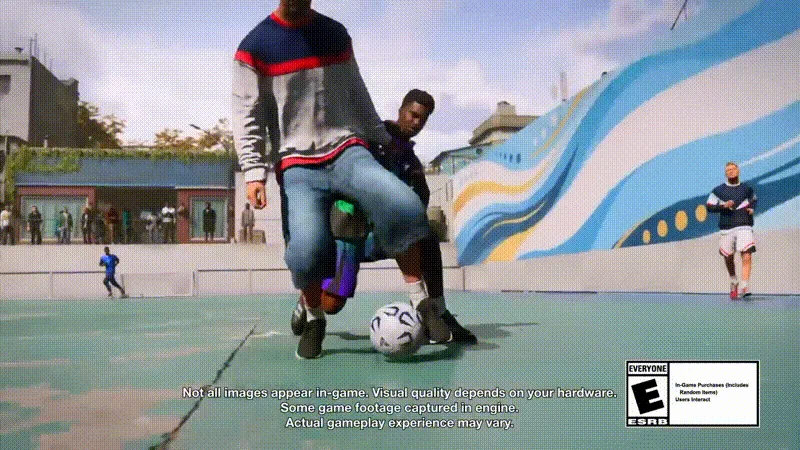
EA Sports FC 27 introduces Off-Balance Dribbling, a feature intended to make elite technical players more capable of maintaining possession when physically challenged. The system is driven by Balance, Agility, and Dribbling Attributes. When a qualified dribbler experiences an appropriate collision, bump, or shoulder challenge, the player can enter an off-balance animation while remaining under user control. Rather than becoming trapped in a stumble sequence, the player can take another touch in the chosen direction and attempt to preserve possession. This could make physical battles more dynamic, as earlier football games sometimes created collision moments where the user had limited ability to influence what happened next. FC 27’s approach allows sufficiently agile players to remain involved in the interaction.
The mechanic also reinforces EA’s renewed emphasis on Attributes. A technically exceptional dribbler should feel different because of the combination of Balance, Agility, and Dribbling statistics, not merely because a single PlayStyle activates. Off-Balance Dribbling is limited to PS5, Xbox Series X|S, PC, and Nintendo Switch 2. That is an important distinction because FC 27 also releases on older hardware, but not every gameplay or mode feature is identical across generations.
Corner kicks are among the most dramatically redesigned parts of EA Sports FC 27. Instead of relying heavily on assisted positioning, FC 27 gives players direct responsibility for both the delivery and the receiving player. The taker determines the target and power before control shifts toward the players competing inside the penalty area. Players inside the box no longer automatically move themselves into the ideal position to meet the delivery. Users must track the incoming ball, move into space, and time the contact. VGC’s hands-on report described the system as a two-stage sequence in which the player first chooses and powers the corner before controlling an attacker inside the box to escape the defender and meet the incoming delivery.
EA has also introduced Avoidance. Holding R1 on PlayStation or RB on Xbox during the appropriate pre-delivery window allows the controlled player to move more evasively through crowded areas. This can be combined with shielding, allowing an attacker to create space and then protect that position. Headers from corners and crosses require more precision than before.
Clean contact should occur less frequently, but successful clean headers are intended to be more accurate than in FC 26. Crosses complement the redesigned corner mechanics, as deliveries increasingly target space rather than locking directly onto teammates, while the user’s aim and power have a larger effect. This turns aerial attacking from an assisted sequence into a series of decisions: identify space, deliver accurately, position the receiver, and time the final contact.
Competitive gameplay is where FC 27’s reduced automation could be felt most strongly. EA specifically states that its announced AI defending changes apply to Competitive gameplay, which matters because Competitive gameplay underpins modes where maintaining a consistent skill-based environment is especially important. The design creates greater separation between players who actively defend and players who depend on the computer-controlled portion of their team. Successful defending should now require more frequent switching, controlled jockeying, correct positioning, and precisely timed tackling. Manually controlled defenders gain advantages in interception reach and tackling ability that AI-controlled teammates do not receive to the same extent.
Attackers must also become more precise because passing assistance has been reduced in several situations. That creates an interesting balance: attackers potentially benefit from weaker automatic defending, but they simultaneously face stricter passing and crossing input. Defenders lose some AI protection but gain more effective manual tools. If the balance holds after launch updates, competitive matches could feature fewer situations in which both players wait for automation to determine possession. EA has explicitly said it intends to preserve the importance of manual defending throughout the FC 27 lifecycle, a statement that will be closely watched because live balance patches can substantially change an EA Sports FC game’s competitive meta after release.
FC 27 is also reducing the gap between powerful PlayStyles and conventional Attributes. EA acknowledged feedback that certain PlayStyles could become too influential. Its goal is for both Attributes and PlayStyles to meaningfully affect player performance without allowing one system to overpower the other. Finesse Shot is being adjusted so Attributes have greater influence over outcomes, with spin, animation speed, and effectiveness from difficult angles scaling more consistently with the individual player. Technical Dribbler receives a smaller performance gap between its standard and PlayStyle+ variants. Rapid receives a slight reduction to the dribbling-animation speed boost, while Quick Step’s acceleration advantage is also reduced, giving the Acceleration Attribute greater importance.
Intercept is changing in the opposite direction. Players without the Intercept PlayStyle but with strong Interceptions ratings can gain better reach and improved chances of retaining possession. These changes matter because player identity can become distorted when possession of a particular PlayStyle is significantly more important than core statistics. Ultimate Team extends the same philosophy into long-term squad progression. FC 27 reduces the maximum number of PlayStyle+ abilities available on a single FUT item from five to three and plans smaller Attribute and PlayStyle increases across the season compared with FC 26. That could help prevent late-cycle squads from converging into teams where almost every elite card performs similarly.

EA Sports FC 27 Goalkeepers, Career Mode, Ultimate Team, and the Grounds Gameplay Experience
Goalkeeping in EA Sports FC 27 deserves careful distinction from the other announced gameplay systems. As of August 11, 2026, EA’s official FC 27 Gameplay Deep Dive does not identify a standalone goalkeeper overhaul comparable to the confirmed changes to defending, corners, crossing, attacking runs, passing, dribbling, and PlayStyles.
Claims that FC 27 has received a completely new goalkeeper system or a confirmed large package of new goalkeeper PlayStyles should therefore not be treated as established simply because they appear in discussions or unofficial reports. Goalkeepers may still benefit indirectly from the wider gameplay environment, as more manual crossing, redesigned aerial contact, altered finishing situations, and a stronger emphasis on player Attributes can change the type and quality of shots they face.
FC 27 also arrives after FC 26 already made substantial improvements to goalkeeper behavior and animation variety, meaning the baseline goalkeeper experience is not identical to older FC titles. However, it is important not to misrepresent improvements inherited from previous versions as newly announced FC 27 features. The most accurate conclusion at present is that the confirmed FC 27 gameplay overhaul changes the situations surrounding goalkeepers, while EA has not yet detailed a dedicated goalkeeper redesign on the scale of its defensive or attacking systems.
Career Mode uses FC 27’s football systems within a broader simulation framework that has received major changes of its own. Dynamic OVR is the headline addition. Instead of treating Overall Rating as a largely static representation of ability, FC 27 allows a player’s effective OVR to rise or fall during the season. Form, morale, and Match Fitness form the core of the system, while injuries, playing time, confidence, and competition for places can also influence a player’s current state.
Underlying ability remains important, but it is no longer the only factor determining how a footballer performs. Form can target Attributes connected to the player’s preferred position rather than providing generic improvements, while morale now directly influences Dynamic OVR, meaning squad-management decisions can affect football performance.
Match Fitness separates long-term physical readiness from ordinary energy. Players can enter games at different Match Fitness levels, and insufficient preparation creates performance penalties. The previous Training Plan system has consequently been removed apart from Energy Recovery settings. Injuries and squad rotation therefore have greater tactical implications, as starting a star player simply because the name and base rating are superior may not always be the optimal decision.
Career Mode also receives a substantially reconstructed transfer environment, updated club behavior, improved salary logic, Dynamic OVR throughout AI-controlled clubs, and expanded Deadline Day simulation. This creates a stronger connection between management and gameplay, where what happens away from the pitch directly influences the quality of the team that takes the field.
Football Ultimate Team uses the same core Competitive gameplay philosophy, making reduced AI defending and stronger manual control particularly relevant. The mode is also being rebalanced to slow the extent to which special items overwhelm normal football Attributes during the annual content cycle. EA says FC 27 will begin with OVR and PlayStyle levels similar to FC 26, but the gap between base items and final campaign items should be meaningfully smaller by the end of the season.
The maximum PlayStyle+ count per item also falls from five to three. This is a potentially important gameplay change because power progression strongly influences how Ultimate Team feels after several months. Excessively inflated statistics can eventually reduce player individuality and create increasingly extreme match behavior.
EA is also adding Single Player Live Events to Ultimate Team. These can contain custom squads, specific requirements, special rules, and themed AI opponents. Some events will form connected challenge sequences in which difficulty increases from stage to stage. The Gallery provides another progression path by recording player items collected throughout the year, including eligible cards that are later sold or submitted into SBCs. Completed sets contribute to Gallery progression and rewards.
The Gallery Hub further gives supported current-generation versions a physicalized environment where elements of the club and its collection can be displayed. Ultimate Team is therefore changing both mechanically and structurally. On the pitch, less AI assistance and restrained PlayStyle inflation may increase the importance of controller skill. Outside matches, EA is trying to make collection and progression broader than repeatedly replacing the starting eleven.
The Grounds is FC 27’s largest new mode-level addition and one of the most unusual experiments in the modern EA football series. EA describes The Grounds as a shared football playground capable of hosting up to 100 players. It is available on PS5, Xbox Series X|S, PC, and Nintendo Switch 2, but not on the older-generation PS4, Xbox One, or original Switch versions. The world contains a central area called The Terrace and three culturally themed districts: Montclair draws on French urban football, Zeiza reflects Argentina’s Potrero football culture, and Parkside takes inspiration from British football environments. Clubs sits at the center of this world, allowing players to reach conventional Clubs competitions while also participating in smaller football activities.
The Grounds supports small-sided matches, Kickabouts, Rush-related competition, Stadium Drop-In activities, and social interaction. The Kickabout lineup includes unconventional activities such as Bocce Ball, Team Keepaway, The Big Race, Attacking Scenarios, Bucket Ball, Balloon Ball, Goal Control, and Drop Kick Targets. The intention is clearly different from simply adding another menu. EA wants players to physically move through a social football environment, find activities, meet friends, and progress their created footballers.
The Guardian’s hands-on impressions were positive, describing activities such as target challenges, a 3v3 game with temporary bonus scoring areas, and a football variation inspired by dodgeball. The major question will be longevity, as open social environments require a steady population, useful rewards, new activities, and efficient navigation to remain compelling after their initial novelty. EA says The Grounds will evolve through seasons, campaigns, and live updates, potentially changing activities, atmosphere, and rewards throughout the year.

EA Sports FC 27 vs FC 26: Key Gameplay Changes and Realism Improvements
The difference between EA Sports FC 26 and EA Sports FC 27 is best understood as a shift from improving responsiveness to increasing responsibility in EA Sports FC 27 Gameplay. FC 26 introduced an important split between Competitive and Authentic gameplay philosophies and made broad improvements to dribbling, responsiveness, AI, and physical interactions. FC 27 continues that work through EA Sports FC 27 Gameplay while targeting automation more aggressively. It is not replacing everything FC 26 attempted; instead, within EA Sports FC 27 Gameplay, it is refining the same broader philosophy while addressing areas where assistance or simulation systems still produced frustrating results.
In FC 26, AI defenders could play a larger role in automatically challenging attackers than in EA Sports FC 27 Gameplay. FC 27 reduces their ability to initiate ball-winning actions and decreases AI interception reach in EA Sports FC 27 Gameplay. To balance that reduction, manual defenders receive faster jockey movement and longer standing-tackle reach than their FC 26 equivalents in EA Sports FC 27 Gameplay. Passing and attacking systems are also becoming more demanding. Through passing is more dependent on directional input, Dinked Passes become fully manual, crosses receive more user-directed placement into space, and corner-kick positioning becomes manual rather than automatically guiding players toward ideal contact locations.
Attacking AI also changes in FC 27 as part of EA Sports FC 27 Gameplay. The game introduces improved spatial awareness and more context-sensitive movement around the offside line in EA Sports FC 27 Gameplay, while Triggered Curved Runs and Pass & Follow Runs create additional control over combination play.
Off-Balance Dribbling in EA Sports FC 27 Gameplay gives suitably skilled players greater agency after physical contact, allowing elite technical players to remain involved in some physical duels instead of immediately losing control. PlayStyle balance is another major distinction in EA Sports FC 27 Gameplay, as FC 27 reduces some of the advantages created by specific PlayStyles while increasing the relevance of underlying Attributes. Career Mode goes substantially further through Dynamic OVR and Match Fitness, while The Grounds introduces an entire shared multiplayer football environment that FC 26 did not have.
On the evidence available before release, EA Sports FC 27 has several mechanics within EA Sports FC 27 Gameplay capable of producing more realistic football than FC 26, although realism will ultimately depend on how they interact in the retail game. Smarter attacking movement in EA Sports FC 27 Gameplay should reduce unnatural straight-line runs and unnecessary offsides, while limiting manually triggered runs prevents players from sprinting indefinitely after the tactical situation that initiated the movement has disappeared.
More manual crossing can produce believable variation because deliveries are directed toward space rather than consistently snapping toward a receiver. Redesigned corners in EA Sports FC 27 Gameplay also create actual battles for positioning instead of allowing automated movement to select ideal contact points.
Off-Balance Dribbling in EA Sports FC 27 Gameplay can make physical confrontations more continuous by allowing skilled players to fight through contact rather than immediately entering uncontrollable animations. Career Mode’s Dynamic OVR may provide an even larger improvement to realism in EA Sports FC 27 Gameplay over the course of an entire season. Footballers in reality do not perform at a permanently fixed level; confidence, injuries, match sharpness, and form matter, and FC 27 is attempting to reflect those fluctuations through its management systems.
However, realism and competitive balance are not identical objectives in EA Sports FC 27 Gameplay. A mechanic can produce authentic-looking football while being undesirable for high-level online competition, which is why EA continues to distinguish its gameplay environments. Based on official information and early hands-on impressions, FC 27 appears to be pursuing greater authenticity through agency in EA Sports FC 27 Gameplay rather than simply slowing matches down. The player is being asked to perform more of the decisive actions in EA Sports FC 27 Gameplay, while AI teammates become smarter about where they should be. That combination could make FC 27 more realistic than FC 26 without making it less responsive.
Frequently Asked Questions (FAQs)
- What are the biggest EA Sports FC 27 gameplay changes?
The biggest confirmed EA Sports FC 27 gameplay changes focus on giving players more direct control over key match moments. Defending is becoming less automated, with reduced AI auto-defending and stronger manual tools such as faster jockeying and improved standing-tackle reach. Attacking is also changing through improved spatial awareness, Triggered Curved Runs, and Pass & Follow Runs, which should make off-ball movement more intelligent and controllable. Passing, crossing, and corners are becoming more manual, while Off-Balance Dribbling and revised PlayStyle balancing are designed to make individual player attributes matter more during gameplay. - Is defending more manual in EA Sports FC 27?
Yes. In Competitive gameplay, defending is much more focused on user input than before. AI-controlled defenders are less likely to automatically step in and win the ball, meaning players will need to switch defenders, position them correctly, jockey manually, and time tackles themselves. EA is balancing this by giving manually controlled defenders better tools, including faster jockey movement and greater reach on manually triggered standing tackles. This should make defending more skill-based and reduce situations where the AI wins possession without much user involvement. - How has attacking AI changed in EA Sports FC 27?
Attacking AI has been improved through a system focused on spatial awareness. This means attacking players should better understand open space, defensive positioning, and the offside line instead of simply making straight forward runs. Wingers, forwards, and midfielders can now make more contextual movements, including curved runs that help them stay onside or move into better passing lanes. The goal is to make attacking teammates more useful without having them complete the decisive action for the player. - What are Pass & Follow Runs in EA Sports FC 27?
Pass & Follow Runs allow the player who has just passed the ball to continue moving into space with a more contextual run. Instead of always sprinting directly forward after releasing the ball, the passer can overlap, underlap, cut inside, or move into another useful route depending on the surrounding space. This should make one-two passes and combination play feel more natural, especially when trying to break down compact defenses or create quick passing moves around the box. - Are through balls more difficult in FC 27?
Yes, through balls should require more precision in FC 27. EA says ground and lobbed through passes will follow the user’s directional input more strictly rather than being heavily corrected toward the most obvious open lane. This means poorly aimed through balls are more likely to miss the target, run into danger, or be intercepted. At the same time, smarter attacking movement should give players better runs to aim for, making successful through balls feel more earned. - How do corners work in EA Sports FC 27?
Corners have been redesigned into a more manual, two-stage process. First, players choose the delivery by aiming and powering the corner. Then, control shifts to a player inside the penalty area, where the user must manually move into position, fight for space, and time the header or contact. Attackers and defenders no longer automatically move into the ideal spot, so positioning, shielding, movement, and anticipation matter more than before. This should make corners feel less automatic and more like a direct contest between players. - What is Off-Balance Dribbling in FC 27?
Off-Balance Dribbling is a new mechanic that lets certain skilled players remain controllable after specific bumps, collisions, or shoulder challenges. Instead of immediately losing control or being locked into a stumble animation, players with strong Balance, Agility, and Dribbling attributes can take another touch and try to keep possession. This is designed to make elite dribblers feel more responsive during physical duels. The feature is available on PS5, Xbox Series X|S, PC, and Nintendo Switch 2. - Does EA Sports FC 27 have major goalkeeper improvements?
EA had not announced a dedicated goalkeeper overhaul in its official FC 27 Gameplay Deep Dive as of August 11, 2026. That means claims about a completely new goalkeeper system or a major new set of goalkeeper-specific features should be treated cautiously unless EA confirms them later. However, goalkeepers will still be affected indirectly by the wider gameplay changes. More manual crossing, redesigned headers, altered finishing situations, and stronger emphasis on attributes can all change the kinds of shots and aerial chances goalkeepers have to deal with. - What is The Grounds in EA Sports FC 27?
The Grounds is a new shared social football environment for up to 100 players on PS5, Xbox Series X|S, PC, and Nintendo Switch 2. It brings Clubs, small-sided matches, Kickabouts, social spaces, and progression activities into a connected football playground. The area includes different football-culture-inspired districts and activities beyond standard eleven-a-side matches. Instead of accessing everything only through menus, players can move through the space, meet friends, join activities, and develop their created footballers. - Is EA Sports FC 27 more skill-based than FC 26?
Based on the confirmed mechanics, EA Sports FC 27 is clearly designed to be more skill-based than FC 26. Reduced defensive automation means players must defend more actively, while stricter passing direction, manual crossing, redesigned corners, and stronger manual tackling all increase the importance of controller input. Revised PlayStyle balancing also helps prevent certain abilities from overpowering basic attributes too heavily. Whether the final game fully delivers a better competitive skill gap will depend on launch balance and future updates, but the design direction is strongly focused on making user decisions matter more.

Conclusion
The EA Sports FC 27 Gameplay experience represents a deliberate attempt to move the series away from excessive automation and toward football in which users have more direct responsibility for decisive actions.
Manual defending is the clearest example in EA Sports FC 27 Gameplay. AI-controlled teammates are being repositioned as supporting defenders rather than automatic ball winners, while manual jockeying, switching, interception positioning and tackle timing become more valuable throughout EA Sports FC 27 Gameplay.
Attack is receiving an equally important transformation in EA Sports FC 27 Gameplay. Improved spatial awareness, contextual curved runs and Pass & Follow movement give players better off-ball options. At the same time, through balls, Dinked Passes and crosses require more precise input in EA Sports FC 27 Gameplay, ensuring smarter runs do not simply produce easier automated chances.
Corners now demand movement before contact in EA Sports FC 27 Gameplay. Elite dribblers gain new ways to survive physical challenges. Player Attributes become more influential relative to dominant PlayStyles. Ultimate Team progression is being restrained to protect player identity, while Career Mode’s Dynamic OVR connects form, morale and fitness directly with performance in EA Sports FC 27 Gameplay.
The Grounds then extends EA Sports FC 27 Gameplay beyond the traditional match structure, placing Clubs and casual football activities inside a shared social environment for current-generation systems.
Not every claim circulating about EA Sports FC 27 Gameplay should be accepted uncritically. In particular, EA has not yet presented a dedicated goalkeeper overhaul for EA Sports FC 27 Gameplay comparable with its confirmed defensive, passing or set-piece changes. Distinguishing officially announced EA Sports FC 27 Gameplay systems from speculation is important before the game’s September 2026 launch.
What EA has confirmed for EA Sports FC 27 Gameplay is already substantial. EA Sports FC 27 Gameplay is asking players to defend rather than wait for tackles, aim rather than expect passing correction, position rather than depend on automatic aerial movement and actively create runs rather than allow them to continue indefinitely.
If those systems remain balanced after launch, the biggest improvement in EA Sports FC 27 may not be any single animation, mode or feature. It may be the feeling that when something decisive happens on the pitch, it happened because the player made it happen.
Sources and Citations
- Electronic Arts, EA SPORTS FC 27 | Gameplay Deep Dive, July 29, 2026. EA’s official gameplay documentation confirms reduced AI-defending influence, increased emphasis on manual jockeying and tackling, reworked corner positioning, less-assisted crossing, smarter attacking movement, directional through passes, fully manual Dinked Passes, Off-Balance Dribbling and extensive PlayStyle balancing. One precision point is that the detailed AI-defending reductions described in this article apply specifically to Competitive gameplay. (EA)
- Electronic Arts, EA SPORTS FC 27 | Career Deep Dive, July 31, 2026. EA’s official Career Mode documentation confirms Dynamic OVR and its three central influences—Form, Morale and Match Fitness. It also details injury and reinjury risk, squad rotation, player readiness, squad-management consequences, scouting, recruitment and the rebuilt Transfer Market. (EA)
- Electronic Arts, EA SPORTS FC 27 | FUT Deep Dive, August 2, 2026. The official title of this source is “FUT Deep Dive,” rather than “Football Ultimate Team Deep Dive.” It confirms FUT Gallery progression and rewards, Gallery Sets and levels, Single Player Live Events against AI opponents, revised item and squad progression, and the reduction of the maximum number of PlayStyle+ abilities on one item from five to three. (EA)
- Electronic Arts, EA SPORTS FC 27 | The Grounds & Clubs Deep Dive, August 4, 2026. EA’s official documentation confirms that The Grounds supports up to 100 players and is available on PlayStation 5, Xbox Series X|S, PC and Nintendo Switch 2. It describes the central Terrace, three districts—Montclair, Zeiza and Parkside—Clubs integration, Kickabouts, 1v1 through 3v3 small-sided football, Rush, Live Events and an evolving live-service structure supported by seasons, campaigns and updates. (EA)
- Video Games Chronicle, Hands-on with EA Sports FC 27: New Corners, Better Crossing, and Huge Changes to AI Defending, July 29, 2026. VGC’s hands-on report provides independent observations of substantially reduced AI defensive assistance, greater rewards for manual defending, crosses directed into space and a redesigned corner system. VGC’s exact description is a “two-part, skill-based mechanic”: the player first chooses and powers the delivery, then takes control of an attacker inside the penalty area to evade defenders, position manually and meet the ball. (VGC)
- The Guardian, EA Sports FC 27: What Does the Next Instalment of the World’s Biggest Football Game Have in Store?, August 7, 2026. The Guardian’s report is based on two days spent playing a pre-release FC 27 build and speaking with its developers. It discusses the rebuilt interception system, reduced defensive automation, greater manual control over jockeying and tackles, more manual crossing, improved attacking runs, revamped two-stage corners and free kicks, Dynamic OVR, realistic transfer changes and The Grounds. (theguardian.com)
Recommendations
- Nivalis Nights Official Release Date Trailer Reveals September 2026 Launch for Cyberpunk Life Sim Game
- Data Reconstruction Quest Guide In Marathon: All Part 1, Part 2, and Part 3 Objectives Explained
- Helldivers 2 Performance Update: Arrowhead Calls it the “Opening Salvo” for More Optimization
- 3Ds Max 2027.2 Released with Native Gaussian Splat Support: Everything New
- In-Game Ads For Full-Price Games “Would Seem Unfair,” GTA 6 Parent Company Boss Says – What It Means for Players
- Resident Evil Requiem: Japanese Players Fight “Immersion-Breaking” Censorship — Why Gore Is Blacked Out in Japan
- Fortnite Is Adding Iconic Game Of Thrones Characters Soon: Release Date, Skins List, and How to Get the Ice and Fire Bundle
- Heart of the Beast: Official Trailer Breakdown and First Impressions
- Nex Playground Review: Features, Gameplay, Price, Subscription Model, and is it Worth it in 2026?
- Crime 101 Review (2026 Movie): Chris Hemsworth, Halle Berry and Mark Ruffalo in Bart Layton’s LA Heist Thriller



































































































