










In This Article (7 sections)
Echoes of Aincrad Combat Guide: Attacks, Defense, Stamina, Sword Skills, and Partner Synergy
Echoes of Aincrad is a single-player action JRPG set across the early floors of Aincrad. Its combat focuses on real-time melee encounters, partner synergy, weapon specialization, and character growth rather than traditional magic or ranged class systems. Bandai Namco’s official materials emphasize that weapon choice effectively functions as a class, while Growth Points, Sword Skills, crafted equipment, and partner selection determine whether a build prioritizes safety, sustained pressure, or explosive damage. The game Echoes of Aincrad was released on July 10, 2026, for PS5, Xbox Series X|S, and PC. Its day-one patch also adjusted weapon balance, Sword Skills, dodge behavior, and EX-MOD balance, making it important to understand how combat works in the current version.
Combat in Echoes of Aincrad revolves around two primary resources: Stamina and SP. Stamina is consumed by physical actions such as attacking, dodging, sprinting, guarding, and other defensive movements. SP powers Sword Skills, which are the stronger weapon-specific techniques equipped in a character’s loadout. Surviving difficult encounters requires more than repeatedly attacking. Players must read enemy patterns, decide when to defend, and use partner commands to create safe openings before committing to stronger attacks.
Partner play is another defining part of the system. Every quest allows the player to bring a companion with unique Support Skills and Combination Skills, while battles are structured around the Switch system. Although the player directly controls one character, combat is not designed as a purely solo experience. The player must decide when to divide enemy attention, attack alongside a partner, or hold a partner command until a stronger punish opportunity appears. Effective partner use can make an otherwise dangerous exchange much safer.
The basic offensive loop consists of light attacks, heavy attacks, and special attacks connected to the equipped weapon. Official demo guidance describes each weapon as having a central combat concept involving light attacks, heavy attacks, special attacks, parries, and evasive actions. Light strings are generally the safer option for applying pressure, while heavy attacks are more useful for causing stagger, breaking guards, or delivering a stronger punish after an enemy commits to an attack.
Each weapon changes how these basic actions behave:
- Daggers provide fast attacks but require the player to remain at close range.
- Rapiers use fluid thrusting combinations with greater reach.
- Two-handed swords reward charged attacks and heavier commitments.
- Maces specialize in breaking defenses.
- Axes emphasize slower attacks with wider area pressure.
Basic attacks are therefore not represented by one universal combo system. They are the standard attack strings and special properties of the weapon class the player has chosen. Since weapons effectively function as classes, learning a weapon’s attack rhythm, defensive options, range, and Stamina demands is central to developing a reliable build.
Blocking is strongest with shield-compatible weapons, particularly Sword and Shield, Rapier, and Mace setups. Guarding with a shield consumes Stamina, while parries, dodges, and Reversal Slash become more valuable defensive tools during difficult boss encounters. Blocking is often the safest choice when learning an enemy’s attack pattern, but it cannot be maintained indefinitely. Remaining behind a shield until Stamina is depleted leaves the player unable to respond effectively to the next attack.
Dodging is the universal defensive option, although its animation and feel can change according to the equipped weapon. Bandai Namco’s starter guidance notes that using a two-handed sword changes the standard dodge into a roll. Version 1.0.3 extended the invincibility period of the step animation and adjusted both rolling and stepping behavior. Proper timing remains necessary, but the launch version is more forgiving than the preview build during one of the most important defensive actions for beginners.
Stamina management explains many early combat failures. Attacking, dodging, and guarding all draw from the same resource, and allowing it to run out limits the player’s available actions and abilities. New players often spend too much Stamina on a long attack sequence, only to discover that they cannot block or dodge the enemy’s counterattack. The safest habit is to end each exchange with enough Stamina remaining to escape, defend, or reposition.
The Endurance stat can help by increasing Stamina Points, but effective management depends more on combat rhythm than statistics alone. Strong early play involves attacking in short sequences, resetting position, and saving SP-powered Sword Skills for genuine openings. Those openings can be created through a stagger, guard break, successful dodge punish, parry, or partner setup. Treating Stamina as both an offensive and defensive resource prevents overextension, while careful use of SP and partner abilities turns safe openings into high-value damage.

Echoes of Aincrad Skills, Weapon Mastery, Growth Points, ACV, and EX-MODs Guide
Sword Skills in Echoes of Aincrad are unlocked by repeatedly using a weapon type to defeat enemies. Bandai Namco’s official starter guide explains that each victory earns Weapon Exp for the equipped weapon path, gradually unlocking additional Sword Skills. This makes early specialization valuable. Constantly switching between weapon types spreads experience across several paths and slows overall progression, while focusing on one weapon provides faster access to a stronger and more coherent skill lineup. Weapon Proficiency and weapon-specific experience are meaningful progression systems, so repetition improves both practical mastery and access to advanced techniques.
Players in Echoes of Aincrad can equip up to three Sword Skills at a time, making loadout selection important from the beginning. Partner Support Skills and Combination Skills exist alongside this system. Most partners have one or two Combination Skills that can be assigned to the action wheel, while Support Skills provide effects such as healing, defensive buffs, offensive buffs, and other forms of utility. Sword Skills are most effective when used after confirming a genuine opening rather than activating them whenever they become available.
They consume SP and can leave the player vulnerable if used at the wrong moment. Combination Skills become available after dealing enough damage and are strongest when the enemy or boss is already in a punishable state. Support Skills should be selected according to the actual threat of the encounter, such as healing during an attrition-heavy fight or applying an offensive buff during a short boss damage phase.
The six confirmed weapon types are:
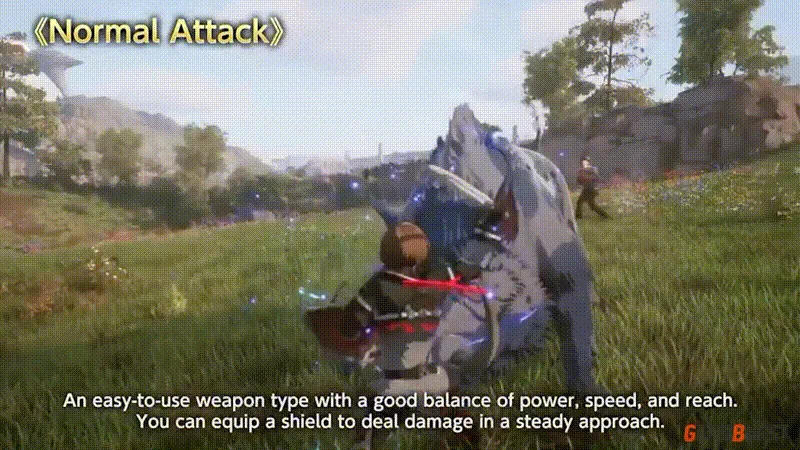
- Sword and Shield: A balanced all-rounder with both offensive and defensive options.
- Two-Handed Axe: A slow but aggressive weapon focused on wide area attacks.
- Dagger: A fast, short-ranged weapon that can also use throwable blades.
- Rapier: A long-reaching, combo-focused weapon with shield access.
- Two-Handed Sword: A heavy weapon with powerful attacks and charge potential.
- Mace: A defensive-breaking weapon designed to create stagger and knockdown pressure.
Weapon choice effectively serves as the game’s class system. Since Aincrad does not provide a traditional magic back line to compensate for weak melee fundamentals, the selected weapon has an unusually large influence on combat. Bandai Namco frames weapons, armor, attributes, partners, and special skills as the tools that define the player’s path through the game. The central question is therefore not which conventional class fantasy sounds most appealing, but which combat problems the build should solve first.
For most beginners, Sword and Shield is the safest starting weapon. It is used during the tutorial and provides enough offensive and defensive flexibility to help players learn guarding, parrying, Stamina management, and enemy pattern recognition without making every mistake immediately fatal. Rapier is the next strongest beginner-friendly option for players who prefer speed and reach while retaining shield access. Daggers, two-handed swords, and axes can become extremely effective, but they demand cleaner spacing, better Stamina control, and more confident commitment windows. For many players, those weapons work better as secondary choices after the basic defensive rhythm has been learned.
Growth Points are earned through leveling and can be spent at the Inn to improve character attributes. Strength, Dexterity, Agility, and Intelligence are the four offensive attributes, with their effects on weapon-skill damage depending on the equipped weapon and individual skill. Vitality, Endurance, and Mind improve survivability by increasing Health Points, Stamina Points, and SP-related effectiveness. Since attributes also affect weapon attack power, Growth Points should reinforce the scaling of the weapon currently being used rather than being divided evenly across every statistic.
ACV is better understood as the weapon’s displayed attribute-correction value, not as a combat gauge that fills during battle. Build planners and community guides use ACV to describe how strongly a weapon benefits from specific attributes. The weapon information panel displays these values, and even two weapons from the same class may reward different attribute distributions. Building around ACV therefore means increasing the attributes favored by the equipped weapon and selecting equipment whose correction profile matches the intended build.
A practical progression route is to begin with enough Vitality to survive mistakes and enough Endurance to maintain comfortable Stamina reserves. After stabilizing those defensive needs, invest more heavily in the offensive attribute rewarded by the current weapon’s ACV values. This approach is more reliable than following a broad assumption that every weapon in the same family scales identically.
EX-MODs provide another major layer of combat customization. Official guides describe them as randomly assigned weapon effects, while Bandai Namco explains that weapons of the same type can be combined to pool or transfer effects onto a stronger base weapon. Confirmed examples include reduced Stamina consumption and increased normal-attack damage. These effects influence more than raw damage. A Stamina-reduction EX-MOD can extend an attack sequence without leaving the player unable to defend, while a normal-attack bonus can shorten encounters by improving the damage of reliable, low-risk openings. Version 1.0.3 adjusted the balance of unique MODs and EX-MODs for weapons and shields, so build advice from previews or earlier versions should be evaluated with the launch rebalance in mind.

Echoes of Aincrad Boss Builds, Damage, Survivability, and Beginner Combat Tips
Boss battles in Echoes of Aincrad are won by combining parries, dodges, and Reversal Slash rather than relying on passive blocking or reckless offense. Defensive counterplay is therefore the most important part of a boss build because successful defensive actions create the openings needed to use Sword Skills safely. Blocking can help while learning an attack pattern, but remaining defensive for too long drains Stamina and limits the player’s ability to respond. The more reliable approach is to recognize an incoming attack, evade or counter it, and then punish the boss during its recovery window.
A strong boss loadout should include three main elements:
- A fast Sword Skill that can reliably connect during a short punish window.
- A utility or stagger option that becomes useful after breaking a guard or interrupting an enemy.
- A partner setup built around Combination Skills and healing or defensive Support Skills.
Official Echoes of Aincrad demo material confirms that Combination Skills become available after enough damage has been dealt, while partner Support Skills can provide healing, offensive buffs, defensive buffs, and other forms of utility. These abilities are particularly useful during long boss encounters where retreat is not possible after entering the arena. Players should avoid using powerful skills simply because they are available. Sword Skills cost SP and may leave the character exposed, so they are most effective after a parry, dodge punish, stagger, guard break, or partner-created opening.
The best early-game build in Echoes of Aincrad is a Sword and Shield setup focused first on survivability and then on weapon scaling. Sword and Shield is the tutorial weapon and provides balanced offensive and defensive options, making it the safest choice for learning guarding, parrying, dodging, Stamina management, and enemy pattern recognition. It gives beginners more room to recover from mistakes while still providing enough damage to progress comfortably.
For attributes, begin by increasing Vitality and Endurance until enemy attacks no longer feel immediately catastrophic and the Stamina bar can support a short attack sequence followed by a safe defensive exit. Once the build feels stable, invest more heavily in the offensive attribute favored by the current sword’s scaling and ACV profile. Growth Points should reinforce the weapon being used rather than being spread evenly across every statistic.
Equipment should also support the same defensive foundation. Upgrade weapons at the Smithy and prioritize EX-MODs that improve Stamina efficiency, reduce incoming damage, or increase Sword Skill damage. A well-upgraded lower-class weapon with suitable scaling and useful EX-MODs can outperform a higher-class weapon that has not been properly developed. Healing or defensive partner abilities should remain part of the setup until the player becomes comfortable enough with boss patterns to replace some of that protection with more aggressive support.
Damage improves most effectively when every part of the build supports the same purpose. Bandai Namco’s official guidance recommends strengthening weapons at the blacksmith, spending Growth Points according to weapon scaling, and configuring EX-MODs before using newly acquired equipment in difficult encounters. Simply equipping a weapon with a higher class or larger base number does not guarantee better performance. Its upgrade level, ACV profile, Sword Skills, and EX-MOD effects all influence its practical value.
Survivability also depends on more than armor or Health Points. It comes from a combination of Vitality, Endurance, consumables, Healing Crystals, partner selection, defensive timing, and preparation before entering a boss room. Since retreat may not be possible once a major fight begins, players should restock items, review their skill loadout, upgrade their weapon, and confirm their partner setup before committing. Survival is rarely determined by one statistic alone. It reflects the quality of the entire build and the player’s understanding of the encounter.
The most important beginner habit is to stop treating every opening as an opportunity for a complete attack combination. Echoes of Aincrad punishes overextension because Stamina is required for both offense and defense. A player who spends the entire bar attacking may have nothing left for the dodge or guard needed to survive the counterattack. Short pressure strings, deliberate resets, and careful SP use are more effective than constant aggression. Every exchange should end with enough Stamina remaining to block, dodge, or reposition.
Players should also return to town regularly. Much of the game’s progression takes place through the Inn, the Smithy, and partner preparation rather than during combat alone. Spending Growth Points, improving weapons, transferring EX-MODs, restocking consumables, and adjusting Support Skills can turn a seemingly impossible encounter into a manageable one. Entering a difficult fight without using these systems leaves a large portion of the character’s potential undeveloped.
Finally, beginners should specialize before experimenting too broadly. Defeating enemies with a weapon earns Weapon Exp and unlocks additional Sword Skills for that weapon path. Constantly changing weapons may be entertaining, but it slows progression across every category and leaves the player without a fully developed skill set. Focusing on one weapon first provides faster access to stronger techniques, a clearer attribute plan, and a more coherent build. Once that foundation is established, experimenting with secondary weapons becomes much easier and less disruptive.
Frequently Asked Questions (FAQs)
- What is the safest first weapon in Echoes of Aincrad?
Sword and Shield is the safest starting choice because it offers balanced damage while giving players access to reliable shield-based defense. It is also the game’s tutorial weapon, making it a natural option for learning core mechanics such as attacking, guarding, dodging, and managing Stamina. - How many Sword Skills can be equipped at once?
You can equip up to three Sword Skills at the same time. Because the number of slots is limited, early loadouts should usually include skills that cover different needs, such as dealing damage, creating an opening, or responding to a dangerous enemy attack. - How are Sword Skills unlocked?
Sword Skills are unlocked by repeatedly using a particular weapon type and earning Weapon Exp with it. Defeating enemies while following that weapon path gradually increases its progression, giving you access to additional skills and more combat options. - What causes most early combat deaths?
Running out of Stamina is one of the biggest causes of early deaths because attacking, dodging, and guarding all use the same resource. Players who attack too aggressively may have no Stamina left to block or escape, so keeping some in reserve is usually safer than completely exhausting the bar. - Can every weapon use a shield?
No. Sword and Shield, Rapier, and Mace can be paired with a shield, giving those weapon styles additional defensive options. Dagger, Two-Handed Sword, and Two-Handed Axe cannot use shields, so players using them must depend more heavily on positioning, dodging, parrying, and careful timing. - What should Growth Points be spent on first?
A strong early approach is to invest enough points in Vitality and Endurance to improve survivability and Stamina management. After establishing that foundation, focus on the damage-related stat that provides the best scaling for your chosen weapon rather than spreading points evenly across attributes that do not support your build. - What is ACV supposed to tell you?
ACV is used by guides and players as an indicator of a weapon’s attribute correction, showing which character stats contribute most effectively to its damage. Checking ACV can help you decide where to place Growth Points and avoid investing heavily in attributes that provide little benefit to your current weapon. - Are EX-MODs worth caring about in the early game?
Yes. EX-MODs can provide useful advantages such as lowering Stamina costs, increasing attack damage, or improving other parts of a weapon’s performance. Because they can also be transferred between weapons of the same type, a valuable early EX-MOD can remain useful even after you replace the weapon on which it was originally found. - What skills matter most in boss fights?
Parries, dodges, Reversal Slash, and properly timed partner Combination and Support Skills are especially important against bosses. Boss encounters often depend on recognizing attack patterns, avoiding unnecessary damage, and striking during brief punish windows rather than attacking continuously. - What changed in the current launch build?
Patch 1.0.3 adjusted a wide range of combat systems, including weapon performance, Sword Skills, Combination Skills, Support Skills, and the attack values of reversal, parry, and dodge slashes. It also changed enemy parameters, dodge invincibility, rolling behavior, and EX-MOD balance, meaning some strategies and builds may perform differently from earlier versions.

Conclusion
Echoes of Aincrad succeeds when it is played as a measured action RPG rather than a flashy button-masher. The most effective combat approach in Echoes of Aincrad is to choose a weapon path early, unlock Sword Skills through focused use, stabilize the build with Growth Points and Smithy upgrades, and then refine the setup through EX-MODs, partner support, and smarter boss preparation. For beginners, Sword and Shield remains the best on-ramp because it teaches the entire defensive language of the game while still scaling into a strong all-round build. Once those fundamentals are secure, every other weapon family opens up naturally.
Sources and Citations
- Bandai Namco Europe, “Sword Art Online: Echoes of Aincrad Official Website.”
https://en.bandainamcoent.eu/sword-art-online/echoes-of-aincrad - Bandai Namco Europe, “Starter Guide.”
https://en.bandainamcoent.eu/sword-art-online/echoes-of-aincrad/news/starter-guide - Bandai Namco Europe, “Gameplay Mechanics Explained.”
https://en.bandainamcoent.eu/sword-art-online/echoes-of-aincrad/news/gameplay-mechanics-explained - Bandai Namco Europe, “A Guide to Aincrad.”
https://en.bandainamcoent.eu/sword-art-online/echoes-of-aincrad/news/a-guide-to-aincrad - Bandai Namco Europe, “Combat System Reveal.”
https://en.bandainamcoent.eu/sword-art-online/echoes-of-aincrad/news/combat-system-reveal - Bandai Namco Europe, “Day 1 Patch 1.0.3 Notes.”
https://en.bandainamcoent.eu/sword-art-online/echoes-of-aincrad/news/day-1-patch-1-0-3 - Bandai Namco America, “Echoes of Aincrad Demo Guide.”
https://www.bandainamcoent.com/news/sword-art-online-echoes-of-aincrad-demo-guide - Games.gg, “Sword Art Online: Echoes of Aincrad Beginner Guide.”
https://games.gg/guides/sword-art-online-echoes-of-aincrad/beginner-guide/ - Games.gg, “Sword Art Online: Echoes of Aincrad Gameplay Guide.”
https://games.gg/guides/sword-art-online-echoes-of-aincrad/gameplay-guide/ - DQ7 Reimagined, “ACV System Guide.”
https://dq7reimagined.com/guides/acv-system/
Recommended
- Shenmue III Enhanced Gets Its First Trailer: Collector’s Edition Contents, Platforms, and Preorder Details
- WWE 2K26 Ringside Pass Season 3 Is Here: New Superstars, Returning NBA Star, and Persona Outfits
- Intel’s New Gaming CPUs Are Its Fastest and Cheapest Yet: Everything to Know About the Core Ultra 200S Plus Series
- Marathon Official Vandal Shell Cinematic Trailer: Vandal Abilities, Disruptor Cannon, and Gameplay Breakdown
- Pixar Canceled a Female-Led Movie Similar to KPop Demon Hunters – What Happened to BeFri? | Pixelhair & The View Keeper
- Understanding Decals in 3D: A Comprehensive Guide to Their Application in Hard Surface Modeling, Blender, Unreal Engine, and Beyond
- Pokémon XD: Gale of Darkness Now Available on Nintendo Switch 2 – How to Play, Features, and Everything You Need to Know
- How Embark Studios Used Unreal Engine To Create ARC Raiders: Technology, Optimization, and Game Design
- Unreal Engine Nanite Foliage Procedural Vegetation Editor Explained (UE5.7): Megaplants, PVE Graph, Nanite Voxels, and PCG Scattering
- Resident Evil Requiem – Official 4th Trailer (State of Play 2026): Community Reaction, Breakdown, Release Date, and Everything We Know



































































































